01Le CauseThe Causes
L'assassinio di Cesare alle Idi di marzo del 44 a.C. non aveva ristabilito la Repubblica; aveva creato un vuoto. Il Secondo Triumvirato (Marco Antonio, Ottaviano e Lepido) siglò nel 43 a.C. una nuova alleanza per spartirsi il mondo romano e vendicare Cesare. Dopo la doppia battaglia di Filippi (42 a.C.), in cui Bruto e Cassio furono sconfitti e si suicidarono, il triumvirato divise l'Impero: Ottaviano l'Occidente, Antonio l'Oriente, Lepido l'Africa. Lepido fu progressivamente emarginato. Restavano due uomini, e due uomini soli non possono governare lo stesso impero.
Caesar's assassination on the Ides of March 44 BC had not restored the Republic; it had created a vacuum. The Second Triumvirate (Mark Antony, Octavian, and Lepidus) sealed in 43 BC a new alliance to divide the Roman world and avenge Caesar. After the double battle of Philippi (42 BC), in which Brutus and Cassius were defeated and committed suicide, the triumvirate divided the Empire: Octavian the West, Antony the East, Lepidus Africa. Lepidus was progressively sidelined. Two men remained, and two men alone cannot govern the same empire.
Antonio aveva la metà più ricca: l'Asia Minore, la Siria, la Grecia, l'Egitto. La sua base era Alessandria, dove dal 41 a.C. era amante e poi marito di Cleopatra VII, regina d'Egitto. Era una relazione sbagliata, secondo i romani: una regina straniera, esotica, con un figlio (Cesarione) che pretendeva di essere il figlio biologico di Cesare e quindi suo erede legittimo. Antonio generò con Cleopatra tre figli e nel 34 a.C., con la cerimonia delle Donazioni di Alessandria, distribuì territori romani come regni personali per i suoi figli con la regina. Era un atto politico devastante: Antonio sembrava trasformarsi in un sovrano orientale, alienare territori romani, fondare una dinastia ellenistica.
Antony had the richer half: Asia Minor, Syria, Greece, Egypt. His base was Alexandria, where from 41 BC he was the lover and then husband of Cleopatra VII, queen of Egypt. It was a wrong relationship, by Roman standards: a foreign, exotic queen, with a son (Caesarion) who claimed to be Caesar's biological son and therefore his legitimate heir. Antony fathered with Cleopatra three children and in 34 BC, with the ceremony of the Donations of Alexandria, distributed Roman territories as personal kingdoms for his children with the queen. It was a devastating political act: Antony seemed to be becoming an Eastern sovereign, alienating Roman territories, founding a Hellenistic dynasty.
Ottaviano sfruttò politicamente questa percezione. Si era costruito a Roma l'immagine di defensor della tradizione: campagna di propaganda contro Antonio servo della regina egiziana, pubblicazione (parziale e manipolata) del testamento di Antonio dove riconosceva Cesarione e lasciava parte del suo patrimonio a Cleopatra. Nel 32 a.C. il senato dichiarò guerra a Cleopatra (non ad Antonio: era importante presentarla come guerra contro un nemico straniero, non come terza guerra civile). Nei mesi successivi, i due eserciti si concentrarono in Grecia. Antonio aveva l'iniziativa: pensava che la massa dei suoi clienti orientali e la flotta egiziana sarebbero state schiaccianti.
Octavian exploited this perception politically. He built in Rome the image of defender of tradition: propaganda campaign against Antony as servant of the Egyptian queen, publication (partial and manipulated) of Antony's will recognising Caesarion and leaving part of his estate to Cleopatra. In 32 BC the senate declared war on Cleopatra (not on Antony: it was important to present this as war against a foreign enemy, not as a third civil war). In the following months, the two armies concentrated in Greece. Antony had the initiative: he thought the mass of his Eastern clients and the Egyptian fleet would be overwhelming.
02Le Forze in CampoThe Forces
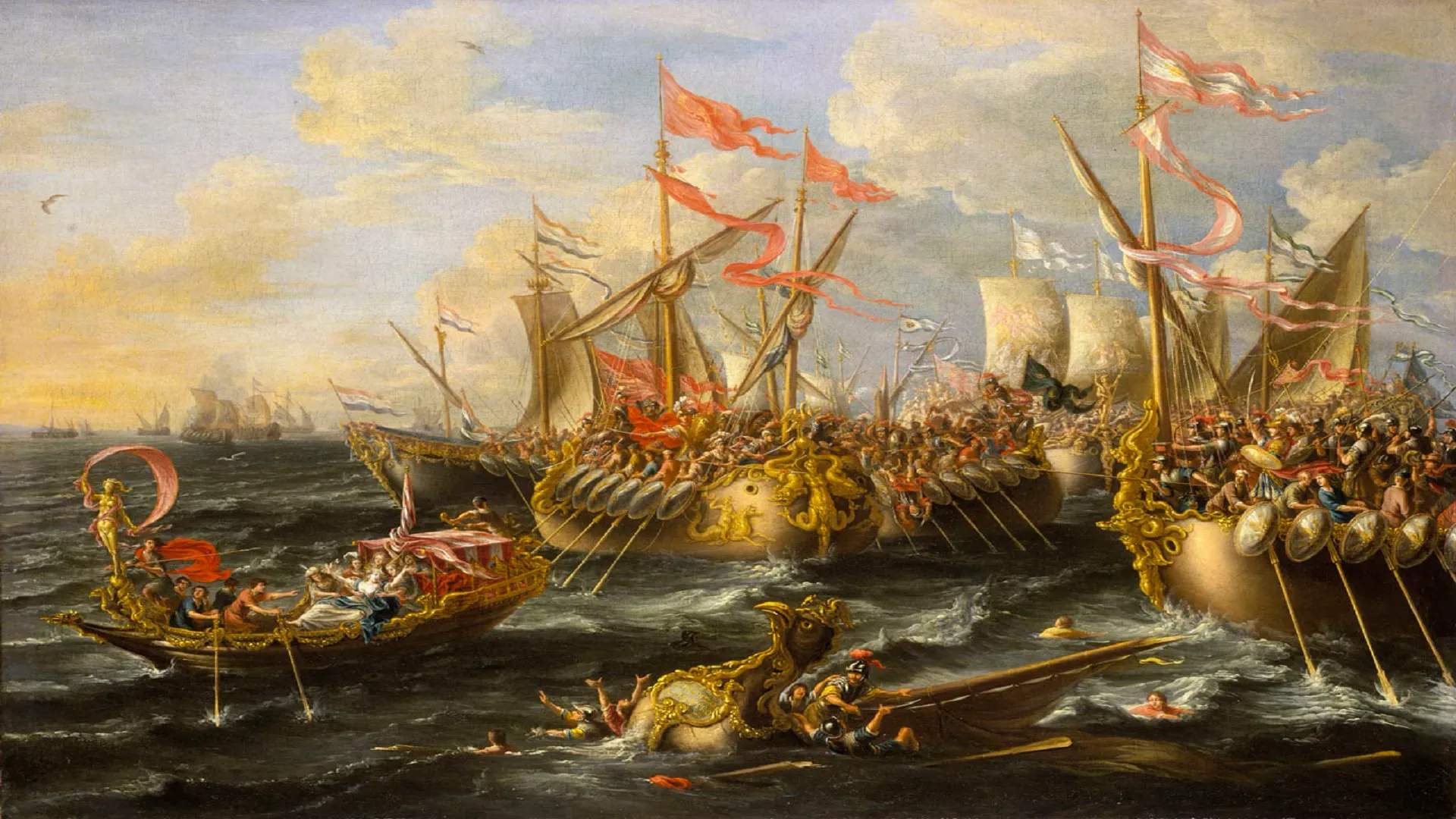
Antonio aveva concentrato in Grecia un'armata enorme: 500 navi da guerra (di cui 200 pesanti decemreme e ottoreme, le più grandi mai costruite nell'antichità) e 100.000 fanti con 12.000 cavalieri. Le navi pesanti erano fortezze galleggianti: torri sui ponti, catapulte, archieri, equipaggi di 400–600 uomini ciascuna. Erano pensate per combattimento di abbordaggio, non di manovra. La flotta egiziana di Cleopatra contribuiva con 60 navi e tutto il tesoro reale dell'Egitto. Era una potenza militare apparentemente invincibile.
Antony had concentrated in Greece an enormous army: 500 warships (of which 200 heavy decaremes and octeremes, the largest ever built in antiquity) and 100,000 infantry with 12,000 cavalry. The heavy ships were floating fortresses: towers on the decks, catapults, archers, crews of 400–600 men each. They were designed for boarding combat, not manoeuvre. Cleopatra's Egyptian fleet contributed 60 ships and the entire royal treasury of Egypt. It was a seemingly invincible military force.
Ottaviano aveva meno: 400 navi, ma di tipo radicalmente diverso. Erano liburniche, agili, leggere, costruite sul modello dei pirati illirici della Liburnia: bireme con prua bassa, equipaggi di 80 uomini, costruite per la velocità e per il combattimento di manovra. Le legioni di terra erano 80.000 fanti e 12.000 cavalieri. La vera arma di Ottaviano però era un uomo: il suo amico d'infanzia Marco Vipsanio Agrippa, ammiraglio di genio, che aveva sviluppato per la flotta di Ottaviano nuove tattiche e un'arma chiave: l'harpax, un arpione lanciato da catapulta che si conficcava nello scafo nemico e lo trascinava sotto attacco.
Octavian had less: 400 ships, but of a radically different type. They were liburnae, agile, light, built on the model of the Illyrian pirates of Liburnia: biremes with low bows, crews of 80 men, built for speed and manoeuvre combat. The land legions were 80,000 infantry and 12,000 cavalry. Octavian's real weapon, however, was one man: his childhood friend Marcus Vipsanius Agrippa, a genius admiral who had developed new tactics for Octavian's fleet and a key weapon: the harpax, a harpoon launched from catapult that drove into the enemy hull and dragged it under attack.
03L'Andamento della BattagliaThe Course of the Battle
La campagna era cominciata male per Antonio. Ottaviano aveva sbarcato l'esercito in Epiro nei primi mesi del 31 a.C. e si era fortificato a nord di Azio, sull'Adriatico. Agrippa aveva intanto operato sul mare: con la sua flotta veloce aveva preso isole strategiche (Methone, Leucade, Patrasso) e bloccato le rotte di rifornimento alla flotta di Antonio, ancorata nel golfo di Ambracia. Per quattro mesi, fra giugno e settembre, l'esercito di Antonio fu progressivamente affamato: niente cibo dall'Egitto, niente rinforzi, defezioni continue di legati e re clienti che passavano dalla parte di Ottaviano. La malaria e la dissenteria decimavano gli equipaggi.
The campaign had begun badly for Antony. Octavian had landed his army in Epirus in the early months of 31 BC and fortified north of Actium, on the Adriatic. Agrippa meanwhile had operated at sea: with his fast fleet he had taken strategic islands (Methone, Leucas, Patras) and blocked supply routes to Antony's fleet, anchored in the Gulf of Ambracia. For four months, between June and September, Antony's army was progressively starved: no food from Egypt, no reinforcements, continuous defections of legates and client kings switching to Octavian's side. Malaria and dysentery decimated the crews.
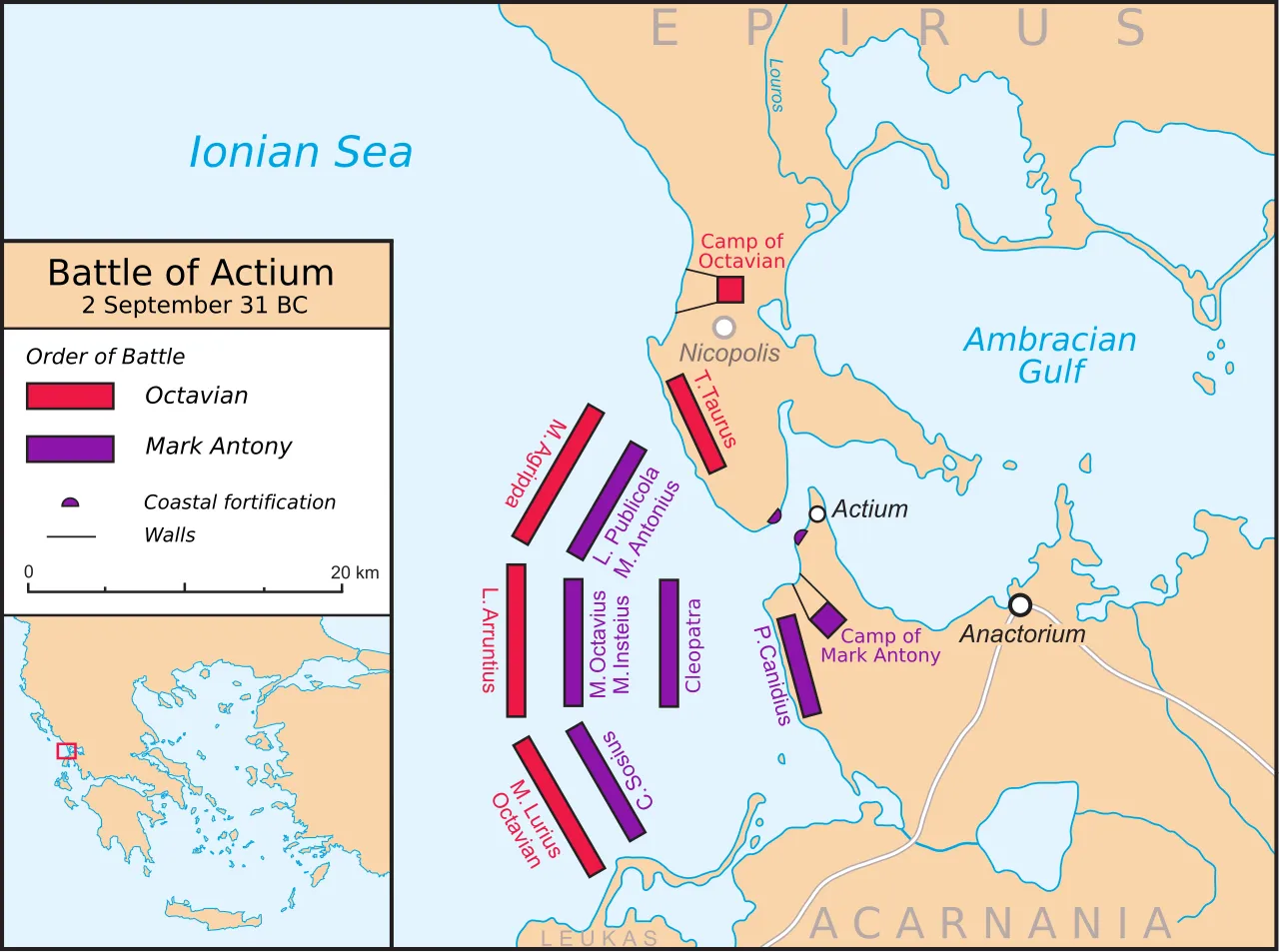
Antonio aveva due opzioni: ritirarsi via terra in Asia, abbandonando la flotta; o forzare la battaglia navale. Cleopatra spinse per la seconda opzione, la sua flotta egiziana e il tesoro reale erano lì, non potevano essere abbandonati. Antonio cedette. Il 2 settembre 31 a.C., le navi di Antonio uscirono dal golfo di Ambracia in formazione di battaglia. La flotta di Agrippa attendeva al largo, due chilometri più a nord. Per quattro ore i due schieramenti si guardarono: Antonio sperava di attirare Agrippa nelle acque strette del golfo, dove le sue navi pesanti avrebbero avuto un vantaggio; Agrippa rifiutava di entrare. Era uno stallo psicologico.
Antony had two options: retreat by land into Asia, abandoning the fleet; or force the naval battle. Cleopatra pushed for the second option: her Egyptian fleet and the royal treasury were there, they could not be abandoned. Antony yielded. On 2 September 31 BC, Antony's ships left the Gulf of Ambracia in battle formation. Agrippa's fleet waited offshore, two kilometres further north. For four hours the two formations watched each other: Antony hoped to lure Agrippa into the narrow waters of the gulf, where his heavy ships would have an advantage; Agrippa refused to enter. It was a psychological stalemate.
Verso mezzogiorno, il vento da nord-ovest si levò . Era il momento decisivo. Antonio capì che doveva attaccare prima che il vento spingesse le sue navi pesanti contro la costa. Diede ordine di avanzare. Le decemremi cominciarono a navigare verso le liburniche di Agrippa. Ottaviano e Agrippa, in superiorità di velocità , si tennero a distanza, evitando l'abbordaggio diretto, lanciando catapulte incendiarie e harpax. Le navi di Antonio, una a una, presero fuoco. Sulle navi che riuscivano ad avvicinarsi, gli equipaggi di Agrippa si concentravano attorno con due o tre liburniche, attaccando da più lati come tonni intorno a una balena.
Around noon, the north-westerly wind rose. It was the decisive moment. Antony understood he had to attack before the wind drove his heavy ships against the coast. He ordered the advance. The decaremes began sailing towards Agrippa's liburnae. Octavian and Agrippa, with the speed advantage, kept their distance, avoiding direct boarding, launching incendiary catapults and harpaxes. Antony's ships, one by one, caught fire. Around the ships that managed to close in, Agrippa's crews swarmed with two or three liburnae, attacking from multiple sides like tuna around a whale.
Mentre la battaglia infuriava, accadde qualcosa che gli storici antichi non hanno mai del tutto chiarito. Cleopatra, alla testa delle sue 60 navi egiziane in retroguardia, alzò le vele, cosa che nessuno faceva durante una battaglia navale, e fuggì verso sud, verso l'Egitto. La sua squadra portò con sé il tesoro reale. Antonio, vedendo la fuga, abbandonò il combattimento, salì su una piccola nave veloce e seguì la regina. Era una decisione fatale: il suo esercito di terra (100.000 uomini), le sue legioni in formazione attorno al golfo, le sue navi rimanenti, tutto fu abbandonato. Il combattimento navale si concluse poco dopo: alcune navi si arresero, altre furono affondate, l'esercito di terra di Antonio (lasciato senza comandante per giorni) capì che la guerra era persa e si arrese senza colpo ferire una settimana dopo. Diciannove legioni passarono a Ottaviano.
As the battle raged, something happened that ancient historians never fully clarified. Cleopatra, at the head of her 60 Egyptian ships in the rear guard, raised sail, something nobody did during a naval battle, and fled south, towards Egypt. Her squadron took with it the royal treasury. Antony, seeing the flight, abandoned the fight, boarded a small fast ship, and followed the queen. It was a fatal decision: his land army (100,000 men), his legions in formation around the gulf, his remaining ships, everything was abandoned. The naval battle ended shortly after: some ships surrendered, others were sunk, Antony's land army (left without commander for days) understood the war was lost and surrendered without fighting a week later. Nineteen legions went over to Octavian.
04Le TatticheThe Tactics
Azio fu una battaglia di tipologie navali contrastanti. Antonio aveva costruito una flotta su modello ellenistico-cartaginese: navi grandi, pesantemente armate, pensate per il combattimento di abbordaggio frontale, ereditando la dottrina che aveva portato Roma a vincere la Prima Guerra Punica due secoli e mezzo prima. Era una scelta logica per la sua tradizione tattica: cariche frontali, pesantezza, peso d'urto. Ma era una flotta vecchia, costruita per uno scenario navale che non esisteva più .
Actium was a battle of contrasting naval typologies. Antony had built a fleet on a Hellenistic-Carthaginian model: large ships, heavily armed, designed for frontal boarding combat, inheriting the doctrine that had brought Rome to victory in the First Punic War two and a half centuries earlier. It was a logical choice for his tactical tradition: frontal charges, weight, impact mass. But it was an old fleet, built for a naval scenario that no longer existed.
Agrippa, invece, aveva ripensato la guerra navale. La sua dottrina era una combinazione di tre principi. Primo: velocità e manovra. Le liburniche, con la loro velocità di crociera del 30% superiore alle navi pesanti, potevano scegliere il momento e il luogo dell'attacco, evitando l'abbordaggio. Secondo: armi a distanza. Catapulte incendiarie, frecce piombate, e l'harpax: un arpione lanciato da una balestra pesante, con una corda di canapa rinforzata di ferro. Una volta conficcato nella nave nemica, la corda veniva avvolta in un argano, trascinando la nave sotto attacco. Era una variazione tecnologica del corvus della Prima Punica, ma a distanza. Terzo: circoscrizione di gruppo. Tre o più liburniche concentravano il fuoco su una nave pesante, attaccandola da poppa, prua e fianchi simultaneamente.
Agrippa, however, had rethought naval warfare. His doctrine was a combination of three principles. First: speed and manoeuvre. The liburnae, with their cruising speed 30% higher than heavy ships, could choose the time and place of attack, avoiding boarding. Second: ranged weapons. Incendiary catapults, leaded arrows, and the harpax: a harpoon launched from a heavy ballista, with an iron-reinforced hemp rope. Once driven into the enemy ship, the rope was wound onto a winch, dragging the ship under attack. It was a technological variation of the First Punic War corvus, but at distance. Third: group surrounding. Three or more liburnae concentrated fire on a single heavy ship, attacking it from stern, bow, and flanks simultaneously.
Sul piano strategico, l'errore di Antonio fu uno solo: cercare di vincere la battaglia che Cesare aveva vinto a Farsalo, copiando la sua scelta della battaglia decisiva. Ma le condizioni erano diverse. A Farsalo, Cesare era affamato; ad Azio, Antonio era affamato. A Farsalo, Cesare aveva veterani disciplinati; ad Azio, Antonio aveva un'armata multinazionale di clienti. A Farsalo, Cesare aveva tempo dalla sua parte; ad Azio, il tempo lavorava per Ottaviano. Antonio applicò la dottrina del suo maestro Cesare in una situazione che richiedeva l'opposto: Pompeo, non Cesare. Avrebbe dovuto attendere, logorare Ottaviano via terra, ritirarsi in Egitto e costruire da lì una nuova base. Ma Cleopatra non glielo permise.
Strategically, Antony's mistake was one: trying to win the battle Caesar had won at Pharsalus, copying his choice of decisive engagement. But conditions were different. At Pharsalus, Caesar was hungry; at Actium, Antony was hungry. At Pharsalus, Caesar had disciplined veterans; at Actium, Antony had a multinational army of clients. At Pharsalus, Caesar had time on his side; at Actium, time worked for Octavian. Antony applied the doctrine of his teacher Caesar in a situation that demanded the opposite: Pompey, not Caesar. He should have waited, worn down Octavian by land, retreated to Egypt and built a new base from there. But Cleopatra would not allow it.
Resta il mistero della fuga di Cleopatra. Le interpretazioni sono tre. Tradimento: Cleopatra aveva concordato segretamente con Ottaviano la propria salvezza in cambio dell'abbandono del marito (improbabile: a Roma fu poi imprigionata e si suicidò). Panico: vedendo la flotta perdere, prese una decisione personale di salvare il tesoro e fuggire. Piano premeditato: la fuga era stata concordata con Antonio come piano B: usare la battaglia come copertura per evacuare il tesoro reale e ricostruire poi una difesa in Egitto. Quest'ultima è l'interpretazione moderna più accreditata, ma resta speculativa. Comunque sia, Cleopatra raggiunse Alessandria; Antonio la seguì ; Ottaviano arrivò in Egitto pochi mesi dopo, nel 30 a.C., e l'epilogo fu inevitabile.
The mystery of Cleopatra's flight remains. Interpretations are three. Betrayal: Cleopatra had secretly agreed with Octavian on her own safety in exchange for abandoning her husband (improbable: she was later imprisoned in Rome and committed suicide). Panic: seeing the fleet losing, she made a personal decision to save the treasury and flee. Premeditated plan: the flight had been agreed with Antony as plan B: use the battle as cover to evacuate the royal treasury and then rebuild a defence in Egypt. The latter is the most accredited modern interpretation, but remains speculative. In any case, Cleopatra reached Alexandria; Antony followed; Octavian arrived in Egypt a few months later, in 30 BC, and the epilogue was inevitable.
« Ben presto li trovi, in fuga: lui che era stato il signore d'Oriente, lei che era stata signora dei due regni. E videro l'una di fronte all'altro la terra promessa.» « Soon you find them in flight: he who had been lord of the East, she who had been mistress of two kingdoms. And they saw the promised land facing each other.» — Properzio, Elegie III, 11 (su Antonio e Cleopatra)
05Le ConseguenzeThe Consequences
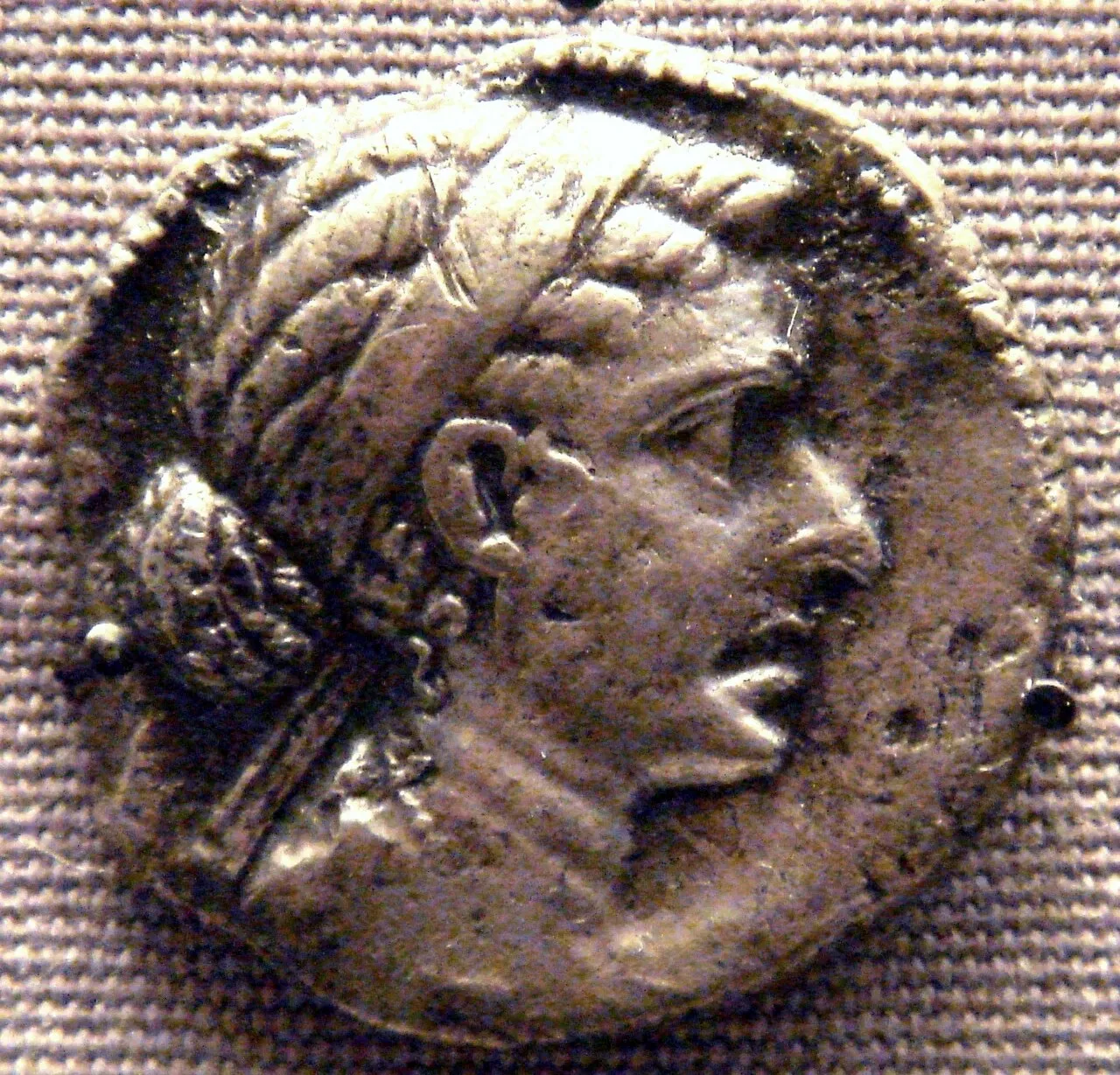
Nell'estate del 30 a.C., Ottaviano sbarcò in Egitto. Antonio cercò di organizzare l'ultima resistenza fuori da Alessandria, ma fu sconfitto in una piccola battaglia il 1° agosto. Riportò la falsa notizia che Cleopatra era morta (lei si era rifugiata nel suo mausoleo) e si suicidò gettandosi sulla spada. Morì tra le braccia di Cleopatra, alla quale fu portato. Pochi giorni dopo, capendo che Ottaviano voleva farla sfilare in catene durante il trionfo a Roma, Cleopatra si suicidò con un asp velenoso secondo la leggenda, più probabilmente con un veleno noto. Aveva 39 anni. Cesarione, suo figlio quindicenne con Cesare e potenziale erede legittimo, fu giustiziato da Ottaviano sulla strada per Berenice. La dinastia tolemaica, che governava l'Egitto da trecento anni, era estinta.
In the summer of 30 BC, Octavian landed in Egypt. Antony tried to organise the last resistance outside Alexandria, but was defeated in a small battle on 1 August. He received the false news that Cleopatra was dead (she had taken refuge in her mausoleum) and committed suicide by throwing himself on his sword. He died in Cleopatra's arms, to whom he was carried. A few days later, understanding that Octavian wanted to parade her in chains during the triumph at Rome, Cleopatra committed suicide with a venomous asp according to legend, more probably with a known poison. She was 39. Caesarion, her fifteen-year-old son with Caesar and potential legitimate heir, was executed by Octavian on the road to Berenice. The Ptolemaic dynasty, which had ruled Egypt for three hundred years, was extinct.
L'Egitto divenne provincia personale dell'imperatore (non del senato), governata da un prefetto equestre. Era una mossa rivoluzionaria: l'Egitto era il granaio di Roma e la provincia più ricca dell'impero. Mantenerne il controllo personale significò che Augusto possedeva direttamente la chiave alimentare e finanziaria dell'impero: nessun senatore poteva minacciarlo affamando Roma. Sarebbe stato il modello: l'Egitto rimase provincia imperiale per tutto il principato.
Egypt became a personal province of the emperor (not the senate), governed by an equestrian prefect. It was a revolutionary move: Egypt was Rome's granary and the empire's richest province. Keeping it under personal control meant Augustus owned directly the food and financial key of the empire: no senator could threaten him by starving Rome. It would be the model: Egypt remained an imperial province throughout the principate.
Il 16 gennaio 27 a.C., in senato, Ottaviano restituì teatralmente i poteri straordinari ricevuti durante la guerra civile. Era una restaurazione fittizia: il senato, in cambio, gli conferi titoli e poteri permanenti che lo facevano in tutto e per tutto un monarca, salvo nel nome. Gli fu attribuito il titolo di Augusto: "il consacrato", il "venerabile". Quel giorno nasceva il Principato. La forma della Repubblica era preservata (ci sarebbero stati ancora consoli, pretori, tribuni della plebe, comizi) ma la sostanza era cambiata: un solo uomo decideva guerra e pace, finanze e leggi, comandi militari e nomine.
On 16 January 27 BC, in the senate, Octavian theatrically returned the extraordinary powers received during the civil war. It was a fictitious restoration: the senate, in exchange, conferred upon him permanent titles and powers that made him in all respects a monarch, except in name. He was given the title of Augustus: "the consecrated", the "venerable". On that day the Principate was born. The form of the Republic was preserved (there would still be consuls, praetors, plebeian tribunes, assemblies) but the substance had changed: one man decided war and peace, finances and laws, military commands and appointments.
Per il Mediterraneo, Azio chiuse il ciclo delle guerre civili romane. Dal 133 a.C. (assassinio di Tiberio Gracco) al 31 a.C., un secolo intero era stato consumato da scontri interni: Mario contro Silla, Cesare contro Pompeo, i triumviri contro i tirannicidi, Ottaviano contro Antonio. Cinque generazioni di romani avevano conosciuto solo la guerra civile. Da Azio in poi, per oltre due secoli, l'Impero conobbe la Pax Romana: una pace imperiale, certo, fatta di soggezione delle province, ma anche di stabilità agricola, prosperità commerciale, urbanizzazione massiccia, costruzione di strade e acquedotti che ancora oggi attraversano l'Europa. La fine della libertà politica fu il prezzo della pace.
For the Mediterranean, Actium closed the cycle of Roman civil wars. From 133 BC (Tiberius Gracchus's assassination) to 31 BC, an entire century had been consumed by internal struggles: Marius against Sulla, Caesar against Pompey, triumvirs against tyrannicides, Octavian against Antony. Five generations of Romans had known only civil war. From Actium on, for over two centuries, the Empire enjoyed the Pax Romana: an imperial peace, of course, made of provincial subjection, but also of agricultural stability, commercial prosperity, massive urbanisation, construction of roads and aqueducts that still cross Europe today. The end of political freedom was the price of peace.
Virgilio, nato pochi anni prima della guerra civile cesariana, dedicò all'Eneide i suoi ultimi dieci anni di vita. Il suo poema epico è in profondità un'esaltazione del regno di Augusto: Enea, fuggito da Troia in fiamme, fonda dopo cento avventure il popolo destinato a governare il mondo. Sullo scudo di Enea, descritto nel libro VIII, Virgilio incise una scena della battaglia di Azio: in mezzo, Augusto guidava la sua flotta contro Antonio e Cleopatra, accompagnato dagli dei della Roma tradizionale, mentre dalla parte avversa "il latrante Anubi" e gli dei mostruosi dell'Egitto fuggivano. Era propaganda raffinata: Azio non era solo una battaglia: era la vittoria della civiltà mediterranea contro la barbarie orientale, dell'ordine contro il caos, della Roma eterna contro l'effimero.
Virgil, born a few years before the Caesarian civil war, devoted his last ten years to the Aeneid. His epic poem is in depth a celebration of Augustus's reign: Aeneas, fleeing burning Troy, founds after a hundred adventures the people destined to rule the world. On Aeneas's shield, described in book VIII, Virgil engraved a scene of the battle of Actium: in the centre, Augustus led his fleet against Antony and Cleopatra, accompanied by the gods of traditional Rome, while on the opposite side "barking Anubis" and the monstrous gods of Egypt fled. It was refined propaganda: Actium was not just a battle, it was the victory of Mediterranean civilisation against Eastern barbarism, of order against chaos, of eternal Rome against the ephemeral.