01Biografia e Ascesa con CesareBiography and Rise with Caesar
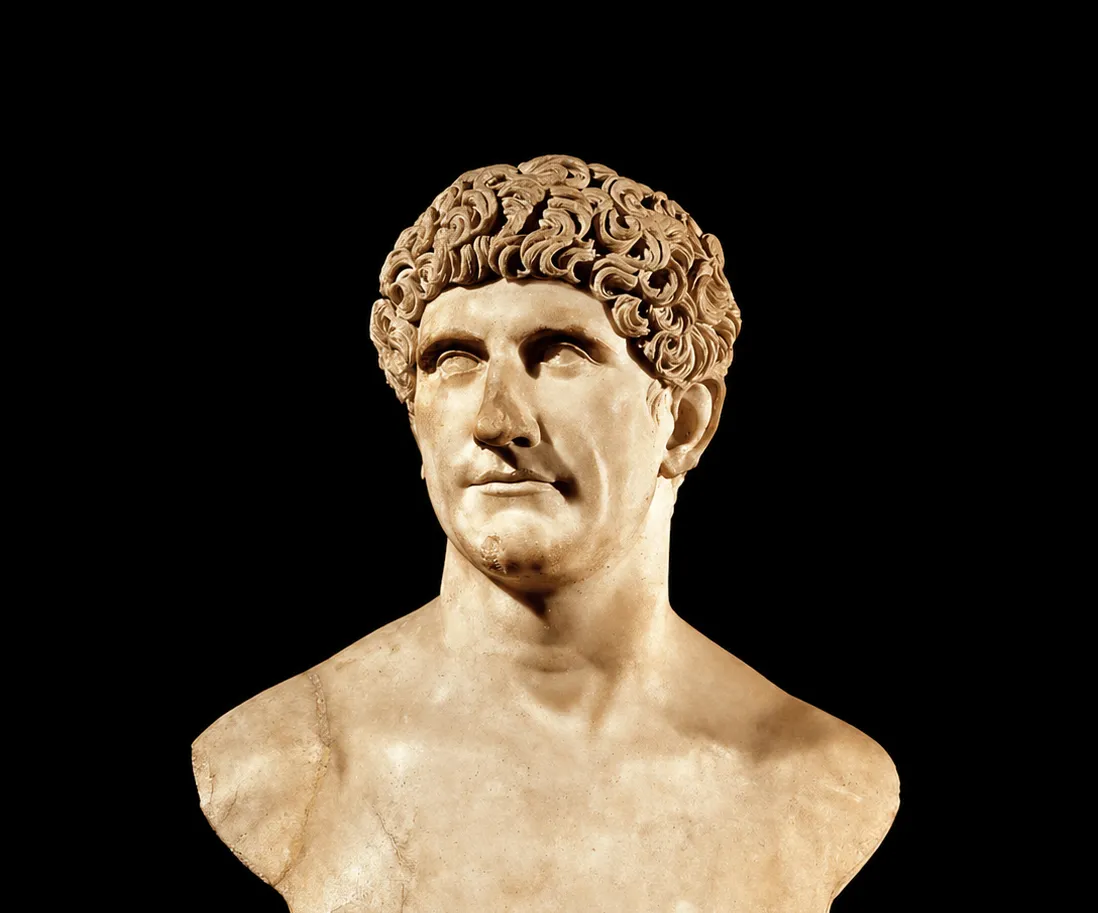
Marco Antonio nacque intorno all'83 a.C. da una famiglia patrizia romana di illustre ma turbolenta tradizione. Il nonno era stato il grande oratore Marco Antonio, uno dei maestri cui si era formato Cicerone, poi vittima delle proscrizioni di Mario. Il padre era morto giovane nella guerra contro i pirati cretesi, lasciando la famiglia in ristrettezze. Adolescente spericolato, Marco Antonio trascorse i suoi anni giovanili tra debiti, alcol e amicizie pericolose, una vita dissoluta che avrebbe inseguito la sua reputazione per sempre, alimentando sia l'ammirazione della truppa sia il disprezzo dell'aristocrazia senatoria.
Mark Antony was born around 83 BC into a patrician Roman family of illustrious but turbulent tradition. His grandfather was the great orator Marcus Antonius: one of the masters under whom Cicero had trained, later a victim of Marian proscriptions. His father died young in the war against Cretan pirates, leaving the family in financial straits. A reckless adolescent, Mark Antony spent his early years amid debts, alcohol, and dangerous friendships, a dissolute life that would shadow his reputation forever, fueling both the troops' admiration and the senatorial aristocracy's contempt.
La svolta arrivò con il servizio militare in Oriente e poi in Gallia sotto Giulio Cesare, di cui divenne uno dei luogotenenti più fidati e audaci. Era uno stratega istintivo, capace di ispirare devozione fanatica nei soldati grazie alla sua fisicità imponente, alla sua capacità di condividere le fatiche della truppa e alla generosità elargita con le mani larghe. Cesare lo nominò suo magister equitum (maestro della cavalleria, la carica più alta dopo il dittatore) e lo tenne costantemente al suo fianco nelle fasi cruciali della guerra civile. Era Marco Antonio a comandare l'ala sinistra a Farsalo; era lui a governare l'Italia mentre Cesare combatteva in Africa e Spagna.
The turning point came with military service in the East and then in Gaul under Julius Caesar, whose most trusted and audacious lieutenant he became. He was an instinctive strategist, capable of inspiring fanatical devotion in soldiers through his imposing physique, his ability to share the troops' hardships, and his generosity dispensed with open hands. Caesar appointed him his magister equitum (master of the horse, the highest office after the dictator) and kept him constantly at his side during the crucial phases of the civil war. It was Mark Antony who commanded the left wing at Pharsalus; it was he who governed Italy while Caesar fought in Africa and Spain.
Nel febbraio del 44 a.C., durante la festa dei Lupercali, Antonio fu protagonista di una scena che Roma non avrebbe dimenticato. Correndo seminudo tra la folla come uno dei sacerdoti luperci, si avvicinò per tre volte a Cesare, assiso sui Rostri in veste trionfale, e per tre volte gli porse un diadema intrecciato d'alloro, l'insegna dei re. Per tre volte Cesare lo respinse, e a ogni rifiuto la folla esplodeva in applausi di sollievo. Era una prova, una messinscena calcolata per saggiare l'umore del popolo verso la monarchia: e il popolo rispose che non voleva un re. Quel gesto, ambiguo e teatrale, legò per sempre il nome di Antonio all'aspirazione regale di Cesare, e diede ai congiurati l'ultima conferma di cui avevano bisogno.
In February 44 BC, during the festival of the Lupercalia, Antony played the lead in a scene Rome would not forget. Running half-naked through the crowd as one of the Luperci priests, he approached Caesar three times, enthroned on the Rostra in triumphal dress, and three times held out to him a diadem wreathed in laurel, the emblem of kings. Three times Caesar pushed it away, and at each refusal the crowd burst into applause of relief. It was a test, a calculated piece of theatre to gauge the people's mood toward monarchy: and the people answered that they wanted no king. That gesture, ambiguous and theatrical, bound Antony's name forever to Caesar's royal aspiration, and gave the conspirators the final confirmation they needed.
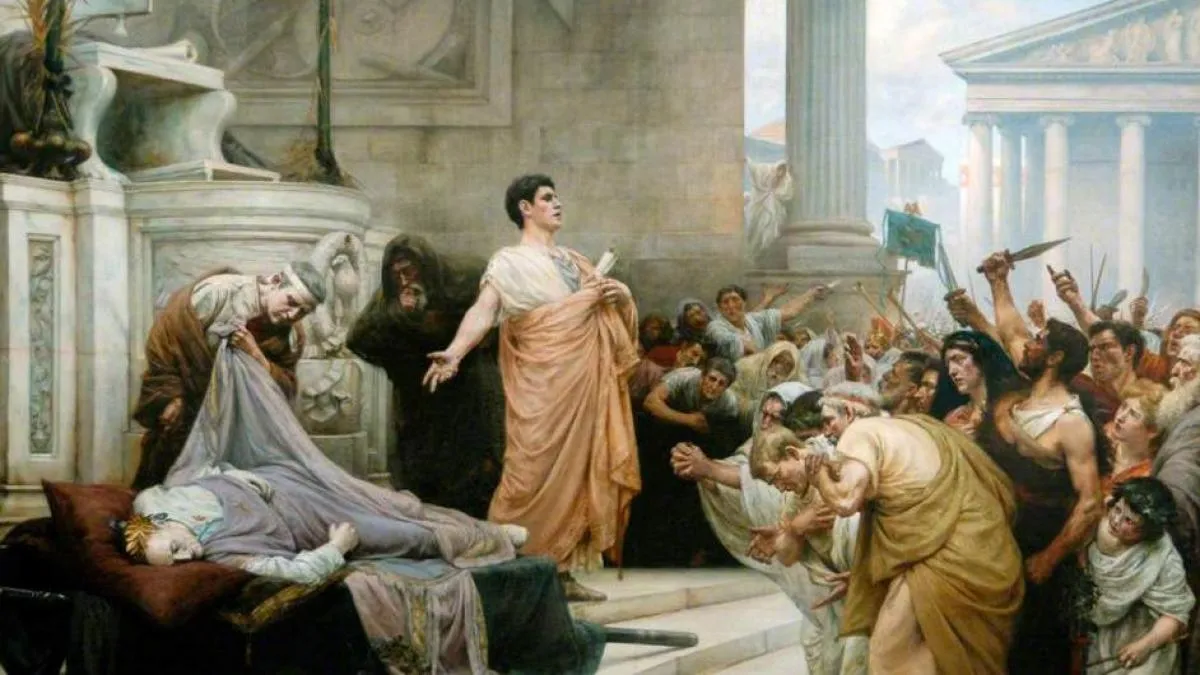
Alle Idi di Marzo del 44 a.C., Marco Antonio era console e condivideva il potere con Cesare. Quando Cesare cadde, si trovava nell'atrio del Teatro di Pompeo: i congiurati lo avevano separato da Cesare di proposito, temendo la sua reazione. Nei giorni immediatamente seguenti, Antonio agì con straordinaria abilità politica. Al funerale di Cesare, pronunciò l'orazione funebre, resa immortale da Shakespeare, che trasformò la folla in una plebaglia furiosa, costringendo i congiurati a fuggire da Roma. Ottenne accesso al testamento e ai fondi di Cesare. Sembrò per un momento l'erede naturale del potere cesariano.
On the Ides of March, 44 BC, Mark Antony was consul and shared power with Caesar. When Caesar fell, he was in the vestibule of the Theater of Pompey: the conspirators had deliberately separated him from Caesar, fearing his reaction. In the days immediately following, Antony acted with extraordinary political skill. At Caesar's funeral, he delivered the eulogy, immortalized by Shakespeare, that turned the crowd into a furious mob, forcing the conspirators to flee Rome. He obtained access to Caesar's will and funds. For a moment he appeared the natural heir to Caesarian power.
02Il Triumvirato e CleopatraThe Triumvirate and Cleopatra
L'arrivo di Ottaviano, il diciannovenne figlio adottivo di Cesare, complicò i piani di Antonio. I due si odiarono quasi subito, ma la necessità politica li spinse ad allearsi con Lepido nel Secondo Triumvirato (43 a.C.), ratificato ufficialmente dalla lex Titia. La prima azione del triumvirato fu una delle più atroci della storia romana: le proscrizioni. Migliaia di nomi (tra cui quello di Cicerone, richiesto personalmente da Antonio per vendicare le Filippiche) furono consegnati ai sicari. Il bottino dei beni confiscati finanziò la guerra contro i cesaricidi.
The arrival of Octavian, the nineteen-year-old adoptive son of Caesar, complicated Antony's plans. The two almost immediately despised each other, but political necessity drove them to ally with Lepidus in the Second Triumvirate (43 BC), officially ratified by the lex Titia. The triumvirate's first action was one of the most atrocious in Roman history: the proscriptions. Thousands of names (among them Cicero's, personally requested by Antony to avenge the Philippics) were handed to assassins. The proceeds from confiscated property financed the war against Caesar's murderers.
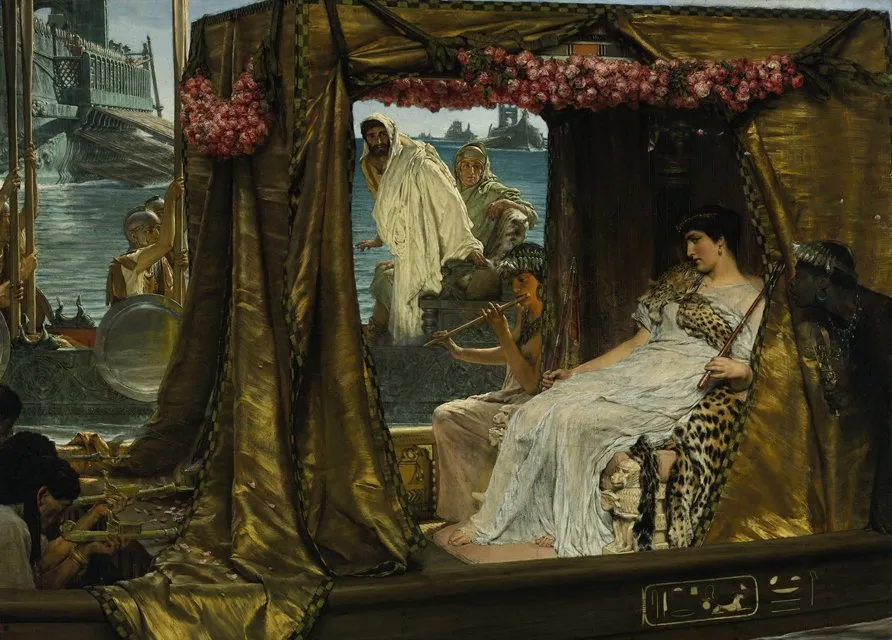
Dopo la vittoria a Filippi (42 a.C.), dove i cesaricidi Bruto e Cassio furono sconfitti e si suicidarono, il mondo romano fu diviso: Ottaviano prese l'Occidente, Marco Antonio l'Oriente, la parte più ricca e culturalmente avanzata dell'Impero. Era la parte che Antonio voleva. Si stabilì ad Alessandria d'Egitto, dove incontrò Cleopatra VII, già amante di Cesare, madre di Cesarione, che lo accolse sulla sua nave in vesti di Afrodite. La loro unione fu politica e sentimentale al tempo stesso: Cleopatra aveva bisogno della protezione di Roma, Antonio aveva bisogno dell'oro egiziano per finanziare le sue campagne contro i Parti.
After the victory at Philippi (42 BC), where the Caesaricides Brutus and Cassius were defeated and committed suicide, the Roman world was divided: Octavian took the West, Mark Antony the East, the richer and culturally more advanced part of the Empire. It was the part Antony wanted. He settled in Alexandria, Egypt, where he met Cleopatra VII, already Caesar's lover, mother of Caesarion, who received him on her barge dressed as Aphrodite. Their union was political and romantic simultaneously: Cleopatra needed Rome's protection, Antony needed Egyptian gold to finance his campaigns against the Parthians.
Per qualche anno Alessandria fu il cuore del suo mondo. Antonio e Cleopatra fondarono una società di piaceri che chiamarono, con sontuosa ironia, gli «Inimitabili Viventi»: notti di banchetti, travestimenti e fughe per le strade della città. Ma l'Oriente non era soltanto lusso. Nel 36 a.C. Antonio lanciò la grande spedizione contro i Parti che doveva eguagliare le imprese di Alessandro e vendicare la disfatta di Crasso a Carre. Fu un disastro: tradito da un alleato armeno, sorpreso dall'inverno sugli altopiani, perse le macchine d'assedio e poi, in una ritirata di oltre cinquecento chilometri, decine di migliaia di uomini per fame, freddo e gli arcieri a cavallo che gli mordevano i fianchi. Tornò con un terzo dell'esercito in meno e con la propria leggenda d'invincibilità incrinata per sempre.
For a few years Alexandria was the heart of his world. Antony and Cleopatra founded a society of pleasure they called, with sumptuous irony, the “Inimitable Livers”: nights of banquets, disguises and escapades through the city streets. But the East was not only luxury. In 36 BC Antony launched the great expedition against the Parthians that was to equal the deeds of Alexander and avenge Crassus's catastrophe at Carrhae. It was a disaster: betrayed by an Armenian ally, caught by winter on the highlands, he lost his siege train and then, in a retreat of more than five hundred kilometres, tens of thousands of men to hunger, cold and the horse-archers harrying his flanks. He returned with a third of his army gone and his legend of invincibility cracked forever.
Ebbero tre figli: i gemelli Alessandro Helios e Cleopatra Selene, e il piccolo Tolomeo Filadelfo. Nel 34 a.C. Antonio compì il gesto che avrebbe definitivamente alienato l'opinione pubblica romana: le Donazioni di Alessandria. In una cerimonia pubblica, distribuì enormi territori romani a Cleopatra e ai suoi figli, nominando Cesarione co-governatore d'Egitto con il titolo di "Re dei Re". A Roma, Ottaviano trasformò questa cerimonia in propaganda devastante: Antonio stava regalando i possedimenti romani a una regina straniera, si stava prostituendo all'Oriente, stava tradendo Roma.
They had three children: twins Alexander Helios and Cleopatra Selene, and little Ptolemy Philadelphus. In 34 BC, Antony committed the act that would definitively alienate Roman public opinion: the Donations of Alexandria. In a public ceremony, he distributed vast Roman territories to Cleopatra and her children, naming Caesarion co-ruler of Egypt with the title "King of Kings." In Rome, Octavian turned this ceremony into devastating propaganda: Antony was giving away Roman possessions to a foreign queen, was prostituting himself to the East, was betraying Rome.
03La Battaglia di Azio e la FineThe Battle of Actium and the End
- 32 a.C. La rottura definitiva con Ottaviano — Antonio divorziò dalla moglie Ottavia (sorella di Ottaviano, che aveva sposato per ragioni politiche) e sposò formalmente Cleopatra secondo il rito egiziano. Fu l'atto che Ottaviano aspettava: dichiarò guerra non ad Antonio, che era ancora formalmente un cittadino romano, ma a Cleopatra, regina straniera. Così inquadrò lo scontro non come guerra civile ma come guerra di difesa di Roma contro l'Oriente. The final break with Octavian — Antony divorced his wife Octavia (Octavian's sister, whom he had married for political reasons) and formally married Cleopatra according to Egyptian rite. It was the act Octavian had been waiting for: he declared war not on Antony, still formally a Roman citizen, but on Cleopatra, a foreign queen. This framed the confrontation not as civil war but as Rome's defensive war against the East.
- 2 settembre 31 a.C. Battaglia di Azio — La flotta di Antonio e Cleopatra incontrò quella di Ottaviano e Agrippa al largo del promontorio di Azio, nel Mar Ionio. La battaglia fu combattuta per ore con esito incerto, finché Cleopatra, con le sue sessanta navi da guerra egiziane, fuggì verso sud, di ritorno in Egitto. Antonio la seguì abbandonando la sua flotta e la sua fanteria. I soldati e le navi rimasti, abbandonati dal loro comandante, si arresero o furono annientati. Fu una disfatta totale, non solo militare ma morale. Battle of Actium — Antony and Cleopatra's fleet met that of Octavian and Agrippa off the promontory of Actium, in the Ionian Sea. The battle was fought for hours with uncertain outcome, until Cleopatra, with her sixty Egyptian warships, fled southward, back toward Egypt. Antony followed, abandoning his fleet and his infantry. The soldiers and ships left behind, deserted by their commander, surrendered or were annihilated. It was a total defeat, not just military but moral.
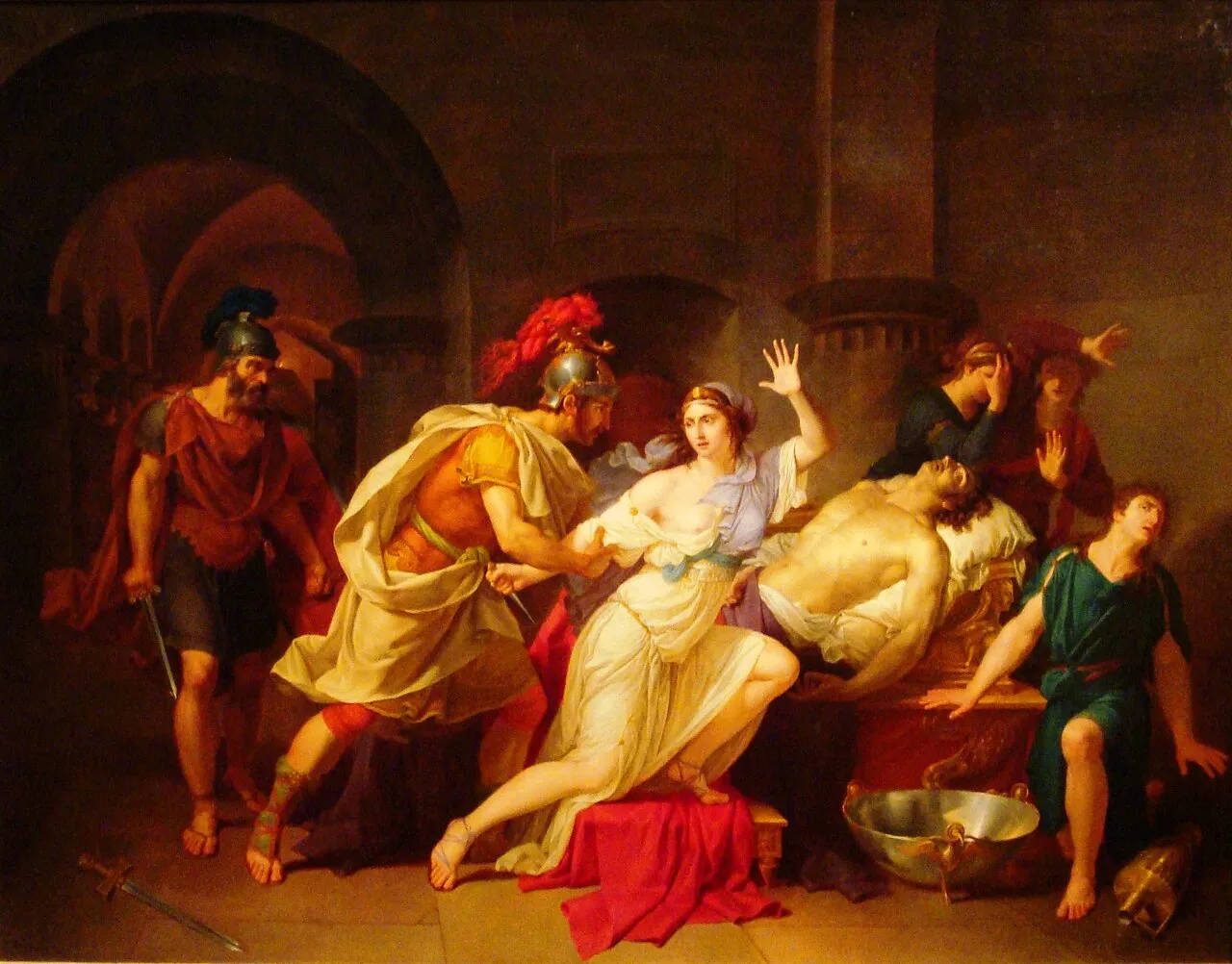
- 30 a.C. La resa di Alessandria e la morte — Ottaviano avanzò sull'Egitto. Le truppe di Antonio si sbandarono. Cleopatra si rinchiuse nel suo mausoleo e fece diffondere la falsa notizia della propria morte. Antonio, credendola morta, si gettò sulla spada. Ferito ma non ancora morto, fu portato al mausoleo dove Cleopatra era ancora viva: morì tra le sue braccia il 1° agosto del 30 a.C. Cleopatra, rifiutandosi di essere portata in trionfo a Roma da Ottaviano, si suicidò pochi giorni dopo, probabilmente con il morso di un aspide. Con loro finì l'ultima dinastia faraonica. The fall of Alexandria and the death — Octavian advanced on Egypt. Antony's troops scattered. Cleopatra locked herself in her mausoleum and spread the false news of her own death. Antony, believing her dead, fell on his sword. Wounded but not yet dead, he was carried to the mausoleum where Cleopatra was still alive: he died in her arms on August 1, 30 BC. Cleopatra, refusing to be paraded in triumph through Rome by Octavian, committed suicide a few days later, probably through the bite of an asp. With them ended the last pharaonic dynasty.
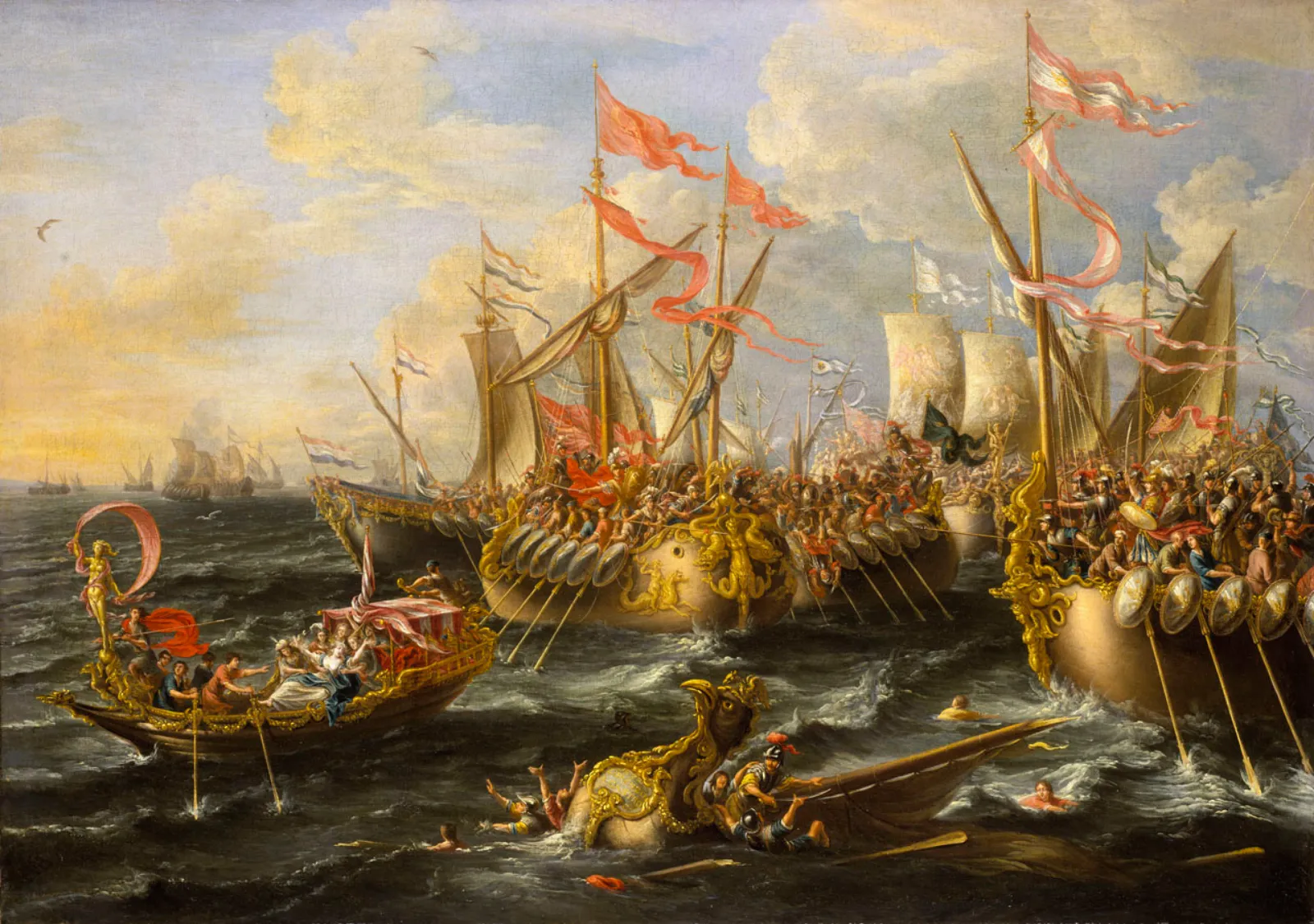
Dietro la fuga di Azio si nascondeva una guerra già perduta nei mesi precedenti. Marco Vipsanio Agrippa, l'ammiraglio di Ottaviano, aveva strappato una a una le basi navali greche e tagliato le rotte dei rifornimenti: nell'accampamento di Antonio, stretto in una baia malsana, dilagavano la malaria e la fame, e i rematori morivano o disertavano a migliaia. Quando le due flotte si affrontarono, il 2 settembre del 31 a.C., Antonio aveva già dovuto bruciare le navi che non poteva più equipaggiare. La fuga di Cleopatra e il suo inseguimento non furono forse un capriccio amoroso, ma l'unico tentativo di salvare il tesoro e una parte della flotta da una trappola ormai chiusa. La leggenda della passione che acceca il guerriero nacque dopo, nelle officine della propaganda di Ottaviano.
Behind the flight at Actium lay a war already lost in the preceding months. Marcus Vipsanius Agrippa, Octavian's admiral, had torn away the Greek naval bases one by one and cut the supply routes: in Antony's camp, hemmed into an unhealthy bay, malaria and hunger spread, and rowers died or deserted by the thousand. By the time the two fleets met, on 2 September 31 BC, Antony had already been forced to burn the ships he could no longer crew. Cleopatra's flight and his pursuit of her were perhaps no amorous whim, but the one attempt to save the treasury and part of the fleet from a trap that had already closed. The legend of passion blinding the warrior was born afterwards, in the workshops of Octavian's propaganda.
04L'EreditàThe Legacy
La storia ha trattato Marco Antonio con ambivalenza. I suoi contemporanei romani che scrissero su di lui erano quasi tutti ostili: Cicerone nelle Filippiche lo dipinse come un ubriaco dissoluto e un tiranno assetato di potere; la propaganda augustea lo trasformò nell'uomo che aveva quasi consegnato Roma all'Egitto per amore di una regina straniera. Plutarco, nelle Vite Parallele, lo accostò a Demetrio Poliorcete: due uomini di immenso talento, divorati dai propri eccessi.
History has treated Mark Antony with ambivalence. His Roman contemporaries who wrote about him were almost all hostile: Cicero in the Philippics portrayed him as a dissolute drunkard and power-hungry tyrant; Augustan propaganda turned him into the man who had almost handed Rome to Egypt for love of a foreign queen. Plutarch, in the Parallel Lives, paired him with Demetrius Poliorcetes: two men of immense talent, devoured by their own excesses.
Eppure i fatti militari raccontano un'altra storia. Marco Antonio fu uno dei più capaci generali romani della sua generazione: a Filippi la vittoria fu in larga parte sua; le campagne orientali, pur con il disastro della spedizione partica del 36 a.C., rivelano un comandante di talento alle prese con condizioni impossibili. Il suo vero errore fu politico: nelle donazioni di Alessandria regalò a Ottaviano la narrativa della guerra. Non perse per debolezza, ma per la superiorità propagandistica del rivale.
Yet the military facts tell another story. Mark Antony was one of the most capable Roman generals of his generation: at Philippi the victory was largely his; the eastern campaigns, despite the disaster of the 36 BC Parthian expedition, reveal a talented commander grappling with impossible conditions. His true error was political: in the Donations of Alexandria he handed Octavian the narrative of the war. He did not lose through weakness, but through his rival's propagandistic superiority.
C'è infine un'ironia che la storia riserva ai vinti. Marco Antonio, l'uomo che Ottaviano cancellò dalla memoria pubblica con la damnatio, divenne attraverso le figlie il capostipite della dinastia che avrebbe governato Roma per quasi un secolo. Dalla sua unione con Ottavia nacque Antonia Minore, madre dell'imperatore Claudio e nonna di Caligola; per altra via il suo sangue scorreva anche nelle vene di Nerone. I figli avuti da Cleopatra furono risparmiati e cresciuti proprio da Ottavia: Cleopatra Selene divenne regina di Mauretania al fianco di Giuba II. Così il nemico giurato di Augusto, sconfitto e diffamato, finì per essere antenato di quasi tutti gli imperatori giulio-claudii che vennero dopo di lui.
There is, finally, an irony that history reserves for the defeated. Mark Antony, the man Octavian erased from public memory with damnatio, became through his daughters the forefather of the dynasty that would rule Rome for nearly a century. From his union with Octavia was born Antonia the Younger, mother of the emperor Claudius and grandmother of Caligula; by another line his blood ran also in the veins of Nero. The children he had by Cleopatra were spared and raised by Octavia herself: Cleopatra Selene became queen of Mauretania alongside Juba II. Thus the sworn enemy of Augustus, defeated and defamed, ended as the ancestor of almost every Julio-Claudian emperor who came after him.
Shakespeare immortalò lui e Cleopatra come il prototipo della passione tragica che distrugge l'ambizione politica: Antony and Cleopatra (1606–07) è forse la più grande storia d'amore della letteratura occidentale. In essa Antonio è contemporaneamente grande e meschino, nobile e vile, amante e guerriero, un uomo che scelse consapevolmente il cuore invece del potere e ne pagò il prezzo con la vita. Quella scelta, reale o mitica che fosse, lo rese immortale.
Shakespeare immortalized him and Cleopatra as the prototype of tragic passion destroying political ambition: Antony and Cleopatra (1606–07) is perhaps the greatest love story in Western literature. In it, Antony is simultaneously great and petty, noble and base, lover and warrior, a man who consciously chose heart over power and paid for it with his life. That choice, real or mythical, made him immortal.