01Il Senatore SoldatoThe Soldier Senator
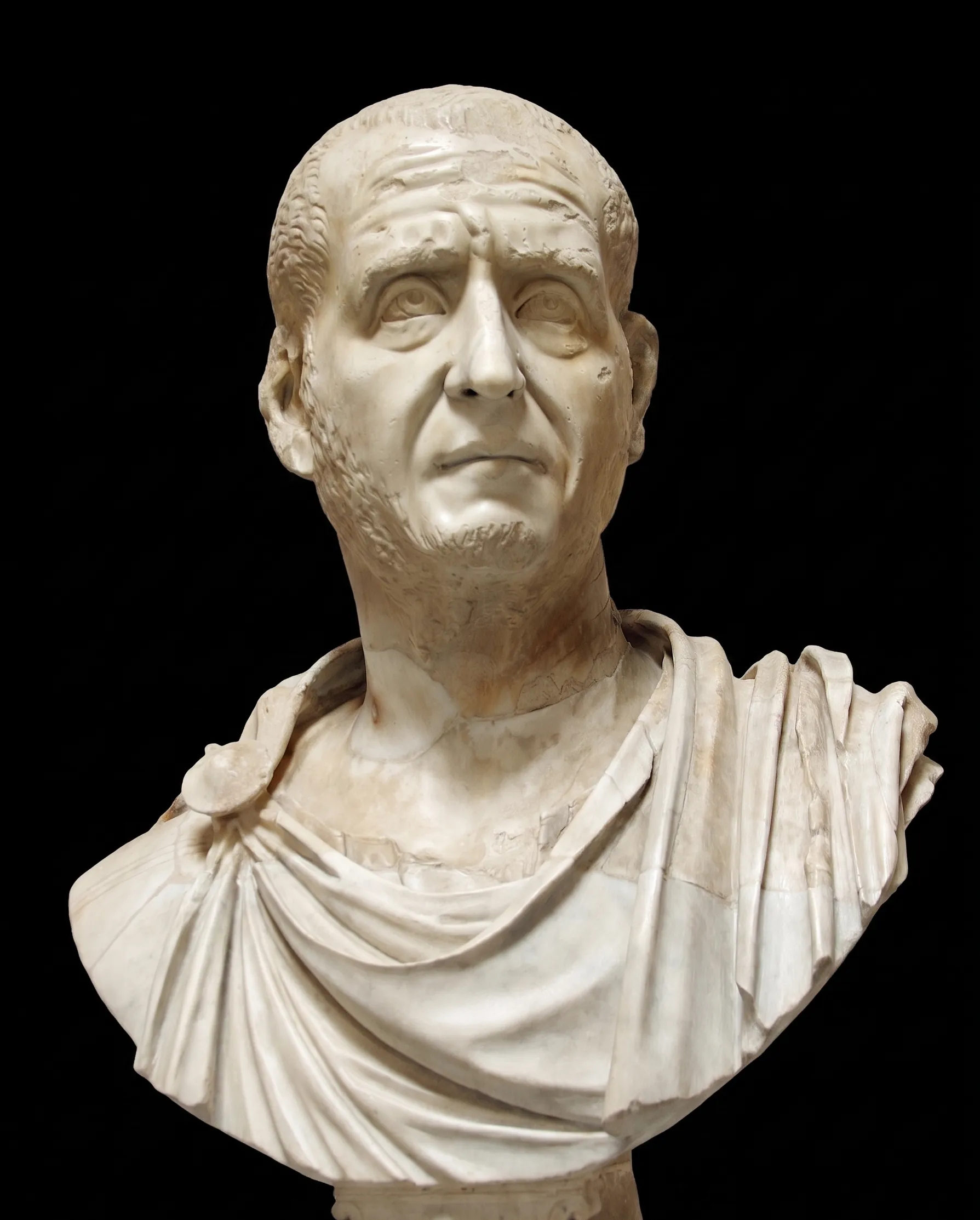
Gaio Messio Quinto Decio era nato in Pannonia da famiglia di rango equestre, aveva percorso la carriera senatoria ed era diventato uno dei generali più stimati dell'esercito. Filippo l'Arabo lo aveva mandato sul Danubio a sedare la ribellione di Pacaziano nel 249, una missione che finì con le legioni danubiane che acclamavano Decio stesso come imperatore. Decio preferiva non accettare la proclamazione, ma non aveva scelta. Marciò verso ovest, sconfisse e uccise Filippo a Verona nell'autunno del 249, e divenne imperatore. Era un uomo di vecchio stampo: tradizionalista, ammiratore della Roma repubblicana, convinto che la crisi dell'impero fosse causata dall'abbandono degli antichi dei.
Gaius Messius Quintus Decius was born in Pannonia to an equestrian family, had followed the senatorial career and had become one of the army's most respected generals. Philip the Arab had sent him to the Danube to suppress Pacatianus's rebellion in 249, a mission that ended with the Danubian legions acclaiming Decius himself as emperor. Decius preferred not to accept the proclamation, but had no choice. He marched westward, defeated and killed Philip at Verona in autumn 249, and became emperor. He was a man of the old school: traditionalist, admirer of Republican Rome, convinced that the empire's crisis was caused by abandonment of the ancient gods.
Da Budalia a RomaFrom Budalia to Rome
Decio nacque verso il 201 d.C. a Budalia, presso Sirmio in Pannonia Inferiore (l'odierna Sremska Mitrovica, Serbia). La famiglia, di rango equestre romanizzata da almeno due generazioni, possedeva latifondi sul Danubio: si chiamava di nome completo Gaio Messio Quinto Decio Valeriano. Studiò retorica a Roma, sposò una donna dell'alta aristocrazia romana: Erennia Cupressenia Etruscilla, di sangue antico, e da lei ebbe due figli, Erennio Etrusco e Ostiliano. Nel 232 era stato console suffetto, nel 235 governatore di Mesia Inferiore, nel 238 prefetto urbano di Roma sotto Pupieno e Balbino. Fu uno dei pochi senatori che riuscì a vivere fra Massimino il Trace e Filippo l'Arabo senza essere ucciso: la sua reputazione di moderazione e competenza militare lo rendeva indispensabile.
Decius was born around 201 AD at Budalia, near Sirmium in Lower Pannonia (modern Sremska Mitrovica, Serbia). The family, of equestrian rank Romanized for at least two generations, owned estates on the Danube: his full name was Gaius Messius Quintus Decius Valerianus. He studied rhetoric in Rome, married a woman of high Roman aristocracy: Herennia Cupressenia Etruscilla, of ancient blood, and by her had two sons, Herennius Etruscus and Hostilian. In 232 he had been suffect consul, in 235 governor of Lower Moesia, in 238 prefect of Rome under Pupienus and Balbinus. He was one of the few senators who managed to survive between Maximinus Thrax and Philip the Arab without being killed: his reputation for moderation and military competence made him indispensable.
Il Soprannome «Traianus»The «Traianus» Nickname
Dopo l'acclamazione del 249, Decio fece aggiungere alla propria titolatura il cognomen «Traianus» — diventando ufficialmente Imperator Caesar Caius Messius Quintus Trajanus Decius Augustus. Era un'autoinvestitura simbolica esplicita: voleva richiamare il grande imperatore conquistatore della Dacia, originario anche lui del Danubio. Le sue monete celebrarono GENIVS EXERCITVS ILLYRICIANI, «Il Genio dell'Esercito Illirico», affermando il primato delle legioni danubiane come centro dell'impero. Era la prima volta che un imperatore proclamava apertamente il proprio esercito d'origine come élite costituzionale di Roma.
After the 249 acclamation, Decius had the cognomen «Traianus» added to his titulature, becoming officially Imperator Caesar Caius Messius Quintus Trajanus Decius Augustus. It was an explicit symbolic self-investiture: he wanted to recall the great conqueror of Dacia, also originally from the Danube. His coins celebrated GENIVS EXERCITVS ILLYRICIANI, «The Genius of the Illyrian Army», affirming the primacy of the Danubian legions as the empire's center. It was the first time an emperor openly proclaimed his own home army as the constitutional élite of Rome.
02L'Editto e la PersecuzioneThe Edict and the Persecution
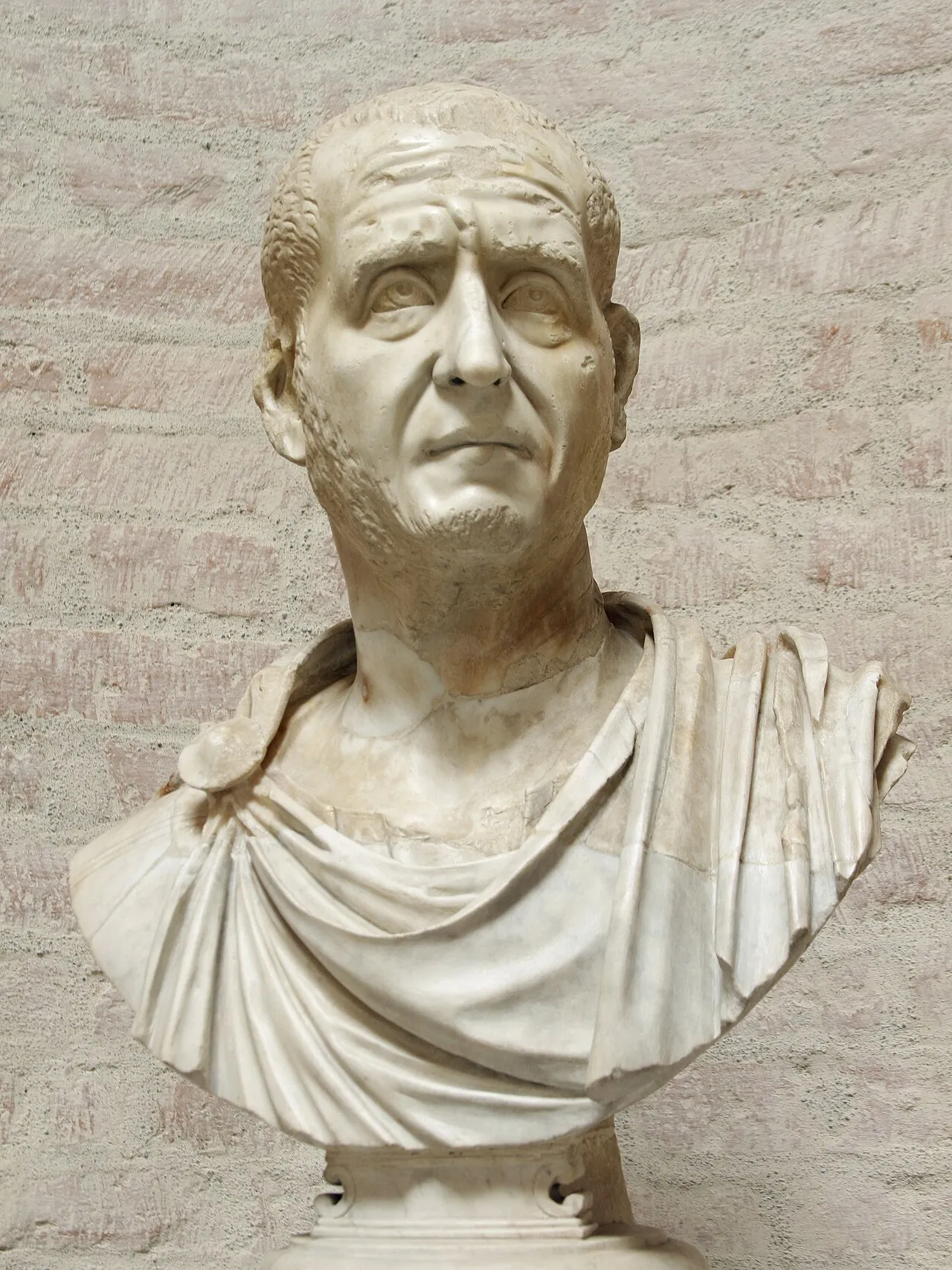
- 250 d.C.L'Editto di Decio — Ordinò che tutti i cittadini dell'impero offrissero sacrifici agli dei romani e ne ottenessero un certificato scritto (libellus). Era la prima persecuzione sistematica dei cristiani nella storia romana: non mirava specificamente ai cristiani, ma chiunque si rifiutasse di sacrificare era perseguito. I cristiani erano l'unico gruppo che si rifiutava in massa. Il papa Fabiano fu martirizzato; il papa Cornelio eletto in seguito soffì sull'esilio. Cipriano di Cartagine si nascose.The Edict of Decius — He ordered that all citizens of the empire offer sacrifices to the Roman gods and obtain a written certificate (libellus). It was the first systematic persecution of Christians in Roman history: it did not specifically target Christians, but anyone who refused to sacrifice was prosecuted. Christians were the only group that refused en masse. Pope Fabian was martyred; Pope Cornelius elected subsequently suffered exile. Cyprian of Carthage went into hiding.
- 250–251 d.C.La crisi gotica — Mentre Decio gestiva le persecuzioni in Occidente, la situazione sul Danubio peggiorava. I Goti di Cniva avevano attraversato il limes romano, saccheggiato le province di Mesia e Tracia, e ora minacciavano la città di Nicopolis. Decio si spostò verso est per affrontarli.The Gothic crisis — While Decius was managing the persecutions in the West, the situation on the Danube was worsening. Cniva's Goths had crossed the Roman limes, plundered the provinces of Moesia and Thrace, and now threatened the city of Nicopolis. Decius moved east to confront them.
03La Battaglia di AbrittoThe Battle of Abritus
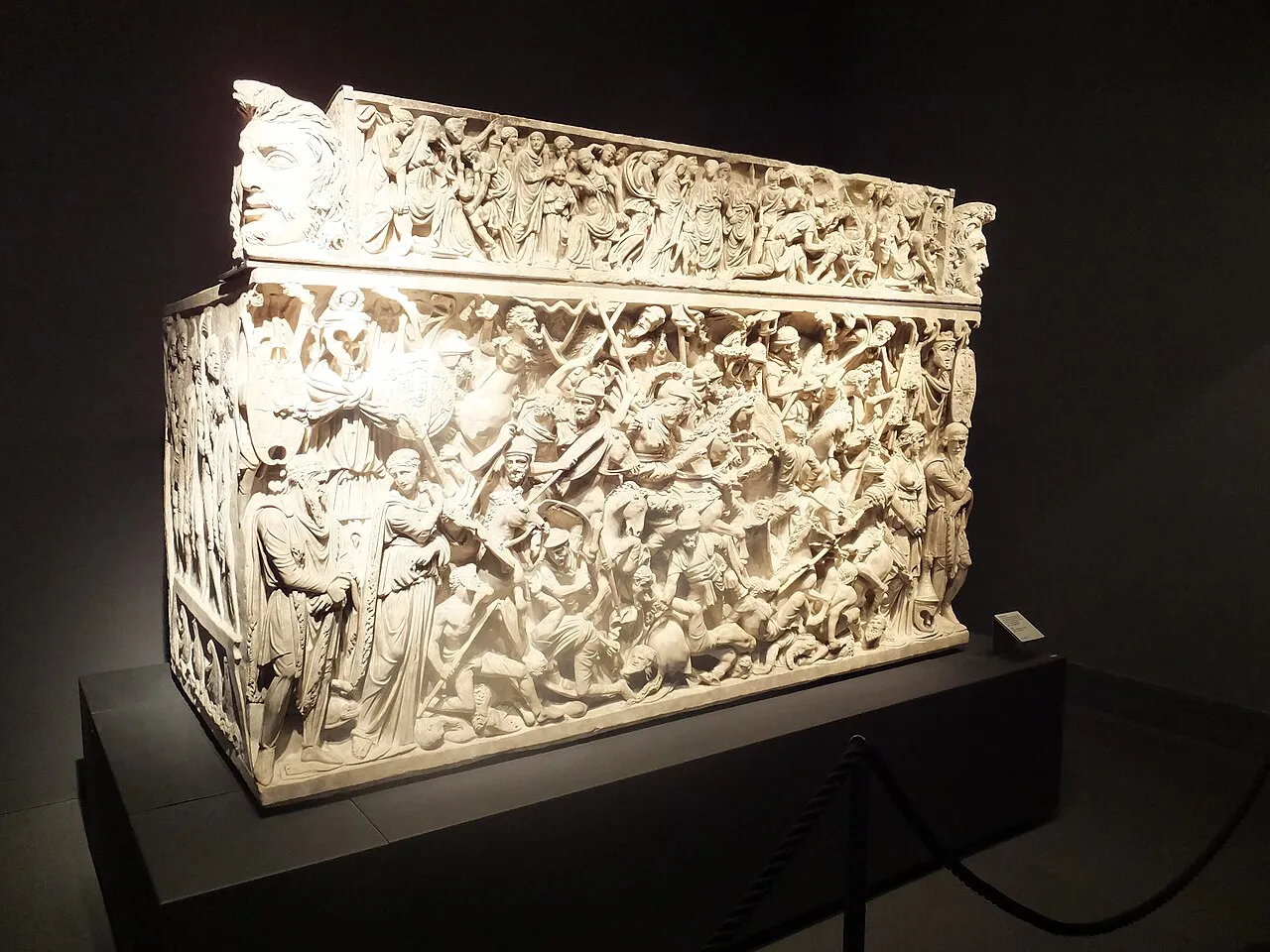
Nel giugno del 251 Decio inseguì i Goti nella regione paludosa di Abritto (Mesia inferiore, odierna Bulgaria settentrionale). Cniva condusse i Romani in una trappola: l'avanguardia romana, guidata dal figlio di Decio Erennio Etrusco, fu attaccata e Erennio fu ucciso da una freccia. Si dice che Decio abbia risposto: "Che la morte di un solo soldato non turbi nessuno, la perdita di uno non è un gran danno per lo Stato". Ma fu una frase pronunciata in un momento disperato: quando l'esercito romano inseguì i Goti nel terreno paludoso, fu circondato e distrutto. Decio morì combattendo : il suo corpo non fu mai trovato, probabilmente inghiottito dalle paludi. Era il primo imperatore romano nella storia dell'Impero a essere ucciso da un nemico straniero. Treboniano Gallo, il generale che era rimasto indietro, negoziò una pace con i Goti e fu proclamato imperatore.
In June 251 Decius pursued the Goths into the swampy region of Abritus (Lower Moesia, modern northern Bulgaria). Cniva led the Romans into a trap: the Roman vanguard, led by Decius's son Herennius Etruscus, was attacked and Herennius was killed by an arrow. Decius is said to have responded: "Let the death of one soldier disturb no one, the loss of one is no great damage to the State." But it was a phrase spoken in a desperate moment: when the Roman army chased the Goths into the swampy terrain, it was surrounded and destroyed. Decius died fighting: his body was never found, probably swallowed by the swamps. He was the first Roman emperor in the Empire's history to be killed by a foreign enemy. Trebonianus Gallus, the general who had hung back, negotiated peace with the Goths and was proclaimed emperor.
La Trappola delle PaludiThe Swamp Trap
Cniva, comandante dei Goti, era uno stratega di rara abilità. Per anni, secondo Giordane (Getica, XVIII), aveva studiato il terreno paludoso intorno ad Abritto: una pianura di canneti acquitrinosi attraversata da banche di terra solida nascoste sotto la vegetazione. I Goti, abituati al terreno, sapevano dove camminare; i Romani no. La fanteria pesante delle legioni, con i loro scuti e le corazze metalliche, sprofondò appena lasciò il sentiero. Le frecce gote, scoccate dalle alture circostanti, falciarono i veterani romani uno per uno. Zosimo, fonte tarda ma probabilmente attendibile, riporta che Treboniano Gallo, comandante della riserva, non intervenne, e fu sospettato di tradimento. Le fonti moderne (Pat Southern, David Potter) ritengono il sospetto plausibile.
Cniva, commander of the Goths, was a strategist of rare ability. For years, according to Jordanes (Getica, XVIII), he had studied the swampy terrain around Abritus: a plain of marshy reedbeds crossed by banks of solid earth hidden under vegetation. The Goths, accustomed to the terrain, knew where to walk; the Romans did not. The legions' heavy infantry, with their shields and metal armor, sank as soon as it left the path. Gothic arrows, shot from the surrounding heights, mowed down the Roman veterans one by one. Zosimus, a late but probably reliable source, reports that Trebonianus Gallus, commander of the reserve, did not intervene, and was suspected of treason. Modern sources (Pat Southern, David Potter) consider the suspicion plausible.
Il Primato FunestoThe Grim First
Decio fu il primo imperatore romano della storia ad essere ucciso in battaglia da un esercito straniero. Un primato negativo che fra il 251 e il 378 d.C. si sarebbe ripetuto solo una volta, con Valeriano (260, catturato vivo dai Sasanidi) e Valente (378, ucciso ad Adrianopoli dai Goti). Tre imperatori in 130 anni che muoiono davanti al nemico, là dove in tre secoli (27 a.C., 251 d.C.) nessuno era caduto sul campo. Sulla scia di questa rottura rituale e simbolica, gli stessi confini dell'Impero cominciarono a sembrare permeabili. Lattanzio (De mortibus persecutorum, IV), autore cristiano, vide nella sua morte il castigo divino per la persecuzione dell'anno precedente.
Decius was the first Roman emperor in history to be killed in battle by a foreign army. A negative first that between 251 and 378 AD would only be repeated twice, with Valerian (260, captured alive by the Sasanians) and Valens (378, killed at Adrianople by the Goths). Three emperors in 130 years dying before the enemy, where in three centuries (27 BC, 251 AD) none had fallen on the field. In the wake of this ritual and symbolic rupture, the very borders of the Empire began to seem permeable. Lactantius (De mortibus persecutorum, IV), Christian author, saw in his death the divine punishment for the previous year's persecution.
Eredità StoriograficaHistoriographical Legacy
L'imperatrice Etruscilla e il figlio superstite Ostiliano rimasero a Roma sotto la protezione di Treboniano Gallo, ma Ostiliano morì pochi mesi dopo, probabilmente di peste, forse avvelenato. Etruscilla sparì dalle fonti dopo il 252. Decio fu divinizzato dal Senato sotto la pressione popolare, e il suo ricordo restò positivo malgrado il disastro di Abritto: per l'Historia Augusta fu «princeps optimus», per Aurelio Vittore «vir egregius virtutibus, sed temporum infelicitate oppressus» — un uomo di virtù eccellenti, ma schiacciato dalla sfortuna del proprio tempo. Per gli storici contemporanei (David Potter The Roman Empire at Bay, 2004; Pat Southern The Roman Empire from Severus to Constantine, 2001), il regno di Decio segna il punto in cui la crisi diventa irreversibile: Goti che attraversano il Danubio, peste che inizia a diffondersi (la cosiddetta «peste di Cipriano», 250–270), imperatore caduto in battaglia. Tutto ciò che caratterizzerà i successivi trent'anni di anarchia militare era già lì, in nuce, sotto Decio.
Empress Etruscilla and the surviving son Hostilian remained in Rome under the protection of Trebonianus Gallus, but Hostilian died a few months later, probably of plague, perhaps poisoned. Etruscilla disappeared from sources after 252. Decius was deified by the Senate under popular pressure, and his memory remained positive despite the Abritus disaster: for the Historia Augusta he was «princeps optimus», for Aurelius Victor «vir egregius virtutibus, sed temporum infelicitate oppressus» — a man of excellent virtues, but crushed by the misfortune of his own time. For contemporary historians (David Potter The Roman Empire at Bay, 2004; Pat Southern The Roman Empire from Severus to Constantine, 2001), Decius's reign marks the point at which the crisis becomes irreversible: Goths crossing the Danube, plague beginning to spread (the so-called «plague of Cyprian», 250–270), emperor fallen in battle. Everything that would characterize the next thirty years of military anarchy was already there, in nuce, under Decius.