01BiografiaBiography
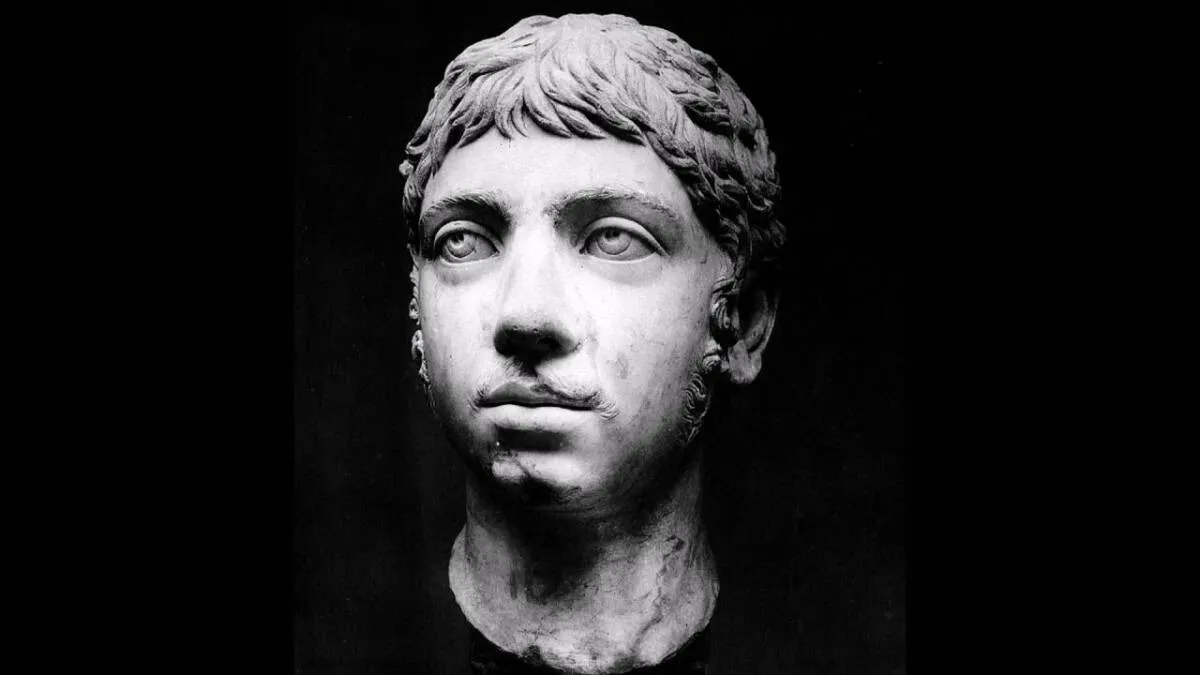
Vario Avito Bassiano era nipote di Giulia Mesa, sorella dell'imperatrice Giulia Domna. Quando Macrino salì al potere dopo l'assassinio di Caracalla, Giulia Mesa promosse la voce che il ragazzo fosse il figlio illegittimo di Caracalla. Il giovane era sacerdote del dio solare siriano Elagabal nel tempio di Emesa, da cui derivò il suo soprannome. L'esercito d'Oriente, fedele alla memoria dei Severi, si rivoltò contro Macrino e proclamò imperatore il quattordicenne nel 218.
Varius Avitus Bassianus was the grandson of Julia Maesa, sister of empress Julia Domna. When Macrinus came to power after Caracalla's assassination, Julia Maesa spread the rumor that the boy was Caracalla's illegitimate son. The young man was a priest of the Syrian sun god Elagabal in the temple at Emesa, from which his nickname derived. The Eastern army, loyal to the memory of the Severans, revolted against Macrinus and proclaimed the fourteen-year-old emperor in 218.
Il Sacerdote-Bambino di EmesaThe Child-Priest of Emesa
Vario Avito nacque intorno al 203/204 d.C. a Emesa (l'odierna Homs, Siria), figlio di Giulia Soemia e del console Sesto Vario Marcello. La sua famiglia materna deteneva da generazioni il sommo sacerdozio del dio Elagabal, divinità tutelare della città, rappresentata da una pietra conica nera di origine meteorica conservata nel tempio cittadino. Erodiano, testimone diretto, racconta che già a 14 anni Vario Avito presiedeva i riti dell'estasi solare: «ballava attorno agli altari al suono di flauti, sistri e timpani, vestito di sete porpora e oro». La sua bellezza adolescenziale, e i suoi elaborati costumi sacerdotali, attiravano i soldati della Legio III Gallica acquartierata a Raphana: gli stessi soldati che lo proclameranno Augusto.
Varius Avitus was born around 203/204 AD at Emesa (modern Homs, Syria), son of Julia Soemias and the consul Sextus Varius Marcellus. His maternal family had held for generations the high priesthood of the god Elagabal, tutelary deity of the city, represented by a black conical stone of meteoric origin preserved in the city temple. Herodian, a direct witness, recounts that already at 14 Varius Avitus presided over the rites of solar ecstasy: «he danced around the altars to the sound of flutes, sistra and timpani, dressed in purple silks and gold». His adolescent beauty, and his elaborate priestly costumes, attracted the soldiers of the Legio III Gallica quartered at Raphana: the same soldiers who would proclaim him Augustus.
La Marcia su RomaThe March on Rome
Dopo la vittoria su Macrino a Imma (8 giugno 218), Elagabalo trascorse l'inverno ad Antiochia, poi quello del 218–219 a Nicomedia, dove svernò scandalizzando i senatori che vi si recavano in ambasceria. Solo nell'autunno del 219 entrò a Roma. Inviò prima un proprio ritratto al Senato per «prepararlo» psicologicamente: lo si vedeva in vesti sacerdotali siriache, con turbante e braghe ricamate, intento al sacrificio. Cassio Dione racconta che il quadro fu accolto in Senato con «un silenzio simile alla paura». L'ingresso a Roma fu trionfale ma stravagante: il giovane Augusto si presentò a piedi nudi, danzando davanti al carro che trasportava la pietra sacra di Elagabal, scortato da senatori obbligati a seguirlo. Era il novembre del 219 d.C.
After the victory over Macrinus at Immae (June 8, 218), Elagabalus spent the winter at Antioch, then that of 218–219 at Nicomedia, where he wintered scandalizing the senators who came there on embassies. Only in the autumn of 219 did he enter Rome. He first sent a portrait of himself to the Senate to «prepare» it psychologically: he was shown in Syriac priestly robes, with turban and embroidered trousers, intent on sacrifice. Cassius Dio recounts that the painting was received in the Senate with «a silence resembling fear». The entry into Rome was triumphant but extravagant: the young Augustus presented himself barefoot, dancing in front of the chariot transporting the sacred stone of Elagabal, escorted by senators obliged to follow him. It was November 219 AD.
02La Rivoluzione ReligiosaThe Religious Revolution
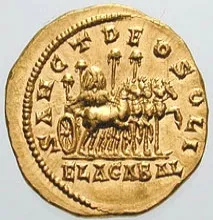
Elagabalo non si limitò a portare il proprio dio a Roma: tentò di sovvertire l'intero sistema religioso romano. Fece costruire sul Palatino l'Elagabalium, un tempio monumentale dove ogni mattina celebrava i riti solari siriaci, dipinto con la guancia tinta, gli occhi bistrati e indumenti orientali. Vi fece trasferire, sottratti ai loro santuari originari, il Palladium (statua di Atena che Enea aveva portato da Troia), gli scudi sacri dei Salii, il fuoco di Vesta e perfino le statue di Cibele e di Minerva. Il messaggio era esplicito: tutte le divinità romane diventavano ancellae, ancelle, del dio Sole.
Elagabalus did not limit himself to bringing his god to Rome: he attempted to subvert the entire Roman religious system. He had the Elagabalium built on the Palatine, a monumental temple where every morning he celebrated the Syriac solar rites, painted with rouged cheeks, kohl-rimmed eyes and Eastern garments. He had transferred there, taken from their original sanctuaries, the Palladium (statue of Athena that Aeneas had brought from Troy), the sacred shields of the Salii, the fire of Vesta and even the statues of Cybele and Minerva. The message was explicit: all Roman deities became ancellae, handmaids, of the sun-god.
Le Nozze SacrilegheThe Sacrilegious Marriages
Per legare definitivamente il dio Elagabal al pantheon romano, Elagabalo organizzò un matrimonio divino: prima fece sposare la pietra meteorica con la Pallade Atena (la statua del Palladium), poi rifiutò l'unione per cercare una sposa «più adatta al Sole orientale» — e scelse il Baetylus di Astarte, la dea-luna di Cartagine, fatto venire dalla Tunisia. Sul piano personale, sposò successivamente cinque mogli in soli quattro anni. La seconda, Aquilia Severa, vestale, costituiva un sacrilegio capitale: per il diritto romano una vestale che violava il voto di castità veniva sepolta viva. Quando il Senato protestò, Elagabalo replicò che la vestale doveva sposare un sacerdote, ed egli era il sommo sacerdote del Sole.
To bind the god Elagabal definitively to the Roman pantheon, Elagabalus organized a divine marriage: first he had the meteoric stone wedded to Pallas Athena (the Palladium statue), then he rejected the union to seek a bride «more suited to the Eastern Sun» — and chose the Baetylus of Astarte, the Moon-goddess of Carthage, brought from Tunisia. On the personal level, he successively married five wives in only four years. The second, Aquilia Severa, a Vestal, constituted a capital sacrilege: by Roman law a Vestal who violated the vow of chastity was buried alive. When the Senate protested, Elagabalus replied that the Vestal had to marry a priest, and he was the high priest of the Sun.
Identità di Genere — il Caso IerocleGender Identity — the Hierocles Case
Cassio Dione, contemporaneo, fornisce un'informazione che ha sconcertato gli storici di ogni epoca: Elagabalo «desiderava chiamarsi domina, signora, anziché dominus, signore», e chiedeva ai medici di praticargli un'operazione di mutamento sessuale. Visse pubblicamente la propria relazione con un auriga della fazione dei Verdi, lo schiavo bitinico Ierocle, che chiamava «maritus» — marito, e davanti al quale si presentava al palazzo come moglie sottomessa. Per molti studiosi contemporanei (Martijn Icks, 2011) Elagabalo è stato il primo personaggio storico documentato esplicitamente come transgender; alcune storici accademiche recenti, sulla base di Cassio Dione, hanno proposto di riferirsi all'imperatore con pronomi femminili. Il dibattito è aperto.
Cassius Dio, a contemporary, provides information that has bewildered historians of every age: Elagabalus «desired to be called domina, lady, rather than dominus, lord», and asked physicians to perform a sex-change operation. He lived publicly his relationship with a charioteer of the Greens faction, the Bithynian slave Hierocles, whom he called «maritus» — husband, and before whom he presented himself at the palace as a submissive wife. For many contemporary scholars (Martijn Icks, 2011) Elagabalus was the first historical figure documented explicitly as transgender; some recent academic historians, on the basis of Cassius Dio, have proposed referring to the emperor with feminine pronouns. The debate is open.
03La Caduta e l'AssassinioThe Fall and the Assassination
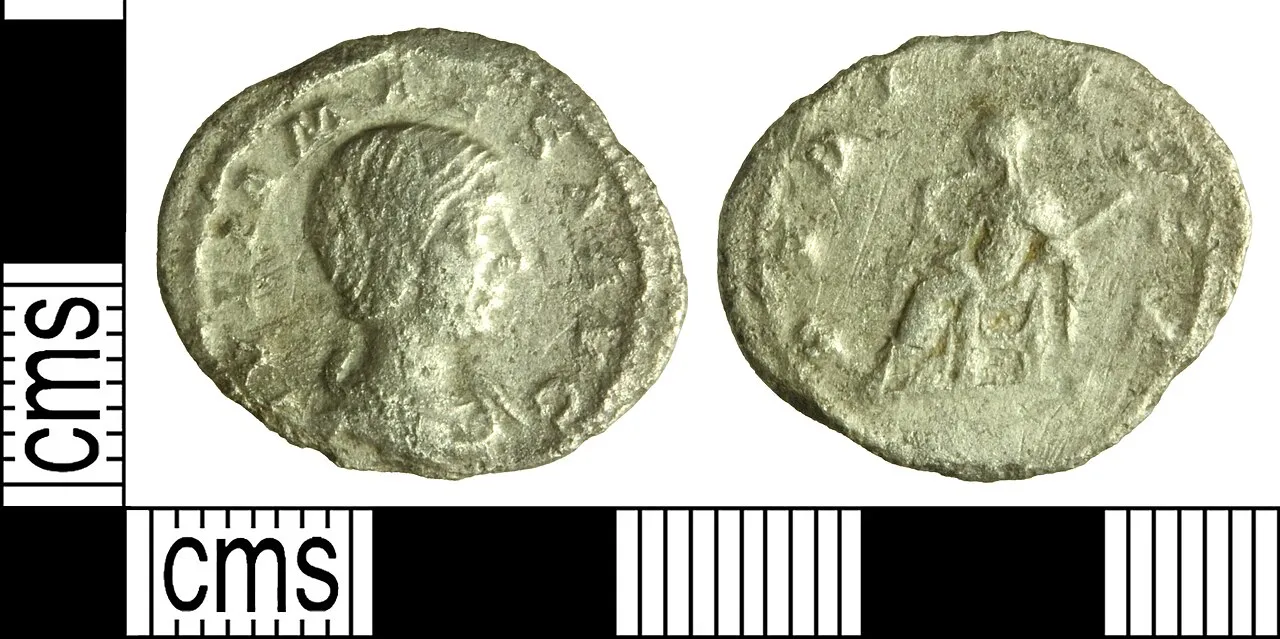
Giulia Mesa, la stessa nonna che lo aveva portato al trono, comprese rapidamente che il regno di Elagabalo avrebbe distrutto la dinastia. Convinse il giovane imperatore ad adottare il cugino tredicenne Alessiano, figlio di sua figlia Giulia Mamea, nominandolo Caesar nel 221: una mossa che presentava come gesto di pietà familiare, ma che in realtà preparava la sostituzione. Alessiano fu rinominato Marco Aurelio Alessandro Severo per ricollegarlo agli ultimi imperatori legittimi.
Julia Maesa, the same grandmother who had brought him to the throne, quickly understood that Elagabalus's reign would destroy the dynasty. She convinced the young emperor to adopt his thirteen-year-old cousin Alexianus, son of her daughter Julia Mamaea, naming him Caesar in 221: a move she presented as a gesture of family piety, but which in fact prepared the substitution. Alexianus was renamed Marcus Aurelius Alexander Severus to link him to the last legitimate emperors.
Il Tentato FratricidioThe Attempted Fratricide
Elagabalo capì troppo tardi la trappola. Tentò più volte di far uccidere Alessandro, ma i pretoriani, che intanto avevano preso a benvolere il cugino sobrio e studioso, proteggevano il ragazzo. Quando Elagabalo diffuse a Roma la falsa notizia della morte di Alessandro, i pretoriani si ammutinarono. Elagabalo dovette presentarsi al campo pretoriano con il cugino vivo per placarli, ma all'interno del campo i soldati lo arrestarono.
Elagabalus understood the trap too late. He repeatedly tried to have Alexander killed, but the praetorians (who had meanwhile come to like the sober, studious cousin) protected the boy. When Elagabalus spread in Rome the false news of Alexander's death, the praetorians mutinied. Elagabalus had to present himself at the praetorian camp with the cousin alive to placate them, but inside the camp the soldiers arrested him.
Aveva 18 anni. Aveva regnato tre anni e nove mesi. Il Senatus Consultum votò immediatamente la damnatio memoriae: le sue statue furono distrutte, le monete fuse, le iscrizioni cancellate. La pietra di Elagabal fu rispedita a Emesa, l'Elagabalium del Palatino fu riconsacrato a Giove. Il successore Alessandro Severo, salito al trono lo stesso giorno, scelse di regnare nel solco severiano della sobrietà, restaurando ogni culto tradizionale.
He was 18 years old. He had reigned three years and nine months. The Senatus Consultum immediately voted damnatio memoriae: his statues were destroyed, his coins melted down, his inscriptions erased. The Elagabal stone was sent back to Emesa, the Palatine Elagabalium reconsecrated to Jupiter. His successor Alexander Severus, ascending the throne the same day, chose to reign in the Severan tradition of sobriety, restoring every traditional cult.
04Eredità e Giudizio StoricoLegacy and Historical Judgement
Elagabalo è stato tradizionalmente dipinto come il simbolo della decadenza imperiale, lo scarafaggio che uscì dalle tenebre orientali per contaminare la tradizione romana. Ma storici moderni vedono nel suo tentativo di promuovere il monoteismo solare un precursore del Cristianesimo: l'idea che ci fosse un solo dio supremo, il Sole, era nuova e rivoluzionaria per Roma. Fallì perché era troppo presto e troppo estremo, ma la direzione era quella che avrebbe preso l'Impero un secolo dopo con Costantino.
Elagabalus has traditionally been depicted as the symbol of imperial decadence, the bug that crawled from Eastern darkness to contaminate Roman tradition. But modern historians see in his attempt to promote solar monotheism a precursor of Christianity: the idea that there was one supreme god, the Sun, was new and revolutionary for Rome. He failed because it was too early and too extreme, but the direction was the one the Empire would take a century later with Constantine.
Il Mito NeroThe Black Myth
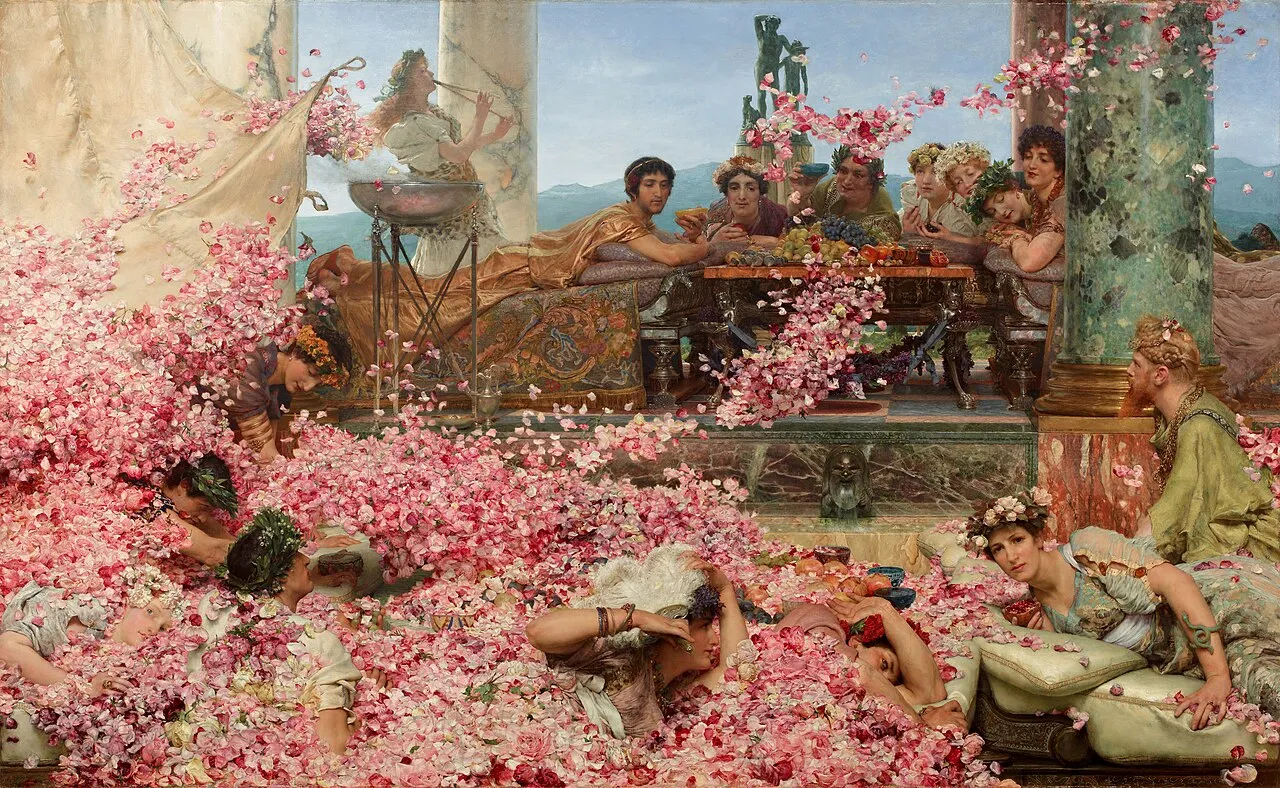
L'Historia Augusta, opera tarda e in gran parte favolistica, sigillò la sua reputazione con aneddoti grotteschi: stuoie di petali di rosa che soffocavano gli ospiti (il celebre dipinto di Alma-Tadema), banchetti con pesci di gomma e pavoni vivi, palline di pancetta come gemme, elefanti caricati con leoni nei circhi. Quanto sia stato reale e quanto sia stata propaganda postuma dei Severi resta materia di dibattito. Edward Gibbon, riprendendo l'Historia Augusta, lo definì «il più ignobile dei tiranni»; il poeta Antonin Artaud, in Eliogabalo o l'anarchico incoronato (1934), lo riabilitò come icona surrealista del rifiuto del potere normativo.
The Historia Augusta, a late and largely fabular work, sealed his reputation with grotesque anecdotes: carpets of rose petals that smothered guests (the famous Alma-Tadema painting), banquets with rubber fish and live peacocks, bacon balls as gems, elephants loaded with lions in the circus games. How much was real and how much was posthumous Severan propaganda remains debated. Edward Gibbon, drawing on the Historia Augusta, defined him as «the most ignoble of tyrants»; the poet Antonin Artaud, in Heliogabalus or the Anarchist Crowned (1934), rehabilitated him as a surrealist icon of refusal of normative power.
Il Precursore di CostantinoThe Forerunner of Constantine
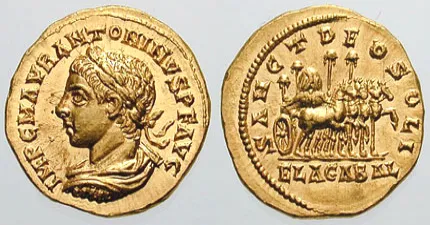
Lo storico contemporaneo Martijn Icks (The Crimes of Elagabalus, 2011) ha proposto una rilettura del suo regno come tentativo strutturale di trasformare il principato in una teocrazia solare: esattamente il modello che, novant'anni dopo, Aureliano realizzerà con il culto del Sol Invictus (274 d.C.), e che Costantino erediterà sincretizzandolo con il Cristianesimo (313–325). Elagabalo fu, in questa lettura, il primo riformatore religioso dell'Impero tardoantico: precocissimo, fallito, troppo aperto sul piano dell'identità personale per essere tollerato da una Roma tradizionalista, ma profeta involontario della direzione che la storia avrebbe effettivamente preso.
The contemporary historian Martijn Icks (The Crimes of Elagabalus, 2011) has proposed a re-reading of his reign as a structural attempt to transform the principate into a solar theocracy: exactly the model that, ninety years later, Aurelian will realize with the cult of Sol Invictus (274 AD), and which Constantine will inherit syncretizing it with Christianity (313–325). Elagabalus was, in this reading, the first religious reformer of the late ancient Empire: extremely precocious, failed, too open on the level of personal identity to be tolerated by a traditionalist Rome, but unintentional prophet of the direction history would actually take.