01BiografiaBiography
Il giovane di corte (32–58 d.C.)
The young courtier (32–58 AD)
Marco Salvio Otone nacque il 28 aprile del 32 d.C. a Ferentium, in Etruria, da una famiglia di rango equestre ascesa alla nobiltà senatoria sotto Augusto. Suo padre, Lucio Salvio Otone, era stato console e proconsole d'Africa sotto Claudio; era considerato così affidabile dall'imperatore che molti dicevano fosse il vero figlio illegittimo di Tiberio. Otone crebbe quindi nei palazzi imperiali, in mezzo alla ricchezza, con un'ambizione precoce.
Marcus Salvius Otho was born on 28 April 32 AD at Ferentium, in Etruria, from an equestrian family that had risen to senatorial nobility under Augustus. His father, Lucius Salvius Otho, had been consul and proconsul of Africa under Claudius; he was considered so trustworthy by the emperor that many said he was actually Tiberius's illegitimate son. Otho thus grew up in the imperial palaces, surrounded by wealth, with precocious ambition.
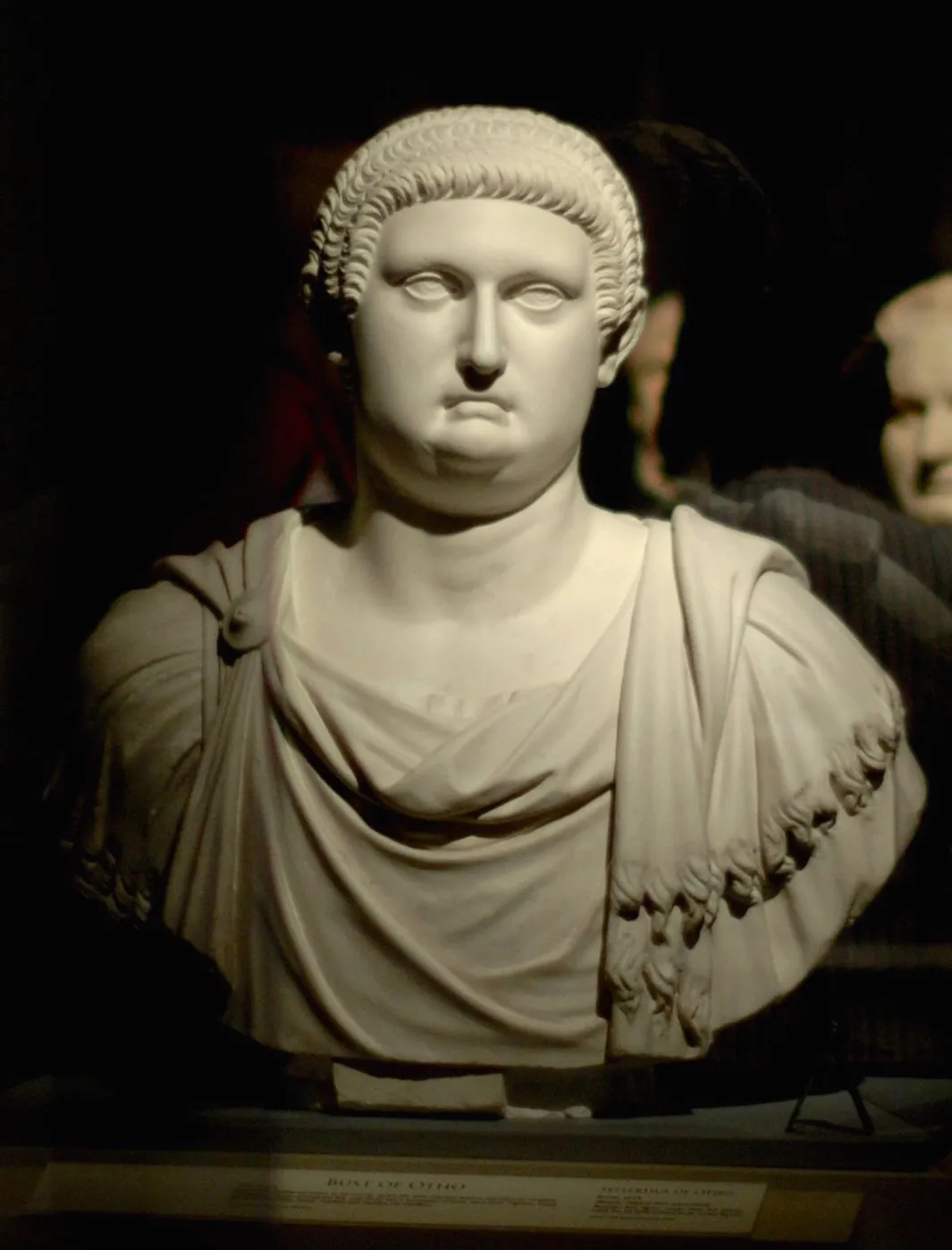
Era un uomo di tutt'altro stampo rispetto a Galba: elegante, amante del lusso e dell'ostentazione, famoso per la cura quasi ossessiva dell'aspetto personale. Indossava una parrucca per nascondere la calvizie precoce, si depilava il corpo, si faceva ricoprire il viso di pane ammollato per mantenere la pelle liscia. Svetonio lo dipinge come un dandy; Tacito, con maggiore equità , come un uomo di reale valore militare celato sotto un'immagine frivola. Da giovane fece amicizia con il quattordicenne Nerone appena salito al trono; divenne suo confidente e socio nelle scorribande notturne. La leggenda diceva che fosse stato Otone a presentare a Nerone Poppea Sabina, già sua moglie, dopo averla brevemente sposata pro forma per nascondere la liaison del giovane principe.
He was a man of very different character from Galba: elegant, fond of luxury and ostentation, famous for almost obsessive attention to personal appearance. He wore a wig to hide premature baldness, depilated his body, had his face covered in moistened bread to keep the skin smooth. Suetonius portrays him as a dandy; Tacitus, more fairly, as a man of genuine military worth concealed beneath a frivolous image. As a young man he made friends with the fourteen-year-old Nero, freshly enthroned; he became his confidant and accomplice in nocturnal escapades. Legend says it was Otho who introduced Poppaea Sabina to Nero, after briefly marrying her himself pro forma to conceal the young prince's affair.
L'esilio in Lusitania (58–68 d.C.)
The Lusitanian exile (58–68 AD)
Quando Nerone volle Poppea per sé , dovette togliere il marito di mezzo. Nel 58 d.C. relegò Otone come governatore della Lusitania, lontana provincia atlantica corrispondente all'attuale Portogallo. Era esilio dorato, ma esilio. Vi rimase dieci anni. Tutti si aspettavano un governo dissoluto da parte del cortigiano-ballerino; invece Otone amministrò la provincia con sorprendente competenza e onestà, accumulando un'esperienza che avrebbe pagato in seguito. Lui stesso non perse mai la speranza del ritorno: continuava a tingersi i capelli e curare l'aspetto come se dovesse rientrare a corte ogni giorno.
When Nero wanted Poppaea for himself, the husband had to be removed. In 58 AD he relegated Otho as governor of Lusitania: the distant Atlantic province corresponding to modern Portugal. It was gilded exile, but exile. He remained there ten years. Everyone expected a dissolute government from the courtier-dancer; instead Otho administered the province with surprising competence and honesty, accumulating experience that would later pay off. He himself never lost hope of returning: he kept dyeing his hair and tending his appearance as if he had to re-enter court any day.
Quando nel 68 d.C. Galba si ribellò a Nerone, Otone fu fra i primi a unirsi al collega di Spagna. Mise a disposizione il proprio patrimonio personale per finanziare la rivolta, sperando che Galba lo avrebbe designato successore. Il vecchio aristocratico aveva settant'anni e nessun figlio: la successione doveva passare per adozione. Otone si comportò come l'erede in pectore, accompagnò Galba a Roma, lo servì in pubblico, frequentò il suo entourage. Era convinto che la corona fosse a portata di mano.
When in 68 AD Galba rebelled against Nero, Otho was among the first to join his Spanish colleague. He put his personal fortune at the disposal of the revolt, hoping Galba would designate him as successor. The old aristocrat was seventy years old and had no son: the succession had to pass through adoption. Otho behaved like the heir presumptive, accompanied Galba to Rome, served him in public, frequented his entourage. He was convinced the crown was within his grasp.
L'usurpatore (15 gennaio 69 d.C.)
The usurper (15 January 69 AD)
Il 10 gennaio del 69 d.C., quando Galba presentò ai pretoriani come erede il giovane senatore Pisone Liciniano ignorando completamente Otone, la dichiarazione di guerra fu silenziosa ma totale. Otone aveva contratto debiti enormi per sostenere Galba, e il suo unico capitale politico era la promessa di successione. Persa quella, era rovinato. Decise di usare l'ultima moneta che gli restava: la Guardia Pretoriana, dove aveva amici dai tempi della corte di Nerone.
On 10 January 69 AD, when Galba presented to the praetorians as heir the young senator Piso Licinianus, completely ignoring Otho, the declaration of war was silent but total. Otho had contracted enormous debts to support Galba, and his only political capital was the promise of succession. Lose that, and he was ruined. He decided to use the last coin he had left: the Praetorian Guard, where he had friends from his days at Nero's court.
In cinque notti corruppe ventitré pretoriani con un donativo personale; ventitré bastavano. La mattina del 15 gennaio, mentre Galba sacrificava nel tempio di Apollo Palatino, Otone raggiunse il Forum Romanum in lettiga, accompagnato dai suoi sicari. Davanti al miliario aureo cesariano fu acclamato imperatore. Trasportato di corsa ai Castra Praetoria, dove ricevette il giuramento dell'intera Guardia. Galba, che si era diretto al Foro per affrontare la rivolta, fu massacrato al Lago di Curzio; Pisone, rifugiatosi nel Tempio di Vesta, fu trascinato fuori e ucciso. Era la prima volta nella storia che un principe romano veniva fatto da pretoriani in cambio di un donativo personale: il modello sarebbe ricomparso nel 193 d.C. con Didio Giuliano e l'asta del trono.
In five nights he bribed twenty-three praetorians with a personal donative; twenty-three were enough. On the morning of 15 January, while Galba was sacrificing in the temple of Palatine Apollo, Otho reached the Forum Romanum by litter, accompanied by his hit men. Before the Caesarian golden milestone he was acclaimed emperor. He was rushed to the Castra Praetoria, where he received the oath of the entire Guard. Galba, who had headed to the Forum to face the revolt, was massacred at the Lake of Curtius; Piso, having taken refuge in the Temple of Vesta, was dragged out and killed. It was the first time in history that a Roman prince was made by praetorians in exchange for a personal donative: the model would reappear in 193 AD with Didius Julianus and the auctioning of the throne.
Bedriaco e il suicidio (aprile 69 d.C.)
Bedriacum and the suicide (April 69 AD)
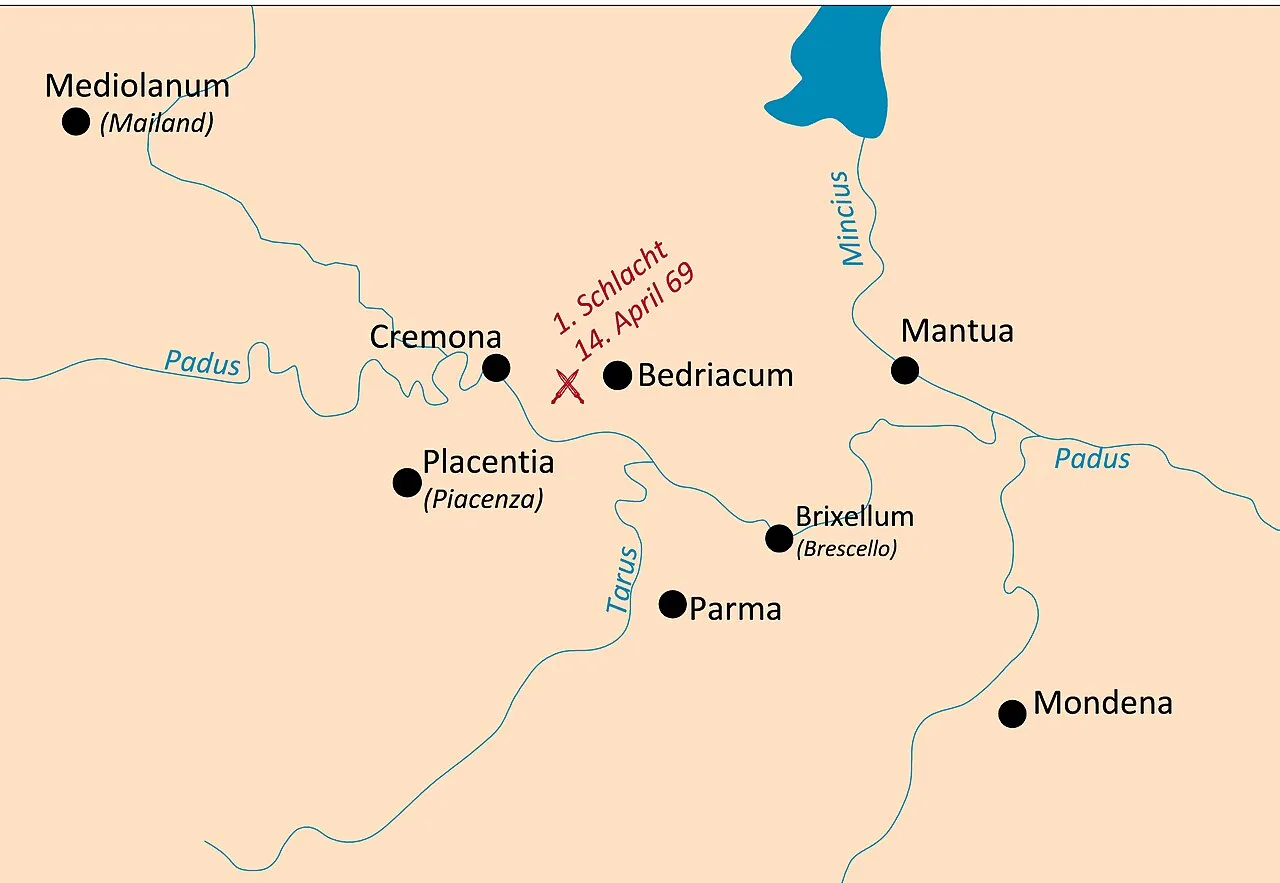
Otone aveva il trono ma non la pace. Dal Reno avanzava Aulo Vitellio con sei legioni intere e altrettanti ausiliari germanici: forza più che doppia rispetto a quella otoniana. Il principe avrebbe dovuto attendere l'arrivo dei rinforzi danubiani; i suoi generali Suetonio Paolino, Mario Celso e Annio Gallo lo consigliarono di tentennare. Otone, ansioso e ottimista, scelse di portare la guerra al nord. Il 14 aprile del 69 d.C., nei pressi di Bedriaco (l'odierna Calvatone) fra Cremona e Verona, le legioni vitelliane sconfissero quelle otoniane in una battaglia disordinata e sanguinosa. Le perdite romane furono enormi su entrambi i lati: forse quarantamila morti complessivi.
Otho had the throne but not peace. From the Rhine advanced Aulus Vitellius with six full legions and as many Germanic auxiliaries: a force more than double Otho's. The prince should have waited for the Danubian reinforcements; his generals Suetonius Paulinus, Marius Celsus and Annius Gallus advised him to stall. Otho, anxious and optimistic, chose to bring the war north. On 14 April 69 AD, near Bedriacum (modern Calvatone) between Cremona and Verona, the Vitellian legions defeated the Othonian in a chaotic and bloody battle. Roman losses were enormous on both sides: perhaps forty thousand dead in total.
Otone non si trovava in prima linea: era a Brixellum (l'odierna Brescello sul Po), trentadue chilometri più a sud, attendendo notizie. Quando arrivò la notizia della disfatta, ancora aveva forze sufficienti per continuare: due legioni intere danubiane stavano per arrivare, e i suoi pretoriani gridavano di voler combattere ancora. Otone scelse l'opposto. Quella stessa notte radunò gli ufficiali, distribuì denaro per il loro ritorno alle famiglie, scrisse due lettere (una al fratello, una alla nipote orfana) e bruciò le carte private. Disse che non voleva trascinare altri a morire per lui. Dormì tranquillamente fino alle prime ore. All'alba del 16 aprile si trafisse il cuore con un pugnale. Aveva trentasei anni e regnato novantacinque giorni.
Otho was not on the front line: he was at Brixellum (modern Brescello on the Po), thirty-two kilometres south, awaiting news. When word of the defeat arrived, he still had forces enough to continue: two full Danubian legions were on their way, and his praetorians shouted to keep fighting. Otho chose the opposite. That same night he gathered the officers, distributed money for their return to their families, wrote two letters (one to his brother, one to his orphan niece) and burned his private papers. He said he did not want to drag others into dying for him. He slept calmly until the early hours. At dawn on 16 April he stabbed his own heart with a dagger. He was thirty-six years old and had reigned ninety-five days.
La sua morte fu salutata come eroica perfino dai nemici. Tacito, Plutarco, Svetonio concordano sull'interpretazione: il principe frivolo aveva compiuto, alla fine, un atto di suprema dignità romana, l'unico vero mors voluntaria di un imperatore romano per amore della pace civile. Le sue truppe, dopo aver visto il cadavere, si suicidarono in massa attorno al rogo: episodio unico nella storia militare romana. Plutarco scrisse che il suicidio di Otone era stato più nobile di qualunque vittoria avesse mai potuto ottenere.
His death was hailed as heroic even by enemies. Tacitus, Plutarch, Suetonius agree on the interpretation: the frivolous prince had performed, in the end, an act of supreme Roman dignity, the only true mors voluntaria of a Roman emperor for love of civil peace. His troops, after seeing the corpse, killed themselves en masse around the pyre: an episode unique in Roman military history. Plutarch wrote that Otho's suicide had been nobler than any victory he could ever have achieved.
02Battaglie e Campagne MilitariBattles and Military Campaigns
- 15 gen 69 Colpo di Stato contro Galba — Con soli ventitré pretoriani corrotti come nucleo iniziale, Otone orchestrò il golpe che portò all'assassinio di Galba e Pisone al Foro Romano. La rapidità e la precisione dell'operazione rivelarono un talento politico inaspettato. Coup against Galba — With only twenty-three bribed Praetorians as the initial nucleus, Otho orchestrated the coup that led to the assassination of Galba and Piso at the Roman Forum. The speed and precision of the operation revealed an unexpected political talent.
- feb–apr 69 Campagna contro Vitellio — Otone mobilitò rapidamente forze dalla Guardia Pretoriana, dalle flotte di Ravenna e Miseno e dai Dalmati. Avanzò verso nord affidando il comando operativo a Svetonio Paulino. Alcune scaramucce iniziali andarono a favore degli Otoniani, ma la battaglia campale fu inevitabile. Campaign against Vitellius — Otho rapidly mobilized forces from the Praetorian Guard, the fleets of Ravenna and Misenum and the Dalmatians. He advanced north entrusting operational command to Suetonius Paulinus. Some initial skirmishes went in favor of the Othonians, but a pitched battle was inevitable.
- 14 apr 69 Prima battaglia di Bedriacum — La battaglia decisiva si svolse nei pressi di Cremona. Gli eserciti di Vitellio, comandati da Fabio Valente e Aulo Cecina Alieno, erano più numerosi e meglio organizzati. Le forze di Otone furono sconfitte dopo un combattimento accanito. La perdita non era totale, Otone aveva ancora riserve, ma scelse di non prolungare il conflitto. First Battle of Bedriacum — The decisive battle took place near Cremona. Vitellius's armies, commanded by Fabius Valens and Aulus Caecina Alienus, were more numerous and better organized. Otho's forces were defeated after fierce fighting. The loss was not total, Otho still had reserves, but he chose not to prolong the conflict.
03Riforme e ProvvedimentiReforms and Measures
- gen 69 Restaurazione delle politiche neroniane — Otone ripristinò immediatamente le politiche di Nerone per accattivarsi il popolo romano, che rimpiangeva il defunto imperatore. Riportò il nome di Nerone sulle statue e si fece chiamare talvolta "Nerone Otone" in pubblico: gesto di pragmatismo politico, non di nostalgia personale. Restoration of Neronian policies — Otho immediately restored Nero's policies to win over the Roman people, who mourned the deceased emperor. He restored Nero's name to statues and occasionally had himself called "Nero Otho" in public: a gesture of political pragmatism, not personal nostalgia.
- gen–apr 69 Politica di clemenza e riconciliazione — A differenza di Galba, Otone si sforzò di riconciliarsi con senatori e cavalieri, promettendo rispetto per le tradizioni istituzionali. Il Senato, inizialmente ostile, fu conquistato da un comportamento moderato e rispettoso, inatteso in un uomo che era salito al potere con un colpo di Stato. Policy of clemency and reconciliation — Unlike Galba, Otho strove to reconcile with senators and knights, promising respect for institutional traditions. The Senate, initially hostile, was won over by moderate and respectful behavior, unexpected in a man who had come to power through a coup.
- apr 69 Scelta del suicidio — Il gesto più significativo del regno di Otone fu la sua morte. Dopo Bedriacum, i consiglieri lo esortavano a continuare la lotta. Otone rifiutò, dichiarando che non valeva la pena esporre così tanti uomini valenti a ulteriore pericolo per una causa ormai perduta. Questo atto fu interpretato dall'antichità come la più alta forma di virtù imperiale. The choice of suicide — The most significant act of Otho's reign was his death. After Bedriacum, advisors urged him to continue the fight. Otho refused, declaring it was not worth exposing so many worthy men to further danger for a cause already lost. This act was interpreted by antiquity as the highest form of imperial virtue.
04Opere e CostruzioniWorks and Constructions
- 69 d.C. Ripresa della Domus Aurea — Otone dispose la ripresa dei lavori alla Domus Aurea di Nerone, che Galba aveva interrotto. Il gesto era parte della sua strategia di identificazione con la memoria di Nerone per guadagnarsi la popolarità delle classi inferiori romane. Resumption of the Domus Aurea — Otho ordered the resumption of work on Nero's Domus Aurea, which Galba had halted. The gesture was part of his strategy of identification with Nero's memory to win popularity among Rome's lower classes.
- 69 d.C. Governo della Lusitania (58—68 d.C.) — Prima di diventare imperatore, la sua eredità amministrativa più concreta fu il decennio trascorso come governatore della Lusitania, dove governò con equità e competenza, guadagnandosi il rispetto delle popolazioni locali, un contrasto stridente con la sua immagine di cortigiano dissoluto. Governance of Lusitania (58—68 AD) — Before becoming emperor, his most concrete administrative legacy was the decade spent as governor of Lusitania, where he governed with fairness and competence, earning the respect of local populations: a stark contrast to his image as a dissolute courtier.
05Eredità e Giudizio StoricoLegacy and Historical Judgement
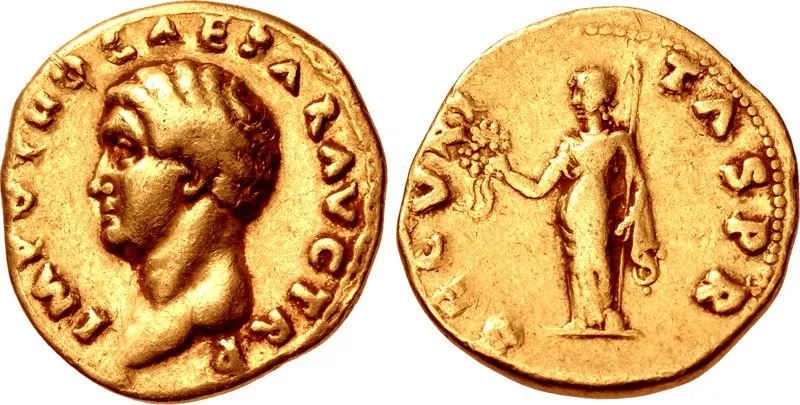
Otone è una delle figure più complesse e affascinanti dell'anno dei quattro imperatori. La sua immagine pubblica (il dandy frivolo, il cortigiano di Nerone, l'uomo che aveva organizzato un assassinio per salire al potere) contrastava con la realtà di un governatore capace, di un soldato rispettato dalle proprie truppe, infine di un uomo che scelse la morte propria per risparmiare quella altrui. Le tre identità convivevano nello stesso uomo, e nessuna era falsa.
Otho is one of the most complex and fascinating figures of the year of the four emperors. His public image (the frivolous dandy, Nero's courtier, the man who had organised an assassination to seize power) contrasted with the reality of a capable governor, a soldier respected by his troops, finally a man who chose his own death to spare that of others. The three identities lived in the same man, and none was false.
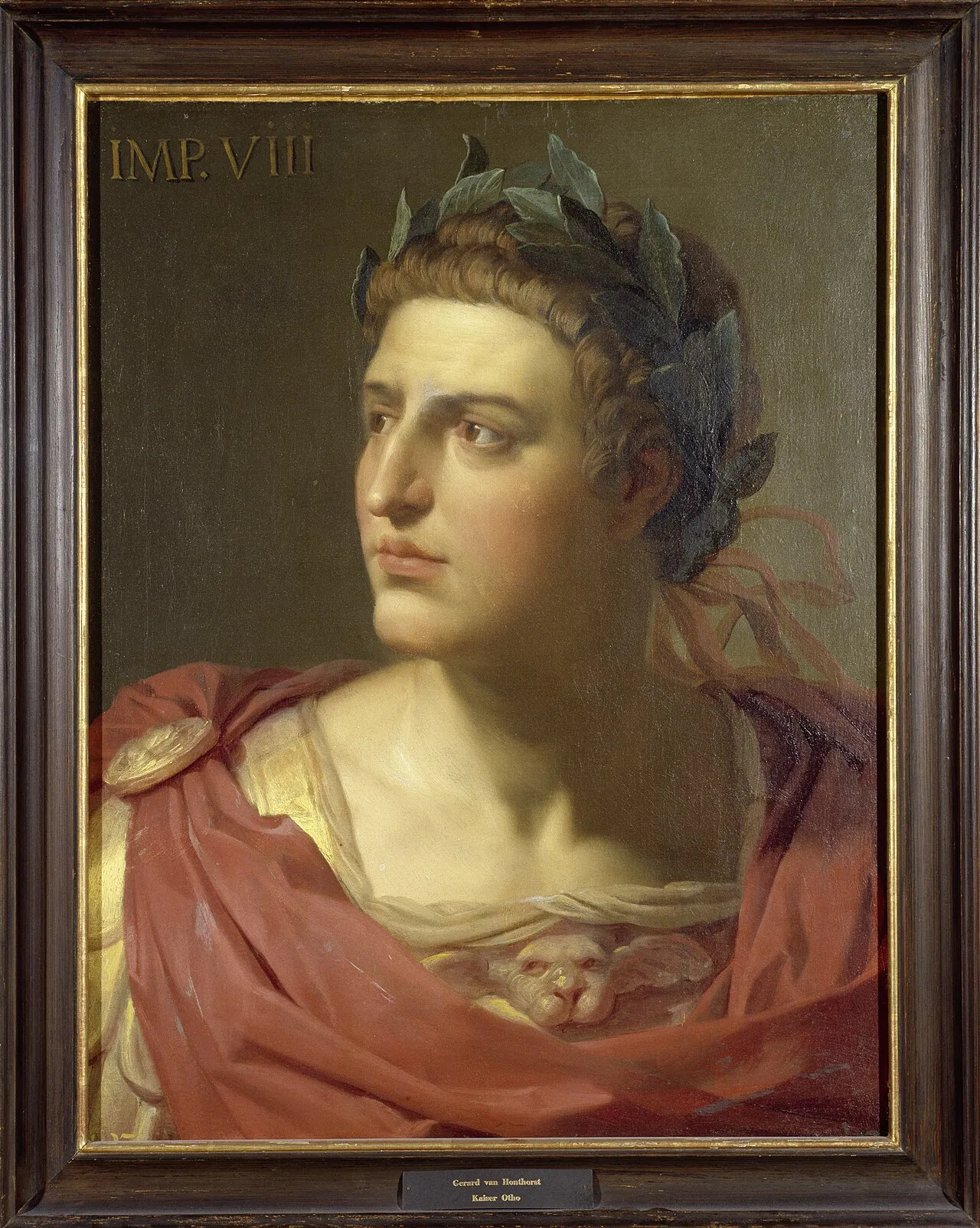
Tacito, Svetonio e Plutarco concordano nell'esaltare la sua morte come atto di vera grandezza. Plutarco scrisse nelle Vite Parallele che il suicidio di Otone era stato più nobile di qualunque vittoria avesse mai potuto ottenere. Era una formula paradossale: il principe usurpatore che aveva fatto sgozzare Galba ai piedi del Lago di Curzio era ricordato meglio di tutti gli altri imperatori dell'anno civile per il modo in cui aveva scelto di morire. La sua breve vita traccia la parabola di un uomo che trovò la propria vera natura non nel potere, ma nel modo in cui vi rinunciò .
Tacitus, Suetonius and Plutarch agree in extolling his death as an act of true greatness. Plutarch wrote in the Parallel Lives that Otho's suicide had been nobler than any victory he could ever have achieved. It was a paradoxical formula: the usurper prince who had had Galba butchered at the foot of the Lake of Curtius was remembered better than all the other emperors of the civil year for the way he chose to die. His brief life traces the arc of a man who found his true nature not in power, but in the way he relinquished it.
Il suo suicidio inaugurò un modello stoico raro nella storia imperiale: il principe che si toglie la vita per evitare ulteriori spargimenti di sangue. Sarebbe stato imitato più volte nella tradizione filosofica successiva, in particolare nel pensiero stoico tardo-imperiale, ma quasi mai dagli imperatori reali. La maggioranza dei principi sconfitti del III e IV secolo combattevano fino all'ultima legione, trascinando l'Impero in conflitti rovinosi. Otone fu un'eccezione: un dandy diventato eroe nella morte. Il poeta Marziale, mezzo secolo dopo, gli dedicò un epigramma in cui lo paragonava agli antichi eroi repubblicani. Era la massima onorificenza che la cultura romana poteva conferire.
His suicide inaugurated a Stoic model rare in imperial history: the prince who takes his own life to avoid further bloodshed. It would be imitated several times in later philosophical tradition, particularly in late-imperial Stoic thought, but almost never by actual emperors. Most defeated princes of the 3rd and 4th centuries fought to the last legion, dragging the Empire into ruinous conflicts. Otho was an exception: a dandy turned hero in death. The poet Martial, half a century later, dedicated to him an epigram comparing him to the ancient Republican heroes. It was the highest honour Roman culture could bestow.
« Sopravvivere a tanti coraggiosi caduti per me sarebbe vile. Tu, vivi» . « To outlive so many brave men fallen for me would be cowardice. Live thou» . Otone, in Tacito, Historiae II, 47