01BiografiaBiography
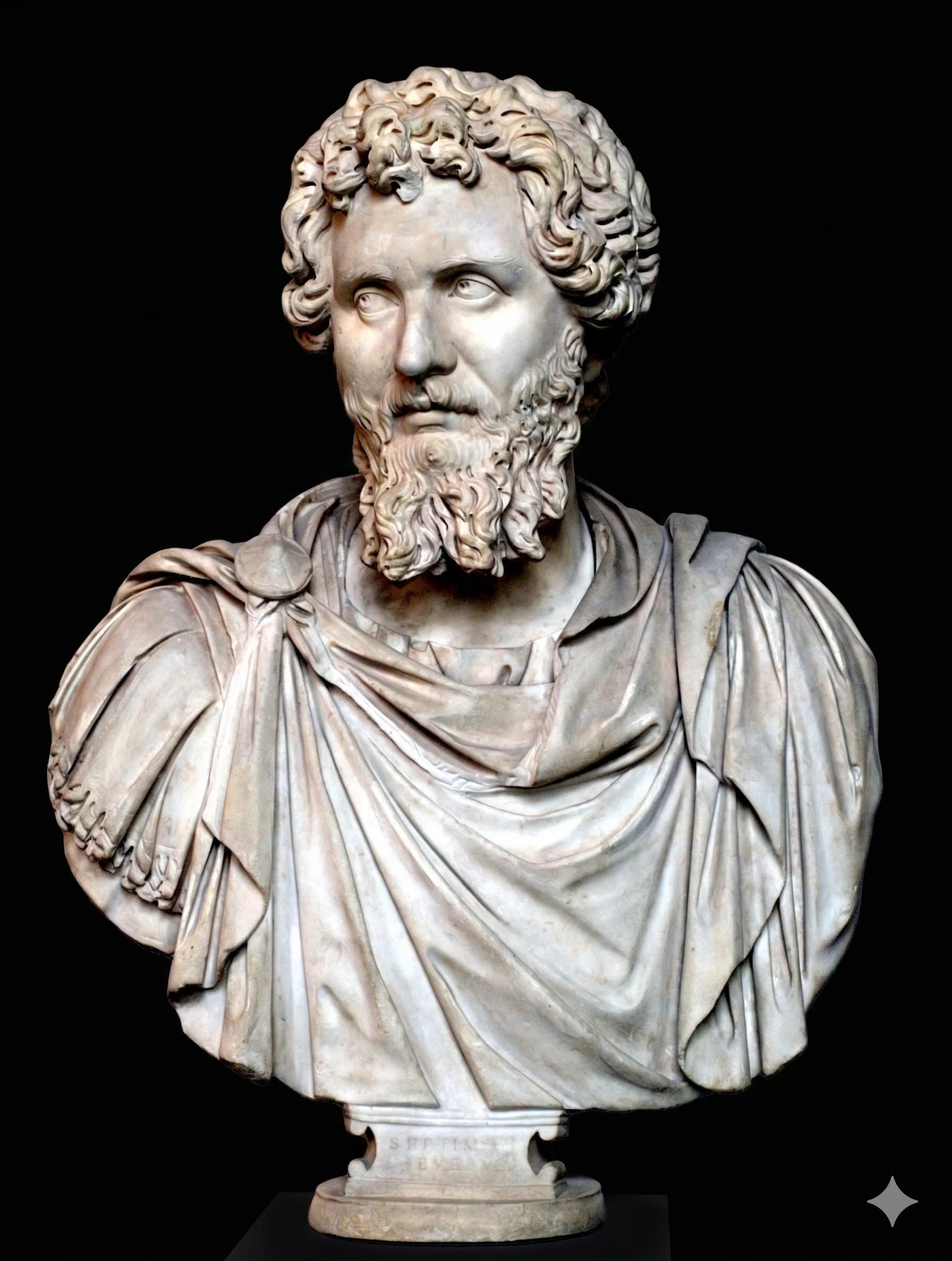
Lucio Settimio Severo nacque l'11 aprile del 145 d.C. a Leptis Magna, nella provincia d'Africa (l'odierna Libia). Era il primo imperatore proveniente dall'Africa, non da una famiglia romana trapiantata in Africa, ma da una famiglia berbero-punica romanizzata. Sua madre era di origine italiana, suo padre di stirpe locale. Parlava latino con accento africano che non perse mai del tutto, fatto che i suoi nemici gli rinfacciarono per tutta la vita.
Lucius Septimius Severus was born on April 11, 145 AD at Leptis Magna, in the province of Africa (modern Libya). He was the first emperor from Africa, not from a Roman family transplanted to Africa, but from a Romanized Berber-Punic family. His mother was of Italian origin, his father of local stock. He spoke Latin with an African accent he never quite lost, a fact his enemies held against him throughout his life.
Origini Puniche e Cursus HonorumPunic Origins and Cursus Honorum
La famiglia Settimia era influente a Leptis Magna da generazioni: il bisnonno paterno, Settimio Macer, aveva ricoperto incarichi locali sotto Traiano; due cugini, Settimio Geta e Settimio Apero, erano già stati senatori romani. Il giovane Lucio studiò retorica e diritto a Roma sotto i grandi maestri dell'epoca antoniniana, e il suo primo incarico, la questura di Sardegna, risale al 170. La carriera fu rapida ma non eccezionale: tribuno della plebe (174), pretore (177), legato della Legio IV Scythica in Siria (179), governatore della Gallia Lugdunense (185–186), console suffetto (190), e infine governatore della Pannonia Superiore (191), il comando che lo avrebbe portato al trono.
The Septimius family had been influential in Leptis Magna for generations: paternal great-grandfather Septimius Macer had held local offices under Trajan; two cousins, Septimius Geta and Septimius Aper, had already been Roman senators. The young Lucius studied rhetoric and law in Rome under the great masters of the Antonine age, and his first office, the quaestorship of Sardinia, dates from 170. His career was rapid but not exceptional: tribune of the plebs (174), praetor (177), legate of the Legio IV Scythica in Syria (179), governor of Gallia Lugdunensis (185–186), suffect consul (190), and finally governor of Upper Pannonia (191), the command that would lead him to the throne.
Giulia Domna e le StelleJulia Domna and the Stars
Nel 187 d.C., a 42 anni, Severo, vedovo della prima moglie Paccia Marciana, sposò in seconde nozze Giulia Domna, figlia di Bassiano, sommo sacerdote del dio solare Elagabal a Emesa, in Siria. La scelta non fu sentimentale: secondo Cassio Dione, Severo era convinto astrologo e aveva fatto compilare gli oroscopi di tutte le candidate dell'aristocrazia imperiale. Le stelle indicavano che Giulia avrebbe «sposato un re». Il matrimonio inaugurò la dinastia siro-africana che dominerà Roma per i prossimi 42 anni, fino all'estinzione dei Severi nel 235. Da Giulia ebbe i due figli che gli sopravvissero: Bassiano (poi Caracalla) e Publio Settimio Geta.
In 187 AD, at 42, Severus, widower of his first wife Paccia Marciana, married as second wife Julia Domna, daughter of Bassianus, high priest of the sun-god Elagabal at Emesa, Syria. The choice was not sentimental: according to Cassius Dio, Severus was a convinced astrologer and had had horoscopes of all imperial aristocracy candidates drawn up. The stars indicated that Julia would «marry a king». The marriage inaugurated the Syro-African dynasty that would dominate Rome for the next 42 years, until the extinction of the Severans in 235. From Julia he had the two sons who survived him: Bassianus (later Caracalla) and Publius Septimius Geta.
Seguì la carriera militare e senatoria con grande competenza. Quando Commodo fu assassinato nel 192 e Pertinace, il successore designato, fu ucciso dalla Guardia Pretoriana dopo soli 87 giorni, scoppiò una guerra civile. Severo comandava le legioni del Danubio, le più agguerrite, e marciò su Roma. Arrivò senza combattere: la Guardia Pretoriana si sciolse, Didio Giuliano (che aveva comprato il trono all'asta) fu decapitato. Severo era imperatore.
He followed the military and senatorial career with great competence. When Commodus was assassinated in 192 and Pertinax, the designated successor, was killed by the Praetorian Guard after only 87 days, a civil war broke out. Severus commanded the Danubian legions, the most battle-hardened, and marched on Rome. He arrived without fighting: the Praetorian Guard dissolved, Didius Julianus (who had bought the throne at auction) was beheaded. Severus was emperor.
02Guerre e CampagneWars and Campaigns
- 193–197 d.C.Guerre civili — tre fronti — Severo dovette sconfiggere due rivali: Pescennio Nigro in Oriente (sconfitto nella battaglia di Isso, 194) e Clodio Albino in Occidente (sconfitto a Lugdunum/Lione, 197). Fu una delle più grandi guerre civili della storia romana.Civil Wars — three fronts — Severus had to defeat two rivals: Pescennius Niger in the East (defeated at the Battle of Issus, 194) and Clodius Albinus in the West (defeated at Lugdunum/Lyon, 197). It was one of the greatest civil wars in Roman history.
- 197–199 d.C.Guerra Partica — Sconfisse i Parti e saccheggiò la loro capitale Ctesifonte per la terza volta nella storia romana. Creò due nuove province: Osroene e Mesopotamia. Fu l'ultima grande espansione territoriale romana.Parthian War — He defeated the Parthians and sacked their capital Ctesiphon for the third time in Roman history. He created two new provinces: Osroene and Mesopotamia. It was the last great Roman territorial expansion.
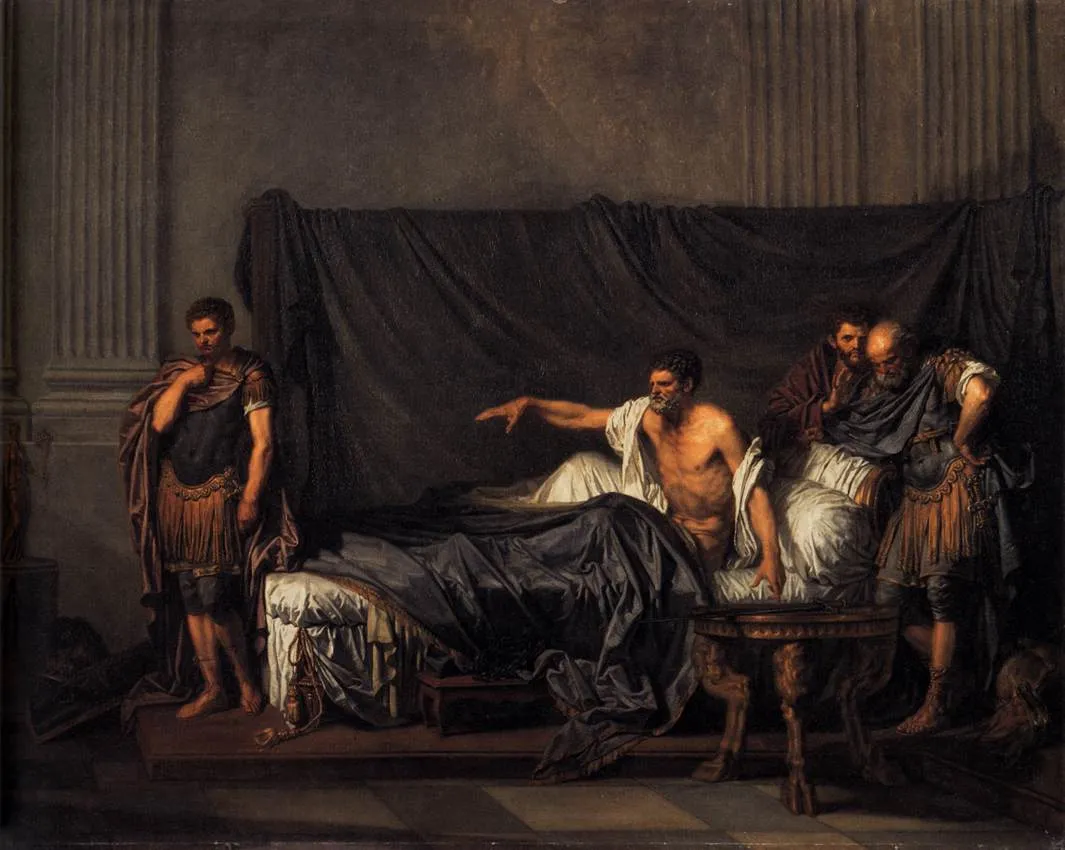
- 208–211 d.C.Campagna in Britannia — Guidò personalmente una campagna in Caledonia (Scozia), spingendo oltre il Vallo di Adriano. Morì nel 211 a Eboracum (York) prima di completare la conquista. Suoi ultimi ordini ai figli: "Siate concordi, arricchite i soldati, sprezzate gli altri."Campaign in Britain — He personally led a campaign in Caledonia (Scotland), pushing beyond Hadrian's Wall. He died in 211 at Eboracum (York) before completing the conquest. His last words to his sons: "Be harmonious, enrich the soldiers, scorn all others."
03Riforme e GovernoReforms and Government
- 193 d.C.Scioglimento della Guardia Pretoriana — Sciolse la vecchia Guardia Pretoriana, corrotta e pericolosa, e la sostituì con una nuova, scelta personalmente tra i soldati delle sue legioni danubiane. La fedeltà verso l'esercito diventò il fondamento del suo potere.Dissolution of the Praetorian Guard — He dissolved the old Praetorian Guard, corrupt and dangerous, and replaced it with a new one, personally chosen from soldiers of his Danubian legions. Loyalty to the army became the foundation of his power.
- 193–211 d.C.Militarizzazione dell'impero — Aumentò i salari dei soldati del 50%, permise ai soldati di sposarsi durante il servizio (vietato in precedenza), promosse i provinciali ai più alti ranghi. Il suo motto era: "Non interessarti a nient'altro che ai soldati."Militarization of the empire — He raised soldiers' salaries by 50%, allowed soldiers to marry during service (previously forbidden), promoted provincials to the highest ranks. His motto was: "Interest yourself in nothing except the soldiers."
- 197 d.C.Adozione Postuma negli Antonini — Per legittimarsi, Severo si dichiarò ufficialmente figlio adottivo di Marco Aurelio (morto da 17 anni) e fratello di Commodo (che fece divinizzare). Aggiunse alla propria titolatura «divi Marci filius, divi Commodi frater». Era una finzione giuridica clamorosa, ma efficace: l'esercito e il Senato lo accettarono.Posthumous Adoption into the Antonines — To legitimize himself, Severus officially declared himself adoptive son of Marcus Aurelius (dead for 17 years) and brother of Commodus (whom he had deified). He added to his titulature «divi Marci filius, divi Commodi frater». It was a sensational juridical fiction, but effective: the army and Senate accepted it.
- 197 d.C.Epurazione del Senato — Dopo la vittoria su Clodio Albino a Lugdunum, Severo trovò una lista di 64 senatori che avevano sostenuto il rivale. Li fece giustiziare tutti, confiscò i loro patrimoni e li sostituì con provinciali, soprattutto africani e siriani, a lui fedeli. Il Senato perse per sempre il proprio carattere italico aristocratico.Senate Purge — After the victory over Clodius Albinus at Lugdunum, Severus found a list of 64 senators who had supported his rival. He had them all executed, confiscated their estates and replaced them with provincials, especially Africans and Syrians, loyal to him. The Senate lost forever its aristocratic Italic character.
- 202 d.C.Riforma Giuridica — Avocò a sé la suprema potestà giurisprudenziale, sostenuto dai due grandi giuristi Papiniano ed Ulpiano, suoi prefetti del pretorio. Da questo momento il diritto romano diventa essenzialmente diritto imperiale: il ius respondendi del Senato è morto, le costituzioni imperiali sono fonte unica.Juridical Reform — He took to himself the supreme juridical authority, supported by the two great jurists Papinian and Ulpian, his praetorian prefects. From this moment Roman law becomes essentially imperial law: the Senate's ius respondendi is dead, the imperial constitutions are the sole source.
04Opere e CostruzioniWorks and Constructions
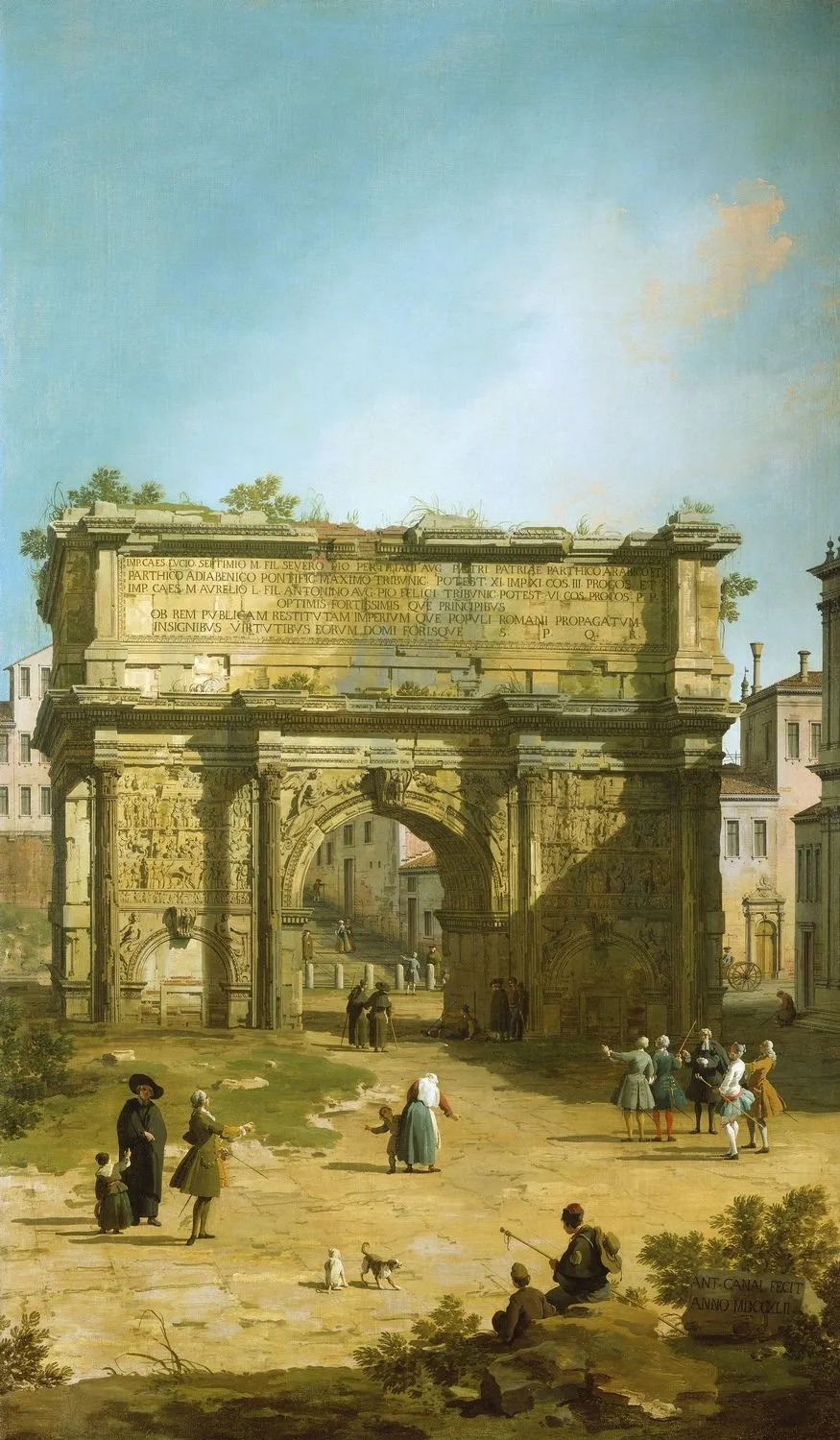
- 203 d.C.Arco di Settimio Severo — Eresse nel Foro Romano un arco trionfale a tre fornici per celebrare le vittorie partiche, ancora perfettamente conservato. L'iscrizione originale menzionava entrambi i figli Caracalla e Geta, ma il nome di Geta fu scalpellato via dopo il suo assassinio.Arch of Septimius Severus — He erected a three-bay triumphal arch in the Roman Forum to celebrate the Parthian victories, still perfectly preserved. The original inscription mentioned both sons Caracalla and Geta, but Geta's name was chiseled out after his assassination.
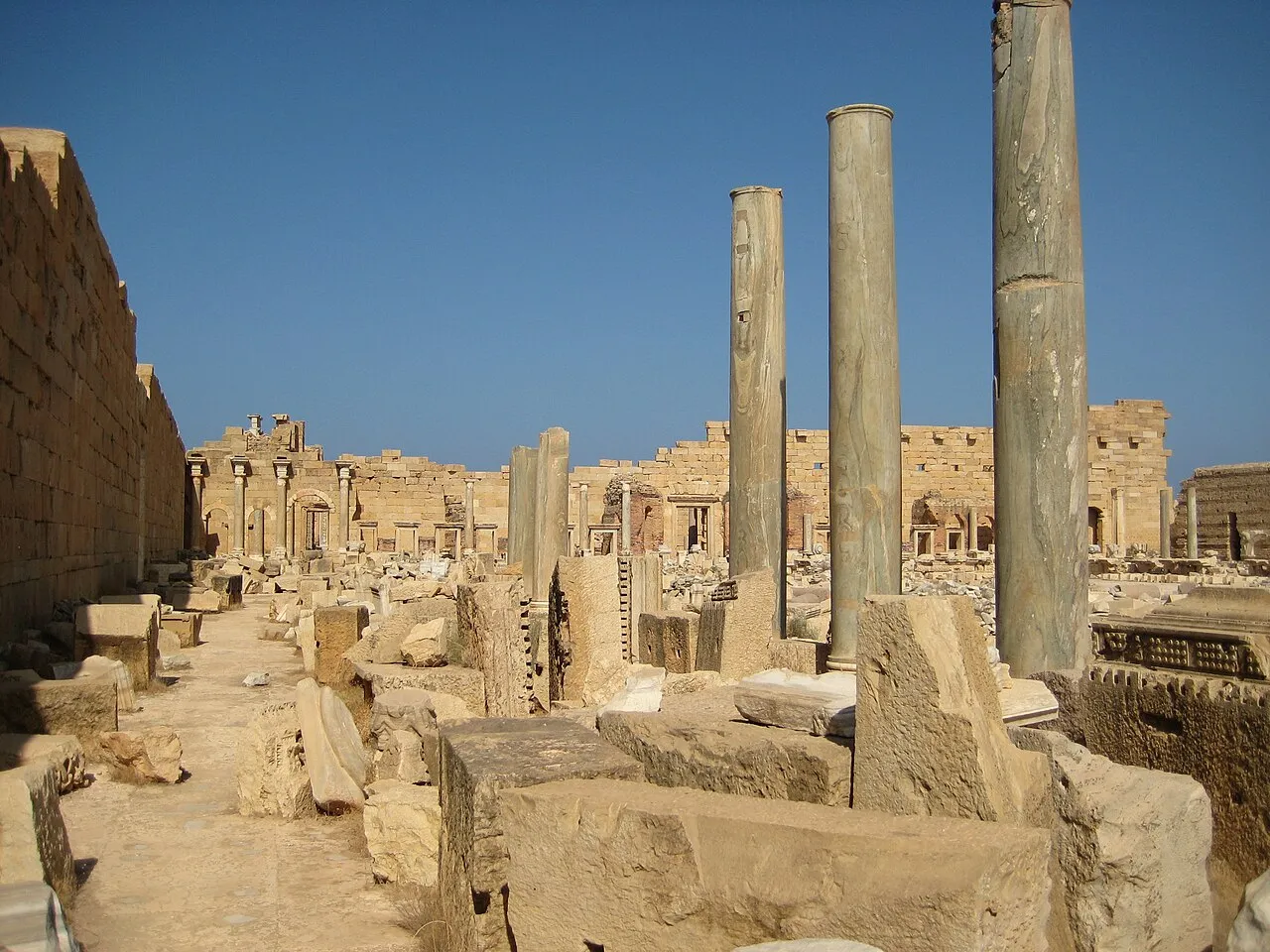
- 193–211 d.C.Ricostruzione di Leptis Magna — Arricchì la sua città natale con monumenti di straordinaria bellezza (un foro, una basilica, un arco quadrifronte, terme, un porto) facendo di Leptis Magna una delle più belle città dell'Impero.Reconstruction of Leptis Magna — He enriched his hometown with monuments of extraordinary beauty (a forum, a basilica, a quadrifrontal arch, baths, a harbor) making Leptis Magna one of the most beautiful cities in the Empire.
05Eredità e Giudizio StoricoLegacy and Historical Judgement
Settimio Severo fu il fondatore dell'ultima grande dinastia romana prima della crisi del III secolo. Fu un soldato-imperatore efficace e spietato, che capì prima di tutti che il potere imperiale poggiava sull'esercito. Il suo lascito più controverso: aver lasciato l'Impero ai suoi due figli incompatibili, Caracalla e Geta, con il risultato che il primo uccise il secondo pochi mesi dopo.
Septimius Severus was the founder of the last great Roman dynasty before the crisis of the 3rd century. He was an effective and ruthless soldier-emperor who understood before anyone else that imperial power rested on the army. His most controversial legacy: having left the Empire to his two incompatible sons, Caracalla and Geta, with the result that the former killed the latter a few months later.
La Trasformazione del PrincipatoThe Transformation of the Principate
Con Severo si chiude definitivamente il Prinzipat augusteo, quella finzione costituzionale per cui l'imperatore era un princeps della res publica, e si apre la monarchia militare vera e propria. Le riforme severiane (Guardia Pretoriana rifondata su base provinciale, aumento salari militari, militarizzazione dell'amministrazione, ius respondendi avocato) gettano le basi per l'Imperium del III secolo. Gli imperatori successivi, fino a Diocleziano governeranno come comandanti in capo dell'esercito, non più come primi cittadini di Roma.
With Severus closes definitively the Augustan Prinzipat, that constitutional fiction by which the emperor was a princeps of the res publica, and opens the genuine military monarchy. The Severan reforms (Praetorian Guard refounded on a provincial basis, military salary increase, militarization of administration, juridical authority absorbed) lay the foundation for the third-century Imperium. Subsequent emperors, until Diocletian, will govern as commanders-in-chief of the army, no longer as first citizens of Rome.
L'Africa al Centro dell'ImperoAfrica at the Centre of the Empire
Per la prima volta nella storia romana, il centro dell'Impero si spostò geograficamente e culturalmente: l'imperatore era africano, l'imperatrice siriana, la corte parlava sia latino che greco che neopunico. La Pannonia e la Siria divennero più importanti dell'Italia per il reclutamento, le province africane per l'approvvigionamento. Roma, pur restando capitale simbolica, perse il ruolo di centro effettivo. È il preludio alla policentralità della Tetrarchia (Diocleziano) e all'eventuale spostamento del centro a Costantinopoli.
For the first time in Roman history, the centre of the Empire shifted geographically and culturally: the emperor was African, the empress Syrian, the court spoke Latin, Greek and Neo-Punic. Pannonia and Syria became more important than Italy for recruitment, the African provinces for supply. Rome, though remaining the symbolic capital, lost its role as effective centre. It is the prelude to the polycentrality of the Tetrarchy (Diocletian) and the eventual shift of the centre to Constantinople.
Il Giudizio StoriograficoThe Historiographical Verdict
Edward Gibbon lo definì «l'autore principale della decadenza dell'Impero Romano», accusandolo di aver militarizzato senza ritorno il principato. Theodor Mommsen lo riabilitò parzialmente: «un grande riformatore, costretto dalle circostanze del suo tempo». Lo storico contemporaneo Anthony Birley, autore della biografia di riferimento (1971, ed. riv. 1988) lo presenta come l'ultimo imperatore competente prima del lungo declino: «non fu Severo a iniziare la crisi, ma i suoi figli e successori a sprecarne l'eredità in vent'anni».
Edward Gibbon defined him as «the principal author of the decline of the Roman Empire», accusing him of having militarized the principate without return. Theodor Mommsen partially rehabilitated him: «a great reformer, forced by the circumstances of his time». The contemporary historian Anthony Birley, author of the reference biography (1971, rev. ed. 1988) presents him as the last competent emperor before the long decline: «it was not Severus who began the crisis, but his sons and successors who squandered his inheritance within twenty years».