01BiografiaBiography
Italica, il provinciale di Spagna (53–78 d.C.)
Italica, the provincial from Spain (53–78 AD)
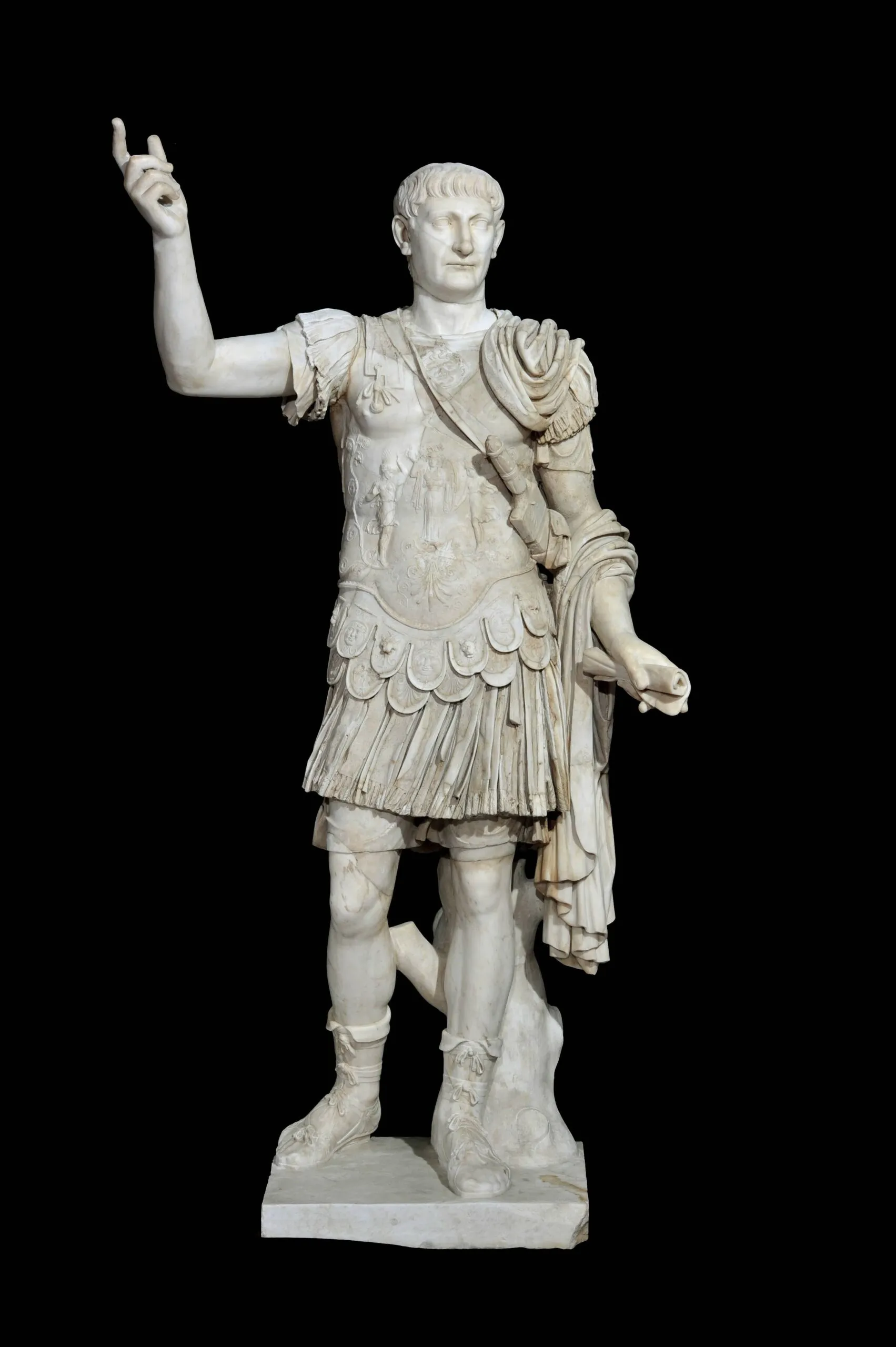
Marco Ulpio Traiano nacque il 18 settembre del 53 d.C. a Italica, in Hispania Baetica, l'odierna Santiponce, alle porte di Siviglia. Era una colonia fondata da Scipione l'Africano nel 206 a.C. per i veterani della seconda guerra punica, abitata da italici romanizzati da sei generazioni: i provinciali di Italica erano ricchi proprietari di oliveti e miniere d'argento, perfettamente integrati nell'aristocrazia imperiale. Fu il primo imperatore romano nato fuori dall'Italia, una svolta epocale nella storia della cittadinanza romana, simbolicamente fondamentale.
Marcus Ulpius Traianus was born on 18 September 53 AD at Italica, in Hispania Baetica, modern Santiponce, just outside Seville. It was a colony founded by Scipio Africanus in 206 BC for the veterans of the Second Punic War, inhabited by Romanised Italics for six generations: the provincials of Italica were wealthy owners of olive groves and silver mines, perfectly integrated into the imperial aristocracy. He was the first Roman emperor born outside Italy, an epochal turning point in the history of Roman citizenship, symbolically fundamental.
Il padre, Marco Ulpio Traiano Senior, era stato senatore, console suffetto sotto Vespasiano, comandante della Legio X Fretensis durante la guerra giudaica, governatore di Siria e poi proconsole d'Asia. Aveva combattuto fianco a fianco con il futuro imperatore Vespasiano e ricevuto da lui gli ornamenti trionfali. Il giovane Traiano crebbe quindi nell'orbita di una famiglia militare ricca, fedele alla dinastia flavia, già pienamente entrata nel patriziato. Il suo greco era impeccabile, ma le fonti notano che fu sempre più a suo agio con il latino tecnico dei campi militari che con la sofisticazione retorica della corte.
His father, Marcus Ulpius Traianus the Elder, had been a senator, suffect consul under Vespasian, commander of the Legio X Fretensis during the Jewish war, governor of Syria and then proconsul of Asia. He had fought side by side with the future emperor Vespasian and received triumphal ornaments from him. Young Trajan thus grew up in the orbit of a wealthy military family, loyal to the Flavian dynasty, already fully entered into the patriciate. His Greek was impeccable, but the sources note that he was always more at ease with the technical Latin of military camps than with the rhetorical sophistication of the court.
La carriera militare (78–97 d.C.)
The military career (78–97 AD)
A differenza di molti aristocratici che attraversavano il cursus honorum in modo formale, Traiano servì come tribuno militare per dieci anni interi, un'eccezione assoluta. Le legioni in Siria, sul Reno, sul Danubio: ogni frontiera dell'Impero lo vide passare in carne e ossa. Sotto Domiziano fu nominato legatus legionis della VII Gemina a Legio (l'odierna León) in Spagna. Nell'89 d.C., quando il governatore della Germania Superiore Antonio Saturnino si ribellò, Traiano marciò con la sua legione attraverso i Pirenei a tempo di record per soccorrere Domiziano. L'imperatore lo ricompensò col consolato suffetto nel 91. Era ormai uno dei generali più affidabili dell'Impero, e, fatto cruciale, uno dei pochi a non essersi compromesso con la politica del terrore degli ultimi anni di Domiziano.
Unlike many aristocrats who traversed the cursus honorum formally, Trajan served as military tribune for ten full years: an absolute exception. The legions in Syria, on the Rhine, on the Danube: every frontier of the Empire saw him pass in flesh and blood. Under Domitian he was appointed legatus legionis of the VII Gemina at Legio (modern León) in Spain. In 89 AD, when the governor of Upper Germany Antonius Saturninus rebelled, Trajan marched with his legion across the Pyrenees in record time to aid Domitian. The emperor rewarded him with the suffect consulship in 91. He was by now one of the most reliable generals of the Empire, and, crucially, one of the few who had not been compromised by the terror politics of Domitian's final years.
L'adozione di Nerva (97 d.C.)
The adoption by Nerva (97 AD)
Dopo l'assassinio di Domiziano il 18 settembre del 96 d.C., il Senato proclamò imperatore l'anziano senatore Marco Cocceio Nerva, sessantasei anni, giurista distinto ma senza alcun appoggio nell'esercito. Era una scelta di compromesso, accettabile per i senatori ma esposta. Nell'ottobre del 97 d.C. la guardia pretoriana si ammutinò chiedendo la testa degli assassini di Domiziano: Nerva fu trattenuto in palazzo, costretto a consegnare l'ex prefetto del pretorio Petronio Secondo e altri congiurati che furono massacrati sotto i suoi occhi. Era umiliato; capì che non sarebbe sopravvissuto senza il sostegno dell'esercito. La soluzione politica fu geniale: invece di scegliere un erede di sangue, adottò il generale più popolare delle legioni renane, Traiano.
After the assassination of Domitian on 18 September 96 AD, the Senate proclaimed the elderly senator Marcus Cocceius Nerva as emperor: sixty-six years old, a distinguished jurist but without any backing in the army. It was a compromise choice, acceptable to senators but exposed. In October 97 AD the Praetorian Guard mutinied demanding the heads of Domitian's assassins: Nerva was confined in the palace, forced to hand over the former praetorian prefect Petronius Secundus and other conspirators, who were massacred before his eyes. He was humiliated; he understood he would not survive without the army's support. The political solution was brilliant: instead of choosing a blood heir, he adopted the most popular general of the Rhine legions, Trajan.
L'adozione fu annunciata sul Campidoglio nell'ottobre del 97 d.C. con queste parole, riportate da Cassio Dione: «Possa essere fortunato per il popolo romano e per me; adotto Marco Ulpio Nerva Traiano». Traiano si trovava in quel momento a Colonia, sulla frontiera renana. Quando ricevette la notizia, accettò con la celebre frase: «Vado dove la Repubblica mi chiama». Pochi mesi dopo, il 28 gennaio del 98 d.C., Nerva morì di colpo apoplettico. Traiano divenne imperatore senza neppure dover tornare a Roma per il momento: rimase sul Reno e poi sul Danubio per quasi due anni, riorganizzando le frontiere e dando una prova di sobrietà che lo rese leggendario. Solo nell'autunno del 99 d.C. entrò finalmente nella capitale, a piedi, accolto dal Senato e dal popolo come un imperatore venuto dal fronte.
The adoption was announced on the Capitol in October 97 AD with these words, reported by Cassius Dio: «May it be fortunate for the Roman people and for me; I adopt Marcus Ulpius Nerva Trajan». Trajan was at that moment in Cologne, on the Rhine frontier. When he received the news, he accepted with the famous phrase: «I go where the Republic calls me». A few months later, on 28 January 98 AD, Nerva died of apoplexy. Trajan became emperor without even needing to return to Rome for the moment: he remained on the Rhine and then on the Danube for almost two years, reorganising the frontiers and giving a proof of sobriety that made him legendary. Only in the autumn of 99 AD did he finally enter the capital, on foot, welcomed by the Senate and the people as an emperor coming from the front.
L'apogeo e la fine (98–117 d.C.)
Apogee and end (98–117 AD)
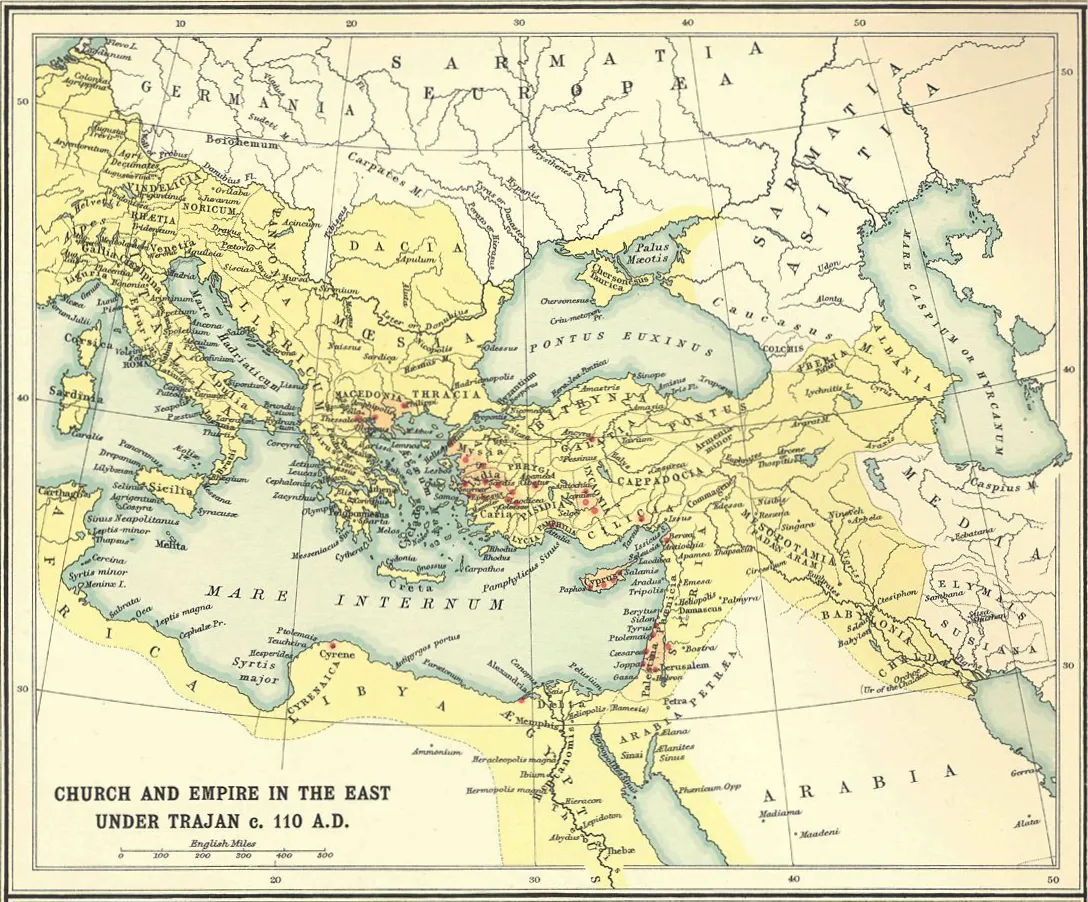
Diciannove anni di regno. Due grandi guerre daciche (101–102, 105–106) che gli portarono il 500.000 prigionieri e 165 tonnellate d'oro calcolate dal Tesoro imperiale: un bottino senza precedenti. Una colossale spedizione partica (114–117) che gli aprì l'Armenia, la Mesopotamia, l'Adiabene, e lo portò fino al Golfo Persico, dove, secondo Cassio Dione, guardando una nave mercantile diretta verso l'India, pianse di non essere abbastanza giovane per seguirla. Era il punto più orientale mai raggiunto da un'aquila romana. L'Impero raggiunse la sua massima estensione storica: circa 5,9 milioni di km².
Nineteen years of reign. Two great Dacian wars (101–102, 105–106) which brought him 500,000 prisoners and 165 tons of gold calculated by the imperial Treasury: an unprecedented booty. A colossal Parthian expedition (114–117) which opened to him Armenia, Mesopotamia, Adiabene, and brought him as far as the Persian Gulf, where, according to Cassius Dio, looking at a merchant ship bound for India, he wept that he was not young enough to follow it. It was the easternmost point ever reached by a Roman eagle. The Empire reached its greatest historical extent: about 5.9 million km².
Negli ultimi mesi della campagna orientale le province alle spalle si ribellarono in massa, gli ebrei della diaspora insorgenro in Cirenaica, in Egitto, a Cipro (la cosiddetta guerra di Kitos, 115–117 d.C.), con massacri reciproci di proporzioni terribili. Mesopotamia e Babilonia furono perse quasi subito. Traiano, ormai anziano e affaticato, prese la via del ritorno. Nell'estate del 117, durante il viaggio, fu colpito da un ictus paralizzante in Cilicia. Morì a Selino (oggi Gazipaşa, in Turchia meridionale) l'8 agosto del 117 d.C. Aveva sessantatré anni. Sul letto di morte, secondo una tradizione contestata, adottò il cugino e luogotenente Publio Elio Adriano, governatore di Siria; alcuni storici sospettarono che l'adozione fosse stata orchestrata dalla moglie Plotina dopo la morte. Le sue ceneri furono riportate a Roma e, contrariamente alla tradizione che proibiva sepolture intra-urbane, deposte alla base della sua Colonna nel Foro Traiano: l'unico imperatore con simile onore.
In the final months of the eastern campaign the rear provinces revolted en masse, the Jews of the diaspora rose up in Cyrenaica, in Egypt, on Cyprus (the so-called Kitos war, 115–117 AD), with mutual massacres of terrible proportions. Mesopotamia and Babylonia were lost almost at once. Trajan, by now elderly and exhausted, took the road home. In the summer of 117, during the journey, he was struck by a paralysing stroke in Cilicia. He died at Selinus (today Gazipaşa, in southern Turkey) on 8 August 117 AD. He was sixty-three. On his deathbed, according to a contested tradition, he adopted his cousin and lieutenant Publius Aelius Hadrianus, governor of Syria; some historians suspected the adoption had been orchestrated by his wife Plotina after death. His ashes were brought back to Rome and, contrary to the tradition prohibiting intra-urban burials, placed at the base of his Column in the Forum of Trajan: the only emperor accorded such an honour.
02Battaglie e Campagne MilitariBattles and Military Campaigns
Le due guerre daciche (101–106 d.C.)
The two Dacian wars (101–106 AD)
La Dacia, corrispondente all'odierna Romania e parte dell'Ungheria, era da decenni una spina nel fianco di Roma. Il re Decebalo, abile politicamente e militarmente, aveva costretto Domiziano nell'89 d.C. a un trattato umiliante in cui Roma pagava sussidi annuali in cambio di pace. Le miniere d'oro dei Carpazi finanziavano l'esercito daco; le sue fortezze montane erano fra le più sofisticate del mondo barbarico. Traiano, da generale di campo, conosceva quella frontiera e considerava la pace di Domiziano una vergogna nazionale.
Dacia, corresponding to modern Romania and part of Hungary, had been a thorn in Rome's side for decades. King Decebalus, politically and militarily able, had forced Domitian in 89 AD into a humiliating treaty in which Rome paid annual subsidies in exchange for peace. The Carpathian gold mines financed the Dacian army; his mountain fortresses were among the most sophisticated in the barbarian world. Trajan, as a field general, knew that frontier and considered Domitian's peace a national disgrace.
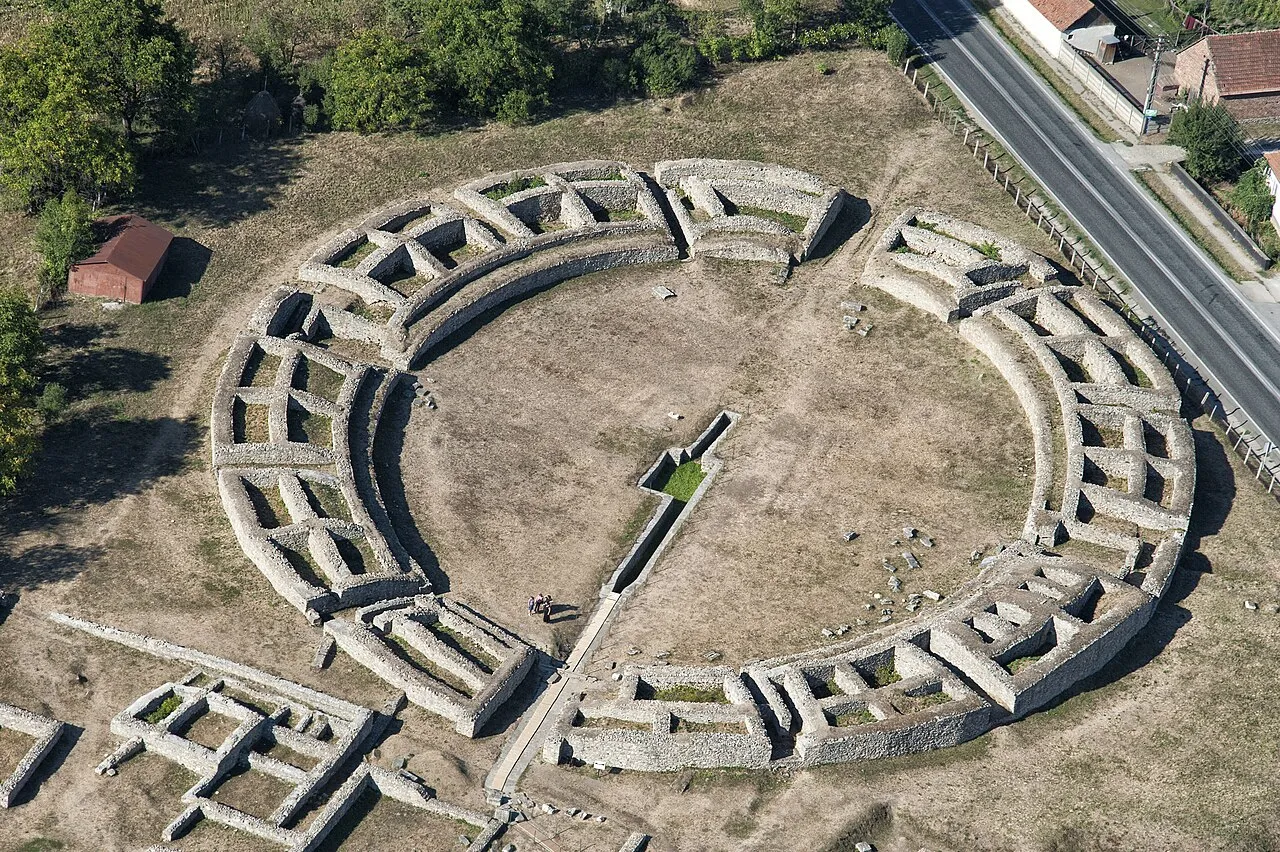
- 101–102 d.C.Prima guerra dacica — Traiano attraversò il Danubio su un ponte di barche presso Viminacium con un esercito di circa 100.000 uomini divisi in due colonne. Vinse la battaglia campale di Tapae (autunno 101), la stessa località in cui i Romani avevano combattuto i Daci sotto Domiziano. Decebalo, vedendosi accerchiato durante l'inverno fra le sue stesse roccaforti, chiese pace nella primavera del 102: cessione di territori, restituzione dei disertori, rinuncia ad arruolare soldati romani. Traiano accettò, ottenne il titolo di Dacicus e tornò a Roma per il trionfo. Tutti sapevano che la pace era una tregua.First Dacian War — Trajan crossed the Danube on a boat-bridge near Viminacium with an army of about 100,000 men divided into two columns. He won the pitched battle of Tapae (autumn 101), the same place where the Romans had fought the Dacians under Domitian. Decebalus, seeing himself encircled during winter amid his own strongholds, sued for peace in spring 102: cession of territories, restitution of deserters, renunciation of recruiting Roman soldiers. Trajan accepted, obtained the title Dacicus and returned to Rome for the triumph. Everyone knew the peace was a truce.
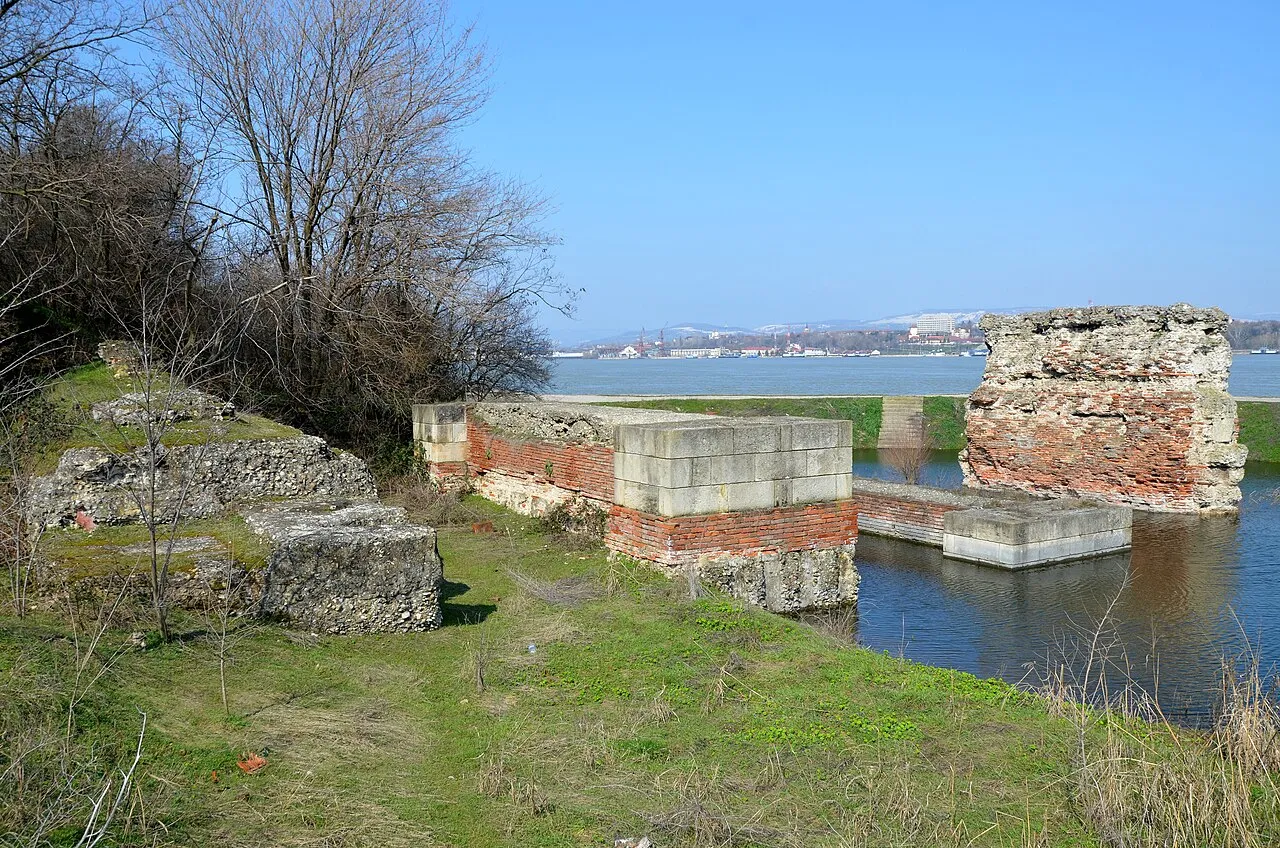
- 105–106 d.C.Seconda guerra dacica e conquista definitiva — Decebalo aveva violato il trattato dal primo momento. Traiano questa volta non rischiò: fece costruire da Apollodoro di Damasco un colossale ponte permanente in pietra e legno sul Danubio, lungo 1.135 metri, con venti piloni di pietra alti trentacinque metri (il più grande ponte dell'antichità). Attraversò con dieci legioni, circa 200.000 uomini, contando ausiliari, e portò la guerra al cuore del regno. Assediò sistematicamente le fortezze dei Carpazi. Sarmizegetusa Regia, la capitale daca, cadde nell'estate del 106. Decebalo fuggì verso nord ma fu inseguito da un decurione romano di nome Tiberio Claudio Massimo (la cui stele funeraria ne immortalò la storia): vedendosi raggiunto, si tagliò la gola con la falx. La sua testa fu portata a Traiano e poi esposta a Roma. La Dacia divenne provincia.Second Dacian War and definitive conquest — Decebalus had violated the treaty from the very first moment. Trajan this time took no risks: he had Apollodorus of Damascus build a colossal permanent bridge in stone and wood over the Danube, 1,135 metres long, with twenty stone piers thirty-five metres high (the largest bridge of antiquity). He crossed with ten legions, about 200,000 men, counting auxiliaries, and brought the war to the heart of the kingdom. He systematically besieged the Carpathian fortresses. Sarmizegetusa Regia, the Dacian capital, fell in summer 106. Decebalus fled north but was pursued by a Roman decurion named Tiberius Claudius Maximus (whose funerary stele immortalised the story): seeing himself overtaken, he cut his throat with the falx. His head was brought to Trajan and then displayed in Rome. Dacia became a province.
Il bottino fu astronomico. Le fonti antiche parlano di cinquecentomila prigionieri e di centosessantacinque tonnellate d'oro e trecentotrentuno tonnellate d'argento, cifre probabilmente esagerate ma confermate nella sostanza dalle moderne stime di volume delle miniere dei Carpazi. Roma celebrò centoventitré giorni di giochi pubblici con diecimila gladiatori e undicimila animali. La Dacia divenne romana per oltre centosessant'anni, fino all'abbandono di Aureliano nel 271 d.C. La latinità della lingua rumena moderna è figlia diretta di questa conquista: il rumeno è l'unica lingua romanza dell'Europa orientale, isola romanizzata sopravvissuta a quindici secoli di pressione slava e turca.
The booty was astronomical. Ancient sources speak of five hundred thousand prisoners and one hundred and sixty-five tons of gold and three hundred and thirty-one of silver, figures probably exaggerated but substantially confirmed by modern estimates of the volume of the Carpathian mines. Rome celebrated one hundred and twenty-three days of public games with ten thousand gladiators and eleven thousand animals. Dacia became Roman for over a hundred and sixty years, until Aurelian's abandonment in 271 AD. The Latinity of the modern Romanian language is the direct daughter of this conquest: Romanian is the only Romance language of Eastern Europe, a Romanised island surviving fifteen centuries of Slavic and Turkic pressure.
L'annessione dell'Arabia Nabatea (106 d.C.)
The annexation of Nabataean Arabia (106 AD)
Mentre Traiano celebrava il trionfo dacico, il legato di Siria Aulo Cornelio Palma annetté pacificamente il regno dei Nabatei, alla morte del re Rabbel II senza eredi. Nacque così la provincia di Arabia Petraea, che includeva Petra (capitale carovaniera fra le più ricche dell'Oriente), Bostra, e il controllo delle rotte commerciali verso l'Arabia meridionale e l'Oceano Indiano. Era un'acquisizione strategica: il commercio dell'incenso, della mirra, delle spezie orientali e della seta cinese passava ora sotto controllo fiscale romano. Una nuova via militare, la via Nova Traiana, collegò Bostra al Mar Rosso.
While Trajan was celebrating the Dacian triumph, the legate of Syria Aulus Cornelius Palma peacefully annexed the kingdom of the Nabataeans, at the death of King Rabbel II without heirs. Thus was born the province of Arabia Petraea, which included Petra (a caravan capital among the wealthiest of the East), Bostra, and control of the trade routes to southern Arabia and the Indian Ocean. It was a strategic acquisition: the trade in frankincense, myrrh, eastern spices and Chinese silk now came under Roman fiscal control. A new military road, the via Nova Traiana, linked Bostra to the Red Sea.
La spedizione partica (114–117 d.C.)
The Parthian expedition (114–117 AD)
- 114 d.C.Conquista dell'Armenia — Il re parto Cosroe I aveva deposto il re armeno filo-romano e installato un proprio candidato senza consultare Roma: violazione palese del trattato di Nerone. Traiano partì da Antiochia con un esercito enorme. Avanzò senza incontrare quasi resistenza: l'Armenia capitolò, fu trasformata in provincia, il pretendente parto Partamasiri fu ucciso "tentando la fuga".Conquest of Armenia — The Parthian king Osroes I had deposed the pro-Roman Armenian king and installed his own candidate without consulting Rome: a blatant violation of Nero's treaty. Trajan set out from Antioch with an enormous army. He advanced almost without resistance: Armenia capitulated, was turned into a province, the Parthian pretender Parthamasiris was killed "while attempting to flee".
- 115 d.C.Conquista della Mesopotamia — Discese verso sud-est lungo la valle del Tigri. Nisibi, Singara, Edessa, Adiabene cadono una dopo l'altra. La Mesopotamia centrale e settentrionale diventa provincia romana per la prima volta nella storia. Traiano svernò ad Antiochia, dove fu testimone, sopravvivendo per miracolo, del catastrofico terremoto del 13 dicembre 115 d.C. che rase al suolo la città uccidendo decine di migliaia di persone.Conquest of Mesopotamia — He descended south-east along the Tigris valley. Nisibis, Singara, Edessa, Adiabene fall one after another. Central and northern Mesopotamia becomes a Roman province for the first time in history. Trajan wintered at Antioch, where he witnessed, miraculously surviving, the catastrophic earthquake of 13 December 115 AD that levelled the city killing tens of thousands.
- 116 d.C.Babilonia, Ctesifonte, Golfo Persico — La campagna del 116 fu la più audace mai tentata da un esercito romano. Traiano costruì una flotta sul Tigri, discese fino a Babilonia (dove visitò la stanza in cui era morto Alessandro Magno offrendo sacrifici al suo spirito), poi prese Ctesifonte, capitale partica. Continuò la discesa fino a Charax Spasinou, sul Golfo Persico, dove ricevette ambascerie dai mercanti indiani. Era il punto più orientale toccato da Roma. «Se avessi vent'anni di meno andrei anch'io in India», disse guardando una nave salpare per Oriente. Si fece nominare Parthicus ed emise monete con la leggenda PARTHIA CAPTA.Babylon, Ctesiphon, Persian Gulf — The 116 campaign was the most daring ever attempted by a Roman army. Trajan built a fleet on the Tigris, descended as far as Babylon (where he visited the room in which Alexander the Great had died, offering sacrifices to his spirit), then took Ctesiphon, the Parthian capital. He continued the descent to Charax Spasinou, on the Persian Gulf, where he received embassies from Indian merchants. It was the easternmost point reached by Rome. «If I were twenty years younger I too would go to India», he said watching a ship sail east. He had himself named Parthicus and issued coins bearing the legend PARTHIA CAPTA.
- 115–117 d.C.La guerra di Kitos e il crollo orientale — Mentre Traiano era in Mesopotamia, le comunità ebraiche della diaspora insorsero violentemente in Egitto, Cirenaica, Cipro, Mesopotamia. I massacri reciproci furono terribili: la Cirenaica fu spopolata, Cipro vide la distruzione di Salamina. Traiano dovette distrarre legioni intere per reprimerle, sotto il comando del generale ebreo-romano Lusio Quieto, da cui la guerra prese il nome. Contemporaneamente, in Mesopotamia, le città conquistate insorsero. Quando Traiano riprese la via per Roma, la conquista orientale si stava già sgretolando. Adriano l'avrebbe definitivamente abbandonata.The Kitos war and the eastern collapse — While Trajan was in Mesopotamia, the Jewish communities of the diaspora rose violently in Egypt, Cyrenaica, Cyprus, Mesopotamia. The mutual massacres were terrible: Cyrenaica was depopulated, Cyprus saw the destruction of Salamis. Trajan had to divert whole legions to suppress them, under the command of the Jewish-Roman general Lusius Quietus, from whom the war took its name. At the same time, in Mesopotamia, the conquered cities rose. When Trajan took the road back to Rome, the eastern conquest was already crumbling. Hadrian would definitively abandon it.
03Riforme e ProvvedimentiReforms and Measures
Optimus Princeps e il rapporto col Senato
Optimus Princeps and the Senate
Il rapporto di Traiano col Senato fu radicalmente nuovo. Dopo i quindici anni di terrore domizianeo (processi per maiestas, esecuzioni di senatori illustri, esili in massa) il principe ispanico arrivò con un gesto che fu insieme simbolico e giuridico: il giorno stesso del suo ingresso in Senato giurò pubblicamente che «mai avrebbe condannato a morte un senatore». Fu un voto rispettato per diciannove anni. Per i contemporanei era un mondo nuovo. Il Senato gli attribuì spontaneamente il titolo di Optimus Princeps, "principe ottimo", e lo impose come parte integrante della titolatura imperiale, fra Augustus e Caesar. Era un riconoscimento mai concesso prima, e mai più ripetuto allo stesso modo.
Trajan's relationship with the Senate was radically new. After fifteen years of Domitianic terror (maiestas trials, executions of distinguished senators, mass exiles) the Spanish prince arrived with a gesture that was at once symbolic and juridical: on the very day of his entry into the Senate he publicly swore that «he would never sentence a senator to death». It was a vow kept for nineteen years. For contemporaries it was a new world. The Senate spontaneously conferred upon him the title Optimus Princeps, "best prince", and imposed it as integral part of the imperial titulature, between Augustus and Caesar. It was a recognition never granted before, and never repeated in the same way.
Gli alimenta — il primo welfare pubblico
The alimenta — the first public welfare
Il programma degli alimenta, avviato da Nerva e ampliato sistematicamente da Traiano, è una delle più sofisticate politiche sociali dell'antichità. Il meccanismo era ingegnoso: il fisco imperiale concedeva prestiti ipotecari a tasso agevolato (5%) ai proprietari terrieri italici; gli interessi versati annualmente alimentavano un fondo che pagava sussidi mensili ai bambini poveri delle stesse municipalità: ragazzi e ragazze, anche illegittimi. Una tavola di bronzo trovata a Veleia (Piacenza) nel 1747 conserva il bilancio completo di un'unità locale: 245 ragazzi e 35 ragazze sostenuti con un capitale prestato di 1.044.000 sesterzi. Era contemporaneamente sussidio sociale, sostegno demografico, prestito agricolo agevolato. Funzionò per oltre due secoli e fu replicato in tutte le province italiche.
The alimenta programme, begun by Nerva and systematically expanded by Trajan, is one of the most sophisticated social policies of antiquity. The mechanism was ingenious: the imperial fiscus granted mortgage loans at favourable rates (5%) to Italic landowners; the interest paid annually fed a fund that paid monthly subsidies to poor children of the same municipalities: boys and girls, even illegitimate. A bronze tablet found at Veleia (Piacenza) in 1747 preserves the complete account of a local unit: 245 boys and 35 girls supported with a loan capital of 1,044,000 sesterces. It was simultaneously social subsidy, demographic support and agricultural credit. It functioned for over two centuries and was replicated throughout the Italic provinces.
Finanze, esercito, amministrazione
Finances, army, administration
L'oro dacico riempì il Tesoro imperiale. Traiano poté permettersi una congiarium (distribuzione di denaro al popolo) di 650 denari a testa, tre paghe annuali di un legionario, e finanziare il programma più ambizioso di opere pubbliche del primo secolo senza svalutare la moneta. Aumentò la paga delle truppe ausiliarie, fondò nuove colonie di veterani (Sarmizegetusa, Timgad in Africa, Selinunte in Cilicia), riformò il sistema delle vigintiviri, codificò il diritto provinciale. Estese la via Traiana da Benevento a Brindisi raddoppiando la capacità di traffico verso l'Oriente. A Ostia fece costruire il portus Traiani, un bacino esagonale di circa 32 ettari capace di ospitare cento navi di grosso tonnellaggio, ancora oggi visibile come lago artificiale presso l'aeroporto di Fiumicino.
Dacian gold filled the imperial Treasury. Trajan could afford a congiarium (distribution of money to the people) of 650 denarii a head, three annual pays of a legionary, and finance the most ambitious public works programme of the first century without devaluing the currency. He raised the pay of auxiliary troops, founded new veteran colonies (Sarmizegetusa, Timgad in Africa, Selinunte in Cilicia), reformed the system of the vigintiviri, codified provincial law. He extended the via Traiana from Benevento to Brindisi doubling traffic capacity toward the East. At Ostia he had the portus Traiani built, a hexagonal basin of about 32 hectares capable of hosting one hundred large-tonnage ships, still visible today as an artificial lake near Fiumicino airport.
04Opere e CostruzioniWorks and Constructions
Apollodoro di Damasco
Apollodorus of Damascus
Dietro ogni grande opera traianea c'è il nome di un solo uomo: Apollodoro di Damasco, l'ingegnere-architetto siriano che aveva conosciuto Traiano sul Danubio, dove gli aveva costruito il ponte di pietra delle guerre daciche. Per i quindici anni successivi fu praticamente il capo della cancelleria edilizia imperiale. Le sue opere segnano la massima espressione tecnica dell'ingegneria romana: il Ponte sul Danubio (1.135 m, distrutto da Adriano per ragioni strategiche), il Foro di Traiano, la Basilica Ulpia, la Colonna Traiana, i Mercati di Traiano, le Terme di Traiano sul Colle Oppio (sopra le rovine sepolte della Domus Aurea neroniana, le cui camere divennero quelle "grotte" in cui Raffaello e Pinturicchio nel Rinascimento scoprirono il "grottesco"). Era un greco-siriano di estrazione media, e divenne uno dei più potenti consiglieri tecnici dell'Impero.
Behind every great Trajanic work stands the name of a single man: Apollodorus of Damascus, the Syrian engineer-architect who had known Trajan on the Danube, where he had built him the stone bridge of the Dacian wars. For the next fifteen years he was practically head of the imperial building chancery. His works mark the highest expression of Roman engineering: the Danube Bridge (1,135 m, destroyed by Hadrian for strategic reasons), the Forum of Trajan, the Ulpian Basilica, Trajan's Column, the Markets of Trajan, the Baths of Trajan on the Oppian Hill (above the buried ruins of Nero's Domus Aurea, whose rooms became those "grottoes" in which Raphael and Pinturicchio rediscovered the "grotesque" in the Renaissance). He was a Greco-Syrian of middling extraction, and became one of the most powerful technical advisers of the Empire.
Su di lui circolava un aneddoto rivelatore. Quando il futuro imperatore Adriano, allora ancora cugino di Traiano e principe in via di formazione, aveva interrotto una conversazione tecnica fra il vecchio imperatore e Apollodoro mostrando i propri disegni di tempio, Apollodoro lo aveva liquidato sgarbatamente: «Vai a disegnare le tue zucche» (allusione alle cupole a costoloni che Adriano amava). Adriano non dimenticò. Quando salì al trono nel 117 lo fece prima esiliare, poi, secondo Cassio Dione, uccidere. È una delle prime testimonianze certe della tensione fra principe e architetto, fra committenza e talento tecnico: un tema che sarebbe tornato in tutta la storia dell'arte europea.
A revealing anecdote circulated about him. When the future emperor Hadrian, then still Trajan's cousin and a prince in formation, had interrupted a technical conversation between the old emperor and Apollodorus by showing his own temple drawings, Apollodorus had brushed him off rudely: «Go and draw your pumpkins» (an allusion to the ribbed domes Hadrian loved). Hadrian did not forget. When he ascended the throne in 117 he had him first exiled and then, according to Cassius Dio, killed. It is one of the first certain testimonies of the tension between prince and architect, between patronage and technical talent: a theme that would recur throughout the history of European art.
Il Foro di Traiano e la Colonna
The Forum of Trajan and the Column
Il Foro di Traiano, inaugurato nel 112 d.C., è il più grande e ultimo dei fori imperiali di Roma. Per costruirlo Apollodoro fece tagliare un'intera ala del colle Quirinale, un'operazione di sbancamento di oltre trenta metri di altezza, equivalente a un grattacielo di dieci piani, eseguita con utensili manuali. La Basilica Ulpia, la più grande basilica civile mai costruita a Roma (lunga 170 metri, larga 60), ne occupava il centro. Ai lati, due biblioteche (una greca, una latina) affrontate. Fra di esse, al centro di un piccolo cortile, si elevava la Colonna Traiana.
The Forum of Trajan, inaugurated in 112 AD, is the largest and last of Rome's imperial fora. To build it Apollodorus had an entire flank of the Quirinal hill cut away, an excavation operation of more than thirty metres of height, equivalent to a ten-storey skyscraper, executed with hand tools. The Ulpian Basilica, the largest civil basilica ever built in Rome (170 metres long, 60 wide), occupied its centre. On the sides, two libraries (one Greek, one Latin) faced each other. Between them, at the centre of a small courtyard, rose Trajan's Column.
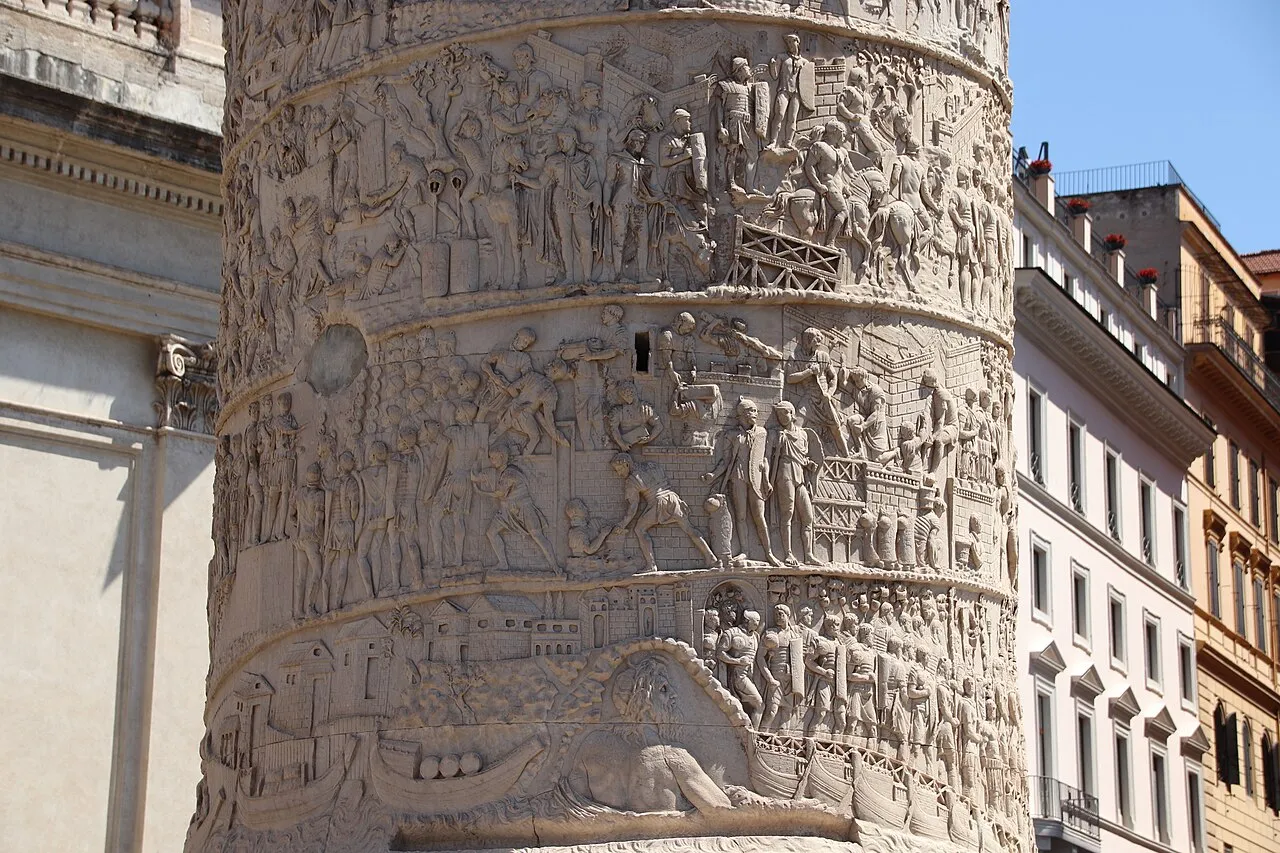
La Colonna è uno dei monumenti più straordinari dell'antichità. Alta 30 metri (38 col basamento), in marmo lunense, scolpita all'esterno con un fregio elicoidale di 200 metri di lunghezza che si avvolge a spirale come un papiro srotolato. Vi sono rappresentate 155 scene con oltre 2.500 figure umane scolpite a bassorilievo, che narrano le due guerre daciche dal primo passaggio del Danubio al suicidio di Decebalo. È al tempo stesso un capolavoro propagandistico, un monumento funebre (le ceneri di Traiano furono deposte alla base nel 117 d.C., e una statua del principe sormontava la colonna fino al 1587, quando papa Sisto V la sostituì con quella di San Pietro), e un documento etnografico straordinario sull'esercito romano e sui Daci. Per gli archeologi moderni è la più ricca fonte iconografica per la conoscenza di armi, fortificazioni, ingegneria militare, uniformi, etnografia balcanica del II secolo.
The Column is one of the most extraordinary monuments of antiquity. 30 metres tall (38 with the base), in Luna marble, sculpted on the outside with a helical frieze 200 metres long that spirals like an unrolled papyrus. There are represented 155 scenes with over 2,500 human figures sculpted in bas-relief, narrating the two Dacian wars from the first crossing of the Danube to the suicide of Decebalus. It is at once a propaganda masterpiece, a funerary monument (Trajan's ashes were placed at its base in 117 AD, and a statue of the prince crowned the column until 1587, when Pope Sixtus V replaced it with that of Saint Peter), and an extraordinary ethnographic document on the Roman army and the Dacians. For modern archaeologists it is the richest iconographic source for the knowledge of weapons, fortifications, military engineering, uniforms and Balkan ethnography of the 2nd century.
I Mercati di Traiano
The Markets of Trajan
Sul fianco del Quirinale tagliato a strapiombo, Apollodoro costruì il complesso semicircolare che oggi chiamiamo Mercati di Traiano: cinque livelli sovrapposti di tabernae, uffici amministrativi, sale di rappresentanza, una grande aula a volte di laterizio sospesa, raccordata da scale e rampe che salgono fino al Salita del Grillo. È il primo centro commerciale a più piani della storia, ed è anche il primo grande edificio in opus latericium (mattoni) esibito a vista, senza rivestimento di marmo: un'audacia stilistica che inaugurò l'estetica dell'architettura romana matura. Le tabernae, circa 150, ospitavano i mercati alimentari di quartiere, gli uffici dell'annona imperiale, e probabilmente le sedi delle attività finanziarie collegate al Foro. La sua conservazione è dovuta al fatto che nel Medioevo divenne fortezza e poi monastero, evitando le spoliazioni che distrussero quasi tutto il Foro adiacente.
On the flank of the Quirinal cut sheer, Apollodorus built the semicircular complex we today call the Markets of Trajan: five stacked levels of tabernae, administrative offices, reception halls, a great vaulted suspended brick hall, connected by stairs and ramps rising as far as the Salita del Grillo. It is the first multi-storey shopping centre in history, and also the first great building in opus latericium (brickwork) displayed bare, without marble cladding: a stylistic boldness that inaugurated the aesthetics of mature Roman architecture. The tabernae, about 150, housed the neighbourhood food markets, the offices of the imperial annona, and probably the seats of the financial activities linked to the Forum. Its preservation is owed to the fact that in the Middle Ages it became a fortress and then a monastery, avoiding the spoliations that destroyed almost the entire adjacent Forum.
05Plinio e i Cristiani — il Carteggio dalla BitiniaPliny and the Christians — the Correspondence from Bithynia
Fra il 111 e il 113 d.C., Traiano inviò il senatore Plinio il Giovane, consolare, ricco proprietario di Como, esecutore testamentario di Tacito, come legatus pro praetore straordinario nella provincia di Bitinia-Ponto, sulla costa meridionale del Mar Nero. La situazione era complessa: le città provinciali avevano dissipato i propri fondi pubblici in edifici incompiuti, le contabilità municipali erano in rovina, le comunità religiose proliferavano. Plinio scrisse al principe quasi quotidianamente chiedendo direttive: lettere brevi, tecniche, deferenti. Le risposte di Traiano sono altrettanto brevi, asciutte, pragmatiche. Il loro carteggio, il libro X delle Lettere, è la più viva immagine sopravvissuta del rapporto fra principe e governatore nell'amministrazione di alta epoca imperiale.
Between 111 and 113 AD, Trajan sent the senator Pliny the Younger, consular, wealthy owner of Como, executor of Tacitus's will, as legatus pro praetore extraordinary to the province of Bithynia-Pontus, on the southern coast of the Black Sea. The situation was complex: the provincial cities had squandered their public funds on unfinished buildings, municipal accounts were in ruin, religious communities proliferated. Pliny wrote to the prince almost daily asking for instructions: short, technical, deferential letters. Trajan's replies are equally brief, dry, pragmatic. Their correspondence, Book X of the Letters, is the most vivid surviving image of the relationship between prince and governor in the high imperial administration.
La lettera 96 — sui Cristiani
Letter 96 — on the Christians
La lettera più famosa è la Ep. X, 96. Plinio si imbatté in un fenomeno nuovo: una "superstitio prava et immodica", una setta orientale chiamata christiani che si rifiutava di sacrificare agli dèi tradizionali e onorare l'immagine dell'imperatore. Aveva interrogato e condannato alcuni, ma poi era venuto a scoprire che migliaia di persone in Bitinia erano cristiani: contadini, donne, schiavi, persino due diaconesse interrogate sotto tortura. Aveva sospeso le esecuzioni e scrisse a Traiano chiedendo direttive: bisognava considerarli colpevoli per il solo fatto di essere cristiani, o solo per crimini specifici? Punire l'apostasia o accettare la riconversione?
The most famous letter is Ep. X, 96. Pliny had stumbled upon a new phenomenon: a "superstitio prava et immodica", an oriental sect called christiani that refused to sacrifice to the traditional gods and honour the image of the emperor. He had interrogated and condemned some, but then discovered that thousands of people in Bithynia were Christians: peasants, women, slaves, even two deaconesses interrogated under torture. He had suspended the executions and wrote to Trajan asking for guidance: should they be considered guilty merely for being Christian, or only for specific crimes? Punish apostasy or accept reconversion?
È uno dei testi giuridici più importanti dell'antichità. Traiano stabilì una posizione di compromesso pragmatico: i cristiani erano illegali (perché rifiutavano il culto imperiale), ma non da ricercare attivamente; potevano essere puniti se denunciati e refrattari, ma graziati se rinnegavano; le denunce anonime erano respinte. Per quasi due secoli, fino a Decio (250 d.C.), questa fu la base giuridica della tolleranza di fatto: una politica che evitava sia il martirio di massa sia la legittimazione della nuova religione. Tertulliano nel III secolo l'avrebbe criticata come internamente contraddittoria («Se sono colpevoli perché non cercarli? Se non colpevoli, perché punirli quando denunciati?»), ma proprio quella ambiguità permise al cristianesimo di espandersi nei due secoli successivi senza essere annientato. Il futuro dell'Europa religiosa nacque, in qualche modo, in quattro righe di un rescritto traianeo.
It is one of the most important juridical texts of antiquity. Trajan established a position of pragmatic compromise: Christians were illegal (because they refused the imperial cult), but not to be actively sought; they could be punished if denounced and obstinate, but pardoned if they recanted; anonymous denunciations were rejected. For nearly two centuries, until Decius (250 AD), this was the juridical basis of de facto tolerance: a policy that avoided both mass martyrdom and the legitimisation of the new religion. Tertullian in the third century would criticise it as internally contradictory («If they are guilty why not seek them out? If not guilty, why punish them when denounced?»), but precisely that ambiguity allowed Christianity to expand in the following two centuries without being annihilated. The future of religious Europe was born, in some way, in four lines of a Trajanic rescript.
06La Successione di AdrianoThe Succession of Hadrian
Il cugino di Italica
The cousin from Italica
Publio Elio Adriano era cugino di secondo grado di Traiano, anche lui nato a Italica. Suo padre era morto giovane, e dall'età di dieci anni il bambino era stato affidato alla tutela di Traiano stesso, allora ancora generale di Domiziano. Traiano lo crebbe come un figlio adottivo informale, ma senza mai compiere il passo dell'adozione formale che avrebbe sciolto ogni dubbio sulla successione. Adriano fece carriera militare e amministrativa: tribuno militare in tre legioni, questore (102), tribuno della plebe (105), pretore (107), governatore della Pannonia Inferiore (107–108), console suffetto (108), legato in Siria durante la campagna partica (114–117). Sposò Vibia Sabina, pronipote di Traiano. Era preparato al massimo livello, ma Traiano non lo proclamò mai ufficialmente erede. Le ragioni rimangono oscure: forse sospettava il suo grecismo eccessivo, forse temeva la sua tendenza all'isolamento intellettuale, forse semplicemente non si rassegnava all'idea di morire.
Publius Aelius Hadrianus was Trajan's second cousin, also born at Italica. His father had died young, and from the age of ten the child had been entrusted to Trajan himself, then still Domitian's general. Trajan raised him as an informal adoptive son, but without ever taking the step of formal adoption that would have dispelled any doubt about succession. Hadrian made a military and administrative career: military tribune in three legions, quaestor (102), tribune of the plebs (105), praetor (107), governor of Lower Pannonia (107–108), suffect consul (108), legate in Syria during the Parthian campaign (114–117). He married Vibia Sabina, Trajan's great-niece. He was prepared at the highest level, but Trajan never officially proclaimed him heir. The reasons remain obscure: perhaps he suspected his excessive Hellenism, perhaps he feared his tendency to intellectual isolation, perhaps he simply did not resign himself to the idea of dying.
L'adozione contestata (agosto 117 d.C.)
The contested adoption (August 117 AD)
Quando Traiano fu colpito dall'ictus, era a Selino in Cilicia col seguito ridotto. Lo accudivano la moglie Plotina, la sorella Marciana, il prefetto del pretorio Attiano. Adriano, governatore di Siria, era ad Antiochia. La versione ufficiale, quella che la propaganda flavia adottò, dice che Traiano sul letto di morte, l'8 agosto 117, adottò formalmente Adriano dettando una lettera che fu inviata alle legioni e al Senato. La versione contestata, sussurrata da Cassio Dione e da molti contemporanei, sostiene che Plotina, vedendo l'imperatore già morto, abbia mantenuto il segreto per tre giorni, dettato la lettera di adozione a un proprio segretario, fatto firmare il documento con una voce contraffatta e poi annunciato la morte solo a fatto compiuto. Per i posteri non sarà mai possibile distinguere fra le due ipotesi. Adriano divenne imperatore senza opposizione: aveva il sostegno delle legioni d'Oriente, dell'esercito danubiano, del Senato (che si trovò di fronte al fatto compiuto), e il consenso di Plotina, la donna più ascoltata dell'Impero.
When Trajan was struck by the stroke, he was at Selinus in Cilicia with a reduced retinue. He was attended by his wife Plotina, his sister Marciana, the praetorian prefect Attianus. Hadrian, governor of Syria, was at Antioch. The official version, which Flavian propaganda adopted, says that Trajan on his deathbed, on 8 August 117, formally adopted Hadrian by dictating a letter that was sent to the legions and the Senate. The contested version, whispered by Cassius Dio and many contemporaries, maintains that Plotina, seeing the emperor already dead, kept the secret for three days, dictated the adoption letter to her own secretary, had the document signed in a counterfeit voice and then announced the death only after the deed was done. For posterity it will never be possible to distinguish between the two hypotheses. Hadrian became emperor without opposition: he had the support of the eastern legions, of the Danubian army, of the Senate (which found itself faced with a fait accompli), and the consent of Plotina: the most listened-to woman of the Empire.
Il ritiro strategico di Adriano
Hadrian's strategic retreat
La prima decisione di Adriano come imperatore fu di abbandonare la Mesopotamia e l'Armenia, restituendole come stati clienti dei Parti. Era esattamente l'opposto della politica imperialista di Traiano. Fu una scelta strategica fredda: le province erano impossibili da difendere a distanze logistiche enormi dalla base imperiale, esposte a continue ribellioni e mantenute solo con sforzi militari sproporzionati. Eppure il gesto era anche profondamente simbolico: il nuovo principe ripudiava il sogno alessandrino del cugino e proclamava un'epoca di consolidamento. La reazione del Senato e dei militari traianei fu di indignazione; quattro consolari di estrazione militare (i "quattro consolari") furono giustiziati pochi mesi dopo l'ascesa di Adriano per presunto complotto, iniziando il regno con un'ombra di violenza che sarebbe stata il suo cruccio più grande.
Hadrian's first decision as emperor was to abandon Mesopotamia and Armenia, returning them as client states of the Parthians. It was exactly the opposite of Trajan's imperialist policy. It was a coldly strategic choice: the provinces were impossible to defend at enormous logistical distances from the imperial base, exposed to continual rebellions and maintained only with disproportionate military efforts. Yet the gesture was also deeply symbolic: the new prince repudiated his cousin's Alexandrian dream and proclaimed an era of consolidation. The reaction of the Senate and Trajanic military was outrage; four military consulars (the "four consulars") were executed a few months after Hadrian's accession on charges of conspiracy, beginning the reign with a shadow of violence that would be his greatest concern.
07Eredità e Giudizio StoricoLegacy and Historical Judgement
Felicior Augusto, melior Traiano
Felicior Augusto, melior Traiano
Per tre secoli, ogni nuovo imperatore al momento dell'ascesa veniva acclamato dal Senato con la formula augurale «felicior Augusto, melior Traiano» — "più fortunato di Augusto, migliore di Traiano". Era un riconoscimento storiografico straordinario: i due pilastri ideali del principato erano il fondatore della monarchia (Augusto) e il principe modello (Traiano). Nessun altro imperatore raggiunse mai quella posizione canonica. Quando Eutropio nel IV secolo dovette riassumere la storia romana per i suoi lettori cristiani, presentò Traiano come l'ultimo dei "buoni imperatori" prima dell'era cristiana. Quando Edward Gibbon nel 1776 cercò di datare l'epoca più felice del genere umano, scelse il periodo da Domiziano (cioè da Nerva) a Marco Aurelio, e al centro di quell'arco luminoso c'era Traiano.
For three centuries, every new emperor at his accession was acclaimed by the Senate with the augural formula «felicior Augusto, melior Traiano» — "more fortunate than Augustus, better than Trajan". It was an extraordinary historiographical recognition: the two ideal pillars of the principate were the founder of the monarchy (Augustus) and the model prince (Trajan). No other emperor ever reached that canonical position. When Eutropius in the 4th century had to summarise Roman history for his Christian readers, he presented Trajan as the last of the "good emperors" before the Christian era. When Edward Gibbon in 1776 sought to date mankind's happiest era, he chose the period from Domitian (that is, from Nerva) to Marcus Aurelius, and at the centre of that luminous arc stood Trajan.
L'imperatore in Paradiso
The emperor in Paradise
Una leggenda medievale di straordinaria fortuna lo trasformò in caso teologico. La storia, attestata da Paolo Diacono e ripresa da Tommaso d'Aquino, narrava che papa Gregorio Magno, vedendo un giorno sul Foro la Colonna Traiana, fu mosso a compassione ricordando la giustizia esemplare dell'imperatore pagano (l'episodio della vedova orfana che gli aveva chiesto giustizia per il figlio ucciso, e a cui Traiano aveva personalmente fatto giustizia prima di partire per una campagna). Pregò Dio per la sua anima e il Signore lo resuscitò temporaneamente perché potesse essere battezzato, salvandolo dall'Inferno. Dante ne fece un caso dottrinale nel Paradiso (Canti XIX–XX, cielo di Giove): Traiano è una delle sei anime di sovrani giusti che formano l'occhio dell'aquila celeste, simbolo del giusto governo cristiano, insieme a Davide, Ezechia, Costantino, Guglielmo II di Sicilia e Rifeo Troiano. È l'unico pagano "storico" nel Paradiso dantesco insieme a Rifeo (figura mitologica). Per dieci secoli Traiano fu il modello del "principe pagano salvabile" della teologia politica europea.
A medieval legend of extraordinary fortune transformed him into a theological case. The story, attested by Paul the Deacon and taken up by Thomas Aquinas, narrated that Pope Gregory the Great, seeing one day in the Forum Trajan's Column, was moved to compassion remembering the exemplary justice of the pagan emperor (the episode of the orphan widow who had asked him for justice for her murdered son, and to whom Trajan had personally rendered justice before leaving for a campaign). He prayed to God for his soul and the Lord temporarily resurrected him so that he could be baptised, saving him from Hell. Dante made it a doctrinal case in Paradiso (Cantos XIX–XX, heaven of Jupiter): Trajan is one of the six souls of just sovereigns forming the eye of the celestial eagle, symbol of just Christian government, alongside David, Hezekiah, Constantine, William II of Sicily and Ripheus the Trojan. He is the only "historical" pagan in Dante's Paradise alongside Ripheus (a mythological figure). For ten centuries Trajan was the model of the "salvable pagan prince" in European political theology.
Il giudizio moderno
The modern verdict
La storiografia moderna è più sobria. Il giudizio antico, scritto in larga parte da Plinio il Giovane (suo amico e laudator), Cassio Dione (suo ammiratore) e Eutropio (sintesi epitomatica), tende all'apologia. Le sue conquiste orientali, abbandonate da Adriano poche settimane dopo, vengono oggi viste come un'avventura sproporzionata che svuotò il Tesoro accumulato con le guerre daciche. La sua politica fiscale fu generosa ma anche dipendente dal bottino dacico: l'esaurimento delle miniere dei Carpazi nel III secolo creò problemi che si sarebbero amplificati nei decenni successivi. Eppure il bilancio resta straordinario: le opere pubbliche (il Foro, la Colonna, i Mercati, le Terme, il porto di Ostia, il sistema viario, gli alimenta) durarono quasi mille anni; la riforma del rapporto principe-Senato rese stabile il principato per un secolo; la conquista dacica romanizzò un intero settore d'Europa con effetti linguistici tuttora visibili. Soprattutto, Traiano stabilì un modello morale di principe: militare ma rispettoso del Senato, conquistatore ma pragmatico, paterno coi sudditi ma severo coi nemici. Era il principato come servizio, non come privilegio. Una figura mai più del tutto realizzata nella storia di Roma.
Modern historiography is more sober. The ancient judgement, written largely by Pliny the Younger (his friend and laudator), Cassius Dio (his admirer) and Eutropius (epitomatic synthesis), tends to apology. His eastern conquests, abandoned by Hadrian a few weeks after, are today seen as a disproportionate adventure that emptied the Treasury accumulated with the Dacian wars. His fiscal policy was generous but also dependent on Dacian booty: the exhaustion of the Carpathian mines in the 3rd century created problems that would amplify in the following decades. Yet the balance remains extraordinary: the public works (the Forum, the Column, the Markets, the Baths, the port of Ostia, the road system, the alimenta) lasted almost a thousand years; the reform of the prince-Senate relationship made the principate stable for a century; the Dacian conquest Romanised an entire sector of Europe with linguistic effects still visible today. Above all, Trajan established a moral model of prince: military but respectful of the Senate, conquering but pragmatic, paternal with subjects but severe with enemies. It was the principate as service, not as privilege. A figure never again fully realised in Rome's history.