01BiografiaBiography
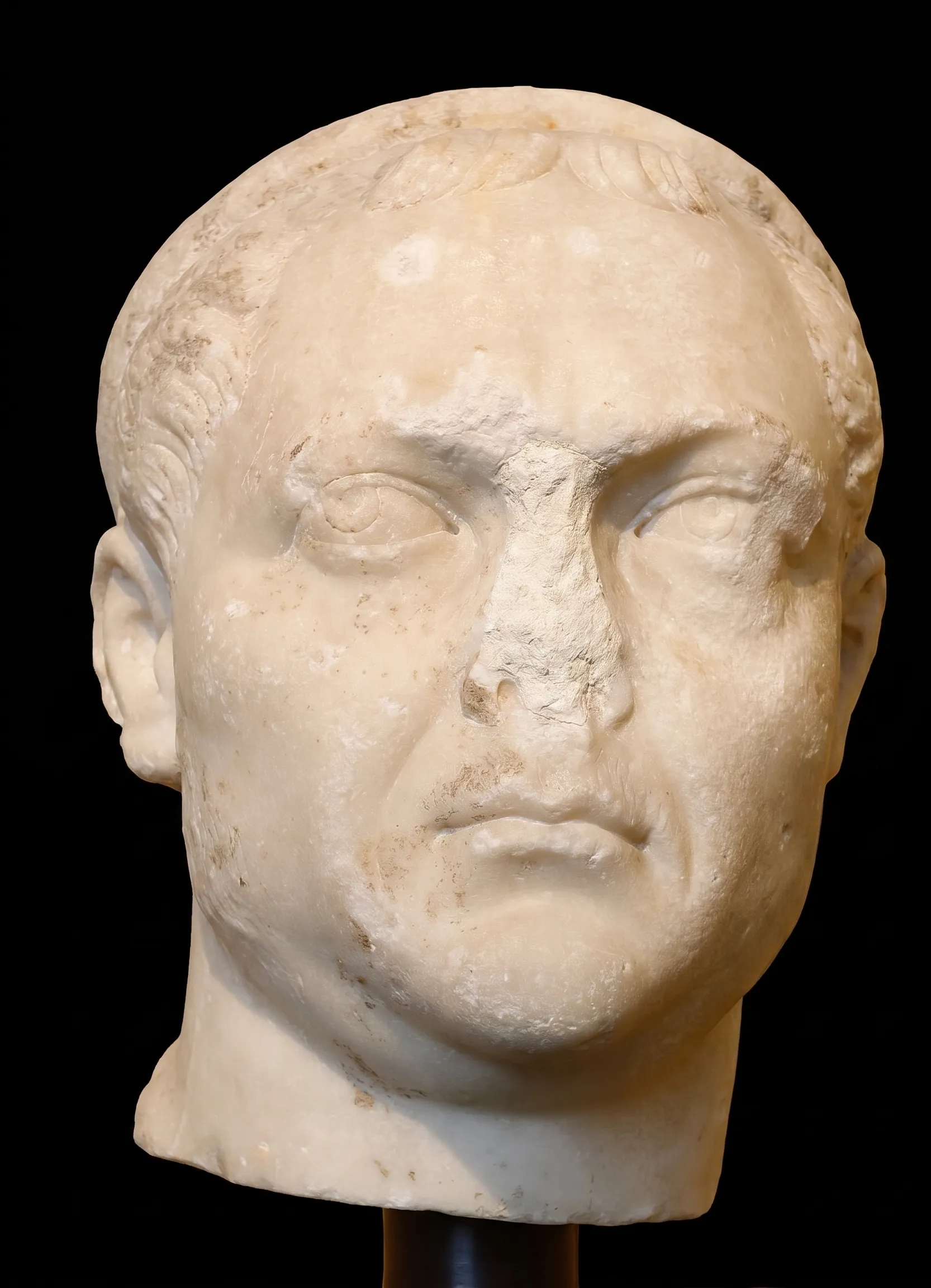
Publio Licinio Valeriano era un senatore anziano di nobile famiglia, rispettato nell'esercito e nel Senato. Dopo l'assassinio di Treboniano Gallo nel 253, fu acclamato imperatore dalle sue truppe e il Senato lo ratificò. La sua prima mossa saggia fu associare al trono il figlio Gallieno: con l'impero assediato su tutti i fronti, servivano due generali per difenderlo. Valeriano si riservò la difesa dell'Oriente, dove la nuova dinastia persiana Sasanide, sotto Sapore I, stava premendo con forza crescente.
Publius Licinius Valerianus was an elderly senator of noble family, respected in the army and Senate. After Trebonianus Gallus's assassination in 253, he was acclaimed emperor by his troops and the Senate ratified him. His first wise move was to associate his son Gallienus on the throne: with the empire besieged on all fronts, two generals were needed to defend it. Valerian reserved for himself the defense of the East, where the new Persian Sassanid dynasty, under Shapur I, was pressing with growing force.
L'Ultimo Senatore AugustoThe Last Senatorial Augustus
Publio Licinio Valeriano nacque verso il 195 d.C. da una famiglia patrizia italica, forse di Falerii (l'odierna Civita Castellana), forse di origine etrusca. Aveva già 58 anni quando fu acclamato imperatore, e oltre vent'anni di carriera senatoria alle spalle: console suffetto sotto Severo Alessandro, censitor in Italia sotto Decio, governatore di Norico e di Rezia. Era noto soprattutto per essere stato uno dei pochi senatori romani sopravvissuti a tutte le purghe del periodo 235–253, vivendo discretamente fra una carica e l'altra. Decio gli aveva offerto la prefettura del pretorio, lui aveva rifiutato. Treboniano Gallo lo aveva mandato sul Reno, ma fu acclamato dalle sue stesse legioni dopo l'assassinio di Treboniano.
Publius Licinius Valerianus was born around 195 AD to an Italic patrician family, perhaps from Falerii (modern Civita Castellana), perhaps of Etruscan origin. He was already 58 when he was acclaimed emperor, with over twenty years of senatorial career behind him: suffect consul under Severus Alexander, censitor in Italy under Decius, governor of Noricum and Raetia. He was known above all for being one of the few Roman senators who had survived all the purges of the 235–253 period, living discreetly between one office and another. Decius had offered him the praetorian prefecture, he had refused. Trebonianus Gallus had sent him to the Rhine, but he was acclaimed by his own legions after Trebonianus's assassination.
La Divisione dell'ImperoThe Division of the Empire
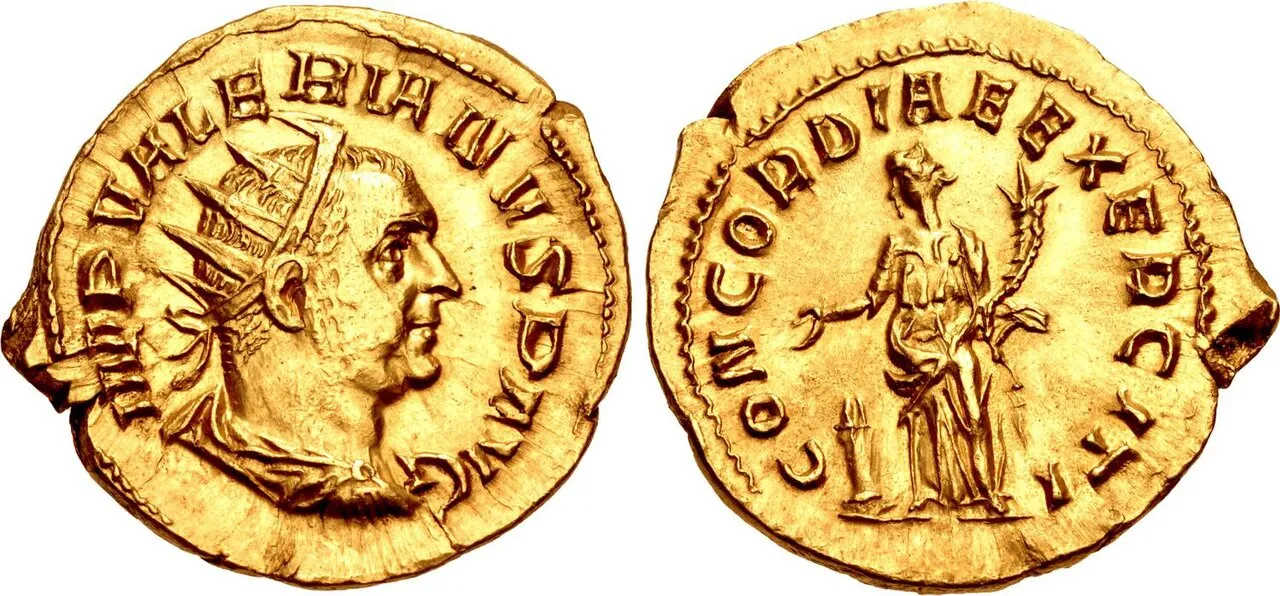
Una delle più importanti riforme costituzionali di Valeriano fu la divisio imperii con il figlio Gallieno (settembre 253). Per la prima volta nella storia romana, l'Impero venne formalmente diviso in due metà: Valeriano si riservò l'Oriente (Mesopotamia, Siria, Asia Minore, Egitto) con capitale ad Antiochia; Gallieno l'Occidente (Reno, Danubio, Italia, Iberia, Africa) con capitale a Mediolanum (Milano). Non era una semplice associazione al trono come ce n'erano state altre (Marco Aurelio/Vero, Settimio Severo/Caracalla), ma una vera spartizione territoriale con eserciti, finanze e cancellerie distinte. Era il prototipo della Tetrarchia di Diocleziano (anticipato di 40 anni) e, in ultima istanza, della separazione fra Impero d'Oriente e d'Occidente del 395.
One of Valerian's most important constitutional reforms was the divisio imperii with his son Gallienus (September 253). For the first time in Roman history, the Empire was formally divided into two halves: Valerian reserved for himself the East (Mesopotamia, Syria, Asia Minor, Egypt) with capital at Antioch; Gallienus the West (Rhine, Danube, Italy, Iberia, Africa) with capital at Mediolanum (Milan). It was not a simple throne association as there had been others (Marcus Aurelius/Verus, Septimius Severus/Caracalla), but an actual territorial partition with distinct armies, finances and chanceries. It was the prototype of Diocletian's Tetrarchy (anticipated by 40 years) and, ultimately, of the separation between Eastern and Western Empire of 395.
02La Catastrofe di EdessaThe Catastrophe of Edessa
- 257–258 d.C.Persecuzione dei cristiani — Valeriano emise due editti contro i cristiani: il primo proibiva le riunioni, il secondo ordinava la condanna a morte dei vescovi. Cipriano di Cartagine fu martirizzato nel 258. La motivazione era pratica oltre che religiosa: Valeriano aveva bisogno di soldi per l'esercito e i beni delle chiese cristiane erano una fonte appetibile.Persecution of Christians — Valerian issued two edicts against Christians: the first prohibited assemblies, the second ordered the death penalty for bishops. Cyprian of Carthage was martyred in 258. The motivation was practical as well as religious: Valerian needed money for the army and Christian church property was an appealing source.
- 259–260 d.C.La campagna in Siria — Sapore I aveva invaso nuovamente, prendendo Antiochia. Valeriano si spostò in Siria con il suo esercito, già decimato dalla peste. Nei pressi di Edessa (odierna Şanlıurfa, Turchia), l'esercito romano era in condizioni disperate: la peste aveva falcidiato i ranghi, i rifornimenti scarseggiavano.The Syrian campaign — Shapur I had invaded again, taking Antioch. Valerian moved to Syria with his army, already decimated by plague. Near Edessa (modern Şanlıurfa, Turkey), the Roman army was in desperate condition: plague had scythed through the ranks, supplies were scarce.
- 260 d.C.La cattura — Nella primavera del 260, Valeriano aprì trattative di pace con Sapore. Durante o subito dopo l'incontro, fu catturato dai Persiani: le circostanze esatte sono dibattute. Forse fu teso un agguato durante i negoziati, forse si arrese formalmente. Il risultato fu inequivocabile: l'imperatore romano finì prigioniero del re persiano.The capture — In spring 260, Valerian opened peace negotiations with Shapur. During or just after the meeting, he was captured by the Persians: the exact circumstances are debated. Perhaps an ambush was set during negotiations, perhaps he formally surrendered. The result was unequivocal: the Roman emperor ended up prisoner of the Persian king.
La Versione PersianaThe Persian Version
L'iscrizione sasanide del Ka'ba-i Zardosht, la più dettagliata testimonianza contemporanea, descrive uno scontro campale presso Carre con la cattura «per mano» di Sapore stesso. Le fonti romane sono divise: per Zosimo (I, 36), Valeriano si recò personalmente ai negoziati con Sapore credendoli buona fede e fu catturato a tradimento; Lattanzio (De mortibus persecutorum, V) sostiene invece che si arrese per evitare un massacro dell'esercito accerchiato. Petrus Patricius (frammento bizantino, VI secolo) racconta che fu il proprio esercito a consegnarlo per ottenere salva la vita. La verità è probabilmente una combinazione: l'esercito imperiale, affamato e ammalato dopo Carre, costrinse Valeriano alla trattativa, e la trattativa stessa fu una trappola di Sapore.
The Sasanian inscription of Ka'ba-i Zardosht, the most detailed contemporary testimony, describes a pitched battle near Carrhae with the capture «by hand» of Shapur himself. Roman sources are divided: for Zosimus (I, 36), Valerian went personally to negotiations with Shapur believing them in good faith and was captured by treachery; Lactantius (De mortibus persecutorum, V) claims instead that he surrendered to avoid a massacre of the encircled army. Petrus Patricius (Byzantine fragment, 6th c.) recounts that his own army handed him over to obtain its life. The truth is probably a combination: the imperial army, starving and plague-ridden after Carrhae, forced Valerian to negotiate, and the negotiation itself was Shapur's trap.
03La Prigionia e la VergognaThe Captivity and the Shame
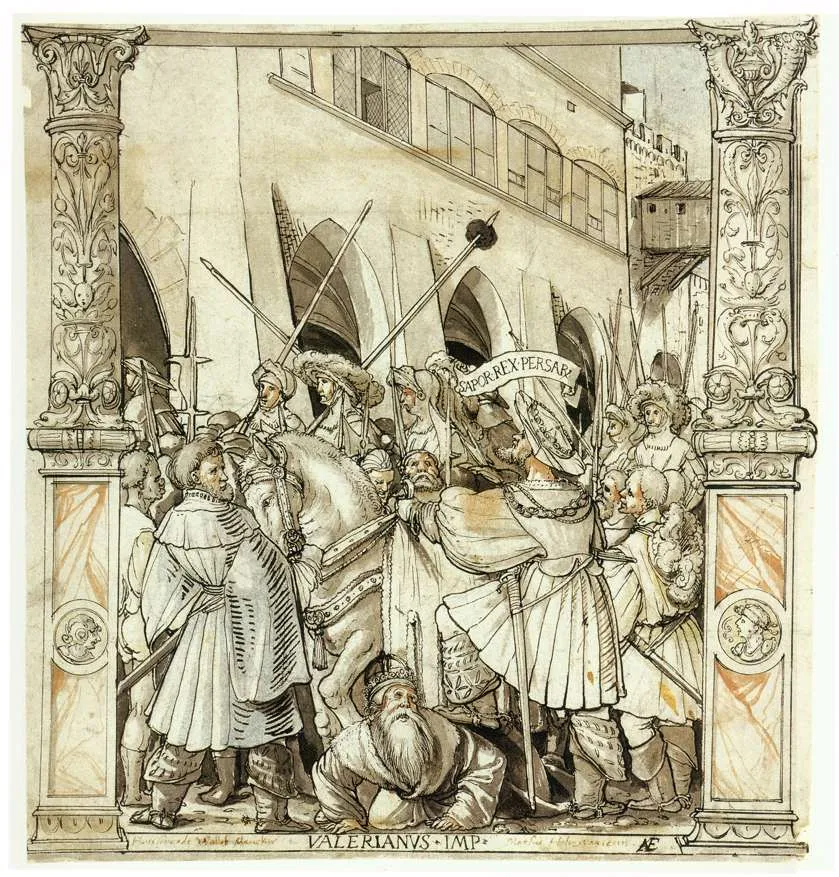
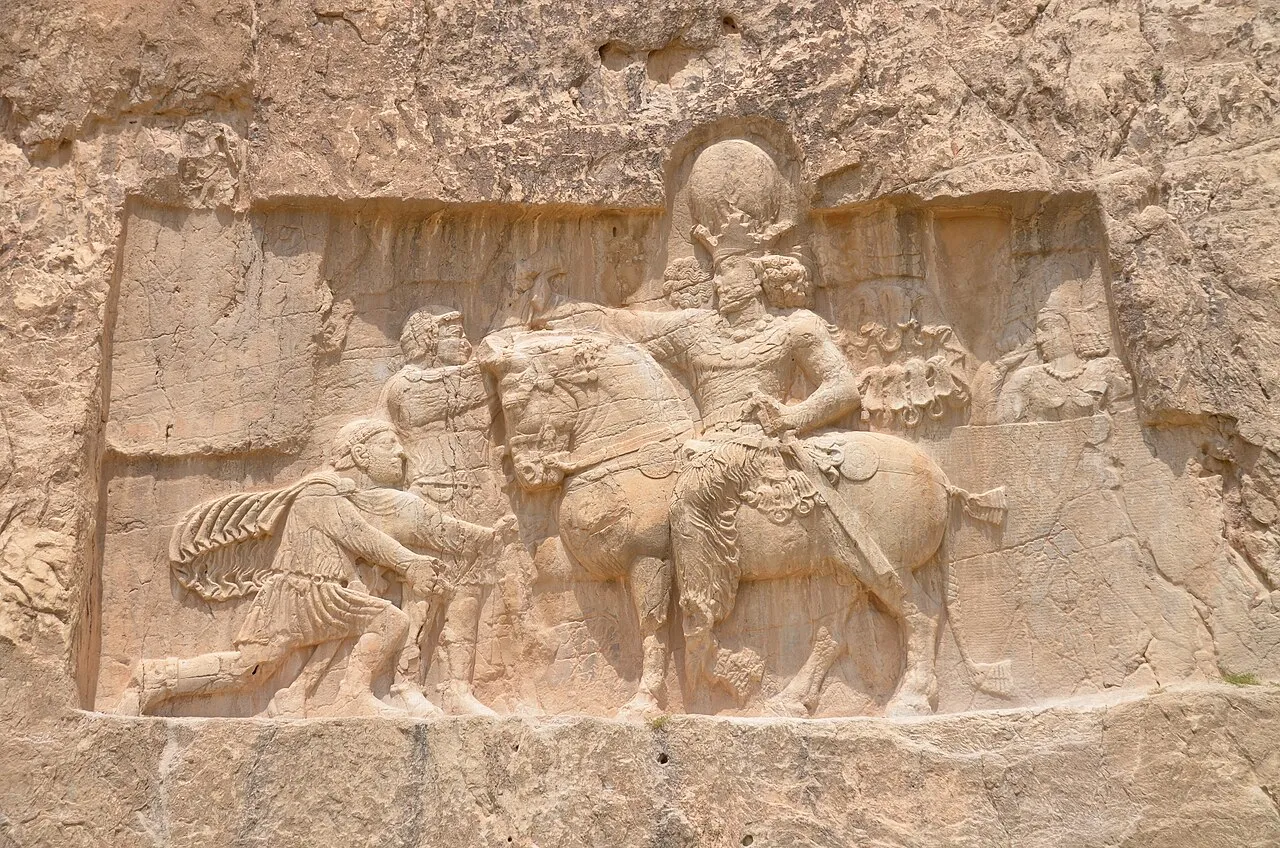
Valeriano trascorse il resto della sua vita come prigioniero in Persia. Non fu rilasciato, non fu riscattato: rimase uno strumento di propaganda vivente per la gloria di Sapore I. I rilievi rupestri persiani di Naqš-e Rostam e Bishapur mostrano Sapore a cavallo con Valeriano inginocchiato o tenuto per il polso, immagini destinate a durare millenni. Alcune fonti bizantine affermano che il corpo di Valeriano, dopo la morte, fu scuoiato e la sua pelle riempita di paglia, esposta in un tempio persiano come trofeo. Che sia letteralmente vero o no, l'immagine esprime perfettamente cosa significò quella cattura per il mondo romano: una vergogna senza precedenti. In Occidente, Gallieno governò da solo, fronteggiando la frammentazione dell'Impero: nacquero l'Impero Gallico a ovest e il regno di Palmira a est.
Valerian spent the rest of his life as a prisoner in Persia. He was not released, not ransomed: he remained a living propaganda tool for Shapur I's glory. The Persian rock reliefs of Naqsh-e Rostam and Bishapur show Shapur on horseback with Valerian kneeling or held by the wrist, images destined to last millennia. Some Byzantine sources claim that Valerian's body, after death, was flayed and his skin stuffed with straw, displayed in a Persian temple as a trophy. Whether literally true or not, the image perfectly expresses what that capture meant to the Roman world: an unprecedented shame. In the West, Gallienus governed alone, facing the Empire's fragmentation, the Gallic Empire was born in the west and the kingdom of Palmyra in the east.
I Deportati e BishapurThe Deportees and Bishapur
Insieme a Valeriano, Sapore I deportò 70.000 prigionieri romani (soldati, ingegneri, artigiani) nelle terre dell'altopiano iranico. Furono impiegati nella costruzione della nuova capitale sasanide Bishapur, in Fars, e nelle grandi opere idrauliche di Band-e Kaisar («Diga di Cesare») sul fiume Karun, vicino a Shushtar. La diga, ancora oggi visibile e parzialmente in funzione, era larga 500 metri e venne realizzata con tecnica romana: gli ingegneri imperiali, ora schiavi, costruirono per Sapore l'infrastruttura più ambiziosa dell'antichità persiana. È uno dei rari casi nella storia in cui la tecnica imperiale romana fu trapiantata in territorio non-romano per opera di prigionieri di guerra.
Along with Valerian, Shapur I deported 70,000 Roman prisoners (soldiers, engineers, artisans) to the lands of the Iranian plateau. They were employed in the construction of the new Sasanian capital Bishapur, in Fars, and in the great hydraulic works of Band-e Kaisar («Caesar's Dam») on the Karun river, near Shushtar. The dam, still visible today and partially in operation, was 500 metres wide and was built with Roman technique: the imperial engineers, now slaves, built for Shapur the most ambitious infrastructure of Persian antiquity. It is one of the rare cases in history when Roman imperial technique was transplanted to non-Roman territory through war prisoners.
La Leggenda della PelleThe Legend of the Skin
L'autore cristiano Lattanzio, scrivendo settant'anni dopo l'evento (De mortibus persecutorum, V), narra la versione più estrema della prigionia di Valeriano: l'imperatore (anziano, ammalato) sarebbe stato usato come scalino umano per montare a cavallo da Sapore per anni; alla sua morte (probabilmente attorno al 264), il corpo sarebbe stato scuoiato, la pelle tinta di rosso vermiglio e riempita di paglia, conservata in un tempio di Khuzestan come trofeo eterno. La narrazione è di chiara matrice propagandistica cristiana, Lattanzio voleva mostrare la punizione divina per il persecutore. Le fonti pagane (Zosimo, l'Historia Augusta) tacciono su questi dettagli. Gli storici moderni (Erich Kettenhofen) considerano la storia della pelle leggenda: Valeriano morì probabilmente in cattività di malattia o vecchiaia, e il corpo fu sepolto secondo il rito zoroastriano.
The Christian author Lactantius, writing seventy years after the event (De mortibus persecutorum, V), recounts the most extreme version of Valerian's captivity: the emperor (elderly, ill) would have been used as a human step to mount his horse by Shapur for years; on his death (probably around 264), the body would have been flayed, the skin dyed vermilion red and stuffed with straw, preserved in a Khuzestan temple as an eternal trophy. The narrative is of clear Christian propagandistic origin, Lactantius wanted to show divine punishment for the persecutor. Pagan sources (Zosimus, the Historia Augusta) are silent on these details. Modern historians (Erich Kettenhofen) consider the skin story legend: Valerian probably died in captivity from illness or old age, and the body was buried according to Zoroastrian rite.
Le Conseguenze: la FrammentazioneThe Consequences: Fragmentation
La cattura di Valeriano spezzò l'unità simbolica dell'Impero. In Occidente, il generale Postumo si ribellò a Gallieno e fondò l'Imperium Galliarum (260), un impero separato che comprendeva Gallia, Britannia, Spagna, con capitale a Treviri, durato fino al 274. In Oriente, il principe palmireno Odenato, formalmente cliente di Roma, vendicò Valeriano battendo Sapore nella battaglia di Edessa (260) e creò il proprio dominio indipendente di Palmira, che la regina Zenobia avrebbe poi esteso fino all'Egitto (267–272). Per dodici anni, dal 260 al 272, l'Impero Romano esistette di fatto diviso in tre Stati indipendenti: l'Impero Centrale di Gallieno (con Roma e Italia), l'Impero Gallico, e l'Impero di Palmira. Solo Aureliano (270–275) avrebbe riunificato i tre Stati.
Valerian's capture broke the symbolic unity of the Empire. In the West, general Postumus rebelled against Gallienus and founded the Imperium Galliarum (260): a separate empire comprising Gaul, Britain, Spain, with capital at Trier, lasting until 274. In the East, the Palmyrene prince Odaenathus, formally a client of Rome, avenged Valerian by defeating Shapur at the battle of Edessa (260) and created his own independent dominion of Palmyra, which queen Zenobia would later extend to Egypt (267–272). For twelve years, from 260 to 272, the Roman Empire effectively existed divided into three independent states: Gallienus's Central Empire (with Rome and Italy), the Gallic Empire, and the Palmyrene Empire. Only Aurelian (270–275) would reunify the three states.
Eredità StoriograficaHistoriographical Legacy
Per tutti gli autori successivi, pagani e cristiani, Valeriano fu il punto più basso della storia imperiale romana: il primo (e unico) imperatore catturato vivo da un nemico straniero. «Imperator Romanorum captus est», l'imperatore dei Romani è stato preso, fu la formula con cui le cronache successive lo definirono. Edward Gibbon vi vide il «momento in cui cessa l'inviolabilità sacra del principato». Lo storico contemporaneo Klaus Geus (Krise und Kaiser im 3. Jahrhundert, 2008) ha proposto una lettura più contestualizzata: Valeriano non fu né traditore né stolto, ma il primo a sperimentare il limite strutturale dell'Impero romano, la sua incapacità di reggere simultaneamente su tre fronti militari (Reno, Danubio, Eufrate) senza un sistema di co-imperatori più articolato. La sua tragedia personale anticipò la soluzione tetrarchica di Diocleziano, che 38 anni dopo l'avrebbe istituzionalizzata.
For all subsequent authors, pagan and Christian, Valerian was the lowest point in Roman imperial history: the first (and only) emperor captured alive by a foreign enemy. «Imperator Romanorum captus est», the emperor of the Romans has been taken, was the formula with which later chronicles defined him. Edward Gibbon saw in it the «moment when the sacred inviolability of the principate ceased». The contemporary historian Klaus Geus (Krise und Kaiser im 3. Jahrhundert, 2008) has proposed a more contextualized reading: Valerian was neither traitor nor fool, but the first to experience the structural limit of the Roman Empire, its inability to hold simultaneously on three military fronts (Rhine, Danube, Euphrates) without a more articulated co-emperor system. His personal tragedy anticipated Diocletian's tetrarchic solution, which 38 years later would institutionalize it.