
01BiografiaBiography
La regina degli Iceni
The queen of the Iceni
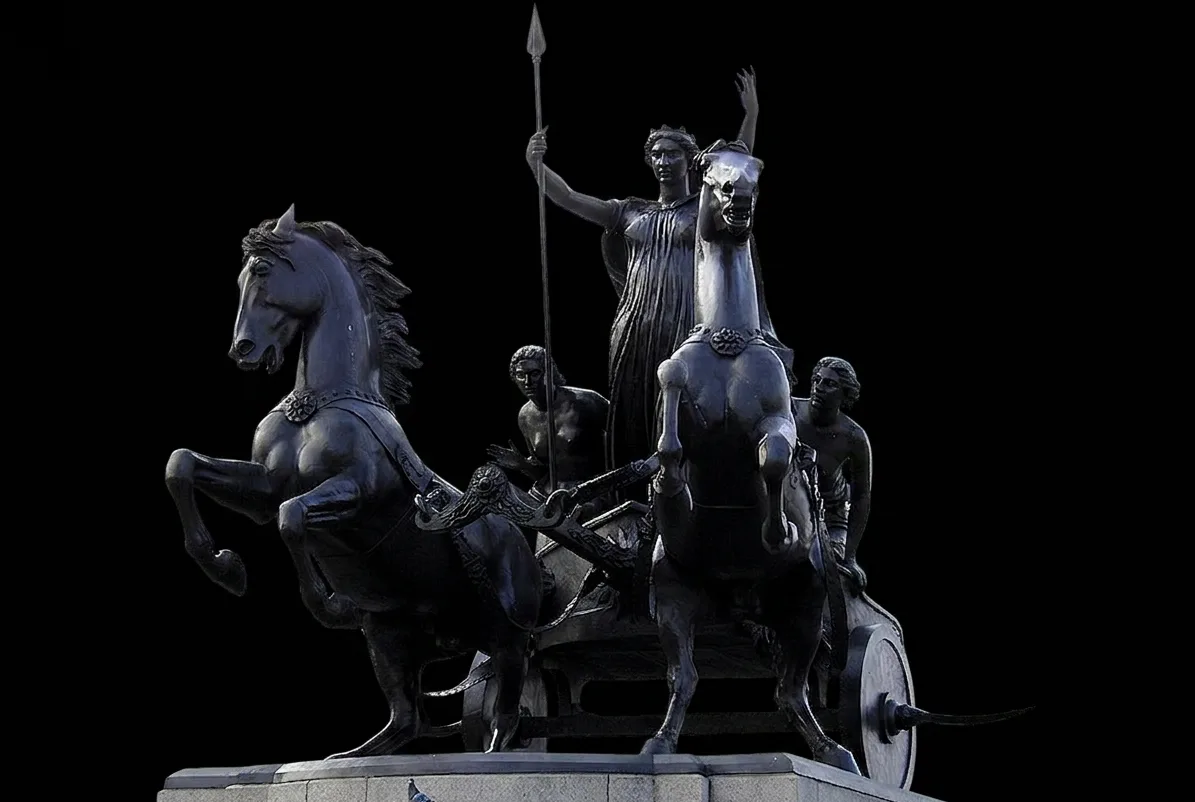
Boudicca nacque intorno al 30 d.C. in una stirpe nobile degli Iceni, il popolo celtico stanziato nell'odierno Norfolk, sulla costa orientale della Britannia. Il suo nome, Boudica (dalla radice *boud–, « vittoria»), significa letteralmente « la vittoriosa» . Cassio Dione la dipinge altissima, la voce aspra, lo sguardo terribile, una cascata di capelli fulvi fino ai fianchi, avvolta in un mantello fissato da una spilla. Aveva sposato Prasutago, re-cliente degli Iceni: la formula con cui Roma reggeva la Britannia senza doverla amministrare tutta.
Boudicca was born around 30 AD into a noble line of the Iceni, the Celtic people settled in modern Norfolk, on the eastern coast of Britain. Her name, Boudica (from the root *boud–, « victory»), means literally « the victorious one» . Cassius Dio paints her very tall, harsh of voice, terrible in gaze, a cascade of tawny hair to her hips, wrapped in a cloak fastened with a brooch. She had married Prasutagus, client-king of the Iceni: the formula by which Rome ruled Britain without having to administer all of it.
Il testamento tradito
The betrayed will
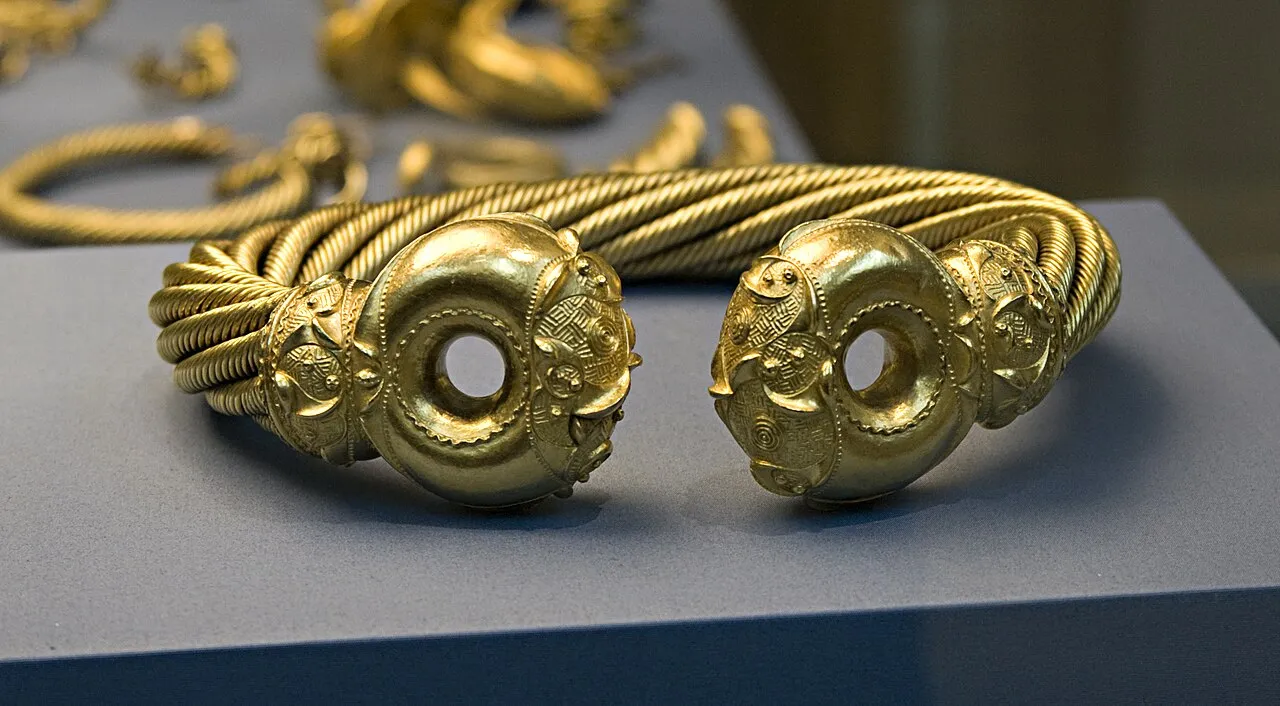
La Britannia era stata invasa da Claudio nel 43 d.C., ma la conquista restava incompiuta: Roma teneva il sud, mentre molte tribù sopravvivevano come regni clienti, in cambio di tributi e fedeltà . Alla sua morte, intorno al 60 d.C., Prasutago lasciò per testamento metà del regno all'imperatore Nerone e metà alle due figlie, sperando di salvare così l'autonomia della famiglia. Era una clausola consueta, che Roma aveva spesso accettato.
Britain had been invaded by Claudius in 43 AD, yet the conquest remained unfinished: Rome held the south, while many tribes survived as client kingdoms in exchange for tribute and loyalty. On his death, around 60 AD, Prasutagus left by will half his kingdom to Emperor Nero and half to his two daughters, hoping thus to save his family's autonomy. It was a customary clause, one Rome had often accepted.
Questa volta no. Il procuratore Cato Deciano, avido e brutale, trattò il regno iceno come bottino di guerra. Le sue truppe vennero a confiscare le terre, a esigere d'un colpo i prestiti che i finanzieri romani, fra cui, secondo Cassio Dione, il filosofo Seneca, avevano imposto alla nobiltà locale, a ridurre in schiavitù i parenti del re defunto. Boudicca protestò . La risposta ebbe la freddezza di un atto di terrore: la regina fu spogliata e flagellata in pubblico; le sue due figlie, ancora bambine, furono violentate dai legionari sotto i suoi occhi.
Not this time. The procurator Catus Decianus, greedy and brutal, treated the Icenian kingdom as spoils of war. His troops came to seize the lands, to recall in one stroke the loans that Roman financiers, among them, by Cassius Dio's account, the philosopher Seneca, had imposed on the local nobility, to reduce the dead king's kin to slavery. Boudicca protested. The answer had the coldness of an act of terror: the queen was publicly stripped and flogged; her two daughters, still children, were raped by the legionaries before her eyes.
« Non vendico, da donna di stirpe regale, il regno e le ricchezze: vendico, come una del popolo, la libertà perduta, il corpo straziato dalle verghe, l'onore violato delle mie figlie. » « I avenge, not as a woman of royal descent my kingdom and wealth, but as one of the people, my lost freedom, my body torn with stripes, the violated honour of my daughters. » Boudicca ai Britanni (Tacito, Annali XIV, 35Boudicca to the Britons) Tacitus, Annals XIV, 35
La scintilla della rivolta
The spark of revolt
Quell'oltraggio doveva essere un monito. Fu una dichiarazione di guerra. Boudicca non era più soltanto la vedova di un re-cliente: era la prova vivente del patto tradito. Le tribù del sud (soprattutto i Trinovanti, esasperati dai veterani romani insediati nella loro Camulodunum e dalle estorsioni del culto imperiale) trovarono in lei la guida che cercavano. Nell'estate del 60 d.C., mentre il governatore Gaio Svetonio Paolino sterminava i druidi sull'isola di Mona, la Britannia insorse.
That outrage was meant as a warning. It became a declaration of war. Boudicca was no longer merely the widow of a client-king: she was the living proof of a broken pact. The southern tribes (above all the Trinovantes, enraged by the Roman veterans planted in their Camulodunum and by the extortions of the imperial cult) found in her the leader they sought. In the summer of 60 AD, while governor Gaius Suetonius Paulinus was exterminating the Druids on the island of Mona, Britain rose.
Camulodunum in fiamme
Camulodunum in flames
La furia britanna piombò prima su Camulodunum (Colchester), simbolo dell'occupazione: colonia di veterani, sede del tempio del divo Claudio: mole eretta col denaro tassato ai Britanni e da loro odiata come emblema dell'oppressione. La città era senza mura. I veterani implorarono rinforzi: ne ottennero duecento. Camulodunum fu travolta, il tempio dato alle fiamme dopo due giorni d'assedio, la popolazione sterminata. Accorsa in soccorso, la IX legione Ispanica di Petilio Cereale fu intercettata e quasi annientata: si salvò la sola cavalleria.
British fury fell first on Camulodunum (Colchester), symbol of the occupation: a colony of veterans, seat of the temple of the deified Claudius, a pile raised with money taxed from the Britons and hated by them as the emblem of oppression. The city had no walls. The veterans begged for reinforcements: they got two hundred. Camulodunum was overrun, the temple burned after a two-day siege, the people slaughtered. Rushing to the rescue, the IX Hispanic legion of Petilius Cerialis was intercepted and almost annihilated: only the cavalry escaped.
Londinium e Verulamium
Londinium and Verulamium
Boudicca puntò allora su Londinium, giovane emporio di trentamila anime. Svetonio Paolino, rientrato in fretta dalla Mona, vi giunse per primo ma comprese di non poterla difendere: poche truppe, nessuna mura. Scelse il sacrificio. Ordinò l'evacuazione e abbandonò la città . Chi rimase (donne, vecchi, bambini, mercanti) fu massacrato. « Non vendere né far prigionieri», scrive Tacito, « ma macellare, impiccare, bruciare, crocifiggere.» Stessa sorte a Verulamium (St. Albans). Tre città , frutto di vent'anni di occupazione, ridotte in cenere: settanta-ottantamila morti.
Boudicca then struck at Londinium, a young emporium of thirty thousand souls. Suetonius Paulinus, hurrying back from Mona, reached it first but saw he could not hold it: few troops, no walls. He chose sacrifice. He ordered the evacuation and abandoned the city. Those who stayed (women, the old, children, merchants) were massacred. « They neither sold nor took prisoners», writes Tacitus, « but slaughtered, hanged, burned, crucified.» The same fate met Verulamium (St. Albans). Three cities, the fruit of twenty years of occupation, reduced to ash: seventy to eighty thousand dead.
La gola di Watling Street
The defile of Watling Street
Svetonio Paolino non poteva concedersi un'altra ritirata. Raccolse quanto aveva (circa diecimila uomini fra la XIV Gemina, parte della XX Valeria Victrix e gli ausiliari) e scelse con cura il campo. Quel luogo, mai identificato con certezza, è ricordato come Watling Street, dalla strada romana che lo attraversava, probabilmente nelle Midlands: una stretta gola fra colli boscosi che annullava la superiorità numerica nemica e proteggeva i fianchi delle legioni. Di fronte, una marea sterminata di guerrieri, e dietro di loro, sui carri, donne e figli, certi del trionfo.
Suetonius Paulinus could allow no second retreat. He gathered what he had (some ten thousand men from the XIV Gemina, part of the XX Valeria Victrix, and auxiliaries) and chose his ground with care. That place, never identified for certain, is remembered as Watling Street, from the Roman road that crossed it, probably in the Midlands: a narrow defile between wooded hills that cancelled the enemy's numbers and shielded the legions' flanks. Facing them, a boundless tide of warriors, and behind it, on the wagons, women and children, sure of triumph.
Vincere o morire
Win or die
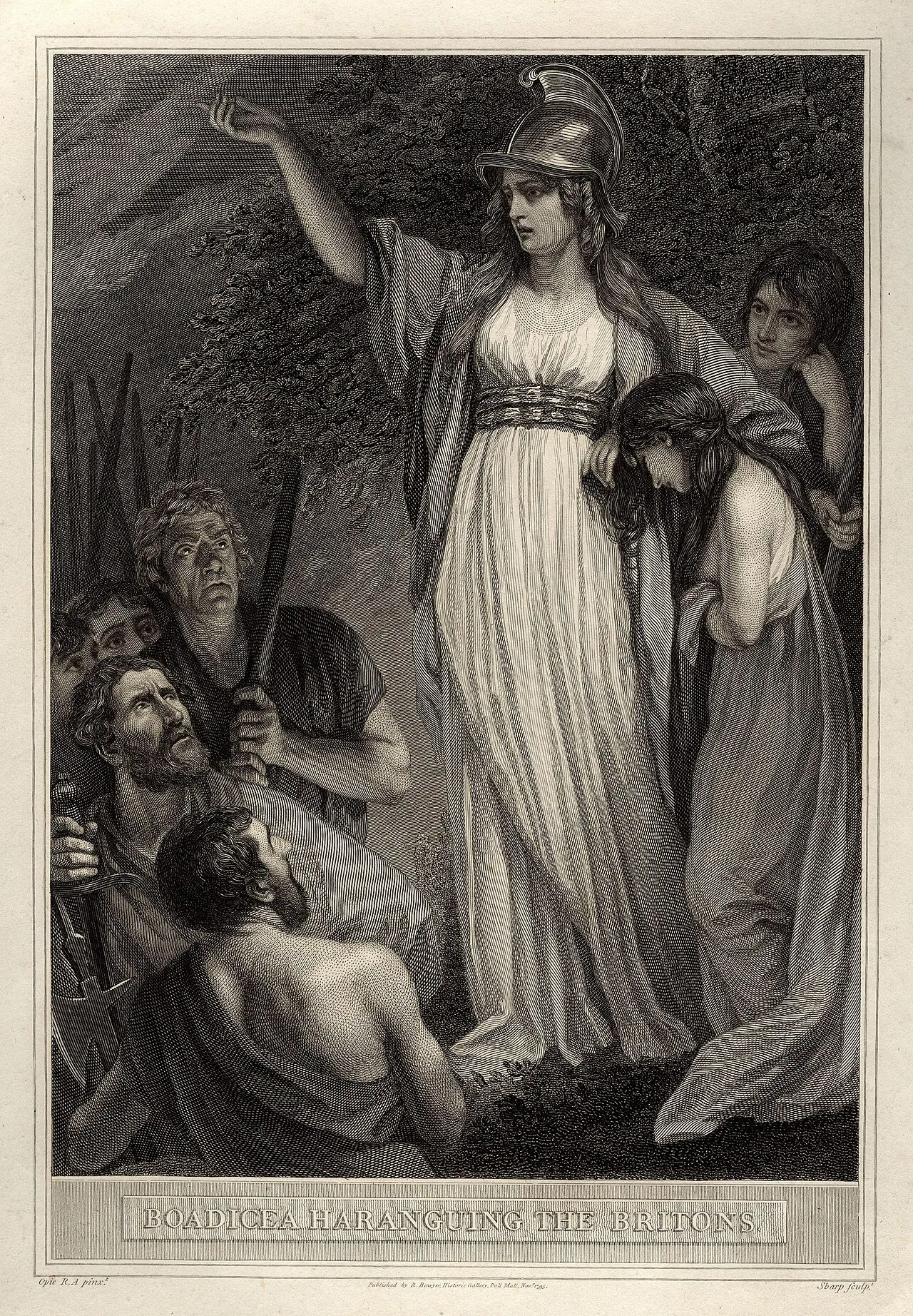
Tacito affida a Boudicca un discorso prima della carica: la regina percorre il fronte sul carro, le figlie accanto, e rammenta i flagelli, gli stupri, l'onta. « Su questo campo, vincere o morire. Questo è il proposito di una donna; gli uomini, se vogliono, vivano pure da schiavi.» La massa britanna si avventò . I legionari serrarono il cuneo, scagliarono i pila a distanza ravvicinata, poi caricarono col gladius. La gola divenne trappola: il fronte nemico si comprime, la fuga è sbarrata dalla cintura dei loro stessi carri. Tacito conta ottantamila Britanni caduti contro quattrocento Romani. Esagerazione, forse, ma l'esercito di Boudicca, in poche ore, cessò di esistere.
Tacitus gives Boudicca a speech before the charge: the queen rides along the front on her chariot, her daughters beside her, recalling the floggings, the rapes, the shame. « On this field, win or die. This is a woman's resolve; the men, if they wish, may live as slaves.» The British mass hurled itself forward. The legionaries locked the wedge, flung their pila at close range, then charged with the gladius. The defile became a trap: the enemy front compressed, flight barred by the belt of their own wagons. Tacitus counts eighty thousand Britons fallen against four hundred Romans. An exaggeration, perhaps, but Boudicca's army, in a few hours, ceased to exist.
Veleno e silenzio
Poison and silence
Della sua fine restano due racconti. Per Tacito la regina, vista la disfatta, bevve il veleno per non cadere viva in mano romana; per Cassio Dione morì poco dopo di malattia, e i Britanni le diedero solenne sepoltura. In entrambi i casi sparì dalla scena prima dei trent'anni. La repressione di Svetonio Paolino fu spietata; ma Roma, atterrita dall'ampiezza della catastrofe, lo richiamò . Il nuovo procuratore Iulio Classiciano e il governatore Petronio Turpiliano scelsero una mano più lieve, allentando le esazioni. La rivolta aveva insegnato a Roma una verità scomoda: anche una provincia già vinta poteva esplodere.
Of her end, two accounts remain. For Tacitus the queen, seeing the rout, drank poison rather than fall alive into Roman hands; for Cassius Dio she died soon after of illness, and the Britons gave her solemn burial. Either way she vanished from the scene before her thirtieth year. Suetonius Paulinus's repression was merciless; but Rome, appalled by the scale of the catastrophe, recalled him. The new procurator Julius Classicianus and governor Petronius Turpilianus chose a lighter hand, easing the exactions. The revolt had taught Rome an uncomfortable truth: even an already conquered province could explode.
02Battaglie e CampagneBattles and Campaigns
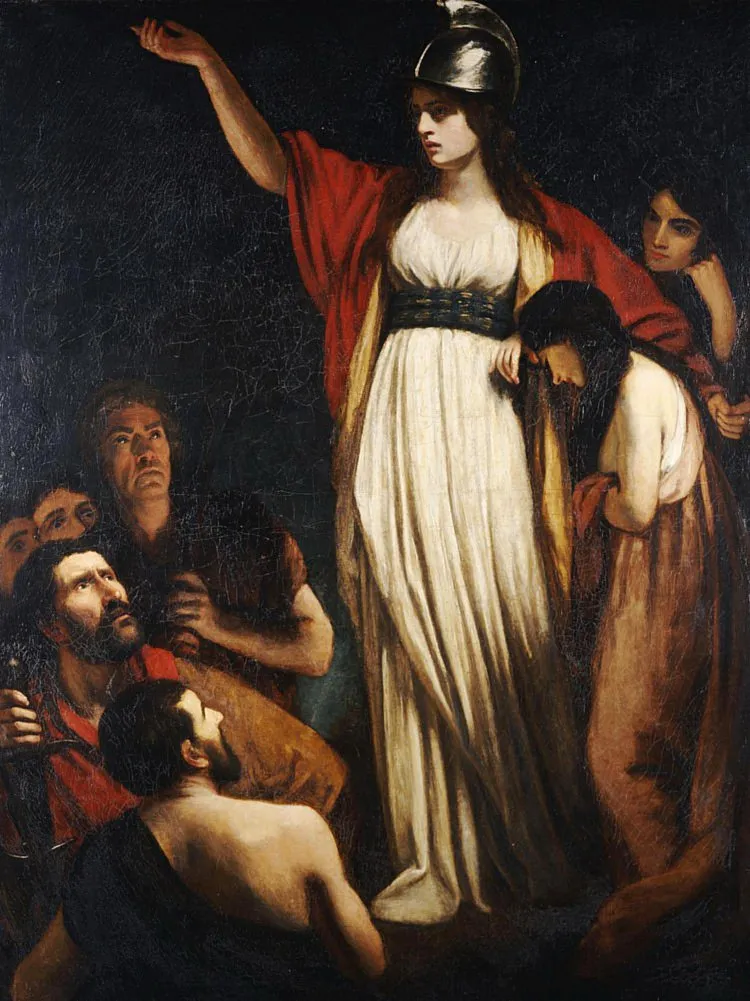
In poco più di un anno Boudicca portò la più ricca provincia occidentale di Roma sull'orlo della perdita. Tre città incendiate, una legione annientata, decine di migliaia di morti: mai una sollevazione provinciale era andata così vicina a strappare un'isola all'Impero. Ecco la cronaca di quella tempesta, e del giorno in cui la disciplina romana la spense.
In little more than a year Boudicca brought Rome's richest western province to the brink of loss. Three cities burned, a legion annihilated, tens of thousands dead: never had a provincial rising come so close to tearing an island from the Empire. Here is the chronicle of that storm, and of the day Roman discipline put it out.
- ~60 d.C. La morte di Prasutago — Il re-cliente muore lasciando il regno metà a Nerone, metà alle figlie. Il procuratore Cato Deciano confisca ogni cosa. Boudicca è flagellata in pubblico, le figlie violentate, la nobiltà iceno ridotta in schiavitù . Da quell'oltraggio nasce la guerra. The death of Prasutagus — The client-king dies, leaving the kingdom half to Nero, half to his daughters. Procurator Catus Decianus confiscates everything. Boudicca is publicly flogged, her daughters raped, the Icenian nobility enslaved. From that outrage war is born.
- 60 d.C., estate Il sacco di Camulodunum — Iceni e Trinovanti travolgono Colchester. Il tempio di Claudio, simbolo dell'oppressione fiscale e religiosa, brucia dopo due giorni d'assedio. La città era priva di mura: veterani e famiglie sono massacrati. The sack of Camulodunum — Iceni and Trinovantes overrun Colchester. The temple of Claudius, symbol of fiscal and religious oppression, burns after a two-day siege. The city had no walls: veterans and their families are massacred.
- 60 d.C. La fine della IX Ispanica — La legione di Petilio Cereale accorre da Lindum (Lincoln). Boudicca la coglie in marcia: la fanteria è annientata nell'imboscata, si salva la sola cavalleria. È il più grave disastro romano in Britannia. The end of the IX Hispana — Petilius Cerialis's legion hurries from Lindum (Lincoln). Boudicca catches it on the march: the infantry is annihilated in the ambush, only the cavalry survives. It is the gravest Roman disaster in Britain.
- 60 d.C. Il sacco di Londinium — Svetonio Paolino raggiunge Londra per primo, ma rinuncia a difenderla: evacua e si ritira. Chi resta è trucidato. Lo strato di cenere rossa, il red layer, affiora ancora oggi negli scavi sotto la City. The sack of Londinium — Suetonius Paulinus reaches London first but gives up defending it: he evacuates and withdraws. Those who stay are slaughtered. The layer of red ash, the red layer, still surfaces today in digs beneath the City.
- 60 d.C. Il sacco di Verulamium — Terza città a cadere: St. Albans, abitata da Britanni romanizzati e bollati come collaborazionisti, è rasa al suolo. In poche settimane tre centri romani spariscono; le fonti antiche contano oltre settantamila morti. The sack of Verulamium — The third city to fall: St. Albans, peopled by Romanised Britons branded as collaborators, is razed. In a few weeks three Roman centres vanish; the ancient sources count over seventy thousand dead.
- 61 d.C. Battaglia di Watling Street — Lo scontro decisivo. Con diecimila uomini, Svetonio Paolino sceglie una gola stretta per annullare i centomila di Boudicca. I pila a distanza ravvicinata aprono varchi; il cuneo legionario spezza la massa; la cintura dei carri britanni, dietro l'esercito, sbarra la fuga. Massacro: ottantamila contro quattrocento, secondo Tacito. Battle of Watling Street — The decisive clash. With ten thousand men, Suetonius Paulinus picks a narrow defile to cancel Boudicca's hundred thousand. Pila at close range tear gaps; the legionary wedge shatters the mass; the belt of British wagons behind the army bars all flight. A massacre: eighty thousand against four hundred, by Tacitus's count.
- 61 d.C. La morte della regina — Tacito: si avvelena per non cadere prigioniera. Cassio Dione: muore di malattia, e i Britanni le rendono solenne sepoltura. La tomba non è mai stata trovata. Aveva poco più di trent'anni. The death of the queen — Tacitus: she poisons herself to avoid capture. Cassius Dio: she dies of illness, and the Britons give her solemn burial. The tomb has never been found. She was just past thirty.
- 61–62 d.C. Repressione e svolta — Svetonio Paolino devasta le terre ribelli. Atterrito dalla scala della rivolta, Nerone lo richiama: il procuratore Iulio Classiciano e il governatore Petronio Turpiliano avviano una pace più mite. Roma ammette che l'avidità di un solo funzionario aveva quasi perso la provincia. Reprisal and turn — Suetonius Paulinus lays waste the rebel lands. Appalled by the scale of the revolt, Nero recalls him: procurator Julius Classicianus and governor Petronius Turpilianus begin a milder peace. Rome admits that one official's greed had nearly lost the province.
03Strategia e Limiti MilitariStrategy and Military Limits
La forza di un popolo unito
The strength of a united people
La forza di Boudicca non fu militare, ma politica. Riuscì a fondere tribù storicamente rivali (Iceni, Trinovanti e popoli minori) in un'unica massa, cogliendo il momento perfetto: il governatore lontano, all'estremo ovest; le legioni disperse; il rancore di vent'anni di occupazione e di abusi fiscali pronto a divampare. E scelse bersagli simbolici: Camulodunum, capitale dell'occupazione; Londinium, cuore dei commerci; Verulamium, città dei collaborazionisti. Il messaggio era inequivocabile: chi accetta Roma, con Roma muore.
Boudicca's strength was not military but political. She managed to fuse historically rival tribes (Iceni, Trinovantes and lesser peoples) into a single mass, seizing the perfect moment: the governor far off in the extreme west; the legions scattered; the resentment of twenty years of occupation and fiscal abuse ready to blaze. And she chose symbolic targets: Camulodunum, capital of the occupation; Londinium, heart of trade; Verulamium, city of collaborators. The message was unmistakable: whoever accepts Rome dies with Rome.
I limiti di una migrazione armata
The limits of an armed migration
Ma sul puro terreno militare i suoi limiti furono fatali. L'esercito britanno era una massa di guerrieri valorosi e indisciplinati, avvezzi al duello individuale e alla carica frontale, senza addestramento di reparto. La logistica non esisteva: i carri con donne e bambini seguivano le schiere, mutando la rivolta in una migrazione armata più che in una campagna. E mancava una strategia oltre il saccheggio: dopo le tre città , Boudicca non pensò ad assediare le legioni, a chiudere i porti, a contendere il territorio. Cercò lo scontro frontale, l'unico in cui Roma era imbattibile.
But on purely military ground her limits were fatal. The British army was a mass of valiant, undisciplined warriors, used to single combat and the frontal charge, without unit training. Logistics did not exist: the wagons with women and children trailed the ranks, turning the revolt into an armed migration rather than a campaign. And there was no strategy beyond plunder: after the three cities, Boudicca did not think to besiege the legions, close the ports, contest the land. She sought the frontal clash: the one fight in which Rome could not be beaten.
Watling Street: la trappola
Watling Street: the trap
A Watling Street ogni condizione le fu avversa. La gola scelta da Svetonio Paolino restringeva il fronte a poche centinaia di metri: i centomila guerrieri non potevano impegnare i diecimila legionari tutti insieme. Si combatteva, di fatto, una serie di scontri quasi alla pari, dove la disciplina e l'armatura valevano cento volte la furia. E la cintura di carri alle spalle, voluta come incitamento, divenne il muro che impedì la fuga e moltiplicò la strage. Una rivolta che aveva quasi rovesciato una provincia svanì in poche ore.
At Watling Street every condition was against her. The defile chosen by Suetonius Paulinus narrowed the front to a few hundred metres: the hundred thousand warriors could not engage the ten thousand legionaries all at once. In effect a series of near-even clashes was fought, where discipline and armour counted a hundred times more than fury. And the belt of wagons at their backs, meant as encouragement, became the wall that barred flight and multiplied the slaughter. A revolt that had nearly overturned a province vanished in a few hours.
« Quel giorno fruttò una gloria pari alle vittorie degli antichi. » « The glory won that day was equal to the victories of old. » Tacito, sulla battaglia di Watling Street (Annali XIV, 37Tacitus, on the Battle of Watling Street) Annals XIV, 37
04Eredita e MitoLegacy and Myth
L'incubo di Roma
Rome's nightmare
La rivolta di Boudicca fu un incubo da cui Roma uscì a stento. Per qualche settimana del 60–61 d.C. l'intera provincia di Britannia fu sul punto d'essere perduta: Cassio Dione racconta che, alla notizia di tre città distrutte e di una legione annientata, Nerone meditò di abbandonare l'isola. Non lo fece. Ma ne trasse una lezione duratura: il governo provinciale doveva bilanciare l'esazione fiscale con la tolleranza politica, perché l'avidità di un solo procuratore poteva costare anni di conquista. Roma terrà la Britannia per altri tre secoli e mezzo: senza Boudicca, forse l'avrebbe perduta subito.
Boudicca's revolt was a nightmare Rome barely escaped. For a few weeks in 60–61 AD the whole province of Britain stood on the edge of loss: Cassius Dio tells that, at the news of three cities destroyed and a legion annihilated, Nero pondered abandoning the island. He did not. But he drew from it a lasting lesson: provincial rule had to balance fiscal extraction with political tolerance, for the greed of a single procurator could cost years of conquest. Rome would hold Britain for another three and a half centuries: without Boudicca, it might have lost it at once.
Da Boudica a Victoria
From Boudica to Victoria
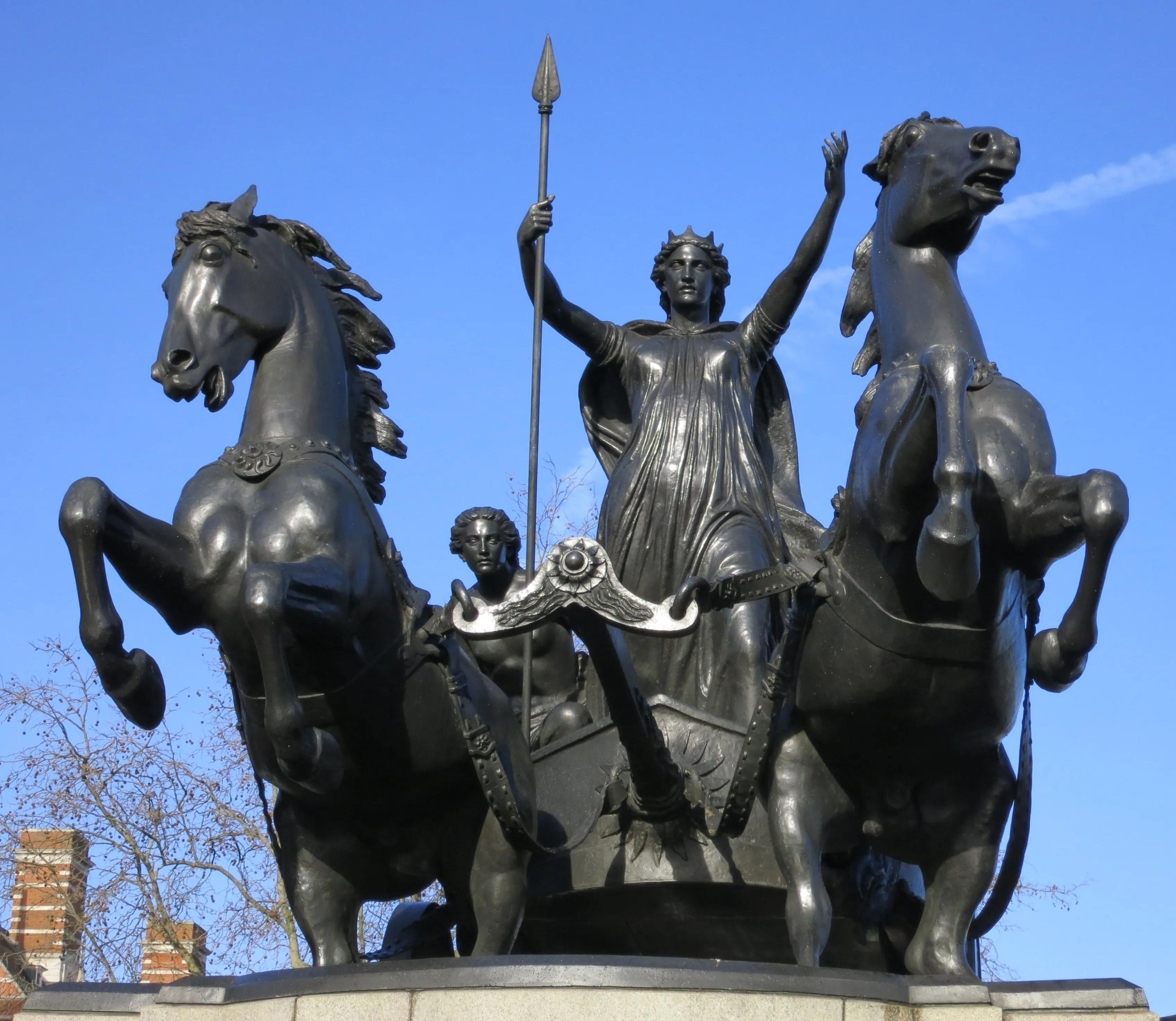
Per oltre millecinquecento anni Boudicca svanì , viva solo negli archivi di Tacito e Cassio Dione. Nel Cinquecento la riscoperta di Tacito la riportò alla luce, e con i Tudor nacquero i primi accostamenti: una regina inglese a difesa della sua isola dallo straniero. La consacrazione venne in età vittoriana. Su un impero mondiale regnava una donna, Vittoria; e il nome celtico Boudica suonava vicino a Victoria, entrambi « la vittoriosa» . La coincidenza era troppo bella per essere ignorata. Boudicca divenne icona patriottica, simbolo dell'Inghilterra antica e indomita.
For over fifteen hundred years Boudicca vanished, alive only in the archives of Tacitus and Cassius Dio. In the sixteenth century the rediscovery of Tacitus brought her back to light, and with the Tudors came the first comparisons: an English queen defending her island from the foreigner. The consecration came in the Victorian age. Over a global empire reigned a woman, Victoria; and the Celtic name Boudica rang close to Victoria, both « the victorious one» . The coincidence was too neat to ignore. Boudicca became a patriotic icon, the symbol of an ancient and unbroken England.
Il giudizio della storia
History's judgement
Il giudizio moderno è più sobrio, e l'archeologia gli dà corpo. Gli scavi di Colchester, Londra e St. Albans hanno restituito strati di cenere datati al 60–61 d.C., scheletri, oggetti calcinati: il red layer di Londra è la rivolta fatta terra. Non si è trovata la tomba della regina, né il campo esatto di Watling Street. Boudicca fu figura tragica più che stratega: la sua grandezza non sta nella vittoria, che non seppe costruire, ma nell'aver dato voce, sangue e nome a una resistenza che senza di lei sarebbe rimasta muta. Che la sua storia ci sia giunta solo dalle penne dei vincitori dice tutto del terrore che seminò .
The modern verdict is soberer, and archaeology gives it body. The digs at Colchester, London and St. Albans have yielded ash layers dated to 60–61 AD, skeletons, calcined objects: London's red layer is the revolt turned to earth. The queen's tomb has not been found, nor the exact field of Watling Street. Boudicca was a tragic figure rather than a strategist: her greatness lies not in victory, which she could not build, but in having given voice, blood and name to a resistance that without her would have stayed mute. That her story reached us only through the pens of the victors says everything of the terror she sowed.
« Era altissima, terribile allo sguardo, aspra nella voce; una gran massa di capelli fulvi le scendeva fino ai fianchi. » « She was very tall, terrible to look upon, harsh of voice; a great mass of tawny hair fell to her hips. » Cassio Dione, ritratto di Boudicca (Storia Romana LXII, 2Cassius Dio, portrait of Boudicca) Roman History LXII, 2