01Nascita, Mito e InfanziaBirth, Myth and Childhood
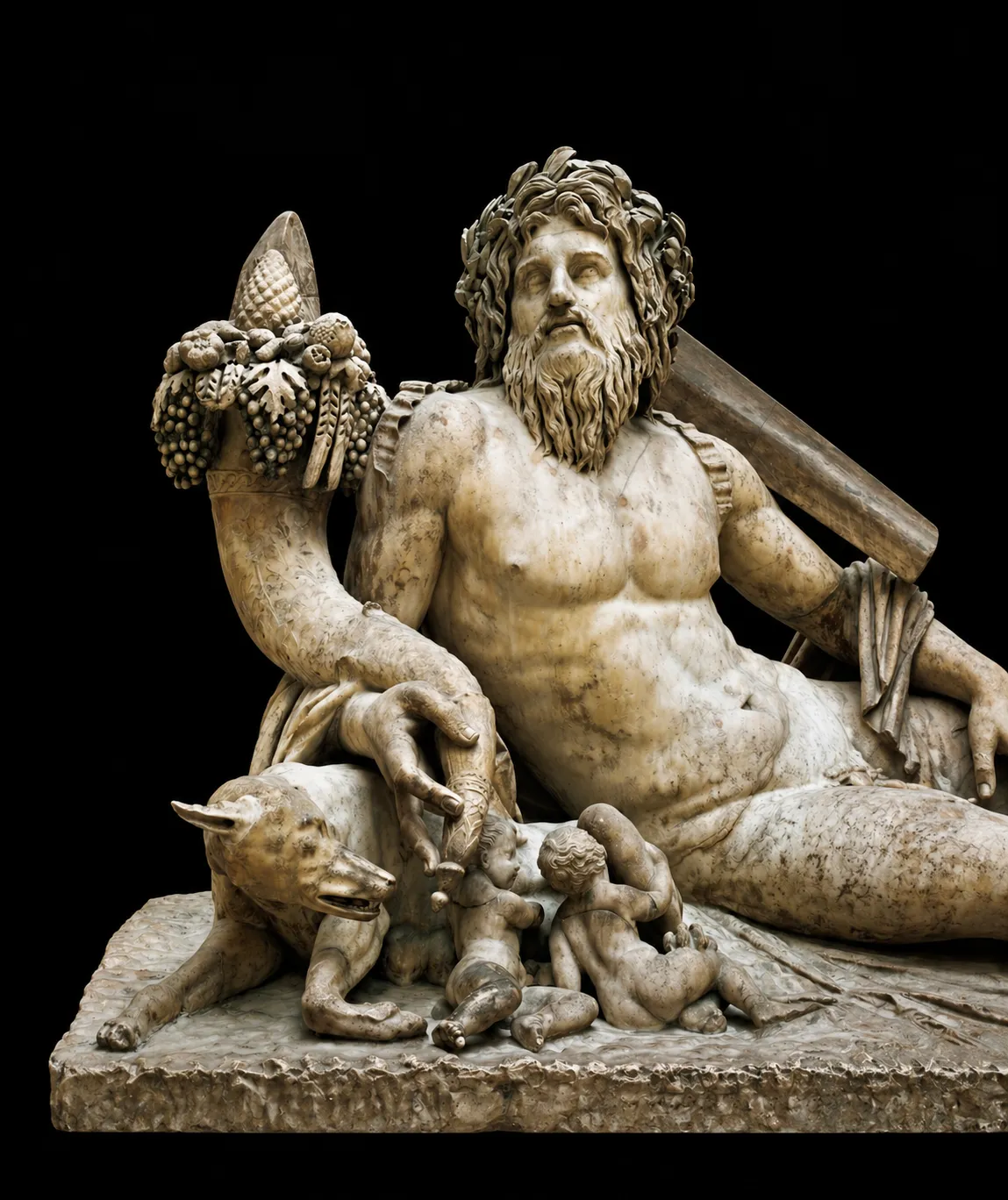
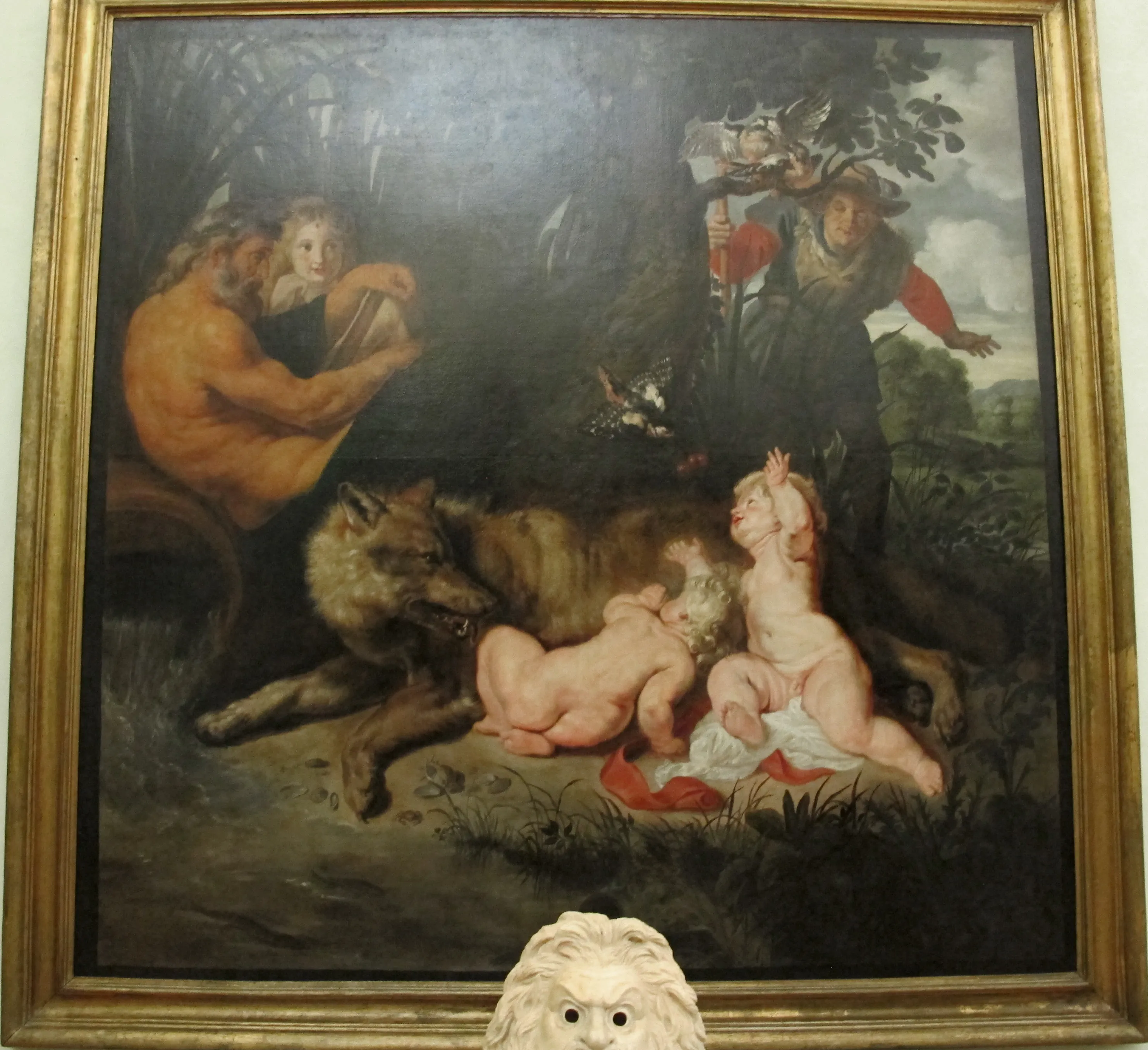
Prima ancora di essere pietra, Roma fu racconto. Tito Livio e Plutarco fissarono per sempre la leggenda: Romolo e Remo nacquero da Rea Silvia, vestale di Alba Longa votata alla castità, e dal dio Marte in persona. Era una nascita proibita, e dunque condannata. Il re Amulio, che aveva strappato il trono al fratello Numitore, nonno dei gemelli, vide in quei due neonati una minaccia di sangue e ordinò di gettarli nel Tevere. Ma il fiume in piena non li annegò: depose la cesta tra i canneti, ai piedi del Palatino. Lì si compì il prodigio. Una lupa scese ad abbeverarsi, li trovò e li allattò; un picchio, anch'esso sacro a Marte, portò loro il cibo. Due bestie selvagge a vegliare sull'origine dell'impero più grande del mondo.
Before it was stone, Rome was story. Livy and Plutarch fixed the legend forever: Romulus and Remus were born of Rhea Silvia, a Vestal of Alba Longa sworn to chastity, and of the god Mars himself. It was a forbidden birth, and therefore a condemned one. King Amulius, who had torn the throne from his brother Numitor, the twins' grandfather, saw in those two newborns a threat of blood and ordered them cast into the Tiber. But the river, swollen with flood, did not drown them: it laid the basket among the reeds at the foot of the Palatine. There the prodigy occurred. A she-wolf came down to drink, found them and suckled them; a woodpecker, also sacred to Mars, brought them food. Two wild beasts standing guard over the origin of the greatest empire in the world.
A strapparli alla foresta fu il pastore Faustolo, che li crebbe come figli tra le capanne del Palatino. I gemelli divennero giovani fieri, capi naturali di una banda di pastori e fuorilegge. Quando il caso rivelò loro la verità del proprio sangue, la vendetta fu fulminea: tornarono ad Alba Longa, rovesciarono e uccisero l'usurpatore Amulio, restituirono lo scettro al vecchio Numitore. Avrebbero potuto regnare là. Scelsero invece di tornare ai colli che li avevano salvati, per fondarvi una città tutta loro. Ma un dubbio avvelenò subito il sogno: su quale colle? Con quale nome? E soprattutto, chi dei due sarebbe stato re? Da quella domanda senza risposta nacque la rivalità che avrebbe macchiato di sangue fraterno le fondamenta di Roma.
It was the shepherd Faustulus who snatched them from the wild, raising them as his own among the huts of the Palatine. The twins grew into proud young men, the natural leaders of a band of shepherds and outlaws. When chance revealed the truth of their blood, vengeance came swiftly: they returned to Alba Longa, overthrew and killed the usurper Amulius, and restored the sceptre to old Numitor. They might have reigned there. Instead they chose to return to the hills that had saved them, to found a city of their own. But a doubt at once poisoned the dream: on which hill? Under what name? And above all, which of the two would be king? From that unanswered question was born the rivalry that would stain Rome's foundations with a brother's blood.
02La Fondazione di Roma — 753 a.C.The Founding of Rome — 753 BC
Per sciogliere la contesa, i gemelli si rimisero al volere del cielo: gli auspicia, la lettura del volo degli uccelli. Remo, ritto sull'Aventino, vide sei avvoltoi. Romolo, dal Palatino, ne contò dodici. Chi aveva vinto: il primo, o il numero maggiore? La disputa sui presagi degenerò in rissa. Poi Romolo prese l'aratro e tracciò il sulcus primigenius, il solco sacro che disegnava il pomerium, il confine religioso e inviolabile della città. Remo, per scherno e per sfida, lo scavalcò. Fu l'ultimo gesto della sua vita. Romolo lo abbatté sul posto, gridando, vuole la tradizione, la maledizione che fondò un impero: «Così perisca chiunque, d'ora in poi, oserà scavalcare le mie mura!» Roma nasceva, e nasceva già bagnata di sangue.
To settle the quarrel, the twins submitted to the will of heaven: the auspicia, the reading of the flight of birds. Remus, standing on the Aventine, saw six vultures. Romulus, from the Palatine, counted twelve. Who had won: the first, or the greater number? The dispute over the omens collapsed into brawling. Then Romulus took the plough and traced the sulcus primigenius, the sacred furrow that drew the pomerium, the city's religious and inviolable boundary. Remus, in mockery and defiance, leapt across it. It was the last act of his life. Romulus struck him down on the spot, crying, so tradition holds, the curse that founded an empire: «Thus perish all who henceforth dare to leap over my walls!» Rome was born, and it was born already bathed in blood.
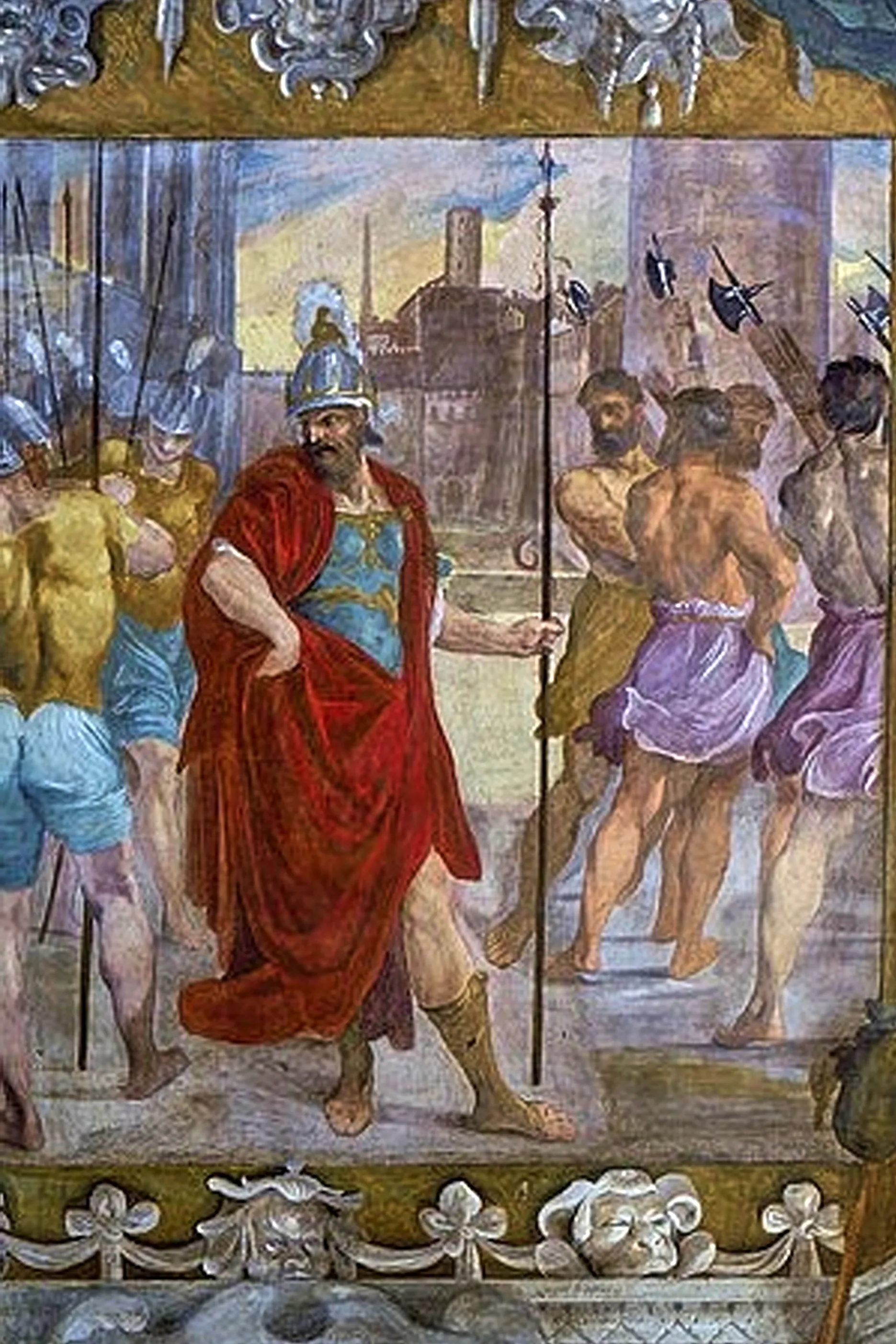
La data consegnata alla memoria è il 21 aprile 753 a.C., ancora oggi celebrata come il Natale di Roma. Romolo non si limitò a cingere mura: edificò uno Stato. Divise il popolo in tre tribù (Ramnes, Tities e Luceres) e istituì il Senato, scegliendo cento patres, i «padri» da cui sarebbe disceso il patriziato. Diede a Roma il calendario, le insegne del potere (i fasci, la toga praetexta, i littori) e le sue prime leggi. Poi compì il gesto più audace: aprì sul Campidoglio un asylum, rifugio per esuli, fuggitivi e disperati di ogni terra. Fin dal primo giorno Roma fu insieme santuario e fortezza: accoglieva chiunque, e si preparava a conquistare tutti.
The date handed down to memory is 21 April 753 BC, still celebrated today as the Natale di Roma. Romulus did not merely raise walls: he built a state. He divided the people into three tribes (Ramnes, Tities, and Luceres) and founded the Senate, choosing one hundred patres, the "fathers" from whom the patriciate would descend. He gave Rome its calendar, the insignia of power (the fasces, the toga praetexta, the lictors) and its first laws. Then he made his boldest move: on the Capitoline he opened an asylum, a refuge for exiles, fugitives and the desperate of every land. From its very first day Rome was both sanctuary and fortress: it welcomed all, and prepared to conquer all.
03Il Ratto delle Sabine e le GuerreThe Rape of the Sabines and the Wars
La città traboccava di uomini, ma mancava di donne, e una città senza spose è una città senza domani. I popoli vicini, diffidenti verso quel covo di avventurieri, negavano ai Romani il conubium, il diritto di matrimonio. Romolo rispose con l'astuzia. Bandì splendidi giochi in onore del dio Conso e invitò i vicini con le loro famiglie; accorsero in massa i Sabini. Al segnale convenuto, nel cuore della festa, i giovani romani si lanciarono e rapirono le fanciulle: è il celebre Ratto delle Sabine. L'oltraggio chiamò la guerra. Ma quando gli eserciti si fronteggiarono, furono le donne stesse, ormai mogli e madri romane, a gettarsi tra le lance dei padri e quelle dei mariti, implorando la pace. Il prodigio si compì: Romani e Sabini deposero le armi e si fusero in un solo popolo, con Romolo e il re sabino Tito Tazio a regnare insieme.
The city overflowed with men but lacked women, and a city without brides is a city without a tomorrow. The neighbouring peoples, wary of that den of adventurers, denied the Romans the conubium, the right of marriage. Romulus answered with cunning. He proclaimed splendid games in honour of the god Consus and invited the neighbours with their families; the Sabines came in throngs. At the appointed signal, in the heart of the festival, the young Romans surged forward and carried off the maidens: the famous Rape of the Sabines. The outrage summoned war. Yet when the armies stood face to face, it was the women themselves, now Roman wives and mothers, who threw themselves between the spears of their fathers and those of their husbands, begging for peace. The prodigy was fulfilled: Romans and Sabines laid down their arms and merged into a single people, with Romulus and the Sabine king Titus Tatius reigning together.
- 753 a.C. — Romolo cinge il Palatino col solco sacro e fonda Roma; Remo cade sotto la sua mano
- 752 a.C. ca. — Il Ratto delle Sabine durante i giochi Consualia: nasce la stirpe romana
- 748 a.C. ca. — Guerra e pace coi Sabini: il re Tito Tazio regna come co-re
- 742 a.C. ca. — Morte di Tito Tazio; Romolo resta sovrano unico
- 738—720 a.C. ca. — Vittorie su Fidenae, Veio e i popoli latini: Roma allarga i confini
- 753 BC — Romulus girds the Palatine with the sacred furrow and founds Rome; Remus falls by his hand
- c. 752 BC — The Rape of the Sabines during the Consualia games: the Roman stock is born
- c. 748 BC — War and peace with the Sabines: King Titus Tatius reigns as co-king
- c. 742 BC — Death of Titus Tatius; Romulus remains sole ruler
- c. 738—720 BC — Victories over Fidenae, Veii and the Latin peoples: Rome widens its borders
04Il Regno: Istituzioni e RiformeThe Reign: Institutions and Reforms
Romolo non fu soltanto un guerriero: fu un legislatore. In quasi quarant'anni di regno scolpì le strutture giuridiche, militari e religiose su cui Roma avrebbe costruito ogni suo secolo. Creò i comitia curiata, la prima assemblea del popolo, ripartita in trenta curie; sancì la distinzione tra patrizi e plebei, e quella tra patroni e clienti; arruolò le prime tre legioni di mille fanti ciascuna, affiancate da trecento cavalieri, i celeres, sua guardia personale; fissò le norme sul matrimonio, sulla proprietà, sull'ospitalità sacra. In quel disegno c'era già tutta Roma: ogni uomo libero un soldato, ogni soldato un cittadino. Il vincolo indissolubile fra le armi e la cittadinanza, la forza segreta che avrebbe trascinato le aquile fino ai confini del mondo, nasceva qui, nella mente del primo re.
Romulus was not only a warrior: he was a lawgiver. In nearly forty years of reign he carved the legal, military and religious structures upon which Rome would build every one of its centuries. He created the comitia curiata, the first assembly of the people, divided into thirty curiae; he established the distinction between patricians and plebeians, and that between patrons and clients; he raised the first three legions of a thousand foot each, flanked by three hundred horsemen, the celeres, his personal guard; he fixed the rules of marriage, of property, of sacred hospitality. In that design all of Rome was already present: every free man a soldier, every soldier a citizen. The indissoluble bond between arms and citizenship, the secret strength that would drag the eagles to the ends of the earth, was born here, in the mind of the first king.
Sul piano del sacro, Romolo fu il primo a conquistare le spolia opima, le armi strappate di persona a un re nemico ucciso in duello (quelle di Acrone, re di Cenina) e le depose nel tempio di Giove Feretrio, da lui fondato: il più antico santuario di Roma. Soltanto due comandanti, in mille anni, riuscirono a eguagliare quell'impresa. Eppure il primo re non governò da despota assoluto: il Senato dei cento patres lo consigliava e, insieme, lo frenava. In quel dialogo (talvolta alleanza, talvolta braccio di ferro) fra il potere del singolo e l'autorità dell'assemblea era già scritta, in germe, l'intera tensione politica che avrebbe attraversato la Repubblica e l'Impero.
In the realm of the sacred, Romulus was the first to win the spolia opima, the arms stripped in person from an enemy king slain in single combat (those of Acron, king of Caenina) and he laid them in the temple of Jupiter Feretrius, which he founded: the oldest sanctuary in Rome. Only two commanders, in a thousand years, would equal that feat. Yet the first king did not rule as an absolute despot: the Senate of the hundred patres advised him and, at the same time, restrained him. In that dialogue (now alliance, now trial of strength) between the power of one man and the authority of the assembly, the whole political tension that would run through the Republic and the Empire was already written in seed.
05La Scomparsa e l'Eredità EternaThe Disappearance and the Eternal Legacy
Intorno al 717 a.C., mentre passava in rassegna l'esercito presso la palude Caprea, nel Campo di Marte, Romolo svanì. Senza preavviso il cielo si oscurò, un'eclissi spense il sole, una tempesta furiosa si abbatté sulla folla in preda al terrore. Quando la luce tornò, il trono era vuoto: il re non c'era più. La versione consacrata, accolta dal popolo con fede tremante, non ammetteva dubbi: Marte era disceso sul suo carro a riprendersi il figlio. Romolo era stato rapito in cielo nel cuore del turbine e fatto dio. Da quel giorno fu venerato come Quirino, la divinità guerriera che avrebbe vegliato in eterno sulla città da lui fondata.
Around 717 BC, while reviewing the army by the Goat's Marsh on the Field of Mars, Romulus vanished. Without warning the sky darkened, an eclipse smothered the sun, a furious storm fell upon the terror-stricken crowd. When the light returned, the throne stood empty: the king was gone. The consecrated version, received by the people with trembling faith, admitted no doubt: Mars had descended on his chariot to reclaim his son. Romulus had been swept into heaven in the heart of the whirlwind and made a god. From that day he was worshipped as Quirinus, the warrior deity who would watch over the city he had founded for all eternity.
Ma un'altra voce, più cupa, correva sotto la leggenda. Gli storici più disincantati, Plutarco, Dionigi di Alicarnasso, lo stesso Livio, lasciano filtrare il sospetto: che i senatori, esasperati da un sovrano divenuto troppo autocratico, lo avessero fatto a pezzi in piena seduta e portato via i resti nascosti sotto le toghe, approfittando della tempesta e del buio. L'apoteosi sarebbe allora una pietosa menzogna di Stato, costruita per placare un popolo che amava il suo re. Mito glorioso o gelido delitto politico, la fine di Romolo resta l'enigma fondante di Roma: persino la morte del primo re è doppia, ambigua, sospesa per sempre fra il cielo e il pugnale.
But another voice, darker, ran beneath the legend. The more disenchanted historians (Plutarch, Dionysius of Halicarnassus, Livy himself) let the suspicion filter through: that the senators, exasperated by a ruler grown too autocratic, had torn him to pieces in full session and carried off the remains hidden beneath their togas, under cover of the storm and the dark. The apotheosis would then be a merciful lie of state, built to placate a people that loved its king. Glorious myth or cold political murder, the end of Romulus remains the founding enigma of Rome: even the death of the first king is twofold, ambiguous, suspended forever between heaven and the dagger.
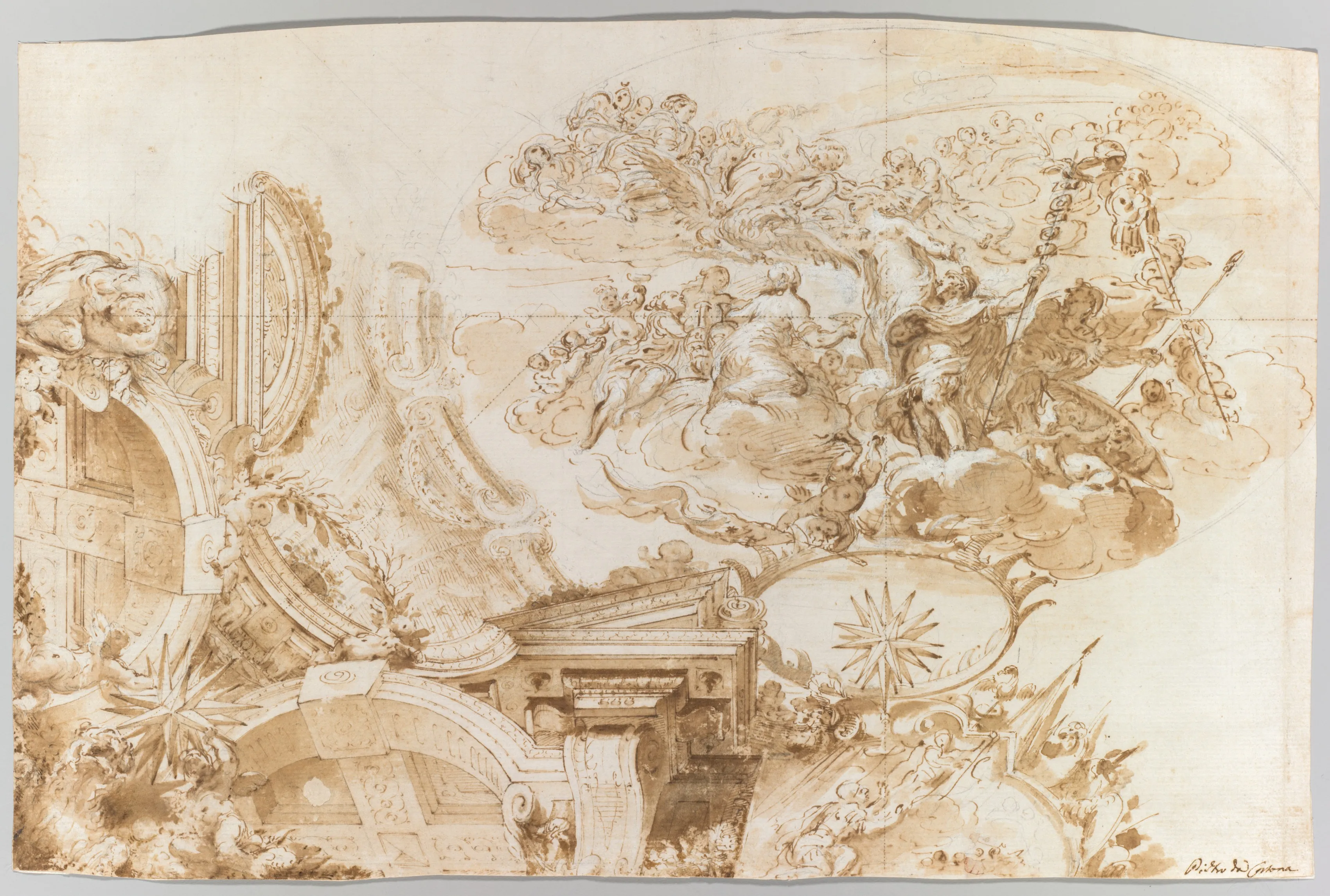
L'eredità di Romolo non è una legge, né una battaglia, né un monumento: è Roma stessa. La città che ancora porta il suo nome, le istituzioni che plasmò, l'idea di popolo che generò dal nulla. Tremila anni dopo, ogni imperatore che avrebbe indossato la porpora regnava su una città che un pastore aveva tracciato con l'aratro su un colle assolato, in un mattino dell'VIII secolo avanti Cristo. Nel suo mito è racchiuso quello di Roma intera: figlio di un dio e allattato da una belva, fratricida e fondatore, uomo svanito in divinità. Violenta e sublime, sacra e spietata, eterna.
The legacy of Romulus is not a law, nor a battle, nor a monument: it is Rome itself. The city that still bears his name, the institutions he shaped, the very idea of a people he conjured from nothing. Three thousand years later, every emperor who would wear the purple reigned over a city that a shepherd had traced with a plough on a sunlit hill, on a morning of the 8th century before Christ. His myth contains that of all Rome: son of a god and suckled by a beast, fratricide and founder, a man dissolved into a god. Violent and sublime, sacred and ruthless, eternal.