01La Fondazione Augustea — 27 a.C.The Augustan Foundation — 27 BC
Nessun romano della Repubblica avrebbe tollerato soldati armati entro le mura della Città: Roma era sacra, e il pomerium, il confine religioso dell'Urbe, restava invalicabile alle legioni. Eppure la radice della Guardia era antica e onorata. Già i grandi imperatores del II–I secolo a.C. (Scipione Emiliano, Mario, Silla, Pompeo, Cesare, Marco Antonio) si cingevano in campagna di un drappello scelto di veterani fedelissimi: la cohors praetoria, la «coorte del pretorio», dal praetorium, la tenda del comandante attorno alla quale essi vegliavano. Era una scorta personale, informale, disciolta al rientro dalle guerre. Fu Augusto a compiere il passo che nessuno aveva mai osato: rese permanente l'eccezione. Nel 27 a.C., appena ricevuto dal Senato il titolo di princeps, organizzò nove coorti pretoriane di cinquecento uomini ciascuna: quattromilacinquecento soldati votati a un uomo solo. Per la prima volta nella storia di Roma il custode dello Stato non era più il Senato: era una guardia armata, e rispondeva all'imperatore soltanto.
No Roman of the Republic would have tolerated armed soldiers within the City walls: Rome was sacred, and the pomerium, the sacred boundary of the Urbs, remained forbidden to the legions. Yet the Guard's root was ancient and honoured. Already the great imperatores of the 2nd–1st century BC (Scipio Aemilianus, Marius, Sulla, Pompey, Caesar, Mark Antony) surrounded themselves in the field with a chosen band of most loyal veterans: the cohors praetoria, the "cohort of the praetorium", from the praetorium, the commander's tent over which they kept watch. It was a personal escort, informal, disbanded on return from the wars. It was Augustus who took the step no one had ever dared: he made the exception permanent. In 27 BC, just after receiving the title of princeps from the Senate, he organized nine praetorian cohorts of five hundred men each: four thousand five hundred soldiers sworn to a single man. For the first time in Rome's history the guardian of the State was no longer the Senate: it was an armed guard, and it answered to the emperor alone.
Augusto, maestro della dissimulazione, conosceva il prezzo della paura: non volle apparire un tiranno cinto di lance. Dispose perciò solo tre coorti dentro Roma (disperse in alloggi privati, senza caserma, quasi invisibili) e relegò le altre sei nelle città del Lazio e della Campania: Otricoli, Tibur, Aquinum, Praeneste, Ostia, Capua. Una guardia onnipresente e tuttavia discreta: un pugnale tenuto sotto la toga. La maschera cadde sotto Tiberio. Nel 23 d.C. il prefetto Lucio Elio Seiano ottenne di radunare tutte le coorti in un'unica fortezza alle porte della Città, la Castra Praetoria. Da quel giorno quattromilacinquecento uomini (poi novemila, infine quindicimila) in armi dormirono a meno di un miglio dal Palatino. Roma aveva accolto entro le proprie mura la macchina che, per tre secoli, avrebbe fatto e disfatto i suoi imperatori.
Augustus, a master of dissimulation, knew the price of fear: he would not appear a tyrant girded with spears. He therefore stationed only three cohorts inside Rome (scattered in private lodgings, without barracks, almost invisible) and relegated the other six to the towns of Latium and Campania: Otricoli, Tibur, Aquinum, Praeneste, Ostia, Capua. A guard omnipresent yet discreet: a dagger kept beneath the toga. The mask fell under Tiberius. In 23 AD the prefect Lucius Aelius Sejanus obtained leave to gather all the cohorts into a single fortress at the gates of the City, the Castra Praetoria. From that day four thousand five hundred armed men (then nine thousand, finally fifteen thousand) slept less than a mile from the Palatine. Rome had welcomed within its own walls the machine that, for three centuries, would make and unmake its emperors.
La Cohors I Praetoria era doppia (1.000 uomini) e ospitava il signifer con l'aquila della Guardia, oltre alle immagini imperiali (imagines). Era stanziata sempre nei pressi della persona dell'imperatore, sul Palatino o nella sua scorta personale di viaggio.
The Cohors I Praetoria was double-strength (1,000 men) and housed the signifer with the Guard's aquila, plus the imperial portraits (imagines). It was always stationed near the emperor's person, on the Palatine or in his personal travel escort.
Reparto scelto di 300 cavalieri all'interno della Guardia: esploratori, corrieri rapidi e, all'occorrenza, sicari. Furono gli speculatores ad eseguire le condanne ordinate dagli imperatori: tagliarono la testa a Galba nel 69; uccisero Domiziano nel 96; assassinarono Commodo nel 192.
Elite corps of 300 horsemen inside the Guard: scouts, fast couriers, and when needed, assassins. The speculatores executed sentences ordered by emperors: they beheaded Galba in 69; killed Domitian in 96; murdered Commodus in 192.
Augusto creò la prefettura nel 2 a.C.: rango equestre (non senatorio, per non dare troppo potere ai nobili). Originariamente due prefetti in parallelo per il controllo reciproco; spesso sotto imperatori deboli un solo prefetto accentrava il comando. Era la seconda carica più potente dell'Impero dopo l'Augusto stesso.
Augustus created the prefecture in 2 BC: equestrian rank (not senatorial, to avoid giving too much power to nobles). Originally two prefects in parallel for mutual control; often under weak emperors a single prefect centralized command. It was the second most powerful office of the Empire after the Augustus himself.
Ad ogni nuovo imperatore, la Guardia esigeva un donativum: un premio in denaro per «ringraziare» la lealtà. Claudio nel 41 d.C. pagò 15.000 sesterzi a testa (5 anni di paga ordinaria); Pertinace nel 193 ne offrì 12.000 e fu ucciso per essere stato giudicato avaro. Era la radice di tutti i mali del sistema: la successione diventava una contrattazione economica.
At every new emperor's accession, the Guard demanded a donativum: a money bonus to "thank" their loyalty. Claudius in 41 AD paid 15,000 sesterces per head (5 years of regular pay); Pertinax in 193 offered 12,000 and was killed for being judged miserly. It was the root of all the system's ills: succession became an economic negotiation.
02I Prefetti del Pretorio — I Kingmaker di RomaThe Praetorian Prefects — Rome's Kingmakers
Un solo uomo stava fra l'imperatore e il mondo: il praefectus praetorio. Dopo l'Augusto era il più potente di Roma, e il più pericoloso. Comandava quindicimila soldati a un miglio dal Palatino, decideva chi potesse varcare la soglia del sovrano, teneva fra le dita i fili dell'intelligence imperiale, presiedeva i processi capitali d'Italia. Sotto un principe debole o lontano, il prefetto si faceva reggente in tutto fuorché nel nome. Sotto un principe forte, ne era l'ombra fedele. La storia della Guardia è perciò, prima di ogni cosa, la storia di chi la comandò: una galleria di kingmaker che incoronarono e sgozzarono i propri signori, e che quasi tutti, prima o poi, sognarono di salire essi stessi sul trono.
A single man stood between the emperor and the world: the praefectus praetorio. After the Augustus he was the most powerful in Rome, and the most dangerous. He commanded fifteen thousand soldiers a mile from the Palatine, decided who could cross the sovereign's threshold, held in his fingers the threads of imperial intelligence, presided over the capital trials of Italy. Under a weak or distant prince, the prefect became regent in all but name. Under a strong prince, he was his faithful shadow. The history of the Guard is therefore, before all else, the history of those who commanded it: a gallery of kingmakers who crowned and throttled their own masters, and who almost all, sooner or later, dreamt of mounting the throne themselves.
- 14–31 d.C. · Seiano Lucio Elio SeianoLucius Aelius Sejanus — Il più grande di tutti i prefetti. Sotto Tiberio (ritirato a Capri dal 26), accentrò il potere reale a Roma. Concentrò le coorti nella Castra Praetoria; eliminò sistematicamente i rivali al trono, incluso Druso, figlio di Tiberio, avvelenato nel 23. Tacito (Annales) lo descrive come l'incarnazione dell'ambizione cieca. Nel 31 Tiberio lo fece arrestare a sorpresa con una lettera al Senato letta da Macrone; Seiano fu strangolato lo stesso giorno.The greatest of all prefects. Under Tiberius (retired to Capri from 26), he centralized real power in Rome. He concentrated the cohorts in the Castra Praetoria; systematically eliminated rivals to the throne, including Drusus, Tiberius's son, poisoned in 23. Tacitus (Annales) describes him as the embodiment of blind ambition. In 31 Tiberius had him arrested by surprise with a letter to the Senate read by Macro; Sejanus was strangled the same day.
- 31–38 d.C. · Macrone Quinto Nevio Sutorio MacroneQuintus Naevius Sutorius Macro — Successe a Seiano dopo averne organizzato l'arresto. Tiberio morente a Misenum (37) fu probabilmente soffocato con un cuscino da Macrone, che voleva accelerare la successione di Caligola. Caligola lo nominò poi prefetto d'Egitto: promozione formale, ma di fatto allontanamento. Costretto al suicidio nel 38 quando Caligola si liberò di chi sapeva troppo.Succeeded Sejanus after organizing his arrest. Dying Tiberius at Misenum (37) was probably smothered with a pillow by Macro, who wanted to speed up Caligula's succession. Caligula then named him prefect of Egypt: formal promotion, in fact removal. Forced to suicide in 38 when Caligula rid himself of those who knew too much.
- 41 d.C. · Claudio Il Primo Imperatore PretorianoThe First Praetorian Emperor — Caligola fu pugnalato il 24 gennaio 41 dal tribuno pretoriano Cassio Cherea. Mentre il Senato discuteva il ripristino della Repubblica, i pretoriani trovarono Claudio nascosto dietro una tenda del Palatino, lo trascinarono al Castra Praetoria, e lo proclamarono Augusto in cambio di 15.000 sesterzi a testa. Fu il primo imperatore scelto dalla Guardia contro la volontà del Senato. Il precedente costituzionale era stato stabilito: da quel momento l'imperatore d'Occidente era chi i pretoriani decidevano.Caligula was stabbed on 24 January 41 by praetorian tribune Cassius Chaerea. While the Senate debated restoring the Republic, the praetorians found Claudius hidden behind a curtain on the Palatine, dragged him to the Castra Praetoria, and proclaimed him Augustus in exchange for 15,000 sesterces per head. He was the first emperor chosen by the Guard against the Senate's will. The constitutional precedent was set: from that moment the Western emperor was whomever the praetorians decided.
- 51–62 d.C. · Burro Sesto Afranio BurroSextus Afranius Burrus — L'eccezione che conferma la regola: un prefetto integro. Nominato da Agrippina Minore per controllare il giovane Nerone, formò con il filosofo Seneca un'efficace coppia di consiglieri. I primi cinque anni di Nerone, il quinquennium Neronis, furono i migliori del suo regno proprio grazie a Burro e Seneca. Morì nel 62 (cancro alla gola, forse veleno di Nerone). La sua scomparsa segnò l'inizio della deriva tirannica di Nerone.The exception that proves the rule: an honest prefect. Appointed by Agrippina the Younger to control the young Nero, he formed an effective advisory pair with philosopher Seneca. Nero's first five years, the quinquennium Neronis, were the best of his reign precisely thanks to Burrus and Seneca. He died in 62 (throat cancer, perhaps Nero's poison). His disappearance marked the beginning of Nero's tyrannical drift.
- 62–68 d.C. · Tigellino Gaio Ofonio TigellinoGaius Ofonius Tigellinus — L'opposto di Burro: il prefetto-favorito di Nerone, complice di tutte le sue follie. Organizzò la persecuzione dei cristiani dopo l'incendio del 64. Cospirò contro i senatori sospetti. Tradì Nerone nel 68 quando capì che era finito, passando dalla parte di Galba. Galba lo perdonò; Otone, l'anno dopo, lo fece costringere al suicidio.The opposite of Burrus: Nero's favourite prefect, accomplice in all his madness. Organized persecution of Christians after the fire of 64. Conspired against suspect senators. Betrayed Nero in 68 when he understood the end had come, switching to Galba's side. Galba pardoned him; Otho, a year later, had him forced to suicide.
- 197–205 d.C. · Plauziano Gaio Fulvio PlauzianoGaius Fulvius Plautianus — Compaesano e cugino di Settimio Severo, prefetto onnipotente che osò sposare la propria figlia Plautilla a Caracalla nel 202. Aveva un patrimonio personale superiore a quello dell'erario imperiale. Caracalla lo odiava: nel 205, gli tese una trappola accusandolo di aver tramato per uccidere l'imperatore, e lo fece pugnalare in palazzo davanti al padre.Compatriot and cousin of Septimius Severus, omnipotent prefect who dared marry his own daughter Plautilla to Caracalla in 202. He had a personal fortune exceeding the imperial treasury. Caracalla hated him: in 205, he set a trap accusing him of plotting to kill the emperor, and had him stabbed in the palace in front of his father.
Il prefetto Marco Opellio Macrino osò ciò che ogni predecessore aveva soltanto sognato. Nell'aprile del 217 d.C., lungo la strada presso Carre, mentre Caracalla era smontato da cavallo per un bisogno, una guardia del corpo lo trafisse a morte, e il colpo era stato ordito proprio da Macrino, che si sapeva ormai il prossimo nella lista delle vittime. Tre giorni dopo le stesse truppe lo acclamarono Augusto. Era il primo imperatore di rango equestre, non senatorio, della storia di Roma, e il primo prefetto a sedere apertamente sul trono. Ma il diadema strappato con il pugnale si regge a fatica. Macrino governò appena quattordici mesi: nel giugno del 218 l'esercito di Siria passò alla causa del giovanissimo Elagabalo, lo sconfisse in campo aperto, lo inseguì fino alla lontana Bitinia e lo decapitò. La lezione fu incisa nel sangue: anche con la Guardia dalla propria parte, conquistare il trono non significava tenerlo.
The prefect Marcus Opellius Macrinus dared what every predecessor had only dreamt. In April 217 AD, on the road near Carrhae, as Caracalla had dismounted to relieve himself, a bodyguard ran him through, and the blow had been contrived by Macrinus himself, who knew he was next on the list of victims. Three days later the same troops acclaimed him Augustus. He was the first emperor of equestrian rank, not senatorial, in Roman history, and the first prefect to sit openly upon the throne. But a diadem seized with the dagger is held only with difficulty. Macrinus ruled barely fourteen months: in June 218 the army of Syria went over to the cause of the boy Elagabalus, defeated him in open field, hunted him as far as distant Bithynia and beheaded him. The lesson was carved in blood: even with the Guard on one's side, to seize the throne was not to keep it.
03L'Asta dell'Impero — 28 marzo 193 d.C.The Auction of the Empire — 28 March 193 AD
Vi fu un giorno in cui l'Impero romano, il più vasto dominio che il mondo avesse mai conosciuto, venne messo all'incanto come una villa o un gregge di schiavi. Accadde nel 193 d.C., e fu l'onta più nera nei mille anni di Roma: la Guardia Pretoriana vendette il trono al miglior offerente. Per comprenderlo bisogna risalire alla notte del 31 dicembre 192, quando Commodo, ultimo degli Antonini, fu strangolato nella vasca del bagno dall'atleta Narcisso, vittima di una congiura ordita dal prefetto del pretorio Quinto Emilio Leto e dalla concubina Marcia. Con quel cadavere si spegneva la dinastia che aveva dato a Roma Traiano, Adriano e Marco Aurelio. Restava il vuoto. E nel vuoto si precipitarono i pretoriani.
There came a day when the Roman Empire, the vastest dominion the world had ever known, was put up for auction like a villa or a herd of slaves. It happened in 193 AD, and it was the blackest disgrace in Rome's thousand years: the Praetorian Guard sold the throne to the highest bidder. To grasp it we must go back to the night of 31 December 192, when Commodus, last of the Antonines, was strangled in his bath by the athlete Narcissus, victim of a plot devised by praetorian prefect Quintus Aemilius Laetus and the concubine Marcia. With that corpse the dynasty that had given Rome Trajan, Hadrian and Marcus Aurelius was extinguished. A void remained. And into the void the praetorians rushed.
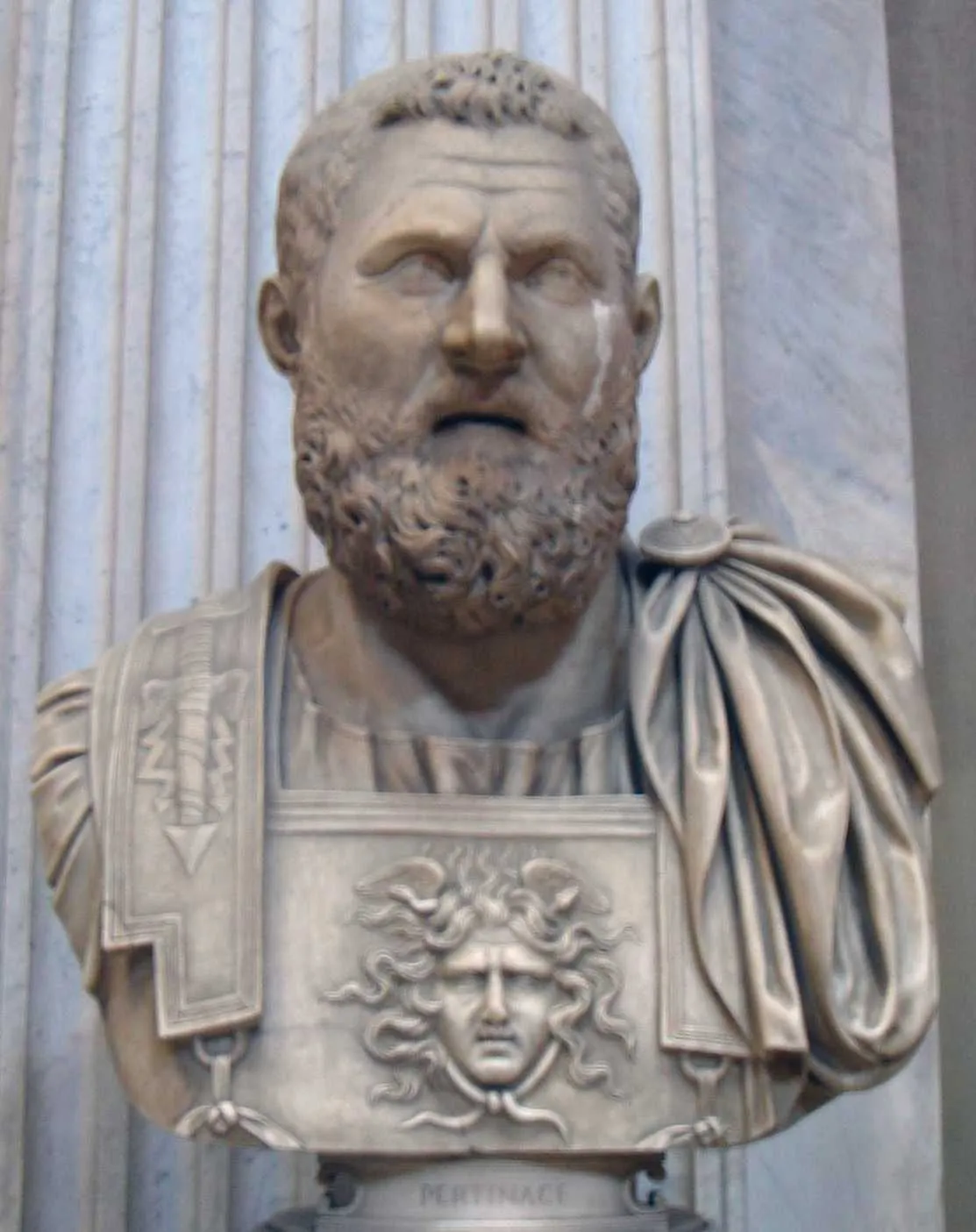
- 31 dicembre 192 Assassinio di CommodoMurder of Commodus — Lo strangolano in bagno il lottatore Narcisso e la favorita Marcia, sotto direzione del prefetto Leto. Il giorno seguente Leto convince Pertinace, prefetto urbano sessantaseienne, ad accettare la porpora.Wrestler Narcissus and favourite Marcia strangle him in his bath, under prefect Laetus's direction. The next day Laetus convinces Pertinax, 66-year-old urban prefect, to accept the purple.
- 1 gennaio – 28 marzo 193 87 giorni di austerità87 days of austerity — Pertinace tenta di salvare le finanze esauste da Commodo: blocca le spese di corte, vende all'asta gli oggetti di lusso del Palatino, riduce i privilegi pretoriani. Promette il donativum ma versa solo metà della somma. Tentativo di restaurazione che si scontra immediatamente con la corruzione strutturale del sistema.Pertinax tries to save finances exhausted by Commodus: freezes court spending, auctions Palatine luxury items, reduces praetorian privileges. Promises the donativum but pays only half. Restoration attempt that immediately clashes with the system's structural corruption.
- 28 marzo 193 L'AssassinioThe Assassination — 300 pretoriani irrompono nel Palatino. Pertinace li affronta personalmente, da solo, ricordando la propria reputazione militare. Esita per qualche minuto; poi il pretoriano Tausio lo trafigge alla gola. Tagliano la testa, la infilano su una lancia e la portano al Castra Praetoria. La regola pretoriana è chiara: si paga subito, e abbondantemente.300 praetorians break into the Palatine. Pertinax faces them personally, alone, recalling his military reputation. They hesitate for some minutes; then praetorian Tausius stabs him in the throat. They cut off his head, impale it on a spear and bring it to the Castra Praetoria. The praetorian rule is clear: pay now, and pay generously.
- 28 marzo 193 (pomeriggio) L'AstaThe Auction — Le coorti annunciano dalle mura del Castra Praetoria che il trono va al miglior offerente. Si presentano due candidati: Tito Flavio Sulpiciano (suocero di Pertinace, prefetto urbano) e Marco Didio Giuliano (ricchissimo senatore). Inizia un'asta vera e propria al rialzo. Sulpiciano offre 20.000 sesterzi a soldato; Didio Giuliano risponde 25.000. La trattativa si svolge gridando dalle finestre. Alla fine Didio Giuliano vince offrendo 25.000 sesterzi a testa (equivalenti a 8 anni di stipendio ordinario). Cassio Dione (LXXIV, 11) descrive la scena come la vergogna suprema dell'Impero.The cohorts announce from the Castra Praetoria walls that the throne goes to the highest bidder. Two candidates appear: Titus Flavius Sulpicianus (Pertinax's father-in-law, urban prefect) and Marcus Didius Julianus (very rich senator). A real bidding war begins. Sulpicianus offers 20,000 sesterces per soldier; Didius Julianus replies 25,000. The negotiation takes place by shouting through the windows. Finally Didius Julianus wins by offering 25,000 sesterces per head (equivalent to 8 years of regular pay). Cassius Dio (LXXIV, 11) describes the scene as the Empire's supreme shame.
- 28 marzo – 1 giugno 193 66 giorni di Didio Giuliano66 days of Didius Julianus — Il senatore-acquirente regna formalmente, ma la notizia provoca rivolte in tutte le province. Tre governatori legionari si proclamano contemporaneamente Augusti: Settimio Severo in Pannonia, Pescennio Negro in Siria, Clodio Albino in Britannia. Settimio Severo, il più vicino, marcia su Roma con le sue legioni danubiane. Didio Giuliano cerca disperatamente di negoziare; non ha esercito vero. Il 1° giugno 193 il Senato lo dichiara nemico pubblico; un soldato lo decapita nel palazzo.The senator-buyer reigns formally, but news provokes revolts in all provinces. Three legionary governors simultaneously proclaim themselves Augusti: Septimius Severus in Pannonia, Pescennius Niger in Syria, Clodius Albinus in Britain. Septimius Severus, the closest, marches on Rome with his Danubian legions. Didius Julianus desperately tries to negotiate; he has no real army. On June 1, 193, the Senate declares him a public enemy; a soldier beheads him in the palace.
- 9 giugno 193 Settimio Severo PunisceSeptimius Severus Punishes — Settimio Severo entra a Roma con le legioni illiriche. Convoca tutta la Guardia Pretoriana disarmata fuori dalle mura, la circonda di truppe legionarie, la scioglie in massa, esilia gli ex-pretoriani lontano da Roma. Ricostituisce poi una Guardia nuova, formata solo da legionari illirici delle frontiere, eliminando il privilegio italico storico. Per la prima volta dopo 220 anni, i pretoriani non sono più «romani».Septimius Severus enters Rome with the Illyrian legions. He summons the entire unarmed Praetorian Guard outside the walls, surrounds it with legionary troops, disbands it en masse, exiles the ex-praetorians far from Rome. He then reconstitutes a new Guard, formed only of Illyrian frontier legionaries, eliminating the historic Italic privilege. For the first time after 220 years, the praetorians are no longer "Roman."
Il 193 passò alla storia come l'anno dei cinque imperatori: Commodo (caduto il 31 dicembre 192), Pertinace, Didio Giuliano, Pescennio Negro, Clodio Albino e Settimio Severo: sei nomi in tutto, di cui cinque vivi nello stesso momento all'alba dell'estate. Uno solo sopravvisse: Settimio Severo. La crisi denudò una verità terribile: l'Impero non possedeva più alcun meccanismo legittimo di successione. L'imperatore lo sceglievano i prefetti del pretorio con il veleno e il pugnale, le legioni di frontiera acclamando i propri comandanti, oppure, come in quel giorno di marzo, l'incanto della Guardia. Era il preludio strutturale alla grande crisi del III secolo: dopo i Severi, Roma avrebbe consumato cinquanta imperatori in cinquant'anni, quasi tutti assassinati dalle stesse spade che avevano giurato di difenderli.
193 went down in history as the Year of the Five Emperors: Commodus (fallen 31 December 192), Pertinax, Didius Julianus, Pescennius Niger, Clodius Albinus and Septimius Severus: six names in all, of which five alive at the same moment at the dawn of summer. Only one survived: Septimius Severus. The crisis laid bare a terrible truth: the Empire no longer possessed any legitimate mechanism of succession. The emperor was chosen by praetorian prefects with poison and dagger, by the frontier legions acclaiming their commanders, or, as on that March day, by the Guard's auction. It was the structural prelude to the great crisis of the 3rd century: after the Severans, Rome would burn through fifty emperors in fifty years, almost all murdered by the very swords that had sworn to defend them.
04Uniforme e Insegne — La Guardia SplendenteUniform and Insignia — The Splendid Guard
Bastava uno sguardo per distinguere il pretoriano dal legionario di linea. Quello non era un soldato da trincea, ma un corpo cerimoniale e di guardia urbana, e la sua uniforme era pensata per abbagliare, non per reggere la fatica del campo: bronzi lucidati a specchio, mantelli azzurri trapunti d'oro, creste trasversali di crine candido. Il legionario combatteva nel fango delle frontiere; il pretoriano sfilava fra i marmi del Palatino. Eppure quello sfarzo non era vanità: era teatro del potere. Ogni placca, ogni colore, ogni insegna gridava a chi giungeva alle udienze imperiali una sola verità: qui regna l'imperatore, e chi gli sta accanto può uccidere.
A single glance set the praetorian apart from the line legionary. He was no trench soldier but a ceremonial corps and urban guard, and his uniform was made to dazzle, not to endure the toil of the field: mirror-polished bronzes, blue cloaks stitched with gold, transverse crests of snow-white horsehair. The legionary fought in the mud of the frontiers; the praetorian paraded amid the marbles of the Palatine. Yet that splendour was no vanity, it was the theatre of power. Every plate, every colour, every standard cried out to all who came to the imperial audiences a single truth: here reigns the emperor, and those at his side can kill.
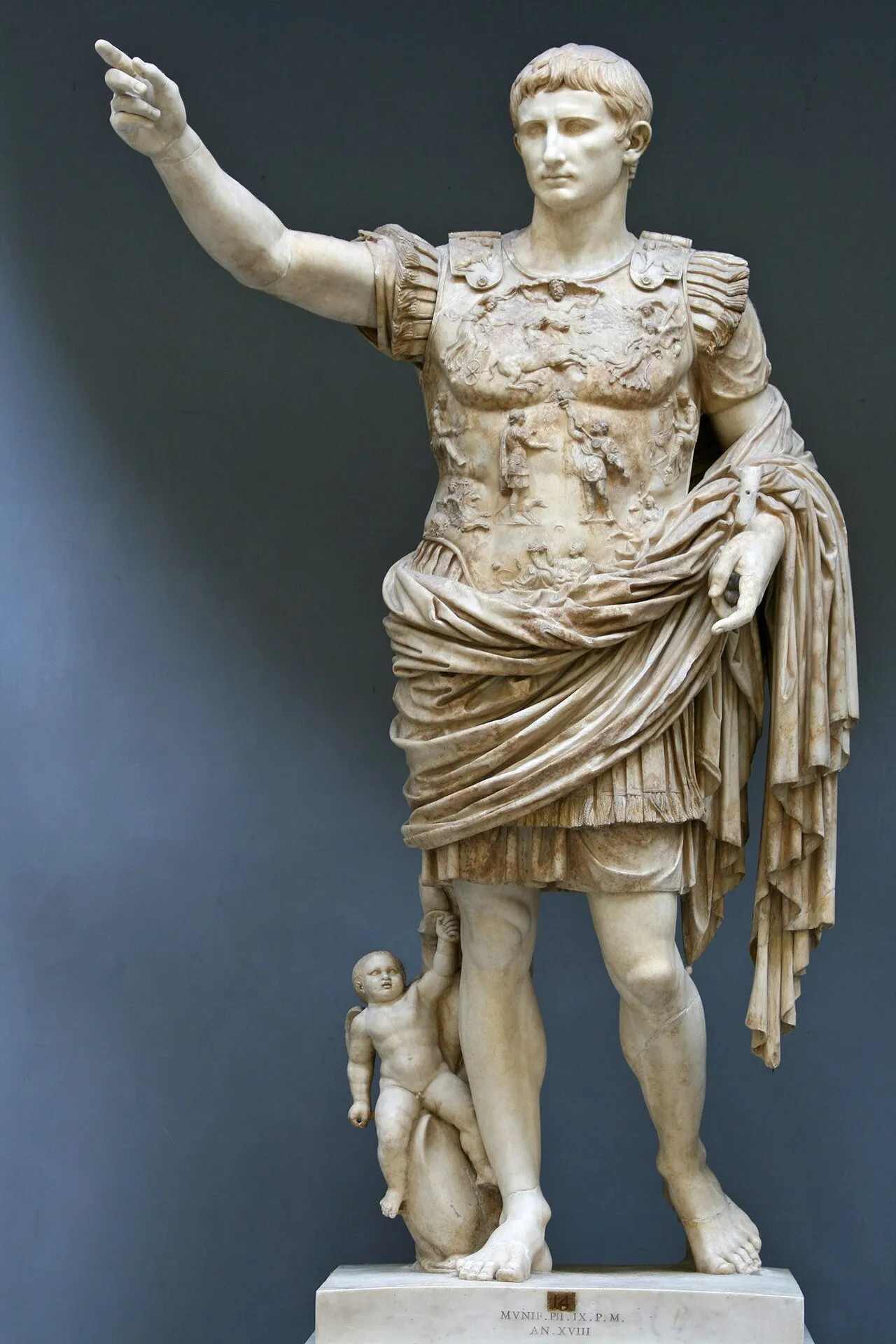
In bronzo, argento o ferro brunito, modellata sui muscoli del torso. Riservata a ufficiali e pretoriani in cerimonia. Sotto, una tunica rossa o azzurra a fasce dorate; sopra, un mantello (paludamentum) imperiale. È l'armatura che vediamo sulle statue di Augusto di Prima Porta e sui rilievi imperiali, l'immagine canonica del soldato di palazzo.
In bronze, silver, or burnished iron, modelled on torso muscles. Reserved for officers and praetorians in ceremony. Underneath, a red or blue tunic with golden bands; above, an imperial cloak (paludamentum). It is the armour we see on Augustus of Prima Porta statues and imperial reliefs: the canonical image of the palace soldier.
Lo scudo pretoriano era ovale (non rettangolare come quello legionario), azzurro intenso e ornato con il scorpione: segno zodiacale di Tiberio, che istituzionalizzò il corpo. Il simbolo rimase fisso per tre secoli. Sulla cornice metallica spesso erano incise stelle, ali aquilee e fulmini di Giove: tutta una grammatica iconografica del potere imperiale.
The praetorian shield was oval (not rectangular like the legionary), deep blue and ornamented with the scorpion: zodiac sign of Tiberius, who institutionalized the corps. The symbol remained fixed for three centuries. On the metal frame were often engraved stars, eagle wings, and Jupiter's thunderbolts: a whole iconographic grammar of imperial power.
L'elmo pretoriano (modello Attico ellenizzante) portava una cresta trasversale, non longitudinale come quella dei centurioni. Era di crine equino di colore variabile: nero per la truppa, bianco per gli ufficiali, azzurro per il prefetto. Riconoscibili da decine di metri di distanza.
The praetorian helmet (Hellenizing Attic model) carried a transverse crest, not longitudinal like centurions'. It was of horsehair in variable colour: black for the troops, white for officers, blue for the prefect. Recognizable from dozens of meters away.
Pugnale-spada di parata, più corto del gladius da combattimento (40–50 cm), con pomo a testa di leone o aquila e fodero rivestito di metalli preziosi. Era l'arma «da palazzo» — pratica per uccidere in spazi chiusi ma anche simbolo di rango. I pretoriani lo portavano sempre, anche fuori servizio.
Parade dagger-sword, shorter than the combat gladius (40–50 cm), with lion- or eagle-head pommel and scabbard covered in precious metals. It was the "palace" weapon: practical for killing in enclosed spaces but also a rank symbol. The praetorians wore it always, even off duty.
In città, soprattutto al seguito dell'imperatore in pubblico, i pretoriani indossavano la toga civile bianca con orlo purpureo. Sotto: lorica nascosta e pugio (pugnale corto) infilato nella cintura. Questo permetteva loro di intervenire in mezzo alla folla senza apparire militari. Era pratica standard durante le visite imperiali al Senato e al Foro.
In the city, especially in public following the emperor, praetorians wore the civilian white toga with purple hem. Underneath: hidden lorica and pugio (short dagger) tucked into the belt. This allowed them to intervene in crowds without appearing military. It was standard practice during imperial visits to the Senate and the Forum.
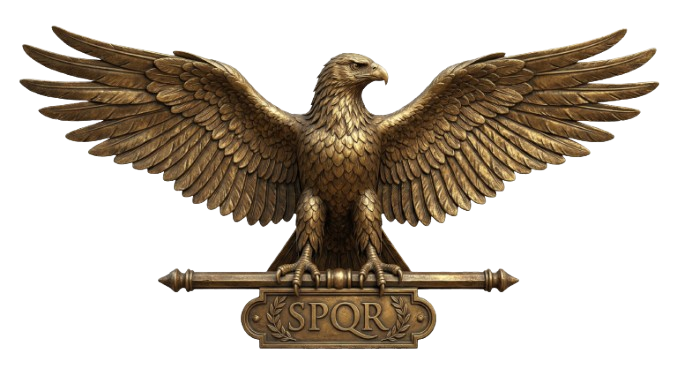
Ogni coorte aveva un proprio signum, asta sormontata da una mano aperta (la mano del giuramento di fedeltà all'imperatore), dischi metallici incisi con i nomi degli imperatori serviti, e una piastra recante il numero della coorte. La Cohors I aveva inoltre l'aquila praetoriana, distinta da quella legionaria per il piedistallo a forma di tempietto.
Each cohort had its own signum: staff topped by an open hand (the hand of the oath of loyalty to the emperor), engraved metal discs with served emperors' names, and a plate bearing the cohort number. Cohors I also had the praetorian aquila, distinct from the legionary one by its temple-shaped pedestal.
La Castra Praetoria, innalzata da Seiano nel 23 d.C. sul margine nord-orientale di Roma (dove oggi sorge la stazione Termini), non era una semplice caserma: era una città fortificata dentro la Città. Mura alte cinque metri, un perimetro di milleduecento per novecento passi, alloggi per novemila uomini, terme, magazzini, prigioni e un tempio del culto imperiale. Costituiva un secondo polo militare permanente nel cuore di Roma, l'altro essendo il palazzo dell'imperatore sul Palatino. Quando le coorti volevano deporre o eleggere un Augusto, bastava che serrassero le porte del Castra e barricassero le vie verso il colle: nessun principe poteva regnare contro di esse. La fortezza vegliò su Roma per quasi tre secoli; le sue mura sopravvivono ancora oggi, inglobate nelle Mura Aureliane, e si possono toccare nel quartiere che da essa prende il nome, Castro Pretorio.
The Castra Praetoria, raised by Sejanus in 23 AD on Rome's north-eastern edge (where Termini station stands today), was no mere barracks: it was a fortified city within the City. Walls five metres high, a perimeter of twelve hundred by nine hundred paces, lodgings for nine thousand men, baths, warehouses, prisons and a temple of the imperial cult. It formed a second permanent military pole at the heart of Rome: the other being the emperor's palace on the Palatine. When the cohorts wished to depose or elect an Augustus, they had only to seal the Castra gates and barricade the roads to the hill: no prince could reign against them. The fortress watched over Rome for nearly three centuries; its walls survive to this day, embedded in the Aurelian Walls, and can still be touched in the district that takes its name from it, Castro Pretorio.
05Ponte Milvio e la Fine — 28 ottobre 312 d.C.Milvian Bridge and the End — 28 October 312 AD
La fine non venne con un decreto, ma con il ferro. Per oltre tre secoli la Guardia aveva fatto e disfatto imperatori, e nessuna riforma era bastata a domarla. Settimio Severo l'aveva sciolta e ricostituita nel 193, eppure il veleno rimase nelle vene del corpo: i pretoriani uccisero Caracalla nel 217, Eliogabalo nel 222, Alessandro Severo nel 235, e bagnarono le mani in quasi ogni regicidio della crisi del III secolo. La belva che custodiva il trono non riconosceva altro padrone che se stessa. A spezzarla, dopo trecentotrentanove anni, non sarebbe stato un editto del Senato, ma un solo, sanguinoso pomeriggio sulle rive del Tevere.
The end came not by decree, but by the sword. For more than three centuries the Guard had made and unmade emperors, and no reform had sufficed to tame it. Septimius Severus had disbanded and reconstituted it in 193, yet the poison remained in the body's veins: the praetorians killed Caracalla in 217, Elagabalus in 222, Alexander Severus in 235, and steeped their hands in nearly every regicide of the 3rd-century crisis. The beast that guarded the throne knew no master but itself. To break it, after three hundred and thirty-nine years, would take no decree of the Senate, but a single, bloody afternoon on the banks of the Tiber.
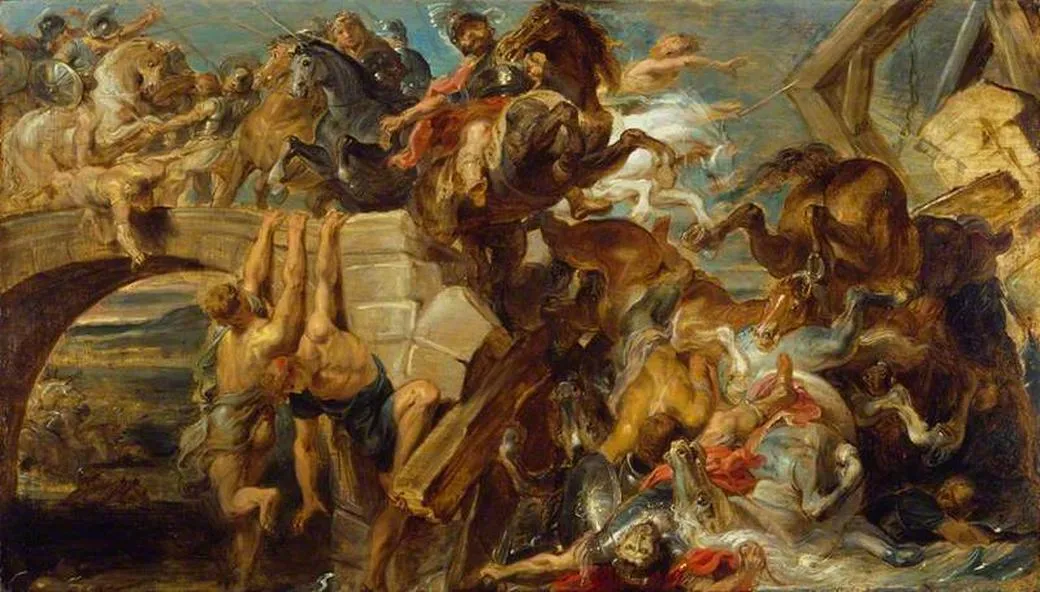
- 306–312 d.C. Massenzio e la GuardiaMaxentius and the Guard — Nel 306 d.C. la Guardia Pretoriana proclamò imperatore Massenzio, figlio dell'ex augusto Massimiano, sfidando la tetrarchia di Diocleziano. Per sei anni Massenzio regnò a Roma con il pieno appoggio dei pretoriani, l'ultimo imperatore «classicamente» romano, residente sul Palatino e protetto dal corpo storico. Era anche l'ultima volta in cui la Guardia avrebbe scelto un Augusto.In 306 AD the Praetorian Guard proclaimed emperor Maxentius, son of former augustus Maximian, defying Diocletian's tetrarchy. For six years Maxentius reigned at Rome with the full support of the praetorians, the last "classically" Roman emperor, residing on the Palatine and protected by the historic corps. It was also the last time the Guard would choose an Augustus.
- 28 ottobre 312 d.C. Ponte MilvioMilvian Bridge — Costantino, sceso dalla Gallia con 40.000 uomini, affronta Massenzio (75.000 uomini, inclusi i pretoriani) appena a nord di Roma. Le due ali della cavalleria costantiniana sbaragliano i fianchi nemici. La Guardia Pretoriana, schierata al centro, combatte con disperazione: era la sua unica chance di sopravvivenza. Massenzio, in ritirata, cade nel Tevere al crollo del ponte di barche e annega. Le coorti pretoriane vengono massacrate praticamente in massa: secondo Lattanzio, «non ne restò una pattuglia intera».Constantine, descended from Gaul with 40,000 men, faces Maxentius (75,000 men, including the praetorians) just north of Rome. The two wings of Constantinian cavalry rout the enemy flanks. The Praetorian Guard, deployed in the centre, fights desperately: it was their only chance of survival. Maxentius, in retreat, falls into the Tiber at the collapse of the boat bridge and drowns. The praetorian cohorts are massacred almost en masse: according to Lactantius, "not a whole patrol of them remained."
- 29 ottobre 312 d.C. Lo Scioglimento DefinitivoThe Definitive Disbanding — Costantino entra a Roma in trionfo. Uno dei primi atti: decreto di scioglimento della Guardia Pretoriana e abolizione della prefettura del pretorio come carica militare. I superstiti vengono dispersi nelle legioni di frontiera. La Castra Praetoria viene smantellata: le mura interne vengono demolite, il sito viene incorporato nelle nuove Mura Aureliane (in costruzione dal 271). 339 anni di storia finiscono in un giorno.Constantine enters Rome in triumph. One of his first acts: decree of disbanding the Praetorian Guard and abolition of the praetorian prefecture as a military office. Survivors are dispersed to frontier legions. The Castra Praetoria is dismantled: inner walls are demolished, the site is incorporated into the new Aurelian Walls (under construction since 271). 339 years of history end in one day.
- 317 d.C. e oltre La Prefettura CivileThe Civil Prefecture — Costantino mantenne il titolo di praefectus praetorio, ma lo trasformò in carica civile-amministrativa: divenne il principale ministro civile dell'Impero, responsabile di finanze, giustizia e logistica di una grande prefettura territoriale (Galliarum, Italiae, Illyrici, Orientis). Il nome sopravvisse per tre secoli, ma la sostanza militare era finita. Il successivo corpo di guardia imperiale fu chiamato Scholae Palatinae, di origine totalmente diversa e reclutato tra i Germani.Constantine kept the title of praefectus praetorio, but transformed it into a civil-administrative office: it became the Empire's principal civil minister, responsible for finances, justice and logistics of a large territorial prefecture (Galliarum, Italiae, Illyrici, Orientis). The name survived for three centuries, but the military substance was finished. The next imperial guard corps was called Scholae Palatinae, of totally different origin and recruited among the Germans.
La Guardia Pretoriana fu la prima «guardia di palazzo» professionale e permanente della storia europea: un modello istituzionale che, attraverso Bisanzio e i Giannizzeri ottomani, la Guardia Svizzera pontificia (1506) e la Guardia Imperiale di Napoleone (1804), giunge fino ai corpi di sicurezza dei capi di Stato del nostro tempo. La parola stessa «pretoriano» è entrata in tutte le lingue d'Europa per indicare una guardia armata legata alla persona di un capo. Edward Gibbon, che al corpo dedicò un intero capitolo del Decline and Fall, ne fissò il paradosso in una formula rimasta celebre: «l'unica cosa più pericolosa, per un imperatore, del non avere una guardia è averne una». Tre secoli di storia gli danno ragione: dieci dei loro stessi imperatori caddero sotto i pugnali della Guardia che giurava di proteggerli. Roma scoprì, prima di ogni altra civiltà, la legge spietata del potere assoluto, lo strumento che lo difende è anche il suo più temibile predatore.
The Praetorian Guard was the first professional and permanent "palace guard" in European history: an institutional model that, through Byzantium and the Ottoman Janissaries, the Papal Swiss Guard (1506) and Napoleon's Imperial Guard (1804), reaches the heads-of-state security corps of our own time. The very word "praetorian" has entered every European language to denote an armed guard bound to the person of a leader. Edward Gibbon, who devoted an entire chapter of the Decline and Fall to the corps, fixed its paradox in a formula that has remained famous: "the only thing more dangerous for an emperor than not having a guard, is having one." Three centuries of history prove him right: ten of their own emperors fell beneath the daggers of the Guard that swore to protect them. Rome discovered, before any other civilization, the merciless law of absolute power, the instrument that defends it is also its most fearsome predator.