01Le CauseThe Causes
Nel 376 d.C., sulle rive nord del Danubio, si presentarono al limes romano centinaia di migliaia di profughi. Erano i Visigoti di Fritigerno e Alavivo, in fuga davanti agli Unni, un popolo nomade venuto dalle steppe asiatiche che in pochi anni aveva annientato il regno ostrogoto del re Ermanarico. I Visigoti chiedevano asilo nell'Impero. Era una richiesta senza precedenti: non un'invasione, ma una migrazione armata che cercava protezione. L'imperatore d'Oriente Valente, allora a Antiochia per la guerra contro la Persia, accettò : avrebbe ricevuto centinaia di migliaia di nuovi sudditi-soldati, una manodopera militare e fiscale enorme. Era un calcolo geopolitico ragionevole. Nessuno previde le conseguenze.
In AD 376, on the north bank of the Danube, hundreds of thousands of refugees presented themselves at the Roman limes. They were the Visigoths of Fritigern and Alavivus, fleeing the Huns, a nomadic people from the Asian steppes who in a few years had annihilated the Ostrogothic kingdom of King Ermanaric. The Visigoths asked for asylum within the Empire. It was an unprecedented request: not an invasion, but an armed migration seeking protection. The Eastern emperor Valens, then at Antioch for the war against Persia, accepted: he would receive hundreds of thousands of new subject-soldiers, an enormous military and fiscal manpower. It was a reasonable geopolitical calculation. No one foresaw the consequences.
Il disastro fu nell'esecuzione. La gestione dei profughi fu affidata a due ufficiali corrotti: Lupicino, comes della Tracia, e Massimo, dux della Mesia. Invece di distribuire il grano promesso, lo vendettero ai Goti a prezzi esorbitanti. Le testimonianze antiche raccontano che madri gote vendevano i propri figli come schiavi in cambio di carne di cane. La promessa romana di disarmare i Goti al passaggio del fiume non fu mantenuta, o per corruzione o per impossibilità pratica con migliaia di carri attraversamenti contemporanei. Nei mesi successivi, una seconda ondata di Goti (Greutungi di Alateo e Safrace) attraversò di nascosto il Danubio. L'Impero aveva ora dentro i suoi confini un'armata barbarica armata e affamata.
The disaster was in the execution. Refugee management was entrusted to two corrupt officers: Lupicinus, comes of Thrace, and Maximus, dux of Moesia. Instead of distributing the promised grain, they sold it to the Goths at exorbitant prices. Ancient testimonies record Gothic mothers selling their own children as slaves in exchange for dog meat. The Roman promise to disarm the Goths at the river crossing was not kept, whether through corruption or practical impossibility, with thousands of wagons crossing simultaneously. In the following months, a second wave of Goths (Greuthungi under Alatheus and Saphrax) crossed the Danube secretly. The Empire now had within its borders an armed and starving barbarian army.
Nell'inverno del 376–377 a Marcianopoli, capitale della Mesia, Lupicino tentò un colpo di mano: invitò Fritigerno e Alavivo a banchetto, intendendo ucciderli durante la cena per decapitare la coalizione gotica. La trama trapelò : Fritigerno fuggì , Alavivo fu ucciso, e i Goti fuori dalle mura insorsero in massa. Lupicino fu sconfitto frontalmente. La Tracia andò in fiamme: villaggi bruciati, proprietà saccheggiate, schiavi liberati che si univano ai Goti, miniere d'oro e d'argento conquistate. Per due anni, fra il 377 e il 378, una guerra di logoramento devastò le province balcaniche. Le truppe locali, comandate da generali di second'ordine come Profuturo e Traiano, non riuscirono a contenere i Goti.
In the winter of 376–377 at Marcianopolis, capital of Moesia, Lupicinus attempted a coup de main: he invited Fritigern and Alavivus to a banquet, intending to have them killed during dinner to behead the Gothic coalition. The plot leaked: Fritigern fled, Alavivus was killed, and the Goths outside the walls rose en masse. Lupicinus was defeated head on. Thrace went up in flames: villages burned, estates plundered, freed slaves joining the Goths, gold and silver mines captured. For two years, between 377 and 378, a war of attrition devastated the Balkan provinces. Local troops, commanded by second-rate generals such as Profuturus and Traianus, could not contain the Goths.
02Le Forze in CampoThe Forces
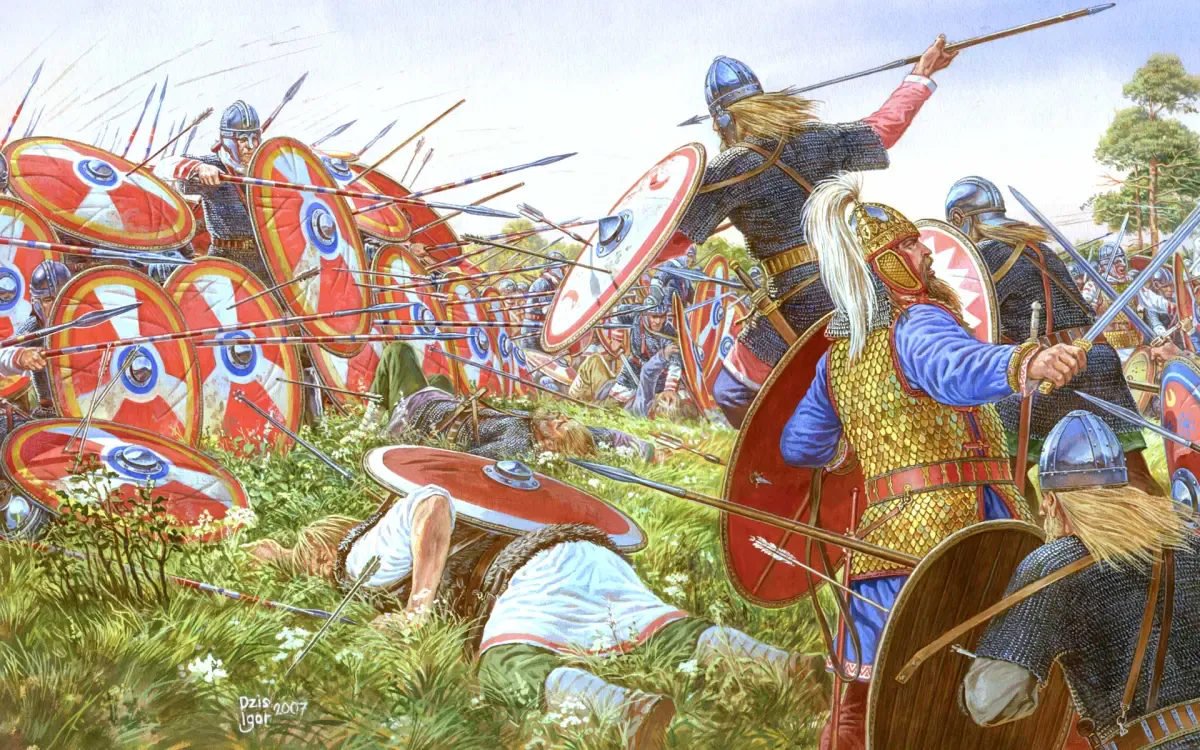
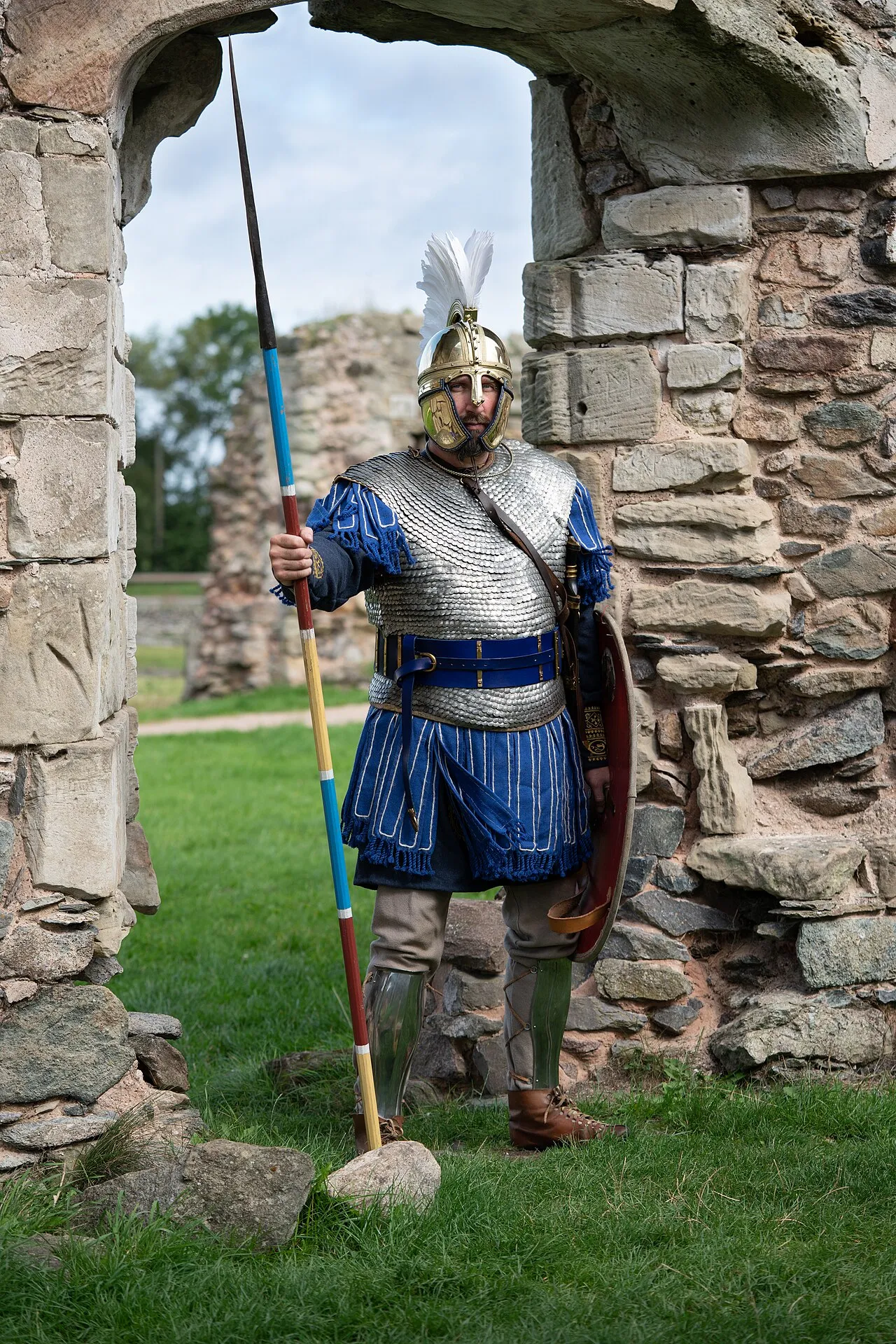
Valente arrivò ad Adrianopoli all'inizio di agosto del 378 con l'esercito da campo dell'Oriente: dodici legioni del comitatus orientalis, le scholae palatinae, le auxilia, la cavalleria scolastica. Le stime moderne più accurate, basate sui calcoli di Heather e Ferrill, parlano di circa 30.000 uomini effettivi, di cui due terzi fanteria pesante e un terzo cavalleria. Erano forze di prim'ordine: i Lanciari, gli Mattiarii, i Iovii, gli Erculii: reparti d'é lite con due secoli di tradizione, equipaggiati di lorica squamata, scudi ovali, lance e spathae lunghe. La cavalleria romana era composta in gran parte da Sarmati, Alani e mercenari germanici al soldo dell'imperatore.
Valens arrived at Adrianople in early August 378 with the Eastern field army: twelve legions of the comitatus orientalis, the scholae palatinae, the auxilia, the household cavalry. The most accurate modern estimates, based on the calculations of Heather and Ferrill, give about 30,000 effective men, two-thirds heavy infantry and one-third cavalry. They were first-rate forces: the Lanciarii, the Mattiarii, the Iovii, the Herculiani: elite units with two centuries of tradition, equipped with lorica squamata, oval shields, lances, and long spathae. Roman cavalry was largely composed of Sarmatians, Alans, and Germanic mercenaries in imperial pay.
La coalizione gotica era invece eterogenea. Fritigerno comandava la fanteria visigota, circa 12.000–15.000 uomini, dispiegata attorno al campo trincerato di carri (carrago) sulla collina. Era fanteria leggera-media: spade lunghe, lance, scudi tondi, alcuni con cotta di maglia, molti con sole tuniche. Sapeva combattere in massa difensiva ma non aveva l'addestramento manipolare delle legioni. La vera arma decisiva, però , era l'altra: la cavalleria pesante greutunga di Alateo e Safrace, circa 8.000–10.000 cavalieri pesanti su cavalli sarmatici, armati di lance lunghe (contus), spada e scudo. Era cavalleria-shock di tipo orientale, ereditata dai contatti con gli Alani e gli Iazigi delle steppe ucraine. Al momento della battaglia, la cavalleria greutunga si trovava lontana dal campo, in foraggiamento.
The Gothic coalition was instead heterogeneous. Fritigern commanded the Visigothic infantry, about 12,000–15,000 men, deployed around the entrenched wagon-camp (carrago) on the hill. It was light-to-medium infantry: long swords, spears, round shields, some with mail, many in tunics only. They could fight in defensive mass but lacked the manipular training of the legions. The truly decisive weapon, however, was different: the heavy Greuthungian cavalry of Alatheus and Saphrax, about 8,000–10,000 heavy horsemen on Sarmatian mounts, armed with long lances (contus), sword, and shield. It was Eastern-type shock cavalry, inherited from contact with the Alans and Iazyges of the Ukrainian steppes. At the moment of battle, the Greuthungian cavalry was away from the camp, foraging.
03L'Andamento della BattagliaThe Course of the Battle
Valente aveva un patto strategico con il nipote Graziano, imperatore d'Occidente: convergere insieme sui Goti con l'armata gallica. Graziano stava arrivando, vincitore della battaglia di Argentaria contro gli Alemanni (maggio 378). Il 7 agosto 378, Valente accampò l'esercito a otto miglia da Adrianopoli, in attesa dei rinforzi occidentali. Quella sera arrivò un'ambasceria gotica capeggiata da un sacerdote ariano: Fritigerno proponeva un trattato: terre stabili in Tracia in cambio della pace. Forse era un bluff, forse era sincero. Valente lo respinse: capì la propria superiorità numerica e decise di colpire prima dell'arrivo di Graziano, per non condividere la gloria.
Valens had a strategic agreement with his nephew Gratian, the Western emperor: to converge together on the Goths with the Gallic army. Gratian was on his way, victor at the battle of Argentaria against the Alemanni (May 378). On 7 August 378, Valens encamped his army eight miles from Adrianople, awaiting Western reinforcements. That evening a Gothic embassy arrived, led by an Arian priest: Fritigern proposed a treaty: stable lands in Thrace in exchange for peace. Perhaps a bluff, perhaps sincere. Valens refused: he sensed his own numerical superiority and decided to strike before Gratian's arrival, so as not to share the glory.
L'errore fu doppio. Primo: la presunta superiorità numerica era un'illusione. I suoi esploratori avevano contato solo la fanteria visigota intorno al campo, circa 10.000 uomini, ignorando completamente la cavalleria greutunga foraggiante a quaranta chilometri di distanza. Secondo: l'attacco fu lanciato il 9 agosto, una delle giornate più calde dell'estate, sotto un sole tracio implacabile. La marcia di otto miglia dal campo romano alla collina dei Goti durò quasi sei ore, con le legioni in armatura completa che sudavano e si disidratavano. Quando arrivarono al pomeriggio, erano già esauste prima di iniziare il combattimento.
The mistake was twofold. First: the supposed numerical superiority was an illusion. His scouts had counted only the Visigothic infantry around the camp (about 10,000 men) completely ignoring the Greuthungian cavalry foraging forty kilometres away. Second: the attack was launched on 9 August, one of the hottest days of summer, under a relentless Thracian sun. The eight-mile march from the Roman camp to the Gothic hill took almost six hours, with the legions in full armour sweating and dehydrating. When they arrived in the afternoon, they were already exhausted before combat began.
Fritigerno comprese il vantaggio. Mentre Valente schierava le sue truppe in formazione di battaglia, il capo gotico fece appiccare il fuoco alla pianura ai piedi della collina, il fumo aggiungeva al caldo un disagio supplementare e mascherava le manovre dei suoi cavalieri in arrivo. Mandò intanto una nuova ambasceria, chiedendo ostaggi per parlamentare. Era un trucco temporeggiatore: i corrieri stavano galoppando per richiamare la cavalleria greutunga. Valente, frustrato, comandò alla cavalleria romana di sinistra di caricare prima che le trattative ricominciassero. Alcuni reparti caricarono prematuramente, senza ordini, e furono respinti dal carrago. Era ancora un disastro tattico, ma non irrecuperabile.
Fritigern understood the advantage. While Valens was deploying his troops in battle formation, the Gothic leader had fire set to the plain at the foot of the hill, the smoke added to the heat an extra discomfort and masked the manoeuvres of his incoming cavalry. Meanwhile he sent a new embassy, asking for hostages to parley. It was a stalling trick: couriers were galloping to recall the Greuthungian cavalry. Valens, frustrated, ordered his left-wing Roman cavalry to charge before negotiations resumed. Some units charged prematurely, without orders, and were repelled from the wagon-fort. It was a tactical disaster, but not yet unrecoverable.
Poi accadde l'imprevedibile. La cavalleria greutunga di Alateo e Safrace, ottomila lance, comparve all'orizzonte dietro la collina, al galoppo. Si scontrò contro la cavalleria romana di destra che era ancora schierata in formazione di parata, e la travolse in pochi minuti. Poi girò verso il centro romano, attaccando la fanteria pesante al fianco scoperto. Contemporaneamente, Fritigerno diede l'ordine di sortita: la fanteria visigota uscì dal carrago e attaccò frontalmente. Le legioni romane, prese fra due fuochi, cercarono di formare un quadrato difensivo. Ma sotto il sole, dopo sei ore di marcia e un'ora di combattimento, lo schieramento si frantumò . La cavalleria romana superstite fuggì verso est. La fanteria, abbandonata, fu massacrata.
Then the unforeseeable happened. The Greuthungian cavalry of Alatheus and Saphrax, eight thousand lances, appeared on the horizon behind the hill, at the gallop. It clashed against the Roman right-wing cavalry, which was still deployed in parade formation, and overwhelmed it in minutes. Then it swung toward the Roman centre, attacking the heavy infantry on the exposed flank. Simultaneously, Fritigern gave the order to sally: the Visigothic infantry came out of the wagon-fort and attacked frontally. The Roman legions, caught between two fires, tried to form a defensive square. But under the sun, after six hours of march and an hour of combat, the formation shattered. The surviving Roman cavalry fled east. The infantry, abandoned, was slaughtered.
Per sei ore, fra le tre del pomeriggio e il calare del sole, la pianura tracia divenne un mattatoio. Valente fu visto l'ultima volta da un soldato superstite mentre cercava rifugio fra i Lanciari e i Mattiarii, le sue legioni d'é lite, che combattevano disperatamente in formazione chiusa. Poi sparì. Il suo corpo non fu mai ritrovato. Una versione (Ammiano) racconta che fu colpito da una freccia, portato da pochi compagni in un fienile vicino, e bruciato vivo dai Goti che incendiarono l'edificio. Un'altra versione dice che morì combattendo come soldato semplice, irriconoscibile fra le migliaia di caduti. Comunque sia, era la prima volta dopo Decio (251 d.C.) che un imperatore romano cadeva in battaglia contro i barbari. Le perdite romane: circa 20.000 uomini, due terzi dell'esercito.
For six hours, between three in the afternoon and sunset, the Thracian plain became a slaughterhouse. Valens was last seen by a surviving soldier as he sought refuge among the Lanciarii and Mattiarii, his elite legions, fighting desperately in close formation. Then he disappeared. His body was never found. One version (Ammianus) tells that he was struck by an arrow, carried by a few companions into a nearby barn, and burned alive by Goths who set the building on fire. Another version says he died fighting as a common soldier, unrecognisable among the thousands of fallen. In either case, it was the first time since Decius (AD 251) that a Roman emperor had fallen in battle against barbarians. Roman losses: about 20,000 men, two-thirds of the army.
04Le TatticheThe Tactics
Adrianopoli è stata letta dagli storici antichi e moderni come la battaglia che cambiò la guerra. La tesi classica, formulata già dal contemporaneo Ammiano Marcellino (storico al servizio di Costanzo II e poi di Valente), è la rivincita della cavalleria sulla fanteria. Per cinque secoli, dalla battaglia di Zama (202 a.C.) in poi, la fanteria pesante romana aveva dominato il Mediterraneo. La cavalleria era stata complementare, non decisiva. Ad Adrianopoli, invece, fu la cavalleria greutunga a vincere la battaglia: arrivò al momento giusto, attaccò il fianco scoperto, distrusse la fanteria pesante. Era la dimostrazione che il combattente a cavallo, con armatura, lancia lunga e cavallo da guerra, poteva travolgere la fanteria. Da quel giorno, ogni esercito europeo per i mille anni successivi avrebbe puntato sulla cavalleria pesante.
Adrianople has been read by ancient and modern historians as the battle that changed warfare. The classical thesis, formulated already by the contemporary Ammianus Marcellinus (historian in the service of Constantius II and later Valens), is the revenge of cavalry over infantry. For five centuries, from the battle of Zama (202 BC) onward, Roman heavy infantry had dominated the Mediterranean. Cavalry had been complementary, not decisive. At Adrianople, instead, it was the Greuthungian cavalry that won the battle: it arrived at the right moment, attacked the exposed flank, destroyed the heavy infantry. It was the demonstration that a mounted fighter, with armour, long lance, and warhorse, could overrun infantry. From that day, every European army for the next thousand years would invest in heavy cavalry.
La storiografia moderna, da Hans Delbrü ck in poi, ha temperato questa lettura. La cavalleria greutunga non vinse per la sua intrinseca superiorità, ma per una concomitanza di circostanze: l'esaurimento della fanteria romana dopo sei ore di marcia sotto il sole, l'attacco di sorpresa al fianco scoperto, l'errore tattico di Valente di iniziare il combattimento prima di avere ricognito completamente il campo. Una fanteria fresca e ben schierata avrebbe respinto la carica come tanti altri eserciti romani avevano fatto contro Sarmati e Alani nei due secoli precedenti. Ma l'effetto pratico, in ogni caso, fu epocale: la fede nella supremazia della fanteria pesante era spezzata.
Modern historiography, from Hans Delbrü ck onward, has tempered this reading. The Greuthungian cavalry did not win through its intrinsic superiority, but through a concurrence of circumstances: the exhaustion of the Roman infantry after six hours of march under the sun, the surprise attack on the exposed flank, Valens's tactical mistake of starting combat before fully reconnoitring the field. Fresh and well-deployed infantry would have repelled the charge, as many other Roman armies had done against Sarmatians and Alans in the previous two centuries. But the practical effect, in any case, was epoch-making: the faith in the supremacy of heavy infantry was broken.
Tatticamente, gli errori di Valente furono cinque. Primo: non aspettò Graziano. Il fronte unito occidentale-orientale avrebbe mosso 60.000 uomini, una superiorità schiacciante. Secondo: non rilevò la posizione esatta della cavalleria greutunga. La ricognizione fu lacunosa, e la sorpresa fu totale. Terzo: scelse la giornata più calda dell'estate per una marcia di otto miglia in armatura. Quarto: non costruì un campo trincerato vicino al carrago gotico per riposare le truppe e attendere il momento favorevole. Quinto: lanciò l'attacco prima di completare lo schieramento, in risposta alla carica prematura della cavalleria romana di sinistra, perdendo così il controllo della battaglia.
Tactically, Valens's mistakes were five. First: he did not wait for Gratian. The united Western-Eastern front would have mustered 60,000 men, an overwhelming superiority. Second: he did not detect the exact position of the Greuthungian cavalry. Reconnaissance was incomplete, and the surprise was total. Third: he chose the hottest day of summer for an eight-mile march in armour. Fourth: he did not build an entrenched camp near the Gothic wagon-fort to rest his troops and await the favourable moment. Fifth: he launched the attack before completing his deployment, in response to the premature charge of the Roman left-wing cavalry, thus losing control of the battle.
La tattica gotica, dal canto suo, fu un capolavoro di adattamento. Fritigerno non era un grande generale nel senso classico: era un capo politico che sapeva temporeggiare. Ma comprese due cose decisive. Prima: il carrago era un sistema difensivo eccellente per fanteria contro cavalleria, e poteva fungere da perno tattico. Seconda: il vero potenziale offensivo della coalizione era la cavalleria greutunga, che andava preservata e usata al momento decisivo. La sua manovra di temporeggiamento (fuoco alla pianura, ambascerie ripetute, richiesta di ostaggi) ebbe lo scopo unico di guadagnare tempo finché Alateo e Safrace non rientrarono. Quando rientrarono, il colpo fu fulminante.
The Gothic tactics, for their part, were a masterpiece of adaptation. Fritigern was not a great general in the classical sense: he was a political leader who knew how to play for time. But he understood two decisive things. First: the wagon-fort was an excellent defensive system for infantry against cavalry, and could serve as a tactical pivot. Second: the real offensive potential of the coalition was the Greuthungian cavalry, which had to be preserved and used at the decisive moment. His delaying manoeuvre (fire on the plain, repeated embassies, request for hostages) had the sole purpose of buying time until Alatheus and Saphrax returned. When they returned, the blow was lightning-fast.
« Mai a memoria d'uomo, eccetto la battaglia di Canne, fu fatta nell'Impero Romano una strage così rovinosa.» « Never within the memory of man, except for the battle of Cannae, was such a ruinous slaughter inflicted on the Roman Empire.» — Ammiano Marcellino, Res Gestae XXXI, 13
05Le ConseguenzeThe Consequences
L'impatto immediato fu un terremoto strategico. L'esercito da campo dell'Oriente, il comitatus orientalis, costruito da Diocleziano e perfezionato da Costanzo II, era stato distrutto. Servirono vent'anni per ricostituirlo, e non tornò mai più alla qualità precedente. La frontiera danubiana era aperta. I Goti, vittoriosi, si dispersero in razzie attraverso i Balcani: assediarono Adrianopoli stessa (senza successo, le mura tennero), saccheggiarono la Tracia e la Mesia, arrivarono fino alle porte di Costantinopoli. La capitale fu salvata solo dalle mura teodosiane e da una guarnigione di mercenari saraceni che eseguirono sortite spettacolari.
The immediate impact was a strategic earthquake. The Eastern field army, the comitatus orientalis, built by Diocletian and perfected by Constantius II, had been destroyed. It took twenty years to reconstitute it, and it never returned to its former quality. The Danubian frontier was open. The Goths, victorious, dispersed in raids through the Balkans: they besieged Adrianople itself (unsuccessfully, the walls held), sacked Thrace and Moesia, reached the gates of Constantinople. The capital was saved only by the Theodosian walls and by a garrison of Saracen mercenaries who executed spectacular sorties.
Graziano, costretto a riconoscere l'impossibilità di governare l'Oriente da Treviri, nominò nel gennaio 379 un nuovo Augusto orientale: Teodosio, generale spagnolo trentunenne, figlio dell'omonimo conte d'Africa giustiziato pochi anni prima per intrighi di palazzo. Teodosio era una scelta militare di emergenza: aveva esperienza bellica nelle Britanniche e in Mesia. Per quattro anni combatté un'estenuante guerra di logoramento contro i Goti, vincendo molte scaramucce ma nessuna grande battaglia. Capì che la distruzione totale era impossibile: i Goti erano dentro l'Impero, e l'Impero non aveva più un esercito sufficiente per cacciarli.
Gratian, forced to acknowledge the impossibility of governing the East from Trier, in January 379 appointed a new Eastern Augustus: Theodosius, a thirty-one-year-old Spanish general, son of the homonymous count of Africa executed a few years earlier for palace intrigue. Theodosius was an emergency military choice: he had combat experience in Britain and Moesia. For four years he fought an exhausting war of attrition against the Goths, winning many skirmishes but no major battle. He understood that total destruction was impossible: the Goths were within the Empire, and the Empire no longer had an army sufficient to expel them.
Il 3 ottobre 382, Teodosio firmò con i Goti il foedus, trattato che cambiò per sempre la natura dell'Impero. I Goti ricevettero terre stanziali in Mesia inferiore e Tracia, conservarono autonomia interna, leggi proprie, comandanti propri. In cambio, fornirono unità militari combattenti come foederati sotto i propri capi. Era una rivoluzione: per la prima volta, un popolo barbarico armato risiedeva permanentemente all'interno del territorio imperiale come entità politica autonoma. Il modello sarebbe stato applicato cento volte negli ottant'anni successivi: Vandali, Burgundi, Suebi, Franchi, Ostrogoti tutti diventarono foederati. La frontiera tra civiltà romana e mondo barbarico, già permeabile prima, divenne fittizia dopo Adrianopoli.
On 3 October 382, Theodosius signed with the Goths the foedus, treaty that changed forever the nature of the Empire. The Goths received settlement lands in Lower Moesia and Thrace, preserved internal autonomy, their own laws, their own commanders. In exchange, they supplied combatant military units as foederati under their own chiefs. It was a revolution: for the first time, an armed barbarian people resided permanently within imperial territory as an autonomous political entity. The model would be applied a hundred times in the next eighty years: Vandals, Burgundians, Suebi, Franks, Ostrogoths all became foederati. The frontier between Roman civilisation and the barbarian world, already permeable before, became fictitious after Adrianople.
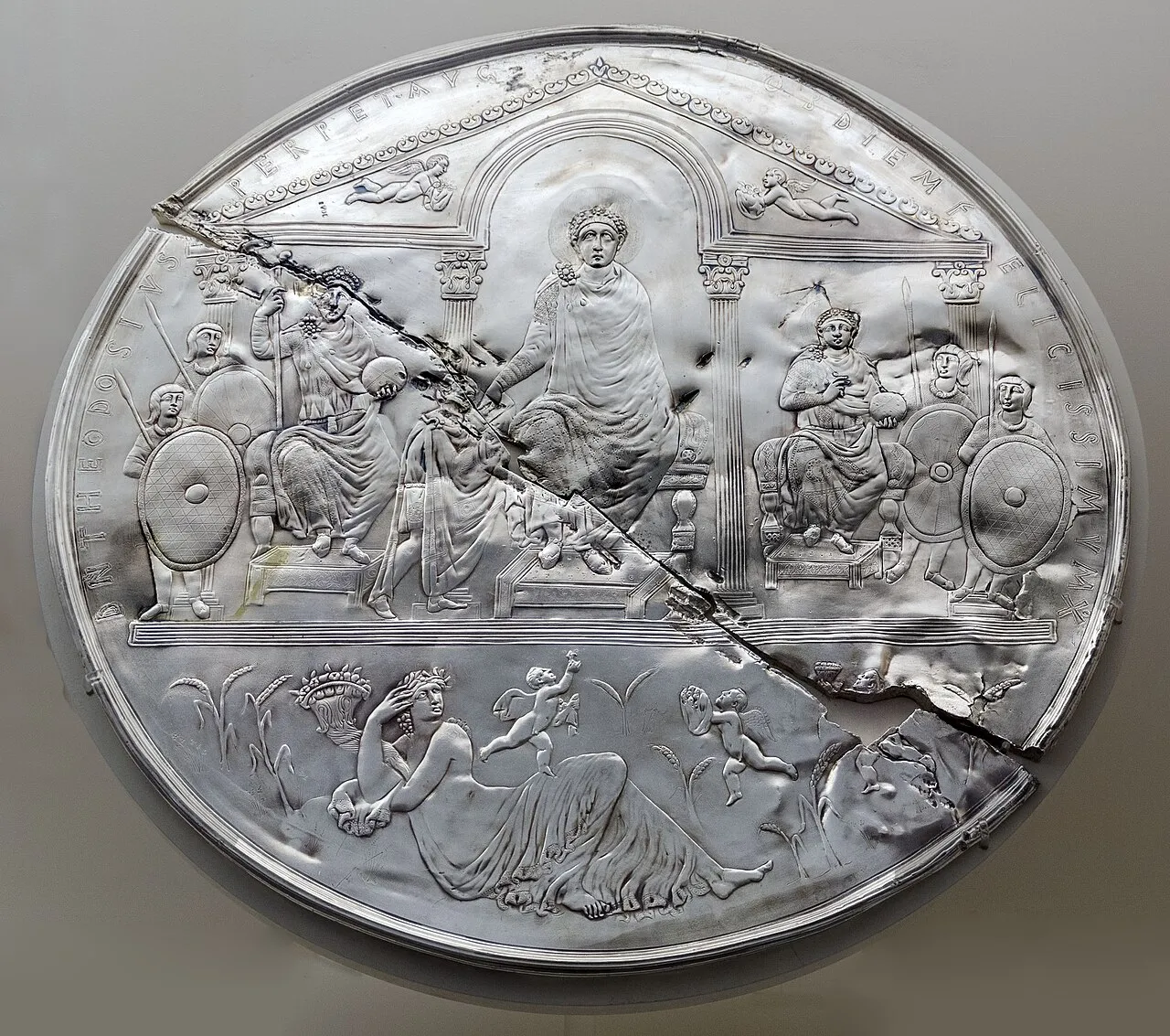
Sul piano militare, le conseguenze furono altrettanto profonde. Le legioni di fanteria pesante non furono mai più ricostruite ai livelli precedenti: l'esercito tardo-imperiale si trasformò progressivamente in un esercito di limitanei di confine più un nucleo di foederati barbarici, sempre più dipendente dalla cavalleria. Stilicone, Aezio, Belisario, i grandi generali del secolo successivo, combatterono tutti con eserciti misti, in cui la cavalleria pesante e i mercenari germanici erano l'asse portante. La fanteria legionaria, simbolo del potere romano per sette secoli, era praticamente scomparsa entro il 450 d.C.
On the military plane, the consequences were equally profound. The heavy infantry legions were never rebuilt to their previous levels: the late imperial army progressively transformed into an army of frontier limitanei plus a core of barbarian foederati, increasingly dependent on cavalry. Stilicho, Aetius, Belisarius, the great generals of the following century, all fought with mixed armies in which heavy cavalry and Germanic mercenaries formed the backbone. The legionary infantry, symbol of Roman power for seven centuries, had practically vanished by AD 450.
Sul piano simbolico, infine, Adrianopoli fu il segno della fine. Edward Gibbon, due secoli fa, ne fece uno degli atti d'apertura della Decline and Fall: dopo Adrianopoli, scrisse, "il prestigio delle armi romane non si riprese mai più ". Ottantacinque anni dopo, sotto Romolo Augustolo (476 d.C.), l'Impero d'Occidente sarebbe formalmente caduto. Per molti storici, è ad Adrianopoli, non a Roma sotto Alarico (410), non a Cartagine sotto i Vandali (439), non al deposto Romolo Augustolo (476), che bisogna fissare la data simbolica della fine del mondo antico. Quella sera del 9 agosto 378, fra il fumo della pianura tracia, la vecchia Roma di Cesare e di Augusto era già morta.
On the symbolic plane, finally, Adrianople was the sign of the end. Edward Gibbon, two centuries ago, made it one of the opening acts of the Decline and Fall: after Adrianople, he wrote, "the prestige of Roman arms never recovered". Eighty-five years later, under Romulus Augustulus (AD 476), the Western Empire would formally fall. For many historians, it is at Adrianople, not at Rome under Alaric (410), not at Carthage under the Vandals (439), not at the deposed Romulus Augustulus (476), that the symbolic date of the end of the ancient world should be fixed. That evening of 9 August 378, in the smoke of the Thracian plain, the old Rome of Caesar and Augustus was already dead.