01L'Imperatore d'Oriente — Quattordici Anni sul FronteEmperor of the East — Fourteen Years on the Front
Il fratello minore (~328–364)
The younger brother (~328–364)
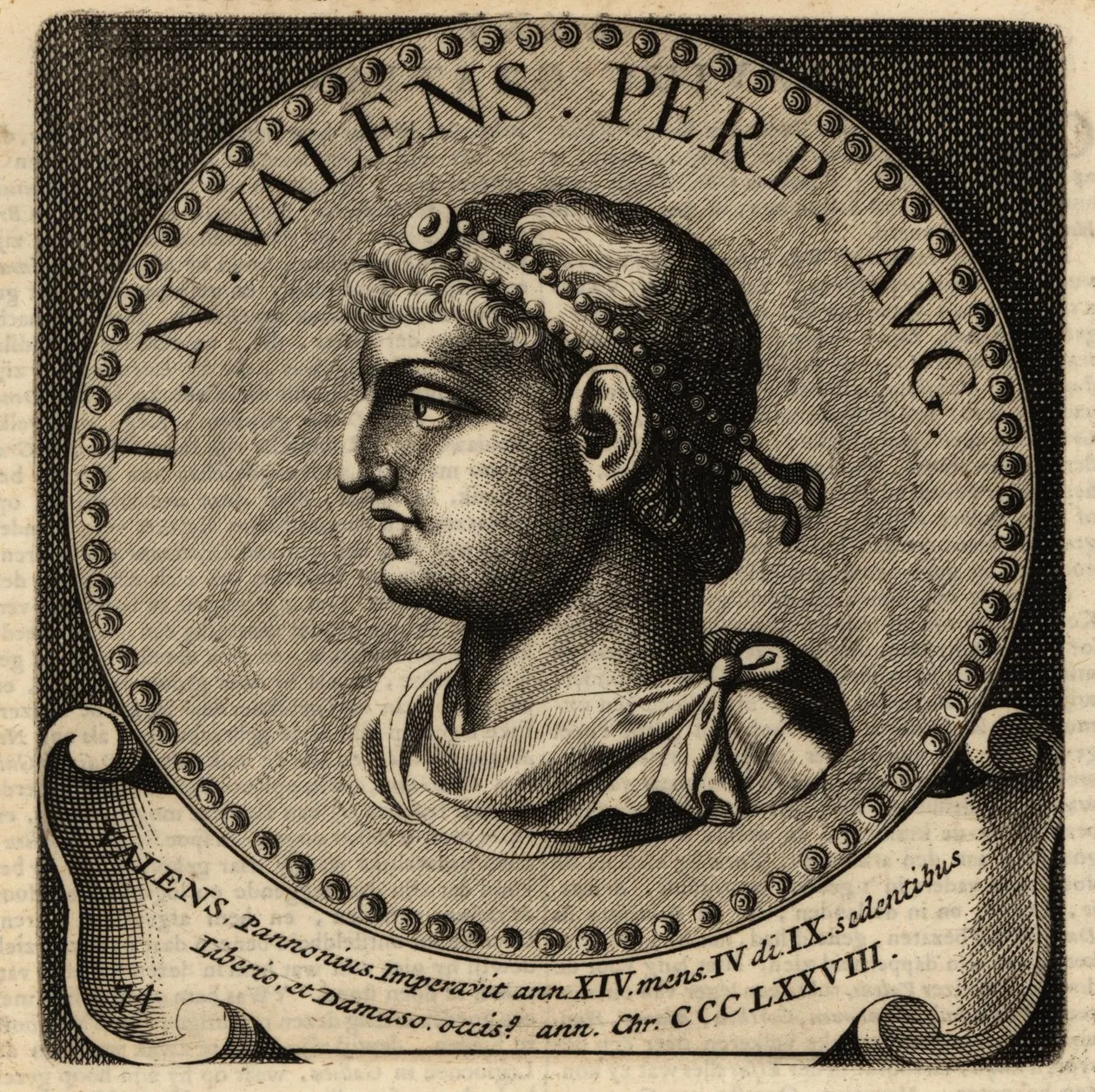
Fratello minore di Valentiniano I, Flavio Valente nacque a Cibalae, in Pannonia, attorno al 328 d.C., sette anni dopo il fratello maggiore, e sempre nella sua ombra restò. Cresciuto nella stessa dura terra illirica, abbracciò anch'egli le armi, ma senza la stoffa del fratello: servì come protector domesticus nella guardia imperiale sotto Costanzo II e Giuliano senza mai lasciare traccia. Comandante mediocre, balbuziente, minato dalla gotta, Valente fu giudicato dagli antichi, Ammiano per primo, un uomo opaco e facile preda dell'adulazione di corte. Non fu il merito a incoronarlo, ma il sangue: Valentiniano voleva in Oriente un Augusto fedele, non un rivale. Così, il 28 marzo 364, a Costantinopoli, il fratello minore ricevette metà del mondo romano: un mese dopo l'elezione di Valentiniano a Nicea.
Younger brother of Valentinian I, Flavius Valens was born at Cibalae, in Pannonia, around 328 AD, seven years after his elder brother, and ever in his shadow he remained. Raised on the same hard Illyrian soil, he too took up arms, but without his brother's mettle: he served as protector domesticus in the imperial guard under Constantius II and Julian without ever leaving a mark. A mediocre commander, a stutterer, gnawed by gout, Valens was judged by the ancients, Ammianus first, a man dull and easy prey to court flattery. It was not merit that crowned him, but blood: Valentinian wanted in the East a loyal Augustus, not a rival. So, on 28 March 364, at Constantinople, the younger brother received half the Roman world: a month after Valentinian's election at Nicaea.
L'usurpazione di Procopio (365–366)
Procopius's usurpation (365–366)
La porpora bruciava già sulle sue spalle. Nel settembre 365, appena insediato, Valente dovette fronteggiare la rivolta di Procopio, cugino di Giuliano l'Apostata, ultimo virgulto della stirpe di Costantino e generale stimato. Approfittando dell'assenza dell'imperatore, lontano in Siria contro i Persiani, Procopio occupò Costantinopoli, si proclamò Augusto come erede legittimo della casa costantiniana e trascinò dalla sua parte due legioni. Per dare corpo alla pretesa dinastica si fece accompagnare perfino dalla piccola Costanzia, figlia postuma di Costanzo II. Per qualche mese metà dell'Asia Minore fu sua. Ma Valente, mediocre sul campo, si rivelò freddo maestro d'intrighi: comprò gli ufficiali del rivale, che lo tradirono nell'ora decisiva. Sconfitto a Nacolea, in Frigia, il 27 maggio 366, Procopio fu catturato in fuga e decapitato; la sua testa viaggiò fino in Gallia, trofeo macabro per il fratello Valentiniano.
The purple already burned on his shoulders. In September 365, barely installed, Valens had to face the revolt of Procopius, cousin of Julian the Apostate, last sprig of Constantine's line and a respected general. Seizing on the emperor's absence, far away in Syria against the Persians, Procopius occupied Constantinople, proclaimed himself Augustus as legitimate heir of the Constantinian house, and drew two legions to his side. To flesh out his dynastic claim he even had himself accompanied by the little Constantia, posthumous daughter of Constantius II. For some months half of Asia Minor was his. But Valens, mediocre in the field, proved a cold master of intrigue: he bought the rival's officers, who betrayed him at the decisive hour. Defeated at Nacolea, in Phrygia, on 27 May 366, Procopius was captured fleeing and beheaded; his head travelled all the way to Gaul, a grim trophy for his brother Valentinian.
Guerra gotica e persiana (367–376)
Gothic and Persian wars (367–376)
Vendetta e confine andavano puniti insieme. Tra il 367 e il 369 Valente scatenò tre campagne contro i Goti Tervingi di re Atanarico, rei di aver parteggiato per Procopio. Le legioni varcarono il Danubio per tre volte, dando alle fiamme villaggi e raccolti. Atanarico fu costretto a chinare il capo nel trattato di Noviodunum (autunno 369), ma a condizioni che i Goti potevano accettare. Fu una vittoria di facciata più che di sostanza: la nazione gotica restava intatta, intera, in attesa. Pochi anni e Roma l'avrebbe scoperto a proprie spese.
Vengeance and frontier had to be punished together. Between 367 and 369 Valens unleashed three campaigns against the Tervingi Goths of king Athanaric, guilty of having sided with Procopius. The legions crossed the Danube three times, putting villages and harvests to the torch. Athanaric was forced to bow in the treaty of Noviodunum (autumn 369), but on terms the Goths could accept. It was a victory of appearance more than substance: the Gothic nation remained intact, whole, waiting. A few years, and Rome would learn it at its own cost.
Dal 371 al 376 Valente si logorò in Mesopotamia contro l'eterno Sapore II di Persia, soprattutto per il controllo dell'Armenia. Furono campagne grigie, senza grandi battaglie né conquiste: il fronte restò congelato, una guerra di posizione che divorava anni e risorse. Valente piantò la corte ad Antiochia, dove rimase un lustro intero: troppo lontano da Costantinopoli, e fatalmente lontano dai Balcani, dove la più grande tempesta della tarda antichità stava già addensandosi sul Danubio.
From 371 to 376 Valens wore himself down in Mesopotamia against the eternal Shapur II of Persia, above all for control of Armenia. They were grey campaigns, with no great battles or conquests: the front stayed frozen, a war of position that devoured years and resources. Valens pitched his court at Antioch, where he stayed a full five years: too far from Constantinople, and fatally far from the Balkans, where the greatest storm of late antiquity was already gathering over the Danube.
L'ariano perseguitore
The Arian persecutor
Se sul campo fu tiepido, in materia di fede Valente fu di fuoco, ma dalla parte sbagliata della storia. Abbracciò con ardore l'arianesimo homoiano, la dottrina per cui il Figlio era «simile» (homoios) al Padre, ma non «della stessa sostanza» (homoousios). Battezzato dal vescovo ariano Eudossio di Costantinopoli, mosse guerra ai campioni di Nicea: esiliò Atanasio per la quinta volta (368, salvo richiamarlo quattro mesi dopo sotto la collera del popolo di Alessandria), depose Eusebio di Samosata, e si scontrò con Basilio Magno di Cesarea, che gli tenne testa con tale fermezza da entrare nella leggenda cristiana. Per quasi quindici anni questa crociata al rovescio avvelenò l'Impero, scavando una frattura profonda tra l'Oriente greco e l'Occidente niceno. Teodosio I avrebbe ricucito lo strappo nel 380 con l'editto di Tessalonica, ma la ferita politica era ormai aperta.
If on the field he was lukewarm, in matters of faith Valens was all fire, but on the wrong side of history. He embraced with ardour Homoian Arianism, the doctrine by which the Son was «like» (homoios) the Father, but not «of the same substance» (homoousios). Baptised by the Arian bishop Eudoxius of Constantinople, he made war on the champions of Nicaea: he exiled Athanasius for the fifth time (368, only to recall him four months later under the wrath of the people of Alexandria), deposed Eusebius of Samosata, and clashed with Basil the Great of Caesarea, who stood up to him with such firmness that he passed into Christian legend. For nearly fifteen years this inverted crusade poisoned the Empire, gouging a deep rift between the Greek East and the Nicene West. Theodosius I would mend the tear in 380 with the Edict of Thessalonica, but the political wound was by then wide open.
L'opera pubblica: l'acquedotto di Costantinopoli
The public work: the Constantinople aqueduct
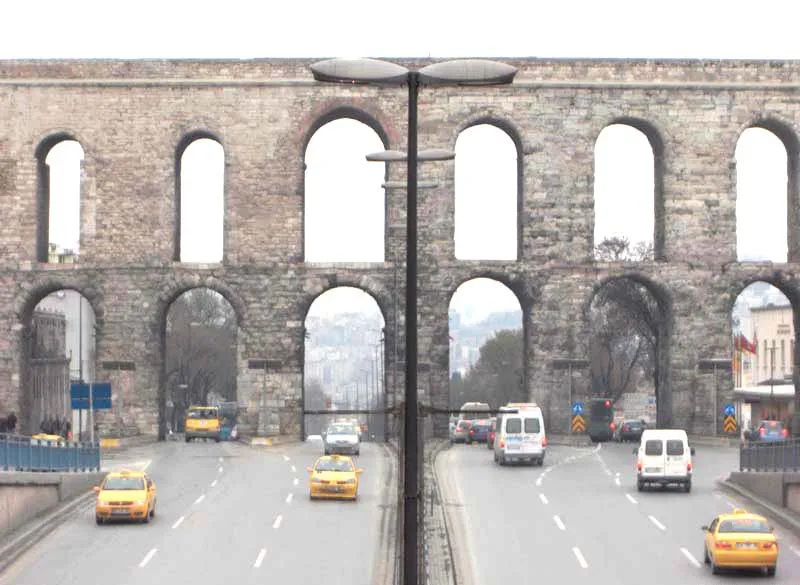
Se le sue armi non lasciarono trionfi, una sola grande opera porta ancora oggi il suo nome scolpito nella pietra: il colossale Acquedotto di Valente. Inaugurato nel 373 dopo decenni di lavori iniziati da Costanzo II, il suo circuito si snodava per oltre 250 km, dai monti della Tracia fino al cuore di Costantinopoli, portando l'acqua viva delle sorgenti di Vize al palazzo imperiale e alle immense cisterne della capitale. Il tratto monumentale che scavalca la valle del Lico (due ordini di archi alti 26 metri, per 971 metri di lunghezza) svetta ancora oggi su Istanbul col nome di Bozdoğan Kemeri, « l'Acquedotto del Falco Grigio» : il più lungo acquedotto romano sopravvissuto al mondo, e il monumento più duraturo di un regno altrimenti segnato dalla rovina.
If his arms left no triumphs, one great work still carries his name carved in stone today: the colossal Aqueduct of Valens. Inaugurated in 373 after decades of works begun under Constantius II, its circuit wound for over 250 km, from the Thracian mountains to the heart of Constantinople, carrying the living water of the springs of Vize to the imperial palace and the immense cisterns of the capital. The monumental stretch that strides across the Lycus valley (two orders of arches 26 metres high, 971 metres long) still towers over Istanbul under the name Bozdoğan Kemeri, "the Aqueduct of the Grey Falcon": the longest surviving Roman aqueduct in the world, and the most enduring monument of a reign otherwise marked by ruin.
02Il Passaggio del Danubio — La Crisi dei Rifugiati del 376The Danube Crossing — The Refugee Crisis of 376
L'onda gotica
The Gothic wave
Nel 376 il confine del mondo si spezzò. Centinaia di migliaia di Visigoti (uomini in armi, ma anche donne, bambini, vecchi) si ammassarono sulla riva settentrionale del Danubio, supplicando di entrare nell'Impero. Alle loro spalle incalzava un terrore mai visto: gli Unni, cavalieri nomadi delle steppe d'Asia che stavano polverizzando l'intero mondo barbarico noto a Roma. Il re visigoto Fritigerno mandò i suoi ambasciatori a Valente con una proposta semplice: terra e protezione in cambio di soldati per le legioni. Era una delle più grandi migrazioni della storia antica, e bussava alle porte di Roma.
In 376 the border of the world cracked open. Hundreds of thousands of Visigoths (armed men, but also women, children, the old) massed on the northern bank of the Danube, begging to enter the Empire. At their backs pressed a terror never seen before: the Huns, nomadic horsemen of the Asian steppes who were pulverising the entire barbarian world Rome knew. The Visigoth king Fritigern sent his ambassadors to Valens with a simple offer: land and protection in exchange for soldiers for the legions. It was one of the greatest migrations of ancient history, and it was knocking at Rome's gates.
Valente disse sì, e sulla carta era saggezza: all'Impero servivano reclute, ai Goti serviva terra. Ma l'esecuzione fu un crimine. I funzionari incaricati dell'accoglienza, i comites Lupicino e Massimo, si rivelarono avidi e spietati: vendettero ai profughi affamati cibo avariato a peso d'oro, ne ridussero molti in schiavitù, ne oltraggiarono le donne. Si racconta che padri gotici cedessero i figli in cambio di carne di cane. Quando l'esasperazione ribollì, Lupicino tentò di pugnalare Fritigerno durante un banchetto, e fallì. Fu la scintilla: i Goti insorsero e travolsero la Tracia, la provincia più ricca dell'Oriente, mettendola a ferro e fuoco.
Valens said yes, and on paper it was wisdom: the Empire needed recruits, the Goths needed land. But the execution was a crime. The officials charged with the reception, the comites Lupicinus and Maximus, proved greedy and merciless: they sold the starving refugees spoiled food at its weight in gold, enslaved many, violated their women. It is said Gothic fathers gave up their children in exchange for dog meat. When the exasperation boiled over, Lupicinus tried to knife Fritigern at a banquet, and failed. That was the spark: the Goths rose up and overran Thrace, the richest province of the East, putting it to fire and sword.
Ad Salices: la prima sconfitta (377)
Ad Salices: the first defeat (377)
Nell'estate del 377 le legioni d'Oriente, guidate dai generali Saturnino e Profuturo, affrontarono i Goti ribelli presso Ad Salices, « Ai Salici» , nel delta del Danubio. Fu uno scontro feroce e indeciso, un macello reciproco senza vincitori, ma rivelò una verità terribile: quei profughi disperati si erano trasformati in un esercito disciplinato. Sotto le insegne di Fritigerno confluivano ormai Ostrogoti, Alani e perfino mercenari unni. La Tracia, cuore ricco dell'Oriente, sprofondò nella terra di nessuno per un'intera stagione. Roma non lo sapeva ancora, ma stava marciando verso il baratro.
In the summer of 377 the Eastern legions, led by the generals Saturninus and Profuturus, faced the rebel Goths near Ad Salices, "At the Willows", in the Danube delta. It was a ferocious, indecisive clash, a mutual slaughter with no victors, but it revealed a terrible truth: those desperate refugees had become a disciplined army. Under Fritigern's banners now gathered Ostrogoths, Alans, and even Hun mercenaries. Thrace, the rich heart of the East, sank into no-man's land for a whole season. Rome did not yet know it, but it was marching toward the abyss.
« Una massa innumerevole di nazioni differenti, sparse in tutte le nostre province, calate dalle remote regioni del mondo, riempivano le terre e le città , e i loro accampamenti coprivano le pianure» . « An innumerable mass of different nations, scattered through all our provinces, descending from the remote regions of the world, filled the lands and the cities, and their camps covered the plains» . Ammiano Marcellino, Res Gestae XXXI, 4
03Adrianopoli 378 — Il Campo di Battaglia che Cambiò il MondoAdrianople 378 — The Battlefield That Changed the World
L'errore fatale
The fatal mistake
Per due lunghi anni, dal 376 al 378, le legioni inseguirono invano i Goti per la Tracia. Valente lasciò il fronte persiano e tornò a Costantinopoli nell'estate del 377 per stringere il nodo. Da Occidente accorreva il giovane co-imperatore Graziano, figlio di Valentiniano, appena sedicenne, con i rinforzi galli: aveva da poco schiacciato gli Alemanni ad Argentaria (Colmar, maggio 378), accorsi a approfittare dello sguarnimento del Reno. Bastava attendere la giunzione dei due eserciti e i Goti sarebbero stati stritolati. La situazione sembrava, finalmente, sotto controllo.
For two long years, from 376 to 378, the legions chased the Goths in vain across Thrace. Valens left the Persian front and returned to Constantinople in the summer of 377 to draw the noose tight. From the West hurried the young co-emperor Gratian, son of Valentinian, barely sixteen, with Gallic reinforcements: he had just crushed the Alemanni at Argentaria (Colmar, May 378), who had rushed to exploit the stripping of the Rhine. One had only to wait for the two armies to join and the Goths would be ground to dust. The situation seemed, at last, under control.
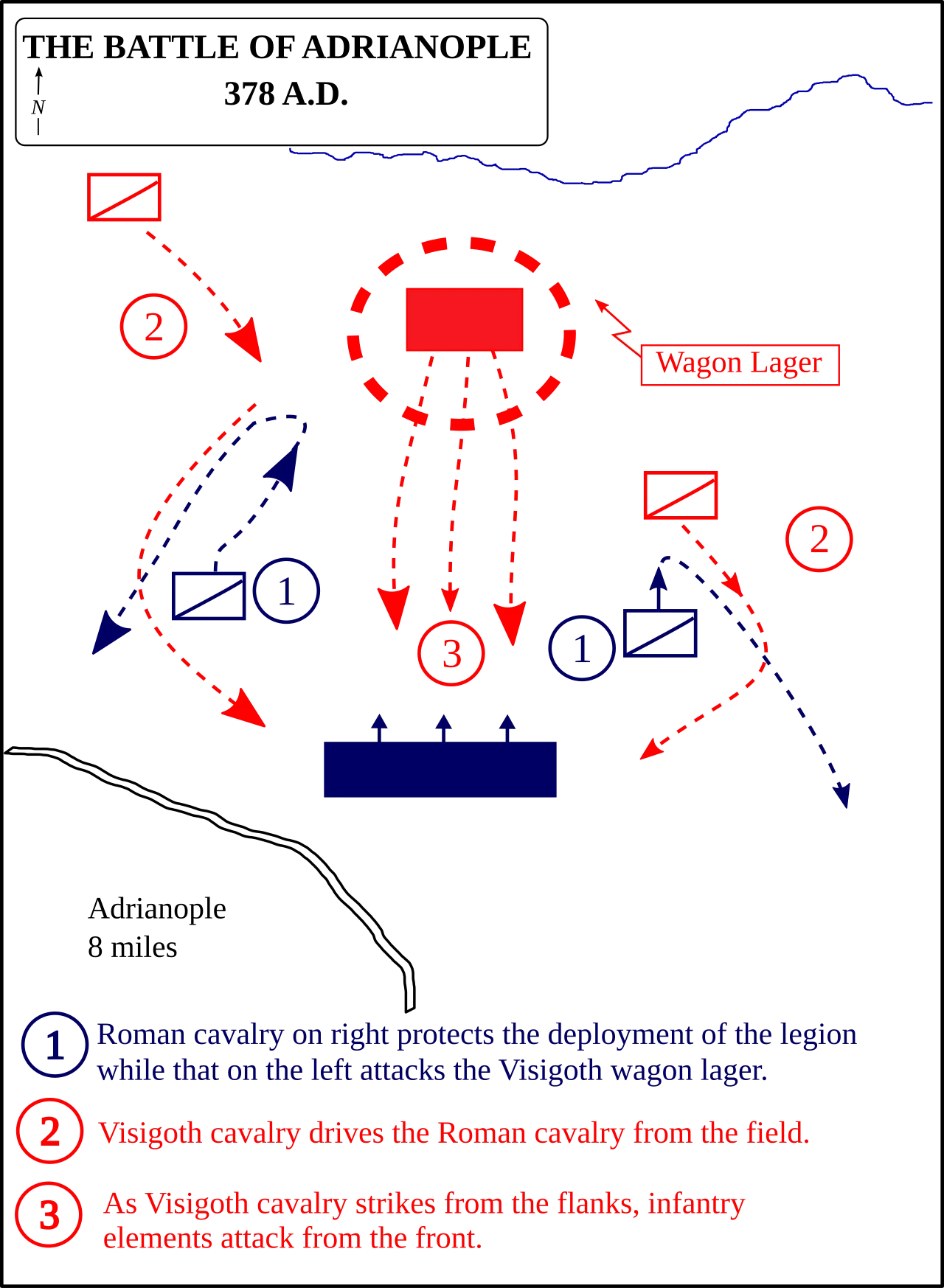
I suoi esploratori gli riferirono, falsamente, che i Goti erano appena 10.000. Accecato dalla brama di gloria, Valente rifiutò di attendere Graziano e attaccò da solo. Le sue legioni, sfinite da una marcia forzata sotto il sole rovente d'agosto, si schierarono davanti al laager, il cerchio di carri gotici. Fu allora che si compì la trappola: la temibile cavalleria pesante dei Greutungi, assente durante la ricognizione, piombò all'improvviso sul fianco romano nell'ora decisiva.
His scouts reported, falsely, that the Goths numbered barely 10,000. Blinded by the hunger for glory, Valens refused to wait for Gratian and attacked alone. His legions, exhausted by a forced march under the scorching August sun, drew up before the laager, the Gothic circle of wagons. It was then the trap sprang shut: the dreaded heavy cavalry of the Greutungi, absent during the reconnaissance, crashed without warning onto the Roman flank at the decisive hour.
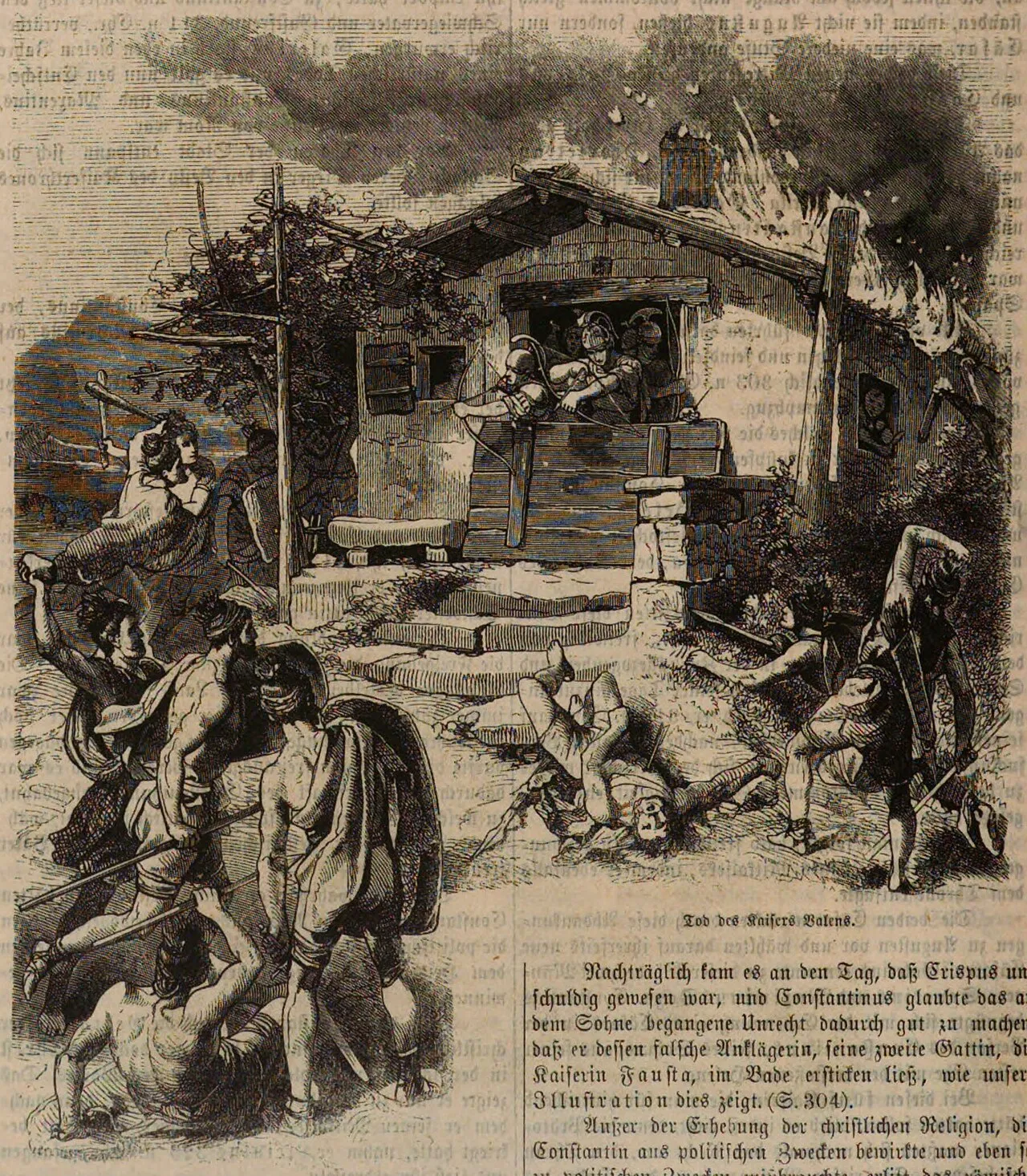
L'urto travolse il fianco destro romano, che si sbriciolò in pochi minuti. La fanteria, schiacciata tra il muro di carri gotico e i propri rincalzi che premevano alle spalle, si ritrovò imbottigliata, incapace di avanzare o di fuggire: gli uomini erano così serrati da non poter nemmeno alzare le spade. Non fu una battaglia, ma una mattanza. In poche ore tra 10.000 e 20.000 soldati, due terzi dell'intero esercito d'Oriente, furono trucidati sul campo. Valente svanì nella carneficina: la tradizione narra che, ferito, si rifugiò in una capanna, che i Goti diedero alle fiamme ignorando di bruciare vivo un imperatore di Roma. Del suo corpo non si trovò mai nulla. Aveva cinquant'anni.
The charge swept away the Roman right flank, which crumbled in minutes. The infantry, crushed between the Gothic wall of wagons and its own reserves pressing from behind, found itself bottled up, unable to advance or to flee: the men were packed so tight they could not even raise their swords. It was not a battle but a slaughter. In a few hours between 10,000 and 20,000 soldiers, two-thirds of the entire Eastern army, were butchered on the field. Valens vanished into the carnage: tradition tells that, wounded, he took refuge in a hut, which the Goths set ablaze, never knowing they were burning a Roman emperor alive. Of his body nothing was ever found. He was fifty years old.
Adrianopoli fu uno spartiacque che spezzò la storia in due. Per la prima volta dall'età repubblicana un imperatore romano cadeva in battaglia contro i barbari; per la prima volta un'intera armata da campo veniva cancellata senza speranza di rapida ricostruzione. Il successore, Teodosio I, scelto da Graziano, non poté vincere i Goti: dovette trattare. Il foedus del 382 li lasciò stanziare in Tracia come popolo autonomo, con le proprie leggi e i propri re. Era la prima volta che una nazione barbara metteva radici dentro l'Impero non come sudditi, ma come alleati stranieri su suolo romano. Un precedente fatale: ogni volta che si sarebbe ripetuto, una scheggia di Roma si sarebbe staccata, fino al crollo finale.
Adrianople was a watershed that broke history in two. For the first time since the Republican era a Roman emperor fell in battle against barbarians; for the first time an entire field army was wiped out with no hope of swift rebuilding. His successor, Theodosius I, chosen by Gratian, could not defeat the Goths: he had to negotiate. The foedus of 382 let them settle in Thrace as an autonomous people, with their own laws and their own kings. It was the first time a barbarian nation put down roots inside the Empire not as subjects, but as foreign allies on Roman soil. A fatal precedent: each time it was repeated, a splinter of Rome would break away, until the final collapse.
L'inizio della fine
The beginning of the end
Non a caso Adrianopoli è considerata la fine simbolica dell'antichità militare romana. Per ritrovare un'armata da campo annientata così bisognava risalire a Canne, 216 a.C.; per ritrovare un imperatore morto in battaglia contro i barbari, a Decio, 251 d.C. Non a caso Ammiano Marcellino, ultimo grande storico di Roma e testimone di quegli anni, chiude proprio qui la sua Res Gestae: come se, dopo quel campo coperto di morti, non restasse più nulla di degno d'essere narrato. Per i contemporanei fu la fine di un mondo; per gli storici di oggi fu la metamorfosi irreversibile dell'esercito romano, da quel giorno schiavo dei contingenti barbari mai davvero assimilati.
It is no accident that Adrianople is considered the symbolic end of antiquity in Roman military terms. To find a field army annihilated like this one had to go back to Cannae, 216 BC; to find an emperor dead in battle against barbarians, to Decius, AD 251. It is no accident that Ammianus Marcellinus, Rome's last great historian and a witness of those years, closes his Res Gestae right here: as if, after that field heaped with the dead, nothing worth telling remained. For contemporaries it was the end of a world; for today's historians it was the irreversible metamorphosis of the Roman army, from that day enslaved to barbarian contingents never truly assimilated.
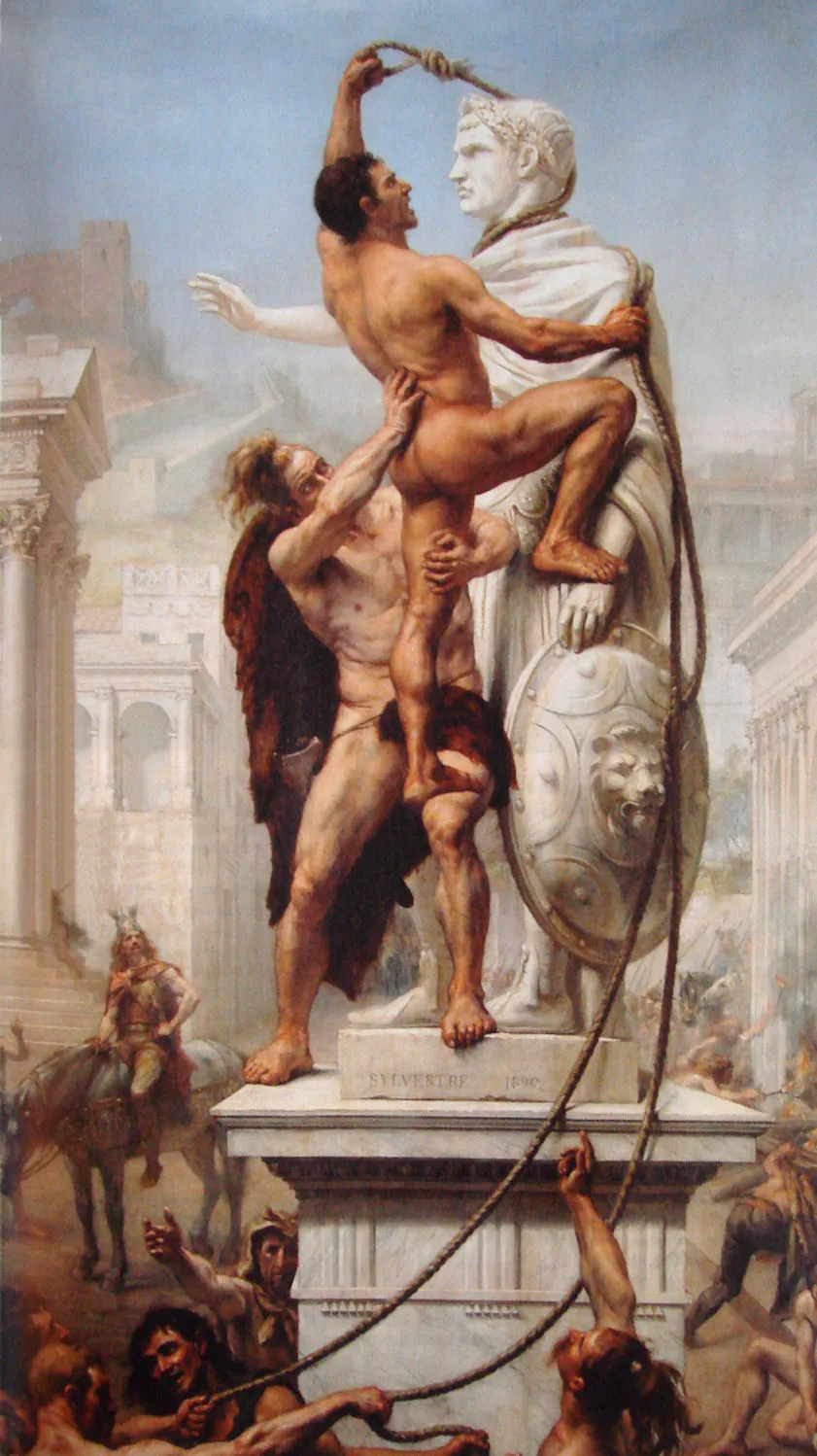
Trentadue anni dopo Adrianopoli, nel 410, i discendenti diretti di quei Visigoti accolti da Valente, sotto il nipote di Fritigerno, Alarico, saccheggiarono Roma: per la prima volta in otto secoli la città eterna cadeva in mano nemica. Sessantasei anni più tardi, nel 476, l'ultimo imperatore d'Occidente, Romolo Augustolo, sarebbe stato deposto da un altro generale germanico. La catena causale che lega quei crolli al 9 agosto 378 è diretta, ininterrotta. Ecco il grande paradosso: Valente, mediocre in vita, è tra gli imperatori più influenti che Roma abbia mai avuto, perché i suoi errori pesarono sulla bilancia della storia più delle vittorie di molti grandi.
Thirty-two years after Adrianople, in 410, the direct descendants of those Visigoths welcomed by Valens, under Fritigern's nephew Alaric, sacked Rome: for the first time in eight centuries the eternal city fell to an enemy. Sixty-six years later, in 476, the last Western emperor, Romulus Augustulus, would be deposed by another Germanic general. The causal chain binding those collapses to 9 August 378 is direct, unbroken. Here is the great paradox: Valens, mediocre in life, is among the most influential emperors Rome ever had, because his mistakes weighed on history's scales more than the victories of many great men.