01Le CauseThe Causes
Cinquant'anni dopo Zama, Cartagine non era più una potenza militare. Il trattato del 201 a.C. l'aveva ridotta a uno stato cliente: niente flotta, niente possedimenti esteri, divieto di muovere guerra senza l'autorizzazione di Roma. Ma economicamente la città si era rialzata. Le rotte commerciali con il Mediterraneo orientale, l'agricoltura intensiva nel suo entroterra africano, le manifatture di porpora e di vetro: nel 191 a.C. Cartagine offrì di pagare in anticipo l'intera indennità rimanente, segno di una salute finanziaria sorprendente. Per Roma, questa era una provocazione.
Fifty years after Zama, Carthage was no longer a military power. The treaty of 201 BC had reduced it to a client state: no fleet, no overseas possessions, ban on waging war without Rome's authorisation. But economically the city had recovered. The trade routes with the eastern Mediterranean, the intensive agriculture of its African hinterland, the workshops producing purple and glass: in 191 BC Carthage offered to pay the entire remaining indemnity in advance, a sign of surprising financial health. For Rome, this was a provocation.
Il problema strategico era il re Massinissa di Numidia, l'antico alleato di Scipione. Forte del trattato che gli permetteva di rivendicare ogni terra che storicamente fosse stata "numidica", iniziò una serie di aggressioni sistematiche contro i confini di Cartagine, sapendo che la città non poteva difendersi senza il permesso di Roma. Ogni volta Cartagine si rivolse al senato romano per arbitrare, e ogni volta Roma diede ragione a Massinissa. Era un cappio che si stringeva. Nel 151 a.C. Cartagine, esasperata, mobilitò un piccolo esercito senza l'autorizzazione romana per respingere un'incursione numidica. Fu catastrofico: l'esercito fu distrutto, e Roma ebbe il pretesto giuridico che cercava da decenni.
The strategic problem was King Massinissa of Numidia, Scipio's old ally. Backed by the treaty that allowed him to claim any land historically "Numidian", he began a systematic series of aggressions against Carthage's borders, knowing the city could not defend itself without Rome's permission. Every time Carthage turned to the Roman senate to arbitrate, and every time Rome ruled in favour of Massinissa. It was a tightening noose. In 151 BC Carthage, exasperated, mobilised a small army without Roman authorisation to repel a Numidian incursion. It was catastrophic: the army was destroyed, and Rome had the legal pretext it had been seeking for decades.
Il vero motore della guerra era ideologico. Marco Porcio Catone il Censore, settantenne, in visita ufficiale a Cartagine nel 153 a.C., era rimasto colpito dalla floridezza della città : i porti, i magazzini, le ville suburbane. Tornato a Roma, fece scalpore mostrando in senato un fico cartaginese ancora fresco: "Tre giorni di mare ci separano da questo nemico." Da quel momento, ogni discorso in senato, su qualsiasi argomento, chiudeva con la formula: Ceterum censeo Carthaginem esse delendam. "Per il resto, ritengo che Cartagine debba essere distrutta." Lo ripeté per anni, ad ogni occasione, fino alla morte. Era una propaganda lenta ma efficace.
The real engine of the war was ideological. Marcus Porcius Cato the Censor, in his seventies, on an official visit to Carthage in 153 BC, had been struck by the city's prosperity: the harbours, the warehouses, the suburban villas. Back in Rome, he caused a sensation by showing a still-fresh Carthaginian fig in the senate: "Three days at sea separate us from this enemy." From that moment, every speech in the senate, on any subject, closed with the formula: Ceterum censeo Carthaginem esse delendam. "Furthermore, I think Carthage must be destroyed." He repeated it for years, on every occasion, until his death. It was slow but effective propaganda.
02Le Forze in CampoThe Forces
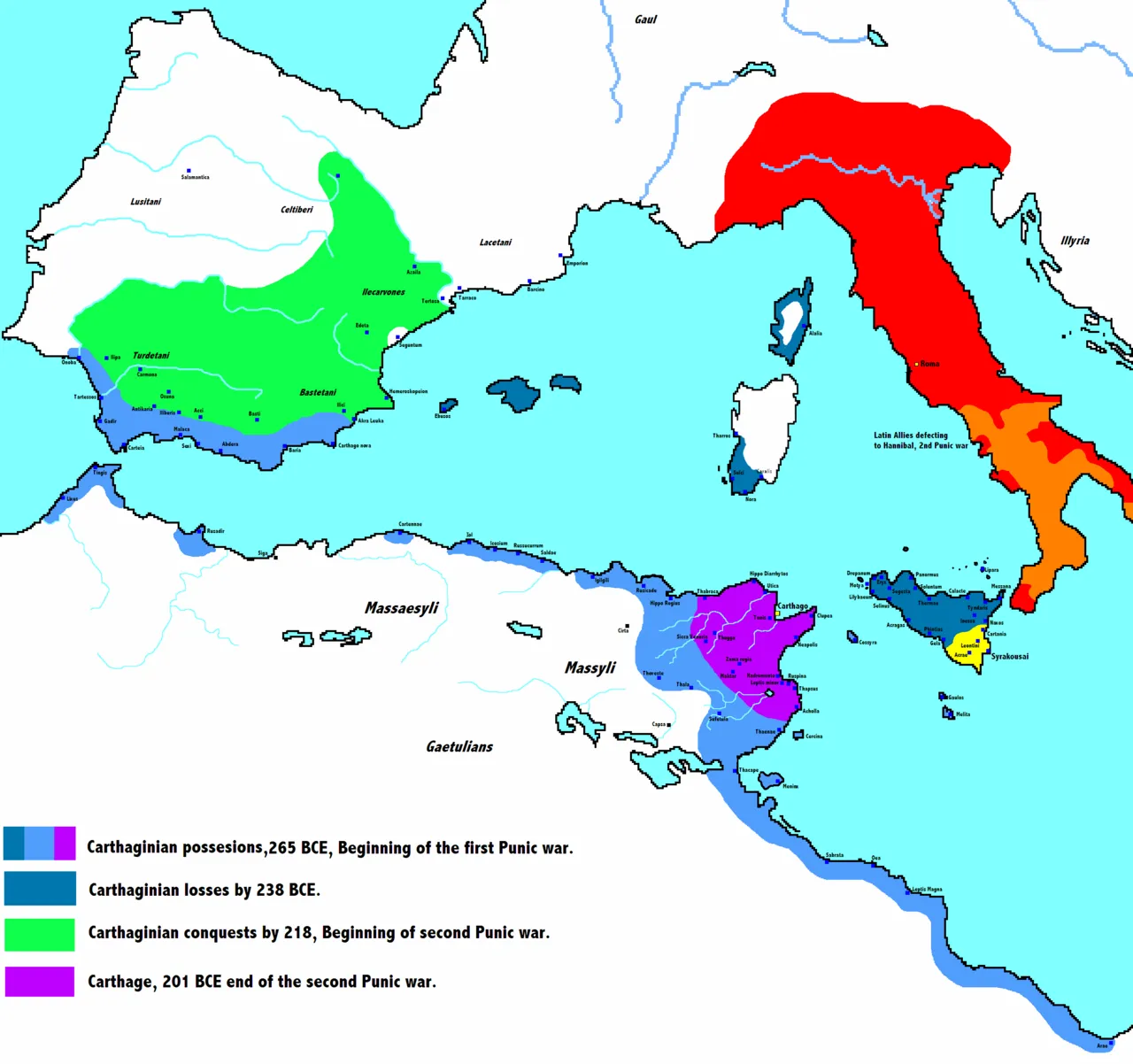
Roma sbarcò in Africa nel 149 a.C. con un esercito imponente: ottanta mila fanti, quattromila cavalieri, una flotta di duecento navi, comandati dai consoli Manio Manilio e Lucio Marcio Censorino. Era più che sufficiente per schiacciare la città in poche settimane. Roma, ormai prima potenza del Mediterraneo, poteva permettersi qualsiasi spreco di forze: aveva conquistato la Macedonia (168 a.C.), umiliato Antioco III di Siria (190 a.C.), trasformato la Grecia in protettorato. Cartagine non era più un nemico, era un bersaglio.
Rome landed in Africa in 149 BC with an imposing army: eighty thousand infantry, four thousand cavalry, a fleet of two hundred ships, commanded by consuls Manius Manilius and Lucius Marcius Censorinus. It was more than enough to crush the city in a few weeks. Rome, by now the first power of the Mediterranean, could afford any waste of forces: it had conquered Macedonia (168 BC), humiliated Antiochus III of Syria (190 BC), turned Greece into a protectorate. Carthage was no longer an enemy; it was a target.
Cartagine partiva da una situazione disperata. La città aveva consegnato a Roma, in segno di buona fede, trecentomila set di armature e duemila catapulte, e poi aveva scoperto che nemmeno questo bastava: Roma esigeva l'evacuazione totale e la fondazione di una nuova città interna, almeno sedici chilometri dal mare. Era una sentenza di morte commerciale per una metropoli marittima. I Cartaginesi rifiutarono. Allora, in un capolavoro di volontà popolare, la città intera si trasformò in una fucina d'armi: i templi divennero officine, le donne tagliarono i loro capelli per fabbricare corde da catapulte, ogni giorno si producevano cento scudi, trecento spade, mille proiettili. La popolazione, di circa cinquecentomila abitanti, fu militarizzata in massa.
Carthage started from a desperate situation. The city had handed over to Rome, in good faith, three hundred thousand sets of armour and two thousand catapults, only to discover that even this was not enough: Rome demanded total evacuation and the founding of a new inland city, at least sixteen kilometres from the sea. It was a commercial death sentence for a maritime metropolis. The Carthaginians refused. Then, in a masterpiece of popular will, the entire city transformed itself into an arms factory: temples became workshops, women cut their hair to make catapult ropes, every day a hundred shields, three hundred swords, a thousand projectiles were produced. The population, of about five hundred thousand inhabitants, was mass-militarised.
03L'Andamento dell'AssedioThe Course of the Siege
La guerra fu in realtà un solo grande assedio di tre anni. Le mura di Cartagine erano formidabili: trentasette chilometri di cinta tripla, alte tredici metri, larghe nove, con due ordini di torri ogni sessanta metri. Tra le due cinte interne erano alloggiate le caserme degli elefanti (fino a 300) e le stalle per la cavalleria. La città era costruita su un promontorio circondato da lagune e dal mare; un solo istmo la collegava alla terraferma, e quell'istmo era pesantemente fortificato.
The war was in fact a single great siege lasting three years. The walls of Carthage were formidable: thirty-seven kilometres of triple circuit, thirteen metres high, nine wide, with two tiers of towers every sixty metres. Between the two inner walls were stabled the elephants (up to 300) and the cavalry. The city stood on a promontory surrounded by lagoons and the sea; a single isthmus connected it to the mainland, and that isthmus was heavily fortified.
Nel 149 a.C., primo anno, i consoli Manilio e Censorino tentarono assalti frontali e furono respinti con perdite enormi. Cartagine, lungi dall'arrendersi, contrattaccò : notte dopo notte, i suoi soldati uscivano per attaccare le posizioni romane, bruciare le macchine d'assedio, intercettare i convogli di rifornimento. Asdrubale il Beotarca, comandante cartaginese, organizzò sortite che misero Roma in seria difficoltà . Nel 148 a.C., secondo anno, i nuovi consoli Calpurnio Pisone e Lucio Mancino fecero ancora peggio: persero unità intere in attacchi mal coordinati, e la situazione romana diventò precaria. Si parlò perfino di togliere l'assedio. A Roma il senato era nel panico.
In 149 BC, first year, the consuls Manilius and Censorinus attempted frontal assaults and were repelled with enormous losses. Carthage, far from surrendering, counter-attacked: night after night, its soldiers sallied out to attack Roman positions, burn siege engines, intercept supply convoys. Hasdrubal the Boeotarch, the Carthaginian commander, organised sorties that put Rome in serious difficulty. In 148 BC, second year, the new consuls Calpurnius Piso and Lucius Mancinus did even worse: they lost entire units in poorly coordinated attacks, and the Roman situation became precarious. There was even talk of lifting the siege. In Rome, the senate was in panic.
Nel 147 a.C., terzo anno, il senato romano fece una mossa eccezionale. Sospese le regole sull'eleggibilità al consolato e affidò il comando a un giovane di trentasette anni: Publio Cornelio Scipione Emiliano, nipote adottivo di Scipione l'Africano. Era una scelta politicamente carica. Emiliano riorganizzò immediatamente l'esercito: discipline ripristinata, accampamenti rifortificati, prostitute ed accozzaglia di seguaci espulse. Costruì una grande diga sull'imboccatura del porto cartaginese, isolando la città dal mare per la prima volta. Quando i Cartaginesi disperati scavarono un secondo canale per uscire con la flotta improvvisata, persero la battaglia navale. La città era ormai completamente accerchiata.
In 147 BC, third year, the Roman senate made an exceptional move. It suspended the rules on consular eligibility and entrusted command to a thirty-seven-year-old: Publius Cornelius Scipio Aemilianus, adopted grandson of Scipio Africanus. It was a politically loaded choice. Aemilianus immediately reorganised the army: discipline restored, camps refortified, prostitutes and camp followers expelled. He built a great dam at the mouth of the Carthaginian harbour, isolating the city from the sea for the first time. When the desperate Carthaginians dug a second canal to sail out with an improvised fleet, they lost the naval battle. The city was now completely surrounded.
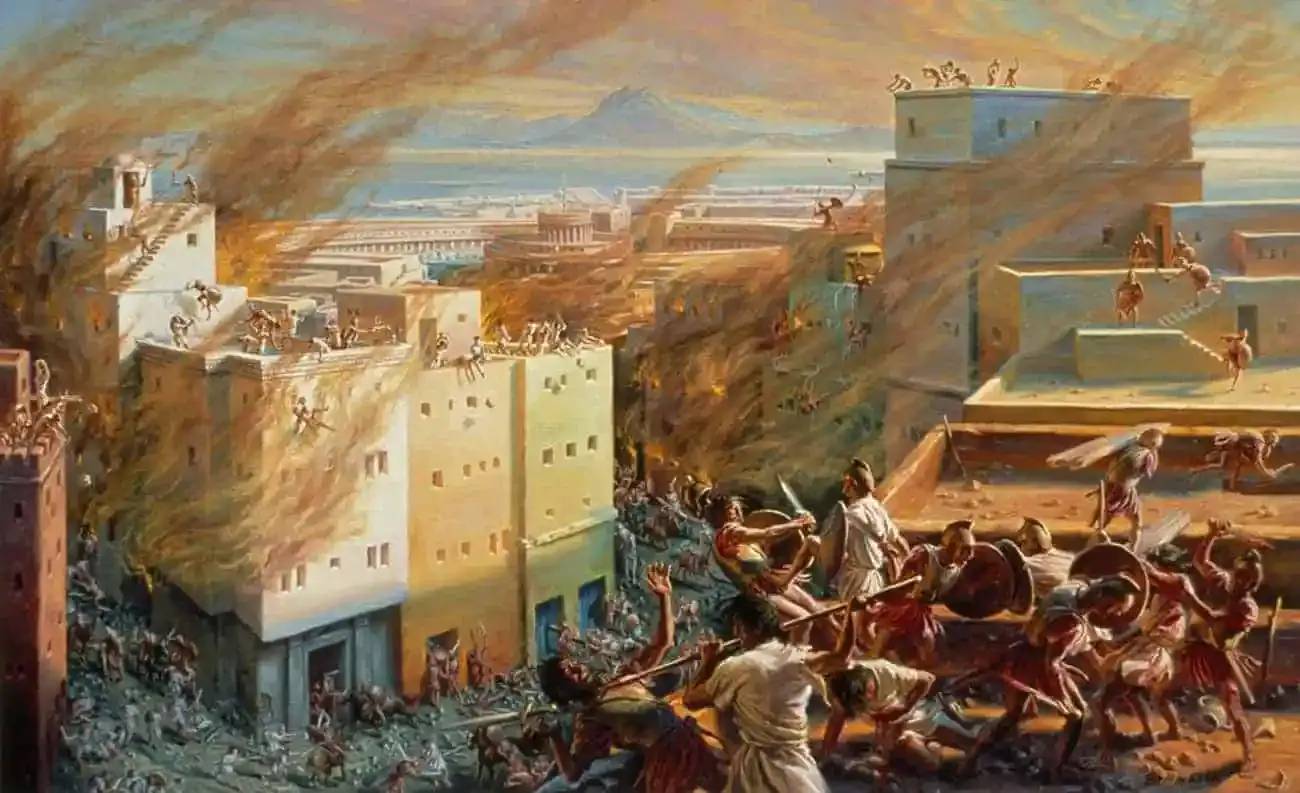
Nella primavera del 146 a.C., dopo un inverno di carestia in cui i difensori erano stati ridotti a mangiare cuoio e pelli, Scipione lanciò l'assalto finale. La breccia fu aperta sull'angolo settentrionale, vicino al porto. Per sei giorni e sei notti, i legionari avanzarono casa per casa, strada per strada. Ogni edificio era un fortino. La popolazione combatteva dai tetti, lanciava tegole, fuoco, mobili dalle finestre. I soldati romani usavano scale, demolivano i muri, riempivano le strade dei corpi. Quando finalmente raggiunsero la rocca dell'acropoli (la Byrsa), 50.000 superstiti si arresero. Asdrubale il Beotarca scappò e si arrese personalmente a Scipione. Sua moglie, vedendolo, gli rivolse un'invettiva pubblica e si gettò nelle fiamme del tempio di Eshmun con i due figli.
In the spring of 146 BC, after a winter of famine in which the defenders had been reduced to eating leather and hides, Scipio launched the final assault. The breach was opened at the northern corner, near the harbour. For six days and six nights, the legionaries advanced house by house, street by street. Every building was a fortress. The population fought from rooftops, hurled tiles, fire, furniture from windows. Roman soldiers used ladders, demolished walls, filled the streets with bodies. When they finally reached the citadel of the acropolis (the Byrsa), 50,000 survivors surrendered. Hasdrubal the Boeotarch fled and surrendered personally to Scipio. His wife, seeing him, hurled public invective at him and threw herself into the flames of the temple of Eshmun with her two sons.
04Le TatticheThe Tactics
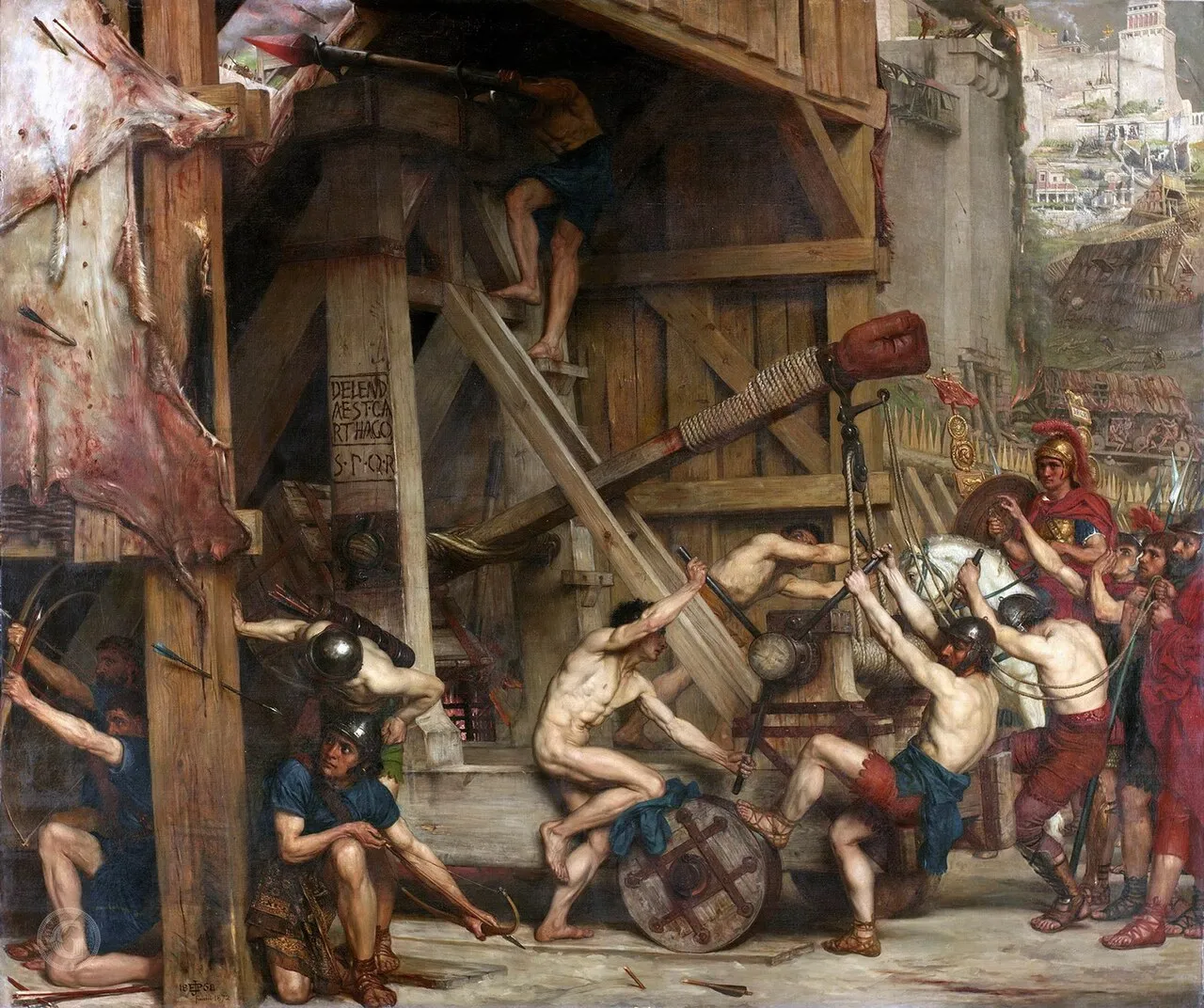
L'assedio di Cartagine fu un manuale di poliorcetica classica e di guerra urbana. Sul piano tradizionale, Roma costruì rampe, torri d'assedio, gallerie, ariete, senza grandi successi nei primi due anni. La svolta arrivò con Scipione Emiliano, che applicò tre principi nuovi. Primo: l'assedio totale. Costruzione di una grande diga marina (~1500 metri di pietra) per chiudere il porto principale; isolamento idrografico della città , fino ad allora capace di ricevere rifornimenti via mare nonostante il blocco terrestre. Secondo: strangolamento sistematico. Costruzione di un muro di contro-assedio che corre dall'una all'altra costa, lungo l'istmo, eliminando ogni possibilità di sortita. Terzo: disciplina ferrea. L'esercito romano del 147 era diventato una mandria indisciplinata; Emiliano lo trasformò di nuovo in macchina militare, espellendo civili, restaurando guardie notturne, ricostruendo accampamenti.
The siege of Carthage was a textbook of classical poliorcetics and urban warfare. On the traditional plane, Rome built ramps, siege towers, mines, rams, without much success in the first two years. The turning point came with Scipio Aemilianus, who applied three new principles. First: total siege. Construction of a great sea dam (~1500 metres of stone) to close the main harbour; hydrographic isolation of the city, until then able to receive supplies by sea despite the land blockade. Second: systematic strangulation. Construction of a counter-siege wall running from coast to coast along the isthmus, eliminating any possibility of sallies. Third: iron discipline. The Roman army of 147 had become an undisciplined mob; Aemilianus turned it back into a military machine, expelling civilians, restoring night guards, rebuilding camps.
La fase finale fu la guerra urbana: combattere casa per casa contro una popolazione disperata in una città di un milione di abitanti densamente edificata. Fu la prima grande prova di guerra urbana della storia romana, e si rivelò sanguinosa quanto qualsiasi battaglia campale. I tetti delle case, costruite a più piani, divennero piattaforme di tiro per i Cartaginesi; per ogni metro avanzato, le legioni dovevano scalare, demolire, sgomberare. Scipione fece bruciare interi quartieri sistematicamente per facilitare l'avanzata: le testimonianze antiche parlano di gente che bruciava viva nei propri rifugi. La memoria di sei giorni di carneficina rimase un trauma anche per i veterani romani.
The final phase was urban warfare: fighting house by house against a desperate population in a densely built city of one million people. It was the first great test of urban warfare in Roman history, and it proved as bloody as any pitched battle. The roofs of the multi-storey houses became firing platforms for the Carthaginians; for every metre gained, the legions had to climb, demolish, clear. Scipio had entire districts systematically burned to ease the advance: ancient testimonies speak of people burning alive in their shelters. The memory of six days of slaughter remained a trauma even for Roman veterans.
Sul piano logistico, l'assedio richiese uno sforzo senza precedenti. La flotta romana doveva mantenere ottanta mila uomini in territorio nemico per tre anni, attraversando il Mediterraneo dall'Italia. La rete di magazzini, granai, ospedali da campo che Scipione costruì lungo la costa africana fu la base della futura logistica imperiale: l'arte di sostenere eserciti permanenti in province lontane, perfezionata qui, sarebbe stata applicata duemila anni di guerre.
On the logistical plane, the siege required an unprecedented effort. The Roman fleet had to keep eighty thousand men in enemy territory for three years, crossing the Mediterranean from Italy. The network of warehouses, granaries, field hospitals that Scipio built along the African coast was the foundation of future imperial logistics: the art of sustaining permanent armies in distant provinces, perfected here, would be applied for two millennia of wars.
« Pianse Scipione vedendo bruciare Cartagine, e citò Omero: 'Verrà un giorno in cui Ilio sacra perirà '. Polibio gli chiese il senso. Ed egli rispose: 'Penso a Roma'.» « Scipio wept seeing Carthage burn, and quoted Homer: 'A day will come when sacred Ilium shall perish'. Polybius asked him the meaning. And he replied: 'I think of Rome'.» — Polibio, Storie XXXVIII, 22
05Le ConseguenzeThe Consequences
Cartagine fu sistematicamente distrutta. Il senato romano ordinò la rasatura totale: ogni edificio, ogni muro, ogni mura furono demoliti. Il sito fu poi arato e cosparso di sale, secondo una tradizione storiografica successiva, in modo che nulla potesse più nascere, la "salatura" è probabilmente un mito tardo, ma ben rappresenta lo spirito del decreto. Cinquantamila superstiti furono venduti come schiavi. Il territorio cartaginese divenne la provincia d'Africa, governata da un proconsole con sede a Utica. La popolazione locale, decimata dall'esecuzione delle é lites filopuniche, fu progressivamente romanizzata.
Carthage was systematically destroyed. The Roman senate ordered total levelling: every building, every wall was demolished. The site was then ploughed and sprinkled with salt, according to a later historiographical tradition, so that nothing could ever grow again, the "salting" is probably a late myth, but well represents the spirit of the decree. Fifty thousand survivors were sold as slaves. The Carthaginian territory became the province of Africa, governed by a proconsul based at Utica. The local population, decimated by the execution of the pro-Punic elites, was progressively Romanised.
Quello stesso anno, il 146 a.C., fu un anno-simbolo dell'imperialismo romano. Pochi mesi dopo Cartagine, la legione di Lucio Mummio rase al suolo Corinto, l'altra grande città commerciale che dominava il Peloponneso. Il messaggio era chiaro: nessun centro economico autonomo nel Mediterraneo poteva esistere fuori dal controllo romano. Era la nascita ideologica dell'impero universale: un solo legge, una sola lingua, un solo padrone.
That same year, 146 BC, was a symbolic year of Roman imperialism. Only months after Carthage, Lucius Mummius's legion razed Corinth, the other great commercial city dominating the Peloponnese. The message was clear: no autonomous economic centre in the Mediterranean could exist outside Roman control. It was the ideological birth of the universal empire: one law, one language, one master.
Per Roma, l'effetto a lungo termine fu paradossale. Aveva eliminato la sua grande nemica, ma con essa anche il metus hostilis, "la paura del nemico" che secondo Sallustio aveva tenuto unita la Repubblica. Senza più un avversario esterno, Roma scoprì le proprie tensioni interne: i Gracchi, la riforma agraria, le guerre civili, la lunga crisi che condusse a Cesare. Cartagine, paradossalmente, era servita a tenere coesi i Romani; senza di lei, la macchina della Repubblica iniziava a inceppare. Catone aveva forse vinto troppo.
For Rome, the long-term effect was paradoxical. It had eliminated its great enemy, but with it also the metus hostilis, "the fear of the enemy" that according to Sallust had kept the Republic united. Without an external adversary, Rome discovered its own internal tensions: the Gracchi, agrarian reform, the civil wars, the long crisis that led to Caesar. Carthage, paradoxically, had served to keep the Romans cohesive; without her, the Republic's machinery began to seize up. Cato had perhaps won too much.
Centodue anni dopo, nel 44 a.C., Giulio Cesare ordinò la rifondazione di Cartagine come Colonia Iulia Concordia. Suo erede Augusto la portò a termine: la nuova Cartagine romana divenne in pochi decenni la seconda città dell'Africa proconsolare, e poi della latinità occidentale dopo Roma. Sul sito della Byrsa, dove Asdrubale aveva combattuto i suoi ultimi giorni, sorse il foro romano. Cartagine cancellata era nato Cartagine cristiana (quella di Tertulliano, Cipriano, Agostino) che sarebbe stata uno dei centri intellettuali del primo cristianesimo. La storia, come spesso accade, fece i suoi giri.
One hundred and two years later, in 44 BC, Julius Caesar ordered the refounding of Carthage as Colonia Iulia Concordia. His heir Augustus completed it: the new Roman Carthage became in a few decades the second city of proconsular Africa, and then of western Latinity after Rome. On the Byrsa site, where Hasdrubal had fought his last days, rose the Roman forum. The erased Carthage was reborn Christian Carthage (the city of Tertullian, Cyprian, Augustine) which would be one of the intellectual centres of early Christianity. History, as often happens, made its turns.