01BiografiaBiography
Il bambino del campo (12–19 d.C.)
The camp child (12–19 AD)
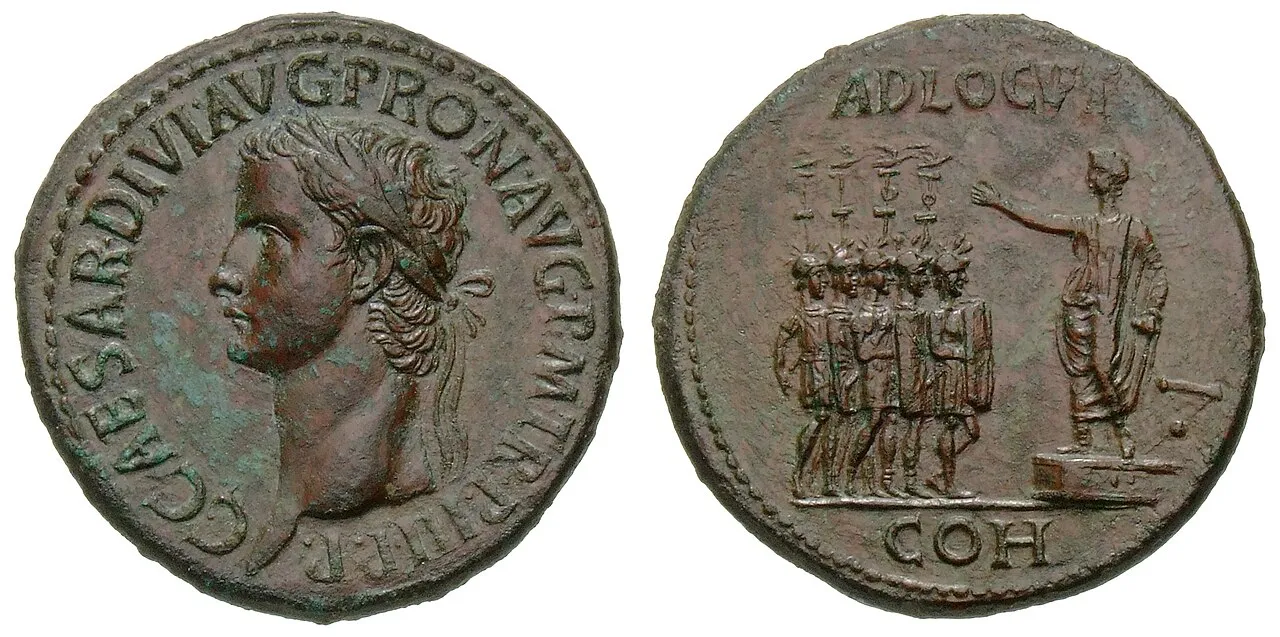
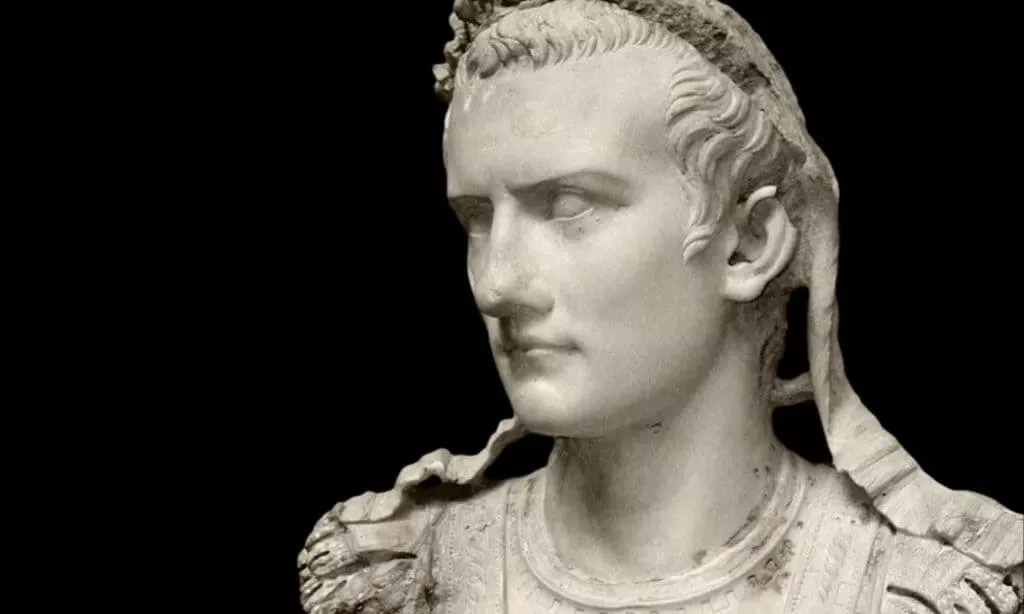
Gaio Giulio Cesare Germanico nacque il 31 agosto del 12 d.C. ad Antium, terzo dei sei figli di Germanico, il generale più popolare di Roma, e di Agrippina Maggiore, nipote diretta di Augusto. Era pronipote del divo Augusto per parte di madre e nipote del dittatore Tiberio per parte di padre adottivo: due linee imperiali si fondevano in lui. La sua nascita avvenne due anni dopo la disfatta di Teutoburgo, mentre Germanico comandava le otto legioni del Reno; appena compiuti i due anni, il bambino seguì il padre negli accampamenti germanici.
Gaius Julius Caesar Germanicus was born on 31 August 12 AD at Antium, third of the six children of Germanicus, Rome's most popular general, and Agrippina the Elder, direct granddaughter of Augustus. He was great-grandson of the deified Augustus through his mother and grandson of the dictator Tiberius through his adoptive father: two imperial lines merged in him. He was born two years after the Teutoburg disaster, while Germanicus commanded the eight Rhine legions; barely two years old, the child followed his father into the Germanic camps.
Sua madre Agrippina lo vestiva con armatura legionaria in miniatura per mostrarlo alle truppe, in particolare con piccoli caligae: gli stivaletti chiodati dei soldati. I legionari, commossi dal bambino-mascotte, gli appiccicarono il diminutivo affettuoso Caligula, "stivaletto piccolo". Il nome non gli piacque mai, ma rimase: nessun imperatore romano della storia è più conosciuto col proprio soprannome di gioventù che con il proprio nome ufficiale. Sotto questi caligae nasceva un figlio della propaganda dinastica giulio-claudia: il discendente del divo Augusto, allevato fra le legioni, simbolo vivente del legame fra esercito e principe.
His mother Agrippina dressed him in miniature legionary armour to show him to the troops, especially with small caligae: the studded boots of soldiers. The legionaries, moved by the mascot-child, attached to him the affectionate diminutive Caligula, "little boot". The name never pleased him, but it stuck: no Roman emperor in history is better known by his boyhood nickname than by his official name. Under these caligae grew a son of Julio-Claudian dynastic propaganda: the descendant of the deified Augustus, raised among the legions, living symbol of the bond between army and prince.
La famiglia distrutta (19–31 d.C.)
A family destroyed (19–31 AD)
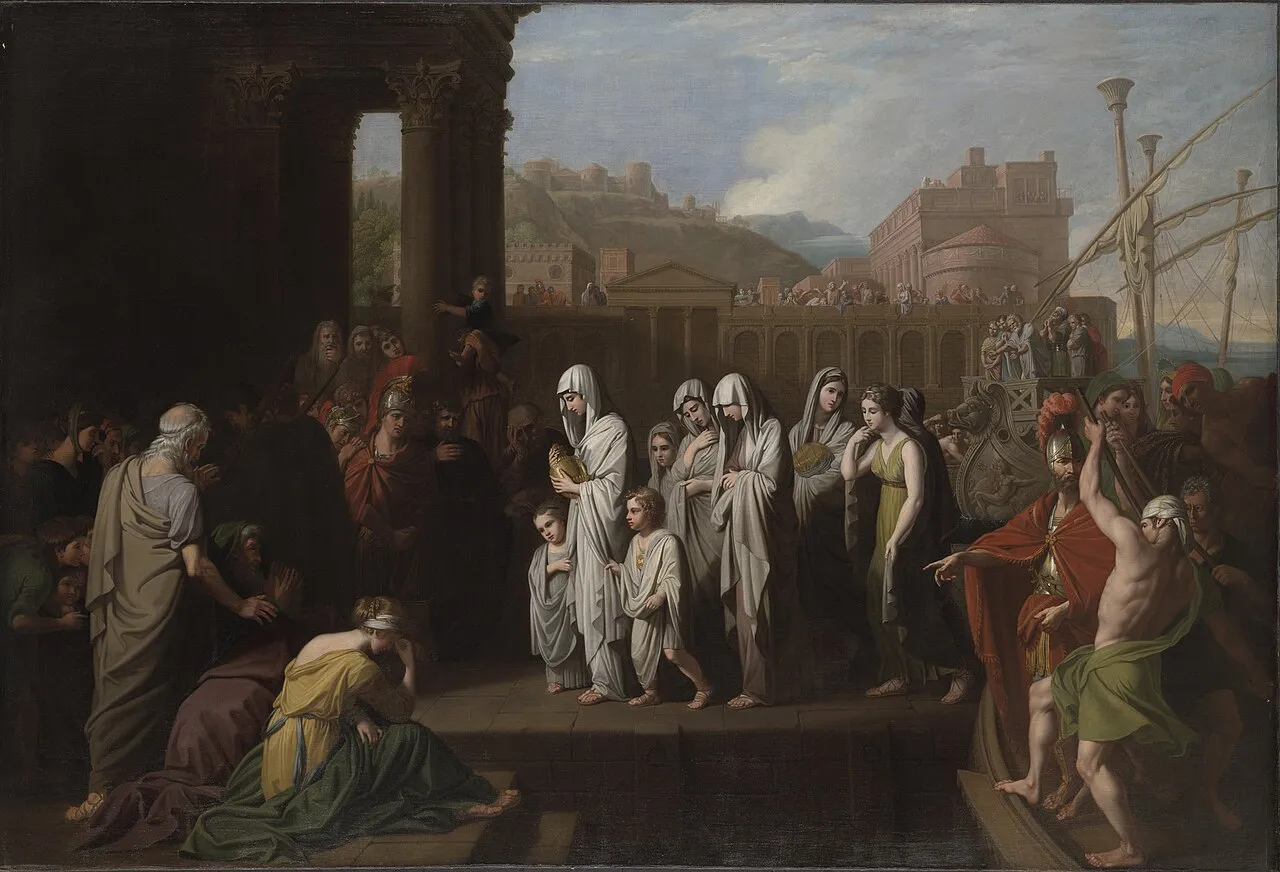
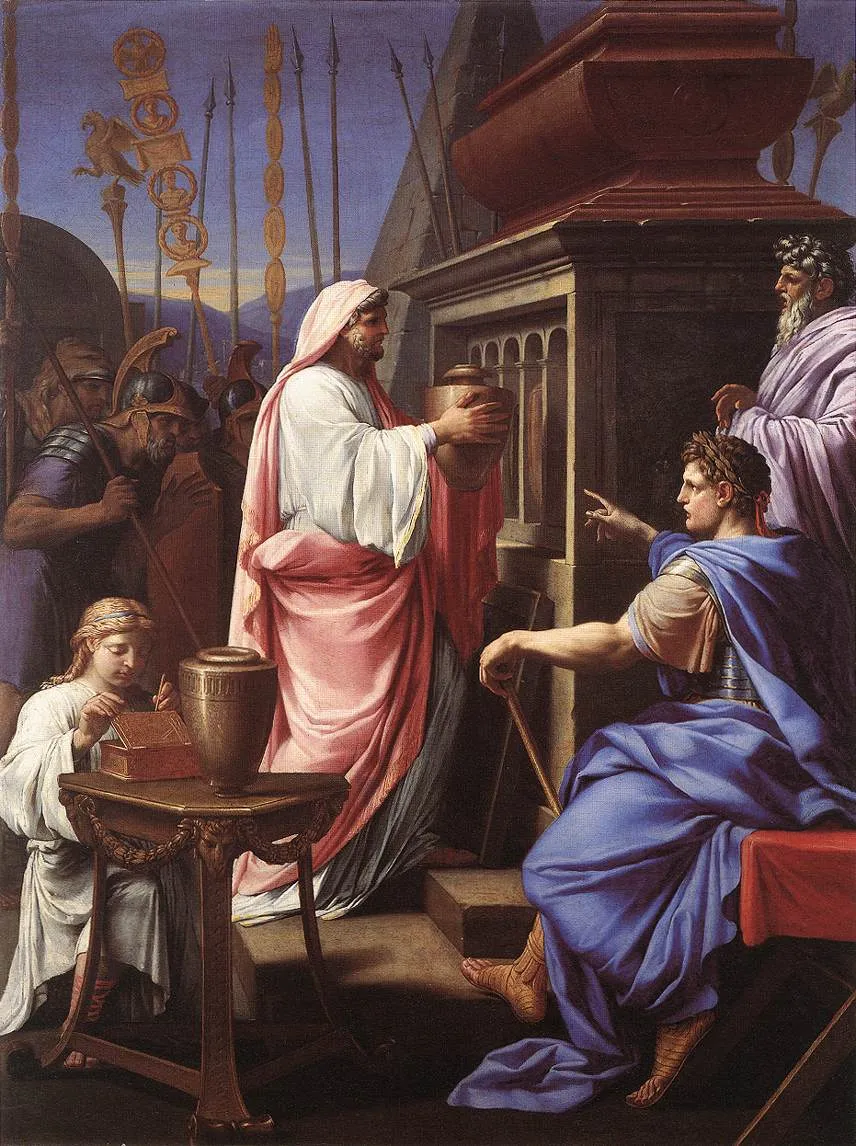
Nel 17 d.C., quando Caligola aveva cinque anni, Tiberio richiamò dalla Germania il padre Germanico e lo inviò in Oriente con poteri straordinari. La famiglia seguì . Il 10 ottobre del 19 d.C., ad Antiochia, Germanico morì in circostanze sospettissime: convinto di essere stato avvelenato dal legato Pisone su istigazione di Tiberio, lo ammonì sul letto di morte di vendicarlo. Caligola aveva sette anni. La madre Agrippina riportò l'urna delle ceneri a Brindisi attraversando l'Adriatico in pieno inverno: il funerale fu un evento di massa, e Roma intera sospettò il principe regnante della morte del nipote.
In 17 AD, when Caligula was five, Tiberius recalled his father Germanicus from Germany and sent him East with extraordinary powers. The family followed. On 10 October 19 AD, at Antioch, Germanicus died in highly suspicious circumstances: convinced he had been poisoned by the legate Piso at Tiberius's instigation, he charged his children on his deathbed to avenge him. Caligula was seven. His mother Agrippina brought the urn of ashes back to Brundisium across the Adriatic in midwinter: the funeral was a mass event, and all Rome suspected the reigning prince of his nephew's death.
Per dodici anni la famiglia di Germanico fu sistematicamente distrutta dal prefetto del pretorio Seiano, eseguendo, o anticipando, la volontà di Tiberio. Nel 29 d.C. Agrippina e il primogenito Nerone Cesare furono accusati di tradimento ed esiliati: Agrippina morì di fame nell'isola di Pandataria nel 33 d.C., probabilmente con un occhio cavato dai pretoriani; Nerone Cesare fu costretto al suicidio nelle Pontine. Nel 30 d.C. il secondogenito Druso Cesare fu imprigionato sotterra a Roma e morì di fame in cella, masticando l'imbottitura del materasso. Caligola, terzo figlio, sopravvisse perché troppo giovane per essere una minaccia politica.
For twelve years Germanicus's family was systematically destroyed by the praetorian prefect Sejanus, carrying out, or anticipating, Tiberius's will. In 29 AD Agrippina and her firstborn Nero Caesar were charged with treason and exiled: Agrippina starved to death on the island of Pandateria in 33 AD, probably with an eye gouged out by the praetorians; Nero Caesar was forced to suicide in the Pontine Islands. In 30 AD the second son Drusus Caesar was imprisoned underground in Rome and starved to death in his cell, chewing the stuffing of his mattress. Caligula, third son, survived because he was too young to be a political threat.
Sopravvissuto a Capri (31–37 d.C.)
Survivor at Capri (31–37 AD)
Nel 31 d.C., a diciannove anni, Caligola fu convocato a Capri da Tiberio. Era ufficialmente un onore; in realtà era ostaggio. Il giovane visse sei anni nella Villa Jovis sotto sorveglianza costante, fra l'astrologo Trasillo, i corrieri imperiali e le ombre dei delatori. Apprese una lezione fondamentale per sopravvivere: dissimulare. Svetonio racconta che non un gesto, non una parola, non un'espressione di Caligola tradiva mai i suoi sentimenti reali. Quando il fratello e la madre morivano in esilio, Caligola elogiava in pubblico la giustizia di Tiberio. Il tribuno Macrone, che aveva sostituito Seiano, gli diceva: « dovrebbero educarti come servo, non come principe» .
In 31 AD, aged nineteen, Caligula was summoned to Capri by Tiberius. Officially an honour; in reality a hostage. The young man spent six years in the Villa Jovis under constant surveillance, among the astrologer Thrasyllus, imperial couriers and the shadows of informers. He learned a fundamental lesson for survival: dissimulation. Suetonius tells that not a gesture, not a word, not an expression of Caligula ever betrayed his real feelings. While his brother and mother died in exile, Caligula publicly praised the justice of Tiberius. The tribune Macro, who had replaced Sejanus, told him: « they ought to raise you as a slave, not as a prince» .
A Capri Caligola sviluppò due tratti che avrebbero definito il suo regno: una fascinazione mortale per il potere assoluto del nonno adottivo, e un odio bruciante per la classe senatoria che si era prestata alla distruzione della propria famiglia. Studiò gli atti pubblici di Tiberio, ne memorizzò i nomi dei delatori e dei testimoni nei processi per maiestas contro la madre. Era una mente colta (conosceva il greco, citava Omero, leggeva astrologia) ma forgiata nel risentimento. Quando Tiberio morì il 16 marzo del 37 d.C. a Miseno, e secondo Tacito fu Macrone stesso a soffocarlo sotto i cuscini per consegnare il trono a Caligola, il giovane aveva ventiquattro anni e sapeva esattamente che cosa avrebbe fatto del proprio potere.
At Capri Caligula developed two traits that would define his reign: a deadly fascination for his adoptive grandfather's absolute power, and a burning hatred for the senatorial class that had lent itself to destroying his own family. He studied Tiberius's public acts, memorised the names of informers and witnesses in the maiestas trials against his mother. He was a cultured mind (he knew Greek, quoted Homer, read astrology) but forged in resentment. When Tiberius died on 16 March 37 AD at Misenum, and according to Tacitus it was Macro himself who smothered him under the pillows to deliver the throne to Caligula, the young man was twenty-four and knew exactly what he would do with his power.
Il principe rivelato (marzo–ottobre 37 d.C.)
The prince revealed (March–October 37 AD)
L'ascesa di Caligola fu un trionfo. Roma odiava il vecchio Tiberio: lungo la strada che portava il corpo da Miseno a Roma, la folla gridò Tiberium in Tiberim!, "Tiberio nel Tevere!". Il giovane figlio di Germanico era invece il sogno realizzato: la legittimità del divo Augusto, l'amore popolare del padre martire, la gioventù vibrante. Lo proclamarono imperatore in tre giorni. Il Senato gli conferì tutti i poteri augustei in una volta sola; nessuna recita repubblicana come Tiberio. Caligola fu acclamato dal popolo, festeggiato dai pretoriani con un donativo di mille sesterzi a testa, atteso come liberatore.
Caligula's ascent was a triumph. Rome hated old Tiberius: along the road carrying the body from Misenum to Rome, the crowd shouted Tiberium in Tiberim!, "Tiberius into the Tiber!". The young son of Germanicus was instead the dream made real: the legitimacy of the deified Augustus, the popular love of his martyred father, vibrant youth. They proclaimed him emperor in three days. The Senate conferred on him all the Augustan powers at once; no Republican charade as with Tiberius. Caligula was acclaimed by the people, celebrated by the praetorians with a donative of a thousand sesterces a head, awaited as a liberator.
I primi sei mesi giustificarono ogni speranza. Caligola abolì i processi per maiestas, l'arma con cui Tiberio aveva terrorizzato il Senato; richiamò gli esiliati; ripagò il quattrocento per cento sui legati testamentari di Tiberio; pubblicò tutti gli atti finanziari dello Stato (Tiberio li teneva segreti); restituì alle assemblee popolari il diritto di eleggere magistrati che Tiberio aveva trasferito al Senato; offrì giochi sontuosi, distribuì donativi al popolo, organizzò venationes con animali rari. Riportò le ceneri della madre Agrippina e del fratello Nerone Cesare a Roma in solenne processione, le depose nel Mausoleo di Augusto. Il Senato lo chiamò filius Germanici, "il figlio di Germanico"; era il complimento massimo. Il futuro imperatore Traiano avrebbe ricordato anche questo periodo come uno dei migliori del Principato.
The first six months justified every hope. Caligula abolished the maiestas trials, the weapon with which Tiberius had terrorised the Senate; recalled the exiles; paid four hundred per cent on Tiberius's testamentary bequests; published all the State's financial acts (Tiberius had kept them secret); restored to the popular assemblies the right to elect magistrates that Tiberius had transferred to the Senate; offered lavish games, distributed donatives to the people, staged venationes with rare animals. He brought back the ashes of his mother Agrippina and his brother Nero Caesar to Rome in solemn procession, deposited them in the Mausoleum of Augustus. The Senate called him filius Germanici, "the son of Germanicus"; it was the highest compliment. The future emperor Trajan would remember even this period as one of the Principate's best.
Nel mese di ottobre del 37 d.C., però , Caligola si ammalò gravemente. La natura della malattia non è mai stata chiarita: meningite, encefalite, esaurimento nervoso, avvelenamento da piombo per i suoi vasi rituali, sono tutte ipotesi proposte. La città pianse per giorni; alcuni cittadini fecero voti pubblici di offrire la propria vita in cambio di quella del principe. Quando si riprese, due settimane dopo, Caligola era diverso. Le fonti lo descrivono come un altro uomo: insonne, eccitabile, paranoico, soggetto a improvvise rabbie e profonde melanconie. Quei due cittadini che avevano fatto voti per la sua salvezza furono costretti uno a gettarsi dal Tarpeo, l'altro a tagliarsi la gola con un gladio: avevano detto, era il loro debito divino.
In October 37 AD, however, Caligula fell gravely ill. The nature of the illness was never clarified: meningitis, encephalitis, nervous exhaustion, lead poisoning from his ritual vessels are all hypotheses. The city wept for days; some citizens made public vows to offer their own lives in exchange for the prince's. When he recovered two weeks later, Caligula was different. The sources describe him as another man: sleepless, excitable, paranoid, subject to sudden rages and deep melancholies. Those two citizens who had vowed for his recovery were forced one to throw himself from the Tarpeian Rock, the other to cut his throat with a sword: they had spoken, it was their divine debt.
Il dio sulla terra (37–39 d.C.)
The god on earth (37–39 AD)
Caligola intraprese un programma sistematico per ridefinire il principato come monarchia divina assoluta sul modello orientale, abbandonando la finzione augustea del primo cittadino. Si fece costruire un ponte coperto fra il Palatino e il Campidoglio, "per essere vicino al fratello Giove", come diceva. Si presentava in pubblico vestito da Apollo, da Marte, da Bacco, da Diana, da Mercurio, e perfino da Venere con parrucca e seno finto. Si fece scolpire fra le statue dei dodici dei nel tempio dei Castori, dialogando di notte con Giove ad alta voce dal santuario. Inviava ordini in Giudea per fare erigere la propria statua nel Tempio di Gerusalemme, un gesto che avrebbe causato una guerra civile, evitata solo dalla morte improvvisa del prefetto Petronio nel 39 d.C.
Caligula undertook a systematic programme to redefine the principate as absolute divine monarchy on the Eastern model, abandoning the Augustan fiction of the first citizen. He had a covered bridge built between the Palatine and the Capitol, "to be near my brother Jupiter", as he said. He appeared in public dressed as Apollo, Mars, Bacchus, Diana, Mercury, and even as Venus with wig and false breasts. He had himself carved among the statues of the twelve gods in the temple of the Castors, speaking aloud at night with Jupiter from the sanctuary. He sent orders to Judea to have his own statue erected in the Temple of Jerusalem, a gesture that would have caused a civil war, avoided only by the sudden death of the prefect Petronius in 39 AD.
Nel giugno del 38 d.C. morì improvvisamente la sorella prediletta Drusilla, di cui Caligola era esageratamente innamorato, secondo Svetonio, in modo incestuoso. Il principe fece deporre il lutto pubblico per dieci giorni, vietò di ridere o lavarsi sotto pena capitale, e fece divinizzare la sorella morta col nome di Diva Drusilla Panthea. Era la prima donna divinizzata nella storia di Roma. Un senatore giurò di averla vista salire al cielo: ricevette un milione di sesterzi. Caligola scappò in Campania per il dolore, lasciandosi crescere barba e capelli; quando tornò , era più instabile che mai. Lo stesso anno sposò e ripudiò in pochi mesi due donne; nel 39 d.C. sposò Cesonia, già madre di tre figlie da altri matrimoni, gravida del suo primo figlio: trent'anni dopo si dirà che Cesonia gli somministrasse filtri d'amore che ne avevano accelerato la pazzia.
In June 38 AD his beloved sister Drusilla died suddenly, with whom Caligula was excessively in love, according to Suetonius, incestuously. The prince ordered public mourning for ten days, forbade laughter or washing under penalty of death, and had his dead sister deified under the name Diva Drusilla Panthea. She was the first woman deified in Roman history. A senator swore he had seen her ascend to heaven: he received a million sesterces. Caligula fled to Campania in grief, letting his beard and hair grow; when he returned, he was more unstable than ever. The same year he married and repudiated two women in a few months; in 39 AD he married Caesonia, already mother of three daughters by other marriages, pregnant with his first child: thirty years later it would be said that Caesonia administered to him love-philtres that had accelerated his madness.
Il tiranno teatrale (39–40 d.C.)
The theatrical tyrant (39–40 AD)
Nel 39 d.C. Caligola scoprì (o inventò) una grande congiura: ne erano coinvolti il proprio cognato Marco Emilio Lepido, le sorelle Agrippina e Livilla (che amavano Lepido), e il governatore della Germania Superiore Cornelio Lentulo Getulico. Lepido fu giustiziato; le sorelle furono esiliate alle isole Pontine; Getulico fu ucciso. Caligola riprese in pieno il sistema dei processi per maiestas che aveva abolito tre anni prima: ora le delazioni venivano premiate, le confische pagavano il bilancio dilapidato, le esecuzioni si moltiplicavano. La conversione era completa: il principe-libertario del 37 era diventato il tiranno del 39.
In 39 AD Caligula discovered (or invented) a great conspiracy: it involved his own brother-in-law Marcus Aemilius Lepidus, his sisters Agrippina and Livilla (who loved Lepidus), and the governor of Upper Germany Cornelius Lentulus Gaetulicus. Lepidus was executed; the sisters were exiled to the Pontine Islands; Gaetulicus was killed. Caligula fully resumed the system of maiestas trials he had abolished three years earlier: now denunciations were rewarded, confiscations paid the squandered budget, executions multiplied. The conversion was complete: the libertarian prince of 37 had become the tyrant of 39.
Lo stesso anno organizzò il più spettacolare delle sue gesta: il ponte di Baia. Tre miglia romane di navi mercantili agganciate, ricoperte di terra, attraversavano il golfo da Pozzuoli a Baiae. Per due giorni Caligola le percorse a cavallo, in armatura di Alessandro Magno (presa dalla tomba del re a Alessandria), seguito dal proprio esercito. Era un iperbole di propaganda: dimostrare che poteva fare quello che gli astrologi di Tiberio avevano detto impossibile, "cavalcare il mare". Costò la flotta annonaria di Roma per quasi tutto un anno, provocò carestia in Italia, ma fu esattamente l'effetto cercato: lo spettacolo del potere assoluto.
The same year he staged the most spectacular of his exploits: the bridge of Baiae. Three Roman miles of merchant ships hooked together, covered with earth, crossed the gulf from Puteoli to Baiae. For two days Caligula rode them on horseback, in the armour of Alexander the Great (taken from the king's tomb at Alexandria), followed by his army. It was a hyperbole of propaganda: to demonstrate that he could do what Tiberius's astrologers had said was impossible, "to ride the sea". It cost Rome's grain fleet for almost an entire year, provoked famine in Italy, but produced exactly the effect sought: the spectacle of absolute power.
Nel 40 d.C. Caligola marchò verso il Reno per una grande campagna in Germania e Britannia. Le fonti antiche descrivono l'impresa come una farsa: arrivato sulla costa dell'Oceano davanti alla Britannia, ordinò alle truppe di raccogliere conchiglie come "bottino di guerra"; ordinò al Senato un trionfo per "la vittoria sulle onde di Nettuno". Le scoperte archeologiche moderne nel campo di Caligola in Germania mostrano però che ci fu effettivamente attività militare: probabilmente furono pacificate alcune tribù lungo il Reno e fu preparata l'invasione della Britannia che Claudio avrebbe eseguito tre anni dopo. La narrazione del « principe folle che combatte il mare» era in larga parte propaganda postuma del Senato, mirata a giustificare il suo assassinio.
In 40 AD Caligula marched to the Rhine for a great campaign in Germany and Britain. Ancient sources describe the enterprise as a farce: arrived on the Ocean shore facing Britain, he ordered the troops to gather seashells as "war loot"; he ordered the Senate to grant a triumph for "victory over Neptune's waves". Modern archaeological discoveries in Caligula's camp in Germany however show that real military activity took place: tribes along the Rhine were probably pacified and the invasion of Britain was prepared which Claudius would carry out three years later. The narrative of the « mad prince who fought the sea» was largely posthumous Senate propaganda, aimed at justifying his assassination.
Tornato a Roma alla fine del 40 d.C., Caligola intensificò le umiliazioni del Senato. Costringeva i senatori a correre accanto al suo cocchio per chilometri; ordinò a uno di loro di servirgli a tavola in tunica corta, da schiavo. Il più celebre dei suoi gesti, il cavallo Incitatus, era stato a quanto pare destinato al consolato: non era follia ma una calcolata umiliazione del Senato, una dichiarazione che la magistratura suprema della Repubblica era ormai così svuotata che persino un cavallo poteva ricoprirla. Incitatus aveva scuderia di marmo, mangiatoia d'avorio, una guardia personale di servi imperiali, e dignità senatoria de facto. Il Senato, terrorizzato, taceva.
Returned to Rome at the end of 40 AD, Caligula intensified the humiliations of the Senate. He forced senators to run beside his chariot for miles; he ordered one of them to serve him at table in a short tunic, like a slave. The most celebrated of his gestures, the horse Incitatus, had apparently been destined for the consulship: not madness but a calculated humiliation of the Senate, a declaration that the supreme magistracy of the Republic was now so emptied that even a horse could hold it. Incitatus had a marble stable, an ivory manger, a personal guard of imperial slaves, and de facto senatorial dignity. The Senate, terrified, was silent.
« Mi odiino, purché mi temano» . « Let them hate me, so long as they fear me» . Caligola, in Svetonio, Vita di Caligola 30
L'assassinio (24 gennaio 41 d.C.)
The assassination (24 January 41 AD)
La fine arrivò per via interna, dalla stessa Guardia Pretoriana che lo aveva acclamato. Il tribuno Cassio Cherea era un veterano cinquantenne dei tempi di Germanico, soggetto a una voce stridula di cui Caligola si faceva beffe ogni giorno. Quando Cherea presentava al sovrano la parola d'ordine quotidiana, Caligola la cambiava sempre in un'oscenità o in un nome femminile per umiliarlo davanti ai colleghi. Per Cherea era la goccia che faceva traboccare il vaso. Si fece capo di una congiura che coinvolse altri tribuni, alcuni senatori e perfino il prefetto del pretorio Marco Arrecino Clemente.
The end came from within, from the very Praetorian Guard that had acclaimed him. The tribune Cassius Chaerea was a fifty-year-old veteran of Germanicus's days, subject to a shrill voice that Caligula mocked every day. When Chaerea presented the daily watchword to the sovereign, Caligula always changed it to an obscenity or a woman's name to humiliate him before his colleagues. For Chaerea it was the last straw. He made himself leader of a conspiracy involving other tribunes, some senators, and even the praetorian prefect Marcus Arrecinus Clemens.
Il 24 gennaio del 41 d.C., ultimo giorno dei Ludi Palatini celebrati nel cortile del Palatino, Caligola assisté alle gare. A mezzogiorno uscì per pranzare, accompagnato da pochi familiari e dalla sua guardia. In un passaggio sotterraneo che collegava il teatro al palazzo, Cherea e gli altri congiurati lo affrontarono. La prima pugnalata di Cherea cadde sulla nuca; Caligola crollò gridando « sono ancora vivo!» . I congiurati lo finirono con trenta colpi. Poco dopo, altri pretoriani uccisero la moglie Cesonia colpendola di sciabola, e fracassarono il cranio della figlia neonata Giulia Drusilla contro un muro. Il regno era durato tre anni, dieci mesi e otto giorni.
On 24 January 41 AD, last day of the Ludi Palatini celebrated in the courtyard of the Palatine, Caligula attended the games. At noon he went out to lunch, accompanied by a few relatives and his guard. In an underground passage connecting the theatre to the palace, Chaerea and the other conspirators confronted him. Chaerea's first stab fell on the back of his neck; Caligula collapsed crying « I am still alive!» . The conspirators finished him with thirty blows. Shortly after, other praetorians killed his wife Caesonia by sabre stroke, and smashed the skull of his infant daughter Julia Drusilla against a wall. The reign had lasted three years, ten months and eight days.
Il Senato si riunì immediatamente per discutere il ritorno della Repubblica, per qualche ora i senatori sognarono la fine del Principato. Ma la Guardia Pretoriana, intanto, aveva trovato fra le tende del palazzo lo zio di Caligola, Claudio, cinquantenne, balbuziente, considerato debole di mente, che si era nascosto dietro una tenda per la paura. Lo trascinarono ai Castra Praetoria e lo proclamarono imperatore in cambio di un donativo di quindicimila sesterzi a testa. Era la prima volta che un imperatore romano veniva fatto dai pretoriani contro la volontà del Senato. Il segreto dell'Impero, la formula che Tacito avrebbe usato dopo la morte di Nerone, era già svelato qui: il principe lo decideva l'esercito, non Roma.
The Senate met immediately to discuss the return of the Republic, for a few hours senators dreamed of the end of the Principate. But the Praetorian Guard had meanwhile found among the palace curtains Caligula's uncle, Claudius, fifty years old, stammering, considered feeble-minded, who had hidden behind a curtain in fear. They dragged him to the Castra Praetoria and proclaimed him emperor in exchange for a donative of fifteen thousand sesterces a head. It was the first time a Roman emperor was made by the praetorians against the Senate's will. The secret of empire, the formula Tacitus would use after Nero's death, was already revealed here: the prince was decided by the army, not by Rome.
02Battaglie e Campagne MilitariBattles and Military Campaigns
Caligola non comandò mai una battaglia campale, ma il suo regno coinvolse tre fronti militari di importanza. L'annessione della Mauretania (37–40 d.C.), preparata col rapimento e l'esecuzione del re cliente Tolomeo, scatenò una rivolta che Claudio avrebbe completato. La spedizione germanica del 40 d.C. produsse risultati archeologicamente comprovati lungo il Reno, anche se le fonti antiche la dipingono come farsa. La preparazione dell'invasione della Britannia, abortita sulla costa, fu poi ripresa esattamente da Claudio nel 43 d.C. con le stesse legioni e la stessa logistica.
Caligula never commanded a pitched battle, but his reign involved three military fronts of importance. The annexation of Mauretania (37–40 AD), prepared through the kidnapping and execution of client king Ptolemy, sparked a revolt that Claudius would complete. The Germanic expedition of 40 AD produced archaeologically documented results along the Rhine, even if ancient sources paint it as farce. The preparation of the British invasion, aborted on the coast, was later resumed exactly by Claudius in 43 AD with the same legions and the same logistics.
- 37 d.C. Annessione della Mauretania — Caligola convoca a Roma il re Tolomeo di Mauretania, suo cugino, e lo fa giustiziare. La Mauretania viene annessa come provincia romana, provocando una rivolta che sarà sedata solo sotto Claudio. Annexation of Mauretania — Caligula summons King Ptolemy of Mauretania, his cousin, to Rome and has him executed. Mauretania is annexed as a Roman province, provoking a revolt that would only be suppressed under Claudius.
- 38 d.C. Crisi in Giudea — Ordina che una statua dorata di sé stesso venga eretta nel Tempio di Gerusalemme. Il governatore Petronio ritarda l'esecuzione, temendo una rivolta di massa. Solo la morte di Caligola impedirà una catastrofe. Judean crisis — Orders a golden statue of himself to be erected in the Temple of Jerusalem. Governor Petronius delays execution, fearing a mass revolt. Only Caligula's death would prevent a catastrophe.
- 39 d.C. Complotto di Getulico — Sventata una congiura guidata dal legato Gneo Cornelio Lentulo Getulico, comandante delle legioni sul Reno, e dal cognato Marco Emilio Lepido. Entrambi vengono giustiziati. Le sorelle di Caligola, Agrippina e Livilla, vengono esiliate per complicità. Gaetulicus conspiracy — A conspiracy led by legate Gnaeus Cornelius Lentulus Gaetulicus, commander of the Rhine legions, and brother-in-law Marcus Aemilius Lepidus is thwarted. Both are executed. Caligula's sisters Agrippina and Livilla are exiled for complicity.
- 39–40 d.C. Campagna sul Reno — Caligola marcia personalmente verso il Reno con un grande esercito. Le operazioni sono confuse e prive di risultati concreti. Le fonti parlano di finte battaglie e prigionieri simulati per celebrare trionfi fasulli. Rhine campaign — Caligula personally marches to the Rhine with a large army. The operations are confused and without concrete results. Sources describe mock battles and fake prisoners to celebrate bogus triumphs.
- 40 d.C. "Guerra contro il mare" — L'episodio più bizzarro: sulla costa della Manica, Caligola schiera le legioni sulla spiaggia e ordina di raccogliere conchiglie come "bottino di guerra" contro Nettuno. Potrebbe essere stata una punizione umiliante per le truppe che rifiutavano di imbarcarsi per la Britannia. "War against the sea" — The most bizarre episode: on the English Channel coast, Caligula lines up the legions on the beach and orders them to collect seashells as "spoils of war" against Neptune. It may have been a humiliating punishment for troops who refused to embark for Britain.
- 40 d.C. Pianificata invasione della Britannia — Caligola progetta un'invasione della Britannia ma la abbandona prima di iniziare. Costruisce un faro monumentale a Boulogne (Turris Caligulae) che rimarrà in piedi per secoli. Planned invasion of Britain — Caligula plans an invasion of Britain but abandons it before starting. He builds a monumental lighthouse at Boulogne (Turris Caligulae) that would stand for centuries.
- 40 d.C. Ponte di barche a Baia — In una delle sue imprese più spettacolari, Caligola fa costruire un ponte di navi lungo circa 5 km attraverso il Golfo di Baia, per cavalcarvi sopra indossando la corazza di Alessandro Magno. Un atto di pura ostentazione per smentire una profezia secondo cui non sarebbe mai diventato imperatore. Bridge of boats at Baiae — In one of his most spectacular stunts, Caligula has a bridge of ships built approximately 5 km long across the Bay of Baiae, riding across it wearing Alexander the Great's breastplate. A pure act of ostentation to disprove a prophecy that he would never become emperor.
03Riforme e LeggiReforms and Laws
- 37 d.C. Abolizione dei processi per maiestas — Nei primi mesi del regno, Caligola abolisce i temuti processi per lesa maestà che avevano terrorizzato Roma sotto Tiberio. Brucia pubblicamente i fascicoli dei processi. Misura molto popolare, poi revocata. Abolition of treason trials — In the first months of his reign, Caligula abolishes the dreaded treason trials that had terrorized Rome under Tiberius. He publicly burns the trial records. A very popular measure, later revoked.
- 37 d.C. Pubblicazione del bilancio imperiale — Reintroduce la pubblicazione dei conti dello Stato, pratica abolita da Tiberio. Mostra trasparenza iniziale che sarà rapidamente abbandonata quando il tesoro comincerà a svuotarsi. Publication of the imperial budget — Reintroduces the publication of state accounts, a practice abolished by Tiberius. An initial show of transparency that would be rapidly abandoned as the treasury began to empty.
- 38 d.C. Tasse di emergenza — Per finanziare le sue spese folli, introduce tasse su tutto: matrimoni, prostituzione, portantini, cause legali. Tassa persino il cibo venduto nelle strade. Misure che gravano soprattutto sulla plebe. Emergency taxes — To fund his mad expenditures, introduces taxes on everything: marriages, prostitution, litter-bearers, lawsuits. Even taxes food sold on the streets. Measures that burden the common people most.
- 39 d.C. Trasformazione del principato in monarchia assoluta — Caligola abbandona la finzione augustea del princeps. Esige la proskynesis (prostrazione orientale), si veste da divinità (Giove, Mercurio, Apollo), ordina che i templi incorporino la sua statua. Un cambiamento radicale nella concezione del potere imperiale. Transformation of the principate into absolute monarchy — Caligula abandons the Augustan fiction of the princeps. He demands proskynesis (oriental prostration), dresses as deities (Jupiter, Mercury, Apollo), orders temples to incorporate his statue. A radical change in the conception of imperial power.
- 40 d.C. Ripristino delle elezioni popolari — Tenta brevemente di restituire le elezioni dei magistrati al popolo (tolte da Tiberio e date al Senato), ma il tentativo fallisce e viene abbandonato. Gesto populista contro il Senato. Restoration of popular elections — Briefly attempts to return magistrate elections to the people (taken by Tiberius and given to the Senate), but the attempt fails and is abandoned. A populist gesture against the Senate.
04Opere e CostruzioniWorks and Constructions
- 37 d.C. Completamento del Tempio di Augusto — Caligola completa e dedica il Tempio del Divo Augusto nel Foro, iniziato da Tiberio ma mai portato a termine. Una delle poche imprese edilizie positive del suo regno. Completion of the Temple of Augustus — Caligula completes and dedicates the Temple of Divus Augustus in the Forum, begun by Tiberius but never finished. One of the few positive building achievements of his reign.
- 38 d.C. Acquedotti Aqua Claudia e Anio Novus (inizio lavori) — Caligola inizia la costruzione di due grandi acquedotti che saranno completati sotto Claudio. L'Aqua Claudia sarà uno dei più imponenti acquedotti romani. Aqua Claudia and Anio Novus aqueducts (construction begins) — Caligula begins construction of two major aqueducts that would be completed under Claudius. The Aqua Claudia would become one of the most imposing Roman aqueducts.
- 39 d.C. Navi di Nemi — Fa costruire due gigantesche navi sul Lago di Nemi, lunghe circa 70 metri: veri palazzi galleggianti con pavimenti in mosaico, colonne di marmo, riscaldamento a pavimento e impianti idraulici. Recuperate nel XX secolo, furono distrutte in un incendio nel 1944. Nemi ships — Has two gigantic ships built on Lake Nemi, approximately 70 meters long: true floating palaces with mosaic floors, marble columns, underfloor heating and hydraulic systems. Recovered in the 20th century, they were destroyed by fire in 1944.
- 40 d.C. Obelisco Vaticano — Fa trasportare dall'Egitto un grande obelisco (oggi in Piazza San Pietro) per decorare il Circo di Caligola e Nerone sul colle Vaticano. L'impresa richiede una nave speciale che impressiona per le sue dimensioni. Vatican Obelisk — Has a great obelisk transported from Egypt (today in St. Peter's Square) to decorate the Circus of Caligula and Nero on the Vatican Hill. The feat requires a special ship that impresses by its sheer size.
- 40 d.C. Ampliamento del Palazzo Imperiale — Estende il Palazzo sul Palatino fino al Foro Romano, collegandolo al Tempio dei Castori. Si dice che "conversasse" con Giove Capitolino dal suo palazzo, costruendo un ponte tra Palatino e Campidoglio. Expansion of the Imperial Palace — Extends the Palace on the Palatine down to the Roman Forum, connecting it to the Temple of Castor. He reportedly "conversed" with Jupiter Capitolinus from his palace, building a bridge between the Palatine and the Capitoline.
- 40 d.C. Faro di Boulogne (Turris Caligulae) — Costruisce un imponente faro sulla costa della Manica a Boulogne-sur-Mer, che rimarrà in uso fino al XVI secolo. Forse l'unica eredità duratura della sua abortita campagna britannica. Lighthouse of Boulogne (Turris Caligulae) — Builds an imposing lighthouse on the English Channel coast at Boulogne-sur-Mer, which would remain in use until the 16th century. Perhaps the only lasting legacy of his aborted British campaign.
05Eredità e Giudizio StoricoLegacy and Historical Judgement
La maschera della follia
The mask of madness
Le fonti antiche (Svetonio, Cassio Dione, Seneca, Filone Alessandrino) tramandano un catalogo coerente di orrori: il cavallo Incitatus designato console, il rapporto incestuoso con le sorelle, le esecuzioni capricciose durante i banchetti, le orge sacrileghe nel tempio dei Castori, la statua nel Tempio di Gerusalemme. La maggior parte di questi episodi va interpretata non come prove di pazzia clinica ma come scelte politiche deliberate: ognuno di essi serviva a infrangere un tabù della tradizione romana e ad affermare la posizione assoluta del principe sopra ogni regola.
The ancient sources (Suetonius, Cassius Dio, Seneca, Philo of Alexandria) transmit a coherent catalogue of horrors: the horse Incitatus designated consul, the incestuous relationship with his sisters, capricious executions during banquets, sacrilegious orgies in the temple of the Castors, the statue in the Temple of Jerusalem. Most of these episodes must be interpreted not as proof of clinical madness but as deliberate political choices: each broke a taboo of Roman tradition and affirmed the prince's absolute position above every rule.
Il cavallo console era un'umiliazione calcolata della magistratura senatoria, non delirio. La pretesa di divinità vivente era una scelta politica orientale, presa coscientemente sul modello dei Tolomei. L'incesto con le sorelle, se mai avvenne, richiamava il modello faraonico di unione fra fratelli regali per mantenere puro il sangue divino. Caligola non era pazzo come Re Lear: era un giovane di ventiquattro anni traumatizzato dalla distruzione della propria famiglia, intelligente, vendicativo, che usava il potere assoluto come strumento di rivolta personale contro la classe senatoria che aveva ucciso sua madre.
The horse-consul was a calculated humiliation of the senatorial magistracy, not delirium. The claim to living divinity was a political choice on the Eastern model, made consciously after the Ptolemies. Incest with his sisters, if it ever happened, recalled the pharaonic model of royal sibling marriage to keep the divine blood pure. Caligula was not mad like King Lear: he was a twenty-four-year-old traumatised by the destruction of his own family, intelligent, vindictive, who used absolute power as a tool of personal revolt against the senatorial class that had killed his mother.
Il bilancio reale del regno
The real balance sheet
Il bilancio amministrativo concreto, al netto della propaganda senatoria, presenta luci precise. Caligola completò gli acquedotti Aqua Claudia e Anio Novus, riformò il sistema postale (cursus publicus), annetté la Mauretania come provincia, preparò l'invasione di Britannia che Claudio eseguì tre anni dopo. Riportò alle assemblee popolari il diritto di eleggere magistrati. Pubblicò gli atti finanziari dello Stato, segretati da Tiberio. Concesse cittadinanza a numerose comunità provinciali. Ai cittadini di Pompei, Herculaneum e Pozzuoli rimborsò i danni di un terremoto.
The concrete administrative record, net of senatorial propaganda, presents precise highlights. Caligula completed the Aqua Claudia and Anio Novus aqueducts, reformed the postal system (cursus publicus), annexed Mauretania as a province, prepared the invasion of Britain that Claudius executed three years later. He restored to the popular assemblies the right to elect magistrates. He published the State's financial acts, kept secret by Tiberius. He granted citizenship to numerous provincial communities. He reimbursed the citizens of Pompeii, Herculaneum and Puteoli for earthquake damage.
Sul rovescio del bilancio: la dilapidazione dei due miliardi e settecento milioni di sesterzi lasciati da Tiberio, esauriti in poco più di un anno fra giochi sontuosi, ponte di Baia, donativi all'esercito, costruzioni private. La svalutazione monetaria che ne seguì . La ripresa dei processi per maiestas dopo averli aboliti. La rottura definitiva con il Senato. Il trattamento dei Giudei (l'ordine di erigere la sua statua nel Tempio di Gerusalemme avrebbe scatenato una guerra civile evitata solo dalla sua morte). I tre anni e mezzo di terrore arbitrario sull'aristocrazia.
On the debit side: the squandering of the two billion seven hundred million sesterces left by Tiberius, exhausted in little more than a year on lavish games, the Baiae bridge, army donatives, private constructions. The monetary devaluation that followed. The resumption of maiestas trials after abolishing them. The definitive rupture with the Senate. The treatment of the Jews (the order to erect his statue in the Temple of Jerusalem would have triggered a civil war averted only by his death). Three and a half years of arbitrary terror over the aristocracy.
Il segreto svelato
The secret revealed
La conseguenza politica più importante della sua morte fu istituzionale. La proclamazione di Claudio da parte della Guardia Pretoriana, contro la volontà del Senato che sognava la restaurazione della Repubblica, dimostrò per la prima volta che il principe lo facevano i pretoriani. Lo stesso meccanismo si sarebbe ripetuto nel 68–69 d.C. dopo la morte di Nerone, e poi sotto Pertinace, Didio Giuliano, Settimio Severo, Caracalla. La storia imperiale dei tre secoli successivi nasce in quel passaggio sotterraneo del Palatino, fra il sangue di Caligola e l'imbarazzo di un Claudio sequestrato.
The most important political consequence of his death was institutional. The proclamation of Claudius by the Praetorian Guard, against the will of the Senate which dreamed of restoring the Republic, demonstrated for the first time that the prince was made by the praetorians. The same mechanism would be repeated in 68–69 AD after Nero's death, and then under Pertinax, Didius Julianus, Septimius Severus, Caracalla. The imperial history of the three following centuries is born in that underground passage of the Palatine, between Caligula's blood and the embarrassment of an abducted Claudius.
Il sistema augusteo, fondato sulla finzione del princeps rispettoso delle istituzioni, era stato distrutto in tre anni e mezzo da un solo individuo. Augusto aveva costruito un equilibrio fragile tra apparenza repubblicana e potere monarchico; Caligola lo strappò brutalmente, mostrando che il principe poteva fare letteralmente ciò che voleva, fino al limite della propria sopravvivenza fisica. Quando il limite fu superato, l'esercito uccise il principe. La lezione fu chiara per tutti i suoi successori: governare assoluti, ma non al punto di farsi assassinare.
The Augustan system, founded on the fiction of a princeps respectful of institutions, had been destroyed in three and a half years by a single individual. Augustus had built a fragile equilibrium between Republican appearance and monarchic power; Caligula tore it brutally, showing that the prince could literally do whatever he wanted, up to the limit of his own physical survival. When the limit was exceeded, the army killed the prince. The lesson was clear for all his successors: rule absolutely, but not to the point of having yourself assassinated.
Il volto della tirannia nell'arte
The face of tyranny in art
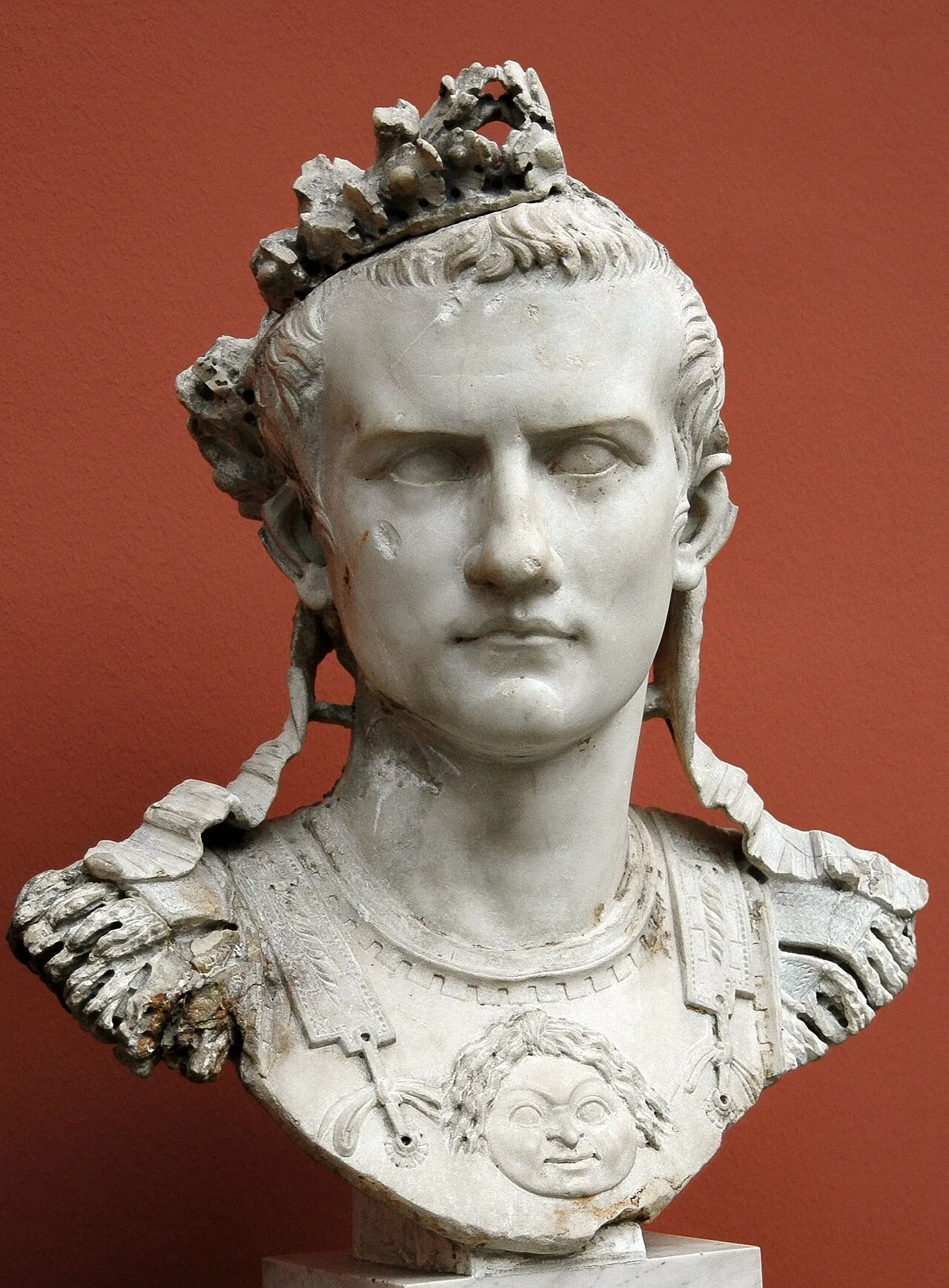
Caligola è passato all'immaginario europeo come l'archetipo della tirannia perversa: un'icona più potente di Tiberio, di Domiziano, di Commodo. La damnatio memoriae votata dal Senato erasò le sue iscrizioni e fece distruggere le sue statue, ma la sua leggenda, rinforzata dagli storici flavî e antonini per legittimare le dinastie successive, sopravvisse intatta. Albert Camus ne fece il protagonista del suo dramma Caligula (1945), interpretandolo come il filosofo dell'assurdo che porta alle estreme conseguenze il principio "tutto è permesso". Il film Caligola di Tinto Brass (1979), prodotto da Bob Guccione, ne fece simbolo di una pornografia decadente. La serie televisiva I, Claudius di Robert Graves (1976) restò il ritratto più sfumato e psicologicamente penetrante.
Caligula has passed into the European imagination as the archetype of perverse tyranny: an icon more powerful than Tiberius, Domitian, or Commodus. The damnatio memoriae voted by the Senate erased his inscriptions and had his statues destroyed, but his legend, reinforced by Flavian and Antonine historians to legitimise the subsequent dynasties, survived intact. Albert Camus made him the protagonist of his drama Caligula (1945), interpreting him as the philosopher of the absurd who carries the principle "everything is permitted" to its extreme consequences. Tinto Brass's film Caligula (1979), produced by Bob Guccione, made him a symbol of decadent pornography. Robert Graves's television series I, Claudius (1976) remained the most nuanced and psychologically penetrating portrait.
Forse la sintesi più giusta è quella di Svetonio: scrive che Caligola « univa in sé un principe e un mostro» . I primi sei mesi del 37 d.C. sono il principe ideale: giovane, generoso, popolare, riformatore. I tre anni successivi sono il mostro: assoluto, megalomane, vendicativo, sadico. Le due figure sono lo stesso uomo, separato in mezzo da una malattia di due settimane nell'ottobre del 37 d.C. che cambiò per sempre la storia di Roma e della tirannia europea.
Perhaps the most just synthesis is Suetonius's: he writes that Caligula « combined in himself a prince and a monster» . The first six months of 37 AD are the ideal prince: young, generous, popular, reformer. The three following years are the monster: absolute, megalomaniacal, vindictive, sadistic. The two figures are the same man, separated by a two-week illness in October 37 AD that changed forever the history of Rome and of European tyranny.