01BiografiaBiography
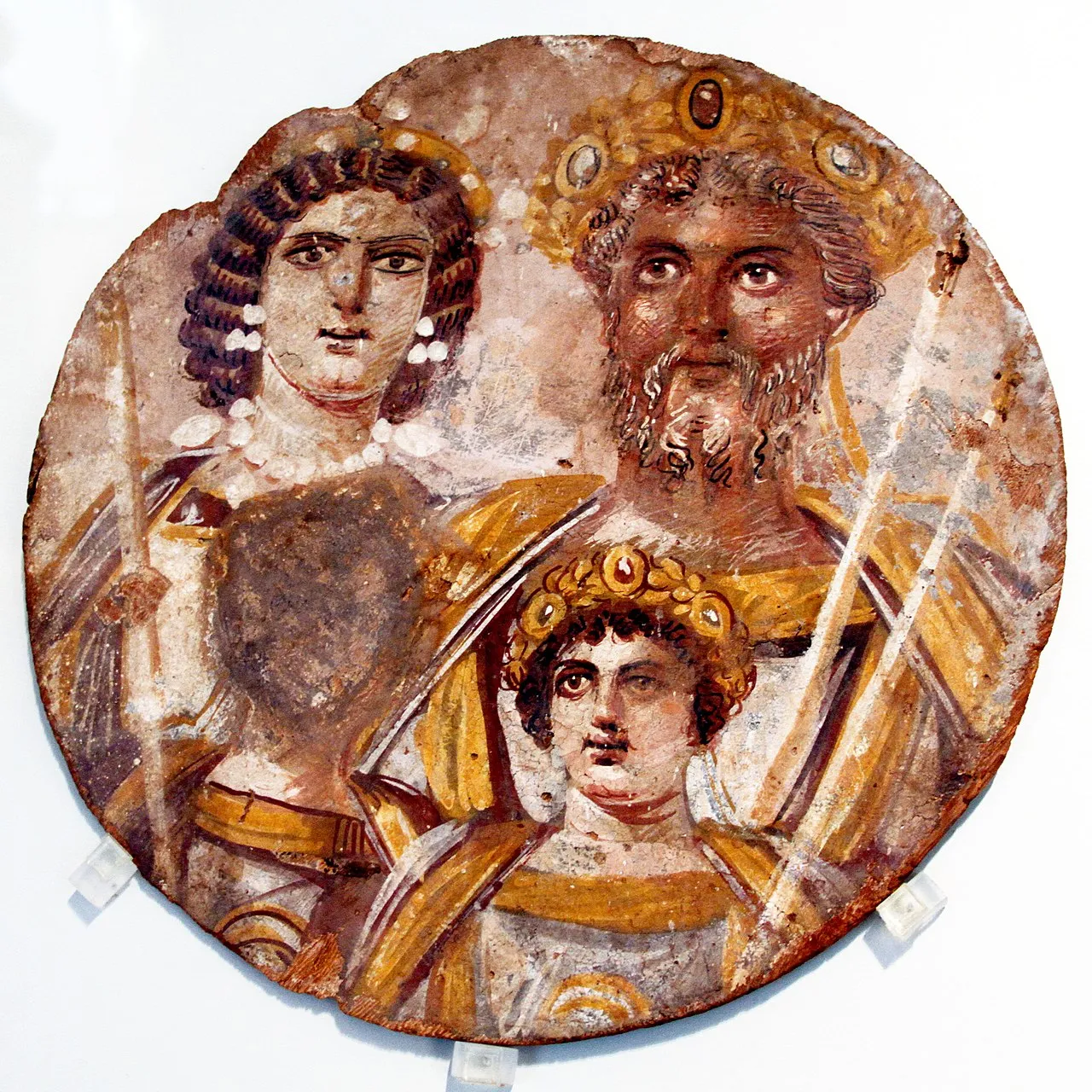
Il soprannome "Caracalla" derivava da un mantello gallico che l'imperatore indossava abitualmente e aveva distribuito al popolo di Roma: un gesto populista che lo aveva reso amato dalla plebe. Il suo vero nome era Marco Aurelio Antonino: prese il nome del grande imperatore filosofo per legittimare la propria stirpe. Figlio di Settimio Severo e di Giulia Domna, siriana di Emesa, era di sangue africano, siriano, e gallico insieme.
The nickname "Caracalla" came from a Gallic cloak the emperor habitually wore and had distributed to the people of Rome: a populist gesture that had made him beloved by the plebs. His real name was Marcus Aurelius Antoninus: he took the name of the great philosopher emperor to legitimize his lineage. Son of Septimius Severus and Julia Domna, a Syrian from Emesa, he was of African, Syrian, and Gallic blood combined.
L'Infanzia in GuerraA Childhood in Wartime
Marco Aurelio Bassiano nacque il 4 aprile del 188 d.C. a Lugdunum (Lione), dove il padre era governatore della Gallia. La sua infanzia si svolse a seguito dell'esercito: nelle guerre civili contro Pescennio Nigro (193–194) e Clodio Albino (196–197) il piccolo Bassiano fu portato in marcia, a dieci anni vide la battaglia di Lugdunum, e a undici fu già Caesar (196), poi Augustus (198), associato al trono dal padre. Crebbe nella convinzione che la spada fosse l'unico fondamento del potere: esatto rovescio di quanto Marco Aurelio aveva creduto.
Marcus Aurelius Bassianus was born on April 4, 188 AD at Lugdunum (Lyon), where his father was governor of Gaul. His childhood unfolded in the army's train: in the civil wars against Pescennius Niger (193–194) and Clodius Albinus (196–197) the small Bassianus was carried on campaign, at ten he saw the battle of Lugdunum, and at eleven he was already Caesar (196), then Augustus (198), associated with the throne by his father. He grew up in the conviction that the sword was the only foundation of power: the exact reverse of what Marcus Aurelius had believed.
L'Odio FraternoThe Brotherly Hatred
Geta nacque undici mesi dopo Bassiano. Cassio Dione, testimone della corte, racconta che i due fratelli si odiarono fin dall'infanzia: gareggiavano nella corsa dei carri al circo (ciascuno tifoso d'una fazione opposta), nei combattimenti tra galli da combattimento, perfino nelle dispute giuridiche al fianco del padre. Settimio Severo, sul letto di morte a Eboracum (York) nel 211, li esortò alla concordia con la celebre frase: «Concordes estote, milites locupletate, ceteros despicite». Aveva colto l'imminente fallimento del proprio piano dinastico. Caracalla e Geta governarono come co-Augusti per soli dieci mesi: la corte fu divisa in due metà nel palazzo del Palatino, con residenze e guardie separate. Si pensò perfino di spartire formalmente l'impero: Caracalla l'Occidente, Geta l'Oriente. Giulia Domna riuscì a riunirli per una riconciliazione il 26 dicembre 211. Era una trappola.
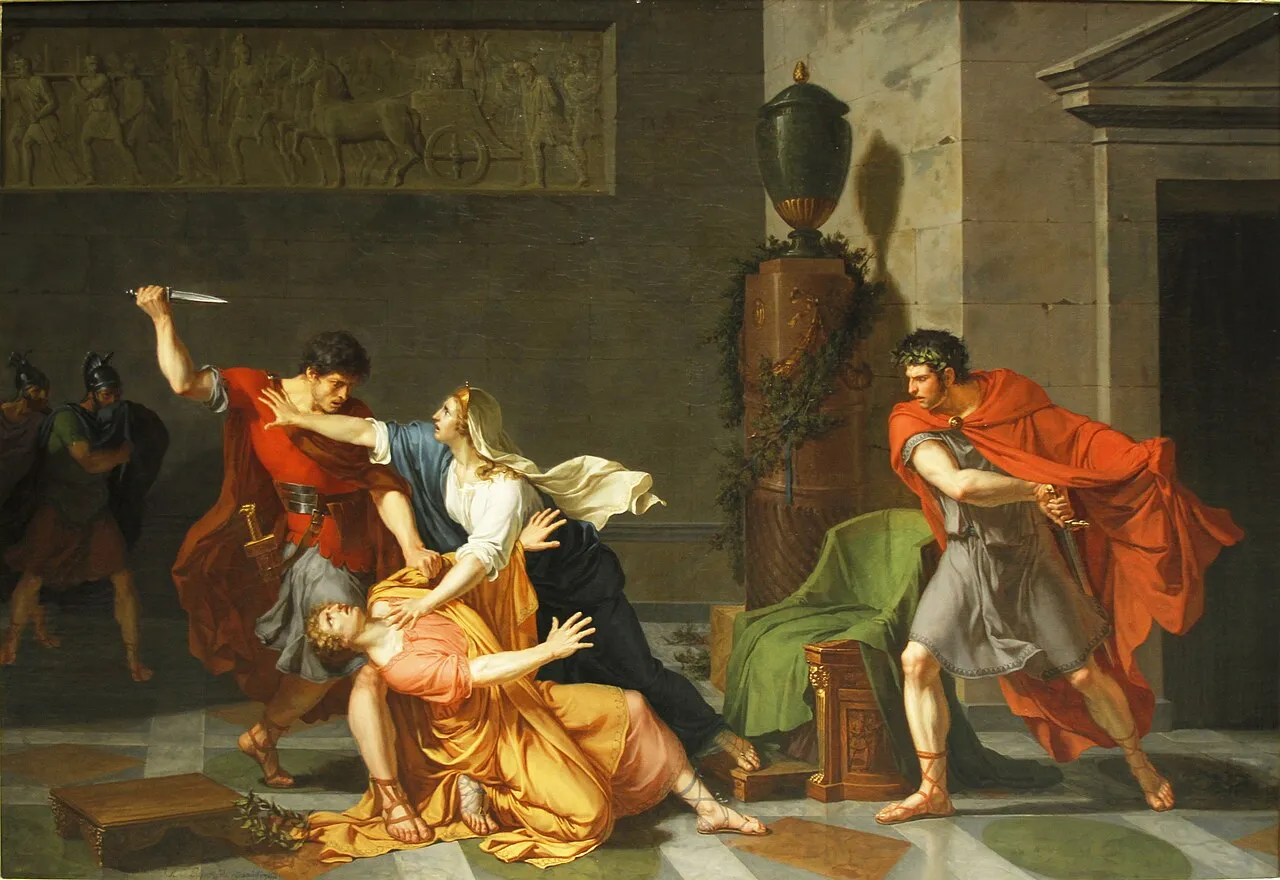
Geta was born eleven months after Bassianus. Cassius Dio, court witness, recounts that the two brothers hated each other from childhood: they competed in chariot racing at the circus (each supporter of an opposing faction), in cockfights, even in juridical disputes alongside their father. Septimius Severus, on his deathbed at Eboracum (York) in 211, exhorted them to harmony with the famous phrase: «Concordes estote, milites locupletate, ceteros despicite». He had grasped the imminent failure of his own dynastic plan. Caracalla and Geta governed as co-Augusti for only ten months: the court was divided into two halves in the Palatine palace, with separate residences and guards. There was even thought of formally partitioning the empire: Caracalla the West, Geta the East. Julia Domna succeeded in reuniting them for a reconciliation on December 26, 211. It was a trap.
Il primo atto del suo regno fu l'assassinio del fratello Geta, ucciso il 26 dicembre del 211 tra le braccia di sua madre. Fu poi proclamata la damnatio memoriae di Geta: il suo nome fu scalpellato da tutte le iscrizioni, i suoi ritratti ridipinti. Si stima che circa 20.000 persone legate a Geta furono uccise nei giorni seguenti. Caracalla fu assassinato nel 217 durante la campagna partica, ucciso da un soldato mentre si fermava a urinare, su istigazione del prefetto del pretorio Macrino.
The first act of his reign was the assassination of his brother Geta, killed on December 26, 211 in his mother's arms. The damnatio memoriae of Geta was then proclaimed: his name was chiseled from all inscriptions, his portraits repainted. An estimated 20,000 people connected to Geta were killed in the following days. Caracalla was assassinated in 217 during the Parthian campaign, killed by a soldier while stopping to urinate, at the instigation of the praetorian prefect Macrinus.
02Editto di Caracalla (212 d.C.)Edict of Caracalla (212 AD)
La Constitutio Antoniniana del 212 d.C. estese la cittadinanza romana a tutti gli uomini liberi dell'Impero: circa 30 milioni di persone in un solo decreto. Era il completamento di un processo iniziato secoli prima, quando la cittadinanza si era espansa gradualmente dall'Italia alle province. Con un solo atto, ogni uomo libero che viveva entro i confini dell'Impero diventò civis Romanus.
The Constitutio Antoniniana of 212 AD extended Roman citizenship to all free men of the Empire, approximately 30 million people in a single decree. It was the completion of a process begun centuries earlier, when citizenship had gradually expanded from Italy to the provinces. With a single act, every free man living within the Empire's borders became a civis Romanus.
Le motivazioni di Caracalla erano probabilmente fiscali, i cittadini romani pagavano tasse che i non-cittadini evitavano, ma le conseguenze furono enormi: uniformità giuridica in tutto l'Impero, fine del doppio sistema di diritto, e il senso che Roma non fosse più una città ma un'idea universale.
Caracalla's motivations were probably fiscal, Roman citizens paid taxes that non-citizens avoided, but the consequences were enormous: legal uniformity throughout the Empire, end of the dual legal system, and the sense that Rome was no longer a city but a universal idea.
Il Papiro di GiessenThe Giessen Papyrus
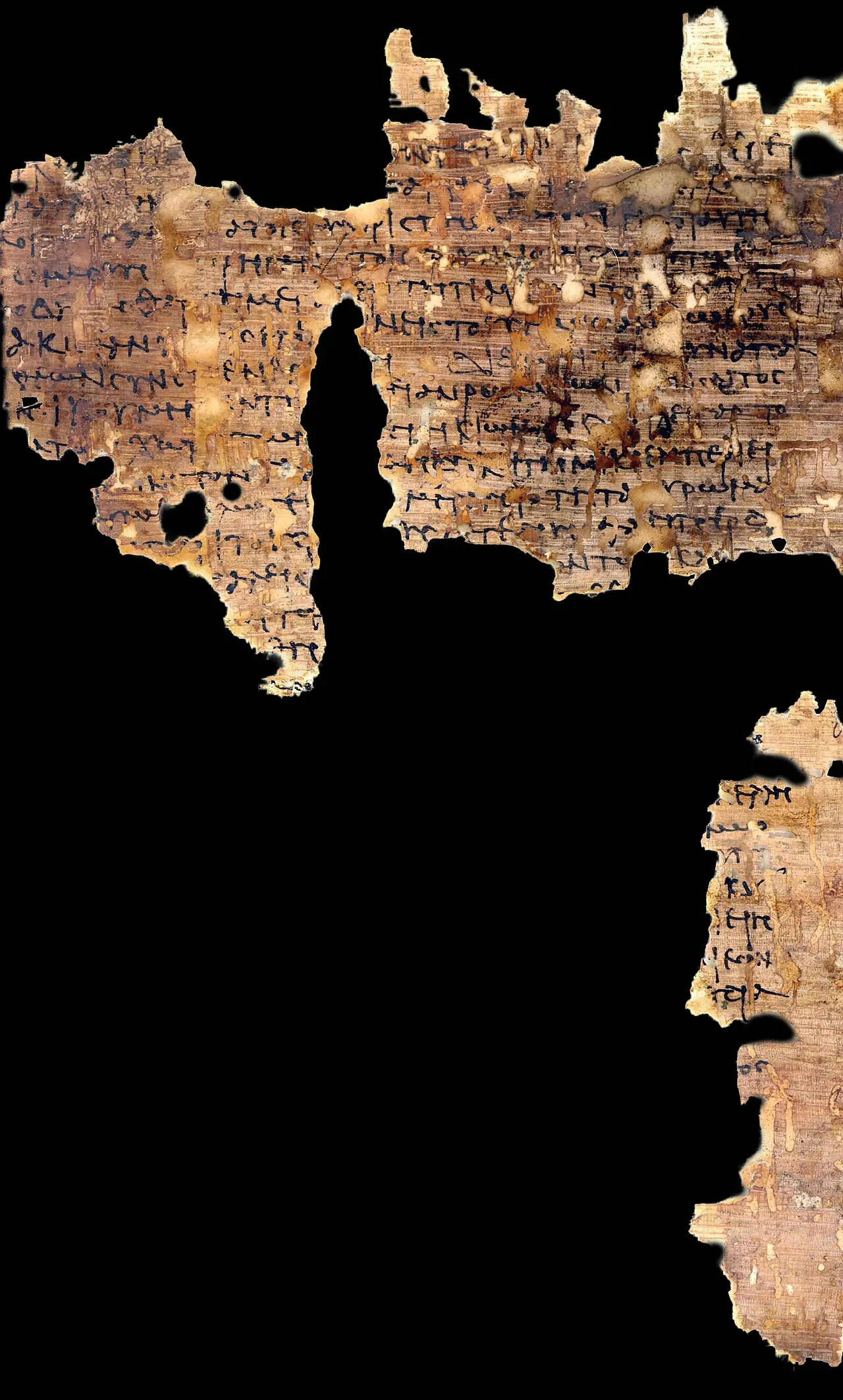
Il testo originale dell'editto non ci è giunto attraverso i grandi storici (Cassio Dione lo accenna in poche righe), ma da un papiro frammentario rinvenuto nel 1910 a Giessen, Germania: P.Giss. 40. Vi si legge: «do a tutti coloro che vivono nel mondo romano la cittadinanza dei Romani, restando salvi i diritti delle comunità, eccetto quelli dei dediticii». L'enigmatica esclusione dei dediticii (probabilmente i barbari arruolati come ausiliari) ha alimentato decenni di dibattiti storiografici.
The original text of the edict has not come down to us through the great historians (Cassius Dio mentions it in a few lines), but from a fragmentary papyrus found in 1910 at Giessen, Germany: P.Giss. 40. It reads: «I give to all those who live in the Roman world the citizenship of the Romans, the rights of communities remaining intact, except those of the dediticii». The enigmatic exclusion of the dediticii (probably barbarian recruits enlisted as auxiliaries) has fueled decades of historiographical debate.
L'Impatto OnomasticoThe Onomastic Impact
Da quel giorno, ogni neo-cittadino aggiunse al proprio nome Marcus Aurelius , il nome ufficiale di Caracalla. Le iscrizioni dei decenni successivi mostrano milioni di Marci Aurelii in Egitto, Siria, Africa: un fenomeno onomastico senza precedenti, riflesso materiale dell'editto. Per gli storici è una delle prove archeologiche più solide dell'effettiva applicazione della Constitutio.
From that day, every new citizen added to their name Marcus Aurelius, Caracalla's official name. Inscriptions of the following decades show millions of Marci Aurelii in Egypt, Syria, Africa: an unprecedented onomastic phenomenon, material reflection of the edict. For historians it is one of the most solid archaeological proofs of the actual application of the Constitutio.
03Le Terme di CaracallaThe Baths of Caracalla
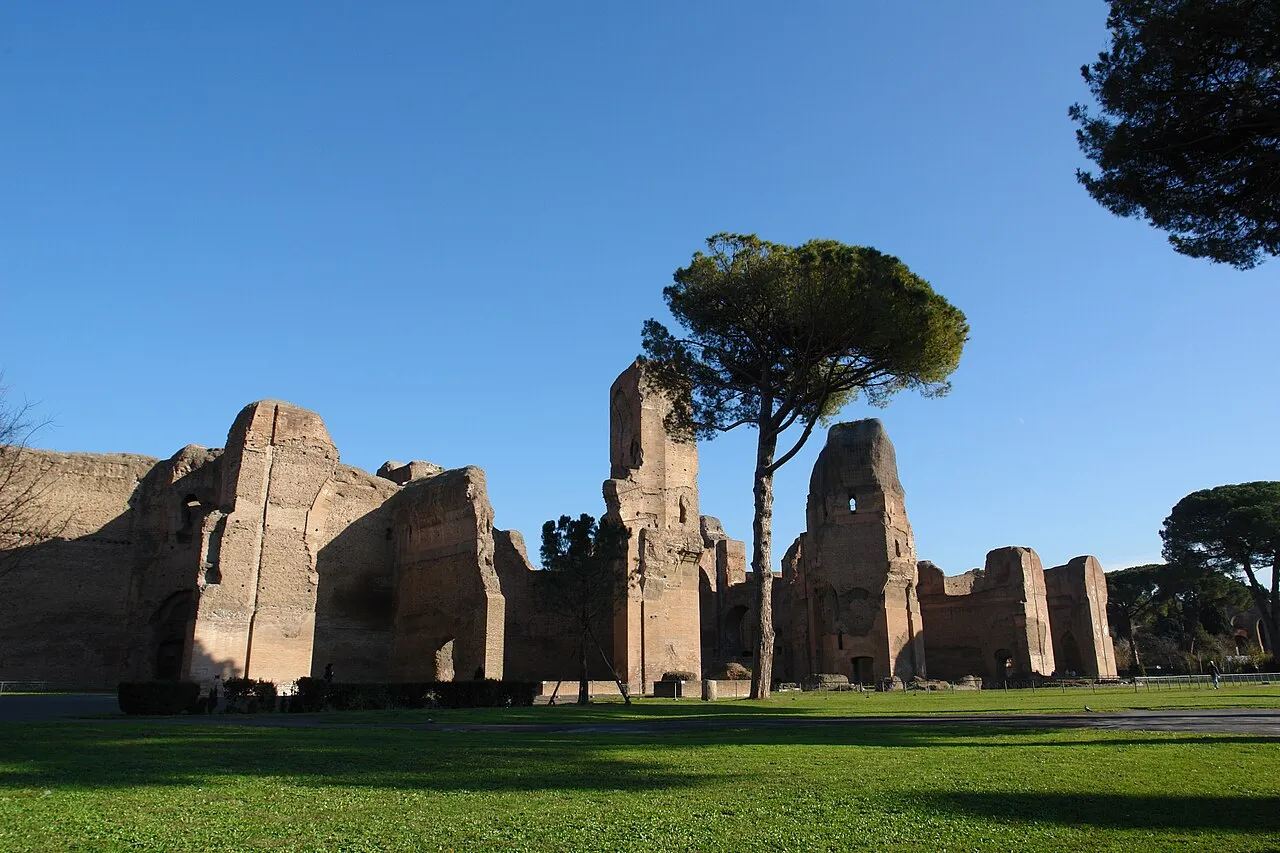
Le Terme di Caracalla, inaugurate nel 216 d.C. e ultimate dai successori, sono la più grande opera termale della storia romana: 11 ettari di superficie, capaci di accogliere simultaneamente 1.600 bagnanti. Comprendevano piscine fredde, tiepide e calde, palestre, biblioteche, giardini, mosaici e statue. Ancora oggi le loro rovine a Roma sono tra le più imponenti dell'antichità, e ospitano spettacoli d'opera d'estate.
The Baths of Caracalla, inaugurated in 216 AD and completed by his successors, are the largest bathing complex in Roman history: 11 hectares of surface area, capable of accommodating 1,600 bathers simultaneously. They included cold, warm, and hot pools, gymnasiums, libraries, gardens, mosaics and statues. Their ruins in Rome are still among the most imposing of antiquity, and host opera performances in summer.
04L'Assassinio (8 aprile 217)The Assassination (8 April 217)
Caracalla aveva un'ossessione: emulare Alessandro Magno. Si fece costruire una falange macedone, conservò una spada che credeva fosse appartenuta al conquistatore, dichiarò di esserne la reincarnazione. Nel 216 marciò contro i Parti senza una vera causa iusta, dopo aver brutalmente massacrato la popolazione di Alessandria d'Egitto (dicembre 215): i giovani della città lo avevano deriso con epigrammi su Geta, ed egli organizzò un finto rito di leva militare nel ginnasio per poi farli circondare e trucidare dall'esercito. Cassio Dione stima i morti in «decine di migliaia».
Caracalla had an obsession: to emulate Alexander the Great. He had a Macedonian phalanx built, kept a sword he believed had belonged to the conqueror, declared himself his reincarnation. In 216 he marched against the Parthians without a genuine iusta causa, after having brutally massacred the population of Alexandria in Egypt (December 215): the young men of the city had mocked him with epigrams about Geta, and he organized a fake military levy ceremony in the gymnasium then had them surrounded and slaughtered by the army. Cassius Dio estimates the dead at «tens of thousands».
L'Agguato di CarreThe Ambush at Carrhae
L'8 aprile del 217 d.C., presso la città di Carre (Harran, Mesopotamia), esattamente dove duecentosessantatré anni prima i Parti avevano annientato Crasso, Caracalla si trovava in viaggio fra il campo militare e il tempio della Luna. Sentì il bisogno di urinare e si allontanò sulla strada con la sola scorta di pochi cavalieri. Un soldato del proprio seguito, il centurione Marziale, gli si avvicinò fingendo di volergli parlare, estrasse un pugnale e lo accoltellò alla schiena. Caracalla morì all'istante. Marziale fu ucciso a sua volta dai pretoriani, ma la mente dietro l'attentato era il prefetto del pretorio Marco Opellio Macrino, che aveva intercettato una lettera in cui Caracalla gli annunciava il proprio sospetto e l'imminente arresto.
On April 8, 217 AD, near the city of Carrhae (Harran, Mesopotamia), exactly where two hundred and sixty-three years earlier the Parthians had annihilated Crassus, Caracalla was traveling between the military camp and the temple of the Moon. He felt the need to urinate and moved off down the road with only an escort of a few horsemen. A soldier from his own entourage, the centurion Martialis, approached him pretending to wish to speak, drew a dagger and stabbed him in the back. Caracalla died instantly. Martialis was killed in turn by the praetorians, but the mind behind the attack was praetorian prefect Marcus Opellius Macrinus, who had intercepted a letter in which Caracalla announced his suspicion and the imminent arrest.
Giulia Domna, già malata, ricevette la notizia ad Antiochia. Si lasciò morire di inedia poche settimane dopo. Era il crollo del cuore dinastico dei Severi. La sorella Giulia Mesa avrebbe presto orchestrato il colpo di stato che porterà al trono il nipote tredicenne Elagabalo (218).
Julia Domna, already ill, received the news at Antioch. She let herself die of starvation a few weeks later. It was the collapse of the dynastic heart of the Severans. Her sister Julia Maesa would soon orchestrate the coup that brought to the throne the thirteen-year-old nephew Elagabalus (218).
05Eredità e Giudizio StoricoLegacy and Historical Judgement
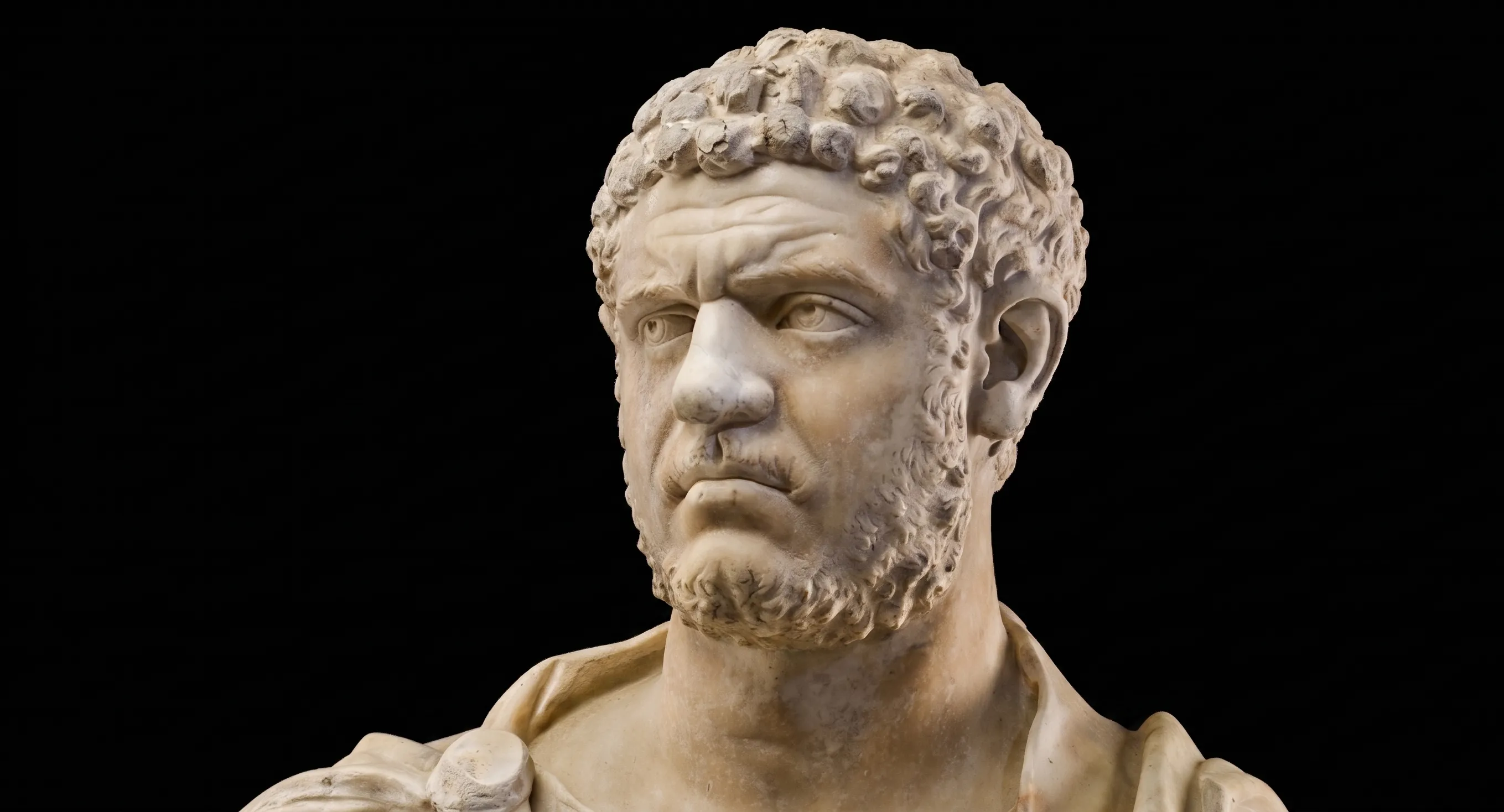
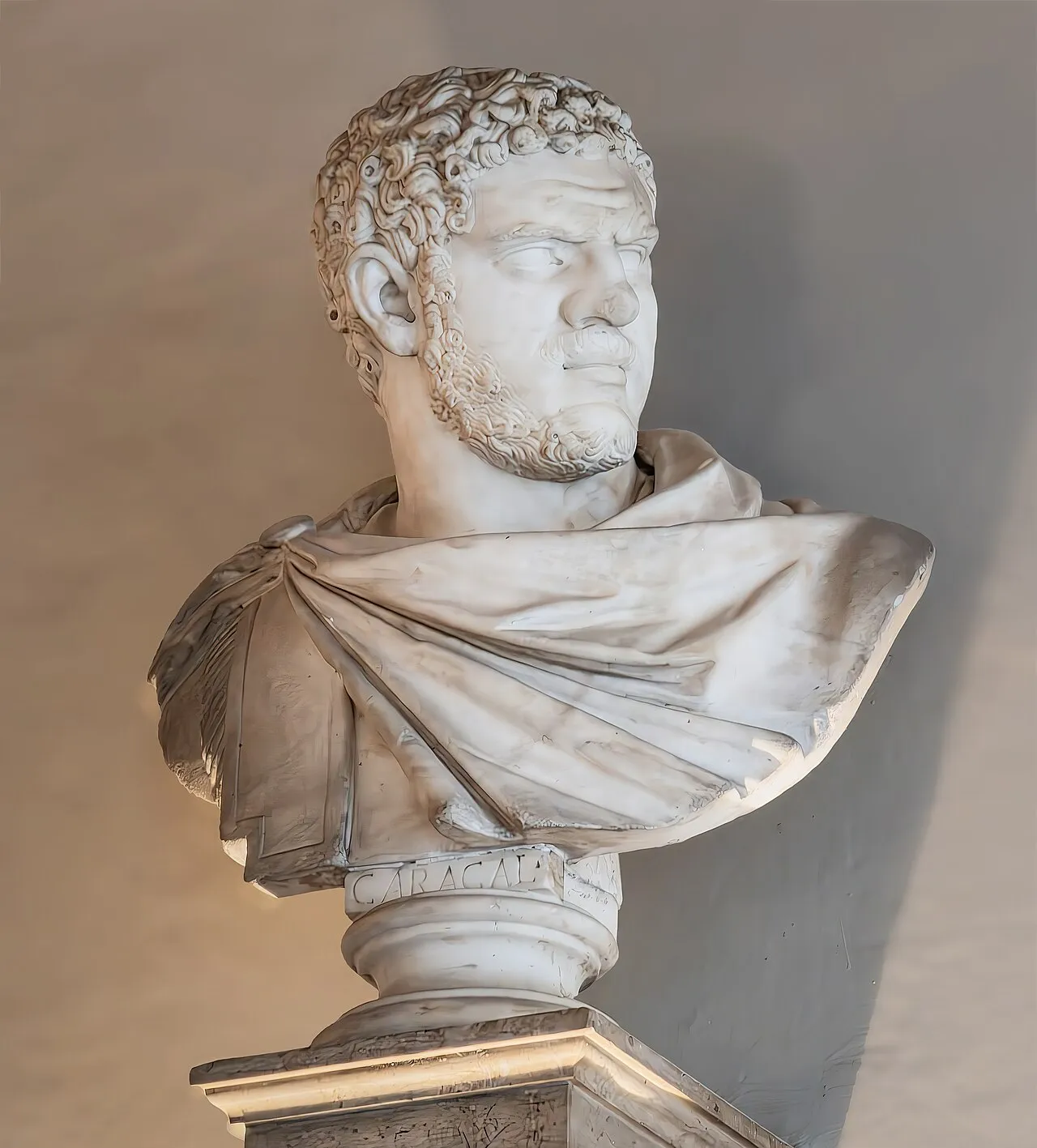
Caracalla è uno degli imperatori più contraddittori della storia romana: fratricida, tiranno, massacratore, e autore di uno degli atti giuridici più rivoluzionari dell'antichità. La Constitutio Antoniniana ha trasformato il concetto stesso di cittadinanza e ha posto le basi per quello che oggi chiamiamo diritto universale. La sua ambivalenza è riassunta nel suo stesso busto: l'espressione torva, la piega ostile della bocca, il ritratto di un uomo che sapeva di essere odiato e aveva smesso di preoccuparsene.
Caracalla is one of the most contradictory emperors in Roman history: fratricide, tyrant, massacrer, and author of one of the most revolutionary legal acts of antiquity. The Constitutio Antoniniana transformed the very concept of citizenship and laid the groundwork for what we today call universal law. His ambivalence is summarized in his own bust: the scowling expression, the hostile set of his mouth, the portrait of a man who knew he was hated and had stopped caring.
Il Ritratto UfficialeThe Official Portrait
Caracalla inaugurò un nuovo linguaggio scultoreo imperiale. Le sue effigi, in particolare il celebre busto del Museo Archeologico di Napoli, abbandonano l'idealizzazione antonina e ritraggono l'imperatore con la testa girata di scatto, la fronte aggrottata, lo sguardo torvo: una iconografia della minaccia. Gli storici dell'arte (Bianchi Bandinelli, Hannestad) hanno identificato in questo modello il prototipo del ritratto militare che dominerà il III secolo fino all'iconografia tetrarchica.
Caracalla inaugurated a new imperial sculptural language. His effigies, particularly the famous bust at the National Archaeological Museum of Naples, abandon the Antonine idealization and portray the emperor with the head sharply turned, the brow furrowed, the gaze grim: an iconography of threat. Art historians (Bianchi Bandinelli, Hannestad) have identified in this model the prototype of the military portrait that will dominate the third century down to the Tetrarchic iconography.
Dibattito StoriograficoHistoriographical Debate
Edward Gibbon lo definì «il nemico comune dell'umanità» e ne fece il simbolo della degenerazione del principato. Lo storico tedesco Ernst Kornemann lo riabilitò parzialmente, vedendo nella Constitutio «l'atto giuridico più audace dell'antichità». Per Anthony Birley, suo biografo contemporaneo (2002), Caracalla è «il tiranno fortunato»: morto giovane, lasciò ai successori il caos e ai posteri un'unica grande riforma che lo rende storicamente indispensabile, malgrado tutto.
Edward Gibbon defined him as «the common enemy of mankind» and made him the symbol of the principate's degeneration. The German historian Ernst Kornemann partially rehabilitated him, seeing in the Constitutio «the boldest juridical act of antiquity». For Anthony Birley, his contemporary biographer (2002), Caracalla is «the lucky tyrant»: dead young, he left successors chaos and posterity a single great reform that makes him historically indispensable, despite everything.