
01Il Difensore dei BalcaniThe Defender of the Balkans
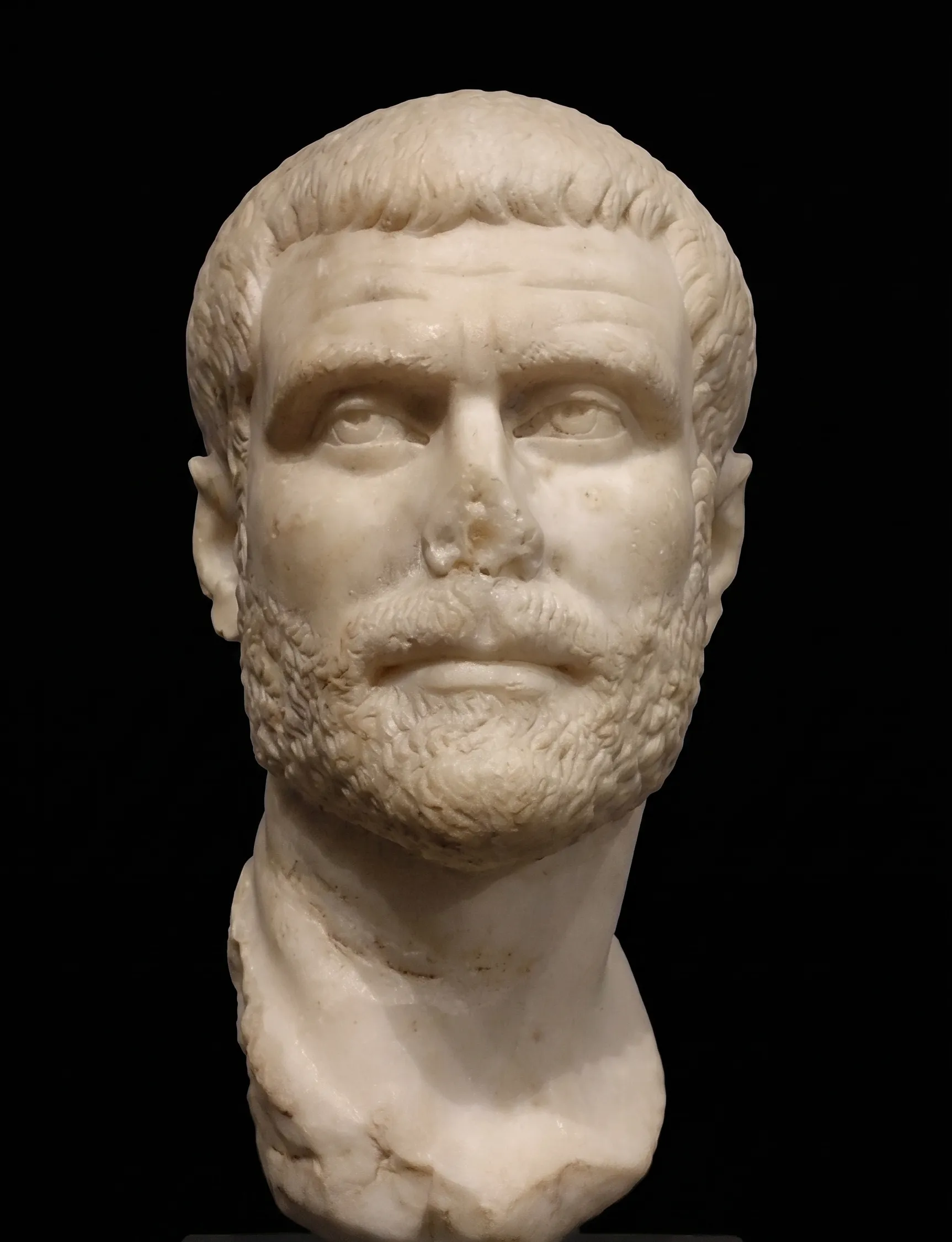
Marco Aurelio Claudio era un generale illirico di origini umili, uno dei migliori comandanti dell'esercito romano. Aveva partecipato alla congiura contro Gallieno e fu proclamato imperatore a Milano nel 268. Subito dovette fronteggiare la più grande invasione gotica della storia: sotto il re Cnaebo, un esercito goto di trecentomila uomini, o forse trecentomila guerrieri e famiglie al seguito, aveva attraversato il Danubio e invaso i Balcani. Claudio li affrontò con un esercito molto più piccolo ma meglio organizzato e guidato da ufficiali di eccezionale qualità.
Marcus Aurelius Claudius was an Illyrian general of humble origins, one of the Roman army's best commanders. He had participated in the conspiracy against Gallienus and was proclaimed emperor at Milan in 268. Immediately he had to face the greatest Gothic invasion in history: under King Cniva, a Gothic army of three hundred thousand men, or perhaps three hundred thousand warriors and families in tow, had crossed the Danube and invaded the Balkans. Claudius faced them with a much smaller but better organized army led by officers of exceptional quality.
Il Primo Imperatore IlliricoThe First Illyrian Emperor
Marco Aurelio Valerio Claudio nacque nel 213 d.C. a Sirmio (l'odierna Sremska Mitrovica, Serbia) in Pannonia Inferiore. Era figlio di contadini illirici, una stirpe di soldati guerrieri che dal 235 in poi avrebbe fornito a Roma quasi tutti i suoi grandi imperatori «illirici»: Decio, Aureliano, Probo, Diocleziano, Costantino. Era alto, fortissimo, di carattere severo; di sé diceva di vergognarsi delle proprie origini umili. Studiò solo lo stretto necessario di latino e greco, ma, secondo l'Historia Augusta, conosceva ogni mossa tattica delle legioni come pochi altri. Sotto Decio servì nella guerra gotica del 250, sotto Valeriano nella campagna persiana del 257, sotto Gallieno divenne magister equitum (comandante della cavalleria d'élite): il vero secondo uomo dell'Impero per anni.
Marcus Aurelius Valerius Claudius was born in 213 AD at Sirmium (modern Sremska Mitrovica, Serbia) in Lower Pannonia. He was the son of Illyrian peasants, a stock of soldier-warriors that from 235 onward would provide Rome with almost all its great «Illyrian» emperors: Decius, Aurelian, Probus, Diocletian, Constantine. He was tall, very strong, of severe character; he said he was ashamed of his humble origins. He studied only the strictly necessary Latin and Greek, but, according to the Historia Augusta, he knew every tactical move of the legions like few others. Under Decius he served in the Gothic war of 250, under Valerian in the Persian campaign of 257, under Gallienus he became magister equitum (commander of the elite cavalry): the Empire's real second man for years.
La Congiura di Mediolanum (268)The Mediolanum Conspiracy (268)
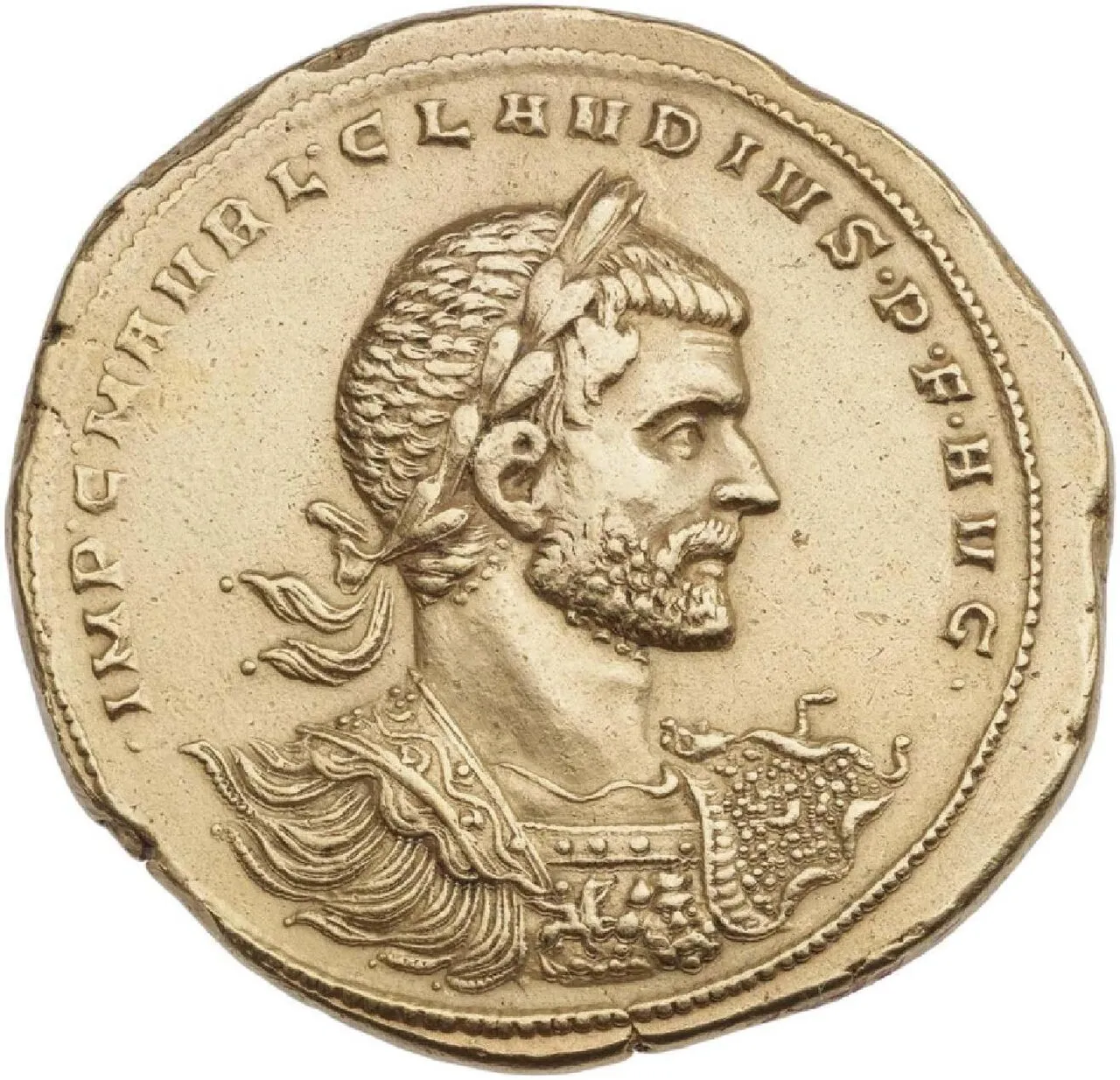
Claudio fu il leader politico, non il solo esecutore, della congiura che assassinò Gallieno durante l'assedio di Aureolo a Milano. Le fonti sono concordi: dopo l'omicidio, fu lui che ordinò ai soldati di acclamare la propria proclamazione, prevenendo il caos di un'elezione competitiva. Aureliano e gli altri congiurati lo riconobbero senza esitazioni, non solo per merito militare, ma perché era il più anziano (55 anni nel 268), il più rispettato, e l'unico che potesse affermare la legittimità senza scatenare gelosie interne. Il Senato di Roma, che aveva odiato Gallieno, lo ratificò con entusiasmo: gli votò il titolo di Pater Patriae e ordinò la damnatio memoriae del predecessore (poi revocata in parte). Era la prima volta che il Senato fosse autorizzato a colpire la memoria di un imperatore deificato dai pretoriani.
Claudius was the political leader, not the sole executor, of the conspiracy that assassinated Gallienus during the siege of Aureolus at Milan. Sources agree: after the murder, it was he who ordered the soldiers to acclaim his proclamation, preventing the chaos of a competitive election. Aurelian and the other conspirators recognized him without hesitation, not only for military merit, but because he was the oldest (55 years old in 268), the most respected, and the only one who could affirm legitimacy without unleashing internal jealousies. The Senate of Rome, which had hated Gallienus, ratified him enthusiastically: it voted him the title of Pater Patriae and ordered the damnatio memoriae of the predecessor (later partially revoked). It was the first time the Senate was authorized to strike the memory of an emperor deified by the praetorians.
02Naissus e la Fine della Crisi GoticaNaissus and the End of the Gothic Crisis
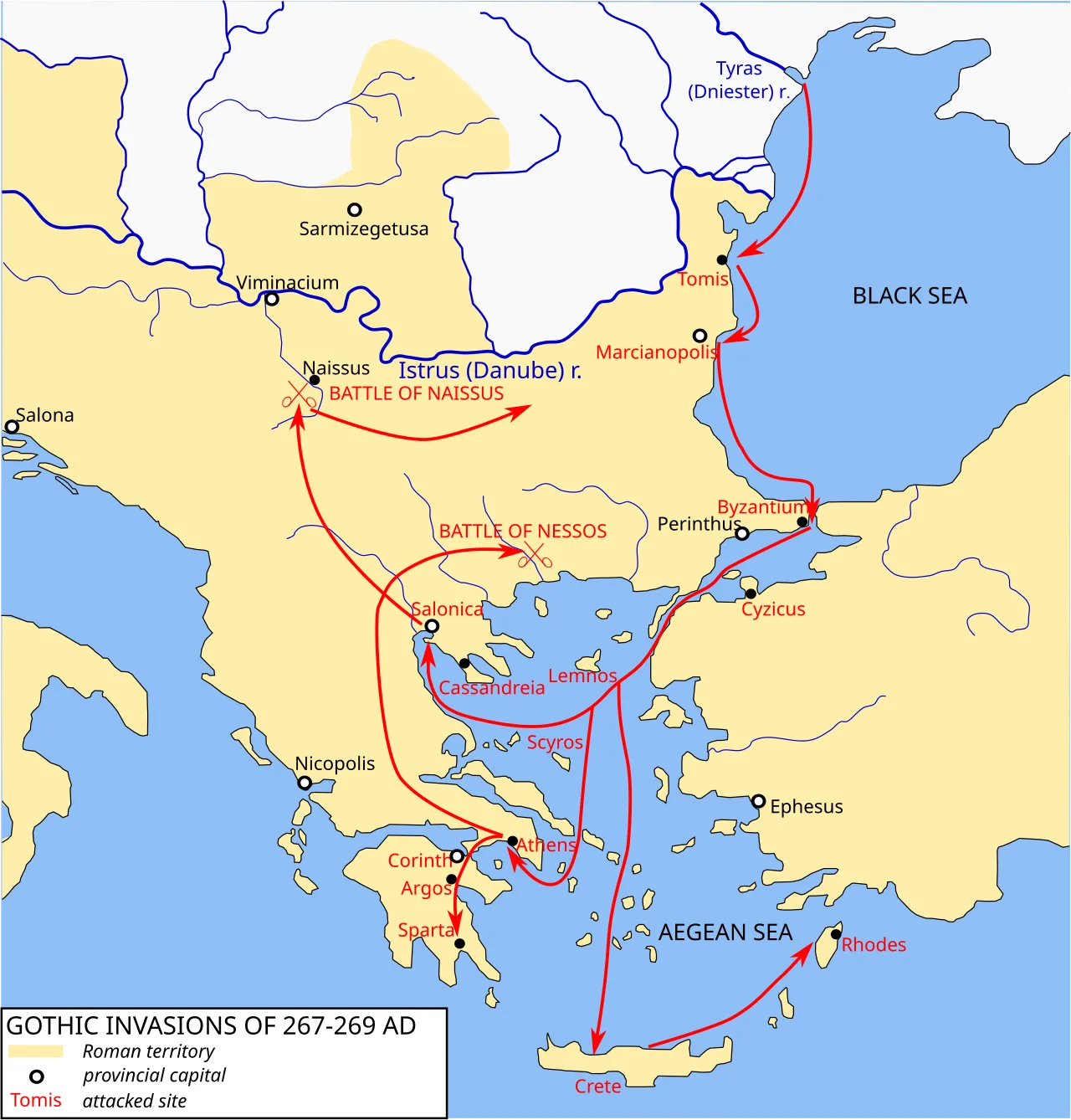
Nella primavera del 269, Claudio II incontrò i Goti nei pressi di Naissus (odierna Niš, Serbia). La battaglia fu epica: i Romani attirarono i Goti in un vallata con una finta ritirata, poi li accerchiarono e li massacrarono. Le fonti parlano di trecentoventi o trecentocinquantamila Goti morti o catturati, numeri probabilmente esagerati ma che riflettono comunque una disfatta totale. Claudio ricevette il titolo di onore "Gothicus Maximus". La minaccia gotica nei Balcani fu eliminata per una generazione. Ma durante la campagna di pulizia che seguì, la peste di Cipriano colpì il campo romano. Claudio II, come molti dei suoi soldati, fu contagiato e morì a Sirmium nel gennaio del 270, pochi mesi prima di poter raccogliere i frutti della sua vittoria.
In spring 269, Claudius II met the Goths near Naissus (modern Niš, Serbia). The battle was epic: the Romans lured the Goths into a valley with a feigned retreat, then surrounded and massacred them. Sources speak of three hundred twenty or three hundred fifty thousand Goths killed or captured, numbers probably exaggerated but still reflecting a total rout. Claudius received the honorary title "Gothicus Maximus." The Gothic threat in the Balkans was eliminated for a generation. But during the following cleanup campaign, the Plague of Cyprian struck the Roman camp. Claudius II, like many of his soldiers, was infected and died at Sirmium in January 270, a few months before he could reap the fruits of his victory.
La Tattica della Finta RitirataThe Feigned-Retreat Tactic
Claudio aveva imparato dalla cavalleria di Gallieno la fuga finta, simulata fuga, tecnica di origine sarmatica adattata dalle legioni romane. A Naissus schierò la fanteria pesante in un'angusta valle fra colline boscose, con i Goti in piano davanti. Quando i Goti caricarono, le legioni romane finsero di rompersi e fuggire risalendo la valle. I Goti, con i loro carriaggi di famiglia e bestiame al seguito, si lanciarono all'inseguimento, perdendo la formazione e disperdendosi. A quel punto la cavalleria romana, nascosta dietro le colline, scese sui fianchi accerchiando l'intera moltitudine. Era il pomeriggio inoltrato: il sole illuminava da ovest i Romani, gettando lunghe ombre sui Goti accecati. Il massacro durò fino al tramonto e nelle ore successive. Zosimo (I, 43) parla di «una valle che si riempì di sangue come un lago».
Claudius had learned from Gallienus's cavalry the feigned retreat, simulata fuga, a technique of Sarmatian origin adapted by the Roman legions. At Naissus he deployed the heavy infantry in a narrow valley between wooded hills, with the Goths on the plain in front. When the Goths charged, the Roman legions pretended to break and flee up the valley. The Goths, with their family wagons and livestock in tow, launched themselves in pursuit, losing formation and dispersing. At that point Roman cavalry, hidden behind the hills, descended on the flanks encircling the entire multitude. It was late afternoon: the sun lit the Romans from the west, casting long shadows on the blinded Goths. The massacre lasted until sunset and in the following hours. Zosimus (I, 43) speaks of «a valley that filled with blood like a lake».
Le Cifre del MassacroThe Massacre Figures
Le fonti antiche oscillano: Historia Augusta (Vita Claudii, 8) parla di 320.000 Goti uccisi; Zosimo di 50.000; Aurelio Vittore di un numero «incalcolabile». Lo storico moderno Pat Southern (The Roman Empire from Severus to Constantine, 2001) ritiene che si tratti probabilmente di 30.000–50.000 morti effettivi in combattimento, oltre a un numero imprecisato di donne, bambini, anziani e bestiame inghiottiti nella rotta. In ogni caso, era la più grande vittoria romana sui Goti dal 251 (anno della morte di Decio) e l'unica fino al 332 (vittoria di Costantino). I prigionieri furono insediati come coloni sui terreni abbandonati della Tracia e della Mesia: primo esperimento di colonatus barbarico su larga scala, modello che i successivi imperatori avrebbero ampliato.
Ancient sources fluctuate: Historia Augusta (Vita Claudii, 8) speaks of 320,000 Goths killed; Zosimus of 50,000; Aurelius Victor of an «incalculable» number. The modern historian Pat Southern (The Roman Empire from Severus to Constantine, 2001) thinks the actual figure is probably 30,000–50,000 combat dead, plus an unspecified number of women, children, elderly and livestock swallowed up in the rout. In any case, it was the greatest Roman victory over the Goths since 251 (year of Decius's death) and the only one until 332 (Constantine's victory). Prisoners were settled as coloni on abandoned lands of Thrace and Moesia, the first large-scale experiment of barbarian colonatus, a model that subsequent emperors would expand.
La Peste a SirmioThe Plague at Sirmium
Durante la campagna di rastrellamento post-Naissus (estate-autunno 269), la peste di Cipriano, l'epidemia virale che falciava l'Impero da vent'anni, scoppiò nel campo romano. Era la stessa malattia che aveva ucciso Ostiliano e che aveva accompagnato Treboniano Gallo. Claudio II contrasse il virus a Sirmio nel dicembre 269 e morì in pochi giorni di gennaio o febbraio 270. Aveva 56 anni e poco più di un anno di regno. Il fratello Quintillo, che amministrava l'Italia, fu acclamato imperatore dai pretoriani, ma regnò appena 17-77 giorni (le fonti variano) prima di morire suicida quando le legioni danubiane proclamarono Aureliano Augusto al campo militare di Sirmio. Aureliano, fedele al sistema di Claudio, gli votò la consecratio: il primo imperatore della Crisi del III secolo a essere divinizzato senza usurpazioni successive.
During the post-Naissus mopping-up campaign (summer-autumn 269), the Plague of Cyprian, the viral epidemic that had been scything down the Empire for twenty years, broke out in the Roman camp. It was the same disease that had killed Hostilian and accompanied Trebonianus Gallus. Claudius II contracted the virus at Sirmium in December 269 and died within a few days in January or February 270. He was 56 years old with just over a year of reign. His brother Quintillus, who administered Italy, was acclaimed emperor by the praetorians, but reigned barely 17–77 days (sources vary) before dying by suicide when the Danubian legions proclaimed Aurelian Augustus at the Sirmium military camp. Aurelian, faithful to Claudius's system, voted him the consecratio: the first emperor of the Third-Century Crisis to be deified without subsequent usurpations.
Il suo successore scelto fu Aureliano. Costantino il Grande, decenni dopo, rivendicò di discendere da Claudio II, un'affermazione quasi certamente inventata, ma che testimonia il prestigio che l'imperatore gotico continuava a godere.
His chosen successor was Aurelian. Constantine the Great, decades later, claimed to descend from Claudius II, an assertion almost certainly invented, but that testifies to the prestige the Gothic emperor continued to enjoy.
La Costruzione CostantinianaThe Constantinian Construction
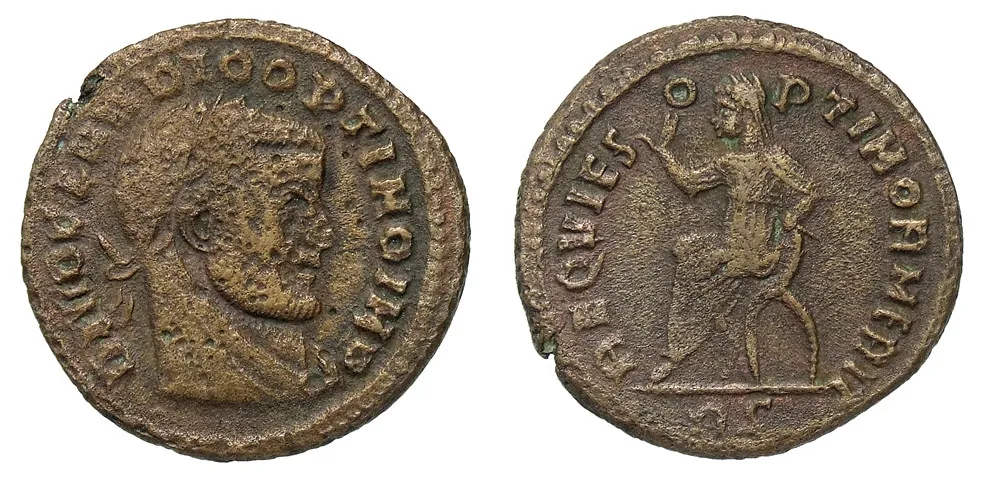
L'affermazione di Costantino di discendere da Claudio II è uno dei più audaci falsi genealogici della storia. Nel 310 d.C., durante una crisi di legittimità con i suoi rivali tetrarchi, Costantino fece pronunciare al panegirista anonimo di Treviri (Panegyrici Latini, VI, 2, 2) la nuova versione: il padre Costanzo Cloro sarebbe stato figlio della figlia di Claudio II. La storia era irreale (Claudio non aveva figli noti), ma fece presa: in poco tempo, le iscrizioni di Diocleziano + Massimiano furono sostituite con dediche ai «Flavi Claudii», nuova dinastia riconnessa al grande generale gotico. Costantino divenne Flavius Claudius Constantinus; suo figlio Costantino II conservò il nome; e per due secoli i sovrani bizantini si firmarono «Flavius» in omaggio retroattivo a Claudio II il Gotico. Era l'impronta più duratura di un imperatore romano sulla storia europea successiva.
Constantine's claim to descend from Claudius II is one of the boldest genealogical forgeries in history. In 310 AD, during a legitimacy crisis with his tetrarchic rivals, Constantine had the anonymous panegyrist of Trier (Panegyrici Latini, VI, 2, 2) pronounce the new version: his father Constantius Chlorus was said to be son of Claudius II's daughter. The story was unreal (Claudius had no known children), but it took hold: in a short time, the inscriptions of Diocletian + Maximian were replaced with dedications to the «Flavii Claudii», a new dynasty reconnected to the great Gothic general. Constantine became Flavius Claudius Constantinus; his son Constantine II kept the name; and for two centuries the Byzantine sovereigns signed themselves «Flavius» in retroactive homage to Claudius II the Goth. It was the most lasting imprint of a Roman emperor on subsequent European history.