01Il Soldato dei SoldatiThe Soldiers' Soldier
Origini illiriche (ca. 214 d.C.)
Illyrian origins (c. 214 AD)
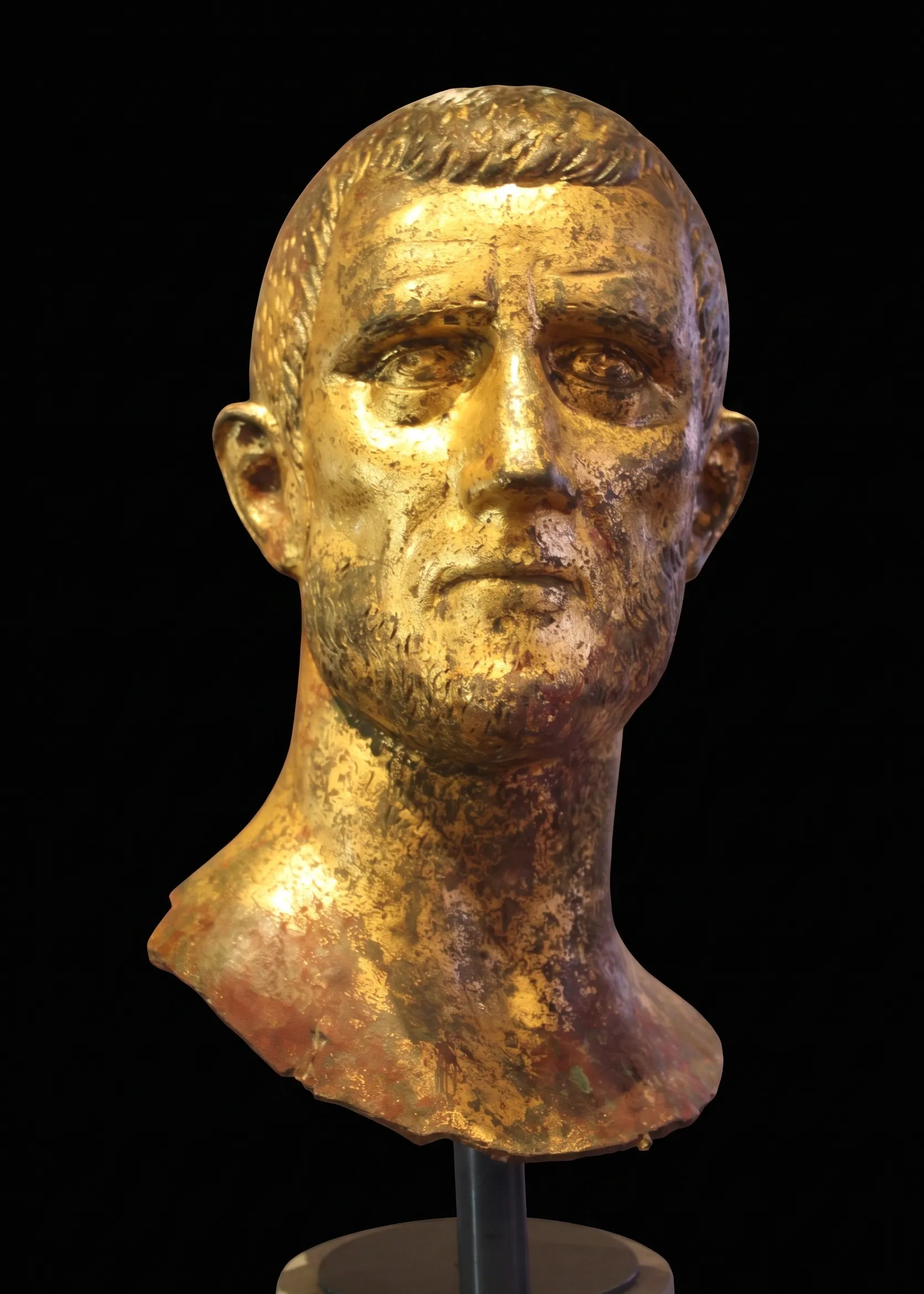
Lucio Domizio Aureliano nacque il 9 settembre del 214 (o 215) d.C. nelle terre di confine della Dacia Ripensis, lungo il corso inferiore del Danubio (odierna Serbia/Bulgaria). Le fonti, soprattutto la tarda e poco affidabile Historia Augusta, concordano su un'origine umile: il padre sarebbe stato un colono nei poderi di un senatore di nome Aurelio, da cui la famiglia avrebbe preso il nomen al momento della manomissione o del cambio di status. Cresciuto in una regione povera e perennemente esposta alle incursioni barbariche, Aureliano apparteneva al ceppo di militari "illirici": Decio, Claudio II, lui stesso, poi Probo e Diocleziano, che nel III secolo salirono dal nulla al trono per pura competenza guerresca. Era alto, asciutto, di poche parole, con una disciplina ferrea verso sé stesso e gli altri. I soldati lo soprannominarono manu ad ferrum, "Mano sulla spada".
Lucius Domitius Aurelianus was born on 9 September 214 (or 215) AD in the borderlands of Dacia Ripensis, along the lower Danube (modern Serbia/Bulgaria). Sources, especially the late and unreliable Historia Augusta, agree on humble origins: his father is said to have been a tenant on the estates of a senator named Aurelius, from whom the family took its nomen. Raised in a poor region constantly exposed to barbarian raids, Aurelian belonged to the lineage of "Illyrian" military men (Decius, Claudius II, himself, then Probus and Diocletian) who in the 3rd century rose from nothing to the throne by sheer warrior competence. He was tall, lean, of few words, with iron self-discipline. His soldiers nicknamed him manu ad ferrum, "Hand on Sword".
L'ascesa nelle armate di Gallieno e Claudio II
Rise under Gallienus and Claudius II
Aureliano entrò nell'esercito come semplice fante e scalò ogni grado per merito. Sotto Gallieno servì nella nuova cavalleria mobile di riserva, l'arma decisiva che permise di tamponare le invasioni del III secolo, partecipando alle vittorie contro Goti e usurpatori. Il suo capolavoro pre-imperiale fu la battaglia di Naissus (269), dove l'esercito di Claudio II annientò un'orda gotica di proporzioni mai viste: cinquantamila barbari morti, secondo le fonti. Aureliano comandò la cavalleria sul fianco destro e fu il vero artefice tattico della vittoria. Da allora fu il numero due dell'impero: Claudio II lo designò di fatto come erede.
Aurelian entered the army as a common foot soldier and climbed every rank on merit. Under Gallienus he served in the new mobile cavalry reserve, the decisive arm that contained the 3rd-century invasions, taking part in victories over Goths and usurpers. His pre-imperial masterpiece was the battle of Naissus (269), where Claudius II's army annihilated a Gothic horde of unprecedented size: fifty thousand barbarians dead, according to the sources. Aurelian commanded the cavalry on the right wing and was the true tactical architect of the victory. From then on he was the empire's number two: Claudius II effectively designated him as heir.
La proclamazione (270 d.C.) e l'eredità ricevuta
Proclamation (270 AD) and the legacy he inherited
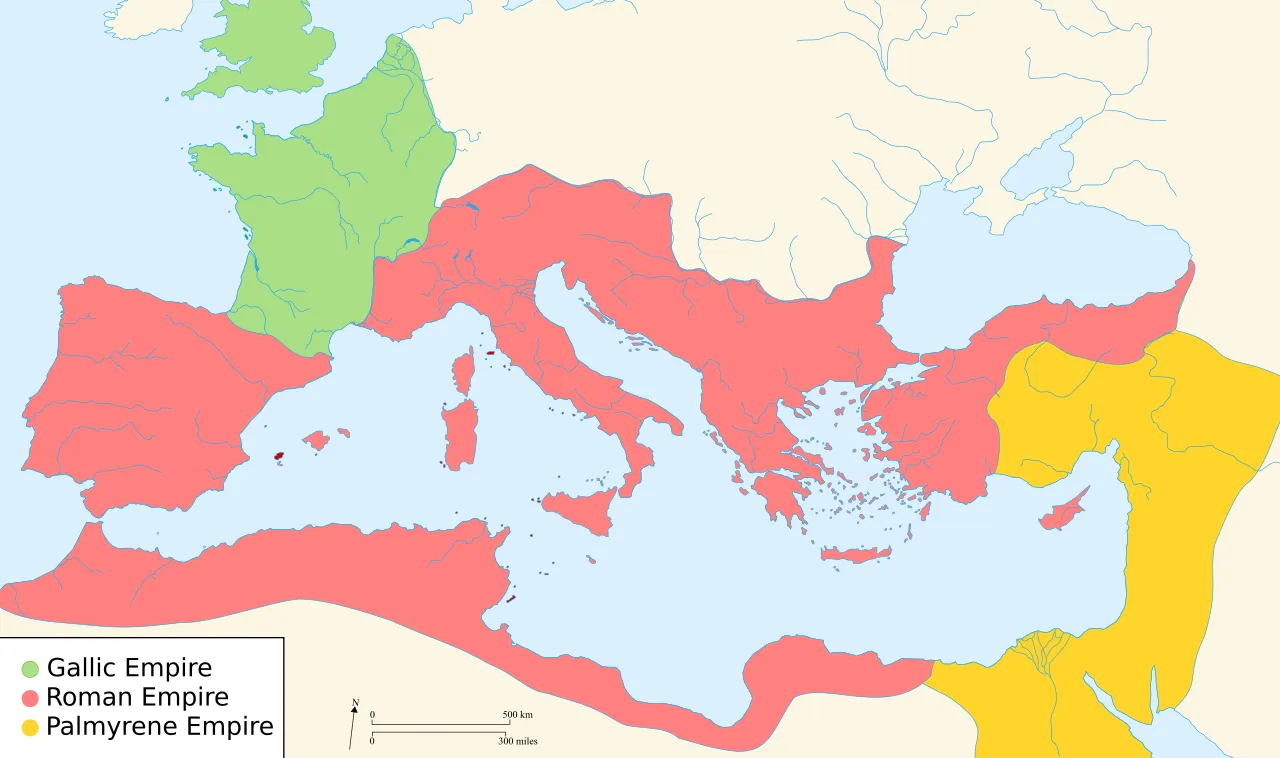
Quando Claudio II morì di peste a Sirmio nel gennaio 270, le legioni del Danubio proclamarono Aureliano imperatore senza esitazione, scartando il fratello del defunto, Quintillo, che si tolse la vita dopo pochi mesi. Aureliano ereditò un Impero spezzato in tre: a occidente l'Impero delle Gallie di Tetrico (Gallia, Britannia, Hispania, dal 260); a oriente il regno di Palmira della regina Zenobia e del figlio Vaballato (Siria, Egitto, gran parte dell'Asia Minore, dal 267); al centro un nucleo italico-balcanico povero, esausto, con la moneta crollata e i Germani (Iutungi, Alemanni, Vandali) che attraversavano le Alpi a piacimento. La maggioranza degli osservatori dava all'Impero pochi anni di vita. In cinque anni Aureliano avrebbe ribaltato tutto.
When Claudius II died of plague at Sirmium in January 270, the Danubian legions proclaimed Aurelian emperor without hesitation, sweeping aside the late emperor's brother Quintillus, who killed himself after a few months. Aurelian inherited an Empire broken into three: in the west, Tetricus's Gallic Empire (Gaul, Britain, Hispania, since 260); in the east, the Palmyrene kingdom of queen Zenobia and her son Vaballathus (Syria, Egypt, much of Asia Minor, since 267); in the centre, a poor and exhausted Italo-Balkan core with collapsed coinage, while the Germans (Iuthungi, Alemanni, Vandals) crossed the Alps at will. Most observers gave the Empire only a few years to live. In five years Aurelian would reverse everything.
« Restitutor Orbis » — Restauratore del Mondo. Era il titolo che il Senato gli concesse nel 274 d.C.: in cinque anni aveva fatto ciò che a tutti era sembrato impossibile. « Restitutor Orbis » — Restorer of the World. It was the title the Senate granted him in 274 AD: in five years he had done what everyone thought impossible. Senatus Populusque Romanus, 274 d.C.
02La Riunificazione dell'ImperoThe Reunification of the Empire
- 270 d.C.L'abbandono della Dacia trasdanubiana — Atto strategico difficile e impopolare: Aureliano evacuò la provincia di Dacia, che Traiano aveva conquistato 165 anni prima, e ritirò le legioni a sud del Danubio creando una nuova "Dacia Aureliana" sulla riva romana. Era la prima provincia mai abbandonata dall'Impero, ma serviva ad accorciare un confine indifendibile e a liberare truppe per le campagne di riunificazione.The abandonment of trans-Danubian Dacia — A hard, unpopular strategic move: Aurelian evacuated the province of Dacia, which Trajan had conquered 165 years earlier, and pulled the legions south of the Danube, creating a new "Aurelian Dacia" on the Roman bank. It was the first province ever abandoned by the Empire, but it shortened an indefensible frontier and freed troops for the reunification campaigns.
- 270–271 d.C.La guerra contro Iutungi e Alemanni — Battaglie di Placentia, Fano e Pavia — Le tribù germaniche degli Iutungi e degli Alemanni invasero l'Italia settentrionale e arrivarono fino al Po. A Placentia (Piacenza) Aureliano subì una pesante sconfitta in un'imboscata; ma riorganizzò l'esercito, li raggiunse a Fano sull'Adriatico e li sterminò. Una settimana dopo li annientò di nuovo a Pavia. Roma, per la prima volta da Annibale, si era sentita realmente in pericolo.War against Iuthungi and Alemanni — Battles of Placentia, Fanum, Pavia — The Germanic Iuthungi and Alemanni invaded northern Italy and reached the Po. At Placentia Aurelian suffered a heavy defeat in an ambush; but he reorganised the army, caught them at Fanum on the Adriatic and slaughtered them. A week later he annihilated them again at Pavia. Rome, for the first time since Hannibal, had felt truly in danger.
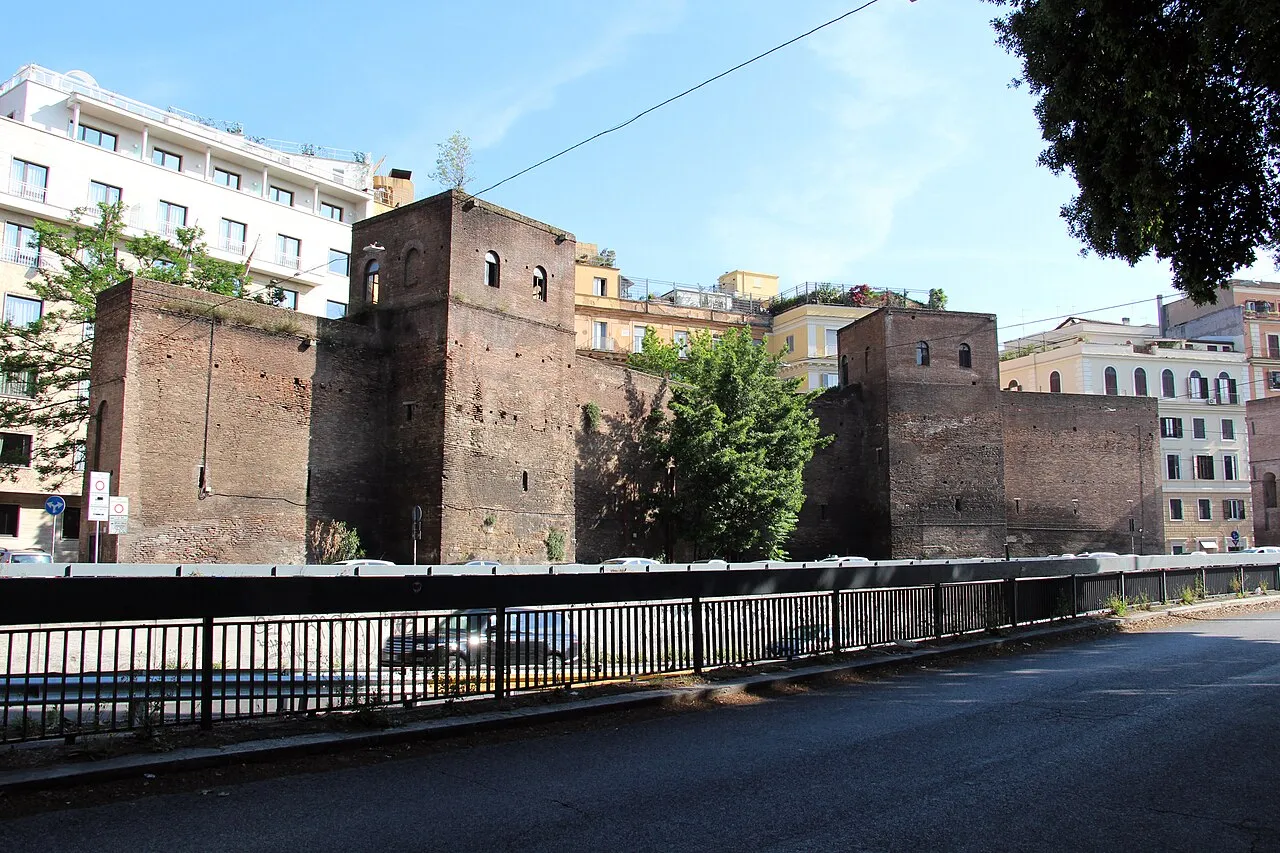
- 271 d.C.Inizio delle Mura Aureliane — Per evitare che il panico del 270 si ripetesse, Aureliano ordinò la costruzione di una nuova cinta muraria attorno a Roma. Diciannove chilometri di mura, alte 6,5 metri (poi raddoppiate da Massenzio), spesse 3,5 metri, con 381 torri e 18 porte monumentali. Una decisione carica di significato: l'Urbe non era più al sicuro per il solo fatto di esistere. Le mura sono ancora oggi in piedi per oltre il 70%.Start of the Aurelian Walls — To prevent the panic of 270 from recurring, Aurelian ordered a new wall around Rome. Nineteen kilometres of walls, 6.5 m high (later doubled by Maxentius), 3.5 m thick, with 381 towers and 18 monumental gates. A decision charged with symbolism: the City was no longer safe by virtue of its mere existence. Over 70% of the walls still stand today.
- 272 d.C.Battaglia di Immae e di Emesa — sconfitta di Zenobia — Marciato in Oriente, Aureliano affrontò l'esercito palmireno presso Immae (vicino ad Antiochia). Le sue legioni, fingendo la fuga, attirarono i catafratti palmireni a inseguirli per ore: quando i cavalieri pesanti furono sfiniti, la fanteria romana li circondò. Pochi giorni dopo, a Emesa, Aureliano replicò la tattica e annientò il resto dell'esercito di Zenobia. La regina ripiegò su Palmira.Battles of Immae and Emesa — Zenobia's defeat — Marching east, Aurelian met the Palmyrene army near Immae (close to Antioch). His legions, feigning retreat, lured the Palmyrene cataphracts into chasing them for hours: once the heavy horsemen were exhausted, the Roman infantry surrounded them. A few days later, at Emesa, Aurelian repeated the tactic and destroyed the rest of Zenobia's army. The queen fell back on Palmyra.
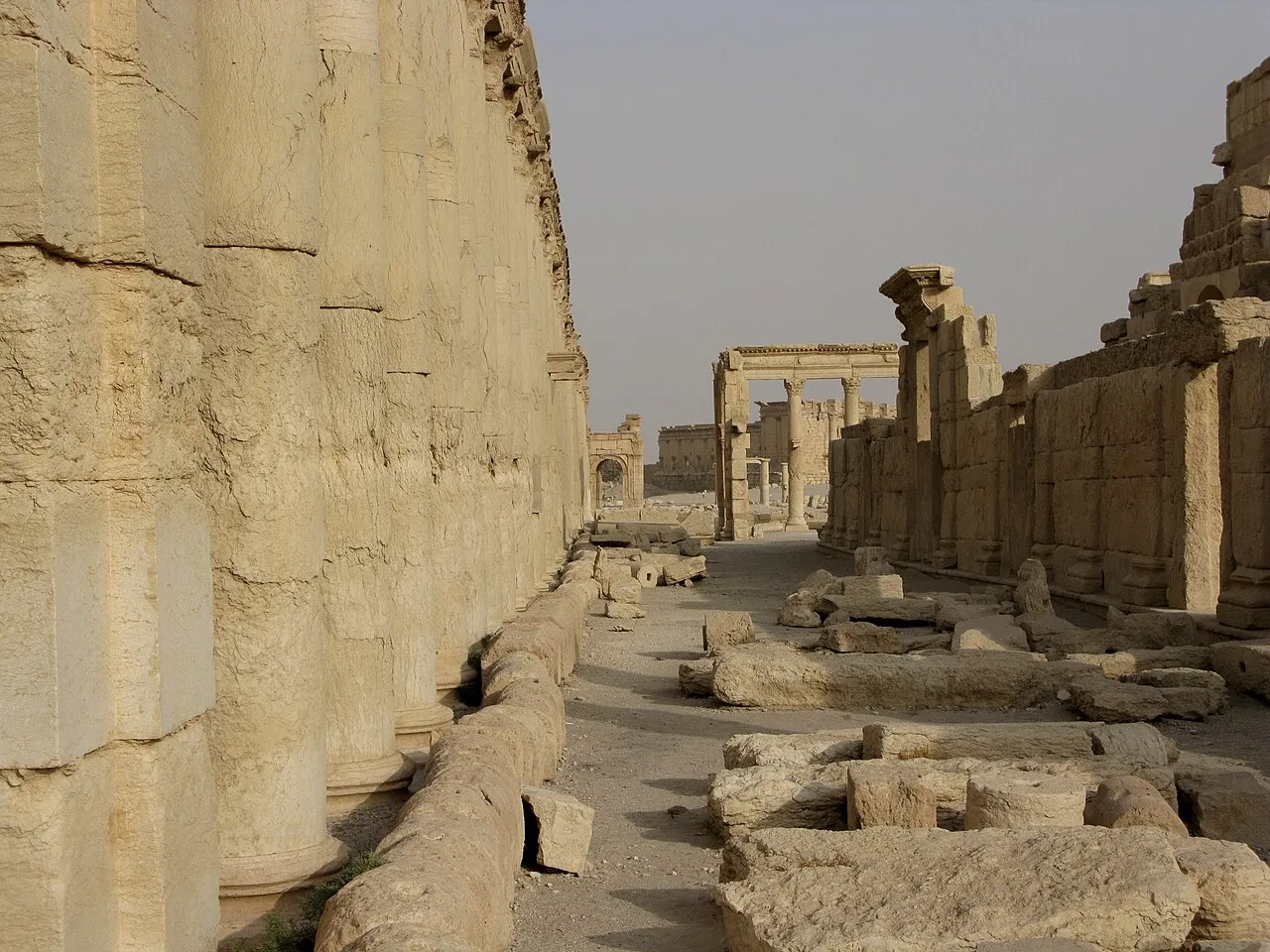
- 272–273 d.C.Assedio di Palmira e cattura di Zenobia — Palmira, oasi nel deserto siriano, era una fortezza naturale. Aureliano l'assediò pazientemente; Zenobia tentò la fuga su un dromedario verso i Persiani, ma fu catturata sul fiume Eufrate. La città si arrese. Pochi mesi dopo, mentre Aureliano era già lontano, Palmira si ribellò: l'imperatore tornò a marce forzate, riprese la città e la rase al suolo. Zenobia fu portata in catene a Roma: secondo Zosimo morì in esilio a Tivoli, secondo altre fonti sopravvisse e si risposò con un senatore.Siege of Palmyra and capture of Zenobia — Palmyra, an oasis in the Syrian desert, was a natural fortress. Aurelian besieged it patiently; Zenobia tried to flee on a dromedary toward the Persians, but was captured at the Euphrates. The city surrendered. A few months later, while Aurelian was already far away, Palmyra revolted: the emperor returned by forced marches, retook the city and razed it to the ground. Zenobia was brought to Rome in chains: Zosimus says she died in exile at Tibur, other sources claim she survived and remarried a senator.
- 273 d.C.Repressione della rivolta egiziana — Mentre Aureliano combatteva a Palmira, in Egitto un certo Firmus, mercante alleato dei Palmireni, si era proclamato imperatore. Aureliano marciò ad Alessandria nel 273 e lo sconfisse rapidamente: Firmus si suicidò. L'Egitto, granaio di Roma, tornò sotto controllo imperiale.Suppression of the Egyptian revolt — While Aurelian was fighting at Palmyra, in Egypt a certain Firmus, a merchant allied with the Palmyrenes, had proclaimed himself emperor. Aurelian marched on Alexandria in 273 and defeated him swiftly: Firmus killed himself. Egypt, Rome's granary, was back under imperial control.
- 274 d.C.Battaglia di Châlons — riconquista dell'Impero delle Gallie — Aureliano tornò a ovest contro Tetrico, ultimo imperatore gallico. Lo scontro decisivo avvenne nei Campi Catalaunici presso Châlons-en-Champagne. Tetrico, secondo le fonti più benevole, aveva segretamente trattato la resa con Aureliano: durante la battaglia avrebbe abbandonato il proprio esercito al massacro. L'Impero era di nuovo uno solo, dalla Britannia alla Mesopotamia. Tetrico, risparmiato, fu addirittura nominato corrector Lucaniae.Battle of Châlons — reconquest of the Gallic Empire — Aurelian returned west against Tetricus, last Gallic emperor. The decisive clash took place at the Catalaunian Fields near Châlons-en-Champagne. Tetricus, according to the more favourable sources, had secretly negotiated his surrender with Aurelian: during the battle he is said to have abandoned his own army to the slaughter. The Empire was one again, from Britain to Mesopotamia. Tetricus, spared, was even appointed corrector Lucaniae.
03Le Riforme: Moneta, Religione, StatoThe Reforms: Coinage, Religion, State
La riforma monetaria del 274
The currency reform of 274
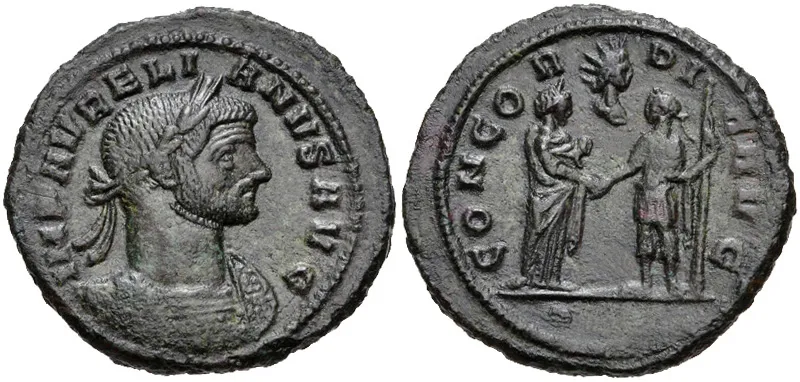
Mezzo secolo di crisi aveva portato il denario e l'antoniniano a contenere meno del 2% di argento: pura monetazione di rame argentata in superficie. I prezzi galoppavano, i soldati pretendevano paga in oro, il commercio interno collassava. Aureliano impose una riforma drastica: nuovo antoniniano con titolo garantito di 5% di argento (rapporto 20:1, da cui la marca XXI sul rovescio), nuova moneta di rame denarius communis, ripristino dell'aureus di peso costante (1/50 di libbra). I lavoratori della zecca di Roma si ribellarono, temevano per i loro guadagni illeciti, e fu necessaria una battaglia campale sul Celio, con migliaia di morti, per imporre la riforma. Ma la riforma tenne: la moneta romana tornò ad essere accettata.
Half a century of crisis had brought the denarius and the antoninianus to contain less than 2% silver: pure copper coinage with a silver wash. Prices galloped, soldiers demanded gold pay, internal trade collapsed. Aurelian imposed a drastic reform: a new antoninianus with a guaranteed alloy of 5% silver (20:1 ratio, hence the XXI mark on the reverse), a new copper denarius communis, restoration of the aureus at constant weight (1/50 of a pound). The workers of the Rome mint revolted (they feared for their illicit profits) and a pitched battle on the Caelian hill, with thousands dead, was needed to enforce the reform. But the reform held: Roman coinage was trusted again.
Il culto del Sol Invictus
The cult of Sol Invictus
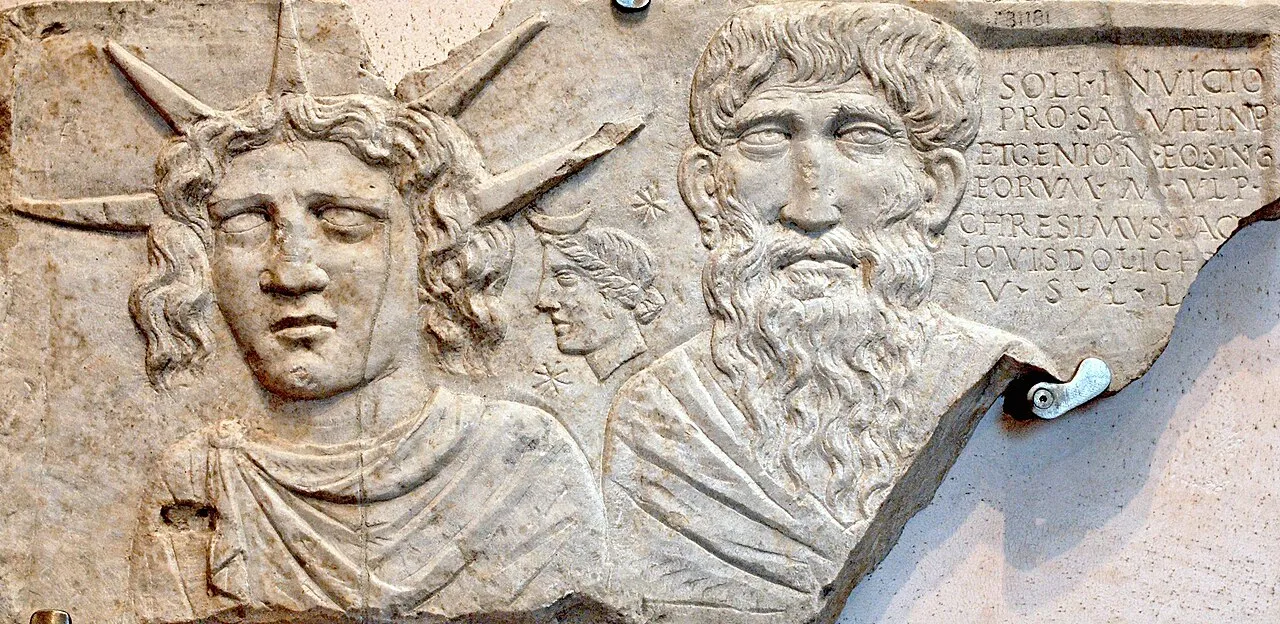
Aureliano è il vero promotore del culto monoteista del Sol Invictus, "Sole Invitto". Tornato vincitore dall'Oriente, attribuì la propria fortuna alla divinità solare di Emesa, in cui, secondo le fonti, aveva avuto una visione durante la campagna. Nel 274 fece costruire a Roma un colossale Tempio del Sole sul Campo Marzio, decorato con i tesori predati a Palmira, e istituì un nuovo collegio di pontifices Solis. Il 25 dicembre, dies natalis Solis Invicti, divenne la massima festa religiosa imperiale. Era una mossa politica: una divinità unica e universale, sopra tutti gli dèi locali, era il fondamento spirituale di un Impero unificato. Mezzo secolo dopo Costantino sostituì semplicemente Sol con Cristo, mantenendo data e simbologia.
Aurelian is the true promoter of the monotheistic cult of Sol Invictus, the "Unconquered Sun". Returning victorious from the East, he attributed his fortune to the solar divinity of Emesa, in which, according to the sources, he had had a vision during the campaign. In 274 he had a colossal Temple of the Sun built in Rome on the Campus Martius, decorated with the treasures looted from Palmyra, and established a new college of pontifices Solis. The 25 December, dies natalis Solis Invicti, became the supreme imperial religious festival. It was a political move: a single, universal divinity, above all local gods, was the spiritual foundation of a unified Empire. Half a century later Constantine simply replaced Sol with Christ, keeping the date and the symbolism.
Le riforme amministrative
Administrative reforms
Aureliano avviò inoltre una riforma annonaria: ai cittadini di Roma non venne più distribuito grano, ma pane già cotto, olio, sale e, per la prima volta, carne di maiale. Il provvedimento accentrò sotto controllo statale i grandi mulini e le panetterie pubbliche. Sul piano militare riorganizzò la cavalleria mobile, anticipando la struttura tetrarchica e dioclezianea. Sul piano simbolico, fu il primo imperatore a presentarsi sistematicamente come dominus et deus, "signore e dio", chiudendo definitivamente la finzione augustea del princeps primo cittadino. Il principato era morto: cominciava il dominato.
Aurelian also launched an annona reform: Rome's citizens no longer received grain but baked bread, oil, salt and, for the first time, pork. The measure centralised the great public mills and bakeries under state control. On the military side he reorganised the mobile cavalry, anticipating the Tetrarchic and Diocletianic structure. Symbolically, he was the first emperor to systematically present himself as dominus et deus, "lord and god", definitively ending the Augustan fiction of the princeps, first citizen. The Principate was dead: the Dominate was beginning.
04Il Restauratore del Mondo e la Sua FineThe Restorer of the World and His End
Il trionfo del 274 d.C.
The triumph of 274 AD
Nell'estate del 274 Aureliano celebrò a Roma uno dei trionfi più sontuosi della storia imperiale. La processione attraversò la città per giorni: animali esotici (tigri, giraffe, alci), 800 gladiatori, ambasciatori da Persia, India e Cina, le insegne d'oro e i tesori di Palmira. In testa, in catene d'oro, marciarono i due grandi vinti dell'Impero: Tetrico con i figli e Zenobia coperta di gioielli così pesanti che dovette fermarsi più volte. Aureliano risparmiò entrambi: gesto inusuale di clemenza politica. Tetrico ottenne una carica civile in Lucania, Zenobia (secondo le fonti più favorevoli) ricevette una villa a Tibur. Era la dimostrazione plastica che l'Impero era di nuovo intero: tre tronconi avevano camminato in catene davanti al loro nuovo signore.
In the summer of 274 Aurelian celebrated in Rome one of the most lavish triumphs in imperial history. The procession crossed the city for days: exotic animals (tigers, giraffes, elk), 800 gladiators, embassies from Persia, India and China, the gold standards and treasures of Palmyra. At the head, in golden chains, marched the two great defeated of the Empire: Tetricus with his sons and Zenobia covered in jewels so heavy she had to stop several times. Aurelian spared both: an unusual gesture of political clemency. Tetricus received a civilian post in Lucania, Zenobia (according to the more favourable sources) was given a villa at Tibur. It was the plastic demonstration that the Empire was whole again: three pieces had walked in chains before their new lord.
L'assassinio di Caenophrurium (settembre 275 d.C.)
The assassination at Caenophrurium (September 275 AD)
Aureliano era un uomo duro, intollerante della corruzione e incline alla giustizia sommaria. Gli ufficiali lo temevano quanto lo ammiravano. Nel 275, mentre marciava verso est per la grande campagna persiana che doveva chiudere il suo programma di ricostruzione, si accampò nei pressi di Caenophrurium, in Tracia, sulla strada per Bisanzio. Un suo segretario di nome Eros, sorpreso a falsificare documenti, sapeva che la pena sarebbe stata la morte. In preda al terrore, redasse una falsa lista di condanne capitali con i nomi di alti ufficiali della guardia, e mostrò il documento ai diretti interessati. Questi, convinti di essere già condannati, agirono per primi: irruppero nella tenda imperiale e uccisero Aureliano a colpi di spada. Quando capirono di essere stati ingannati, era tardi.
Aurelian was a hard man, intolerant of corruption and prone to summary justice. Officers feared him as much as they admired him. In 275, while marching east for the great Persian campaign that was to crown his programme of reconstruction, he camped near Caenophrurium in Thrace, on the road to Byzantium. A secretary of his named Eros, caught forging documents, knew the penalty would be death. In terror, he drew up a false list of capital sentences with the names of senior guard officers and showed the document to the men concerned. Convinced they were already condemned, they struck first: they burst into the imperial tent and killed Aurelian with swords. When they realised they had been deceived, it was too late.
Il giudizio della storia
The verdict of history
L'esercito, in lutto, rifiutò all'inizio di nominare un successore: il Senato dovette intervenire eleggendo l'anziano Tacito, scelta di compromesso destinata a durare pochi mesi. Aureliano fu divinizzato e i suoi assassini eseguiti uno dopo l'altro. Ma il suo programma sopravvisse: la riunificazione, le mura, la riforma monetaria, il culto del Sol Invictus, l'accentramento amministrativo furono le fondamenta su cui Diocleziano dieci anni dopo avrebbe costruito il sistema tetrarchico, e Costantino dopo di lui l'Impero cristiano. Senza i cinque anni di Aureliano, la "Crisi del III secolo" probabilmente avrebbe distrutto l'Impero un secolo e mezzo prima del 476. Edward Gibbon, nel Decline and Fall, lo definì "l'ultimo dei generali e il primo dei sovrani assoluti". Forse nessuna sintesi è più giusta.
The army, in mourning, at first refused to name a successor: the Senate had to intervene, electing the elderly Tacitus, a compromise choice destined to last only months. Aurelian was deified and his murderers executed one by one. But his programme survived: the reunification, the walls, the currency reform, the cult of Sol Invictus, the administrative centralisation became the foundations on which Diocletian ten years later would build the Tetrarchic system, and Constantine after him the Christian Empire. Without Aurelian's five years, the "Crisis of the 3rd Century" would probably have destroyed the Empire a century and a half before 476. Edward Gibbon, in the Decline and Fall, called him "the last of the generals and the first of the absolute sovereigns". Perhaps no synthesis is more just.