01BiografiaBiography
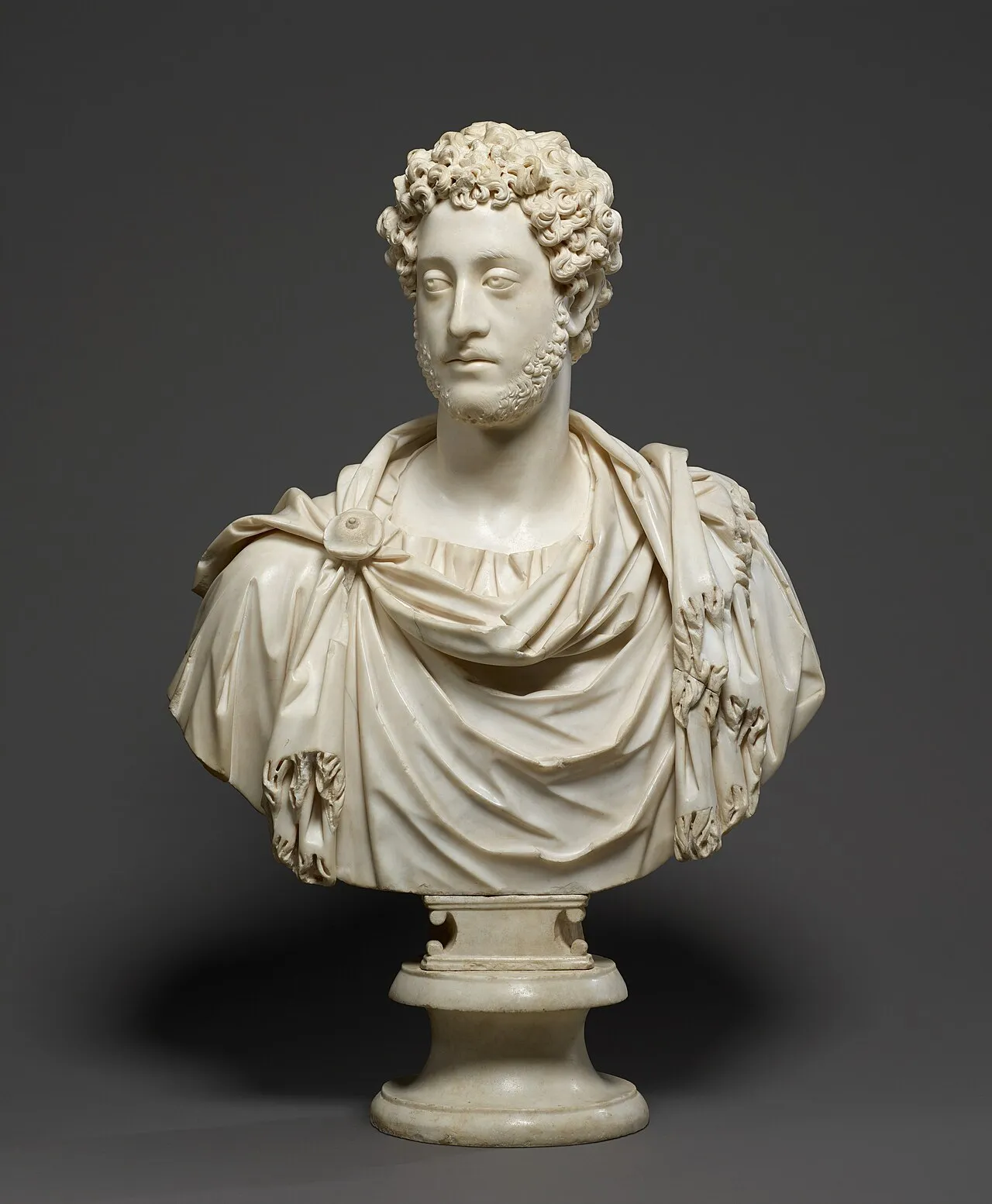
Lucio Aurelio Commodo nacque il 31 agosto del 161 d.C. a Lanuvio, figlio di Marco Aurelio e Faustina Minore. Era il primo figlio biologico di un imperatore regnante a salire al trono dall'epoca di Domiziano, rompendo la tradizione dell'adozione meritocratica che aveva caratterizzato tutta la dinastia antonina. Già dal 177 fu associato al potere come co-imperatore; dopo la morte del padre nel 180 rimase solo al trono e firmò subito la pace con i Marcomanni, abbandonando i progetti di conquista di Marco Aurelio e tornando a Roma.
Lucius Aurelius Commodus was born on August 31, 161 AD at Lanuvium, son of Marcus Aurelius and Faustina Minor. He was the first biological son of a reigning emperor to ascend the throne since the time of Domitian, breaking the tradition of meritocratic adoption that had characterized the entire Antonine dynasty. Already from 177 he was associated with power as co-emperor; after his father's death in 180 he remained alone on the throne and immediately signed peace with the Marcomanni, abandoning Marcus Aurelius's conquest projects and returning to Rome.
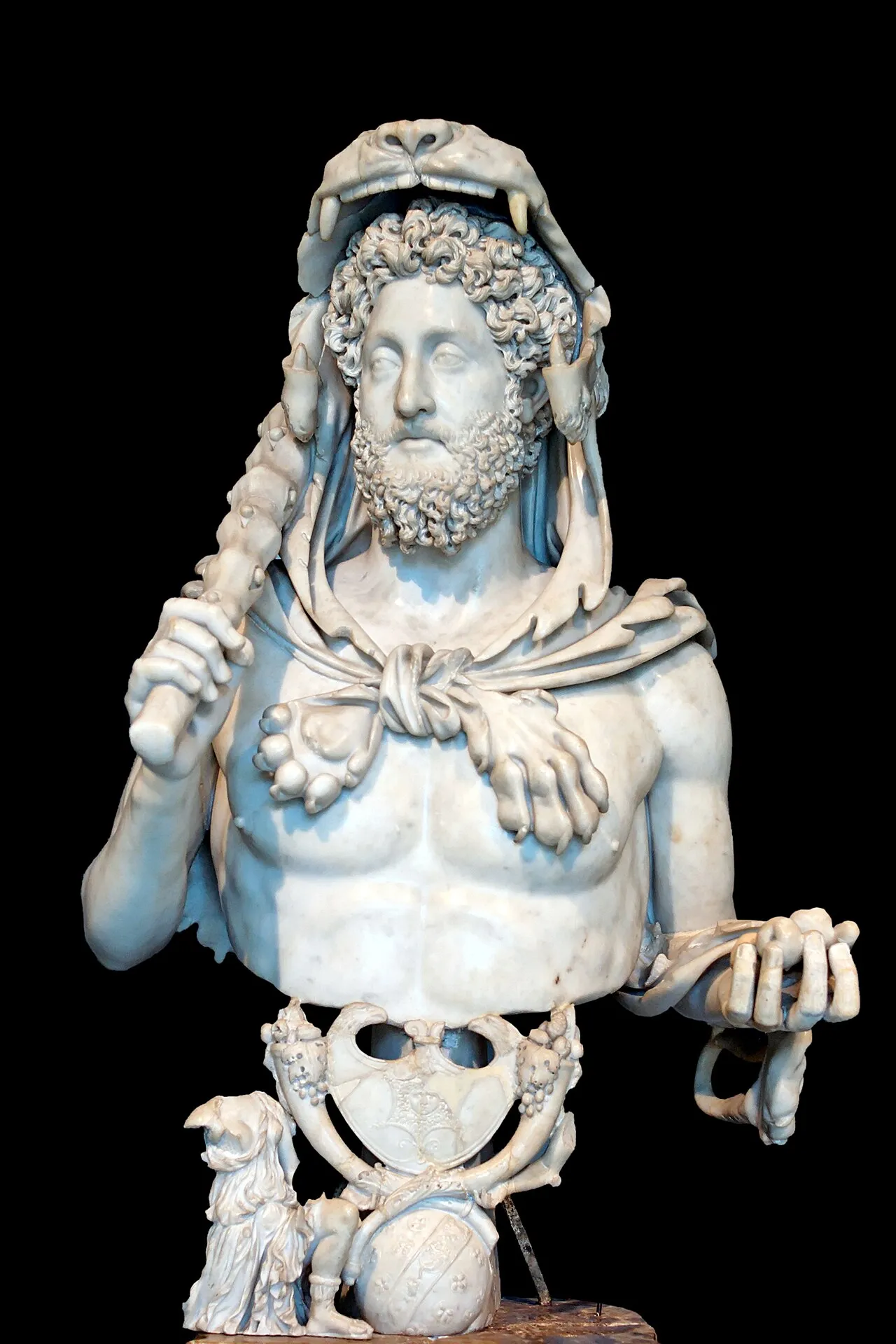
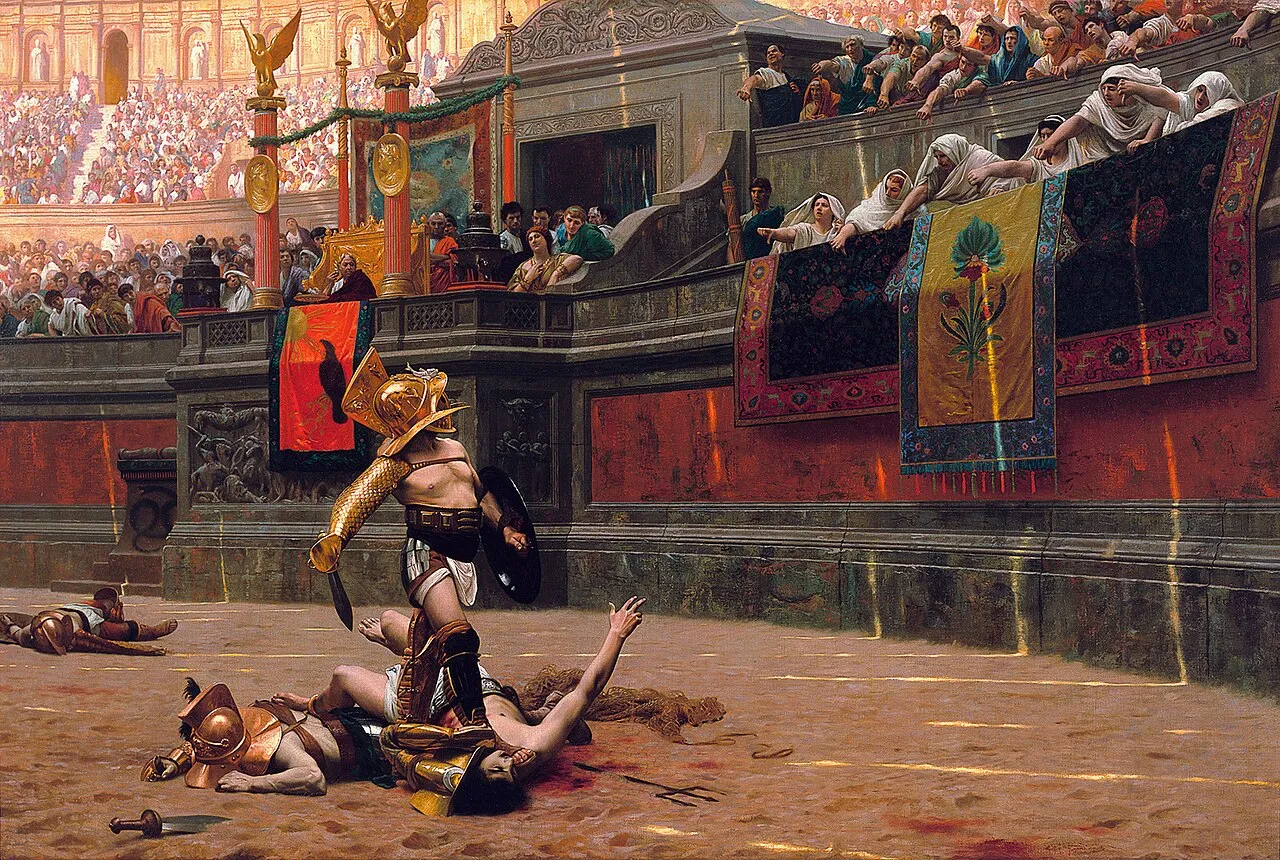
Il suo regno fu una progressiva deriva verso la megalomania. Si identificò con Ercole, si faceva ritrarre con la clava e la pelle di leone, e scese nell'arena come gladiatore, cosa considerata profondamente degradante per un imperatore. Ribattezzò Roma Colonia Lucia Annia Commodiana, i mesi dell'anno con i suoi nomi, le legioni con il nome di Commodianae. Fu assassinato la notte del 31 dicembre del 192 d.C.: dapprima avvelenato, poi strangolato nella vasca da bagno dal lottatore Narciso, per ordine della sua concubina Marcia e del prefetto del pretorio Quinto Emilio Leto.
His reign was a progressive drift toward megalomania. He identified himself with Hercules (he had himself portrayed with a club and lion skin) and descended into the arena as a gladiator, something considered deeply degrading for an emperor. He renamed Rome Colonia Lucia Annia Commodiana, the months of the year with his own names, the legions with the name Commodianae. He was assassinated on the night of December 31, 192 AD: first poisoned, then strangled in his bathtub by the wrestler Narcissus, on the orders of his concubine Marcia and the praetorian prefect Quintus Aemilius Laetus.
L'Ombra del PadreThe Shadow of the Father
Marco Aurelio aveva tredici figli da Faustina Minore: Commodo fu uno dei pochi a sopravvivere all'infanzia, e l'unico maschio rimasto adulto. Lo storico Anthony Birley ha sottolineato come questa sopravvivenza solitaria abbia di fatto azzerato qualsiasi possibilità di scelta dinastica: Marco Aurelio non scelse Commodo per merito, ma per assenza di alternative. Il filosofo-imperatore avrebbe preferito designare un erede secondo la tradizione antonina, ma la sua devozione verso la dignitas familiare prevalse. Commodo crebbe sui campi militari del Danubio, durante le guerre marcomanniche, ricevendo da bambino i titoli di Caesar (166) e Augustus (177), associato al trono già prima dei sedici anni.
Marcus Aurelius had thirteen children by Faustina Minor: Commodus was one of the few to survive childhood, and the only male to reach adulthood. The historian Anthony Birley emphasized how this lone survival in fact reduced to zero any possibility of dynastic choice: Marcus Aurelius did not choose Commodus for merit, but for absence of alternatives. The philosopher-emperor would have preferred to designate an heir according to Antonine tradition, but his devotion to family dignitas prevailed. Commodus grew up on the military camps of the Danube, during the Marcomannic Wars, receiving as a child the titles of Caesar (166) and Augustus (177), associated with the throne already before the age of sixteen.
La storiografia ha a lungo insistito sul contrasto fra padre e figlio: il filosofo stoico e il bestione megalomane. Cassio Dione racconta tuttavia un dettaglio rivelatore: Commodo, da ragazzo, mostrava grande forza fisica e una mano sicura con l'arco; queste qualità, in un altro contesto, sarebbero state celebrate come virtù imperiali. Fu la mancanza assoluta di formazione filosofica e politica (Marco Aurelio era costantemente al fronte, e affidò il figlio a precettori greci di livello modesto) a trasformare quel talento in un ossessione gladiatoria.
Historiography has long insisted on the contrast between father and son: the Stoic philosopher and the megalomaniacal brute. However, Cassius Dio recounts a revealing detail: Commodus, as a youth, showed great physical strength and a steady hand with the bow; these qualities, in another context, would have been celebrated as imperial virtues. It was the absolute lack of philosophical and political training (Marcus Aurelius was constantly at the front, and entrusted his son to Greek tutors of modest level) that transformed that talent into a gladiatorial obsession.
02L'Imperatore nell'ArenaThe Emperor in the Arena
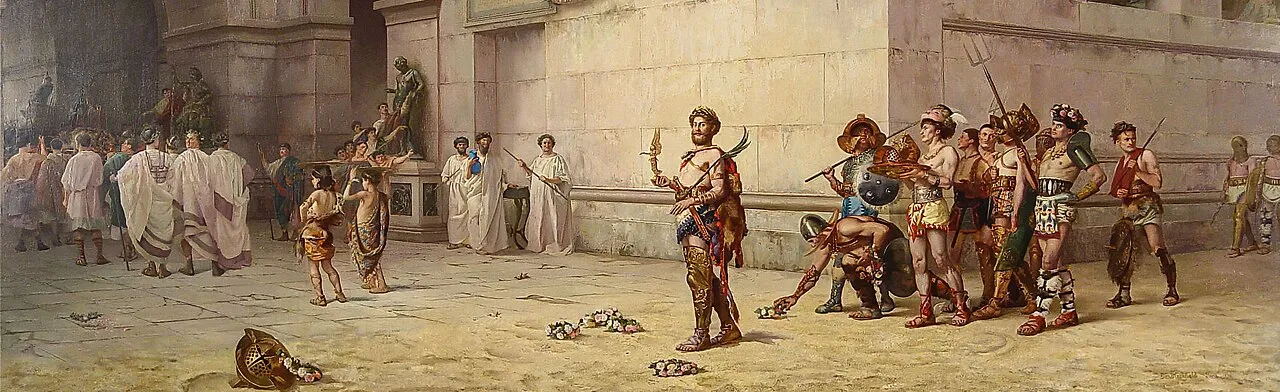
Le fonti antiche (soprattutto Cassio Dione, che assistette di persona agli spettacoli) riferiscono che Commodo combatté nell'arena più di 700 volte. Combatteva ovviamente in condizioni protette: gli avversari erano disarmati o quasi, le belve erano indebolite. Si faceva pagare dalla tesoreria pubblica enormi somme per ogni combattimento. Il Senato era obbligato ad assistere e ad applaudire.
Ancient sources (especially Cassius Dio, who personally attended the spectacles) report that Commodus fought in the arena more than 700 times. He obviously fought in protected conditions: his opponents were unarmed or nearly so, the beasts were weakened. He had himself paid enormous sums from the public treasury for each fight. The Senate was required to attend and applaud.
Si faceva chiamare Hercules Romanus, Ercole Romano, e in questa veste uccise nell'arena orsi, leoni, elefanti, struzzi. Cassio Dione racconta di una mattina in cui Commodo decapitò una fila di struzzi con frecce dalla lama a mezzaluna, poi si voltò verso i senatori agitando la testa sanguinante di uno struzzo, come avvertimento implicito. "Molti di noi, " scrive Dione, "avrebbero riso se non ci fossimo farciti la bocca con le foglie di alloro per non scoppiare."
He called himself Hercules Romanus, Roman Hercules, and in this guise killed bears, lions, elephants, ostriches in the arena. Cassius Dio tells of a morning when Commodus decapitated a row of ostriches with crescent-bladed arrows, then turned toward the senators waving the bleeding head of an ostrich, as an implicit warning. "Many of us, " writes Dio, "would have laughed if we hadn't stuffed our mouths with laurel leaves to keep from bursting out."
03Hercules Romanus e la Reinvenzione di RomaHercules Romanus and the Reinvention of Rome
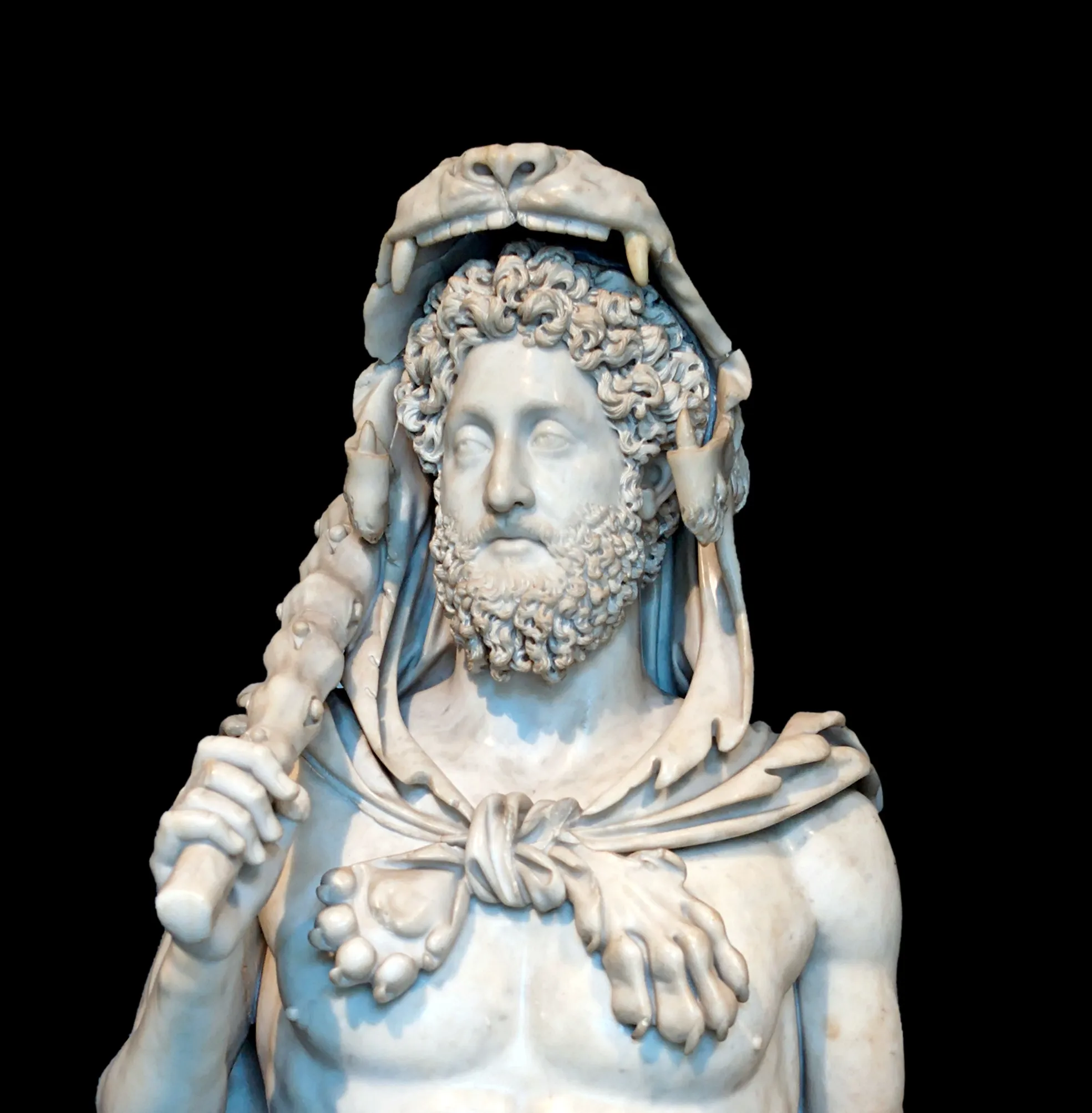
Negli ultimi anni del regno, Commodo abbandonò il titolo tradizionale di Imperator Caesar e si fece proclamare Hercules Romanus Augustus. La propaganda imperiale ne moltiplicò l'immagine: monete coniate in tutta l'Italia lo ritraevano con la pelle del leone Nemeo sulla testa, la clava in mano e il globo terrestre ai piedi. Il celebre busto dei Musei Capitolini, scolpito tra il 191 e il 192 d.C., è il vertice di questa identificazione: i lineamenti dell'imperatore emergono da sotto la pelle ferina, con uno sguardo che è insieme divino e perduto.
In the final years of his reign, Commodus abandoned the traditional title of Imperator Caesar and had himself proclaimed Hercules Romanus Augustus. Imperial propaganda multiplied his image: coins minted across Italy depicted him wearing the skin of the Nemean lion on his head, club in hand and the terrestrial globe at his feet. The famous bust in the Capitoline Museums, sculpted between 191 and 192 AD, is the apex of this identification: the emperor's features emerge from beneath the feral hide, with a gaze that is at once divine and lost.
Nel 192 d.C. Commodo spinse la sua autocelebrazione fino al gesto più radicale di tutta la storia imperiale: la renominatio Urbis. Roma fu ribattezzata Colonia Lucia Annia Commodiana, il Senato divenne Senato Commodiano, il popolo romano Popolo Commodiano, le legioni Commodianae. Anche i mesi dell'anno furono ridenominati con i suoi appellativi: Amazonius (gennaio), Invictus (febbraio), Felix (marzo), Pius (aprile), e così via fino a Exsuperatorius e Romanus. Era come se l'imperatore avesse cercato di sovrascrivere ottocento anni di storia con il proprio nome.
In 192 AD Commodus pushed his self-celebration to the most radical gesture in all imperial history: the renominatio Urbis. Rome was renamed Colonia Lucia Annia Commodiana, the Senate became the Commodian Senate, the Roman people the Commodian People, the legions Commodianae. Even the months of the year were renamed with his epithets: Amazonius (January), Invictus (February), Felix (March), Pius (April), and so on through Exsuperatorius and Romanus. It was as if the emperor had attempted to overwrite eight hundred years of history with his own name.
04Terrore e CongiureTerror and Conspiracies
- 182 d.C.Congiura di Lucilla — La sorella Lucilla organizzò un attentato al fratello. Il congiurato mandato a ucciderlo si fermò a urlare "Questo ti manda il Senato!" invece di colpire subito, dando tempo alle guardie di intervenire. Commodo rispose con una serie di esecuzioni senatoriali e la deportazione e poi l'uccisione di Lucilla.Lucilla's Conspiracy — His sister Lucilla organized an assassination attempt on her brother. The conspirator sent to kill him stopped to shout "This is sent by the Senate!" instead of striking immediately, giving the guards time to intervene. Commodus responded with a series of senatorial executions and the deportation and then killing of Lucilla.
- 190 d.C.Ascesa di Cleandro — Il liberto Cleandro divenne il vero potere dietro il trono, vendendo cariche pubbliche e consolati. Quando una carestia provocò rivolte a Roma, Commodo lo fece decapitare e gettò la sua testa alla folla come capro espiatorio.Rise of Cleander — The freedman Cleander became the real power behind the throne, selling public offices and consulships. When a famine provoked riots in Rome, Commodus had him beheaded and threw his head to the crowd as a scapegoat.
- 192 d.C.La notte del 31 dicembre — Commodo aveva annunciato che dal 1° gennaio si sarebbe presentato come gladiatore nel Colosseo, uscendo dalla porta dei gladiatori invece che dal palazzo imperiale. La concubina Marcia, il prefetto Leto e il ciambellano Ecletto, sapendo di essere sulla lista delle prossime vittime, lo avvelenarono durante la cena. Il veleno non bastò: Narciso, il suo lottatore personale, lo strangolò nella vasca da bagno.The night of December 31 — Commodus had announced that from January 1 he would appear as a gladiator in the Colosseum, exiting through the gladiators' door instead of the imperial palace. His concubine Marcia, the prefect Laetus and the chamberlain Eclectus, knowing they were on the list of next victims, poisoned him during dinner. The poison was not enough: Narcissus, his personal wrestler, strangled him in his bathtub.
05Eredità e Fine della DinastiaLegacy and End of the Dynasty
Il Senato votò la damnatio memoriae di Commodo, la cancellazione della memoria: le sue statue furono abbattute, le iscrizioni cancellate, il nome rimosso dagli edifici pubblici. Roma tornò ad essere Roma, i mesi ripresero i loro nomi. Tuttavia l'imperatore successivo Settimio Severo, fondatore della nuova dinastia, lo riabilitò e lo fece divinizzare per motivi politici, per legittimare il proprio potere attraverso un collegamento con Marco Aurelio.
The Senate voted damnatio memoriae for Commodus, the erasure of memory: his statues were toppled, inscriptions erased, his name removed from public buildings. Rome returned to being Rome, the months resumed their names. However, the next emperor Septimius Severus, founder of the new dynasty, rehabilitated and deified him for political reasons: to legitimize his own power through a connection with Marcus Aurelius.
La morte di Commodo chiuse definitivamente la dinastia antonina e aprì un anno di caos, il secondo "Anno degli Imperatori" della storia romana, in cui si susseguirono Pertinace, Didio Giuliano e infine Settimio Severo, che fondò la dinastia dei Severi. La famosa metafora di Gibbon, che con Marco Aurelio finì l'età dell'oro di Roma, trova il suo compimento nella figura del figlio di quel grande imperatore. Per lo storico britannico, il regno di Commodo segna l'inizio della "decadenza e caduta dell'impero romano": non perché fosse di per sé catastrofico, ma perché interruppe il principio dell'adozione meritocratica e restituì il principato all'arbitrio del sangue.
The death of Commodus definitively closed the Antonine dynasty and opened a year of chaos, the second "Year of Emperors" in Roman history, in which Pertinax, Didius Julianus and finally Septimius Severus succeeded each other, founding the Severan dynasty. Gibbon's famous metaphor, that with Marcus Aurelius ended the golden age of Rome, finds its fulfillment in the figure of that great emperor's son. For the British historian, the reign of Commodus marks the beginning of "the decline and fall of the Roman empire": not because it was catastrophic in itself, but because it interrupted the principle of meritocratic adoption and returned the principate to the arbitrariness of blood.
Il Mito ModernoThe Modern Myth
Commodo è uno dei pochissimi imperatori entrati nella memoria popolare contemporanea grazie al cinema. Il film di Ridley Scott Il Gladiatore (2000), con Joaquin Phoenix nei panni di un Commodo psicologicamente devastato e gelosamente assetato di sangue, ha riportato la sua figura al centro dell'immaginario, anche a costo di forti licenze storiche (Commodo non uccise il padre, non aveva una sorella di nome Lucilla con quel destino, non morì nell'arena per mano di un gladiatore). Lo storico Anthony Birley ha scritto che "nessun imperatore romano deve la propria sopravvivenza nella memoria collettiva tanto a un'opera di finzione quanto Commodo deve al film di Scott".
Commodus is one of the very few emperors to have entered contemporary popular memory thanks to cinema. Ridley Scott's film Gladiator (2000), with Joaquin Phoenix as a psychologically devastated and jealously bloodthirsty Commodus, brought his figure back to the center of the imagination, even at the cost of strong historical licenses (Commodus did not kill his father, did not have a sister named Lucilla with that destiny, did not die in the arena at the hand of a gladiator). The historian Anthony Birley wrote that "no Roman emperor owes his survival in collective memory as much to a work of fiction as Commodus owes to Scott's film".
Gli storici moderni hanno provato a riconsiderare la sua figura: alcuni studi recenti (Hekster, 2002) suggeriscono che la sua identificazione con Ercole, pur estrema, andava letta nel quadro di una strategia di legittimazione popolare contro il Senato, non solo come puro delirio. Tuttavia il giudizio rimane sostanzialmente negativo: con Commodo si chiude l'unico secolo in cui Roma fu governata da un filosofo, e si apre la lunga crisi che porterà al terzo secolo e oltre.
Modern historians have tried to reconsider his figure: some recent studies (Hekster, 2002) suggest that his identification with Hercules, however extreme, should be read within a strategy of popular legitimation against the Senate, not only as pure delirium. However the judgment remains substantially negative: with Commodus closes the only century in which Rome was governed by a philosopher, and opens the long crisis that will lead to the third century and beyond.