01L'Acclamazione BurgundaThe Burgundian Acclamation
Spentosi Olibrio di morte naturale (2 novembre 472), l'Occidente sprofondò in uno dei suoi tanti interregni: un vuoto di quattro mesi in cui nessuna corte riusciva ad accordarsi su un nome. A Ravenna il giovane Gundobado, burgundo, nipote di Ricimero, da poco patricius per nomina dello stesso Olibrio, aveva ereditato il ruolo di kingmaker, ma non l'autorità dello zio. Costantinopoli, lacerata dalle lotte fra l'anziano e malato Leone I e il suo successore Zenone, taceva. E le truppe palatine d'Italia, senza paga da mesi, reclamavano un imperatore qualunque, purché garantisse loro il donativum.
With Olybrius dead of natural causes (2 November 472), the West sank into one of its many interregnums: a four-month void in which no court could agree on a name. At Ravenna the young Gundobad, Burgundian, Ricimer's nephew, lately patricius by Olybrius's own appointment, had inherited the role of kingmaker, but not his uncle's authority. Constantinople, torn by the struggles between the old and ailing Leo I and his successor Zeno, was silent. And the palatine troops of Italy, unpaid for months, clamoured for any emperor at all, so long as he guaranteed them the donativum.
Il 3 marzo 473, presso Ravenna, Gundobado fece acclamare Augusto Flavio Glicerio, fino a quel giorno comes domesticorum, comandante della guardia palatina. Era una scelta tutta interna: nessun legame con le grandi casate senatorie, nessuna ambizione personale, una carriera militare di secondo piano, una fedeltà esclusiva al gruppo di ufficiali burgundi che lo innalzarono. Le fonti tarde (Marcellino Comes, gli Auctaria Hauniensia, il Liber Pontificalis) lo bollano concordi come caesar a militibus factus, « fatto Cesare dai soldati» : la formula con cui si marchiava un'usurpazione mai riconosciuta da Costantinopoli.
On 3 March 473, near Ravenna, Gundobad had Flavius Glycerius acclaimed Augustus, until that day comes domesticorum, commander of the palatine guard. It was an entirely internal choice: no tie to the great senatorial houses, no personal ambition, a second-tier military career, a loyalty exclusive to the band of Burgundian officers who raised him. The late sources (Marcellinus Comes, the Auctaria Hauniensia, the Liber Pontificalis) brand him in unison caesar a militibus factus, "made Caesar by the soldiers": the formula that stamped a usurpation never recognised by Constantinople.
Leone I negò il riconoscimento fin dal primo giorno. Le monete d'Oriente non recarono mai il nome di Glicerio; le ambascerie fra Ravenna e Costantinopoli si spensero; e l'Augusto d'Oriente preparò subito la deposizione, scegliendo un proprio uomo di fiducia: Giulio Nepote, suo nipote acquisito e governatore della Dalmazia.
Leo I denied recognition from the very first day. The coins of the East never bore Glycerius's name; the embassies between Ravenna and Constantinople fell silent; and the Augustus of the East at once prepared the deposition, choosing his own trusted man: Julius Nepos, his nephew by marriage and governor of Dalmatia.
02Quindici Mesi sul Filo del RasoioFifteen Months on the Razor's Edge
Eppure i quindici mesi del regno di Glicerio (marzo 473, giugno 474) furono, paradossalmente, assai meno rovinosi di quanto la sua fama lasci credere. Privo di un esercito proprio e del riconoscimento d'Oriente, l'Augusto-fantoccio si rivelò un diplomatico di notevole abilità .
Yet the fifteen months of Glycerius's reign (March 473, June 474) were, paradoxically, far less ruinous than his fame suggests. Stripped of an army of his own and of the East's recognition, the puppet Augustus proved a diplomat of notable skill.
Nella primavera del 473 respinse un'invasione visigota di Eurico, lo stesso re che aveva travolto Antemio in Spagna, combinando rinforzi burgundi e l'apporto dei foederati ostrogoti: uno dei rarissimi successi militari del tardo Occidente. Nell'estate dovette fronteggiare un pericolo ben più grave: il re ostrogoto Vidimer e suo figlio, fratelli minori di Teodorico Strabone, calarono dalla Pannonia con un'orda di Goti e Sarmati per invadere l'Italia. Incapace di batterli sul campo, Glicerio usò l'arma della diplomazia con sorprendente maestria: persuase Vidimer a dirottare l'invasione verso la Gallia meridionale, dove gli Ostrogoti si fusero coi Visigoti di Eurico (gettando le basi del futuro regnum Tholosanum). Fu una mossa machiavellica: scaricare il problema sul proprio nemico Eurico e, nello stesso tempo, salvare l'Italia.
In the spring of 473 he repelled a Visigothic invasion by Euric, the same king who had overwhelmed Anthemius in Spain, combining Burgundian reinforcements with the contribution of the Ostrogothic foederati: one of the rarest military successes of the late West. In summer he had to face a far graver peril: the Ostrogoth king Vidimer and his son, younger brothers of Theodoric Strabo, came down from Pannonia with a horde of Goths and Sarmatians to invade Italy. Unable to beat them in the field, Glycerius wielded the weapon of diplomacy with surprising mastery: he persuaded Vidimer to redirect the invasion toward southern Gaul, where the Ostrogoths merged with Euric's Visigoths (laying the foundations of the future regnum Tholosanum). It was a Machiavellian move: to unload the problem onto his own enemy Euric and, at the same time, to save Italy.
Della sua attività legislativa restano poche novellae: una contro la simonia ecclesiastica (la vendita delle cariche vescovili, piaga della Gallia di Eurico) e una a tutela delle vedove dai creditori. Coltivò ottimi rapporti con Roma e soprattutto con Milano, perno del nuovo asse burgundo. Nel novembre del 473 inviò a Tolosa, presso Eurico, il vescovo Epifanio di Pavia, lo stesso che aveva tentato di mediare fra Antemio e Ricimero, per strappargli un riconoscimento informale. La missione riuscì a metà : Eurico concesse una tregua, ma rifiutò di riconoscere Glicerio come Augusto.
Of his legislative activity few novellae survive: one against ecclesiastical simony (the sale of episcopal offices, a plague of Euric's Gaul) and one to protect widows from their creditors. He cultivated excellent relations with Rome and above all with Milan, pivot of the new Burgundian axis. In November 473 he sent to Toulouse, to Euric, the bishop Epiphanius of Pavia, the same who had tried to mediate between Anthemius and Ricimer, to wrest from him an informal recognition. The mission half-succeeded: Euric granted a truce, but refused to recognise Glycerius as Augustus.
Ma la sorte di Glicerio fu decisa altrove: Leone I morì il 18 gennaio 474. Gli succedette il nipotino Leone II, un bimbo di sette anni, e poco dopo (alla morte del bambino, in novembre) il genero Zenone l'Isaurico. Zenone confermò la linea del predecessore: l'Augusto d'Occidente doveva essere Giulio Nepote. Nel maggio del 474 la flotta dalmata sciolse le vele verso l'Italia.
But Glycerius's fate was decided elsewhere: Leo I died on 18 January 474. He was succeeded by his little grandson Leo II, a child of seven, and soon after (at the child's death, in November) by his son-in-law Zeno the Isaurian. Zeno confirmed his predecessor's line: the Augustus of the West was to be Julius Nepos. In May 474 the Dalmatian fleet loosed its sails toward Italy.
03Deposizione Senza SangueBloodless Deposition
Giulio Nepote sbarcò a Portus, alla foce del Tevere, sul finire di giugno 474, con la flotta dalmata e reparti dell'esercito orientale. Glicerio, ormai abbandonato da Gundobado, partito mesi prima per rivendicare in Burgundia la corona del padre Gondioco, non aveva forze per opporsi. Le truppe palatine, senza paga e senza ordini, defezionarono in massa.
Julius Nepos landed at Portus, at the mouth of the Tiber, toward the end of June 474, with the Dalmatian fleet and units of the Eastern army. Glycerius, by now abandoned by Gundobad, gone months earlier to claim in Burgundy the crown of his father Gundioc, had no force to oppose him. The palatine troops, unpaid and without orders, defected en masse.
Glicerio compì allora la scelta che gli salvò la vita: si arrese senza combattere. Si presentò di persona a Nepote presso Roma, depose le insegne imperiali e accettò di farsi ordinare vescovo di Salona, la grande città portuale della Dalmazia, a un passo dal palazzo di Diocleziano e sotto il controllo diretto di Nepote. La consacrazione episcopale avvenne il 24 giugno 474. Era la prima volta dai tempi di Romolo che un Augusto rinunciava spontaneamente al trono e accettava la veste sacra come modo « pulito» di sparire dalla scena. Il precedente di Avito, vent'anni prima, era fallito: il vescovo-imperatore era stato ucciso lungo la strada per la sua diocesi. Glicerio, invece, sopravvisse.
Glycerius then made the choice that saved his life: he surrendered without fighting. He presented himself in person to Nepos near Rome, laid down the imperial insignia and agreed to be ordained bishop of Salona, the great port city of Dalmatia, a step from Diocletian's palace and under Nepos's direct control. The episcopal consecration took place on 24 June 474. It was the first time since Romulus's day that an Augustus renounced the throne of his own will and accepted the sacred robe as a "clean" way to vanish from the scene. The precedent of Avitus, twenty years earlier, had failed: the bishop-emperor had been killed on the road to his diocese. Glycerius, instead, survived.
04La Vendetta del VescovoThe Bishop's Revenge
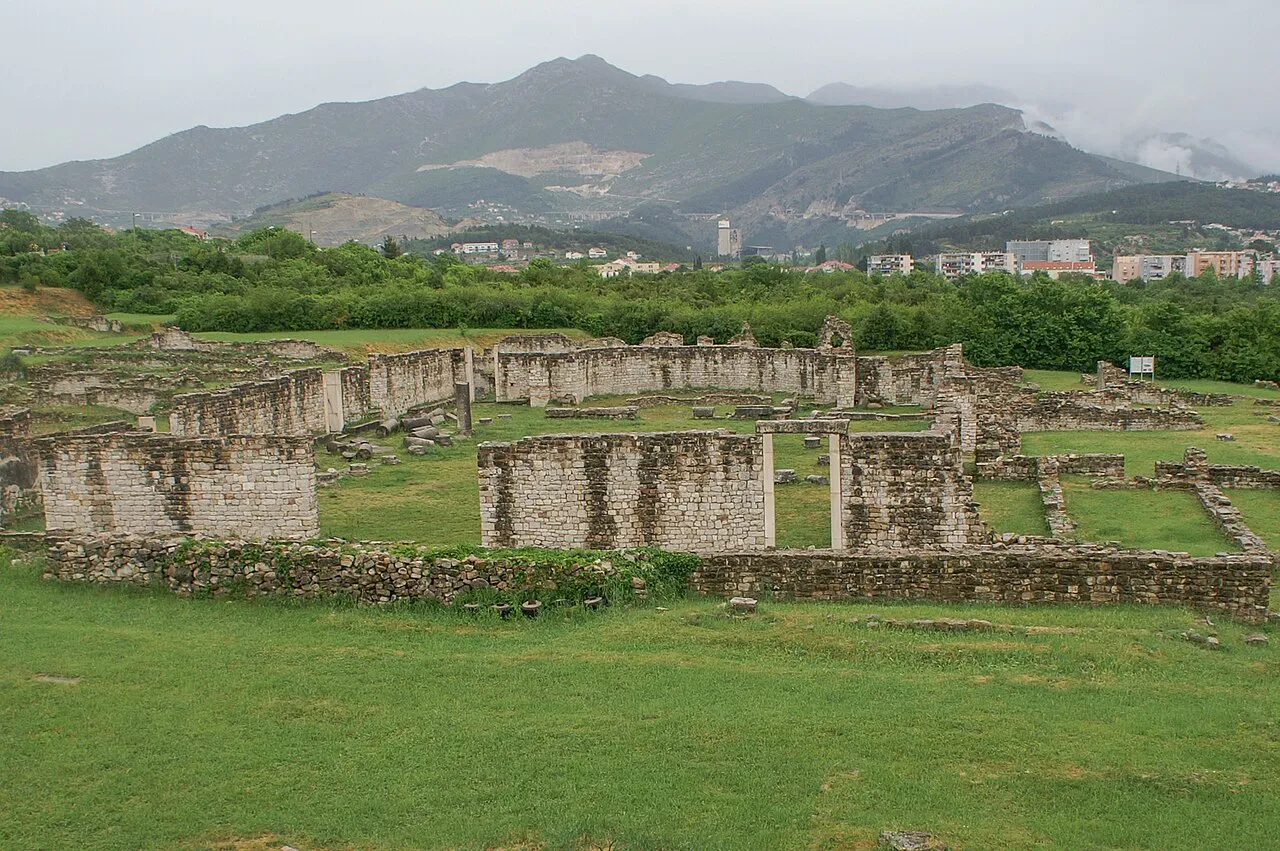
Salona era una scelta tutt'altro che casuale: il vescovado poneva Glicerio sotto la sorveglianza diretta del governatore di Dalmazia, cioè della stessa famiglia di Nepote (il padre Nepoziano vi era stato magister militum). Per sei anni Glicerio esercitò il ministero episcopale senza incidenti registrati, mantenendo, raccontano gli storici tardi, una piccola corte e un residuo di dignità imperiale. Si diceva che sotto la veste vescovile portasse ancora la cintura aurea dei comites.
Salona was anything but a casual choice: the bishopric placed Glycerius under the direct surveillance of the governor of Dalmatia, that is, of Nepos's own family (whose father Nepotianus had been its magister militum). For six years Glycerius exercised the episcopal ministry without recorded incident, keeping, so the late historians relate, a small court and a residue of imperial dignity. It was said that beneath the episcopal robe he still wore the gold belt of the comites.
La rivincita venne nel 480. Giulio Nepote, a sua volta deposto nel 475 da Oreste e Romolo Augustolo, a sua volta esule in Dalmazia, a sua volta « Augusto in esilio» riconosciuto dall'Oriente, fu assassinato presso Salona nel maggio 480 da due dei suoi comites, Viatore e Ovida. Le fonti tarde, il bizantino Malco di Filadelfia e il latino Marcellino Comes, convergono su un particolare inquietante: dietro il delitto ci sarebbe stato proprio Glicerio, il vescovo deposto. Il movente? Il rancore per l'umiliazione del 474, ma anche un freddo calcolo politico: morto Nepote, la porpora poteva tornare a portata di mano, con l'appoggio di Odoacre, che infatti calò poco dopo in Dalmazia per « vendicare» Nepote e annetterla al proprio regno. Cassiodoro vuole che Odoacre, in ricompensa, abbia elevato Glicerio all'arcivescovado di Milano: lì si sarebbe spento, in un anno imprecisato fra il 480 e il 490.
Revenge came in 480. Julius Nepos, himself deposed in 475 by Orestes and Romulus Augustulus, himself an exile in Dalmatia, himself an "Augustus in exile" recognised by the East, was assassinated near Salona in May 480 by two of his comites, Viator and Ovida. The late sources, the Byzantine Malchus of Philadelphia and the Latin Marcellinus Comes, converge on a disquieting detail: behind the crime would have stood Glycerius himself, the deposed bishop. The motive? Resentment for the humiliation of 474, but also a cold political calculation: with Nepos dead, the purple might come within reach again, with the backing of Odoacer, who indeed descended soon after into Dalmatia to "avenge" Nepos and annex it to his own kingdom. Cassiodorus would have it that Odoacer, in reward, raised Glycerius to the archbishopric of Milan: there he would have died, in some unknown year between 480 and 490.
Glicerio è , con Onorio e Olibrio, uno dei soli tre Augusti d'Occidente del V secolo a spegnersi di morte naturale, nel proprio letto; ed è l'unico fra loro a sopravvivere come uomo di Chiesa. Fu il primo «imperatore-vescovo» della storia romana, prototipo di una figura che il Medioevo cristiano avrebbe di tanto in tanto riprodotto. E se la sua vendetta su Nepote fu reale, allora può dirsi anche il vero becchino dell'Impero d'Occidente: con la morte di Giulio Nepote, nel 480, si spense l'ultimo Augusto d'Occidente legalmente riconosciuto. Zenone non nominò più colleghi in Occidente. Da quel giorno, Roma non ebbe mai più un Augusto.
Glycerius is, with Honorius and Olybrius, one of only three 5th-century Western Augusti to die a natural death, in his own bed; and he is the only one among them to survive as a man of the Church. He was the first "emperor-bishop" in Roman history, prototype of a figure that the Christian Middle Ages would now and then reproduce. And if his revenge on Nepos was real, then he may also be called the true gravedigger of the Western Empire: with the death of Julius Nepos, in 480, the last legally recognised Augustus of the West was extinguished. Zeno named no more colleagues in the West. From that day, Rome never again had an Augustus.