01BiografiaBiography
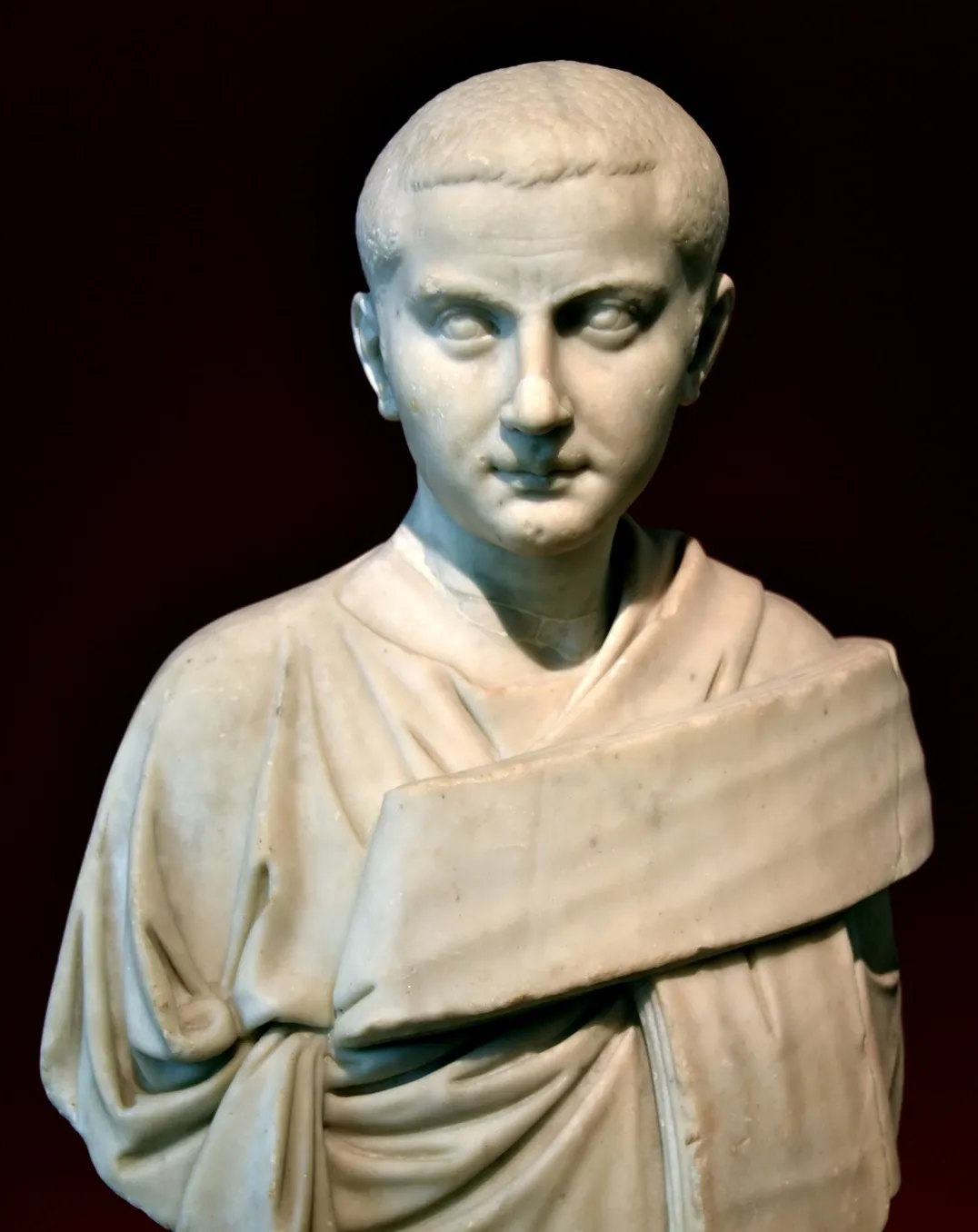
Marco Antonio Gordiano era il nipote di Gordiano I: figlio della figlia di Gordiano I e di un senatore sconosciuto. Aveva tredici anni nel 238 quando la folla di Roma lo acclamò Cesare come compromesso tra il Senato (che voleva Pupieno e Balbino) e il popolo (che voleva un Gordiano). Dopo l'assassinio di Pupieno e Balbino da parte della Guardia Pretoriana, rimase l'unico augusto. Il governo era di fatto nelle mani dei tutori: prima il suocero Timesiteo, abilissimo amministratore che divenne prefetto del pretorio e di fatto co-reggente, poi Filippo l'Arabo dopo la morte di Timesiteo nel 243.
Marcus Antonius Gordianus was the grandson of Gordian I: son of Gordian I's daughter and an unknown senator. He was thirteen in 238 when the Roman crowd acclaimed him Caesar as a compromise between the Senate (which wanted Pupienus and Balbinus) and the people (who wanted a Gordian). After Pupienus and Balbinus were assassinated by the Praetorian Guard, he remained the sole Augustus. Government was effectively in the hands of guardians: first his father-in-law Timesitheus, a brilliant administrator who became praetorian prefect and de facto co-regent, then Philip the Arab after Timesitheus's death in 243.
L'Era di Timesiteo (241–243)The Age of Timesitheus (241–243)
Gaio Furio Sabino Aquila Timesiteo era un funzionario equestre di origini greche che aveva fatto carriera nella curatela imperiale del fisco. Nel 241 sposò il quindicenne Gordiano III alla figlia Furia Sabina Tranquillina, divenendo socer Augusti, suocero dell'imperatore. Pochi mesi dopo lo fece nominare prefetto del pretorio. Da quel momento, secondo Erodiano, fu lui «il vero imperatore di Roma». Riorganizzò l'erario svuotato, ristabilì la regolarità delle paghe militari, riformò l'annona sospendendo l'esportazione di grano italiano e creando depositi di emergenza lungo il limes orientale.
Gaius Furius Sabinus Aquila Timesitheus was an equestrian functionary of Greek origins who had made his career in the imperial fiscal administration. In 241 he married fifteen-year-old Gordian III to his daughter Furia Sabina Tranquillina, becoming socer Augusti, father-in-law of the emperor. A few months later he had him appointed praetorian prefect. From that moment, according to Herodian, he was «the real emperor of Rome». He reorganized the emptied treasury, restored the regularity of military pay, reformed the annona by suspending Italian grain exports and creating emergency depots along the eastern limes.
Il Bambino-AugustoThe Child-Augustus
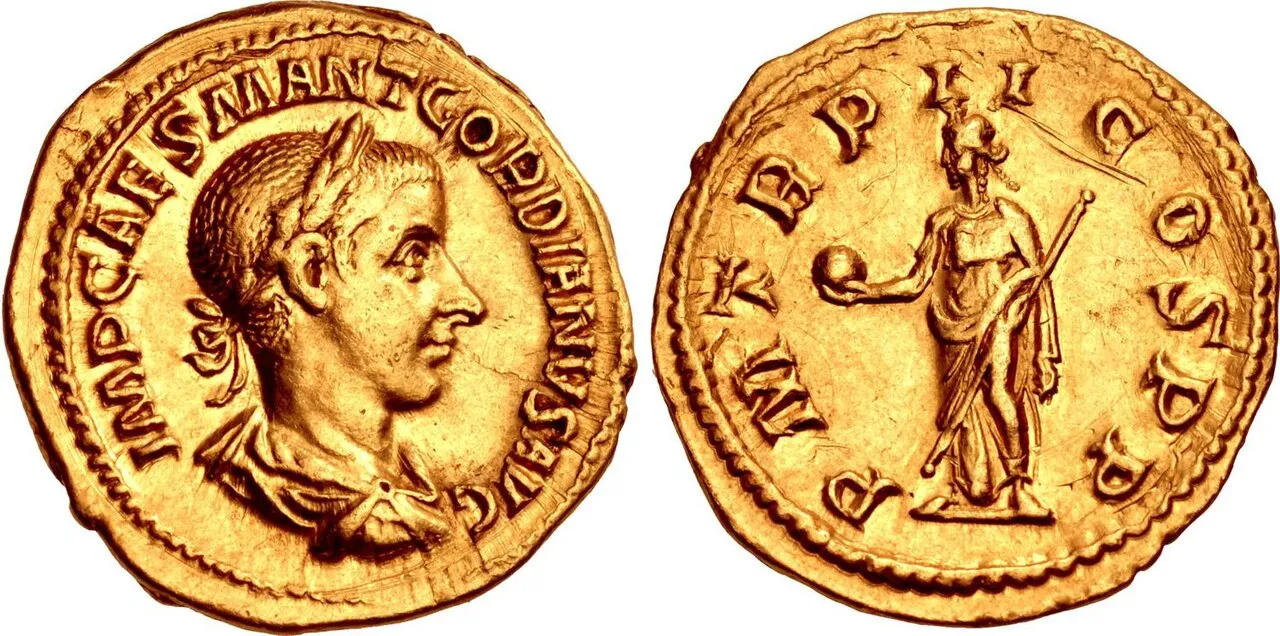
Il regno di Gordiano III è il più lungo dell'epoca della Crisi del III secolo: sei anni dall'agosto 238 al febbraio 244. Statisticamente, nessun imperatore del periodo 235–284 regnerà più a lungo, fino a Gallieno (260–268). Questa stabilità relativa fu il miracolo costituzionale di Timesiteo: un giovane figura simbolica, divinizzato e amato, tutelato da un amministratore tecnocrate. Il sistema funzionava perché tutti vi credevano. Ma quando Timesiteo morì di dissenteria nell'inverno 243, presso Antiochia, alla vigilia della grande campagna persiana, il sistema collassò.
Gordian III's reign is the longest of the Third-Century Crisis: six years from August 238 to February 244. Statistically, no emperor of the 235–284 period will reign longer, until Gallienus (260–268). This relative stability was Timesitheus's constitutional miracle: a young symbolic figure, deified and loved, watched over by a technocrat administrator. The system worked because everyone believed in it. But when Timesitheus died of dysentery in the winter of 243, near Antioch, on the eve of the great Persian campaign, the system collapsed.
02La Guerra PersianaThe Persian War
- 241–243 d.C.L'ascesa di Sapore I — Il re persiano Sapore I aveva ripreso l'offensiva verso occidente, minacciando le province orientali di Roma. Antiochia era caduta. Gordiano III, guidato dall'abile Timesiteo, partì per la campagna orientale con un grande esercito.Rise of Shapur I — The Persian king Shapur I had resumed the westward offensive, threatening Rome's eastern provinces. Antioch had fallen. Gordian III, guided by the skilled Timesitheus, departed for the eastern campaign with a large army.
- 243 d.C.Battaglia di Rhesaena — L'esercito romano sconfisse i Persiani nella grande battaglia di Rhesaena (moderna Ras al-Ayn, Siria). Antiochia fu liberata, la Mesopotamia fu riconquistata. Fu la grande vittoria del giovane imperatore. Ma Timesiteo morì di malattia poco dopo, e Filippo l'Arabo prese il suo posto come prefetto del pretorio.Battle of Rhesaena — The Roman army defeated the Persians at the great battle of Rhesaena (modern Ras al-Ayn, Syria). Antioch was liberated, Mesopotamia was reconquered. It was the young emperor's great victory. But Timesitheus died of illness shortly after, and Philip the Arab took his place as praetorian prefect.
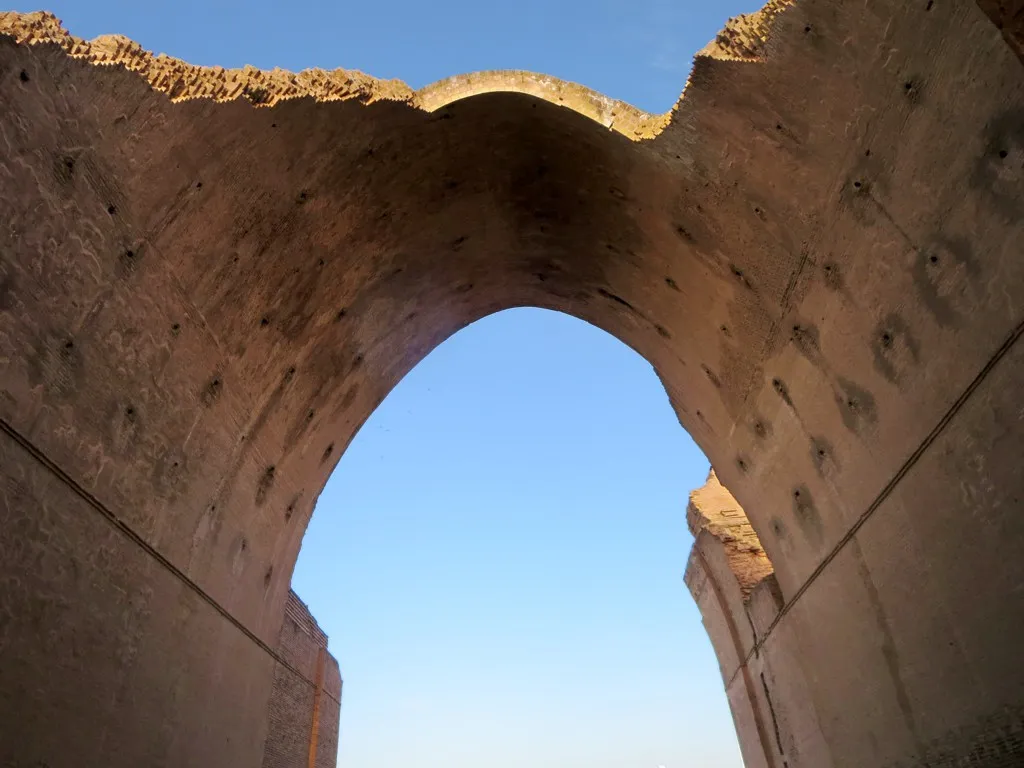
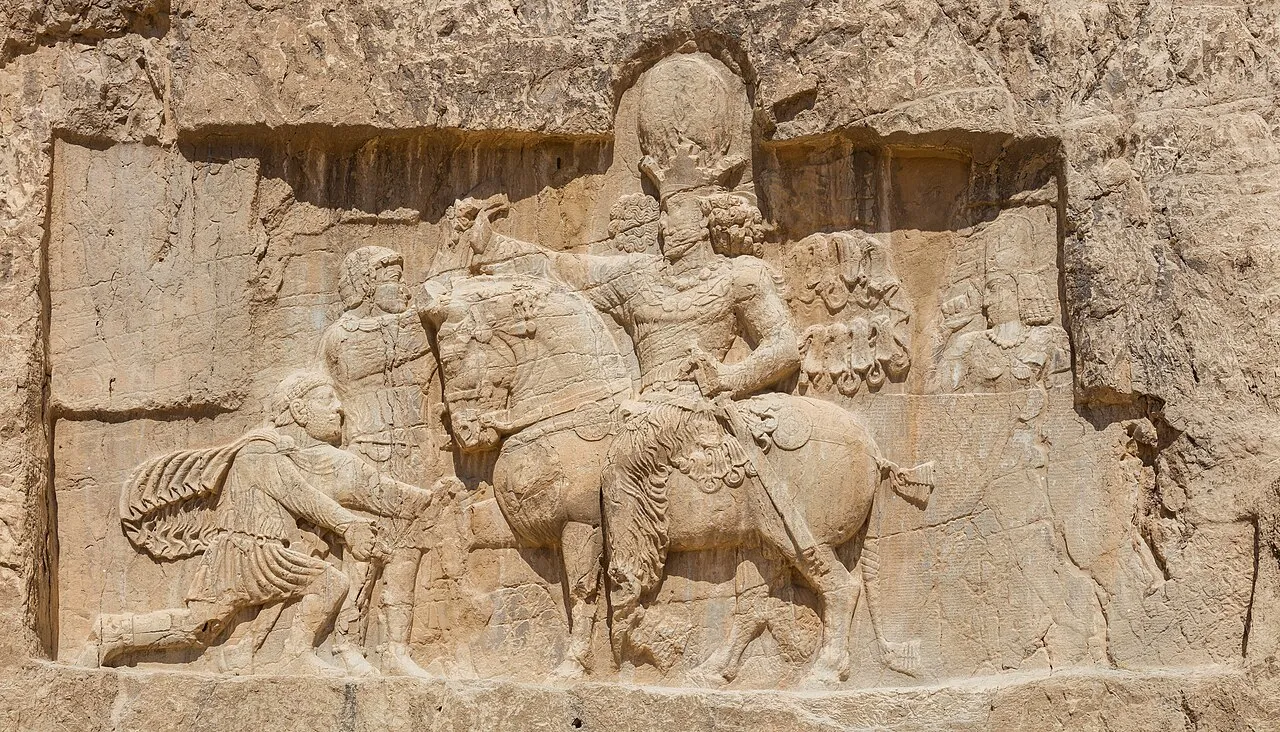
- 244 d.C.Misiche e la morte misteriosa — L'esercito romano avanzò verso la capitale persiana Ctesifonte ma fu bloccato nei pressi di Misiche (moderna Falluja, Iraq). Gordiano III morì in circostanze oscure: le fonti romane dicono in battaglia, quelle persiane, scolpite sul rilievo di Naqš-e Rostam, mostrano Filippo che uccide Gordiano ai piedi del cavallo di Sapore.Misiche and the mysterious death — The Roman army advanced toward the Persian capital Ctesiphon but was stopped near Misiche (modern Fallujah, Iraq). Gordian III died in obscure circumstances: Roman sources say in battle, Persian sources, carved on the relief of Naqsh-e Rostam, show Philip killing Gordian at the feet of Shapur's horse.
03Il Mistero della MorteThe Mystery of His Death
La morte di Gordiano III rimane uno dei grandi misteri della storia romana. Aveva solo diciannove anni. Le fonti antiche sono contraddittorie: alcune parlano di ferite in battaglia a Misiche contro i Persiani, altre insinuano apertamente che fu Filippo l'Arabo a farlo assassinare per prenderne il posto. Il rilievo rupestre persiano di Naqš-e Rostam, commissionato da Sapore I, mostra Gordiano morente sotto gli zoccoli del cavallo persiano mentre Filippo supplica, un'immagine propagandistica che glorificava la vittoria persiana ma che lasciava aperta la domanda: fu davvero una vittoria persiana, o fu Filippo a consegnare l'imperatore? Qualunque sia la verità, Filippo negoziò una pace con i Persiani, pagò un cospicuo riscatto e tornò a Roma come nuovo imperatore. Gordiano III fu divinizzato.
The death of Gordian III remains one of the great mysteries of Roman history. He was only nineteen years old. Ancient sources are contradictory: some speak of battle wounds at Misiche against the Persians, others openly insinuate that it was Philip the Arab who had him assassinated to take his place. The Persian rock relief of Naqsh-e Rostam, commissioned by Shapur I, shows a dying Gordian beneath the Persian horse's hooves while Philip implores, a propagandistic image that glorified Persian victory but left the question open: was it really a Persian victory, or did Philip deliver the emperor? Whatever the truth, Philip negotiated peace with the Persians, paid a substantial ransom and returned to Rome as the new emperor. Gordian III was deified.
Versione Romana vs Versione PersianaRoman Version vs Persian Version
Le fonti romane (l'Historia Augusta, Eutropio, Aurelio Vittore) raccontano una versione concorde: Gordiano III sarebbe morto in battaglia a Misiche contro i Persiani il 11 febbraio 244, e Filippo l'Arabo gli sarebbe successo per legittima acclamazione dell'esercito. Senonché, il Res Gestae Divi Saporis, lunga iscrizione trilingue (medio-persiano, partico, greco) commissionata dal re sasanide Sapore I sulla Ka'ba-i Zardosht a Naqsh-e Rostam, contraddice frontalmente: Gordiano sarebbe morto durante una vittoriosa controffensiva persiana, e Filippo si sarebbe inginocchiato a pagare un riscatto di 500.000 denari d'oro. Le due versioni, romana e sasanide, sono incompatibili.
Roman sources (the Historia Augusta, Eutropius, Aurelius Victor) recount a consistent version: Gordian III would have died in battle at Misiche against the Persians on February 11, 244, and Philip the Arab would have succeeded him by legitimate army acclamation. But the Res Gestae Divi Saporis, long trilingual inscription (Middle Persian, Parthian, Greek) commissioned by the Sasanian king Shapur I on the Ka'ba-i Zardosht at Naqsh-e Rostam, contradicts frontally: Gordian would have died during a victorious Persian counter-offensive, and Philip would have knelt to pay a ransom of 500,000 gold denarii. The two versions, Roman and Sasanian, are incompatible.
La Teoria della CospirazioneThe Conspiracy Theory
Lo storico tedesco Erich Kettenhofen (Die römisch-persischen Kriege des 3. Jahrhunderts, 1982), incrociando le fonti orientali e occidentali, ha sostenuto la versione della congiura: Filippo l'Arabo, neo-prefetto del pretorio dopo la morte di Timesiteo, avrebbe deliberatamente sabotato i rifornimenti dell'esercito presso Misiche, provocando la rivolta dei soldati affamati che uccisero Gordiano. Subito dopo, Filippo si fece acclamare, negoziò la pace con Sapore I e tornò a Roma con il corpo del giovane imperatore, facendolo divinizzare ufficialmente per nascondere il delitto sotto la pietà filiale. Sapore I dieci anni dopo, ormai sicuro della propria vittoria sul successore Valeriano, fece scolpire il rilievo di Naqsh-e Rostam per rivendicare postumamente Gordiano e umiliare i Romani: il rilievo non sarebbe la verità ma la rivalsa narrativa sasanide. Lo storico britannico David Potter (The Roman Empire at Bay, 2004) ritiene invece la versione romana sostanzialmente attendibile, e Filippo «fu semplicemente l'uomo giusto al posto giusto».
The German historian Erich Kettenhofen (Die römisch-persischen Kriege des 3. Jahrhunderts, 1982), cross-referencing Eastern and Western sources, has argued the conspiracy version: Philip the Arab, newly praetorian prefect after Timesitheus's death, would have deliberately sabotaged the army's supplies near Misiche, provoking the revolt of starving soldiers who killed Gordian. Immediately after, Philip had himself acclaimed, negotiated peace with Shapur I, and returned to Rome with the young emperor's body, having him officially deified to hide the crime under filial piety. Shapur I ten years later, by then certain of his victory over the successor Valerian, had the Naqsh-e Rostam relief carved to claim Gordian posthumously and humiliate the Romans: the relief would not be the truth but Sasanian narrative revenge. The British historian David Potter (The Roman Empire at Bay, 2004) considers the Roman version substantially reliable, and Philip «simply the right man in the right place».
Il Cenotafio di ZaithaThe Cenotaph of Zaitha
L'esercito romano in ritirata erigette presso il fiume Eufrate, a Zaitha (l'odierna Khabour, Siria), un cenotafio, sepolcro vuoto, in onore del giovane imperatore. Quasi un secolo dopo, l'imperatore Giuliano l'Apostata, nel 363, vi passò davanti durante la propria sfortunata campagna persiana e lo descrive con commozione nelle sue Lettere. Pochi mesi dopo, Giuliano morirà a sua volta in Mesopotamia in circostanze sospette, non lontano da dove Gordiano era caduto. Per Ammiano Marcellino, che racconta la scena, fu un presagio fatale: gli imperatori-bambini, come gli imperatori-filosofi, erano destinati a perdersi nelle sabbie d'Oriente.
The retreating Roman army erected near the Euphrates river, at Zaitha (modern Khabour, Syria), a cenotaph, empty tomb, in honor of the young emperor. Almost a century later, Emperor Julian the Apostate, in 363, passed before it during his own ill-fated Persian campaign and describes it with emotion in his Letters. A few months later, Julian himself would die in Mesopotamia under suspicious circumstances, not far from where Gordian had fallen. For Ammianus Marcellinus, who recounts the scene, it was a fatal omen: child-emperors, like philosopher-emperors, were destined to be lost in the sands of the East.