01Il Fantasma del TronoThe Ghost on the Throne
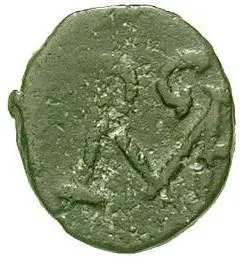
Di Libio Severo non sappiamo quasi nulla, e questo silenzio è già il suo epitaffio. Le fonti tarde (Idazio, i Fasti Vindobonenses, Cassiodoro, Giordane) gli concedono appena qualche riga stereotipata; la Prosopography of the Later Roman Empire lo cataloga come Severus 18, con uno dei dossier biografici più esili dell'intero V secolo. Era con ogni probabilità originario della Lucania, nell'Italia meridionale: il nome completo, « Libius Severianus Severus» , tradisce una famiglia senatoria di rango medio, verosimilmente estranea alle armi e priva di legami con le grandi dinastie, la teodosiana e l'anicia. Non aveva esperienza di comando, né clientele politiche proprie, né un patrimonio paragonabile a quello di un Petronio Massimo o di un Avito.
Of Libius Severus we know almost nothing, and that silence is already his epitaph. The late sources (Hydatius, the Fasti Vindobonenses, Cassiodorus, Jordanes) grant him barely a few stereotyped lines; the Prosopography of the Later Roman Empire catalogues him as Severus 18, with one of the slimmest biographical dossiers of the entire 5th century. He was in all likelihood a native of Lucania, in southern Italy: his full name, "Libius Severianus Severus", betrays a senatorial family of middle rank, presumably a stranger to arms and devoid of ties to the great dynasties, the Theodosian and the Anician. He had no command experience, no political clienteles of his own, no wealth comparable to that of a Petronius Maximus or an Avitus.
Era esattamente l'uomo che Ricimero cercava dopo l'esecuzione di Maioriano, il 7 agosto 461. Il patricius semibarbaro aveva appreso la lezione: un imperatore capace e amato era un rivale, non un alleato. La scelta cadde dunque su un perfetto sconosciuto, a cui si poteva drappeggiare addosso la porpora senza temere alcuna reazione autonoma. Libio Severo fu acclamato Augusto a Ravenna il 19 novembre 461, tre mesi dopo l'uccisione del predecessore. Il Senato di Roma ratificò senza fiatare, nessuna provincia protestò , nessun pretendente si fece avanti: la prova più eloquente di quanto poco ormai contasse chi sedesse fisicamente sul trono.
He was exactly the man Ricimer was seeking after the execution of Majorian, on 7 August 461. The half-barbarian patricius had learned his lesson: a capable and beloved emperor was a rival, not an ally. The choice therefore fell on a perfect unknown, upon whom the purple could be draped without fear of any autonomous reaction. Libius Severus was acclaimed Augustus at Ravenna on 19 November 461, three months after his predecessor's killing. The Senate of Rome ratified without a murmur, no province protested, no pretender came forward: the most eloquent proof of how little it now mattered who physically sat on the throne.
02La Resistenza dei Generali LealiThe Loyal Generals' Resistance
Maioriano era stato amato dai suoi ufficiali, e la sua eliminazione mandò in frantumi la fedeltà delle frontiere. Due grandi generali rifiutarono di riconoscere Libio Severo, giudicando illegittimi tanto il fantoccio quanto il kingmaker che lo aveva imposto.
Majorian had been loved by his officers, and his elimination shattered the loyalty of the frontiers. Two great generals refused to recognise Libius Severus, deeming illegitimate both the puppet and the kingmaker who had imposed him.
Egidio, magister militum per Gallias e fedelissimo di Maioriano, ritirò il proprio esercito nel triangolo fra Loira, Senna e Somme, attorno a Suessio (Soissons). Si dichiarò sciolto dall'autorità di Ravenna ma custode della legittimità imperiale: coniò moneta, amministrò giustizia, riscosse i tributi di Roma, rifiutando però ogni rapporto con Ricimero. Nacque così il Dominio di Soissons, un'enclave romano-gallica destinata a sopravvivere vent'anni oltre la stessa caduta dell'Occidente: morto Egidio nel 464, il comando passò al figlio Siagrio, e quel «regnum Romanorum» , così lo chiama Gregorio di Tours, resistette fino al 486, quando il franco Clodoveo lo inghiottì nel proprio regno. Era l'ultimo lembo di Romanità libera in Gallia.
Aegidius, magister militum per Gallias and most loyal of Majorian's men, withdrew his army into the triangle between Loire, Seine and Somme, around Suessio (Soissons). He declared himself released from the authority of Ravenna yet guardian of imperial legitimacy (he minted coin, administered justice, levied the taxes of Rome) while refusing all dealings with Ricimer. Thus was born the Domain of Soissons, a Roman-Gallic enclave destined to survive twenty years beyond the very fall of the West: when Aegidius died in 464, command passed to his son Syagrius, and that «regnum Romanorum» , as Gregory of Tours calls it, held out until 486, when the Frank Clovis swallowed it into his own kingdom. It was the last shred of free Romanitas in Gaul.
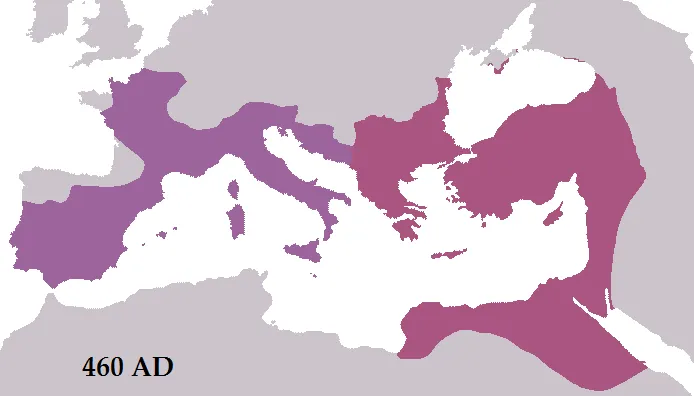
Marcellino, signore della Dalmazia e amico personale di Maioriano, si comportò nello stesso modo: ritirò la flotta dalmata e l'esercito illirico, si proclamò indipendente, riconobbe formalmente Costantinopoli ma negò ogni obbedienza a Ravenna. Per quattro anni Ricimero non poté sfiorarlo: Marcellino dominava l'Adriatico con una flotta efficiente di centinaia di unità e godeva del favore esplicito di Leone I. Nel 468 avrebbe guidato una delle ali della grande spedizione anti-vandala di Antemio, per poi cadere assassinato in Sicilia, quasi certamente per mano di sicari prezzolati da Ricimero, poco prima della catastrofe di Capo Bon.
Marcellinus, lord of Dalmatia and personal friend of Majorian, behaved in the same way: he withdrew the Dalmatian fleet and the Illyrian army, proclaimed himself independent, formally recognised Constantinople but denied all obedience to Ravenna. For four years Ricimer could not touch him: Marcellinus dominated the Adriatic with an efficient fleet of hundreds of vessels and enjoyed the explicit favour of Leo I. In 468 he would lead one of the wings of Anthemius's great anti-Vandal expedition, only to fall assassinated in Sicily, almost certainly by hired killers paid by Ricimer, shortly before the catastrophe of Cape Bon.
03I Vandali Sciamano nel TirrenoThe Vandals Roam the Tyrrhenian
Mentre Libio Severo regnava di nome, il dramma vero si consumava sul mare. Dalla munitissima base di Cartagine, Genserico scatenò una guerra di razzia permanente contro le coste d'Italia, di Sicilia, di Sardegna, di Corsica, delle Baleari e della Grecia. Ogni primavera le navi vandale levavano le vele e rastrellavano metodicamente i porti del Mediterraneo occidentale, saccheggiando villaggi, città costiere, monasteri. I prigionieri finivano in catene sui mercati di schiavi d'Africa; il bottino (argenti, stoffe, statue, libri) ingrassava Cartagine.
While Libius Severus reigned in name, the true drama unfolded at sea. From the heavily fortified base of Carthage, Gaiseric unleashed a permanent raiding war against the coasts of Italy, Sicily, Sardinia, Corsica, the Balearics and Greece. Every spring the Vandal ships hoisted sail and methodically combed the harbours of the western Mediterranean, plundering villages, coastal cities, monasteries. The prisoners ended in chains in the slave markets of Africa; the booty (silver, fabrics, statues, books) fattened Carthage.
Ricimero non disponeva di una flotta capace di opporsi. Nel 462 lanciò una piccola squadra contro i Vandali in Sicilia, e fu battuta. Nel 463 tentò la via diplomatica: cedette formalmente a Genserico la Tripolitania, la Mauretania e la Sardegna in cambio di una tregua parziale, la prima volta che Ravenna sanciva per legge la cessione di territori ai Vandali. La pace durò pochi mesi: già nel 464 le razzie ripresero. La pirateria vandala paralizzò per un intero decennio il commercio del Mediterraneo; il prezzo del grano triplicò ; molte città costiere furono semplicemente abbandonate.
Ricimer possessed no fleet able to resist them. In 462 he launched a small squadron against the Vandals in Sicily, and it was beaten. In 463 he tried the diplomatic path: he formally ceded to Gaiseric Tripolitania, Mauretania and Sardinia in exchange for a partial truce, the first time Ravenna enshrined in law the cession of territories to the Vandals. The peace lasted a few months: already in 464 the raids resumed. Vandal piracy paralysed Mediterranean trade for an entire decade; the price of grain tripled; many coastal cities were simply abandoned.
Sul fronte gallico, in quello stesso 463, l'esercito autonomo di Egidio sconfisse i Visigoti di Teodorico II nella battaglia di Aurelianum (Orlé ans), arrestando la loro spinta verso il nord. Fu una delle ultime vittorie campali romane in Gallia. Libio Severo non vi ebbe parte alcuna: le fonti non sanno nemmeno dire se ne fu informato.
On the Gallic front, in that same 463, the autonomous army of Aegidius defeated the Visigoths of Theodoric II at the battle of Aurelianum (Orléans), halting their thrust toward the north. It was one of the last Roman pitched victories in Gaul. Libius Severus had no part in it whatsoever: the sources cannot even say whether he was informed.
04Morte Sospetta e Vuoto di PotereSuspicious Death and Power Vacuum
Il 14 novembre 465 Libio Severo si spense a Roma. Cassiodoro lo liquida con un « naturale defunctus est», « morì di morte naturale» ; ma Sidonio Apollinare, in una lettera privata, scrive « veneno extinctus», « spento dal veleno» . La storiografia moderna propende per la seconda versione: a Ricimero servivano ormai mani libere per concordare con Costantinopoli un candidato gradito a entrambe le corti, e un Augusto vivo ma ingombrante era soltanto un ostacolo. La sua morte non strappò una lacrima né all'esercito, né al Senato, né al popolo. Fu sepolto in San Pietro: onore reso al titolo, non all'uomo.
On 14 November 465 Libius Severus died at Rome. Cassiodorus dismisses it with a « naturale defunctus est», "he died a natural death"; but Sidonius Apollinaris, in a private letter, writes « veneno extinctus», "extinguished by poison". Modern historiography leans toward the second version: Ricimer now needed free hands to agree with Constantinople on a candidate pleasing to both courts, and a living but cumbersome Augustus was merely an obstacle. His death wrung no tear from the army, the Senate, or the people. He was buried in St Peter's: an honour rendered to the title, not the man.
Per quasi due anni, dal novembre 465 al marzo 467, il trono d'Occidente restò ufficialmente vacante. Era una condizione senza precedenti: dai tempi di Augusto, mai un lungo interregno aveva spezzato la catena ininterrotta degli imperatori. Ricimero governava in nome proprio, da patricius; le monete recavano il solo nome di Leone I, a Costantinopoli; le leggi tacevano. Nulla dice meglio il grado di degrado istituzionale ormai raggiunto: il trono d'Occidente era divenuto una nomina da concordare fra un generale semibarbaro e il sovrano d'Oriente. In gioco non c'era il potere reale, già saldamente in pugno a Ricimero, ma la sola legittimità formale, indispensabile alla diplomazia e al conio della moneta.
For nearly two years, from November 465 to March 467, the Western throne remained officially vacant. It was a condition without precedent: since the days of Augustus, never had a long interregnum broken the unbroken chain of emperors. Ricimer governed in his own name, as patricius; the coins bore the name of Leo I alone, at Constantinople; the laws fell silent. Nothing tells better the degree of institutional decay now reached: the Western throne had become an appointment to be agreed between a half-barbarian general and the sovereign of the East. What was at stake was not real power, already firmly in Ricimer's grip, but formal legitimacy alone, indispensable to diplomacy and to the minting of coin.
L'interregno si chiuse soltanto quando le razzie vandale resero insostenibile l'isolamento di Ricimero, costringendolo a chiedere aiuto militare a Leone I. Il prezzo di quell'aiuto fu un Augusto venuto dall'Oriente: Antemio, generale di altissimo rango, genero del defunto imperatore Marciano. Sbarcò in Italia con un esercito orientale nel marzo del 467. Cominciava l'ultimo, serio tentativo di salvare l'Occidente.
The interregnum closed only when the Vandal raids made Ricimer's isolation unsustainable, forcing him to ask Leo I for military aid. The price of that aid was an Augustus come from the East: Anthemius, a general of the highest rank, son-in-law of the late emperor Marcian. He landed in Italy with an Eastern army in March 467. The last serious attempt to save the West was beginning.