01BiografiaBiography
Le origini e l'infanzia
Origins and childhood
Marcus Annius Verus nacque il 26 aprile del 121 d.C. a Roma, da una famiglia di origine spagnola proveniente da Ucubi, nella Baetica: la stessa regione che aveva dato all'Impero Traiano e Adriano. Il padre, Marcus Annius Verus, morì quando il bambino aveva ancora tre anni; sua madre Domitia Lucilla, donna di vasta cultura, si occupò personalmente della sua formazione. Il nonno paterno, già tre volte console, era intimo di Adriano e frequentava il palazzo imperiale. Fu in questo ambiente che il giovane Marcus entrò nell'orbita del potere.
Marcus Annius Verus was born on April 26, 121 AD in Rome, from a family of Spanish origin from Ucubi, in Baetica: the same region that had given the Empire Trajan and Hadrian. His father, Marcus Annius Verus, died when the boy was barely three years old; his mother Domitia Lucilla, a woman of wide culture, personally oversaw his education. His paternal grandfather, already three times consul, was intimate with Hadrian and frequented the imperial palace. It was in this environment that young Marcus entered the orbit of power.
Adriano lo notò prestissimo: secondo la Historia Augusta, il piccolo Marcus aveva sei anni quando l'imperatore gli assegnò soprannome Verissimus, un gioco di parole sul cognome Verus, ma anche un giudizio di carattere, "il sincerissimo". Lo inserì tra i sodales Augustales e lo seguì con affettuosa cura. Quando Adriano, morente nel 138, progettò la successione, pensò a lungo termine: adottò Antonino Pio imponendogli di adottare a sua volta il giovane Marco Aurelio e Lucio Vero, tessendo in tre mosse la catena di successione della dinastia antonina.
Hadrian noticed him very early: according to the Historia Augusta, little Marcus was six when the emperor gave him the nickname Verissimus, a pun on the surname Verus, but also a character judgment, "the most truthful." He enrolled him among the sodales Augustales and followed him with affectionate care. When Hadrian, dying in 138, planned the succession, he thought long-term: he adopted Antoninus Pius while imposing on him to in turn adopt young Marcus Aurelius and Lucius Verus, weaving in three moves the chain of succession of the Antonine dynasty.
L'educazione e i maestri
Education and teachers
L'educazione di Marco Aurelio fu la più completa che il mondo romano potesse offrire. Per la retorica ebbe Marco Cornelio Frontone, il più grande oratore latino del tempo dopo Cicerone, con il quale rimase in corrispondenza per tutta la vita. Per la filosofia fu decisivo Quinto Giunio Rustico, che gli prestò le opere di Epitteto e lo introdusse allo stoicismo pratico. Apollonio di Calcedonia gli insegnò che un filosofo non deve mai soccombere al dolore fisico né manifestare orgoglio per la propria sapienza. Marco Aurelio abbracciò questo programma con una serietà ascetica: portava la ruvida clamide di lana dei filosofi invece della seta delle vesti senatorie, dormiva su una stuoia, si alzava prima dell'alba.
Marcus Aurelius's education was the most complete that the Roman world could offer. For rhetoric he had Marcus Cornelius Fronto, the greatest Latin orator of the time after Cicero, with whom he corresponded throughout his life. For philosophy, decisive was Quintus Junius Rusticus, who lent him the works of Epictetus and introduced him to practical Stoicism. Apollonius of Chalcedon taught him that a philosopher must never succumb to physical pain nor show pride in his own wisdom. Marcus Aurelius embraced this programme with ascetic seriousness: he wore the rough wool cloak of the philosophers instead of the silk of senatorial dress, slept on a mat, rose before dawn.
Nel 145 d.C. sposò Faustina Minore, figlia di Antonino Pio. Fu un matrimonio lungo e, nelle testimonianze antiche, affettuoso nonostante i pettegolezzi di corte. Ebbero tredici figli, dei quali sopravvissero soltanto sei. Faustina accompagnò il marito nelle campagne sul Danubio, meritandosi il titolo di Mater castrorum, "Madre degli accampamenti". Morì nel 175 d.C. in Cappadocia: Marco Aurelio la fece deificare e costruì città e ospizi in suo nome. Nelle Meditazioni la nomina tra le persone per cui si dichiara più grato agli dèi.
In 145 AD he married Faustina the Younger, daughter of Antoninus Pius. It was a long and, in ancient testimony, affectionate marriage despite court gossip. They had thirteen children, of whom only six survived. Faustina accompanied her husband on the Danubian campaigns, earning the title of Mater castrorum, "Mother of the camps." She died in 175 AD in Cappadocia: Marcus Aurelius had her deified and built cities and hospices in her name. In the Meditations he names her among those for whom he declares himself most grateful to the gods.
L'ascesa al potere
Rise to power
Quando Antonino Pio morì nel 161 d.C., Marco Aurelio, quarant'anni, era già il reggente di fatto dell'Impero, avendo affiancato il padre adottivo per vent'anni. Il Senato lo acclamò imperatore immediatamente. La sua prima decisione fu inedita: rifiutò di accettare il potere se non veniva riconosciuto come co-imperatore anche il fratello adottivo Lucio Vero. Era la prima diarchia nella storia di Roma: due Augusti con poteri formalmente uguali. La scelta disorientò il Senato ma fu politicamente saggia: Lucio Vero avrebbe comandato la campagna in Oriente mentre Marco Aurelio reggeva il governo a Roma.
When Antoninus Pius died in 161 AD, Marcus Aurelius, forty years old, was already the de facto regent of the Empire, having assisted his adoptive father for twenty years. The Senate acclaimed him emperor immediately. His first decision was unprecedented: he refused to accept power unless his adoptive brother Lucius Verus was also recognised as co-emperor. It was the first diarchy in Roman history: two Augusti with formally equal powers. The choice disconcerted the Senate but was politically wise: Lucius Verus would command the campaign in the East while Marcus Aurelius governed Rome.
02Le MeditazioniThe Meditations
Un diario segreto
A secret diary
Le Meditazioni (in greco Ta eis heauton, "A se stesso") sono il documento più straordinario sopravvissuto dall'antichità: il diario interiore di un imperatore al potere. Scritte in greco tra il 170 e il 180 d.C., quasi certamente negli accampamenti militari sul Danubio, non erano destinate alla pubblicazione. Erano un esercizio privato di filosofia stoica: Marco Aurelio scriveva per ricordarsi chi voleva essere, non per mostrare agli altri chi era. Il tono è spesso quello di un uomo che si rimprovera, che si chiede se stia davvero applicando ciò che ha imparato.
The Meditations (in Greek Ta eis heauton, "To himself") are the most extraordinary document surviving from antiquity: the inner diary of an emperor in power. Written in Greek between 170 and 180 AD, almost certainly in the military camps on the Danube, they were not intended for publication. They were a private exercise in Stoic philosophy: Marcus Aurelius wrote to remind himself who he wanted to be, not to show others who he was. The tone is often that of a man reproaching himself, asking whether he is truly applying what he has learned.
I dodici libri non seguono un ordine cronologico né tematico preciso. Il primo libro è unico: è un catalogo di gratitudine verso le persone che lo hanno formato. Ringrazia il nonno per la dolcezza, il padre per la modestia, la madre per la pietà e la semplicità, Frontone per aver capito che "la gelosia e l'astuzia dei tiranni" si nascondono nelle famiglie d'alto rango. Ringrazia Rustico per avergli dato Epitteto. I libri successivi, II–XII, sono riflessioni disordinate, alcune di una sola riga, altre di pagine intere, su temi ricorrenti: la brevità della vita, il valore dell'azione giusta, il distacco dagli onori.
The twelve books follow neither a chronological nor a precise thematic order. The first book is unique: it is a catalogue of gratitude toward those who shaped him. He thanks his grandfather for gentleness, his father for modesty, his mother for piety and simplicity, Fronto for having understood that "the jealousy and cunning of tyrants" lurks in high-ranking families. He thanks Rusticus for having given him Epictetus. The subsequent books, II–XII, are disordered reflections, some a single line, others several pages, on recurring themes: the brevity of life, the value of right action, detachment from honours.
I temi centrali
Central themes
Tre idee percorrono l'intera opera. La prima è il memento mori: la costante meditazione sulla propria morte non come esercizio di angoscia ma come strumento di libertà. "Osserva quanto velocemente tutto scompare: i corpi nel mondo, la memoria nel tempo." La seconda è la distinzione tra ciò che dipende da noi e ciò che non dipende, ereditata direttamente da Epitteto: opinioni, impulsi, desideri appartengono alla sfera della libertà; corpo, fama, ricchezza no. La terza è il dovere verso la comunità: "Quello che nuoce all'alveare nuoce all'ape", e il filosofo imperatore non poteva permettersi di dimenticare che era ape, anche se la più potente.
Three ideas run through the entire work. The first is memento mori: the constant meditation on one's own death not as an exercise in anguish but as an instrument of freedom. "Observe how quickly everything disappears: bodies in the world, memories in time." The second is the distinction between what depends on us and what does not, inherited directly from Epictetus: opinions, impulses, desires belong to the sphere of freedom; body, fame, wealth do not. The third is duty toward the community: "What harms the hive harms the bee", and the philosopher-emperor could not afford to forget that he was a bee, even if the most powerful one.
La sopravvivenza delle Meditazioni è dovuta ai copisti bizantini del X secolo: il testo era circolato in pochissime copie manoscritte fino a quando il cardinale Lorenzo Cyriacus non ne riscoprì un esemplare intorno al 1558. La prima edizione a stampa fu curata da Wilhelm Xylander a Zurigo nel 1559. Da allora non ha smesso di essere tradotto e riedito: oggi esiste in oltre cento lingue. Federico il Grande le portava con sé nelle campagne militari, Bill Clinton le ha citate in discorsi presidenziali, il Libro II è letto ogni anno nelle accademie militari degli Stati Uniti.
The survival of the Meditations is owed to Byzantine copyists of the tenth century: the text had circulated in very few manuscript copies until Cardinal Lorenzo Cyriacus rediscovered a copy around 1558. The first printed edition was edited by Wilhelm Xylander in Zurich in 1559. Since then it has never ceased to be translated and reprinted: today it exists in over a hundred languages. Frederick the Great carried it with him on military campaigns, Bill Clinton has quoted it in presidential speeches, Book II is read every year in the United States military academies.
03La Peste AntoninaThe Antonine Plague
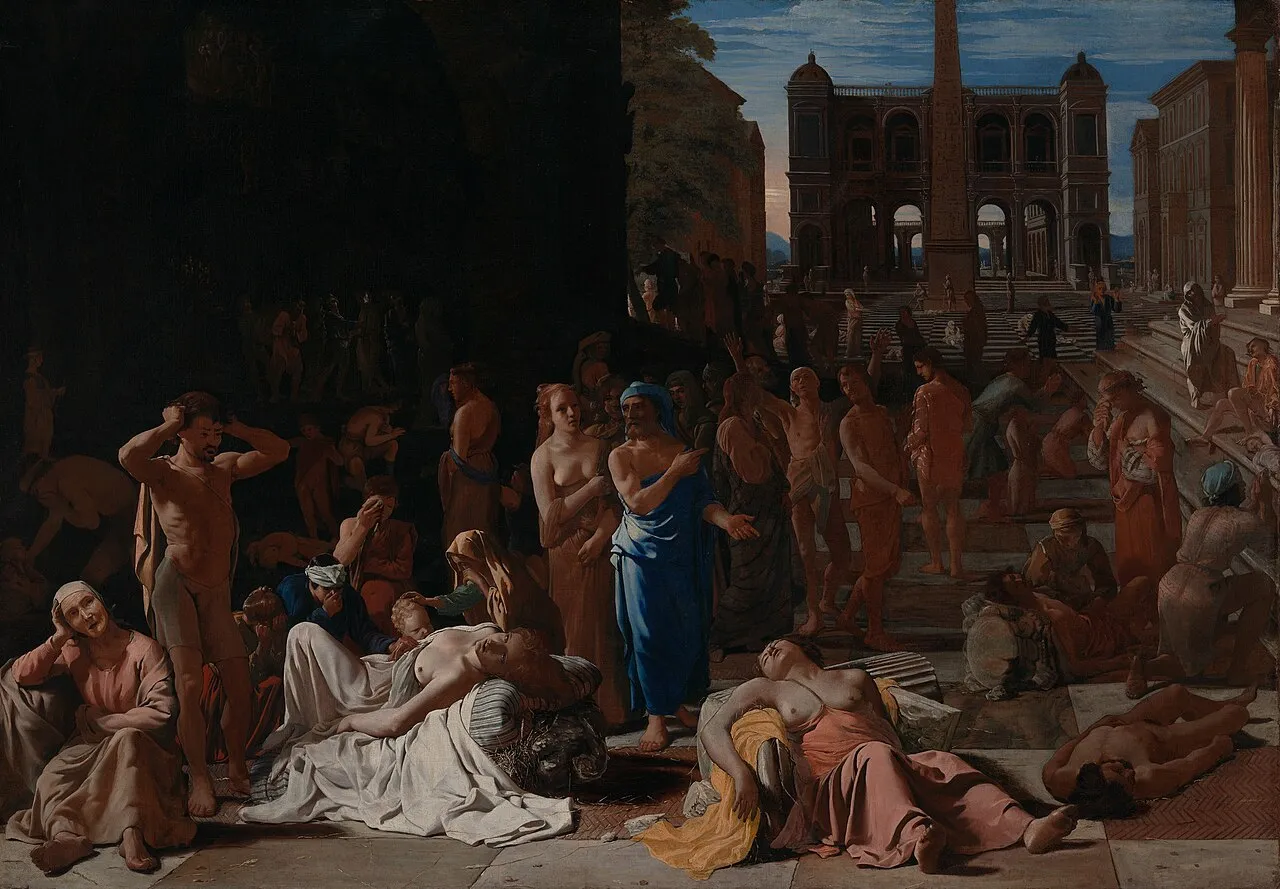
Nell'inverno del 165–166 d.C. le legioni di Lucio Vero, reduci dalla vittoria in Partia, tornarono in Occidente portando con sé una malattia che non aveva nome. In pochi mesi si diffuse dall'Oriente fino alla Britannia, colpendo città e campagne con una violenza mai vista dalla Peste di Atene del V secolo a.C. Lo storico Cassio Dione scrisse che a Roma morirono fino a duemila persone al giorno. Il medico di corte Galeno, che assistette all'epidemia e ne lasciò la descrizione clinica più completa, documentò febbre alta, diarrea nera, pustole cutanee che lasciavano cicatrici permanenti: quasi certamente si trattava di vaiolo, oppure di morbillo, entrambe malattie contro cui la popolazione romana non aveva alcuna immunità.
In the winter of 165–166 AD, Lucius Verus's legions, returning victorious from Parthia, came back west carrying a disease without a name. Within months it spread from the East to Britain, striking cities and countryside with a violence not seen since the Plague of Athens in the fifth century BC. The historian Cassius Dio wrote that in Rome up to two thousand people died per day. The court physician Galen, who witnessed the epidemic and left its most complete clinical description, documented high fever, black diarrhoea, cutaneous pustules leaving permanent scars: almost certainly smallpox, or measles, both diseases against which the Roman population had no immunity whatsoever.
La durata della pandemia fu eccezionale: quattordici anni, dal 165 al 180 d.C., lo stesso arco di tempo in cui Marco Aurelio combatté i Marcomanni sul Danubio. Non si trattò di un'unica ondata ma di cicli ricorrenti, con focolai che si riaccendevano ogni pochi anni. Le stime degli storici moderni parlano di cinque-dieci milioni di morti, pari al 7–10% della popolazione dell'Impero. Alcune province furono decimate: in Egitto, i registri fiscali del II secolo mostrano un crollo delle aziende agricole registrate che non si recuperò fino al III secolo.
The duration of the pandemic was exceptional: fourteen years, from 165 to 180 AD, the same span of time in which Marcus Aurelius fought the Marcomanni on the Danube. It was not a single wave but recurring cycles, with outbreaks reigniting every few years. Estimates by modern historians speak of five to ten million dead, equivalent to 7–10% of the Empire's population. Some provinces were decimated: in Egypt, second-century tax registers show a collapse in registered agricultural estates that did not recover until the third century.
Le conseguenze militari e economiche furono devastanti. Le legioni persero uomini che non riuscivano a rimpiazzare con le normali leve: Marco Aurelio fu costretto ad arruolare schiavi emancipati, gladiatori e, per la prima volta in forma sistematica, contingenti di mercenari germanici. Questo creò un precedente che avrebbe avuto conseguenze a lungo termine: le tribù germaniche che avrebbero distrutto Roma nel V secolo impararono le tattiche romane servendo nelle sue legioni. Sul piano economico, la riduzione della forza lavoro rurale colpì la produzione agricola, la base fiscale si restrinse, il tesoro imperiale si svuotò.
The military and economic consequences were devastating. The legions lost men they could not replace through normal conscription: Marcus Aurelius was forced to enlist emancipated slaves, gladiators and, for the first time systematically, contingents of Germanic mercenaries. This created a precedent with long-term consequences: the Germanic tribes that would destroy Rome in the fifth century learned Roman tactics by serving in her legions. Economically, the reduction in rural labour hit agricultural production, the tax base shrank, the imperial treasury emptied.
Marco Aurelio rispose con tutti i mezzi disponibili: aprì i depositi di grano imperiali, organizzò la sepoltura pubblica dei morti nei quartieri più poveri dove le famiglie non avevano risorse per i funerali, finanziò con denaro del tesoro privato la costruzione di ospizi nei sobborghi di Roma. Galeno fu chiamato a curare l'imperatore e la sua famiglia. Non era in suo potere fermare l'epidemia, la medicina del II secolo non conosceva la natura dei patogeni, ma poteva gestire le conseguenze sociali, e lo fece con il metodo sistematico che caratterizzò tutto il suo governo. Quasi certamente fu lui stesso vittima della stessa malattia: la "febbre" che lo uccise a Vindobona nel 180 d.C. corrisponde alle descrizioni che Galeno fa dell'ultima fase del vaiolo.
Marcus Aurelius responded with all available means: he opened imperial grain depots, organised the public burial of the dead in the poorest districts where families had no resources for funerals, financed with private treasury money the construction of hospices on the outskirts of Rome. Galen was called to treat the emperor and his family. It was not within his power to stop the epidemic, second-century medicine did not know the nature of pathogens, but he could manage the social consequences, and he did so with the systematic method that characterised his entire government. He was almost certainly himself a victim of the same disease: the "fever" that killed him at Vindobona in 180 AD matches Galen's descriptions of the final phase of smallpox.
04Le Guerre MarcomannicheThe Marcomannic Wars
Le guerre marcomanniche sono la più grande crisi militare del principato, quella che più di ogni altra prefigurava le future invasioni del V secolo. Marco Aurelio le affrontò senza esperienza militare (era stato educato come filosofo e amministratore, non come generale) e le combatté per quattordici anni, in condizioni aggravate dalla peste, dalla carestia e dal prosciugamento del tesoro. Le combatté anche mentre scriveva le Meditazioni. I due fatti non si escludono: anzi, si completano in una delle figure più paradossalmente umane della storia antica.
The Marcomannic wars are the greatest military crisis of the principate, the one that more than any other prefigured the future invasions of the fifth century. Marcus Aurelius faced them without military experience (he had been educated as philosopher and administrator, not as a general) and fought them for fourteen years, in conditions aggravated by plague, famine and the draining of the treasury. He fought them while also writing the Meditations. The two facts do not exclude each other: on the contrary, they complement each other in one of the most paradoxically human figures of ancient history.
- 162–166 d.C. Guerra Partica di Lucio Vero — I Parti invasero l'Armenia. Marco Aurelio inviò Lucio Vero in Oriente con il generale Avidio Cassio. La campagna fu un successo militare, Armenia e Mesopotamia tornarono nell'orbita romana, ma i soldati tornarono portando la Peste Antonina, che devastò l'Impero per i successivi quattordici anni. Lucius Verus's Parthian War — The Parthians invaded Armenia. Marcus Aurelius sent Lucius Verus to the East with the general Avidius Cassius. The campaign was a military success, Armenia and Mesopotamia returned to Roman orbit, but the soldiers returned carrying the Antonine Plague, which devastated the Empire for the next fourteen years.
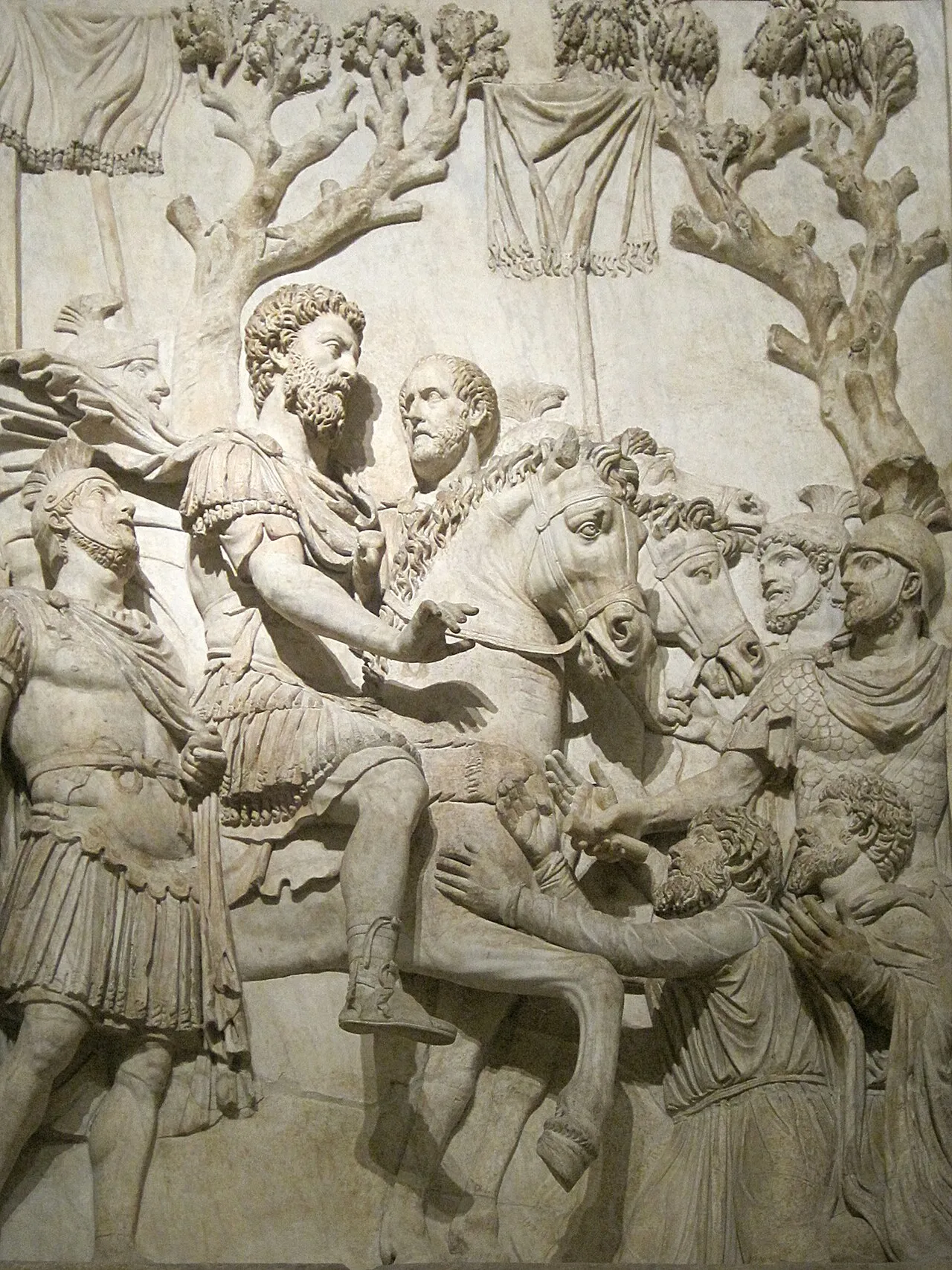
- 167–175 d.C. Prima Guerra Marcomanniche: la crisi del limes — Una grande confederazione di tribù germaniche (Marcomanni, Quadi, Sarmati, Iazigi) sfondò il limes danubiano e penetrò in Italia fino ad Aquileia. Era la prima invasione barbarica del suolo italico in tre secoli. Marco Aurelio vendette le suppellettili del palazzo imperiale per finanziare il riarmo, arruolò schiavi emancipati e gladiatori nelle legioni, e condusse la controffensiva personalmente, con base a Carnuntum sul Danubio. La morte di Lucio Vero nel 169 lasciò Marco Aurelio unico Augusto. First Marcomannic War: the limes crisis — A great confederation of Germanic tribes (Marcomanni, Quadi, Sarmatians, Iazyges) broke through the Danubian limes and penetrated Italy as far as Aquileia. It was the first barbarian invasion of Italian soil in three centuries. Marcus Aurelius sold the palace furnishings to fund rearmament, enrolled emancipated slaves and gladiators in the legions, and personally led the counteroffensive, based at Carnuntum on the Danube. The death of Lucius Verus in 169 left Marcus Aurelius as sole Augustus.
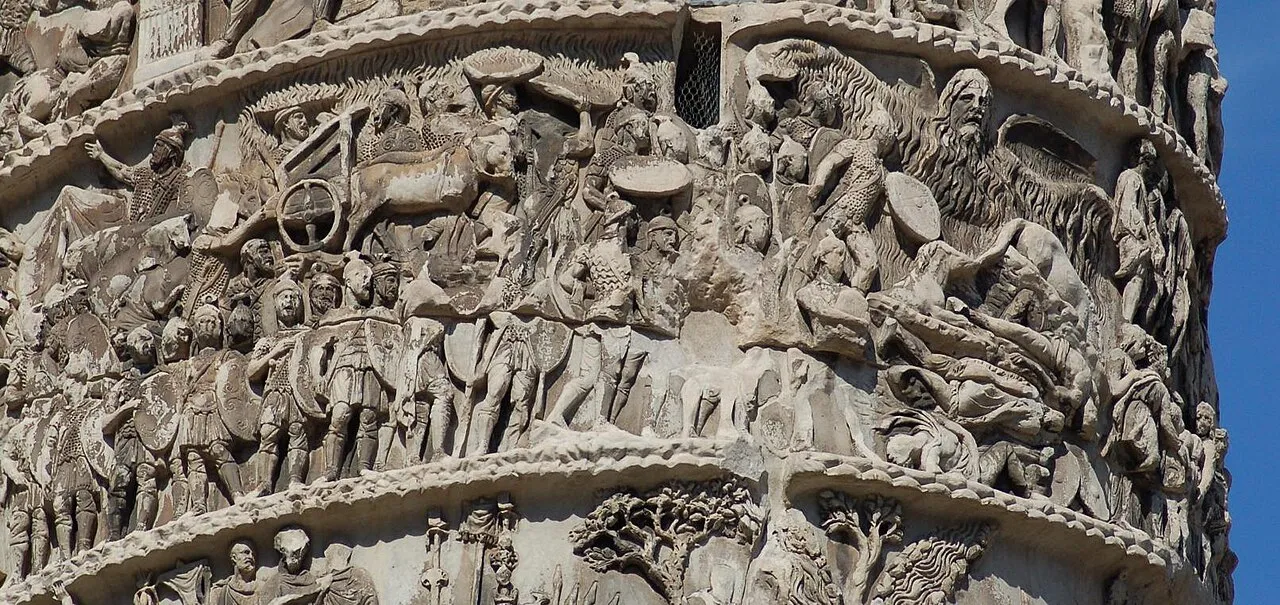
- 172 d.C. Il Miracolo della Pioggia — Durante l'assedio di un accampamento dei Quadi sul Danubio, la XII Legione (Fulminata) era circondata e quasi annientata dalla sete. Una tempesta improvvisa rinfrescò i soldati romani e disperse i nemici con fulmini e grandine. L'episodio fu immortalato sulla Colonna di Marco Aurelio: i Cristiani lo attribuirono alle preghiere dei soldati della loro fede, altri a un mago egizio di nome Arnufi. Marco Aurelio lo attribuì a Giove e ne ricevette il trionfo. The Rain Miracle — During the siege of a Quadi encampment on the Danube, the XII Legion (Fulminata) was surrounded and almost annihilated by thirst. A sudden storm refreshed the Roman soldiers and scattered the enemy with lightning and hail. The episode was immortalised on the Column of Marcus Aurelius: Christians attributed it to the prayers of soldiers of their faith, others to an Egyptian magician named Arnuphis. Marcus Aurelius attributed it to Jupiter and received a triumph for it.
- 175 d.C. La rivolta di Avidio Cassio — Mentre Marco Aurelio era impegnato sul Danubio, il generale Avidio Cassio, lo stesso che aveva vinto la guerra partica, si autoproclamò imperatore in Oriente, probabilmente credendo a una voce falsa sulla morte di Marco Aurelio. L'Egitto e la Siria lo seguirono. Marco Aurelio si preparò a marciare contro di lui, ma Cassio fu assassinato dai propri ufficiali dopo tre mesi. Marco Aurelio rifiutò di leggere le lettere dei congiurati e perdonò le famiglie dei ribelli. Fu uno dei gesti di clemenza più ammiirati dai contemporanei. The revolt of Avidius Cassius — While Marcus Aurelius was engaged on the Danube, the general Avidius Cassius, the same who had won the Parthian war, proclaimed himself emperor in the East, probably believing a false rumour about Marcus Aurelius's death. Egypt and Syria followed him. Marcus Aurelius prepared to march against him, but Cassius was assassinated by his own officers after three months. Marcus Aurelius refused to read the conspirators' letters and pardoned the rebels' families. It was one of the acts of clemency most admired by his contemporaries.
- 178–180 d.C. Seconda Guerra Marcomanniche: la vittoria incompiuta — Dopo un breve periodo a Roma, Marco Aurelio tornò sul fronte danubiano nell'autunno del 178. La campagna andava bene: era vicino a trasformare i territori germanici nelle due nuove province di Marcomannia e Sarmatia. L'incorporazione avrebbe allungato il confine ma lo avrebbe reso più difendibile. Poi, nel marzo del 180, la febbre. Morì a Vindobona il 17 marzo del 180, all'età di 58 anni. Commodo firmò subito la pace e abbandonò le conquiste. Second Marcomannic War: the unfinished victory — After a brief stay in Rome, Marcus Aurelius returned to the Danubian front in autumn 178. The campaign was going well: he was close to transforming the Germanic territories into the two new provinces of Marcomannia and Sarmatia. The incorporation would have lengthened the frontier but made it more defensible. Then, in March 180, the fever came. He died at Vindobona on March 17, 180, aged 58. Commodus immediately signed peace and abandoned the conquests.
05Riforme e OpereReforms and Works
- 161–180 d.C. Riforma del diritto — Marco Aurelio è uno dei principali autori dell'umanizzazione del diritto romano. Limitò il potere assoluto del paterfamilias sui figli, estendendo ai tribunali il diritto di intervenire nei casi di abuso. Migliorò la condizione giuridica degli schiavi: un padrone poteva essere processato per averli uccisi senza ragione. Ampliò i diritti ereditari delle donne. Nominò come consulenti legali Gaio e Papiniano, due dei maggiori giuristi romani, incaricandoli di sistemare e commentare il corpus del diritto civile. Legal reform — Marcus Aurelius is one of the main authors of the humanisation of Roman law. He limited the absolute power of the paterfamilias over his children, extending to the courts the right to intervene in cases of abuse. He improved the legal condition of slaves: a master could be tried for killing them without cause. He expanded women's inheritance rights. He appointed as legal advisers Gaius and Papinian, two of the greatest Roman jurists, tasking them with organising and commenting on the corpus of civil law.
- 176 d.C. Cattedre filosofiche di Atene — Istituì ad Atene quattro cattedre filosofiche finanziate dallo Stato (platonismo, aristotelismo, stoicismo, epicureismo) con uno stipendio annuo di 10.000 dracme ciascuna. Era la prima forma di insegnamento filosofico pubblico retribuito nell'antichità. Atene ritornò così ad essere il centro culturale del Mediterraneo. L'atto rispecchiava la sua convinzione che la filosofia non fosse un lusso elitario ma una necessità civica. Philosophical chairs at Athens — He established in Athens four philosophy chairs funded by the State (Platonism, Aristotelianism, Stoicism, Epicureanism) with an annual salary of 10,000 drachmas each. It was the first form of publicly funded philosophical teaching in antiquity. Athens thus returned to being the cultural centre of the Mediterranean. The act reflected his conviction that philosophy was not an elitist luxury but a civic necessity.
- 176–193 d.C. Colonna di Marco Aurelio — Eretta in Campo Marzio dopo la sua morte (oggi in Piazza Colonna a Roma), alta 29,6 metri, celebra le vittorie marcomanniche con una spirale di bassorilievi. A differenza della Colonna Traiana, il tono è più drammatico e meno trionfale: l'artista, forse lo stesso che lavorò alla Colonna di Traiano, mostra la brutalità della guerra, non solo la gloria del vincitore. Column of Marcus Aurelius — Erected in the Campus Martius after his death (today in Piazza Colonna in Rome), 29.6 metres tall, it celebrates the Marcomannic victories with a spiral of bas-reliefs. Unlike Trajan's Column, the tone is more dramatic and less triumphalist: the artist, perhaps the same who worked on Trajan's Column, shows the brutality of war, not only the glory of the victor.
- 168 d.C. Vendita del patrimonio imperiale — Di fronte al crollo delle entrate fiscali causato dalla peste e dall'impegno militare, Marco Aurelio rinunciò ad aumentare le tasse: vendette all'asta nel Foro di Traiano oggetti preziosi del palazzo imperiale: gioielli, suppellettili d'oro e d'argento, vesti di seta, persino statue. L'asta durò due mesi. Il ricavato finanziò le campagne militari. Era il gesto contrario a quello di ogni predecessore: l'imperatore che impoverisce se stesso per non impoverire i sudditi. Sale of imperial patrimony — Faced with the collapse of fiscal revenues caused by the plague and military commitment, Marcus Aurelius refused to raise taxes: he auctioned in the Forum of Trajan precious objects from the imperial palace: jewels, gold and silver furnishings, silk garments, even statues. The auction lasted two months. The proceeds financed the military campaigns. It was the gesture contrary to every predecessor: the emperor who impoverishes himself so as not to impoverish his subjects.
06Il Filosofo StoicoThe Stoic Philosopher
Lo stoicismo e i suoi maestri
Stoicism and its teachers
Lo stoicismo fu fondato da Zenone di Cizio intorno al 300 a.C. ad Atene, sulla base della convinzione che la ragione sia il principio divino che permea l'universo e che l'essere umano raggiunga la felicità soltanto vivendo in accordo con essa. Per lo stoico, l'unico bene autentico è la virtù, arete, e il filosofo deve accettare con serenità tutto ciò che non dipende da lui: malattia, morte, povertà, perdita. Marco Aurelio giunse allo stoicismo non per via accademica ma attraverso la lettura diretta di Epitteto, lo schiavo frigio che era diventato il maestro più influente del suo tempo senza aver scritto una sola parola (i suoi discepoli presero appunti, poi pubblicati come Diatribe e Manuale).
Stoicism was founded by Zeno of Citium around 300 BC in Athens, on the conviction that reason is the divine principle permeating the universe and that the human being achieves happiness only by living in accordance with it. For the Stoic, the only authentic good is virtue, arete, and the philosopher must accept with serenity all that does not depend on him: illness, death, poverty, loss. Marcus Aurelius arrived at Stoicism not through academic channels but through the direct reading of Epictetus, the Phrygian slave who had become the most influential teacher of his time without having written a single word himself (his disciples took notes, later published as Discourses and Handbook).
Il contatto con Epitteto avvenne tramite il maestro Rustico, che gli prestò il manoscritto. Fu una rivelazione. La distinzione epittètica tra eph' hēmin (ciò che è in nostro potere: opinioni, impulsi, desideri) e ouk eph' hēmin (ciò che non lo è: corpo, fama, cariche) divenne l'armatura filosofica con cui Marco Aurelio affrontò quattordici anni di guerra, una pandemia, una rivolta interna e la morte dei figli. Nella sua interpretazione dello stoicismo, però, c'è qualcosa di più personale: una continua autocritica, un'umiltà quasi autolesionista, la sensazione di non essere mai all'altezza degli ideali che si è posto. Epitteto, lo schiavo, scriveva con autorità; Marco Aurelio, il padrone del mondo, scriveva con dubbio.
Contact with Epictetus came through his teacher Rusticus, who lent him the manuscript. It was a revelation. The Epictetan distinction between eph' hēmin (what is in our power: opinions, impulses, desires) and ouk eph' hēmin (what is not: body, fame, offices) became the philosophical armour with which Marcus Aurelius faced fourteen years of war, a pandemic, an internal revolt and the deaths of his children. In his interpretation of Stoicism, however, there is something more personal: a continuous self-criticism, an almost self-destructive humility, the feeling of never being equal to the ideals he has set himself. Epictetus, the slave, wrote with authority; Marcus Aurelius, the master of the world, wrote with doubt.
La filosofia nel governo
Philosophy in government
Lo stoicismo di Marco Aurelio non era un lusso intellettuale privato: plasmava concretamente le sue decisioni di governo. Quando Avidio Cassio si ribellò, avrebbe potuto giustiziarlo e distruggere la sua famiglia: invece, alla notizia che Cassio era stato ucciso dai propri soldati, pianse, non di gioia, ma perché era stato privato della possibilità di perdonarlo. Rifiutò di leggere le lettere dei congiurati e le fece bruciare, perché "non avrei voluto leggere nulla che potesse far crescere il mio odio o la mia crudeltà". La clemenza non era debolezza: era, nei termini stoici, il riconoscimento che la rabbia è un'emozione che non dipende da noi e va corretta prima di agire.
Marcus Aurelius's Stoicism was not a private intellectual luxury: it concretely shaped his governance decisions. When Avidius Cassius rebelled, he could have executed him and destroyed his family: instead, on hearing that Cassius had been killed by his own soldiers, he wept, not from joy, but because he had been deprived of the opportunity to pardon him. He refused to read the conspirators' letters and had them burned, because "I would not have wanted to read anything that might increase my hatred or my cruelty." Clemency was not weakness: it was, in Stoic terms, the recognition that anger is an emotion that does not depend on us and must be corrected before acting.
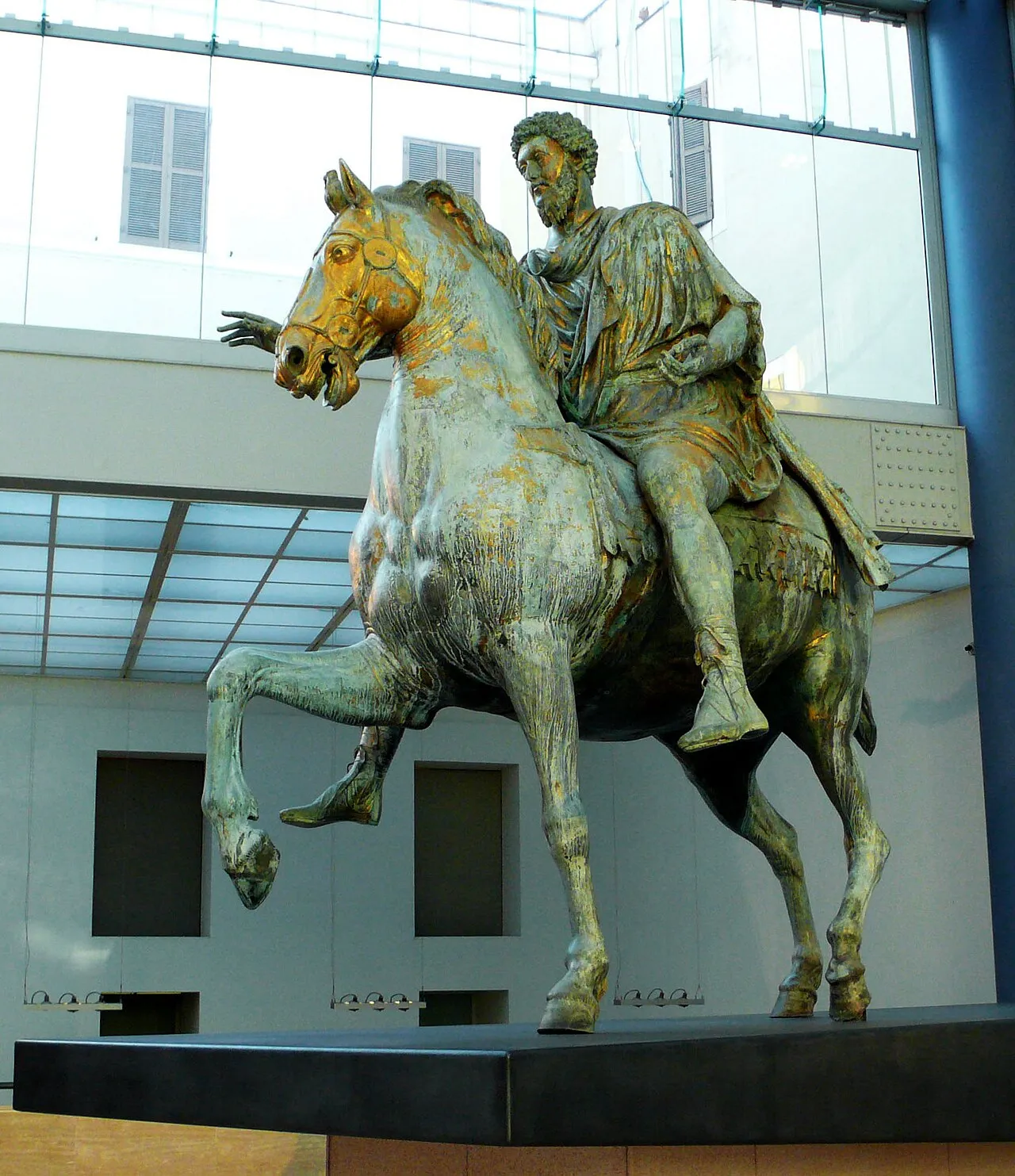
In un famoso passo delle Meditazioni Marco Aurelio immagina di svegliarsi al mattino e prepararsi all'incontro con il mondo: "Incontrerò questo giorno persone invidiose, ingrate, violente, traditrici, malvage. Ma esse sono così perché ignorano il bene e il male. Io invece so che il bene è bello e il male è brutto, e che colui che sbaglia è comunque mio fratello." Non è rassegnazione: è il tentativo di governare la propria reazione prima ancora di governare l'Impero. La filosofia stoica era, in definitiva, uno strumento di autoregolazione del potere, uno degli strumenti più sofisticati che la storia abbia mai prodotto.
In a famous passage of the Meditations Marcus Aurelius imagines waking in the morning and preparing to encounter the world: "I shall meet today people who are envious, ungrateful, violent, treacherous, wicked. But they are so because they are ignorant of good and evil. I, however, know that the good is beautiful and evil is ugly, and that whoever errs is nonetheless my brother." This is not resignation: it is the attempt to govern one's own reaction even before governing the Empire. Stoic philosophy was, ultimately, a tool for the self-regulation of power: one of the most sophisticated tools history has ever produced.
07Eredità e Giudizio StoricoLegacy and Historical Judgement
L'errore di Commodo
The mistake of Commodus
La più grande tragedia intellettuale del regno di Marco Aurelio è anche la più grande ironia della storia imperiale romana: il filosofo che aveva dedicato la vita alla virtù, al dovere e alla ragione lasciò il trono al figlio meno adatto che la stirpe antonina avesse mai prodotto. La tradizione di adozione meritocratica (Nerva scelto dai militari, Traiano adottato da Nerva, Adriano designato da Traiano, Antonino e Marco scelti da Adriano) si era dimostrata il meccanismo di governo più efficace dell'antichità. Marco Aurelio la ruppe per Commodo.
The greatest intellectual tragedy of Marcus Aurelius's reign is also the greatest irony in Roman imperial history: the philosopher who had dedicated his life to virtue, duty and reason left the throne to the least suitable son the Antonine line had ever produced. The tradition of meritocratic adoption (Nerva chosen by the military, Trajan adopted by Nerva, Hadrian designated by Trajan, Antoninus and Marcus chosen by Hadrian) had proved the most effective governance mechanism of antiquity. Marcus Aurelius broke it for Commodus.
Le ragioni rimangono discusse. Marco Aurelio aveva fatto di Commodo co-Augusto già nel 177, a soli sedici anni, rompendo il precedente storico dell'adozione; probabilmente le pressioni di Faustina, morta nel 175, avevano giocato un ruolo. Forse temeva che un successore adottivo avrebbe innescato una nuova rivolta simile a quella di Avidio Cassio. Forse la malattia, era già gravemente provato dalla peste, lo aveva reso meno lucido nelle decisioni di lungo periodo. O forse, semplicemente, nessun padre riesce a valutare davvero il proprio figlio con occhi di filosofo.
The reasons remain debated. Marcus Aurelius had made Commodus co-Augustus already in 177, at barely sixteen, breaking the historical precedent of adoption; probably the pressures of Faustina, who died in 175, had played a role. Perhaps he feared that an adopted successor would trigger a new revolt similar to that of Avidius Cassius. Perhaps the illness (he was already gravely weakened by the plague) had made him less clear-headed in long-term decisions. Or perhaps, simply, no father is truly able to assess his own son with a philosopher's eyes.
Commodo fu tutto ciò che Marco Aurelio non era: vanitoso, crudele, megalomane, indifferente al governo. Si identificò con Ercole, rinominò Roma "Colonia Commodiana" e se stesso "Hercules Romanus Exuperatorius". Partecipò come gladiatore ai giochi del Colosseo. Fu assassinato dai propri congiurati nel 192. Edward Gibbon scrisse che "la morte di Marco segnò la morte della felicità per il mondo romano", e benché sia una formula retorica, contiene una verità storica: dopo Marco Aurelio non vi fu più un imperatore della stessa statura intellettuale e morale per tre secoli.
Commodus was everything Marcus Aurelius was not: vain, cruel, megalomaniacal, indifferent to governance. He identified with Hercules, renamed Rome "Colonia Commodiana" and himself "Hercules Romanus Exuperatorius." He participated as a gladiator in the Colosseum games. He was assassinated by his own conspirators in 192. Edward Gibbon wrote that "the death of Marcus marked the death of happiness for the Roman world", and though it is a rhetorical formula, it contains a historical truth: after Marcus Aurelius there was no emperor of the same intellectual and moral stature for three centuries.
L'eredità filosofica
The philosophical legacy
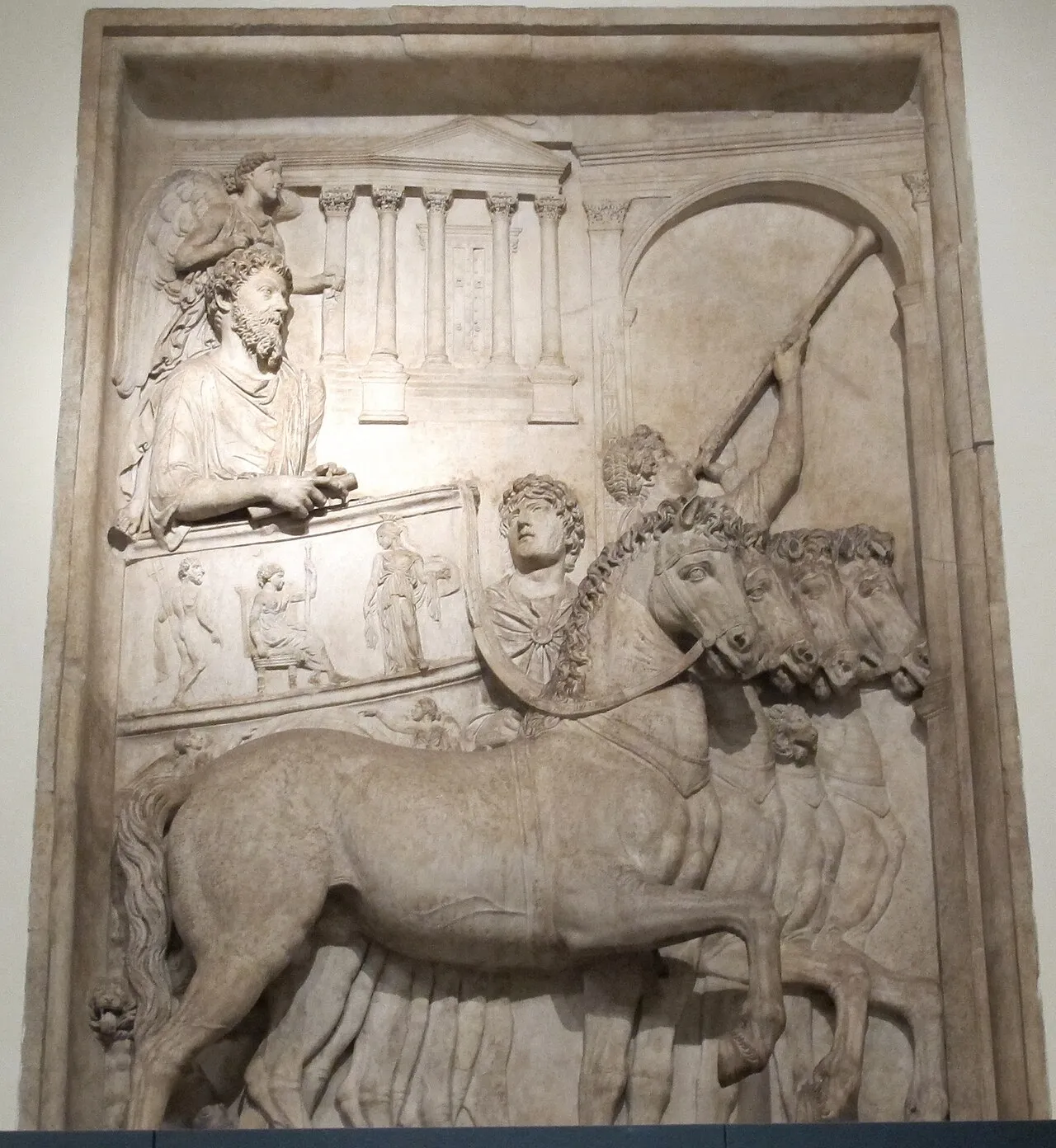
L'eredità di Marco Aurelio è unica nella storia: è simultaneamente quella di un imperatore e quella di un filosofo, e nessuna delle due si eclissa nell'altra. Come imperatore tenne l'Impero unito in uno dei momenti più difficili (pestilenza, guerra su due fronti, rivolta interna, crisi finanziaria) senza mai ricorrere alla tirannia. Come filosofo lasciò un testo che ha attraversato venti secoli senza perdere forza. Le Meditazioni sono oggi al centro del movimento contemporaneo del "neostoicismo": tradotte in oltre cento lingue, vendono milioni di copie, sono citate in psicoterapia cognitiva (la CBT di Aaron Beck deve molto alla distinzione stoica tra pensiero ed emozione) e nelle sale dei consigli di amministrazione.
Marcus Aurelius's legacy is unique in history: it is simultaneously that of an emperor and that of a philosopher, and neither eclipses the other. As emperor he kept the Empire united in one of its most difficult moments (pestilence, war on two fronts, internal revolt, financial crisis) without ever resorting to tyranny. As philosopher he left a text that has crossed twenty centuries without losing force. The Meditations are today at the centre of the contemporary "neo-Stoicism" movement: translated into over a hundred languages, selling millions of copies, cited in cognitive psychotherapy (Aaron Beck's CBT owes much to the Stoic distinction between thought and emotion) and in boardrooms.
Il paradosso definitivo di Marco Aurelio: l'uomo più potente del mondo antico scrisse per tutta la vita di come essere un essere umano normale, di come resistere alla tentazione della grandezza, di come ricordarsi ogni mattina che la fama è polvere e la vita è breve. È questo paradosso, il potere assoluto esercitato con dubbio assoluto, che rende Marco Aurelio non semplicemente il migliore degli imperatori, ma una delle figure più perturbanti e affascinanti che la storia abbia mai prodotto.
The ultimate paradox of Marcus Aurelius: the most powerful man of the ancient world wrote throughout his life about how to be a normal human being, how to resist the temptation of greatness, how to remind himself every morning that fame is dust and life is brief. It is this paradox, absolute power exercised with absolute doubt, that makes Marcus Aurelius not simply the best of emperors, but one of the most disturbing and fascinating figures that history has ever produced.