01Dalle Stalle al TronoFrom the Stables to the Throne
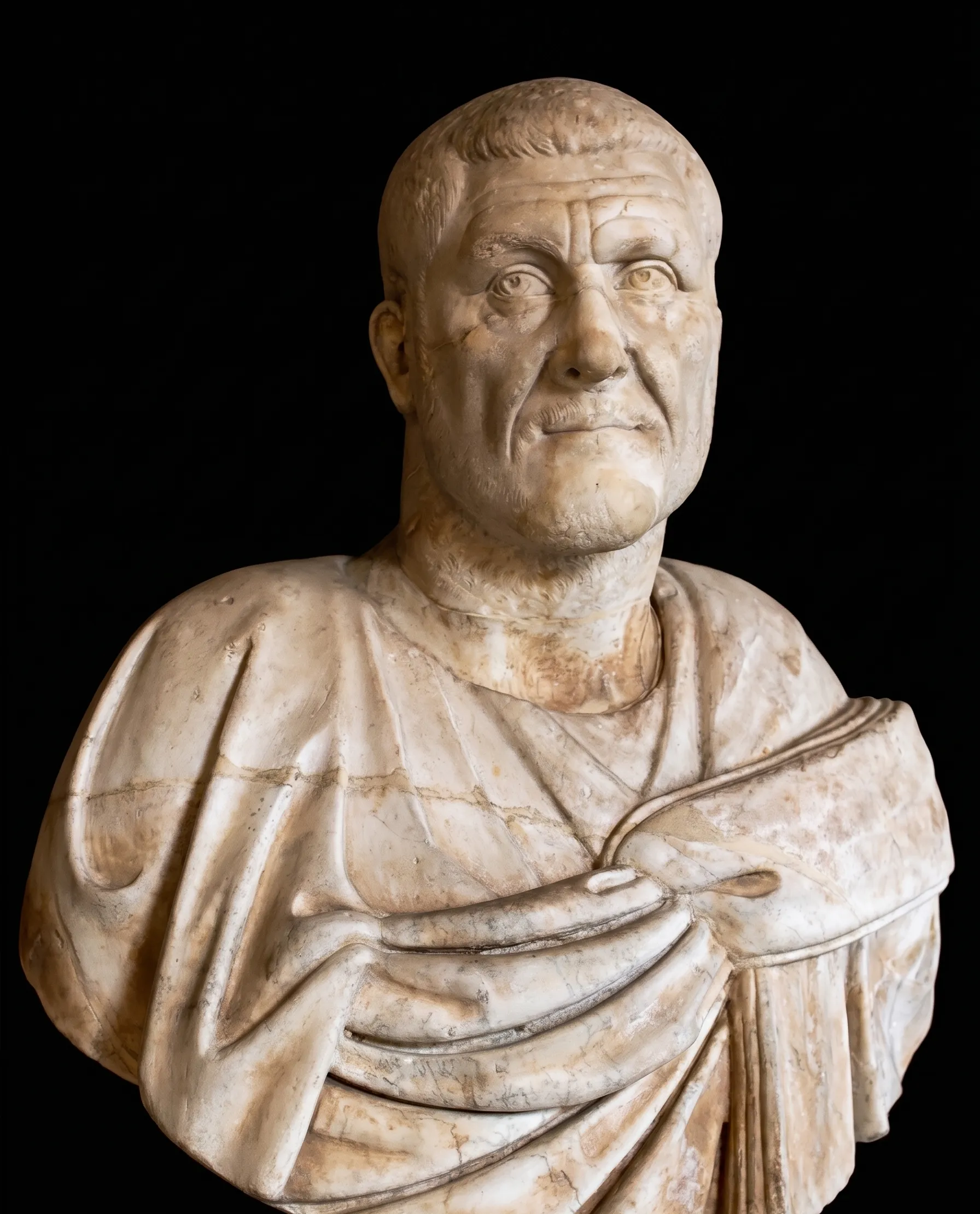
La storia di Massimino il Trace è quella di un uomo che avrebbe dovuto essere impossibile; eppure accadde. Nato in Tracia o Moesia da un padre goto e una madre alana, crebbe come contadino e pastore. Non era romano, non parlava correntemente il latino, non aveva alcuna educazione senatoriale. La sua unica qualità era la forza fisica straordinaria: le fonti antiche gli attribuiscono una statura di oltre otto piedi romani (circa 2,40 m), un'esagerazione letteraria che rispecchiava però la sua reputazione da gigante.
The story of Maximinus Thrax is that of a man who should have been impossible, yet it happened. Born in Thrace or Moesia to a Gothic father and an Alanic mother, he grew up as a farmer and shepherd. He was not Roman, did not speak Latin fluently, had no senatorial education. His only quality was extraordinary physical strength: ancient sources attribute him a stature of over eight Roman feet (about 2.40 m), a literary exaggeration that nevertheless reflected his reputation as a giant.
L'Incontro con Settimio SeveroThe Meeting with Septimius Severus
Secondo l'Historia Augusta, fonte tarda ma ricca di aneddoti, Massimino fu scoperto dall'imperatore Settimio Severo in persona durante una festa militare in Tracia nel 202 d.C. Aveva circa 30 anni e si presentò ai giochi: superò sedici soldati in lotta libera uno dopo l'altro, senza nemmeno sudare. Severo, impressionato, gli regalò una collana d'oro e lo arruolò nella propria guardia personale. Secondo l'aneddoto leggendario, Massimino correva alla cintura del cavallo imperiale per chilometri senza fatica, e a riposo poteva trascinare un carro carico da solo. Sotto Caracalla divenne centurione, sotto Alessandro Severo fu nominato praefectus tironum, istruttore delle reclute, posizione che gli permise di costruire l'unica vera base di potere dei suoi futuri ammutinati: i giovani legionari pannonici e illirici.
According to the Historia Augusta, a late source but rich in anecdotes, Maximinus was discovered by Emperor Septimius Severus in person during a military feast in Thrace in 202 AD. He was about 30 years old and presented himself at the games: he beat sixteen soldiers in wrestling one after the other, without even sweating. Severus, impressed, gave him a gold necklace and enlisted him in his own personal guard. According to legendary anecdote, Maximinus ran at the imperial horse's belt for kilometers without tiring, and at rest could drag a loaded cart alone. Under Caracalla he became centurion, under Alexander Severus he was named praefectus tironum: drill instructor of recruits, a position which allowed him to build the only real power base of his future mutineers: the young Pannonian and Illyrian legionaries.
Il Gigante: Verità e LeggendaThe Giant: Truth and Legend
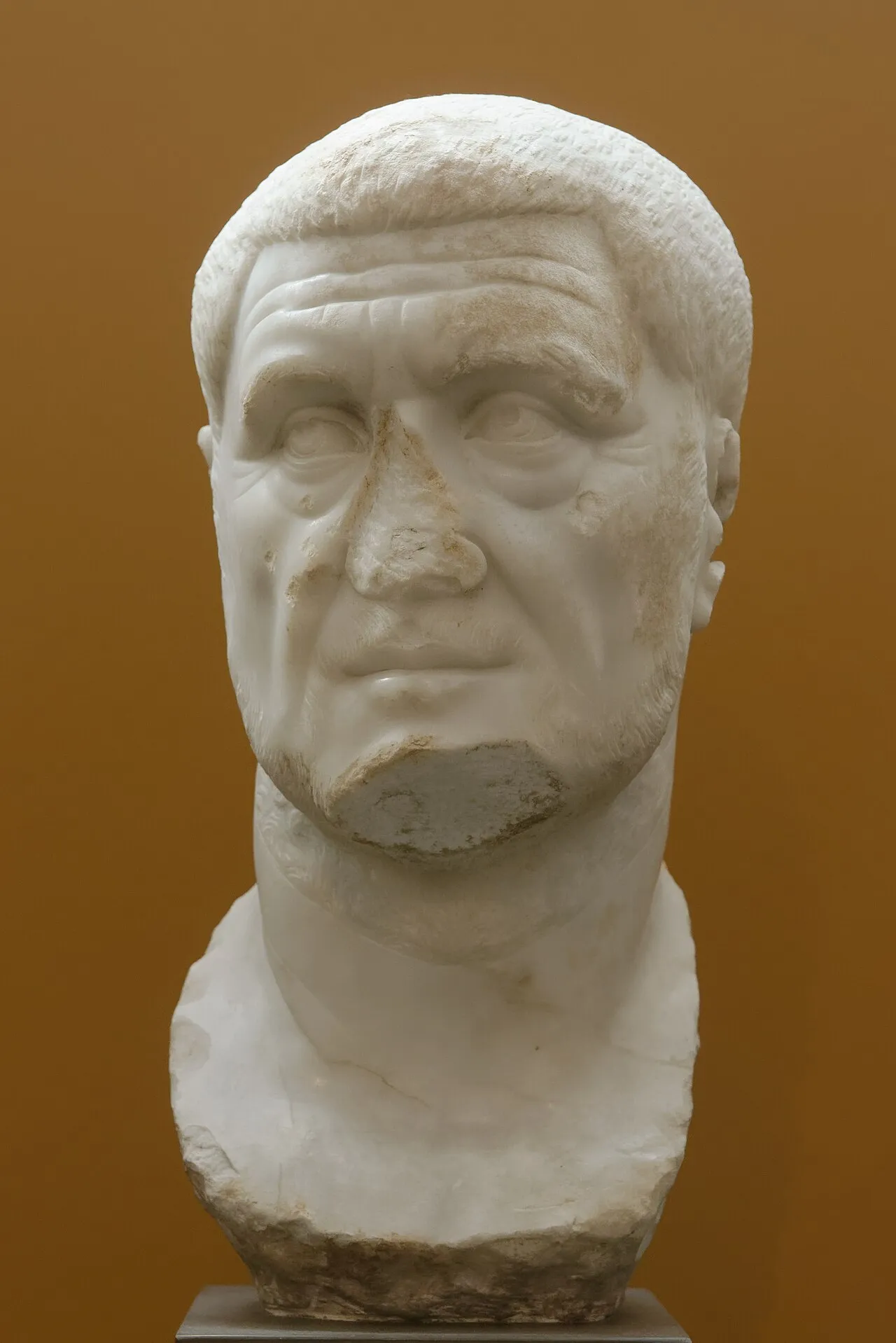
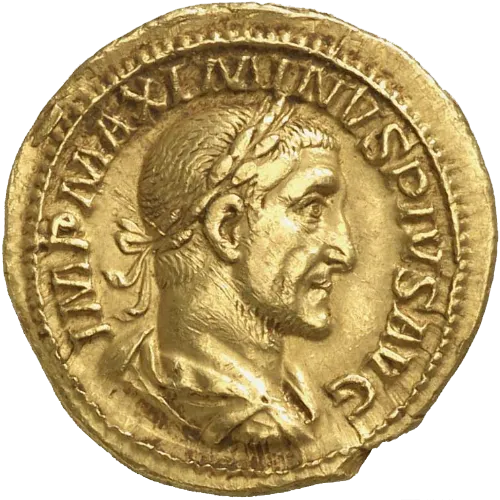
Le fonti antiche concordano sull'aspetto eccezionale di Massimino. Erodiano lo descrive come «otto piedi e mezzo» (circa 2,50 m); Giovanni di Antiochia, in epoca bizantina, parla di «otto piedi e un palmo». Si tramandavano aneddoti curiosi: il suo anello matrimoniale era così largo che ci passava il braccio di sua moglie, e mangiava 18 chili di carne e beveva 25 litri di vino al giorno. L'archeologia moderna ha probabilmente trovato conferma: un'analisi paleopatologica dei suoi presunti resti suggerisce che soffrisse di acromegalia, disturbo dell'ipofisi che produce gigantismo. Le caratteristiche cranio-facciali dei suoi ritratti monetali (mandibola pronunciata, ossa zigomatiche massicce) sono compatibili con la diagnosi.
Ancient sources agree on Maximinus's exceptional appearance. Herodian describes him as «eight and a half feet» (about 2.50 m); John of Antioch, in the Byzantine era, speaks of «eight feet and a palm». Curious anecdotes were transmitted: his wedding ring was so wide that his wife's arm passed through it, and he ate 18 kilos of meat and drank 25 liters of wine a day. Modern archaeology has probably found confirmation: a paleopathological analysis of his presumed remains suggests that he suffered from acromegaly, a pituitary disorder producing gigantism. The craniofacial characteristics of his coin portraits (prominent jaw, massive cheekbones) are compatible with the diagnosis.
Entrò nell'esercito sotto Settimio Severo e scalò i ranghi militari per puro valore sul campo. Sotto Alessandro Severo era già un alto comandante. Nel 235, durante la campagna sul Reno, le legioni si ribellarono ad Alessandro, che aveva preferito pagare i Germani anziché combatterli. I soldati assassinarono l'imperatore e acclamarono Massimino. Il Senato, di fronte al fatto compiuto, lo ratificò. Era il primo imperatore nella storia di Roma privo di qualsiasi legame con l'aristocrazia senatoria.
He entered the army under Septimius Severus and climbed the military ranks through pure valor in the field. Under Alexander Severus he was already a high commander. In 235, during the Rhine campaign, the legions rebelled against Alexander, who had preferred to pay the Germans rather than fight them. The soldiers assassinated the emperor and acclaimed Maximinus. The Senate, faced with the fait accompli, ratified him. He was the first emperor in Roman history with no ties to the senatorial aristocracy.
02Il Soldato-ImperatoreThe Soldier-Emperor
- 235–238 d.C.Campagne germaniche — Massimino condusse vittoriose campagne sul Reno e sul Danubio contro Alamanni e Sarmati. Era un generale capace: le sue vittorie militari furono reali. Ma non andò mai a Roma: governava dall'accampamento.Germanic campaigns — Maximinus led victorious campaigns on the Rhine and Danube against Alemanni and Sarmatians. He was a capable general: his military victories were real. But he never went to Rome: he governed from camp.
- 235–238 d.C.Oppressione fiscale — Per finanziare l'esercito, tassò brutalmente le province e confiscò i beni dei ricchi. I senatori lo odiavano: era un barbaro ignorante che distruggeva le istituzioni romane. Il rancore montava.Fiscal oppression — To fund the army, he brutally taxed provinces and confiscated wealthy men's property. Senators hated him: he was an ignorant barbarian destroying Roman institutions. Resentment was mounting.
- 238 d.C.La ribellione in Africa — Il proconsole d'Africa Gordiano I si ribellò, proclamandosi imperatore con il figlio. Il Senato riconobbe i Gordiani e dichiarò Massimino nemico pubblico. Iniziò la guerra civile.The African rebellion — The proconsul of Africa Gordian I rebelled, proclaiming himself emperor with his son. The Senate recognized the Gordians and declared Maximinus a public enemy. Civil war began.
03L'Anno dei Sei Imperatori (238 d.C.)The Year of the Six Emperors (238 AD)
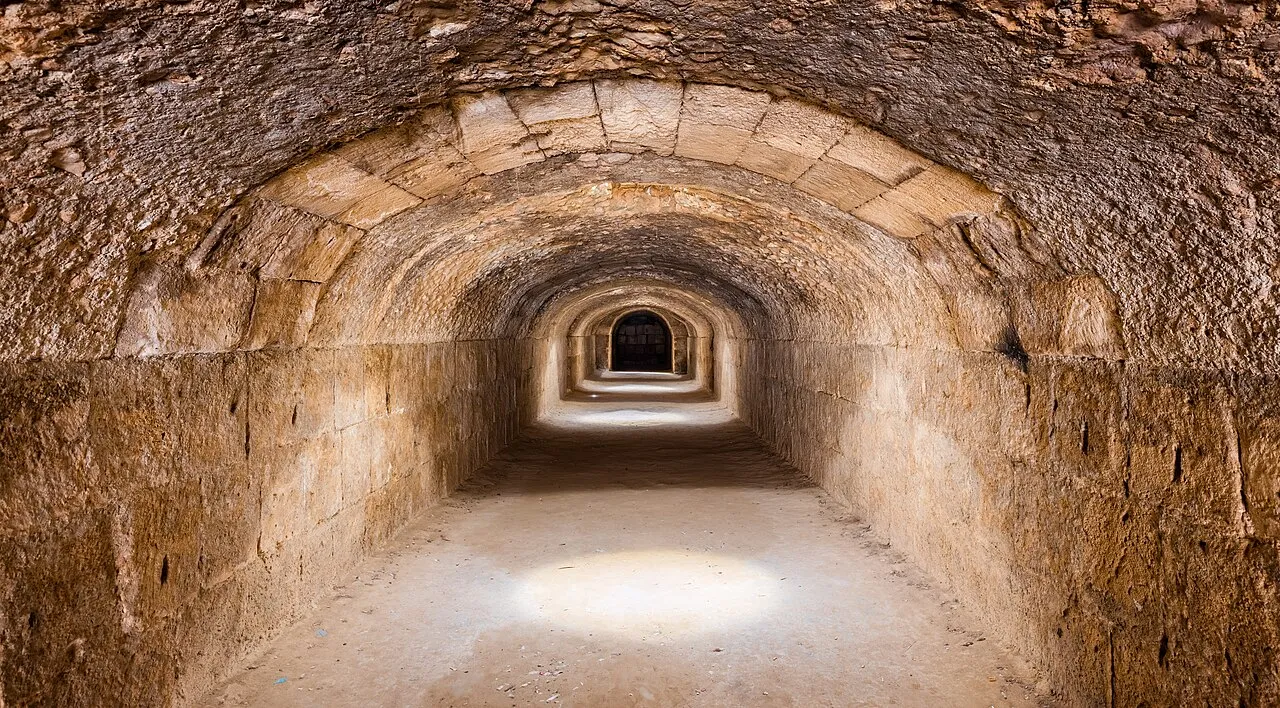
Il 238 d.C. è uno degli anni più convulsi della storia romana: sei imperatori acclamati e morti in soli dodici mesi. La crisi cominciò in marzo, in Africa Proconsolare, quando i giovani dell'aristocrazia di Tisdrus (l'odierna El Djem, Tunisia) si rivoltarono contro un esattore di Massimino e proclamarono imperatore l'anziano e ricchissimo proconsole Gordiano I, 79 anni, e suo figlio Gordiano II, co-Augusto.
238 AD is one of the most convulsive years in Roman history: six emperors acclaimed and dead in just twelve months. The crisis began in March, in Africa Proconsularis, when the young aristocrats of Thysdrus (modern El Djem, Tunisia) revolted against a tax collector of Maximinus and proclaimed emperor the elderly and very wealthy proconsul Gordian I, 79 years old, and his son Gordian II, co-Augustus.
Il Senato si RibellaThe Senate Rebels
Il Senato di Roma, esasperato dalla tassazione di Massimino, riconobbe immediatamente i Gordiani, un atto di alta tradimento, e proclamò Massimino hostis publicus: nemico pubblico dell'Impero. Pochi giorni dopo, però, il legato di Numidia Capelliano, fedele a Massimino, attaccò i Gordiani a Cartagine. Gordiano II morì in battaglia; il padre Gordiano I si impiccò appena ne ricevette notizia. Avevano regnato 22 giorni. Il Senato, ormai compromesso, dovette nominare in tutta fretta due nuovi imperatori scelti tra i propri membri: Pupieno (Massimo Pupieno Africano) e Balbino (Decimo Celio Calvino Balbino). Era la prima volta dall'epoca della Repubblica che due Augusti senatoriali governavano in parallelo, con autorità collegiale.
The Senate of Rome, exasperated by Maximinus's taxation, immediately recognized the Gordians, an act of high treason, and declared Maximinus hostis publicus: public enemy of the Empire. A few days later, however, the legate of Numidia Capellianus, loyal to Maximinus, attacked the Gordians at Carthage. Gordian II died in battle; his father Gordian I hanged himself as soon as he received the news. They had reigned 22 days. The Senate, now compromised, had to hastily appoint two new emperors chosen from among its own members: Pupienus (Maximus Pupienus Africanus) and Balbinus (Decimus Caelius Calvinus Balbinus). It was the first time since the Republican era that two senatorial Augusti governed in parallel, with collegial authority.
La folla romana, però, rifiutò il duumvirato senatorio: voleva un erede di sangue imperiale. Il Senato dovette aggiungere come Caesar il tredicenne Gordiano III, nipote di Gordiano I per parte di madre. Tre Augusti uomini di nascita libera (Pupieno, Balbino, Massimino) e un Cesare bambino regnavano nominalmente contemporaneamente sull'Impero Romano nella primavera del 238.
The Roman crowd, however, rejected the senatorial duumvirate: they wanted an heir of imperial blood. The Senate had to add as Caesar the thirteen-year-old Gordian III, grandson of Gordian I on his mother's side. Three Augusti freeborn men (Pupienus, Balbinus, Maximinus) and a child Caesar nominally reigned simultaneously over the Roman Empire in the spring of 238.
04La Fine ad AquileiaThe End at Aquileia
Massimino marciò verso l'Italia, ma rimase bloccato ad Aquileia: città ben difesa che resistette tenacemente all'assedio. I rifornimenti scarseggiavano, l'inverno si avvicinava, il morale delle truppe crollava. I soldati cominciarono a chiedersi perché stavano morendo di fame per un imperatore che non aveva mai visto Roma. Nella primavera del 238, i soldati della legione II Partica irruppero nella sua tenda. Massimino fu decapitato insieme al figlio Massimo. Le loro teste furono inviate a Roma, dove la folla le accolse con gioia.
Maximinus marched toward Italy but became bogged down at Aquileia: a well-defended city that resisted the siege tenaciously. Supplies were scarce, winter was approaching, troop morale was collapsing. Soldiers began asking themselves why they were starving for an emperor who had never seen Rome. In spring 238, soldiers of the II Parthica legion burst into his tent. Maximinus was beheaded along with his son Maximus. Their heads were sent to Rome, where the crowds received them with joy.
L'Assedio di AquileiaThe Siege of Aquileia
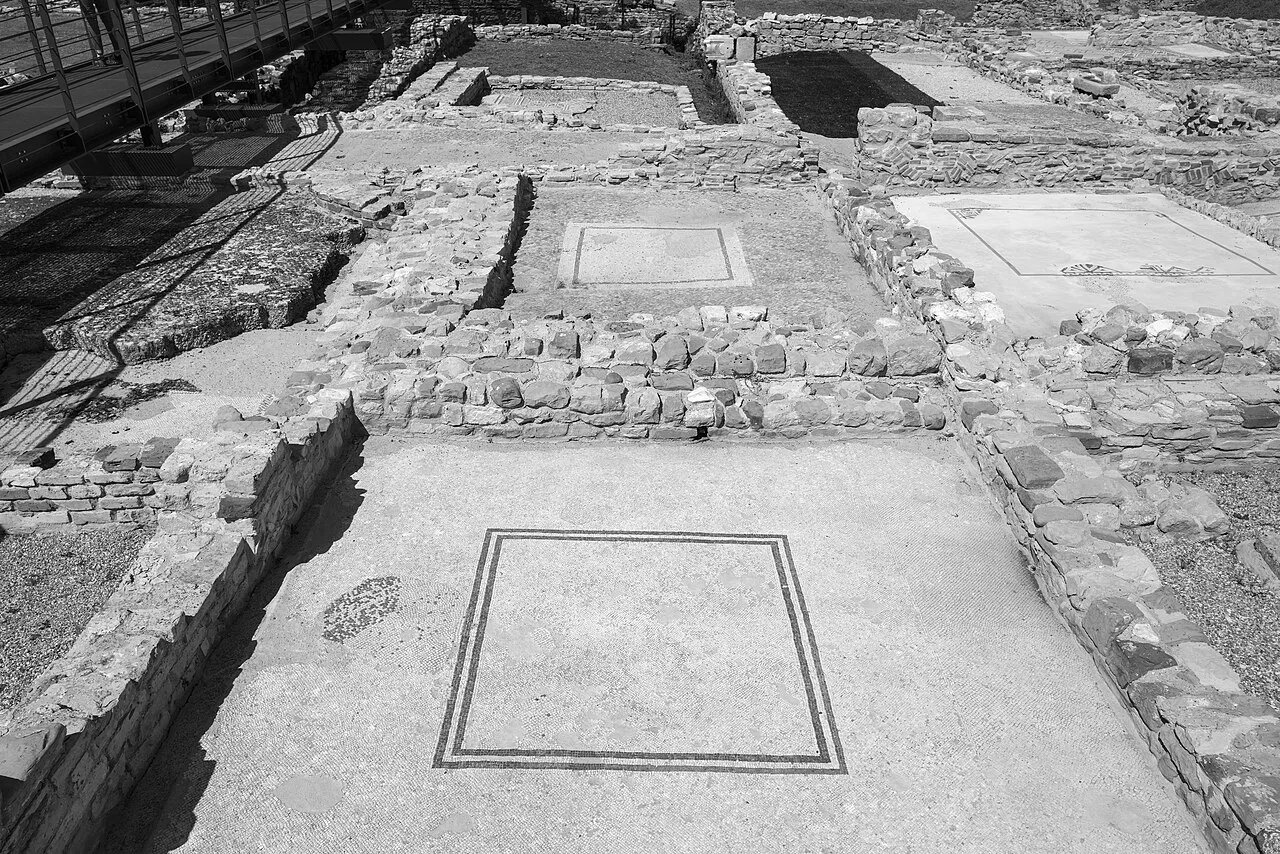
Aquileia, una delle più antiche colonie romane d'Italia (fondata nel 181 a.C.), era difesa da mura solide e dal vescovo cittadino, già attivamente partigiano antimassiminiano. Quando Massimino arrivò, ad aprile 238, le porte si chiusero. I difensori, guidati dai consolari Crispino e Menofilo, riempirono i pozzi della valle di vino e olio per sostenere l'assedio. Massimino tentò l'assalto frontale: respinto. Costruì macchine d'assedio: bruciate dai difensori. La carestia falciava il suo esercito: i contadini friulani avevano nascosto tutti i raccolti. Le legioni mormoravano: il fato di Galba, ucciso ottanta anni prima dall'esercito stesso, sembrava ripetersi.
Aquileia, one of the oldest Roman colonies in Italy (founded 181 BC), was defended by solid walls and the city bishop, already actively anti-Maximinian. When Maximinus arrived, in April 238, the gates closed. The defenders, led by the consulars Crispinus and Menophilus, filled the wells of the valley with wine and oil to sustain the siege. Maximinus attempted frontal assault: repelled. He built siege engines: burned by defenders. Famine mowed down his army: the Friulian peasants had hidden all crops. The legions murmured: the fate of Galba, killed eighty years before by the army itself, seemed to repeat.
L'Eredità degli Imperatori SoldatiThe Legacy of the Soldier-Emperors
La sua caduta non risolse nulla. Il pattern era stato stabilito: l'esercito faceva e disfaceva imperatori. I cinquant'anni successivi avrebbero visto decine di pretendenti al trono, quasi tutti con la stessa fine violenta. L'anarchia militare era iniziata.
His fall solved nothing. The pattern had been set: the army made and unmade emperors. The fifty years that followed would see dozens of throne claimants, almost all meeting the same violent end. The military anarchy had begun.
Pupieno e Balbino, vittoriosi grazie ad Aquileia, regnarono a Roma per tre mesi. Si detestavano reciprocamente. La Guardia Pretoriana, gelosa di entrambi (i due senatori non avevano mai concesso il donativum), li assalì il 29 luglio 238 nel palazzo, li trascinò nudi per le strade di Roma fino al Castro Pretorio e li uccise. Rimase imperatore il solo Gordiano III, tredicenne. In dodici mesi, l'Impero aveva visto regnare e morire sei Augusti: Massimino, Gordiano I, Gordiano II, Pupieno, Balbino, e infine il superstite Gordiano III. È l'annus mirabilis della crisi del III secolo: nessun anno produrrà più una tale densità di acclamazioni e regicidi.
Pupienus and Balbinus, victorious thanks to Aquileia, reigned in Rome for three months. They detested each other. The Praetorian Guard, jealous of both (the two senators had never granted the donativum), assaulted them on July 29, 238 in the palace, dragged them naked through the streets of Rome to the Castra Praetoria and killed them. Only Gordian III remained emperor, thirteen years old. In twelve months, the Empire had seen reign and die six Augusti: Maximinus, Gordian I, Gordian II, Pupienus, Balbinus, and finally the survivor Gordian III. It is the annus mirabilis of the third-century crisis: no year will produce again such a density of acclamations and regicides.