01L'Ombra di StiliconeThe Shadow of Stilicho
Il principe-bambino (384–395)
The child-prince (384–395)
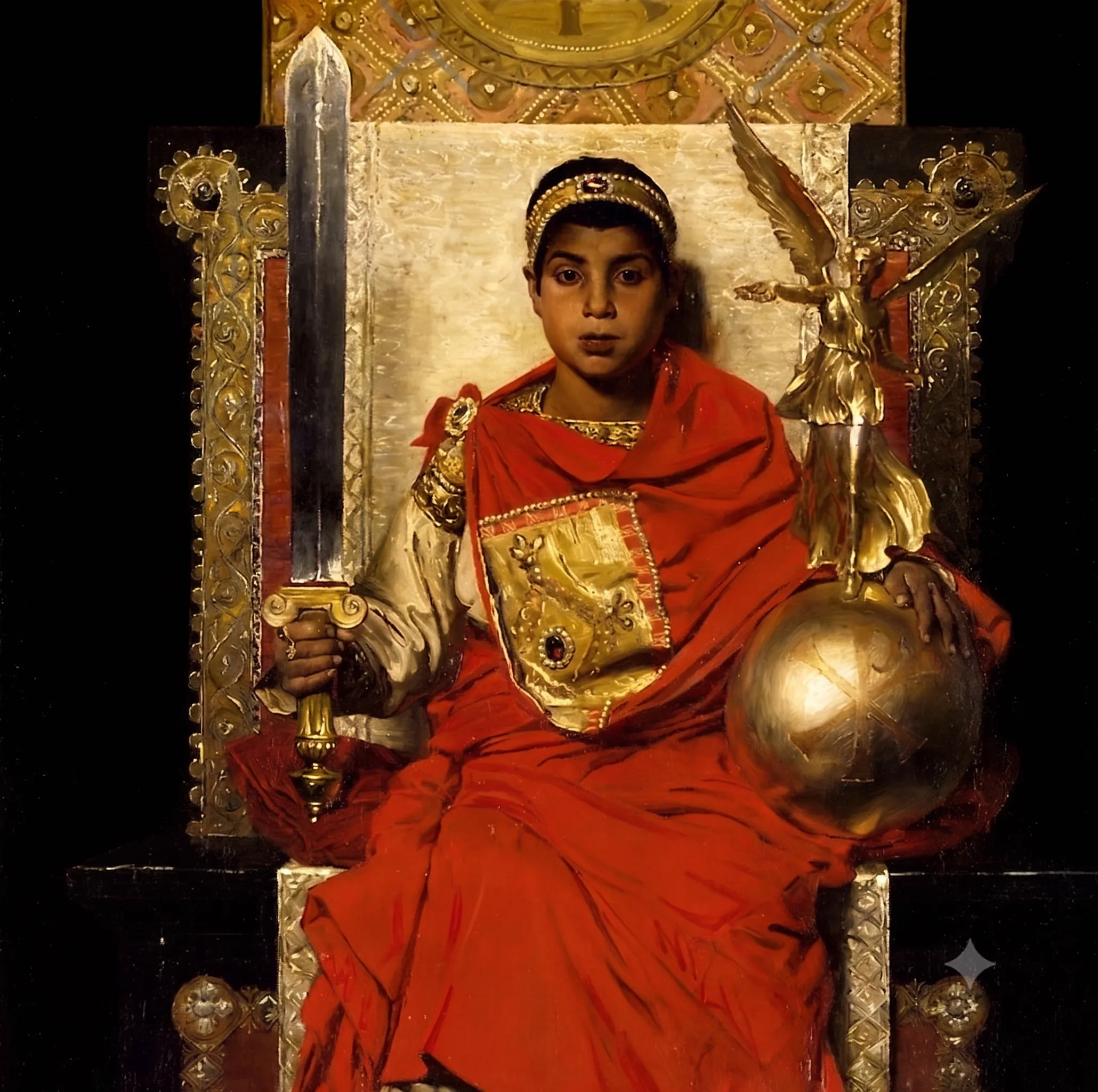
Flavio Onorio venne al mondo il 9 settembre 384 nel palazzo sacro di Costantinopoli, secondogenito di Teodosio I, l'ultimo principe a tenere unito sotto un solo scettro l'intero mondo romano, e di Elia Flaccilla. La porpora gli cadde sulle spalle prima ancora che ne comprendesse il peso: a sei anni perse la madre; a nove, il 23 gennaio 393, le mani del padre lo cinsero del diadema e lo proclamarono Augusto. Era un titolo che gravava come un'ombra più che brillare come una corona, poiché il fratello maggiore Arcadio reggeva già l'Oriente dal 383. Crebbe murato nello splendore del palazzo, plasmato da precettori cristiani in un clima di rigida devozione, tenuto lontano dagli accampamenti, dalle legioni, dall'arte spietata del comando. Esile nel corpo, malfermo di salute, rapito dalla preghiera, fu, sentenziarono gli storici, un monaco nato nel posto sbagliato. Quando Teodosio spirò a Milano il 17 gennaio 395, il fanciullo aveva dieci anni: senza aver alzato una spada, era divenuto de facto signore di tutto l'Occidente romano.
Flavius Honorius came into the world on 9 September 384 in the sacred palace of Constantinople, second-born son of Theodosius I, the last prince to hold the entire Roman world beneath a single sceptre, and of Aelia Flaccilla. The purple fell upon his shoulders before he could grasp its weight: at six he lost his mother; at nine, on 23 January 393, his father's hands girded him with the diadem and proclaimed him Augustus. It was a title that loomed like a shadow rather than shining like a crown, for his elder brother Arcadius had already ruled the East since 383. He grew up walled within the splendour of the palace, shaped by Christian tutors in a climate of rigid devotion, kept far from the camps, the legions, the merciless art of command. Slight of body, frail of health, lost in prayer, he was, historians decreed, a monk born in the wrong place. When Theodosius died at Milan on 17 January 395, the boy was ten years old: without having raised a sword, he had become de facto lord of the entire Roman West.
Il reggente vandalo
The Vandal regent
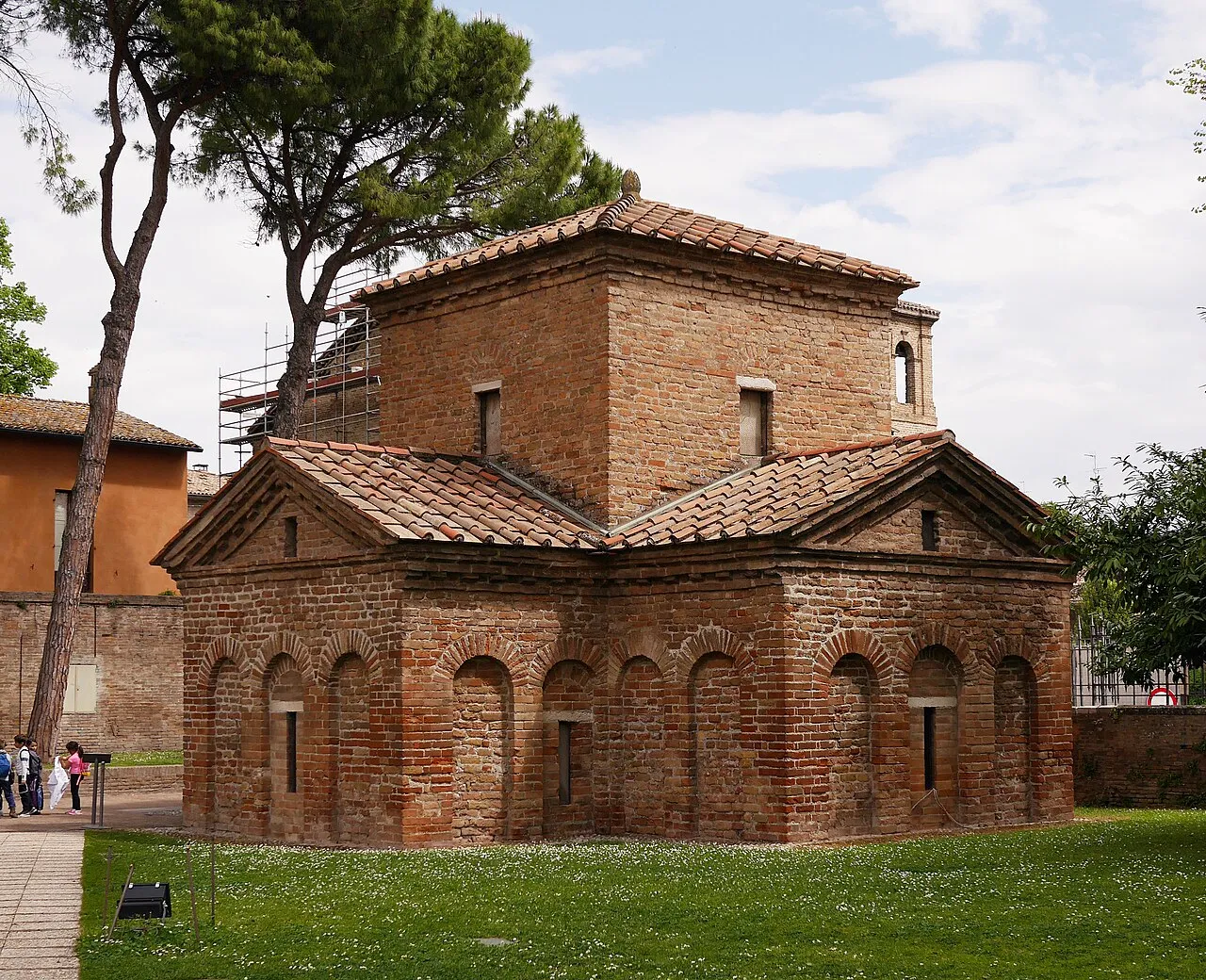
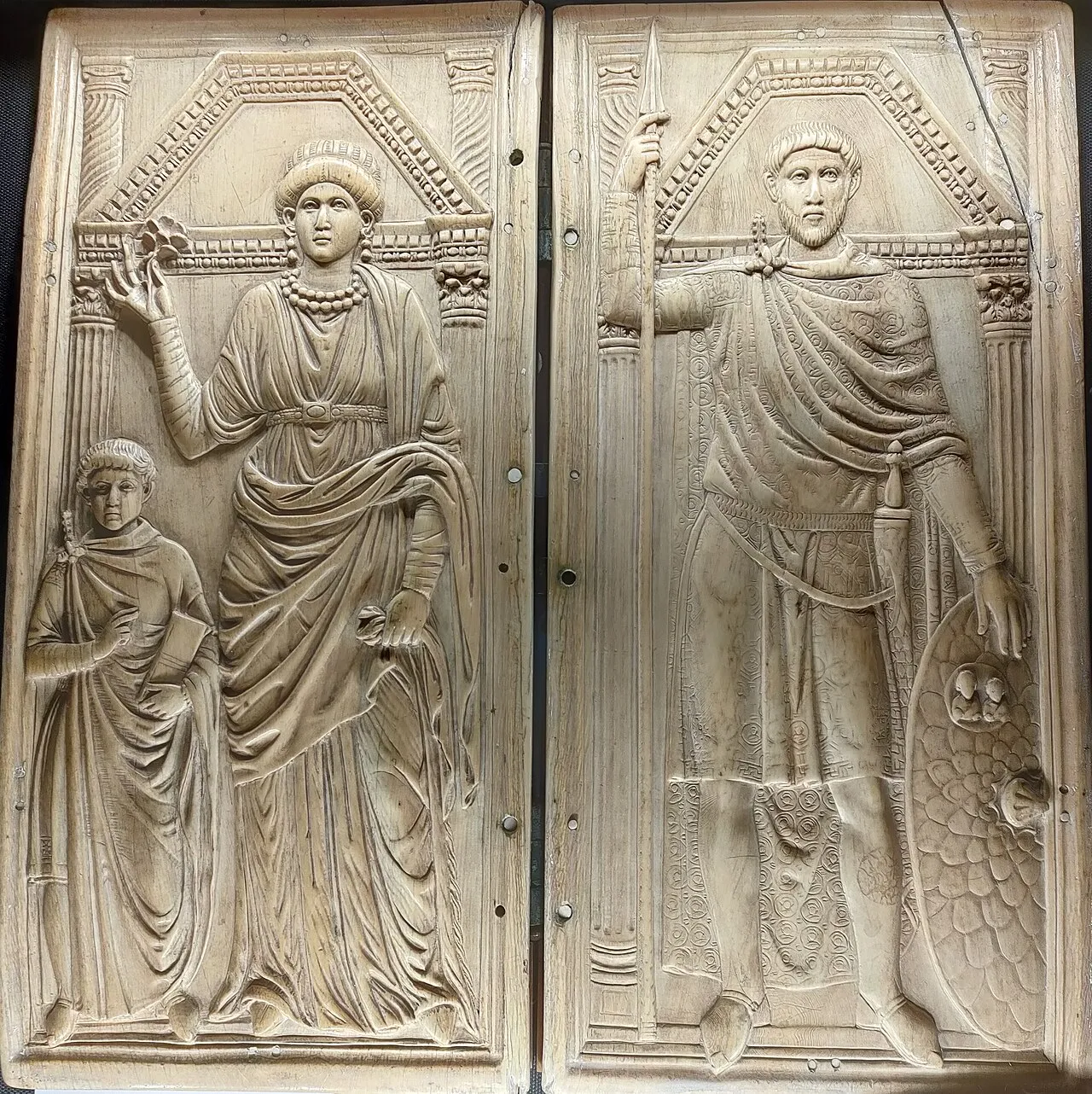
Aveva ereditato la metà più ardua dell'Impero: l'Occidente povero, dalle frontiere sterminate ed esposte su ogni lato, dove ogni fiume era una ferita aperta. Ma Teodosio, da sovrano lungimirante, aveva disinnescato il pericolo prima di morire, affidando la reggenza al più formidabile soldato della sua corte: il generale di sangue vandalo Stilicone, legato alla dinastia dal matrimonio con Serena, nipote dell'imperatore. Per tredici anni Stilicone fu l'unico argine contro la marea: per due volte travolse Alarico e i suoi Visigoti sul suolo d'Italia, a Pollenzo e a Verona nel 402, e in quello stesso anno persuase Onorio ad abbandonare Milano per Ravenna, fortezza inespugnabile annidata fra le paludi, dove il mare e il fango valevano più di mille legioni.
He had inherited the harsher half of the Empire: the impoverished West, its frontiers boundless and exposed on every side, where each river was an open wound. Yet Theodosius, a far-sighted sovereign, had defused the danger before dying, entrusting the regency to the most formidable soldier of his court: the general of Vandal blood Stilicho, bound to the dynasty by marriage to Serena, the emperor's niece. For thirteen years Stilicho was the sole barrier against the tide: twice he crushed Alaric and his Visigoths on Italian soil, at Pollentia and Verona in 402, and in that same year he persuaded Honorius to abandon Milan for Ravenna, an impregnable fortress nestled among the marshes, where sea and mud were worth a thousand legions.
Poi venne il 408, e con esso la frattura. Alarico ripiombò sull'Italia esigendo un riscatto colossale; Stilicone, freddo stratega, voleva trattare e guadagnare tempo. Ma a corte, nel chiuso di Ravenna, i cortigiani guidati dal ministro Olimpio sussurravano veleno all'orecchio del giovane imperatore: rosi dall'invidia per la potenza del reggente, diffidenti del suo sangue barbaro, lo dipinsero come un traditore in segreta intesa col nemico. Il 22 agosto 408 Onorio firmò l'ordine di esecuzione. Fu la sentenza più rovinosa del suo regno: nel momento stesso in cui spezzava Stilicone, spezzava l'unica spada che teneva in piedi l'Occidente.
Then came 408, and with it the rupture. Alaric crashed down upon Italy once more, demanding a colossal ransom; Stilicho, a cold strategist, wished to negotiate and buy time. But at court, sealed within Ravenna, the courtiers led by the minister Olympius whispered poison into the young emperor's ear: gnawed by envy of the regent's power, distrustful of his barbarian blood, they painted him as a traitor in secret league with the enemy. On 22 August 408 Honorius signed the execution order. It was the most ruinous sentence of his reign: in the very act of breaking Stilicho, he broke the only sword that held the West upright.
« Onorio sigillò Stilicone come si sigilla la propria condanna a morte: tagliò la spada che lo difendeva.» « Honorius sealed Stilicho as one seals one's own death sentence: he cut down the sword that defended him.» Sintesi storiografica moderna
02Il Sacco di Roma — 24 Agosto 410The Sack of Rome — 24 August 410
Tre assedi e la Porta Salaria
Three sieges and the Porta Salaria
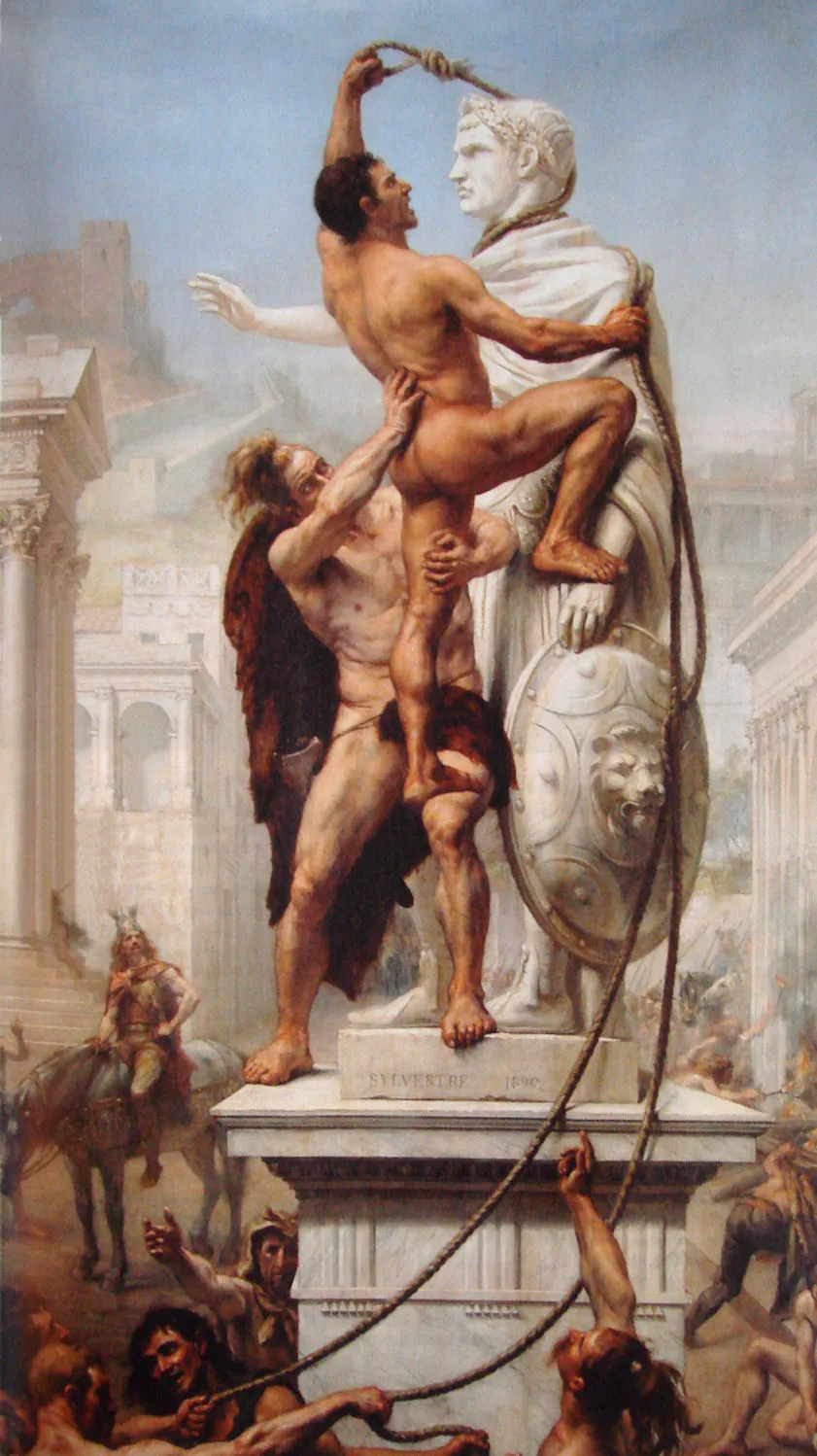
Spezzata quella spada, la via per Roma giaceva sguarnita. Alarico calò sulla città e per tre volte ne strinse l'assedio; alla terza, all'alba del 24 agosto 410, la Porta Salaria si spalancò (tradita, dicono le fonti) e i Visigoti dilagarono fra i sette colli. Per tre giorni e tre notti Roma fu data al saccheggio. Era la prima volta in otto secoli, dall'incendio gallico del 390 a.C., che la Città Eterna cadeva nelle mani di un nemico straniero. Il colpo riverberò fino agli estremi confini del mondo romano come un terremoto dell'anima. Da Betlemme, San Girolamo pianse: « La città che aveva conquistato il mondo è stata conquistata». E Sant'Agostino, per rispondere a chi accusava il Cristo di aver abbandonato Roma, intraprese La Città di Dio, l'opera che avrebbe ridisegnato il pensiero dell'Occidente.
That sword broken, the road to Rome lay undefended. Alaric descended upon the city and three times drew his siege tight; on the third, at the dawn of 24 August 410, the Porta Salaria swung open (betrayed, the sources say) and the Visigoths poured among the seven hills. For three days and three nights Rome was given over to plunder. It was the first time in eight centuries, since the Gallic fire of 390 BC, that the Eternal City had fallen into the hands of a foreign foe. The blow reverberated to the farthest edges of the Roman world like an earthquake of the soul. From Bethlehem, Saint Jerome wept: « The city that had conquered the world is itself conquered». And Saint Augustine, answering those who blamed Christ for abandoning Rome, set out to write The City of God, the work that would reshape the thought of the West.
E dove si trovava Onorio mentre la Città bruciava? A Ravenna, al sicuro dietro le sue paludi. Un aneddoto (riferito da Procopio, forse leggendario ma simbolicamente perfetto) narra che, all'annuncio «Roma è perduta!» , l'imperatore impallidì credendo morta Roma, la sua gallina prediletta; e quando il ciambellano gli spiegò che si trattava della città , tirò un sospiro di sollievo. Vera o inventata che sia, quella scena dice tutto di un sovrano per cui la caduta di Roma pesava meno della perdita di un pennuto.
And where was Honorius while the City burned? At Ravenna, safe behind his marshes. An anecdote (reported by Procopius, perhaps legendary yet symbolically perfect) tells that, at the cry «Rome is lost!» , the emperor turned pale believing dead Roma, his favourite hen; and when the chamberlain explained it was the city, he breathed a sigh of relief. True or invented, that scene says everything of a sovereign for whom the fall of Rome weighed less than the loss of a fowl.
« Mentre il suo polliere gli portava la notizia che Roma era perita, il principe esclamò : "Ma ha appena beccato dalla mia mano!" Quando l'altro spiegò che si trattava della Città , l'imperatore rispose: "Pensavo fosse morta la mia gallina, amico mio".» « While his poultry-keeper brought him the news that Rome had perished, the prince exclaimed: "But it just pecked from my hand!" When the other explained it was the City, the emperor replied: "I thought my hen had died, my friend".» Procopio, Bellum Vandalicum I, 2
03Il Collasso dell'OccidenteThe Collapse of the West
La dissoluzione delle frontiere
The dissolution of the frontiers
Il regno di Onorio fu il lungo, inesorabile sgretolarsi dell'Occidente romano. Nell'ultima notte del 406, il 31 dicembre, Vandali, Svevi e Alani varcarono il Reno gelato presso Magonza e si riversarono come un fiume in piena sulla Gallia, poi sulla Spagna: la frontiera renana, eretta e custodita per quattro secoli, cessò di esistere e mai più rinacque. L'anno seguente, il 407, l'usurpatore Costantino III strappò alla Britannia le ultime legioni per trascinarle in Gallia: l'isola fu abbandonata a se stessa e non conobbe mai più il dominio di Roma. E nel 418, Onorio consegnò ai Visigoti l'Aquitania in qualità di foederati, il primo regno germanico autonomo piantato sul suolo dell'Impero, il modello fatale che avrebbe smembrato l'Occidente. Onorio non provocò questo crollo: lo subì , immobile a Ravenna, incapace di alzare un dito per arrestarlo.
The reign of Honorius was the long, inexorable crumbling of the Roman West. On the last night of 406, the 31st of December, Vandals, Suebi and Alans crossed the frozen Rhine near Mainz and poured like a river in flood over Gaul, then Spain: the Rhine frontier, raised and guarded for four centuries, ceased to exist and was never reborn. The following year, 407, the usurper Constantine III tore the last legions from Britain to drag them into Gaul: the island was abandoned to itself and never again knew the rule of Rome. And in 418, Honorius handed the Visigoths Aquitaine as foederati, the first autonomous Germanic kingdom planted on Imperial soil, the fatal model that would dismember the West. Honorius did not cause this collapse: he suffered it, motionless at Ravenna, unable to lift a finger to halt it.
Onorio spirò a Ravenna il 15 agosto 423, consumato dall'idropisia, senza lasciare un erede maschio. Aveva regnato ventotto anni, fra i più lunghi del tardo Impero; eppure l'Occidente che lasciava era irriconoscibile rispetto a quello ricevuto: mutilato, impoverito, costellato di regni barbarici. Non fu un tiranno, non versò sangue per crudeltà : fu semplicemente inadeguato a un trono che esigeva qualità a lui ignote, in un'ora della storia in cui l'inettitudine di un solo uomo poteva costare un Impero.
Honorius died at Ravenna on 15 August 423, consumed by dropsy, leaving no male heir. He had reigned twenty-eight years, among the longest of the late Empire, yet the West he left behind was unrecognisable from the one he had received: mutilated, impoverished, strewn with barbarian kingdoms. He was no tyrant, he shed no blood out of cruelty: he was simply inadequate to a throne that demanded qualities unknown to him, in an hour of history when the ineptitude of a single man could cost an Empire.
- 23 gen 393 d.C. Augusto a otto anni — A Costantinopoli, Teodosio I cinge il figlio bambino del diadema imperiale: la porpora prima ancora della ragione. Augustus at eight — At Constantinople, Theodosius I girds his infant son with the imperial diadem: the purple before reason itself.
- 17 gen 395 d.C. Signore d'Occidente — Alla morte di Teodosio a Milano l'Impero si divide per sempre: a Onorio (10 anni) l'Occidente, ad Arcadio (18) l'Oriente. La reggenza cade nelle mani salde del generale vandalo Stilicone. Lord of the West — At Theodosius's death in Milan the Empire splits forever: to Honorius (10) the West, to Arcadius (18) the East. The regency falls into the firm hands of the Vandal general Stilicho.
- 402 d.C. Pollenzo e Verona — Per due volte Stilicone ricaccia Alarico oltre le Alpi. Onorio trasferisce la capitale da Milano a Ravenna, cittadella protetta da paludi invalicabili. Pollentia and Verona — Twice Stilicho hurls Alaric back beyond the Alps. Honorius moves the capital from Milan to Ravenna, a citadel shielded by impassable marshes.
- ago 406 d.C. Fiesole — Presso Firenze Stilicone annienta l'orda di Radagaiso (forse 200 000 Goti) e fa decapitare il re barbaro: l'ultima grande vittoria romana in campo aperto. Fiesole — Near Florence Stilicho annihilates the horde of Radagaisus (perhaps 200,000 Goths) and has the barbarian king beheaded: the last great Roman victory in the open field.
- 31 dic 406 d.C. Il Reno gelato — Nella notte di Capodanno Vandali, Svevi e Alani varcano il fiume ghiacciato a Magonza e sommergono la Gallia, poi l'Hispania. La frontiera renana svanisce per sempre. The frozen Rhine — On New Year's night Vandals, Suebi and Alans cross the iced-over river at Mainz and engulf Gaul, then Hispania. The Rhine frontier vanishes forever.
- 407 d.C. Abbandono della Britannia — L'usurpatore Costantino III strappa all'isola le ultime legioni per la Gallia. Roma non vi tornerà mai più . Abandonment of Britain — The usurper Constantine III strips the island of its last legions for Gaul. Rome would never return.
- 22 ago 408 d.C. La morte di Stilicone — Vittima dell'intrigo di corte di Olimpio, il reggente è giustiziato a Ravenna: per non scatenare la guerra civile piega il collo alla spada. Pochi mesi dopo cade anche il figlio Eucherio. L'Occidente perde il suo unico scudo. The death of Stilicho — Victim of Olympius's court intrigue, the regent is executed at Ravenna: to avoid igniting civil war he bends his neck to the sword. Months later his son Eucherius falls too. The West loses its only shield.
- 24 ago 410 d.C. Sacco di Roma — Alarico irrompe dalla Porta Salaria: per la prima volta in 800 anni la Città Eterna cade in mano straniera (dall'invasione gallica del 390 a.C.). Tre giorni di saccheggio scuotono il mondo antico fin nelle fondamenta. Sack of Rome — Alaric bursts through the Porta Salaria: for the first time in 800 years the Eternal City falls to a foreigner (since the Gallic invasion of 390 BC). Three days of plunder shake the ancient world to its foundations.
- 418 d.C. Regno Visigoto di Tolosa — Onorio cede formalmente l'Aquitania ai Visigoti come foederati: il primo regno germanico autonomo su suolo romano, il precedente che dissolverà l'Occidente. Visigothic Kingdom of Toulouse — Honorius formally grants Aquitaine to the Visigoths as foederati: the first autonomous Germanic kingdom on Roman soil, the precedent that would dissolve the West.
- 15 ago 423 d.C. Morte di idropisia — A Ravenna, a soli 38 anni, Onorio si spegne senza figli (due nozze con le figlie di Stilicone, Maria e Termanzia, mai consumate). Dopo brevi usurpazioni gli succede il nipote Valentiniano III, figlio della sorella Galla Placidia. Death by dropsy — At Ravenna, only 38, Honorius dies childless (two marriages to Stilicho's daughters, Maria and Thermantia, never consummated). After brief usurpations his nephew Valentinian III, son of his sister Galla Placidia, succeeds him.
Il giudizio della storia
The verdict of history
Pochi imperatori romani furono giudicati con tanta severità . Procopio, nel VI secolo, lo bollò come un debole imbecille; Orosio, cristiano e contemporaneo più incline all'indulgenza, ne tramanda comunque un ritratto patetico. E nel Settecento Edward Gibbon, con la sua prosa di ghiaccio, lo consegnò ai posteri come «un imperatore privo di passioni e di senno, che sopravvisse al sacco di Roma con assoluta indifferenza» . È sempre Procopio a regalarci l'immagine immortale della gallina di nome Roma, quasi certamente apocrifa, eppure così tristemente calzante da sopravvivere a ogni smentita.
Few Roman emperors were judged with such severity. Procopius, in the 6th century, branded him a feeble half-wit; Orosius, a Christian and contemporary more inclined to mercy, nonetheless hands down a pathetic portrait. And in the 18th century Edward Gibbon, with his prose of ice, consigned him to posterity as «an emperor without passions and without sense, who survived the sack of Rome with utter indifference» . It is Procopius again who gives us the immortal image of the hen named Roma, almost certainly apocryphal, yet so sadly fitting that it has outlived every denial.
La storiografia moderna è più clemente, e forse più giusta. Onorio fu allevato per non governare: cresciuto bambino fra le mura del palazzo, sotto reggenza perpetua, gli fu negata ogni scuola del comando. La sua inettitudine fu strutturale, non morale. Ma l'epoca non concedeva sconti. La scelta di sopprimere Stilicone nel 408 fu il punto di non ritorno: privato di quel generale, l'Occidente non ebbe più alcuna possibilità di salvezza. Ventotto anni di regno si condensano in una sola firma fatale: nel 408 Onorio sottoscrisse, senza saperlo, la condanna a morte dell'Impero Romano d'Occidente. La fine sarebbe giunta sessantotto anni più tardi, ma la ferita mortale era già stata aperta.
Modern historiography is gentler, and perhaps fairer. Honorius was raised not to govern: brought up a child within the palace walls, under perpetual regency, denied every schooling in command. His ineptitude was structural, not moral. Yet the age granted no reprieve. The choice to destroy Stilicho in 408 was the point of no return: stripped of that general, the West had no further hope of salvation. Twenty-eight years of reign condense into a single fatal signature: in 408 Honorius unknowingly underwrote the death sentence of the Western Roman Empire. The end would come sixty-eight years later, but the mortal wound had already been opened.