01Il Trionfo del CristianesimoThe Triumph of Christianity
Cauca, l'esilio, la chiamata (347–379)
Cauca, the exile, the call (347–379)
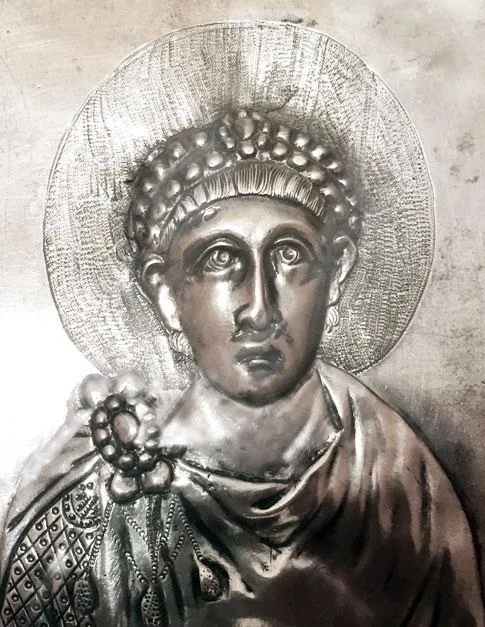
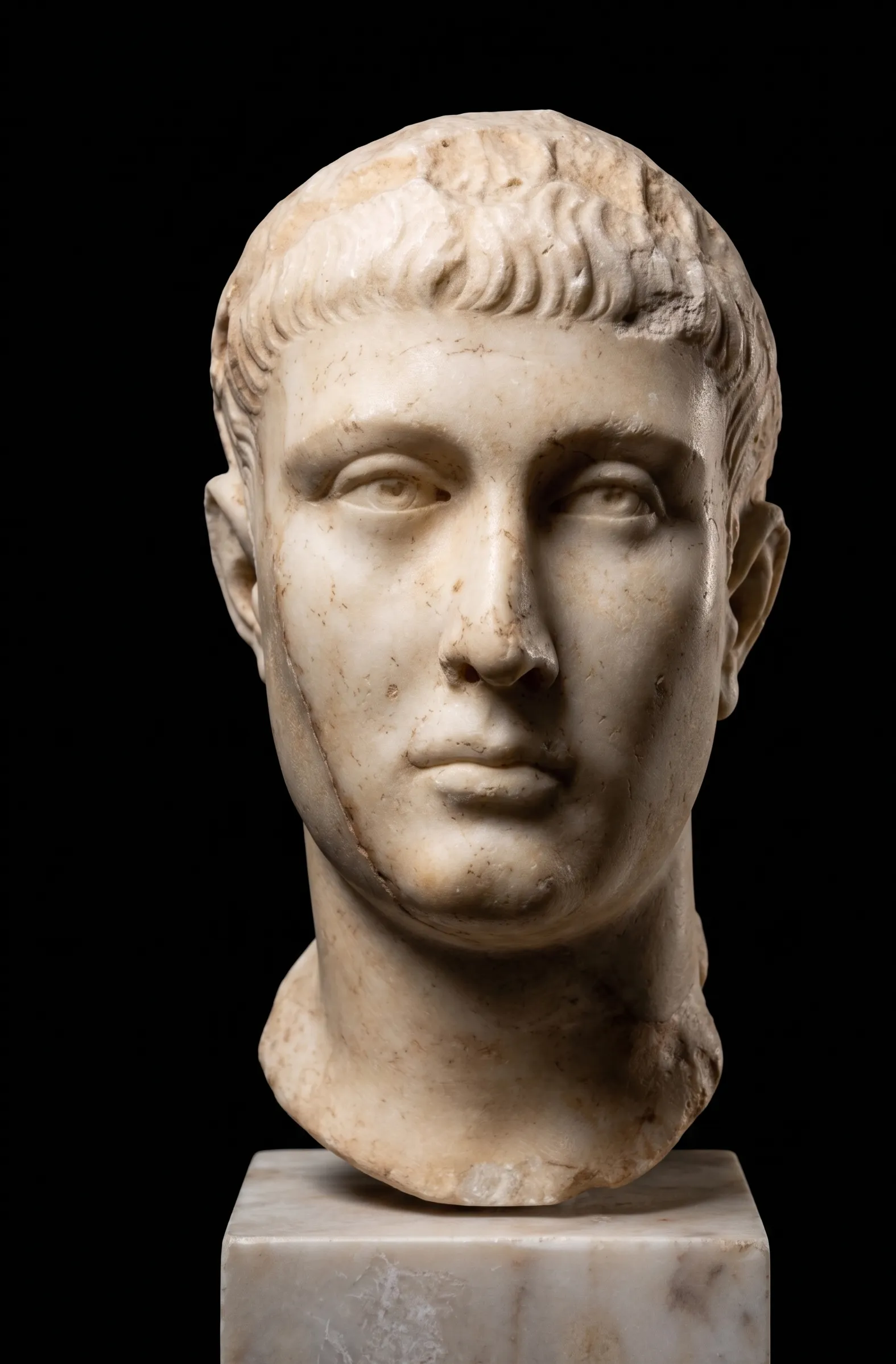
Flavio Teodosio nacque l'11 gennaio 347 a Cauca (oggi Coca, in Castiglia e Leó n), in quella Hispania che da tre secoli forniva a Roma imperatori, retori e legioni. Apparteneva a una stirpe ispano-romana di alta nobiltà militare, e crebbe all'ombra di un nome leggendario: quello del padre, Teodosio il Vecchio, il più temuto generale di Valentiniano I. Fu lui a strappare la Britannia al caos della Grande Cospirazione (367–369), a spegnere nel sangue la rivolta del berbero Firmus in Mauretania (372–375), a guadagnarsi una fama di uomo invincibile. Il giovane Teodosio imparò la guerra al suo fianco, in sella, come comandante di cavalleria, e parve destinato a ereditarne la gloria. Poi, nel 376, la caduta: per ragioni mai chiarite, quasi certamente una congiura di palazzo all'ombra del giovane Graziano, Teodosio il Vecchio fu arrestato a Cartagine e decapitato. Il figlio si dileguò . Si ritirò nei latifondi di famiglia in Hispania, in un esilio interno fatto di silenzio e sospetto, e per tre anni il suo nome scomparve dalla storia.
Flavius Theodosius was born on 11 January 347 at Cauca (today Coca, in Castile and Leó n), in that Hispania which for three centuries had supplied Rome with emperors, rhetoricians and legions. He belonged to a Hispano-Roman line of high military nobility, and grew up in the shadow of a legendary name: that of his father, Theodosius the Elder, the most feared general of Valentinian I. It was he who wrenched Britain back from the chaos of the Great Conspiracy (367–369), who drowned the Berber Firmus's revolt in Mauretania (372–375) in blood, who earned a reputation for invincibility. The young Theodosius learned war at his side, in the saddle, as a cavalry commander, and seemed destined to inherit his glory. Then, in 376, the fall: for reasons never clarified, almost certainly a palace conspiracy in the shadow of the young Gratian, Theodosius the Elder was arrested at Carthage and beheaded. The son vanished. He withdrew to the family estates in Hispania, into an internal exile of silence and suspicion, and for three years his name disappeared from history.
Poi venne Adrianopoli. Il 9 agosto 378 l'esercito d'Oriente fu annientato dai Goti in una sola, terribile giornata: Valente caduto chissà dove tra i cadaveri, due terzi delle legioni orientali distrutte, la Tracia spalancata all'invasione. Fu la peggiore disfatta romana dai tempi di Canne, e l'Impero d'Oriente si ritrovò di colpo senza imperatore e quasi senza esercito. Il giovane Graziano, figlio di Valentiniano I, appena diciannovenne, signore dell'Occidente, aveva bisogno di un uomo solo: un generale di rango imperiale capace di ricostruire dal nulla l'esercito perduto. Lo trovò nel figlio dell'uomo che la sua stessa corte aveva fatto decapitare. Richiamò Teodosio dall'esilio, lo nominò magister militum, e dopo pochi mesi di vittorie contro i Sarmati lo proclamò Augustus d'Oriente, il 19 gennaio 379 a Sirmio. Teodosio aveva trentadue anni. Sulle sue spalle ricadeva l'Impero più ferito del IV secolo.
Then came Adrianople. On 9 August 378 the Eastern army was annihilated by the Goths in a single, terrible day: Valens fallen somewhere among the corpses, two-thirds of the Eastern legions destroyed, Thrace thrown open to invasion. It was the worst Roman disaster since Cannae, and the Eastern Empire found itself suddenly without an emperor and almost without an army. The young Gratian, son of Valentinian I, barely nineteen, lord of the West, needed one man alone: a general of imperial rank able to rebuild the lost army from nothing. He found him in the son of the man his own court had had beheaded. He recalled Theodosius from exile, named him magister militum, and after a few months of victories over the Sarmatians proclaimed him Augustus of the East, on 19 January 379 at Sirmium. Theodosius was thirty-two. Onto his shoulders fell the most wounded Empire of the 4th century.
L'Editto di Tessalonica (27 febbraio 380)
The Edict of Thessalonica (27 February 380)
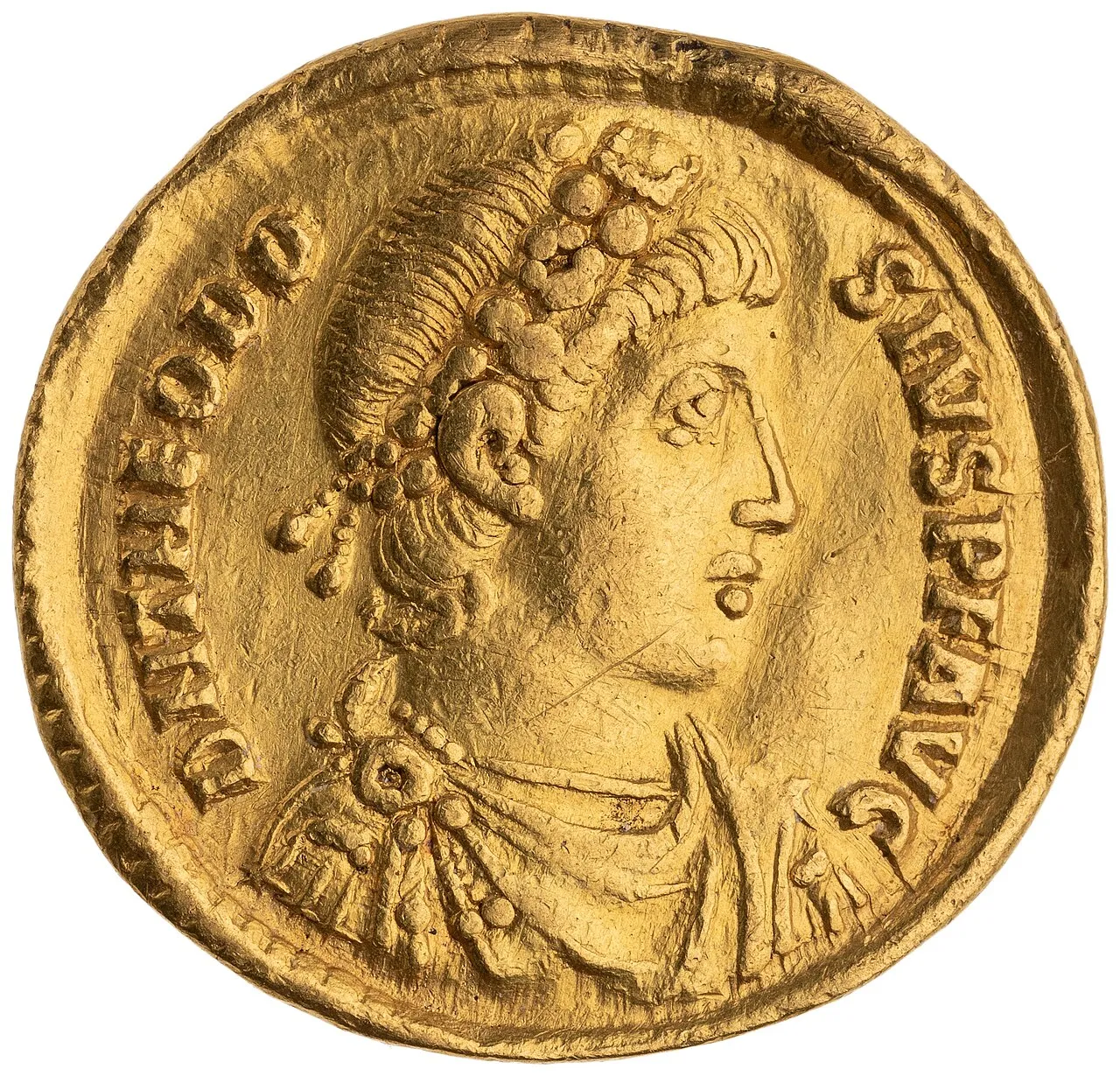
Teodosio non era un teologo, ma un soldato dalla fede incrollabile e dal senso dell'ordine assoluto. Per lui l'unità dell'Impero passava dall'unità della fede. Il 27 febbraio 380, da Tessalonica, emanò con i colleghi l'editto Cunctos populos, passato alla storia come Editto di Tessalonica. In poche righe, quel documento faceva del Cristianesimo niceno, quello che professa la Trinità consustanziale, non più una fede semplicemente tollerata, ma la religione obbligatoria dello Stato romano. Chiunque se ne discostasse veniva bollato come «folle e dissennato», eretico agli occhi della legge, esposto alla punizione divina e a quella imperiale. Era la fine della tolleranza che Costantino aveva inaugurato a Milano nel 313. Lo Stato aveva scelto la sua unica verità .
Theodosius was no theologian, but a soldier of unshakeable faith and an absolute instinct for order. For him the unity of the Empire ran through the unity of the faith. On 27 February 380, from Thessalonica, he issued with his colleagues the edict Cunctos populos, known to history as the Edict of Thessalonica. In a few lines, that document made Nicene Christianity, the creed that professes the consubstantial Trinity, no longer a merely tolerated faith, but the compulsory religion of the Roman state. Whoever departed from it was branded «mad and demented», a heretic in the eyes of the law, exposed to divine and imperial punishment. It was the end of the tolerance Constantine had inaugurated at Milan in 313. The state had chosen its one truth.
« Vogliamo che tutti i popoli soggetti al governo della nostra Clemenza vivano nella religione che il divino apostolo Pietro tramandò ai Romani... Comandiamo che coloro che seguono questa norma assumano il nome di cristiani cattolici» . « We desire that all peoples subject to the rule of our Clemency live in that religion which the divine apostle Peter handed down to the Romans... We command that those who follow this rule assume the name of Catholic Christians» . Editto Cunctos populos, 27 febbraio 380
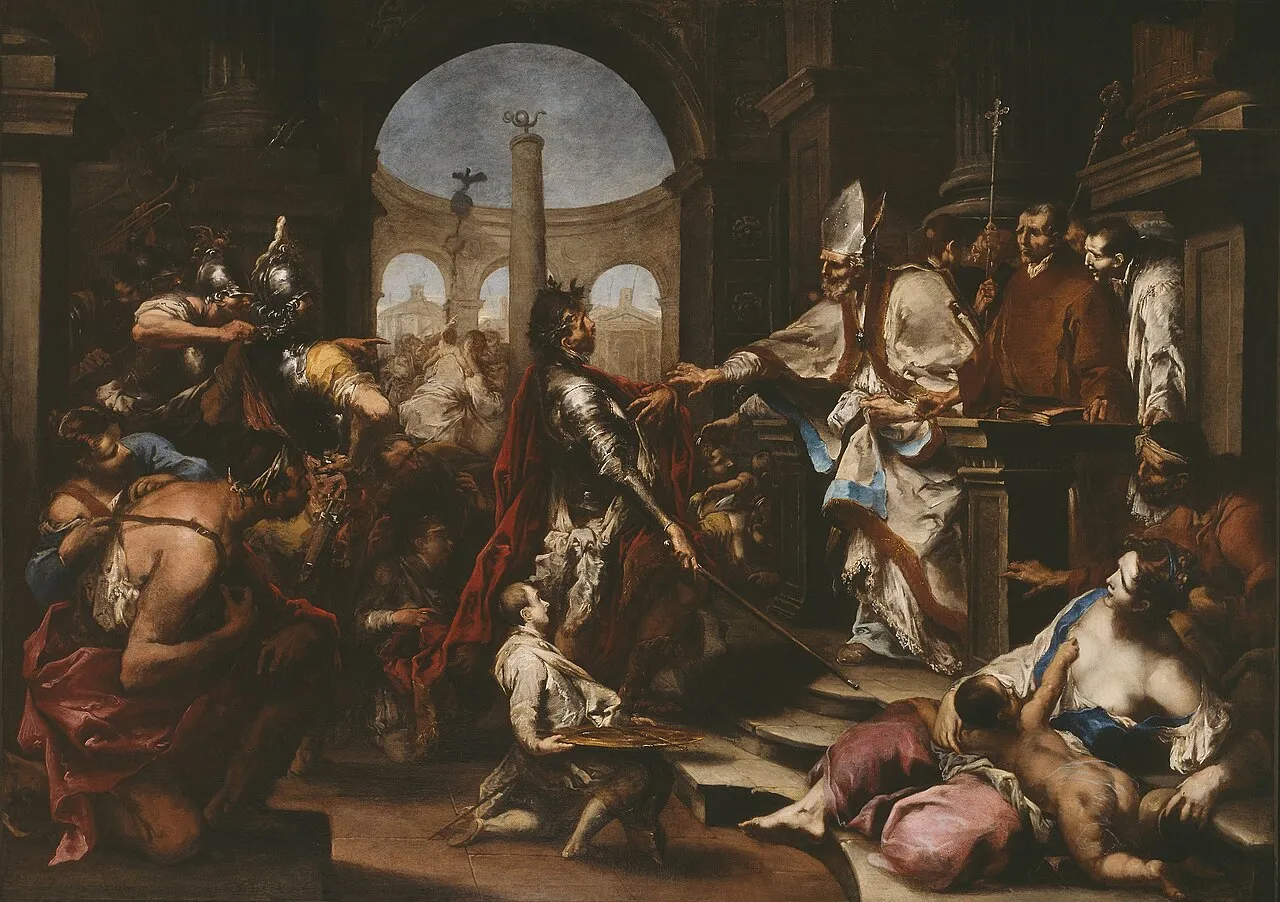
Da quella sola riga di legge discese una valanga. Tra il 391 e il 392 una raffica di editti proibì ogni culto pagano: templi chiusi, sacrifici pubblici e privati vietati, al bando perfino il grano d'incenso bruciato davanti ai Lari domestici. Nel 391 cadde il Serapeo di Alessandria, uno dei santuari più antichi del Mediterraneo, raso al suolo dalla folla cristiana. Nel 393 si spensero i Giochi Olimpici: 1.168 anni di gare in onore di Zeus finirono per sempre, e con essi l'ultimo grande rito della Grecia classica. Ma il momento più drammatico arrivò nel 390. A Tessalonica una sommossa popolare aveva linciato un comandante goto, e Teodosio rispose con una rappresaglia spietata: migliaia di civili attirati nel circo e massacrati in poche ore. L'orrore percorse l'Impero. Il vescovo Ambrogio di Milano gli sbarrò la porta della cattedrale e gli negò l'Eucaristia finché non avesse fatto pubblica penitenza. E l'imperatore, padrone del mondo, si inginocchiò . Per la prima volta nella storia, l'autorità della Chiesa piegava quella dell'Impero: un precedente destinato ad attraversare tutto il Medioevo.
From that single line of law an avalanche descended. Between 391 and 392 a burst of edicts banned every pagan cult: temples closed, public and private sacrifices forbidden, even the grain of incense burned before the household Lares outlawed. In 391 fell the Serapeum of Alexandria, one of the oldest sanctuaries of the Mediterranean, razed by the Christian mob. In 393 the Olympic Games were extinguished: 1,168 years of contests in honour of Zeus ended forever, and with them the last great rite of classical Greece. But the most dramatic moment came in 390. At Thessalonica a popular uprising had lynched a Gothic commander, and Theodosius answered with a merciless reprisal: thousands of civilians lured into the circus and massacred in a few hours. Horror swept the Empire. Bishop Ambrose of Milan barred him the cathedral door and denied him the Eucharist until he should do public penance. And the emperor, master of the world, knelt. For the first time in history, the authority of the Church bent that of the Empire: a precedent destined to run through the whole Middle Ages.
02Battaglie — Usurpatori e l'Ultima GuerraBattles — Usurpers and the Final War
Verona e Aquileia, 388 d.C. — Contro Magno Massimo — Il generale romano Magno Massimo si era ribellato in Britannia nel 383, aveva attraversato il Canale, ucciso il co-imperatore Graziano in Gallia, e controllava ormai quasi tutto l'Occidente. Nel 388 Teodosio marciò verso Occidente con le sue forze orientali. Sconfisse Massimo in due battaglie, a Siscia e poi ad Aquileia, e lo fece giustiziare. Riportò l'Occidente sotto controllo, insediando il giovane Valentiniano II come co-imperatore sotto la sua tutela.
Verona and Aquileia, 388 AD — Against Magnus Maximus — The Roman general Magnus Maximus had rebelled in Britain in 383, crossed the Channel, killed co-emperor Gratian in Gaul, and now controlled nearly all the West. In 388 Theodosius marched westward with his eastern forces. He defeated Maximus in two battles, at Siscia and then at Aquileia, and had him executed. He brought the West back under control, installing the young Valentinian II as co-emperor under his guardianship.
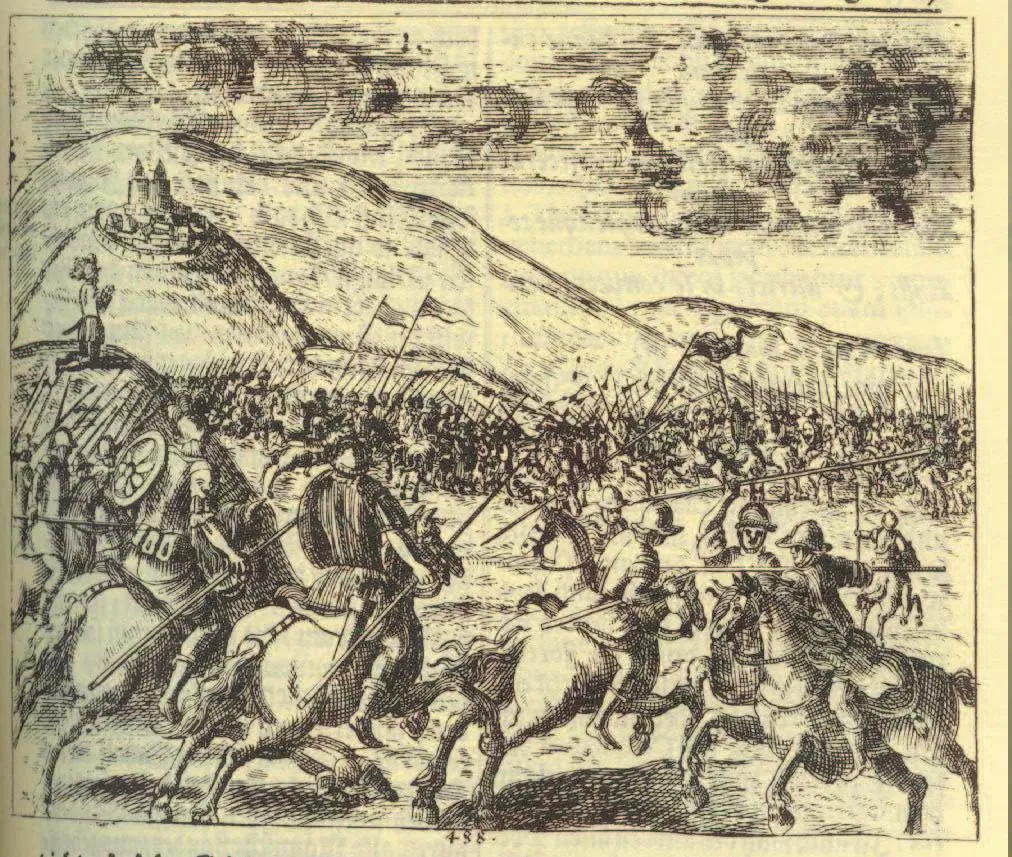
Battaglia del Frigido, 5—6 settembre 394 d.C. — L'ultima grande battaglia dell'Impero Romano unificato. Dopo l'assassinio di Valentiniano II nel 392, il generale franco Arbogasto aveva proclamato imperatore il retore pagano Eugenio, una mossa che sembrava anticipare una restaurazione pagana. Teodosio radunò le sue forze orientali, tra cui grandi contingenti di barbari foederati Visigoti (tra i loro capi: Alarico, il futuro sacco di Roma del 410). Il 5 settembre 394, le forze si scontrarono sul fiume Frigido (odierno Vipava, Slovenia). Il primo giorno fu disastroso per Teodosio: una carica frontale costò la vita a migliaia di soldati, soprattutto tra i Visigoti. Il 6 settembre, una tempesta violenta (la Bora) si abbatté in faccia alle truppe di Eugenio mentre Teodosio attaccava di nuovo. L'esercito di Eugenio fu sbaragliato; Eugenio fu catturato ed eseguito; Arbogasto si suicidò. Teodosio era l'unico imperatore.
Battle of the Frigidus, September 5—6, 394 AD: The last great battle of the unified Roman Empire. After the assassination of Valentinian II in 392, the Frankish general Arbogastes had proclaimed the pagan rhetorician Eugenius as emperor, a move that seemed to prefigure a pagan restoration. Theodosius assembled his eastern forces, including large contingents of barbarian Visigoth foederati (among their leaders: Alaric, the future sacker of Rome in 410). On September 5, 394, the forces clashed on the Frigidus river (today the Vipava, Slovenia). The first day was disastrous for Theodosius: a frontal charge cost the lives of thousands of soldiers, especially among the Visigoths. On September 6, a violent storm (the Bora) struck the face of Eugenius's troops as Theodosius attacked again. Eugenius's army was routed; Eugenius was captured and executed; Arbogastes committed suicide. Theodosius was sole emperor.
- 379–382 d.C. Guerre gotiche — Quattro anni di campagne difficili per contenere i Visigoti vincitori di Adrianopoli. Nessuna vittoria decisiva. Teodosio capisce di non potersi imporre con la forza. Gothic wars — Four years of difficult campaigns to contain the Visigoths victorious at Adrianople. No decisive victory. Theodosius realises he cannot impose himself by force.
- 3 ott 382 d.C. Foedus con i Visigoti — Svolta storica: i Goti insediati in Tracia come foederati autonomi, con propri re e leggi, senza obbligo di assimilazione. Prima nazione barbara legalmente installata in territorio imperiale come entità sovrana. Modello fatale per i secoli successivi. Foedus with the Visigoths — A historical turning point: the Goths settled in Thrace as autonomous foederati, with their own kings and laws, no assimilation required. The first barbarian nation legally installed in imperial territory as a sovereign entity. A fatal model for the centuries that followed.
- 383–388 d.C. Usurpazione di Magno Massimo — Il generale Magnus Maximus si ribella in Britannia, attraversa la Manica nel 383, sconfigge e uccide Graziano in Gallia, controlla Britannia/Gallia/Hispania per cinque anni. Teodosio inizialmente lo riconosce per pragmatismo, poi attende il momento per agire. Magnus Maximus's usurpation — General Magnus Maximus revolts in Britain, crosses the Channel in 383, defeats and kills Gratian in Gaul, controls Britain/Gaul/Hispania for five years. Theodosius initially recognises him pragmatically, then waits for the moment to act.
- est 388 d.C. Siscia e Poetovio — Teodosio marcia verso ovest. Sconfigge Magno Massimo sul fiume Save (Siscia) e poi a Poetovio (Ptuj, Slovenia). Massimo si rifugia ad Aquileia, viene catturato e giustiziato. Valentiniano II restaurato sul trono d'Occidente sotto la tutela di Teodosio. Siscia and Poetovio — Theodosius marches west. He defeats Magnus Maximus on the Save river (Siscia) and then at Poetovio (Ptuj, Slovenia). Maximus takes refuge in Aquileia, is captured and executed. Valentinian II restored to the Western throne under Theodosius's guardianship.
- apr 390 d.C. Massacro di Tessalonica — A Tessalonica, una rivolta della folla uccide il comandante goto Boterico. Teodosio ordina una rappresaglia sproporzionata: 7 000 civili attirati con inganno nel circo e massacrati dalle truppe gotiche in tre ore. Ambrogio di Milano gli nega la comunione. Teodosio fa penitenza pubblica per otto mesi prima di essere riammesso ai sacramenti il giorno di Natale del 390. Massacre of Thessalonica — At Thessalonica, a mob riot kills the Gothic commander Botheric. Theodosius orders a disproportionate reprisal: 7,000 civilians lured by trick into the circus and massacred by Gothic troops in three hours. Ambrose of Milan denies him communion. Theodosius does public penance for eight months before being readmitted to the sacraments on Christmas Day 390.
- 391–392 d.C. Editti antipagani — Una serie di leggi vieta tutti i culti pagani con la pena di morte: chiusura dei templi, divieto di sacrifici sia pubblici sia privati, persino del semplice incenso davanti alle statue domestiche dei Lari. Distruzione del Serapeum di Alessandria nel 391, uno dei più antichi templi del mondo mediterraneo. Cessazione dei Giochi Olimpici nel 393 (393 d.C.; ultima edizione: 393. Erano attivi da 1 168 anni). Anti-pagan edicts — A series of laws bans all pagan cults on pain of death: closure of temples, prohibition of sacrifices both public and private, even of simple incense before the Lares household statues. Destruction of the Serapeum of Alexandria in 391, one of the oldest temples in the Mediterranean world. Cessation of the Olympic Games in 393 (last edition: 393. They had been active for 1,168 years).
- 15 mag 392 d.C. Morte sospetta di Valentiniano II — Il giovane Augusto d'Occidente (vent'anni) trovato impiccato nel palazzo di Vienne, Gallia. Suicidio o omicidio? Le fonti divergono. Il generale franco Arbogasto proclama subito imperatore il retore pagano Eugenio: ultimo tentativo serio di restaurazione pagana. Teodosio prepara la guerra. Suspicious death of Valentinian II — The young Western Augustus (twenty) found hanged in the palace of Vienne, Gaul. Suicide or murder? Sources differ. The Frankish general Arbogastes immediately proclaims the pagan rhetor Eugenius emperor: the last serious attempt at pagan restoration. Theodosius prepares for war.
- 5–6 set 394 d.C. Battaglia del Frigido — Ultima grande battaglia dell'Impero Romano unito. Sul fiume Vipava (Slovenia), tra le forze teodosiane (con Visigoti foederati guidati da Alarico, futuro saccheggiatore di Roma) e quelle pagane di Eugenio/Arbogasto. Primo giorno disastroso per Teodosio. Secondo giorno: la Bora, vento carsico violento, si abbatte in faccia all'esercito di Eugenio. Vittoria totale. Arbogasto si suicida, Eugenio viene decapitato. Teodosio è unico Augusto. Morì quattro mesi dopo. Battle of the Frigidus — Last great battle of the unified Roman Empire. On the Vipava river (Slovenia), between Theodosian forces (with Visigoth foederati led by Alaric, future sacker of Rome) and the pagan forces of Eugenius/Arbogastes. First day disastrous for Theodosius. Second day: the Bora, violent karst wind, strikes Eugenius's army full in the face. Total victory. Arbogastes commits suicide, Eugenius is beheaded. Theodosius is sole Augustus. He died four months later.
03La Divisione dell'Impero — Fine di un'EpocaThe Division of the Empire — End of an Era
Il foedus del 382 e la nuova diplomazia
The 382 foedus and the new diplomacy
Sul piano militare, Teodosio firmò nel 382 un trattato con i Visigoti che rappresentò una svolta storica: i Goti potevano insediarsi in blocco in Tracia come foederati, alleati con proprie leggi, proprio re, propri comandanti, senza obbligo di integrarsi nella struttura romana. Era la prima volta che una nazione straniera si insediava in territorio imperiale come entità autonoma. Il precedente che aprì avrebbe pesato enormemente sul futuro, Alarico, che avrebbe saccheggiato Roma nel 410, era uno di quei foederati visigoti che avevano combattuto per Teodosio al Frigido.
On the military plane, Theodosius signed a treaty with the Visigoths in 382 that represented a historical turning point: the Goths could settle en masse in Thrace as foederati : allies with their own laws, their own king, their own commanders, without obligation to integrate into the Roman structure. It was the first time a foreign nation settled in imperial territory as an autonomous entity. The precedent it opened would weigh enormously on the future, Alaric, who would sack Rome in 410, was one of those Visigoth foederati who had fought for Theodosius at the Frigidus.
Nel gennaio 395, malato da mesi di edema generalizzato, Teodosio morì a Milano. Aveva 47 anni. Prima di morire divise l'Impero tra i due figli: Arcadio (18 anni) ricevette l'Oriente con capitale Costantinopoli; Onorio (10 anni) l'Occidente con capitale Mediolanum (Milano), poi Ravenna. Non si sarebbero mai più riuniti. Il tutore di Onorio era il generale vandalo Stilicone, uno dei personaggi più complessi e controversi del tardo Impero, l'uomo che per quindici anni tenne insieme un Occidente che stava andando in pezzi. La divisione del 395 non fu il crollo dell'Impero Romano (quello avvenne nel 476, ottant'anni dopo) ma ne fu il punto di non ritorno istituzionale.
In January 395, ill for months with generalized edema, Theodosius died in Milan. He was 47 years old. Before dying he divided the Empire between his two sons: Arcadius (18 years old) received the East with its capital at Constantinople; Honorius (10 years old) the West with its capital at Mediolanum (Milan), later Ravenna. They would never be reunited. Honorius's guardian was the Vandal general Stilicho: one of the most complex and controversial figures of the late Empire, the man who for fifteen years held together a West that was falling apart. The division of 395 was not the fall of the Roman Empire (that came in 476, eighty years later) but it was the institutional point of no return.
L'ultimo imperatore unico
The last sole emperor
Teodosio I è stato l'ultimo imperatore a governare di fatto un Impero Romano unificato. Dopo di lui, per 1 058 anni, fino alla caduta di Costantinopoli nel 1453: nessun monarca cristiano avrebbe mai più tenuto sotto un unico scettro le terre dall'Atlantico all'Eufrate. La sua divisione del 395 fra Arcadio e Onorio era stata pensata come temporanea, una spartizione amministrativa in attesa che i figli maturassero. Diventò invece permanente: i due fratelli e i loro successori non si riunirono mai, le due metà svilupparono economie, eserciti, lingue amministrative, persino teologie progressivamente diverse. La separazione fra Chiesa cattolica latina e Chiesa ortodossa greca, sancita formalmente solo nel 1054, nasce qui.
Theodosius I was the last emperor effectively to rule a unified Roman Empire. After him, for 1,058 years, until the fall of Constantinople in 1453: no Christian monarch would ever again hold under a single sceptre the lands from the Atlantic to the Euphrates. His division of 395 between Arcadius and Honorius had been thought of as temporary, an administrative split while the sons matured. It became instead permanent: the two brothers and their successors never reunited, the two halves developed progressively different economies, armies, administrative languages, even theologies. The separation between the Latin Catholic Church and the Greek Orthodox Church, formally sealed only in 1054, is born here.
Per la Chiesa Cattolica e Ortodossa Teodosio è Santo (festa il 17 gennaio nella Chiesa ortodossa, 27 gennaio in alcune tradizioni occidentali). Sant'Ambrogio, che lo aveva sfidato dopo Tessalonica, pronunciò al suo funerale a Milano il celebre De obitu Theodosii: lo definì il nuovo Davide, il re penitente, modello di sovrano cristiano per il Medioevo. Per la storia culturale fu invece, nelle parole di Edward Gibbon, l'imperatore che « sigillò il destino dell'Impero Romano» : chiudendo i templi, vietando le Olimpiadi, abolendo il paganesimo, distrusse i vincoli civili che avevano tenuto insieme un Impero culturalmente plurale per quattro secoli. Per gli storici moderni la valutazione è più sfumata: era stato l'ultimo grande generale-amministratore capace di tenere insieme il sistema. Ciò che venne dopo (cento anni di disgregazione, Alarico, Genserico, Attila, Odoacre) non era inevitabile alla morte di Teodosio. Lo diventò nei due decenni successivi, sotto regni di bambini incapaci e generali strapotenti.
For the Catholic and Orthodox Church Theodosius is a Saint (feast 17 January in the Orthodox Church, 27 January in some Western traditions). Saint Ambrose, who had challenged him after Thessalonica, delivered at his funeral in Milan the celebrated De obitu Theodosii: he called him the new David, the penitent king, model of Christian sovereign for the Middle Ages. For cultural history he was instead, in Edward Gibbon's words, the emperor who « sealed the fate of the Roman Empire» : by closing the temples, banning the Olympics, abolishing paganism, he destroyed the civil bonds that had held a culturally plural Empire together for four centuries. For modern historians the verdict is more nuanced: he had been the last great general-administrator able to hold the system together. What came after (a hundred years of disintegration, Alaric, Genseric, Attila, Odoacer) was not inevitable at Theodosius's death. It became so in the two decades that followed, under reigns of incapable children and over-mighty generals.