01La Reggenza di Galla PlacidiaThe Regency of Galla Placidia
Nascita a Ravenna, esilio in Oriente (419–425)
Born at Ravenna, exile in the East (419–425)
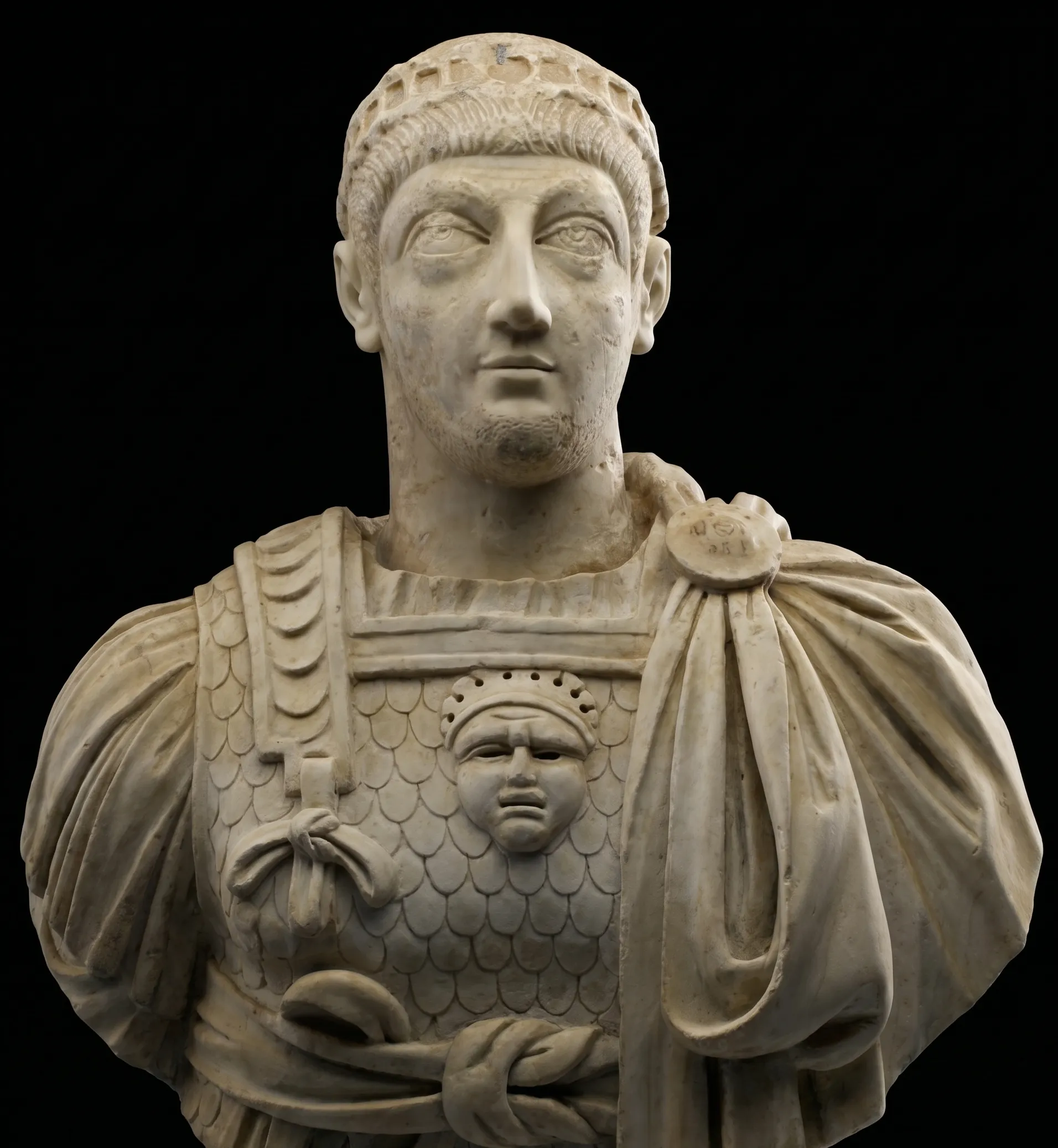
Flavio Placidio Valentiniano venne alla luce il 2 luglio 419 a Ravenna, frutto dell'unione fra Galla Placidia, sorella di Onorio e ultima grande principessa della casa di Teodosio, e il generale Costanzo III, che nel 421 sarebbe asceso alla porpora per spegnersi appena sette mesi dopo. Quando Onorio morì senza eredi nel 423, il trono d'Occidente fu usurpato dal funzionario Giovanni. Galla Placidia fuggì col figlio bambino a Costantinopoli, dove l'imperatore d'Oriente Teodosio II li accolse come supplici. Fu una spedizione armata orientale, guidata dal generale alano Aspar, a riconquistare Ravenna nel 425 e a trascinare l'usurpatore alla decapitazione nell'ippodromo. Il 23 ottobre 425, ad appena sei anni, il fanciullo fu rivestito della porpora augustea con solenne cerimonia a Roma. Nipote, cugino e pronipote di imperatori, nelle sue vene scorreva il sangue più illustre del mondo romano: per stirpe, nessun candidato poteva vantare di più .
Flavius Placidius Valentinianus came into the world on 2 July 419 at Ravenna, born of the union between Galla Placidia, sister of Honorius and last great princess of the house of Theodosius, and the general Constantius III, who in 421 would rise to the purple only to die a mere seven months later. When Honorius died heirless in 423, the Western throne was usurped by the official John. Galla Placidia fled with her infant son to Constantinople, where the Eastern emperor Theodosius II received them as suppliants. It was an Eastern armed expedition, led by the Alan general Aspar, that retook Ravenna in 425 and dragged the usurper to beheading in the hippodrome. On 23 October 425, aged just six, the boy was clothed in the imperial purple in a solemn ceremony at Rome. Nephew, cousin and grandson of emperors, the most illustrious blood of the Roman world ran in his veins: by lineage, no candidate could claim more.
Galla Placidia, regina di tre regni
Galla Placidia, queen of three kingdoms
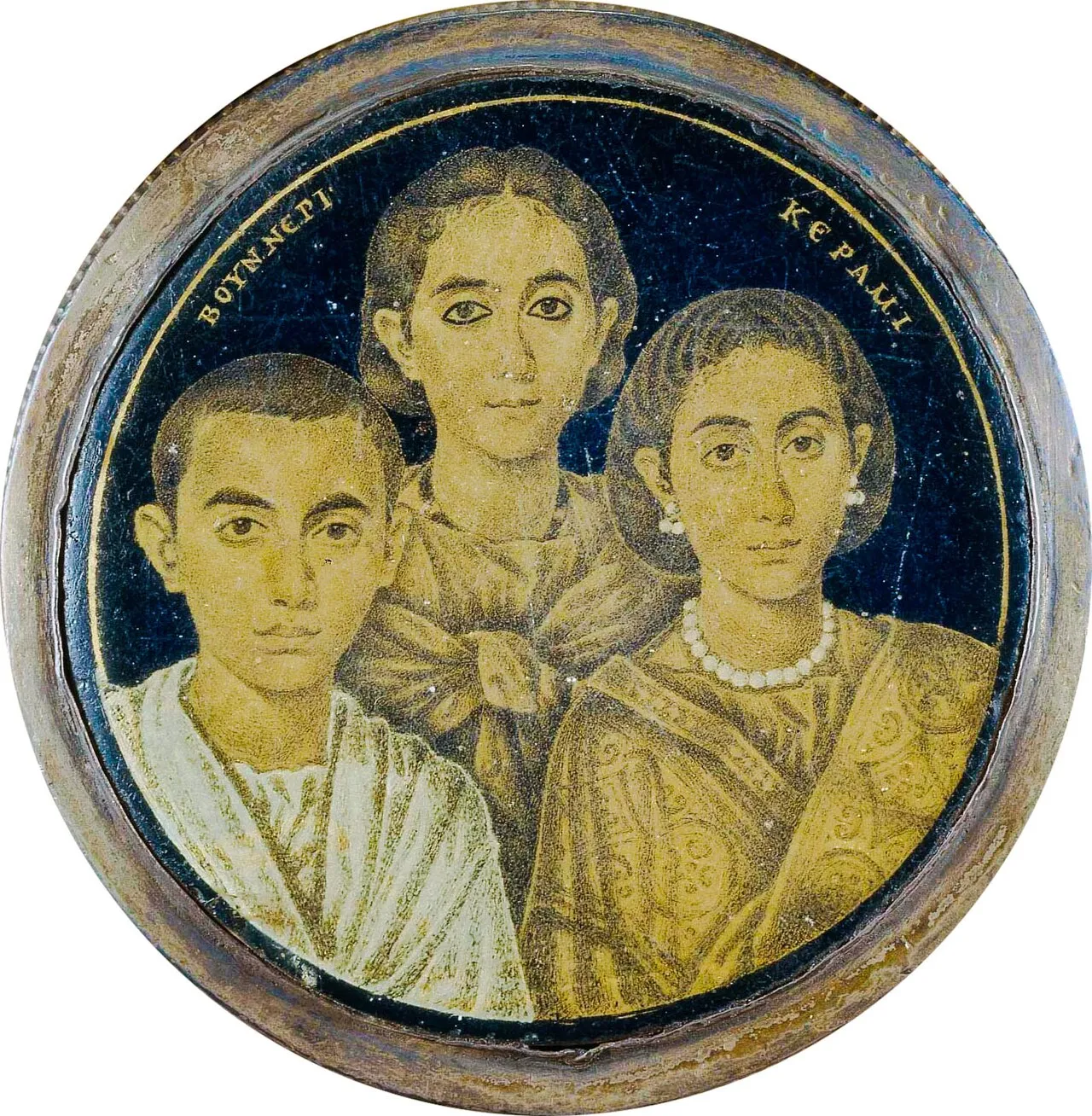
Dietro il trono del bambino si ergeva una donna che valeva un esercito. Galla Placidia, figlia di Teodosio il Grande, sorella di Onorio, già vedova del re visigoto Ataulfo (che l'aveva sposata nel 414, dopo averla tenuta ostaggio durante il sacco di Roma del 410) e infine moglie di Costanzo III, resse l'Occidente come reggente effettiva per dodici anni (425–437). Poche figure femminili della tarda antichità furono altrettanto straordinarie: aveva visto Roma cadere da bambina, aveva regnato come regina dei Visigoti fra le Gallie, parlava il latino, il greco e tre dialetti germanici. Governò nel nome del figlio fino alla sua maggiore età , e a Ravenna ci ha lasciato il celebre mausoleo, in verità un oratorio, i cui mosaici stellati restano fra i più sublimi di tutta l'arte tardo-antica.
Behind the child's throne stood a woman worth an army. Galla Placidia, daughter of Theodosius the Great, sister of Honorius, once widow of the Visigoth king Athaulf (who had married her in 414, after holding her hostage during the sack of Rome of 410) and finally wife of Constantius III, ruled the West as effective regent for twelve years (425–437). Few female figures of late antiquity were so extraordinary: she had seen Rome fall as a child, had reigned as queen of the Visigoths across the Gauls, spoke Latin, Greek and three Germanic dialects. She governed in her son's name until he came of age, and at Ravenna she left us the celebrated mausoleum, in truth an oratory, whose starlit mosaics remain among the most sublime in all late-antique art.
L'ascesa di Ezio, "l'ultimo Romano"
The rise of Aetius, "the last Roman"
Ma il potere reale scivolò presto nelle mani di un solo uomo: il generale Flavio Ezio, che i contemporanei chiamarono già ultimus Romanorum, "l'ultimo dei Romani". Aveva trascorso l'infanzia come ostaggio, prima alla corte degli Alani, poi presso gli Unni: ne aveva appreso la lingua, la psicologia, l'arte della guerra a cavallo, stringendo amicizia personale col re unno Rua e con suo nipote, un giovane di nome Attila. Spezzò i Visigoti in Gallia (430), i Franchi (432), i Burgundi (435, il massacro che avrebbe ispirato il ciclo epico dei Nibelunghi). Nel 433 divenne magister militum praesentalis: di fatto, dittatore militare dell'Occidente. Per vent'anni tenne insieme un edificio in rovina con uno spregiudicato intreccio di vittorie, alleanze barbariche e gelida diplomazia.
But real power soon slipped into the hands of a single man: the general Flavius Aetius, whom contemporaries already called ultimus Romanorum, "the last of the Romans". He had spent his childhood as a hostage, first at the court of the Alans, then among the Huns: he had learned their tongue, their psychology, their art of mounted war, forging a personal friendship with the Hun king Rua and with his nephew, a young man named Attila. He broke the Visigoths in Gaul (430), the Franks (432), the Burgundians (435, the massacre that would inspire the epic cycle of the Nibelungenlied). In 433 he became magister militum praesentalis: in effect, military dictator of the West. For twenty years he held together a crumbling edifice with a ruthless interweaving of victories, barbarian alliances and icy diplomacy.
La perdita dell'Africa (429–439)
The loss of Africa (429–439)
Eppure nemmeno Ezio poté impedire la ferita più grave. Nel maggio del 429, i Vandali e gli Alani del re Genserico, forse ottantamila anime, traghettarono lo Stretto di Gibilterra e si riversarono sul Nord Africa, la provincia più ricca e fertile dell'Occidente, il granaio di Roma da quattro secoli. Le sfibrate legioni africane non riuscirono ad arginarli; il grande Agostino di Ippona spirò proprio mentre i Vandali assediavano la sua città , nell'agosto del 430. Cartagine cadde il 19 ottobre 439, colta di sorpresa mentre il popolo affollava i giochi del circo. Su quelle terre Genserico fondò il primo regno barbarico indipendente che Roma fu costretta a riconoscere (trattato del 442). L'Africa era perduta, e con essa un terzo delle entrate fiscali dell'Occidente: senza il grano africano, Roma restava appesa a Sicilia, Sardegna e all'Oriente lontano.
Yet not even Aetius could prevent the gravest wound. In May of 429, the Vandals and Alans of king Gaiseric, perhaps eighty thousand souls, ferried across the Strait of Gibraltar and poured over North Africa, the West's richest and most fertile province, Rome's granary for four centuries. The exhausted African legions could not stem them; the great Augustine of Hippo breathed his last just as the Vandals besieged his city, in August 430. Carthage fell on 19 October 439, taken by surprise while the people thronged the circus games. On those lands Gaiseric founded the first independent barbarian kingdom that Rome was forced to recognise (treaty of 442). Africa was lost, and with it a third of the West's tax revenue: without African grain, Rome hung upon Sicily, Sardinia and the distant East.
02Attila e i Campi Catalaunici — 451 d.C.Attila and the Catalaunian Plains — 451 AD
La provocazione di Onoria (450)
Honoria's provocation (450)
La tempesta attilana si scatenò da uno scandalo di palazzo. Nel 450 la sorella maggiore dell'imperatore, Giusta Grata Onoria, confinata in un monastero per una relazione proibita, ebbe un'idea folle e fatale: scrisse di nascosto ad Attila, supplicandolo di liberarla e accludendo alla lettera il proprio anello. Il re degli Unni, già pronto a calare sull'Occidente, finse di leggervi una proposta di matrimonio: pretese ufficialmente la mano di Onoria e, come dote, nientemeno che la metà dell'Impero. Valentiniano respinse l'oltraggio con furore. Il pretesto per la guerra era servito.
The Attilan storm broke out of a palace scandal. In 450 the emperor's elder sister, Justa Grata Honoria, confined to a convent for a forbidden affair, conceived a mad and fatal idea: she secretly wrote to Attila, begging him to free her and enclosing with the letter her own ring. The king of the Huns, already poised to descend upon the West, feigned to read in it a marriage proposal: he officially demanded Honoria's hand and, as dowry, nothing less than half the Empire. Valentinian flung back the outrage in fury. The pretext for war was served.
20 giugno 451: la grande coalizione
20 June 451: the great coalition
Nella primavera del 451 Attila, il «flagello di Dio», varsò il Reno alla testa di un'orda che le fonti gonfiano fino a centinaia di migliaia di guerrieri. La Gallia bruciava. Fu Ezio a tessere l'impossibile: una coalizione che riunì sotto le stesse insegne Romani e barbari un tempo nemici, i Visigoti di Teoderico I, i Franchi Salii, i Burgundi, i Sassoni, gli Alani. Lo scontro esplose il 20 giugno 451 ai Campi Catalaunici, presso Châ lons in Champagne: una delle più immani battaglie del mondo antico. Lo storico Giordane racconta che il rigagnolo che attraversava la piana si gonfiò di sangue fino a divenire un torrente; si parlò di centocinquantamila morti. Attila fu respinto. Il vecchio re visigoto Teoderico cadde travolto dai suoi stessi cavalieri, e il figlio Torismondo ne vendicò la morte falciando la cavalleria unna. Ma Ezio non inseguì il nemico in fuga: lo lasciò ritirarsi: scelta dibattuta ancora oggi, forse per non rendere i Visigoti troppo potenti una volta svanita la minaccia degli Unni.
In the spring of 451 Attila, the "Scourge of God", crossed the Rhine at the head of a horde that the sources swell to hundreds of thousands of warriors. Gaul was ablaze. It was Aetius who wove the impossible: a coalition that gathered under the same standards Romans and once-hostile barbarians, the Visigoths of Theodoric I, the Salian Franks, the Burgundians, the Saxons, the Alans. The clash erupted on 20 June 451 on the Catalaunian Plains, near Châ lons in Champagne: one of the most colossal battles of the ancient world. The historian Jordanes recounts that the brook crossing the plain swelled with blood until it became a torrent; men spoke of one hundred and fifty thousand dead. Attila was repelled. The old Visigoth king Theodoric fell, trampled by his own horsemen, and his son Thorismund avenged his death by mowing down the Hunnic cavalry. But Aetius did not pursue the fleeing enemy: he let him withdraw, a choice still debated today, perhaps so as not to leave the Visigoths too powerful once the Hunnic threat had vanished.
Attila in Italia (452) e Leone Magno
Attila in Italy (452) and Leo the Great
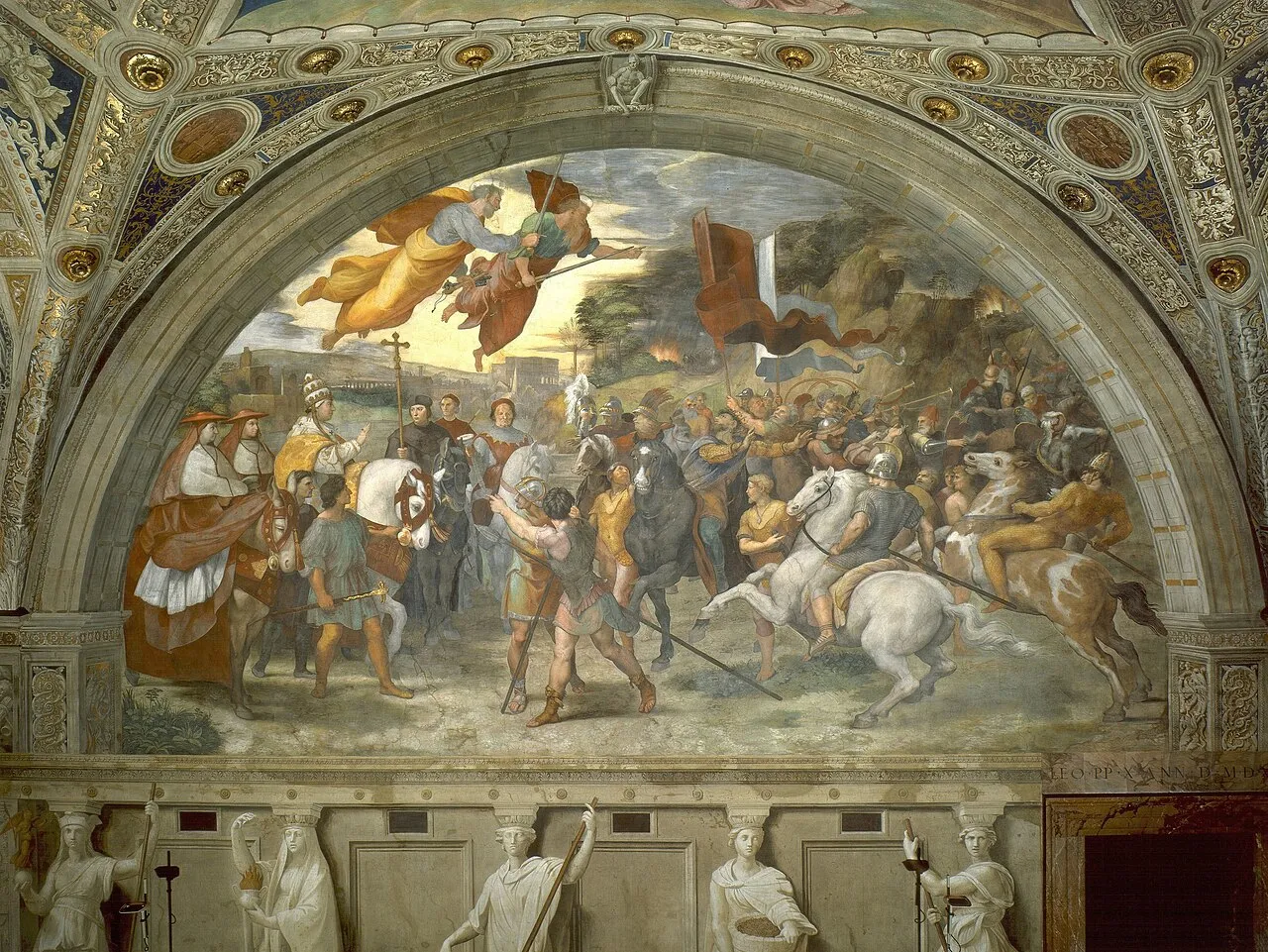
L'anno seguente Attila si riversò sull'Italia, irrompendo dal Carso. Aquileia fu rasa al suolo così completamente che i suoi profughi, rifugiatisi nelle lagune, vi avrebbero gettato i primi germi di Venezia; poi caddero Padova, Vicenza, Verona, Milano, Pavia. Mentre l'orda puntava su Roma, lungo le rive del Mincio presso Mantova le andò incontro un'ambasceria guidata da Papa Leone Magno. Cosa il pontefice abbia sussurrato al re barbaro nessuno lo sa: le fonti cristiane gridarono al miracolo, quelle più disincantate parlarono di pestilenza fra le truppe unne e dello spettro della carestia. Sta di fatto che Attila si ritirò . Morì pochi mesi dopo, nel 453, durante la prima notte delle sue nozze con la giovane sposa germanica Ildico: forse stroncato da un'emorragia per troppo vino, forse dal veleno. Con lui si dissolse, come neve al sole, l'intero impero unno.
The following year Attila poured over Italy, bursting in from the Karst. Aquileia was razed so utterly that its refugees, fleeing into the lagoons, would there sow the first seeds of Venice; then fell Padua, Vicenza, Verona, Milan, Pavia. As the horde bore down on Rome, along the banks of the Mincio near Mantua an embassy led by Pope Leo the Great went out to meet it. What the pontiff whispered to the barbarian king no one knows: Christian sources cried miracle, more disenchanted ones spoke of pestilence among the Hunnic troops and the spectre of famine. The fact remains that Attila withdrew. He died a few months later, in 453, on the first night of his wedding to the young Germanic bride Ildico: perhaps felled by a haemorrhage from too much wine, perhaps by poison. With him the entire Hunnic empire dissolved like snow in the sun.
03La Fine di Ezio e la Fine del TronoThe End of Aetius and the End of the Throne
21 settembre 454: il pugnale dell'imperatore
21 September 454: the emperor's dagger
Il 21 settembre 454 Valentiniano III convocò Ezio nel palazzo imperiale, col pretesto di discutere le nozze fra il figlio del generale, Gaudenzio, e la propria figlia Placidia. Mentre Ezio, ignaro, gli illustrava i conti dell'erario, l'imperatore balzò in piedi, sguainò la spada e lo trafisse; l'eunuco di corte Eraclio, suo complice, vibrò il colpo di grazia. Perché il sovrano fantoccio uccise con le proprie mani il più grande generale dell'Occidente? Le ragioni si intrecciano: l'invidia per un potere ormai sterminato, il timore che il sangue imperiale del giovane Gaudenzio adombrasse il trono, l'intrigo ordito dal senatore Petronio Massimo e dallo stesso Eraclio. Davanti al cadavere, un cortigiano avrebbe pronunciato la sentenza più lucida di tutta la tarda antichità .
On 21 September 454 Valentinian III summoned Aetius to the imperial palace, on the pretext of discussing the marriage between the general's son, Gaudentius, and his own daughter Placidia. While Aetius, unsuspecting, set out the treasury's accounts before him, the emperor sprang to his feet, drew his sword and ran him through; the court eunuch Heraclius, his accomplice, struck the death-blow. Why did the puppet sovereign slay with his own hands the greatest general of the West? The reasons intertwine: envy of a power now boundless, fear that the imperial blood of young Gaudentius might shadow the throne, the intrigue spun by the senator Petronius Maximus and by Heraclius himself. Before the corpse, a courtier is said to have pronounced the most lucid verdict of all late antiquity.
« Ignoro se egli abbia fatto bene o no, ma so che con la sua mano destra si è tagliato la sinistra.» « I do not know whether he acted rightly or not, but I know that with his right hand he cut off his left.» Anonimo senatore romano, ott 454 (Procopio, Bell. Vand. I, 4)
16 marzo 455: la vendetta di Optila e Traustila
16 March 455: the revenge of Optila and Thraustila
La nemesi non tardò . Sei mesi dopo, il 16 marzo 455, due ufficiali dell'antica guardia personale di Ezio (Optila e Traustila, germani di stirpe sciro) circondarono l'imperatore nei pressi del Campo Marzio, mentre assisteva a esercitazioni equestri, e lo abbatterono a colpi di pugnale. Nessuno mosse un dito per difenderlo; lo stesso Eraclio fu trucidato sul posto. Pochi giorni dopo il Senato innalzò alla porpora Petronio Massimo, quasi certamente il vero regista della congiura. Valentiniano III non lasciava figli maschi: con lui si spegneva, dopo settantacinque anni, la dinastia teodosiana d'Occidente, quella stessa che Teodosio il Grande aveva fondato nella gloria del 379.
Nemesis was not slow. Six months later, on 16 March 455, two officers of Aetius's former personal guard (Optila and Thraustila, both Germans of Scirian stock) surrounded the emperor near the Campus Martius, as he watched equestrian exercises, and cut him down with their daggers. No one lifted a finger to defend him; Heraclius himself was butchered on the spot. A few days later the Senate raised to the purple Petronius Maximus, almost certainly the true director of the conspiracy. Valentinian III left no male heirs: with him died out, after seventy-five years, the Theodosian dynasty of the West, the very one that Theodosius the Great had founded in the glory of 379.
L'eredità: trent'anni di crollo
The legacy: thirty years of collapse
Nella memoria storica Valentiniano III resta l'imperatore della perdita: sotto il suo lunghissimo regno l'Occidente lasciò cadere la Britannia, l'Africa proconsolare con Cartagine, vaste regioni di Hispania e Gallia. Uomo mediocre (debole, capriccioso, facilmente manovrabile) sopravvisse trent'anni unicamente perché legittimo per nascita e protetto, prima dalla madre, poi da Ezio. Nell'istante in cui pugnalò il proprio scudo, firmò insieme la propria condanna e quella dell'Occidente. La fine ufficiale sarebbe giunta ventun anni più tardi, nel 476, con la deposizione di Romolo Augustolo per mano di Odoacre, ma il vero crollo era già avvenuto in quella sala d'udienza, il 21 settembre 454.
In historical memory Valentinian III remains the emperor of loss: under his very long reign the West let fall Britain, proconsular Africa with Carthage, vast regions of Hispania and Gaul. A mediocre man (weak, capricious, easily manipulated) he survived thirty years solely because he was legitimate by birth and protected, first by his mother, then by Aetius. In the instant he stabbed his own shield, he signed at once his own doom and that of the West. The official end would come twenty-one years later, in 476, with the deposition of Romulus Augustulus at the hands of Odoacer, but the true collapse had already happened in that audience hall, on 21 September 454.
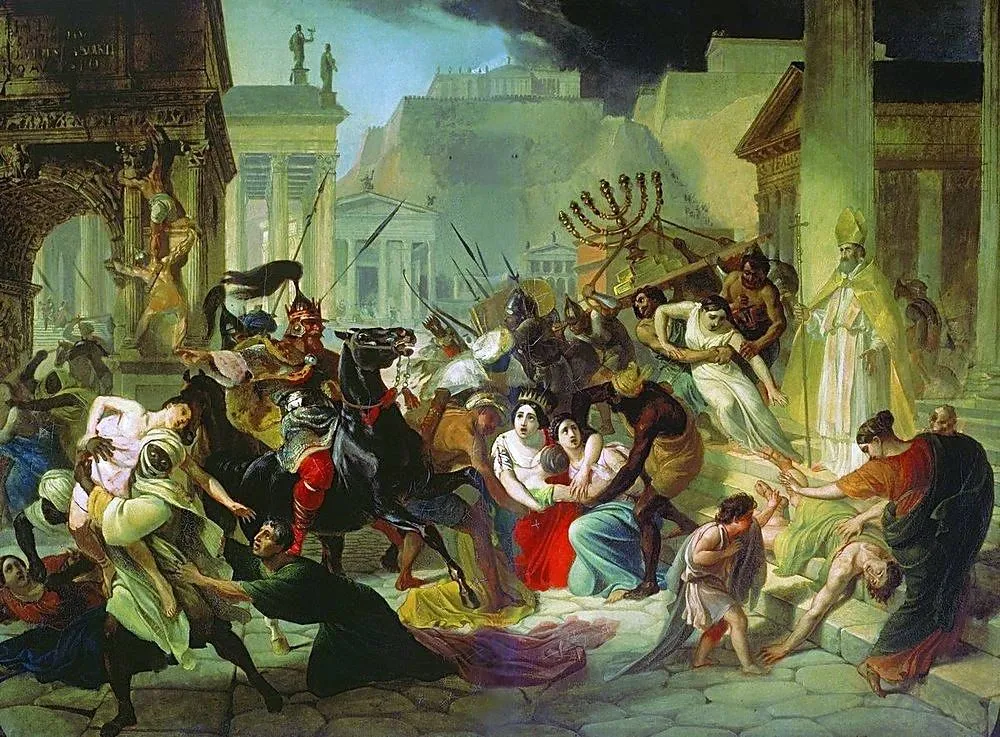
E il castigo fu immediato. Appena quattro mesi dopo l'assassinio, nel giugno 455, la flotta di Genserico risalì la foce del Tevere e i Vandali misero a sacco Roma per quattordici giorni: un saccheggio metodico, meno feroce di quello di Alarico nel 410 ma infinitamente più vorace, che spogliò la città perfino delle tegole dorate del Tempio di Giove. Ufficialmente Genserico era stato invocato dalla vedova imperatrice Eudossia, per vendicare lo sposo trucidato. Da quell'orgia di rapina la storia avrebbe coniato l'aggettivo vandalico. Era il secondo sacco di Roma in quarantacinque anni: il primo aveva chiuso un'epoca, questo spalancava la porta alla fine.
And the punishment was immediate. Barely four months after the assassination, in June 455, the fleet of Gaiseric sailed up the mouth of the Tiber and the Vandals put Rome to the sack for fourteen days: a methodical plundering, less savage than Alaric's of 410 but infinitely more voracious, which stripped the city even of the gilded tiles of the Temple of Jupiter. Officially Gaiseric had been summoned by the widowed empress Eudoxia, to avenge her slaughtered husband. From that orgy of pillage history would coin the adjective vandalism. It was the second sack of Rome in forty-five years: the first had closed an epoch, this flung wide the door to the end.