01Il Senatore AnicioThe Anician Senator
Petronio Massimo nacque attorno al 396 d.C. nel grembo di una delle casate più antiche e doviziose di Roma, gli Anicii, la stessa stirpe che di lì a poco avrebbe dato al mondo il filosofo Severino Boezio. Crebbe all'ombra del palazzo, e la sua fu un'ascesa folgorante lungo il cursus honorum: a quindici anni già tribunus et notarius, segretario imperiale; a venticinque comes sacrarum largitionum, custode delle finanze dell'Impero; a ventisette, nel 421, praefectus urbi, la più alta magistratura civile dell'Urbe. Resse due volte il consolato (433 e 443), fu prefetto del pretorio d'Italia, e ottenne il rarissimo rango di patricius. La sua ricchezza era leggendaria: ville sull'Aventino, in Campania, in Africa, e giochi pubblici di una magnificenza che Roma non vedeva da generazioni.
Petronius Maximus was born around 396 AD into the bosom of one of the most ancient and opulent houses of Rome, the Anicii, the very line that would soon give the world the philosopher Boethius. He grew up in the shadow of the palace, and his rise through the cursus honorum was dazzling: at fifteen already tribunus et notarius, imperial secretary; at twenty-five comes sacrarum largitionum, keeper of the Empire's finances; at twenty-seven, in 421, praefectus urbi: the highest civil magistracy of the City. He held the consulship twice (433 and 443), was praetorian prefect of Italy, and won the rarest rank of patricius. His wealth was legendary: villas on the Aventine, in Campania, in Africa, and public games of a magnificence Rome had not seen in generations.
Per quasi quarant'anni fu la spina nel fianco di Ezio, il generalissimo che dominava la corte di Valentiniano III. Tra il senatore-finanziere e il magister militum correva una rivalità profonda: due idee opposte e inconciliabili del potere romano. Quando, nel settembre del 454, Valentiniano pugnalò Ezio di propria mano nel palazzo del Palatino, fu Petronio, lo attestano Procopio e Giovanni di Antiochia, ad aver ordito la trama insieme all'eunuco di corte Eraclio. Si attendeva in premio la prefettura del pretorio o il consolato per il 455. Non ricevette nulla. Decise allora di rovesciare anche l'imperatore che aveva contribuito a disarmare.
For nearly forty years he was the thorn in the side of Aetius, the generalissimo who dominated Valentinian III's court. Between the senator-financier and the magister militum ran a deep rivalry: two opposite, irreconcilable ideas of Roman power. When, in September 454, Valentinian stabbed Aetius with his own hand in the Palatine palace, it was Petronius, Procopius and John of Antioch attest it, who had spun the plot together with the court eunuch Heraclius. He awaited as his reward the praetorian prefecture or the consulship for 455. He received nothing. So he resolved to overthrow the very emperor he had helped to disarm.
02Il Golpe e i VandaliThe Coup and the Vandals
La mattina del 16 marzo 455, al Campo Marzio, mentre Valentiniano III assisteva a una gara di tiro con l'arco, due ex guardie del corpo di Ezio (Optila e Traustila, di stirpe unna) gli si accostarono col pretesto di consegnargli un messaggio e lo trafissero a colpi di spada. Con lui cadde l'eunuco Eraclio. Nessuna delle guardie presenti mosse un dito: l'esercito aveva amato Ezio, e nessuno avrebbe versato sangue per il suo assassino. Il giorno seguente, distribuendo somme enormi alle truppe palatine, Petronio Massimo si fece acclamare Augusto.
On the morning of 16 March 455, on the Campus Martius, as Valentinian III watched an archery contest, two former bodyguards of Aetius (Optila and Thraustila, of Hunnic stock) approached on the pretext of handing him a message and ran him through with their swords. With him fell the eunuch Heraclius. Not one of the guards present lifted a finger: the army had loved Aetius, and none would shed blood for his murderer. The next day, distributing vast sums to the palatine troops, Petronius Maximus had himself acclaimed Augustus.
Il suo primo atto fu un duplice matrimonio dinastico imposto con la forza. Costrinse Licinia Eudossia, vedova di Valentiniano, figlia dell'imperatore d'Oriente Teodosio II, nipote del grande Teodosio: a sposarlo a poche settimane dall'assassinio del marito. Ruppe il fidanzamento della figlia di lei, Eudocia, col principe vandalo Unerico, figlio di re Genserico, e la promise invece al proprio figlio Palladio, elevato al rango di Cesare. Era una doppia provocazione: contro Costantinopoli, che non lo riconobbe mai, e contro la Cartagine vandala, defraudata dell'alleanza matrimoniale che le era stata promessa.
His first act was a double dynastic marriage imposed by force. He compelled Licinia Eudoxia, widow of Valentinian, daughter of the Eastern emperor Theodosius II, granddaughter of the great Theodosius, to marry him a few weeks after her husband's murder. He broke off the betrothal of her daughter, Eudocia, to the Vandal prince Huneric, son of king Gaiseric, and promised her instead to his own son Palladius, raised to the rank of Caesar. It was a twofold provocation: against Constantinople, which never recognised him, and against Vandal Carthage, cheated of the marriage alliance it had been promised.
Fu allora (narrano Procopio, Giordane e Giovanni Malala) che Eudossia fece pervenire in segreto un appello a Genserico, implorandolo di vendicarla. La leggenda è probabilmente posteriore (al re vandalo non mancavano ragioni politiche per colpire), ma divenne il modo in cui i contemporanei spiegarono ciò che seguì: la comparsa della flotta vandala alla foce del Tevere, alla fine di maggio del 455, appena settantasette giorni dopo l'incoronazione di Petronio.
It was then (so Procopius, Jordanes and John Malalas relate) that Eudoxia secretly sent an appeal to Gaiseric, imploring him to avenge her. The legend is probably later (the Vandal king did not lack political reasons to strike), but it became the way contemporaries explained what followed: the appearance of the Vandal fleet at the mouth of the Tiber, at the end of May 455, just seventy-seven days after Petronius's coronation.
03Il Sacco VandalicoThe Vandal Sack
Petronio non aveva un esercito. Le legioni d'Italia erano disperse, i federati goti lontani, in Gallia. Tentò di fuggire da solo. Il 31 maggio 455, mentre cavalcava verso una delle porte della città , fu riconosciuto dalla folla inferocita. Sul carnefice le fonti divergono: per alcuni fu un servo imperiale di nome Ursus a fracassargli il cranio con una pietra, per altri i soldati della sua stessa scorta a finirlo. Il corpo fu dilaniato, trascinato per le vie e gettato nel Tevere. Non fu mai ritrovato. Il figlio Palladio svanì nello stesso giorno.
Petronius had no army. The legions of Italy were scattered, the Gothic federates far away in Gaul. He tried to flee alone. On 31 May 455, as he rode toward one of the city gates, he was recognised by the enraged crowd. On the executioner the sources diverge: for some it was an imperial servant named Ursus who shattered his skull with a stone, for others the soldiers of his own escort who finished him. The body was torn to pieces, dragged through the streets and thrown into the Tiber. It was never recovered. His son Palladius vanished on the same day.
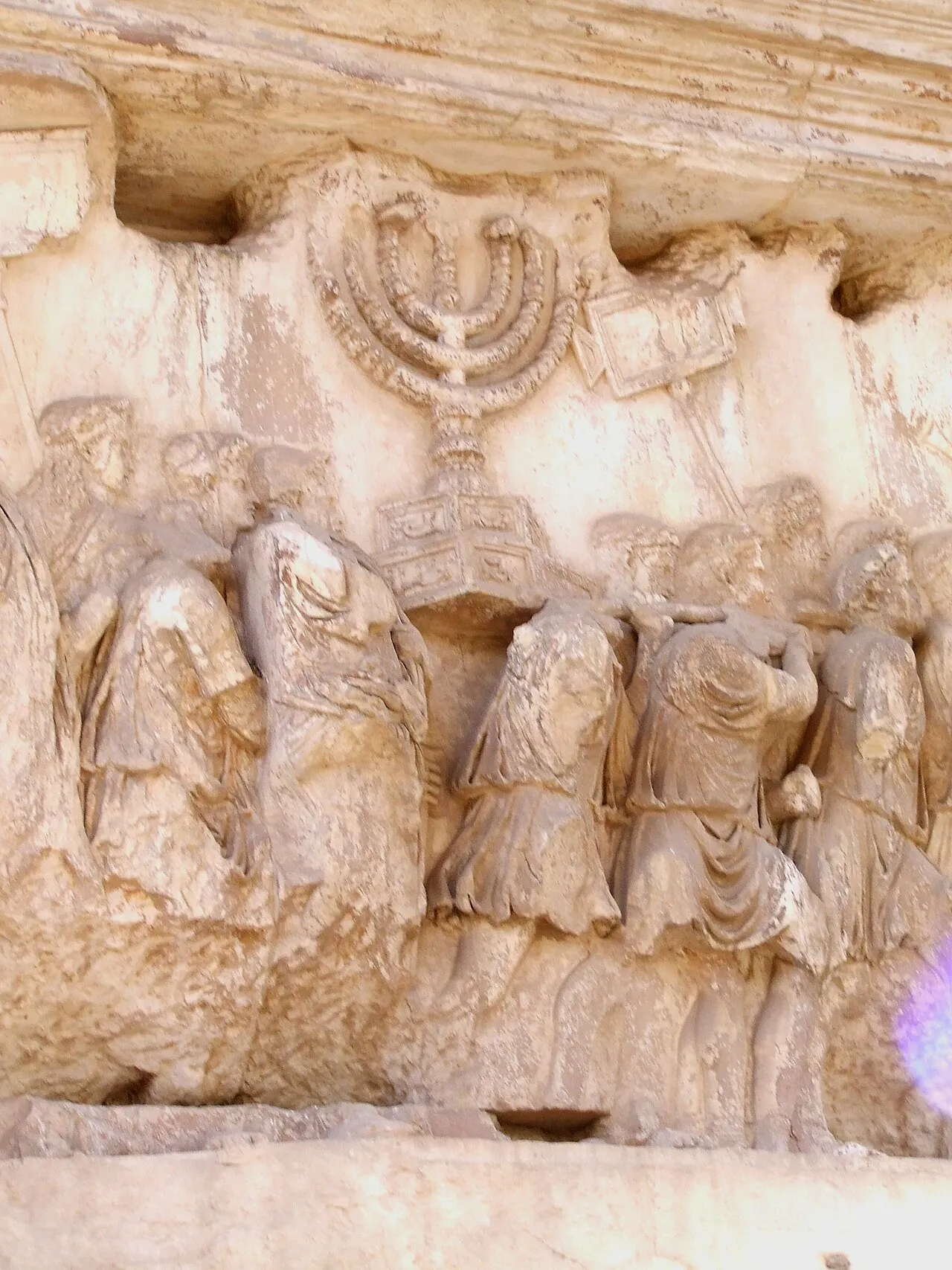
Due giorni dopo, il 2 giugno 455, Genserico entrò in Roma. Ad attenderlo alle porte vi era Papa Leone Magno, lo stesso che tre anni prima aveva piegato Attila con la sola parola. Non poté impedire il saccheggio, ma ne strappò due promesse: nessun incendio, nessun massacro indiscriminato. Per quattordici giorni i Vandali svuotarono metodicamente la capitale. Portarono via i tesori del Palatino, le statue dorate del Campidoglio, metà delle tegole bronzee del tempio di Giove Capitolino, gli arredi sacri delle basiliche, e soprattutto le reliquie del Tempio di Gerusalemme che Tito aveva trascinato a Roma nel 70 d.C. La menorah a sette bracci, la tavola dei pani, le trombe d'argento dei sacerdoti: tutto fu stivato sulle navi vandale, insieme a Eudossia e alle figlie Eudocia e Placidia, condotte prigioniere a Cartagine.
Two days later, on 2 June 455, Gaiseric entered Rome. Awaiting him at the gates stood Pope Leo the Great, the same who three years earlier had bent Attila with words alone. He could not prevent the sack, but wrested from it two promises: no fire, no indiscriminate massacre. For fourteen days the Vandals methodically emptied the capital. They carried off the treasures of the Palatine, the gilded statues of the Capitol, half the bronze tiles of the temple of Jupiter Capitolinus, the sacred furnishings of the basilicas, and above all the relics of the Temple of Jerusalem that Titus had dragged to Rome in 70 AD. The seven-branched menorah, the table of the showbread, the silver trumpets of the priests: all stowed aboard the Vandal ships, together with Eudoxia and her daughters Eudocia and Placidia, led as prisoners to Carthage.
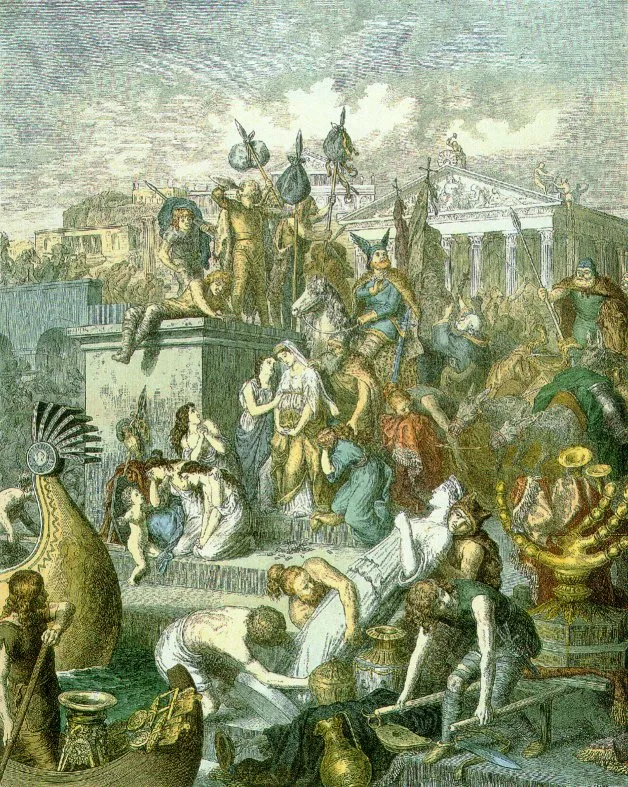
Il sacco vandalico del 455 fu, sul piano materiale, ben più rovinoso di quello visigoto del 410: dove Alarico aveva risparmiato chiese e quartieri, Genserico portò via tutto ciò che potesse essere imbarcato. Il bottino arricchì Cartagine per decenni; parte dei tesori si perse nella traversata, il resto fu disperso quando, nel 533, Belisario riconquistò la città vandala e riportò le reliquie del Tempio a Costantinopoli, per poi (si dice, per scrupolo superstizioso) restituirle alle chiese di Gerusalemme. Dell'evento sopravvisse soprattutto una parola: vandalico, sinonimo eterno di distruzione cieca e ostentata.
The Vandal sack of 455 was, in material terms, far more ruinous than the Visigothic one of 410: where Alaric had spared churches and quarters, Gaiseric carried off everything that could be shipped. The plunder enriched Carthage for decades; part of the treasure was lost in the crossing, the rest scattered when, in 533, Belisarius reconquered the Vandal city and brought the Temple relics back to Constantinople, only (it is said, out of superstitious scruple) to return them to the churches of Jerusalem. Of the event one word above all survived: vandalism, the eternal synonym for blind and ostentatious destruction.
04Settantasette GiorniSeventy-Seven Days
Il regno-lampo di Petronio Massimo, settantasette giorni, è una parabola sulla fragilità del potere nell'ultimo Occidente. Aveva tutto: ricchezza sterminata, reti politiche, esperienza di governo, una clientela tessuta in quarant'anni di cariche. Gli mancava l'unica cosa che ormai contasse davvero: il controllo dell'esercito. Disgregate le truppe palatine dopo l'eliminazione di Ezio, svanite le legioni di frontiera, gli unici reparti efficienti erano i federati barbarici, fedeli ai loro capi tribali: Visigoti, Burgundi, Alani, Suebi. Senza un magister militum alle spalle, la porpora non era più un trono: era una trappola.
The lightning reign of Petronius Maximus, seventy-seven days, is a parable on the fragility of power in the last West. He had everything: boundless wealth, political networks, experience of government, a clientele woven over forty years of office. He lacked the one thing that now truly counted: control of the army. With the palatine troops shattered after the elimination of Aetius and the frontier legions vanished, the only efficient units were the barbarian federates, loyal to their tribal chiefs: Visigoths, Burgundians, Alans, Suebi. Without a magister militum behind him, the purple was no longer a throne: it was a trap.
Il suo amico e contemporaneo, il poeta-vescovo Sidonio Apollinare, che lo aveva conosciuto da giovane, ne suggellò la fine in una lettera spietata (Epistulae II, 13): «Credeva che la felicità del principe stesse nel diadema e nella porpora; ma quando ottenne ciò che bramava, scoprì che il peso della corona schiaccia il capo che la porta» . Era l'epitaffio non del solo Petronio, ma dell'intera teoria di imperatori-fantoccio che lo seguì: Avito, Maioriano, Libio Severo, Antemio, Olibrio, Glicerio, Giulio Nepote, Romolo Augustolo. In ventun anni, dal 455 al 476, l'Occidente avrebbe divorato dieci Augusti, sette dei quali uccisi nel sangue.
His friend and contemporary, the poet-bishop Sidonius Apollinaris, who had known him as a youth, sealed his end in a merciless letter (Epistulae II, 13): «He believed the prince's happiness lay in the diadem and the purple; but when he obtained what he craved, he discovered that the weight of the crown crushes the head that wears it» . It was the epitaph not of Petronius alone, but of the whole succession of puppet emperors that followed him: Avitus, Majorian, Libius Severus, Anthemius, Olybrius, Glycerius, Julius Nepos, Romulus Augustulus. In twenty-one years, from 455 to 476: the West would devour ten Augusti, seven of them killed in blood.