01BiografiaBiography
Il bambino della guerra civile (42–33 a.C.)
A child of civil war (42–33 BC)
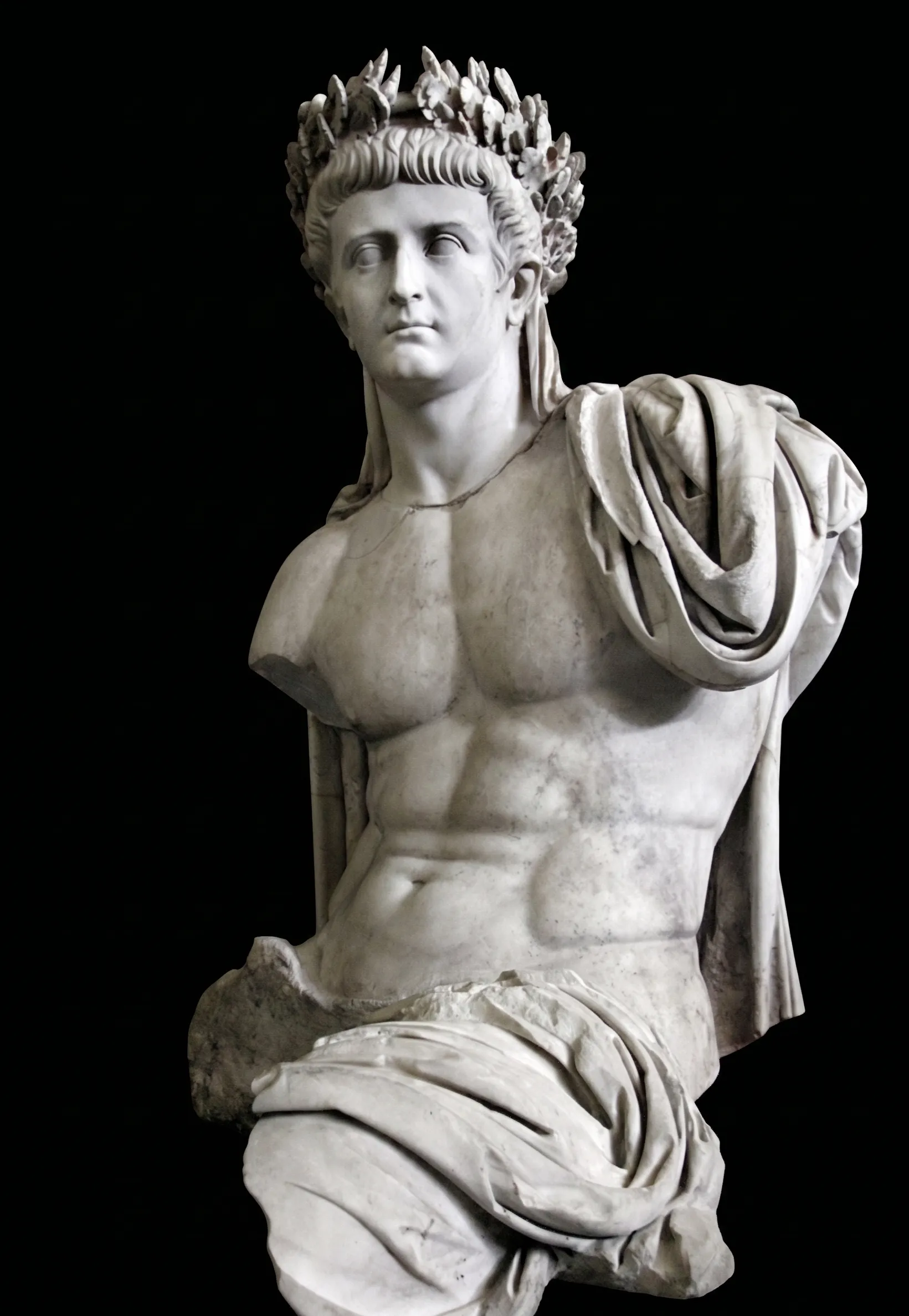
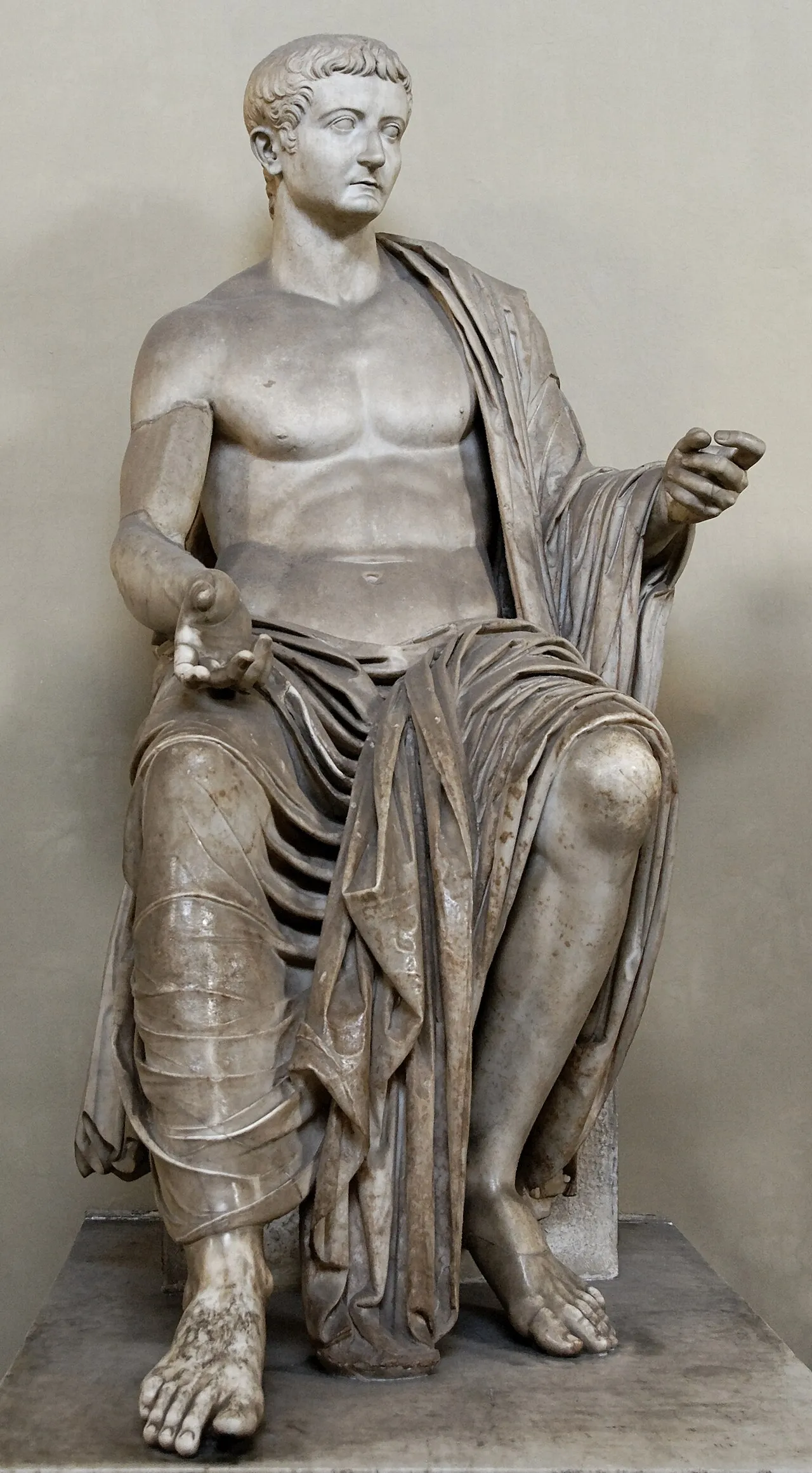
Tiberio Claudio Nerone nacque a Roma il 16 novembre del 42 a.C., poche settimane dopo la battaglia di Filippi. Apparteneva alla gens Claudia, una delle famiglie più antiche e altezzose dell'aristocrazia repubblicana: cinque consolati, sette dittature, tre censure si contavano fra i suoi antenati. Il padre, omonimo, era stato pretore sotto Cesare e questore di Antonio durante la guerra di Perugia; aveva combattuto contro Ottaviano nel 41–40 a.C. La madre, Livia Drusilla, era una nobildonna di soli vent'anni, già con un figlio in grembo: il futuro Druso Maggiore.
Tiberius Claudius Nero was born in Rome on 16 November 42 BC, a few weeks after the Battle of Philippi. He belonged to the Claudian gens, one of the oldest and proudest families of Republican aristocracy: among his ancestors counted five consulships, seven dictatorships, three censorships. His father, of the same name, had been praetor under Caesar and quaestor of Antony during the Perusine War; he had fought against Octavian in 41–40 BC. His mother, Livia Drusilla, was a noblewoman of only twenty, already pregnant, with the future Drusus the Elder.
L'infanzia di Tiberio fu un'odissea. Dopo la sconfitta di Perugia nel 40 a.C., la famiglia fuggì per mare in Sicilia presso Sesto Pompeo, poi in Grecia presso Marco Antonio. Il bambino aveva due anni e già aveva conosciuto la fame, il mare in burrasca, la fuga notturna. Tornato a Roma con l'amnistia del 39 a.C., il padre dovette assistere a un evento sconvolgente: Ottaviano aveva chiesto in moglie sua moglie, già incinta del secondogenito. Per ragioni politiche il padre acconsentì , divorziò dalla giovane Livia e la accompagnò egli stesso al matrimonio. Il 17 gennaio del 38 a.C. Livia sposò Ottaviano; tre mesi dopo nacque Druso, e il padre dichiarò ufficialmente la paternità del bambino. I Romani fecero ironia per anni sui figli che nascevano in tre mesi alle nozze potenti.
Tiberius's infancy was an odyssey. After the defeat at Perugia in 40 BC, the family fled by sea to Sicily to Sextus Pompey, then to Greece to Mark Antony. The child was two years old and had already known hunger, stormy seas, flight by night. Returned to Rome with the amnesty of 39 BC, his father had to witness a shattering event: Octavian had asked for his wife in marriage, already pregnant with their second son. For political reasons the father consented, divorced young Livia, and personally accompanied her to her wedding. On 17 January 38 BC Livia married Octavian; three months later Drusus was born, and the father officially acknowledged the child's paternity. Romans joked for years about sons born three months into powerful weddings.
Tiberio cresceva ora nel Palatino, ma in casa altrui. Aveva nove anni quando il padre carnale morì nel 33 a.C.; fu chiamato a pronunciarne l'elogio funebre dai Rostra. La madre era ormai imperatrice di fatto; il patrigno aveva trentadue anni e nessun figlio maschio. La presenza dei due ragazzi Claudii nel palazzo augusteo era ambigua: erano figli adottivi morali ma non legali, eredi di un sangue diverso, sempre marginali nella stirpe Giulia. Tiberio cresceva taciturno, ombroso, fortissimo nelle armi e nella giurisprudenza, ma scarsamente affettuoso. La madre stessa, secondo Svetonio, lo trovava « più intelligente che amabile» .
Tiberius now grew up on the Palatine, but in another's house. He was nine when his natural father died in 33 BC; he was called to deliver the funeral oration from the Rostra. His mother was by then empress in fact; his stepfather thirty-two years old and without a male son. The presence of the two Claudian boys in the Augustan palace was ambiguous: they were moral but not legal adoptive sons, heirs of a different blood, always marginal in the Julian line. Tiberius grew up taciturn, brooding, formidable in arms and jurisprudence, but sparing in affection. His own mother, according to Suetonius, found him « more intelligent than amiable» .
Il generale di Augusto (20 a.C.–6 a.C.)
Augustus's general (20 BC–6 BC)
A vent'anni Tiberio cominciò la carriera militare. Nel 20 a.C. Augusto lo inviò in Armenia per restaurare il re cliente Tigrane III e, soprattutto, per recuperare le insegne legionarie perdute da Crasso a Carre nel 53 a.C. La missione riuscì senza spargimento di sangue: i Parti, deboli, restituirono le aquile in cambio del riconoscimento. Augusto fece dell'evento il più clamoroso trionfo propagandistico del regno (l'Augusto di Prima Porta lo celebra sulla corazza). Per Tiberio era il battesimo del fuoco; per Augusto, la prova che il figliastro era affidabile.
At twenty Tiberius began his military career. In 20 BC Augustus sent him to Armenia to restore the client king Tigranes III and, above all, to recover the legionary standards lost by Crassus at Carrhae in 53 BC. The mission succeeded without bloodshed: the weak Parthians returned the eagles in exchange for recognition. Augustus made the event the most spectacular propaganda triumph of his reign (the Prima Porta Augustus celebrates it on the breastplate). For Tiberius it was a baptism of fire; for Augustus, proof that his stepson was reliable.
Per quindici anni, dal 16 a.C. al 6 a.C., Tiberio combatté sui fronti più difficili dell'Impero. Sottomise i Reti e i Vindelici nelle Alpi insieme al fratello Druso (15 a.C.); pacificò la Pannonia in tre campagne (12–9 a.C.); ricondusse alla disciplina le legioni del Reno dopo la morte di Druso, caduto da cavallo durante una campagna in Germania (9 a.C.); ottenne tre acclamazioni a imperator dalle truppe e due trionfi a Roma. Era diventato il più abile generale dell'Impero. Ma la sua personalità severa e schiva non lo rese mai popolare: il popolo amava i Druso e i Germanico, non Tiberio.
For fifteen years, from 16 BC to 6 BC, Tiberius fought on the Empire's hardest fronts. He subdued the Raeti and Vindelici in the Alps with his brother Drusus (15 BC); pacified Pannonia in three campaigns (12–9 BC); restored discipline to the Rhine legions after Drusus's death, fallen from his horse during a German campaign (9 BC); won three acclamations as imperator from his troops and two triumphs at Rome. He had become the Empire's most capable general. But his stern, withdrawn personality never made him popular: the people loved the Drusi and the Germanici, not Tiberius.
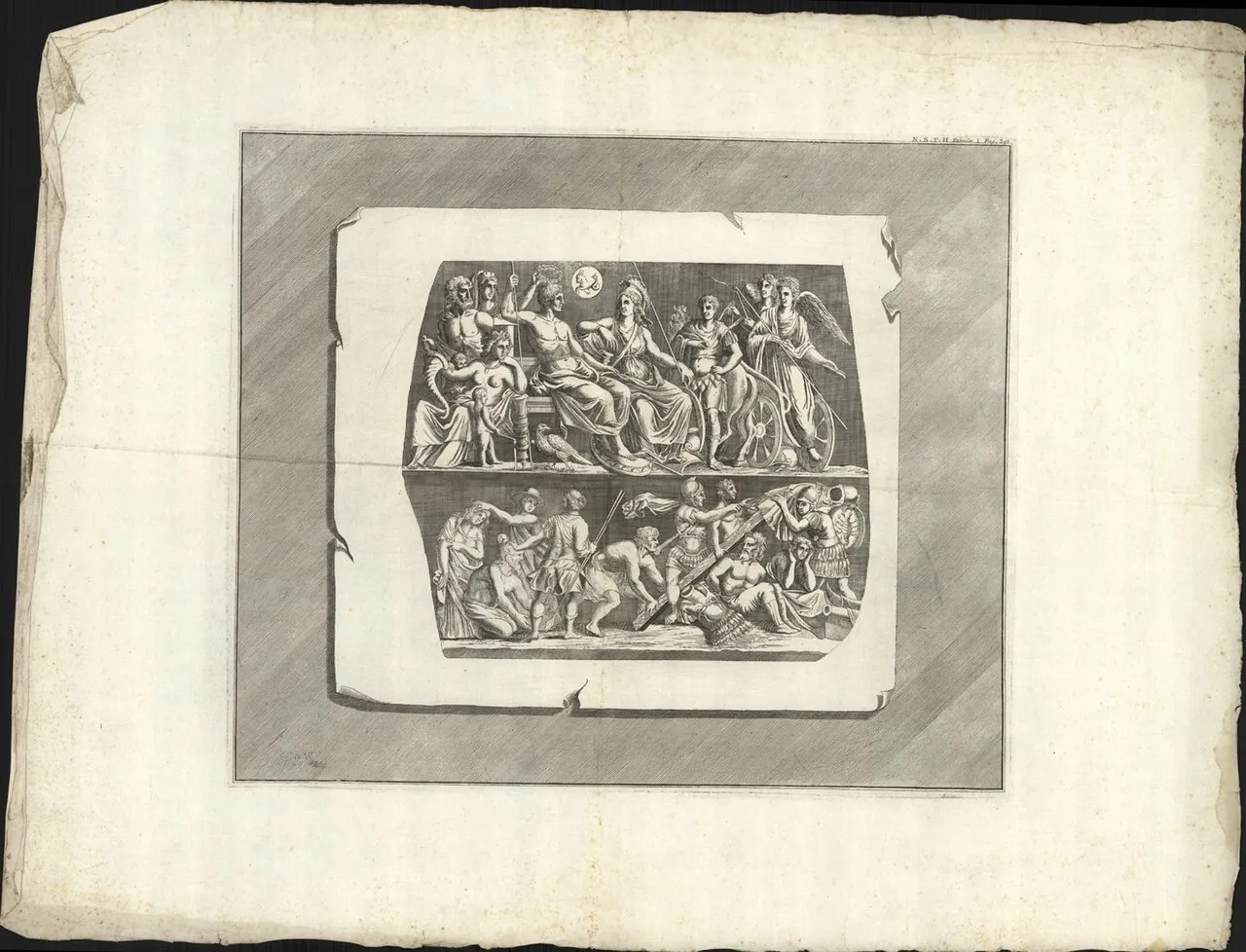
Nel 11 a.C. Augusto gli impose una scelta personale dolorosa: divorziare da Vipsania Agrippina, figlia del fedele Marco Agrippa, di cui era profondamente innamorato e da cui aveva avuto un figlio (Druso Minore), per sposare la propria figlia Giulia, vedova proprio di Agrippa. Era una manovra dinastica per legare ancora più strettamente Tiberio alla famiglia Giulia. Tiberio obbedì , ma a malincuore: Svetonio racconta che, vedendo per caso Vipsania da lontano dopo il divorzio, scoppiò in pianto e fu costretto a ritirarsi. Il matrimonio con Giulia fu un disastro: dopo la morte del loro unico figlio in fasce, marito e moglie si odiarono. Lei tradiva apertamente; lui si chiudeva nel proprio risentimento.
In 11 BC Augustus imposed on him a painful personal choice: to divorce Vipsania Agrippina, daughter of the faithful Marcus Agrippa, with whom he was deeply in love and by whom he had a son (Drusus the Younger), in order to marry Augustus's own daughter Julia, widow of Agrippa himself. It was a dynastic manoeuvre to bind Tiberius still more tightly to the Julian family. Tiberius obeyed, but reluctantly: Suetonius tells that, seeing Vipsania by chance from a distance after the divorce, he burst into tears and had to withdraw. The marriage with Julia was a disaster: after the death of their only son in infancy, husband and wife came to hate one another. She betrayed him openly; he closed himself in resentment.
L'esilio volontario a Rodi (6 a.C.–2 d.C.)
Voluntary exile in Rhodes (6 BC–2 AD)
Nel 6 a.C., al culmine della carriera, Tiberio prese una decisione che lasciò sbalordita Roma: chiese e ottenne, contro il volere di Augusto, di ritirarsi a vita privata sull'isola di Rodi. I motivi rimasero oscuri: l'umiliazione di Giulia, l'ostentata preferenza di Augusto per i nipoti carnali Gaio e Lucio Cesare, il bisogno di stoica solitudine. Tiberio aveva trentasei anni; quando la nave salpò per la Grecia, il patrigno considerò il suo gesto un tradimento. Per sette anni il futuro imperatore visse sull'isola in una piccola casa, studiando astrologia, retorica greca, frequentando filosofi e retori, completamente lontano dalla politica.
In 6 BC, at the height of his career, Tiberius made a decision that left Rome stunned: he asked and obtained, against Augustus's will, to retire to private life on the island of Rhodes. The motives remained obscure: Julia's humiliation, Augustus's marked preference for his natural grandsons Gaius and Lucius Caesar, the need for Stoic solitude. Tiberius was thirty-six; when the ship sailed for Greece, his stepfather considered the gesture a betrayal. For seven years the future emperor lived on the island in a small house, studying astrology, Greek rhetoric, frequenting philosophers and rhetors, entirely far from politics.
Quando nel 2 a.C. il padre fece arrestare Giulia per adulterio scandaloso e la confinò nell'isola di Pandataria, Tiberio, che per legge ne era ancora marito, chiese formalmente il divorzio. Ma a Rodi era ormai diventato sgradito: Augusto si rifiutò di farlo tornare a Roma. Per più di due anni Tiberio rimase nell'isola come una sorta di esiliato civile, costretto a chiedere alla madre Livia, in ginocchio, il permesso di tornare. Solo nel 2 d.C., dopo la morte di Lucio Cesare a Marsiglia, Augusto cedette: Tiberio rientrò a Roma, ma senza alcuna carica pubblica.
When in 2 BC Augustus had Julia arrested for scandalous adultery and confined to the island of Pandateria, Tiberius, still her legal husband, formally requested divorce. But in Rhodes he had become unwelcome: Augustus refused to allow his return to Rome. For more than two years Tiberius remained on the island as a sort of civil exile, forced to plead with his mother Livia, on his knees, for permission to come home. Only in 2 AD, after Lucius Caesar's death at Marseille, did Augustus relent: Tiberius returned to Rome, but without public office.
L'erede riluttante (4–14 d.C.)
The reluctant heir (4–14 AD)
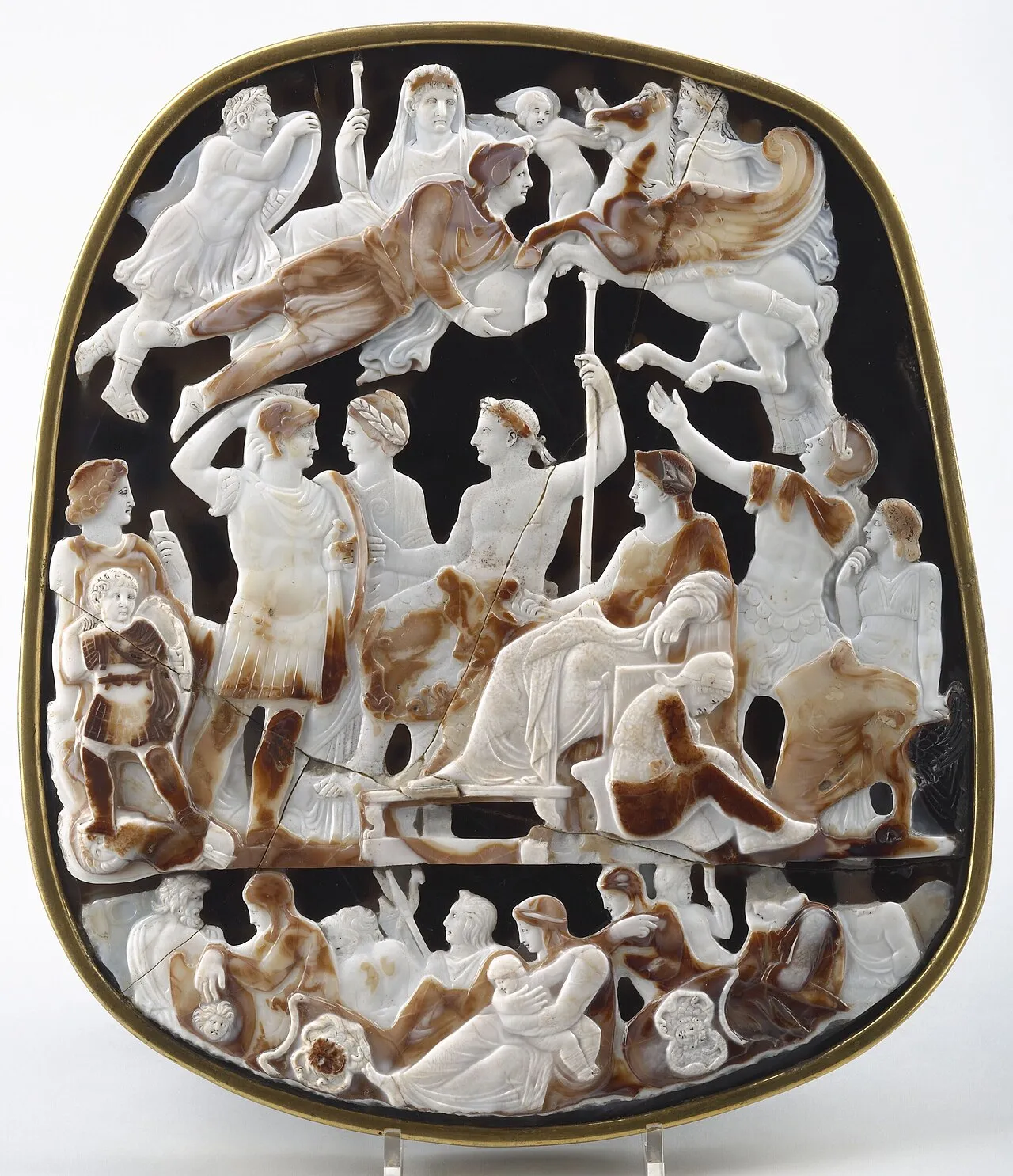
Il 21 febbraio del 4 d.C. morì in Armenia anche Gaio Cesare, l'ultimo nipote diretto di Augusto. Il vecchio principe, che aveva sessantasei anni, dovette ricominciare. Cinque mesi dopo, il 26 giugno, adottò ufficialmente Tiberio come figlio. Le parole della formula, secondo Svetonio, furono cariche di amaro pragmatismo: « Faccio questo per ragioni di Stato». Ma Augusto impose una condizione: Tiberio doveva a sua volta adottare il nipote di sangue augusteo, Germanico, figlio di Druso e di Antonia Minore. La linea dinastica era così assicurata su due generazioni. Tiberio prese il nome di Tiberius Iulius Caesar; non era più un Claudio, era un Cesare adottivo.
On 21 February 4 AD, Gaius Caesar, Augustus's last direct grandson, died in Armenia. The old prince, sixty-six years old, had to start over. Five months later, on 26 June, he officially adopted Tiberius as his son. The words of the formula, according to Suetonius, were heavy with bitter pragmatism: « I do this for reasons of state». But Augustus imposed a condition: Tiberius in turn had to adopt the grandson of Augustan blood, Germanicus, son of Drusus and Antonia the Younger. The dynastic line was thus secured over two generations. Tiberius took the name Tiberius Iulius Caesar; he was no longer a Claudius but an adoptive Caesar.
Nel 6 d.C. scoppiò la più grande rivolta provinciale dai tempi delle Guerre Puniche: la Bellum Batonianum, la rivolta dei Pannoni e dei Dalmati guidati da due capi entrambi di nome Batone. Tiberio fu inviato con quindici legioni, circa centomila uomini, metà dell'esercito imperiale: a sopprimerla. Per tre anni combatté in territorio impervio contro un nemico invisibile e ostile, vincendo non con grandi battaglie ma con la pazienza, la logistica, la diplomazia. Soggiogò alla disciplina anche le sue legioni, sull'orlo dell'ammutinamento. Quando la rivolta fu repressa nell'estate del 9 d.C., Augusto preparava il trionfo per la vittoria.
In 6 AD the greatest provincial revolt since the Punic Wars exploded: the Bellum Batonianum, the rising of the Pannonians and Dalmatians led by two chieftains both named Bato. Tiberius was sent with fifteen legions (about one hundred thousand men, half the imperial army) to suppress it. For three years he fought in difficult terrain against an invisible, hostile enemy, winning not by great battles but by patience, logistics, diplomacy. He subjected even his legions, on the verge of mutiny, to discipline. When the revolt was crushed in the summer of 9 AD, Augustus was preparing the triumph for victory.
Pochi giorni dopo arrivò la notizia di Teotoburgo: tre legioni distrutte da Arminio nei boschi della Germania. Augusto, disperato, mandò subito Tiberio a stabilizzare il Reno. Per due anni il futuro principe si limitò a difensiva: niente vendetta, niente avventure oltre fiume. Era una scelta strategica che avrebbe definito il confine settentrionale dell'Impero per quattrocento anni. Quando finalmente festeggiò il proprio trionfo a Roma, il 23 ottobre del 12 d.C., aveva cinquantatré anni; Augusto, settantaquattro, gli camminava accanto. Era il suo erede e il suo collega.
A few days later came the news of Teutoburg: three legions destroyed by Arminius in the forests of Germany. Augustus, in despair, immediately sent Tiberius to stabilise the Rhine. For two years the future prince confined himself to defence: no vendetta, no adventures across the river. It was a strategic choice that would define the Empire's northern frontier for four hundred years. When at last he celebrated his triumph in Rome on 23 October 12 AD, he was fifty-three; Augustus, seventy-four, walked beside him. He was his heir and his colleague.
Il Principato (14–26 d.C.)
The Principate (14–26 AD)
Augusto morì il 19 agosto del 14 d.C. a Nola. Tiberio, che lo accompagnava nell'ultimo viaggio, era a Brindisi quando arrivò la notizia che il padre adottivo era spirato fra le braccia di sua madre Livia. La transizione fu lenta e teatrale: Tiberio riunì il Senato, finse di rifiutare il principato, esaminò le res gestae lette da un funzionario, parlò del peso troppo grande per un solo uomo. La commedia repubblicana di Augusto continuava. Solo dopo giorni di trattative imbarazzate accettò il potere, e ancora protestava di volerlo solo a tempo determinato. Tacito, nel libro I degli Annali, descrive con sarcasmo questo balletto di umile diniego e accettazione « a malincuore» . Era nato il principe più ipocrita della storia, secondo lo storico; ma forse semplicemente un uomo schiacciato dal carico ereditato.
Augustus died on 19 August 14 AD at Nola. Tiberius, who was accompanying him on his last journey, was at Brundisium when news came that his adoptive father had died in his mother Livia's arms. The transition was slow and theatrical: Tiberius convened the Senate, pretended to refuse the principate, had the res gestae read by a functionary, spoke of the burden too great for one man. Augustus's Republican charade went on. Only after days of embarrassed negotiations did he accept power, and even then protested that he wanted it only for a fixed term. Tacitus, in Book I of the Annals, describes this ballet of humble denial and reluctant acceptance with sarcasm. The most hypocritical prince in history was born, according to the historian; or perhaps simply a man crushed by the inherited burden.
I primi dodici anni di regno furono di amministrazione efficace e prudenza estrema. Tiberio rispettò formalmente il Senato, riducendolo però a strumento ratificatore. Mantenne le finanze in ordine: rifiutò di costruire nuove grandi opere, di organizzare giochi costosi, di sprecare denaro pubblico. Quando un terremoto devastò dodici città dell'Asia Minore (17 d.C.), inviò sussidi enormi e sospese le tasse per cinque anni. Quando le truppe del Reno si ammutinarono alla notizia della morte di Augusto, lasciò che Germanico, popolare, giovane, carismatico, le riconducesse alla disciplina con una serie di campagne in Germania (14–16 d.C.). Erano successi tattici, ma Tiberio le interruppe: la Germania non valeva il costo di una conquista permanente. Richiamò Germanico, lo inviò in Oriente, dove il giovane morì in circostanze sospette ad Antiochia il 10 ottobre del 19 d.C. La voce diceva avvelenamento da parte del legato Pisone, ma molti sospettarono Tiberio.
The first twelve years of the reign were ones of effective administration and extreme prudence. Tiberius formally respected the Senate, reducing it however to a ratifying instrument. He kept finances in order: refused to build new great works, hold expensive games, waste public money. When an earthquake devastated twelve cities in Asia Minor (17 AD), he sent vast subsidies and suspended taxes for five years. When the Rhine troops mutinied at news of Augustus's death, he let Germanicus, popular, young, charismatic, bring them back to discipline through a series of campaigns in Germany (14–16 AD). They were tactical successes, but Tiberius cut them short: Germany was not worth the cost of permanent conquest. He recalled Germanicus, sent him East, where the young man died under suspicious circumstances at Antioch on 10 October 19 AD. The rumour spoke of poisoning by the legate Piso, but many suspected Tiberius.
Nel 23 d.C. una nuova tragedia colpì il principe: morì suo figlio carnale, Druso Minore, ufficialmente di malattia ma probabilmente avvelenato dalla moglie Livilla in collusione con il più pericoloso uomo del regno: Lucio Elio Seiano, prefetto del pretorio. Seiano era figlio di un cavaliere etrusco, comandante della Guardia dal 14 d.C., un ambizioso freddo e calcolatore. Aveva concentrato in una sola caserma alle porte di Roma, i Castra Praetoria, costruiti nel 23 d.C.: tutte le coorti pretorie, fino ad allora disperse nella città . Così armato, era in grado di intimidire qualsiasi senatore. Tiberio, vecchio e solo, cominciò a fidarsi solo di lui.
In 23 AD a new tragedy struck the prince: his natural son Drusus the Younger died, officially of illness but probably poisoned by his wife Livilla in collusion with the most dangerous man of the reign: Lucius Aelius Sejanus, praetorian prefect. Sejanus was the son of an Etruscan equestrian, Guard commander since 14 AD, a cold and calculating ambitious. He had concentrated in a single barracks at the gates of Rome (the Castra Praetoria, built in 23 AD) all the praetorian cohorts, until then scattered through the city. So armed, he could intimidate any senator. Tiberius, old and alone, began to trust no one but him.
Capri e Seiano (26–31 d.C.)
Capri and Sejanus (26–31 AD)
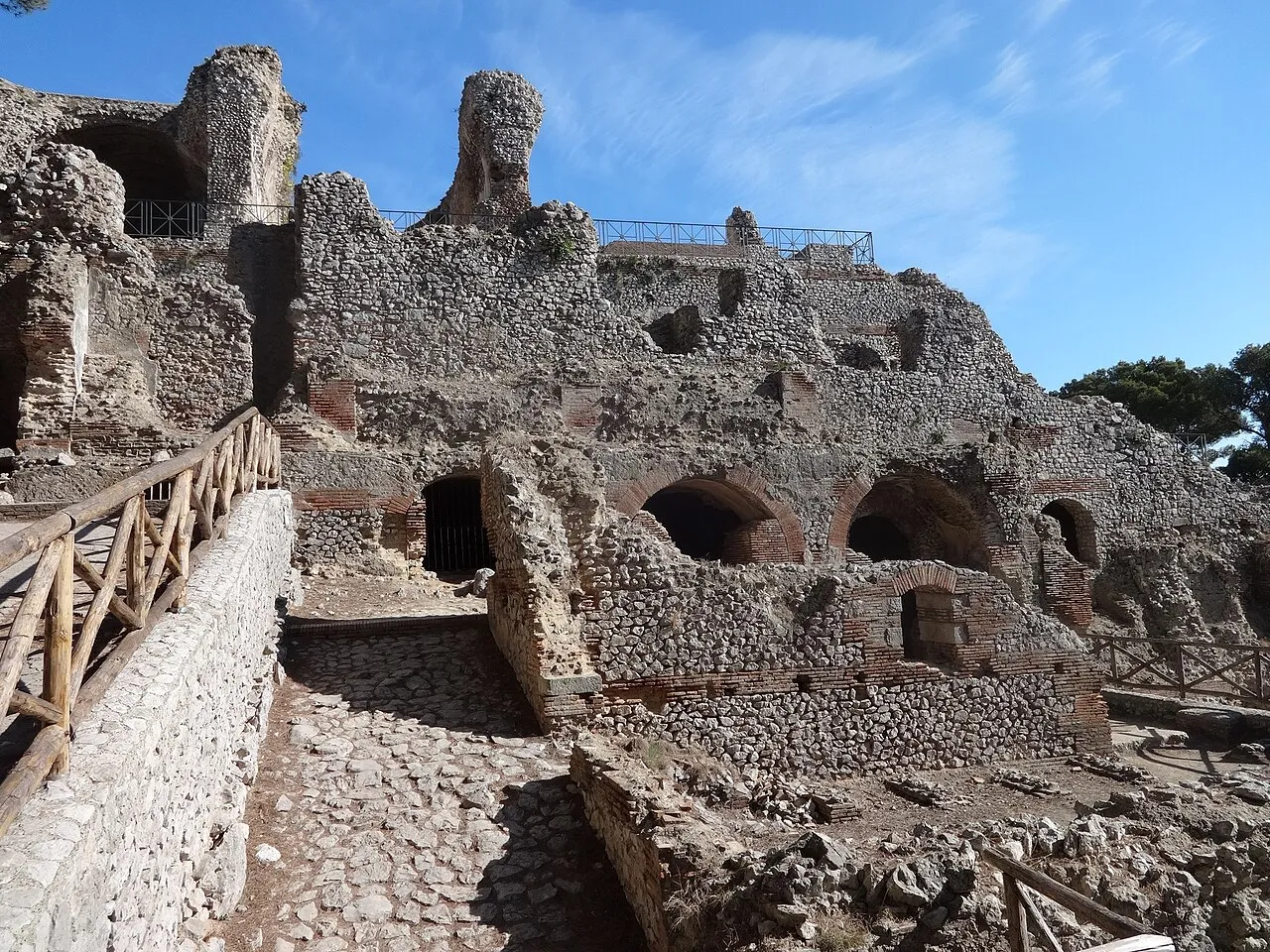
Nel 26 d.C., a sessantasette anni, Tiberio prese la decisione che l'avrebbe consegnato per sempre alla leggenda nera: lasciò Roma e si ritirò sull'isola di Capri. Non tornò mai più nella capitale. Per gli ultimi undici anni del regno governò l'Impero a distanza, attraverso lettere al Senato e al prefetto Seiano, che a Roma faceva da suo plenipotenziario. La sua dimora era la Villa Jovis, sulla punta orientale dell'isola, costruita su una scogliera di trecentocinquanta metri sul mare; un complesso di settemila metri quadrati con terme, biblioteca, sale di ricevimento, una specola astronomica. Da lì l'imperatore osservava le stelle con il proprio astrologo Trasillo e leggeva le memorie pubbliche dell'Impero.
In 26 AD, aged sixty-seven, Tiberius made the decision that would consign him forever to the black legend: he left Rome and retired to the island of Capri. He never returned to the capital. For the last eleven years of his reign he governed the Empire at a distance, through letters to the Senate and to Prefect Sejanus, who acted as his plenipotentiary in Rome. His dwelling was the Villa Jovis, on the eastern tip of the island, built on a cliff three hundred and fifty metres above the sea; a complex of seven thousand square metres with baths, library, reception halls, an astronomical observatory. From there the emperor watched the stars with his astrologer Thrasyllus and read the public memoranda of the Empire.
Le voci che cominciarono a circolare su quella villa divennero leggenda. Svetonio, scrivendo ottant'anni dopo, descrive orgie atroci: bambini "pesciolini" addestrati a nuotare sotto le sue cosce nelle vasche; vecchi gettati dalle scogliere per gioco; perversioni di ogni genere. Le fonti contemporanee tacciono, e i moderni considerano gran parte di questo materiale calunnia post-mortem. Ma una cosa è certa: l'isolamento totale rese l'imperatore una figura mitica e terribile, oggetto di proiezioni di paura e fantasia. La sua paranoia era reale e fondata: due nipoti pretendenti, Nerone Cesare e Druso Cesare, vennero processati per maiestas, esiliati e uccisi nel 31 d.C.
The rumours that began to circulate about that villa became legend. Suetonius, writing eighty years later, describes monstrous orgies: children « little fishes» trained to swim beneath his thighs in the pools; old men thrown from the cliffs for sport; perversions of every kind. Contemporary sources are silent, and modern scholars consider much of this material post-mortem slander. But one thing is certain: total isolation turned the emperor into a mythical and terrible figure, the object of projections of fear and fantasy. His paranoia was real and well-founded: two pretender grandsons, Nero Caesar and Drusus Caesar, were tried for maiestas, exiled and killed in 31 AD.
Nel frattempo a Roma Seiano diventava signore di fatto. I suoi nemici venivano processati e condannati con accuse di maiestas; i suoi amici riempivano il Senato e i comandi militari. Si fece promettere in moglie la nipote vedova del principe, Livilla; aspirava chiaramente al trono. Ma l'imperatore aveva un'arma segreta: Antonia Minore, sua cognata, madre di Germanico e nonna del piccolo Caligola, gli scrisse una lettera disperata raccontando i piani del prefetto. Tiberio capi e preparò la trappola con freddezza assoluta. Il 18 ottobre del 31 d.C., Seiano fu convocato in Senato per ricevere, pensava lui, la tribunicia potestas; gli si lesse invece una lettera di accusa di Tiberio. Fu arrestato, strangolato in carcere a sera, gettato dalle Scale Gemonie. La folla lo dilaniò . Nei giorni seguenti i suoi figli furono uccisi (la figlia, vergine, fu prima violentata dal carnefice perché la legge proibiva di giustiziare vergini). Per mesi si processarono e si condannarono a morte i suoi seguaci. La caduta fu totale.
Meanwhile in Rome Sejanus was becoming master in fact. His enemies were tried and condemned on charges of maiestas; his friends filled the Senate and military commands. He had himself promised in marriage to the prince's widowed niece Livilla; he plainly aspired to the throne. But the emperor had a secret weapon: Antonia the Younger, his sister-in-law, mother of Germanicus and grandmother of little Caligula, wrote him a desperate letter recounting the prefect's plans. Tiberius understood and prepared the trap with absolute coldness. On 18 October 31 AD, Sejanus was summoned to the Senate to receive (he thought) the tribunicia potestas; instead a letter of accusation from Tiberius was read. He was arrested, strangled in prison that evening, thrown down the Gemonian Stairs. The crowd tore him to pieces. In the following days his children were killed (his daughter, a virgin, was first raped by the executioner because the law forbade executing virgins). For months his followers were tried and put to death. The fall was total.
Gli ultimi anni e la morte (32–37 d.C.)
Final years and death (32–37 AD)
La caduta di Seiano lasciò Tiberio ancora più solo e più cupo. I processi per maiestas non si fermarono ma si moltiplicarono: chiunque avesse avuto rapporti col prefetto era sospetto, e centinaia di senatori, cavalieri e cittadini comuni furono giustiziati o costretti al suicidio. Tacito chiama questi ultimi anni "la peggiore età del genere umano dopo l'Iliade". Le fonti aggiungono dettagli atroci: una madre obbligata a guardare la decapitazione del figlio, un anziano gettato dalla Rupe Tarpea, un senatore che si tagliò le vene durante un banchetto. La capitale viveva nel terrore.
Sejanus's fall left Tiberius still more alone and gloomy. The maiestas trials did not stop but multiplied: anyone who had had dealings with the prefect was suspect, and hundreds of senators, equestrians and ordinary citizens were executed or forced to suicide. Tacitus calls these last years « the worst age of mankind since the Iliad» . Sources add terrible details: a mother forced to watch her son's beheading, an old man thrown from the Tarpeian Rock, a senator who cut his veins during a banquet. The capital lived in terror.
L'imperatore stesso, ormai settantasettenne, si occupava di astrologia, di letteratura, di amministrazione provinciale. Riformò il sistema fiscale, ridusse l'imposta sulle vendite dall'1% allo 0,5%, soccorse altre province colpite da disastri. Ma a Roma il suo nome significava paura. Quando finalmente, durante un viaggio di ritorno (mai compiuto fino in fondo), si ammalò nella villa di Lucullo a Miseno, gli ultimi suoi giorni furono drammatici. Il 16 marzo del 37 d.C. sembrò spirare; il giovane Caligola (suo pronipote ed erede designato) si fece subito acclamare imperatore dalla guardia. Ma il vecchio si riprese improvvisamente, chiedendo un anello e un cibo. Secondo Tacito e Svetonio, fu allora che il prefetto del pretorio Macrone, complice di Caligola, fece soffocare l'imperatore sotto i suoi propri cuscini. Aveva regnato ventitré anni.
The emperor himself, by now seventy-seven, busied himself with astrology, literature, provincial administration. He reformed the fiscal system, reduced the sales tax from 1% to 0.5%, gave aid to other provinces struck by disasters. But in Rome his name meant fear. When at last, during a return journey (never completed), he fell ill in Lucullus's villa at Misenum, his last days were dramatic. On 16 March 37 AD he seemed to expire; the young Caligula (his great-nephew and designated heir) was at once acclaimed emperor by the Guard. But the old man suddenly revived, asking for a ring and food. According to Tacitus and Suetonius, it was then that the praetorian prefect Macro, accomplice of Caligula, smothered the emperor beneath his own pillows. He had reigned twenty-three years.
Il corpo fu portato a Roma; il popolo, lungo la strada, gridava «Tiberium in Tiberim!» , "Tiberio nel Tevere!". Il Senato, per la prima volta nella storia imperiale, rifiutò di deificarlo. Le sue ricchezze accumulate per anni (due miliardi e settecento milioni di sesterzi, il più grande tesoro lasciato da un imperatore romano) furono dilapidate dal nipote Caligola in meno di un anno di follia.
The body was brought to Rome; the people along the way shouted «Tiberium in Tiberim!» , "Tiberius into the Tiber!". The Senate, for the first time in imperial history, refused to deify him. His riches, accumulated over years (two billion seven hundred million sesterces, the greatest treasure left by a Roman emperor) were squandered by his nephew Caligula in less than a year of madness.
02Battaglie e Campagne MilitariBattles and Military Campaigns
Tiberio fu il più abile generale dell'epoca augustea: più di trent'anni di campagne sulle frontiere del Reno, del Danubio e dell'Eufrate. Tutte le sue vittorie sono difensive o consolidative, mai espansionistiche: stabilizzò il limes settentrionale al Reno e al Danubio, recuperò senza guerra le insegne partiche, soppresse la più grande rivolta provinciale dei primi due secoli. Da imperatore continuò la stessa filosofia: la dura ma chiara stabilizzazione della Germania dopo Teotoburgo, il richiamo di Germanico, il rifiuto di campagne avventurose. Il suo motto militare era quello dei pastori: « tosare le pecore, non scorticarle» .
Tiberius was the most capable general of the Augustan age: more than thirty years of campaigns on the frontiers of the Rhine, Danube and Euphrates. All his victories were defensive or consolidating, never expansionist: he stabilised the northern limes at the Rhine and Danube, recovered the Parthian standards without war, suppressed the greatest provincial revolt of the first two centuries. As emperor he continued the same philosophy: the harsh but clear stabilisation of Germany after Teutoburg, the recall of Germanicus, the refusal of adventurous campaigns. His military motto was that of shepherds: « to shear the sheep, not flay them» .
- 20 a.C. Recupero delle insegne partiche — Tiberio fu inviato in Armenia per restaurare il re Tigrane III sul trono e recuperare le insegne legionarie perdute da Crasso a Carre nel 53 a.C. Un trionfo diplomatico che Augusto celebrò come grande vittoria. Recovery of the Parthian standards — Tiberius was sent to Armenia to restore King Tigranes III to the throne and recover the legionary standards lost by Crassus at Carrhae in 53 BC. A diplomatic triumph that Augustus celebrated as a great victory.
- 15 a.C. Campagna nelle Alpi (Rezia e Vindelicia) — Insieme al fratello Druso, Tiberio sottomise le tribù alpine dei Reti e dei Vindelici, creando le province di Raetia e Noricum. Una campagna coordinata su due fronti che dimostrò il suo talento strategico. Alpine campaign (Raetia and Vindelicia) — Together with his brother Drusus, Tiberius subdued the Alpine tribes of the Raeti and Vindelici, creating the provinces of Raetia and Noricum. A coordinated two-front campaign that demonstrated his strategic talent.
- 12–9 a.C. Campagne in Pannonia — Tiberio condusse una serie di campagne decisive contro le tribù pannoniche lungo il Danubio, annettendo vasti territori che sarebbero diventati la provincia di Pannonia. Le operazioni furono brutali ma efficaci. Pannonian campaigns — Tiberius led a series of decisive campaigns against the Pannonian tribes along the Danube, annexing vast territories that would become the province of Pannonia. The operations were brutal but effective.
- 4–5 d.C. Campagne in Germania — Dopo il ritorno dall'esilio volontario a Rodi, Tiberio riprese il comando in Germania, conducendo operazioni che portarono le legioni romane fino all'Elba. Si stava preparando una conquista definitiva della Germania quando scoppiò la rivolta in Pannonia. Germanic campaigns — After returning from voluntary exile in Rhodes, Tiberius resumed command in Germany, leading operations that brought Roman legions to the Elbe. A definitive conquest of Germany was being prepared when the Pannonian revolt erupted.
- 6–9 d.C. Grande rivolta pannonica (Bellum Batonianum) — La più grande rivolta dal tempo delle guerre puniche. Tiberio guidò fino a 15 legioni (circa 100.000 uomini) per sopprimere la ribellione dei Dalmati e dei Pannoni guidati da Batone. Tre anni di guerra durissima che consolidarono la sua reputazione di comandante supremo. Great Pannonian Revolt (Bellum Batonianum) — The greatest revolt since the Punic Wars. Tiberius commanded up to 15 legions (approximately 100,000 men) to suppress the rebellion of the Dalmatians and Pannonians led by Bato. Three years of grueling warfare that cemented his reputation as supreme commander.
- 10–12 d.C. Stabilizzazione del Reno dopo Teutoburgo — Dopo il disastro di Varo nel 9 d.C., Tiberio fu inviato a stabilizzare la frontiera renana. Non cercò vendetta ma consolidò le difese, una decisione strategica che definì il confine dell'Impero per secoli. Rhine stabilization after Teutoburg — After Varus's disaster in 9 AD, Tiberius was sent to stabilize the Rhine frontier. He sought no revenge but consolidated defenses, a strategic decision that defined the Empire's boundary for centuries.
- 14–16 d.C. Campagne di Germanico — Come imperatore, Tiberio autorizzò le campagne del nipote adottivo Germanico oltre il Reno. Germanico vinse a Idistaviso (16 d.C.), ma Tiberio lo richiamò, giudicando che la Germania non valesse il costo di una conquista permanente. Germanicus's campaigns — As emperor, Tiberius authorized his adopted nephew Germanicus's campaigns beyond the Rhine. Germanicus won at Idistaviso (16 AD), but Tiberius recalled him, judging Germany not worth the cost of permanent conquest.
03Riforme e Leggi FondamentaliKey Reforms and Laws
- 14 d.C. Trasferimento delle elezioni al Senato — Tiberio trasferì le elezioni dei magistrati dai comizi popolari al Senato, completando di fatto la trasformazione da Repubblica a Principato. I comizi non votarono mai più. Transfer of elections to the Senate — Tiberius transferred magistrate elections from the popular assemblies to the Senate, effectively completing the transformation from Republic to Principate. The assemblies never voted again.
- 15 d.C. Soccorso alle province — Dopo un devastante terremoto in Asia Minore che distrusse 12 città (tra cui Sardi e Filadelfia), Tiberio stanziò enormi fondi per la ricostruzione e sospese le tasse per cinque anni. Un esempio di eccellente amministrazione provinciale. Provincial relief — After a devastating earthquake in Asia Minor that destroyed 12 cities (including Sardis and Philadelphia), Tiberius allocated enormous funds for reconstruction and suspended taxes for five years. An example of excellent provincial administration.
- 17 d.C. Annessione della Cappadocia — Alla morte del re cliente Archelao, Tiberio annesse la Cappadocia come provincia romana e utilizzò le sue entrate per ridurre l'imposta sulle vendite (centesima rerum venalium) dall'1% allo 0,5%. Annexation of Cappadocia — Upon the death of client king Archelaus, Tiberius annexed Cappadocia as a Roman province and used its revenues to reduce the sales tax (centesima rerum venalium) from 1% to 0.5%.
- 19 d.C. Espulsione dei culti orientali — Tiberio espulse da Roma i seguaci di Iside e i Giudei, arruolando 4.000 liberti ebrei per combattere il brigantaggio in Sardegna. Una misura che rifletteva il suo conservatorismo religioso. Expulsion of eastern cults — Tiberius expelled followers of Isis and Jews from Rome, conscripting 4,000 Jewish freedmen to fight brigandage in Sardinia. A measure reflecting his religious conservatism.
- 21–33 d.C. Conservatorismo fiscale — Tiberio rifiutò di costruire grandi opere pubbliche o organizzare giochi costosi. Alla sua morte lasciò nel tesoro imperiale circa 2,7 miliardi di sesterzi, un surplus senza precedenti che il successore Caligola dilapidò in meno di un anno. Fiscal conservatism — Tiberius refused to build grand public works or hold expensive games. At his death he left approximately 2.7 billion sestertii in the imperial treasury, an unprecedented surplus that his successor Caligula squandered in less than a year.
- 31 d.C. Caduta di Seiano — Il potente prefetto del pretorio Lucio Elio Seiano, che aveva concentrato un potere enorme durante il ritiro di Tiberio, fu arrestato e giustiziato con tutta la sua famiglia dopo che Tiberio scoprì (o credette di scoprire) una cospirazione contro di lui. Fall of Sejanus — The powerful Praetorian Prefect Lucius Aelius Sejanus, who had amassed enormous power during Tiberius's retreat, was arrested and executed along with his entire family after Tiberius discovered (or believed he discovered) a conspiracy against him.
04Opere e CostruzioniWorks and Constructions
- 22 d.C. Tempio di Augusto Divinizzato — Tiberio iniziò la costruzione del tempio dedicato al padre adottivo divinizzato, Divus Augustus, presso il Foro Romano. L'opera fu completata solo sotto Caligola. Temple of the Deified Augustus — Tiberius began construction of the temple dedicated to his deified adoptive father, Divus Augustus, near the Roman Forum. The work was completed only under Caligula.
- 26–37 d.C. Villa Jovis a Capri — La più grande delle dodici ville che Tiberio possedeva sull'isola di Capri. Costruita sulla punta orientale dell'isola, a 354 metri sul livello del mare, era un complesso di oltre 7.000 metri quadrati con terme, logge, sale di ricevimento e un osservatorio. Da qui Tiberio governò l'Impero per undici anni. Villa Jovis on Capri — The largest of the twelve villas Tiberius owned on the island of Capri. Built on the eastern tip of the island, 354 meters above sea level, it was a complex of over 7,000 square meters with baths, loggias, reception halls and an observatory. From here Tiberius governed the Empire for eleven years.
- 27 d.C. Restauro del Teatro di Pompeo — Dopo un incendio, Tiberio finanziò il restauro del primo teatro permanente di Roma. Nonostante la sua avversione per gli spettacoli, comprendeva il valore simbolico dell'edificio. Restoration of the Theatre of Pompey — After a fire, Tiberius financed the restoration of Rome's first permanent theatre. Despite his aversion to spectacles, he understood the symbolic value of the building.
- 20 d.C. Castra Praetoria — Su consiglio di Seiano, Tiberio autorizzò la concentrazione delle coorti pretorie in una sola caserma fortificata alla periferia di Roma. Un edificio che avrebbe cambiato la storia: da quel momento, i pretoriani divennero una forza politica decisiva. Castra Praetoria — On Sejanus's advice, Tiberius authorized the concentration of the Praetorian cohorts in a single fortified barracks on the outskirts of Rome. A building that would change history: from that moment, the Praetorians became a decisive political force.
- vari anni Strade e infrastrutture provinciali — Sebbene avaro con Roma, Tiberio investì significativamente nelle infrastrutture provinciali, mantenendo e migliorando la rete stradale e garantendo l'efficienza dell'annona (approvvigionamento di grano). Roads and provincial infrastructure — Though parsimonious with Rome, Tiberius invested significantly in provincial infrastructure, maintaining and improving the road network and ensuring the efficiency of the annona (grain supply).
05L'Esilio a Capri e l'EreditàThe Capri Exile and Legacy
L'enigma di Capri
The riddle of Capri
La decisione di ritirarsi a Capri nel 26 d.C. resta uno degli enigmi più discussi della storia romana. Tiberio aveva sessantasette anni, era stanco degli intrighi senatoriali, addolorato dalla morte del figlio Druso e dell'amato fratello Druso Maggiore decenni prima, disgustato dall'ipocrisia della corte. L'isola gli offriva isolamento, sicurezza, la possibilità di dedicarsi agli studi di astrologia e letteratura greca che tanto amava. Ma la sua assenza trasformò Roma in un campo di battaglia politico, lasciando Seiano libero di governare e dipinse per sempre il principe come tiranno nascosto. Per i posteri, "Capri" sarebbe diventata sinonimo del rifiuto del potere e della sua perversione contemporanea: la solitudine assoluta del sovrano.
The decision to withdraw to Capri in 26 AD remains one of the most debated enigmas in Roman history. Tiberius was sixty-seven, weary of senatorial intrigue, grieving for his son Drusus and his beloved brother Drusus the Elder decades before, disgusted by the hypocrisy of the court. The island offered isolation, security, the chance to devote himself to the studies of astrology and Greek literature he so loved. But his absence turned Rome into a political battlefield, leaving Sejanus free to rule, and forever painted the prince as the hidden tyrant. For posterity, "Capri" would become synonymous with the refusal of power and its simultaneous perversion: the absolute solitude of the sovereign.
Il giudizio di Tacito
The verdict of Tacitus
La storiografia antica, dominata da Tacito e Svetonio, ha dipinto Tiberio come un tiranno crudele e perverso. Tacito, in particolare, costruisce nei primi sei libri degli Annales un ritratto a strati: il principe inizialmente moderato che gradualmente si rivela ipocrita, paranoico, infine sadico. Ogni gesto pubblico è sospetto; ogni sua amabilità è presentata come maschera; ogni clemenza, come trappola. Lo storico costruisce un caso giuridico contro il principe morto: e la sua arte è tale che, sin dal Rinascimento, Tiberio è rimasto fra i tiranni archetipici della letteratura europea, accanto a Erode e a Riccardo III. Macchiavelli e gli analisti del potere lo studieranno come maestro nell'arte di dissimulare.
Ancient historiography, dominated by Tacitus and Suetonius, painted Tiberius as a cruel and depraved tyrant. Tacitus in particular constructs in the first six books of the Annals a layered portrait: an initially moderate prince who gradually reveals himself hypocritical, paranoid, finally sadistic. Every public gesture is suspect; every kindness presented as a mask; every clemency a trap. The historian builds a legal case against the dead prince: and his art is such that, from the Renaissance onward, Tiberius has remained among the archetypal tyrants of European literature, alongside Herod and Richard III. Machiavelli and analysts of power would study him as a master in the art of dissimulation.
Ma la ricerca moderna ha rivalutato significativamente il suo regno. Sotto Tiberio le province furono amministrate con rara competenza, le finanze imperiali prosperarono, i confini rimasero sicuri, le frontiere stabilizzate al Reno e al Danubio per quattrocento anni. Il suo motto (boni pastoris esse tondere pecus, non deglubere, "un buon pastore tosa le pecore, non le scortica") riflette una filosofia di governo pragmatica e moderata. Persino i processi per maiestas, certamente eccessivi negli ultimi anni, riguardarono soprattutto la classe senatoria, il cui terrore non si trasmise quasi mai al popolo o alle province. Ai contemporanei dei territori lontani Tiberio sembrava un'ottima cosa: il suo nome non scatenò mai rivolte, neppure al momento della sua morte.
But modern scholarship has significantly reassessed his reign. Under Tiberius the provinces were administered with rare competence, imperial finances flourished, the frontiers remained secure, the limes stabilised on the Rhine and Danube for four hundred years. His motto (boni pastoris esse tondere pecus, non deglubere, "a good shepherd shears his sheep, he does not flay them") reflects a pragmatic and moderate philosophy of government. Even the maiestas trials, certainly excessive in the final years, mostly affected the senatorial class, whose terror almost never spread to the people or the provinces. To contemporaries in distant lands Tiberius seemed an excellent thing: his name never sparked revolts, not even at his death.
L'amministratore avaro
The miserly administrator
Tiberio è il primo grande imperatore-contabile dell'Impero. Rifiutò sistematicamente di costruire grandi opere a Roma, di organizzare giochi costosi, di erogare donativi straordinari. Le sue lettere al Senato prendevano sempre la forma di un padrone economo che esamina i conti. Il risultato fu un tesoro pubblico mai più eguagliato: alla sua morte, l'aerarium conteneva due miliardi e settecento milioni di sesterzi: circa venticinque volte il bilancio annuale dell'esercito. Era una riserva strategica colossale, accumulata in ventitré anni di parsimonia. Suo nipote Caligola la dilapidò in undici mesi: spettacoli, ponti, follie. La storia avrebbe ripetuto più volte questo ciclo (un imperatore-amministratore che accumula, un erede dilapidatore che disperde) come dimostrazione del fragile equilibrio del Principato.
Tiberius was the first great imperial accountant. He systematically refused to build great works in Rome, to hold expensive games, to grant extraordinary donatives. His letters to the Senate always took the form of a thrifty master examining the books. The result was a public treasury never matched again: at his death, the aerarium held two billion seven hundred million sesterces, about twenty-five times the army's annual budget. It was a colossal strategic reserve, built up in twenty-three years of parsimony. His grandnephew Caligula squandered it in eleven months: spectacles, bridges, follies. History would repeat this cycle several times (an administrator-emperor who accumulates, a wasteful heir who disperses) as demonstration of the Principate's fragile equilibrium.
L'ombra di Seiano
The shadow of Sejanus
La vera lezione politica del regno fu involontaria: il prefetto del pretorio, ufficio creato da Augusto come pura funzione di guardia personale, divenne sotto Tiberio il fulcro segreto del potere. Quando Seiano concentrò le coorti pretorie nei Castra Praetoria (23 d.C.) e si fece accettare come collega de facto dell'imperatore (anni 26–31 d.C.), inaugurò un modello che si sarebbe ripetuto ossessivamente nella storia imperiale: il prefetto del pretorio come secondo principe, capace di abbattere o creare imperatori. Da quel momento in poi, dalla congiura di Cherea contro Caligola nel 41 d.C. fino alla strage di Nerone a Costantino, il pretorio sarebbe stato la chiave segreta della politica. Tiberio l'aveva creata senza volerlo.
The true political lesson of the reign was involuntary: the praetorian prefect, an office created by Augustus as pure personal-guard function, under Tiberius became the secret fulcrum of power. When Sejanus concentrated the praetorian cohorts in the Castra Praetoria (23 AD) and got himself accepted as de facto colleague of the emperor (years 26–31 AD), he inaugurated a pattern that would repeat obsessively in imperial history: the praetorian prefect as second prince, capable of unmaking or making emperors. From that moment on, from Chaerea's conspiracy against Caligula in 41 AD to the slaughter of Nero, to Constantine, the Praetorian Guard would be the secret key of politics. Tiberius had created it without meaning to.
Un'eredità ambigua
An ambiguous legacy
L'eredità di Tiberio è quella di un uomo che non volle mai essere imperatore ma che svolse il ruolo con competenza, se non con grazia. Soldato eccezionale, amministratore capace ma privo di carisma, finì per essere distrutto dal sistema stesso che era stato costretto a guidare. Il tesoro colmo che lasciò fu dilapidato dal suo successore in pochi mesi; il suo nome fu maledetto dal popolo che aveva governato con prudenza, se non con amore. Quattro generazioni dopo, sotto i Flavî, l'imperatore Traiano avrebbe definito il giovane Nerone "il sovrano peggiore di Roma", e in confronto a lui il vecchio Tiberio cominciò a sembrare quasi giusto. Era una rivalutazione lenta, ma inevitabile: nessuno aveva mai messo in dubbio la sua competenza, solo la sua umanità .
Tiberius's legacy is that of a man who never wanted to be emperor but performed the role with competence, if not grace. An exceptional soldier, a capable but uncharismatic administrator, he was ultimately destroyed by the very system he had been forced to lead. The full treasury he left behind was squandered by his successor in mere months; his name was cursed by the people he had governed with prudence, if not with love. Four generations later, under the Flavians, the emperor Trajan would declare young Nero "Rome's worst sovereign", and beside him the old Tiberius began to seem almost just. It was a slow but inevitable reassessment: no one had ever questioned his competence, only his humanity.
Forse la sintesi più profonda è l'osservazione di Tacito stesso, l'accusatore principale: nei primi due libri degli Annales riconosce che, sotto Tiberio, lo Stato funzionava bene. Era il principe come persona a essere malato, non l'amministrazione. Era una lezione difficile da assimilare per la storiografia antica, abituata a giudicare i regimi dal carattere del sovrano: con Tiberio diventava chiaro, per la prima volta, che il Principato era ormai una macchina più grande dell'uomo che lo governava. Un uomo poteva essere oscuro, infelice, ingiusto in privato, e tuttavia lasciare lo Stato più ricco e più sicuro di prima. Era la nascita politica della burocrazia imperiale.
Perhaps the most profound synthesis is Tacitus's own observation, the chief accuser: in the first two books of the Annals he acknowledges that, under Tiberius, the State functioned well. It was the prince as person who was sick, not the administration. It was a difficult lesson to absorb for ancient historiography, used to judging regimes by the sovereign's character: with Tiberius it became clear, for the first time, that the Principate was now a machine larger than the man governing it. A man could be obscure, unhappy, unjust in private, and yet leave the State richer and safer than before. It was the political birth of the imperial bureaucracy.
« Un buon pastore tosa le sue pecore, non le scortica» . « A good shepherd shears his sheep, he does not flay them» . Tiberio, in Svetonio, Vita di Tiberio 32