01BiografiaBiography
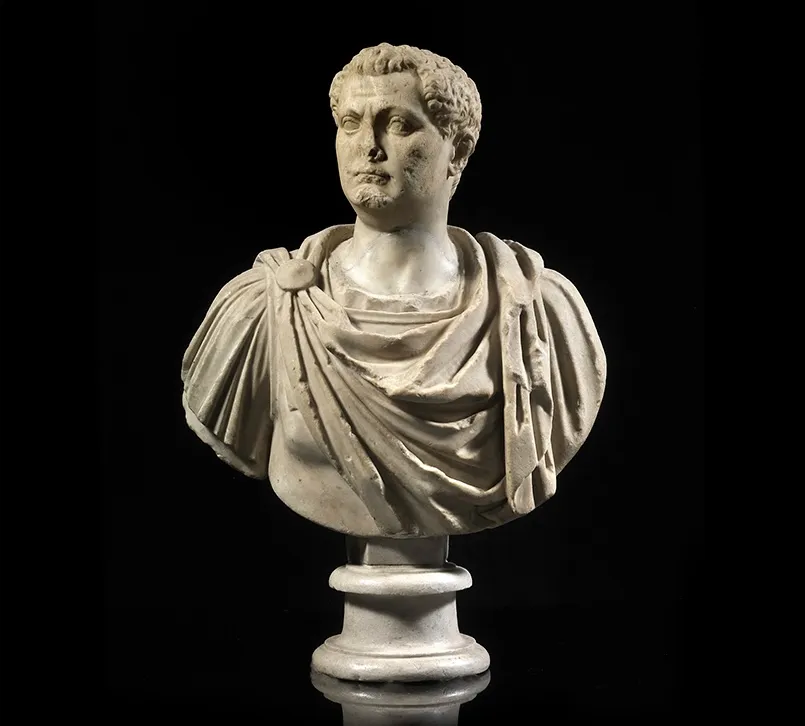
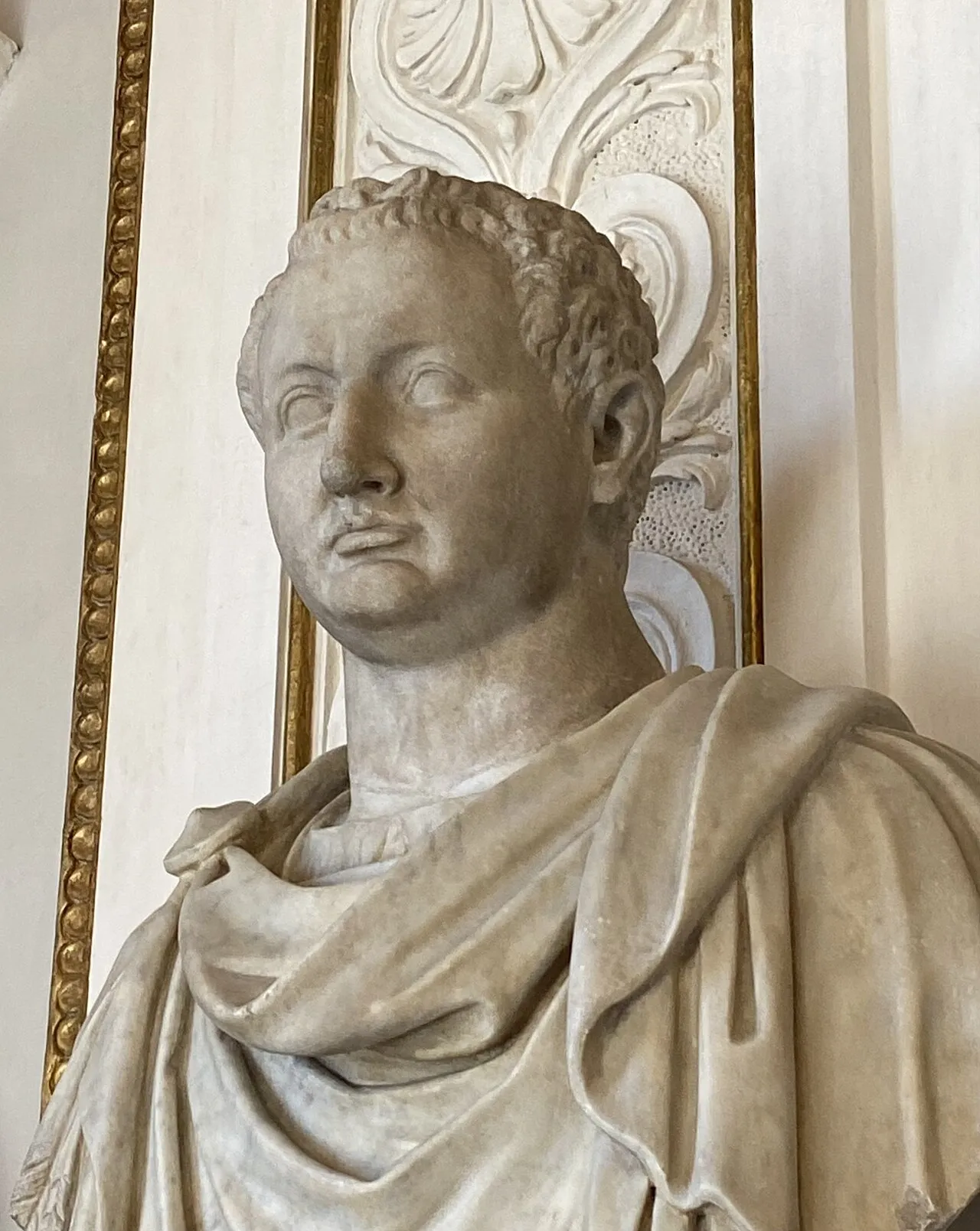
Tito Flavio Vespasiano nacque il 30 dicembre del 39 d.C. a Roma, primogenito di Vespasiano. Crebbe alla corte di Claudio insieme a Britannico, i due erano compagni d'infanzia, e ricevette un'educazione eccellente. Era dotato di un talento eccezionale e versatile: parlava greco e latino con eleganza, componeva poesie, suonava la cetra, aveva doti militari solide e una memoria prodigiosa. Svetonio lo definisce "amore e delizia del genere umano", amor ac deliciae generis humani.
Titus Flavius Vespasianus was born on December 30, 39 AD in Rome, firstborn son of Vespasian. He grew up at Claudius's court alongside Britannicus, the two were childhood companions, and received an excellent education. He was gifted with exceptional and versatile talent: he spoke Greek and Latin with elegance, composed poetry, played the lyre, had solid military gifts and a prodigious memory. Suetonius calls him "the love and delight of the human race", amor ac deliciae generis humani.
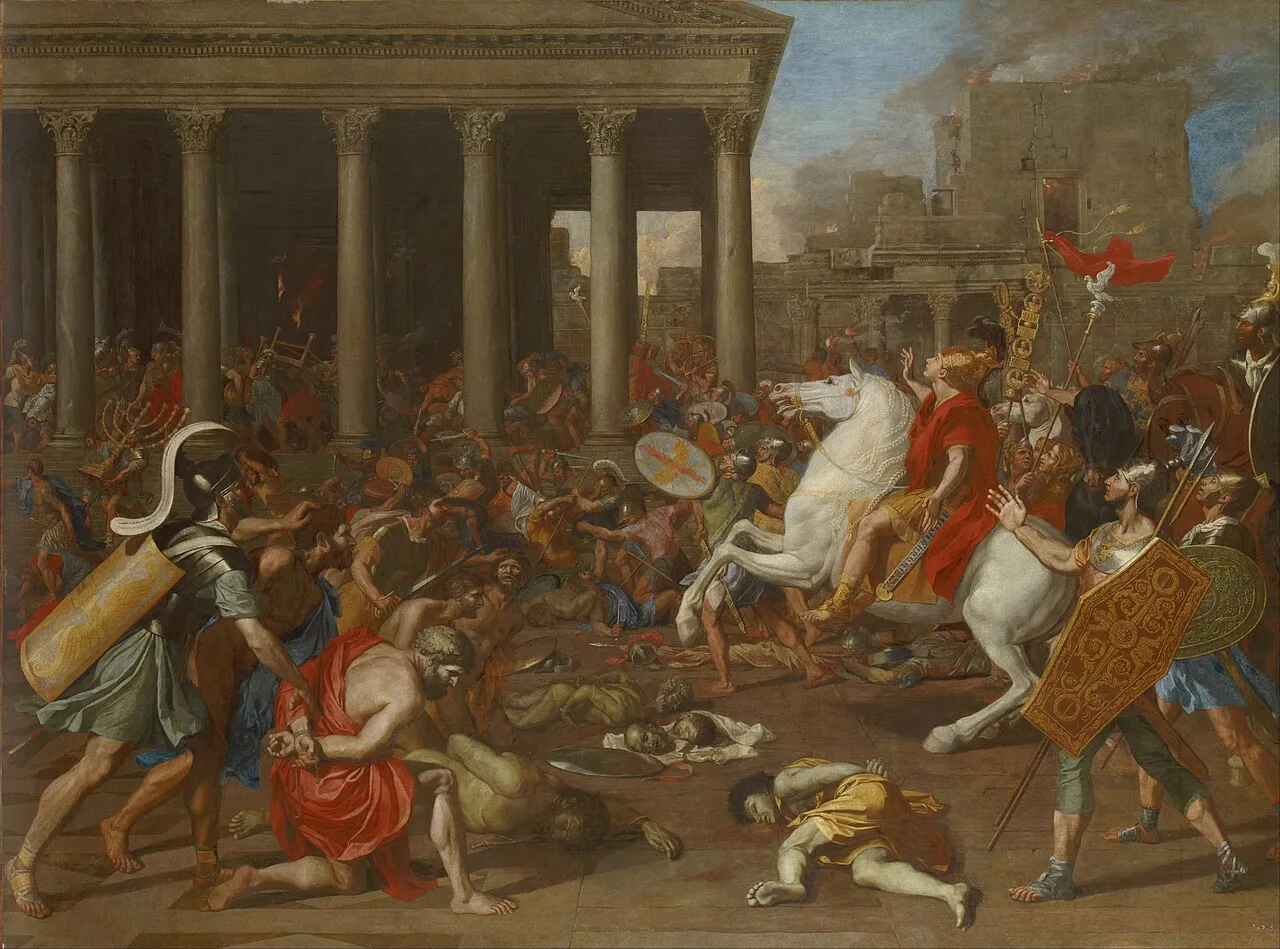
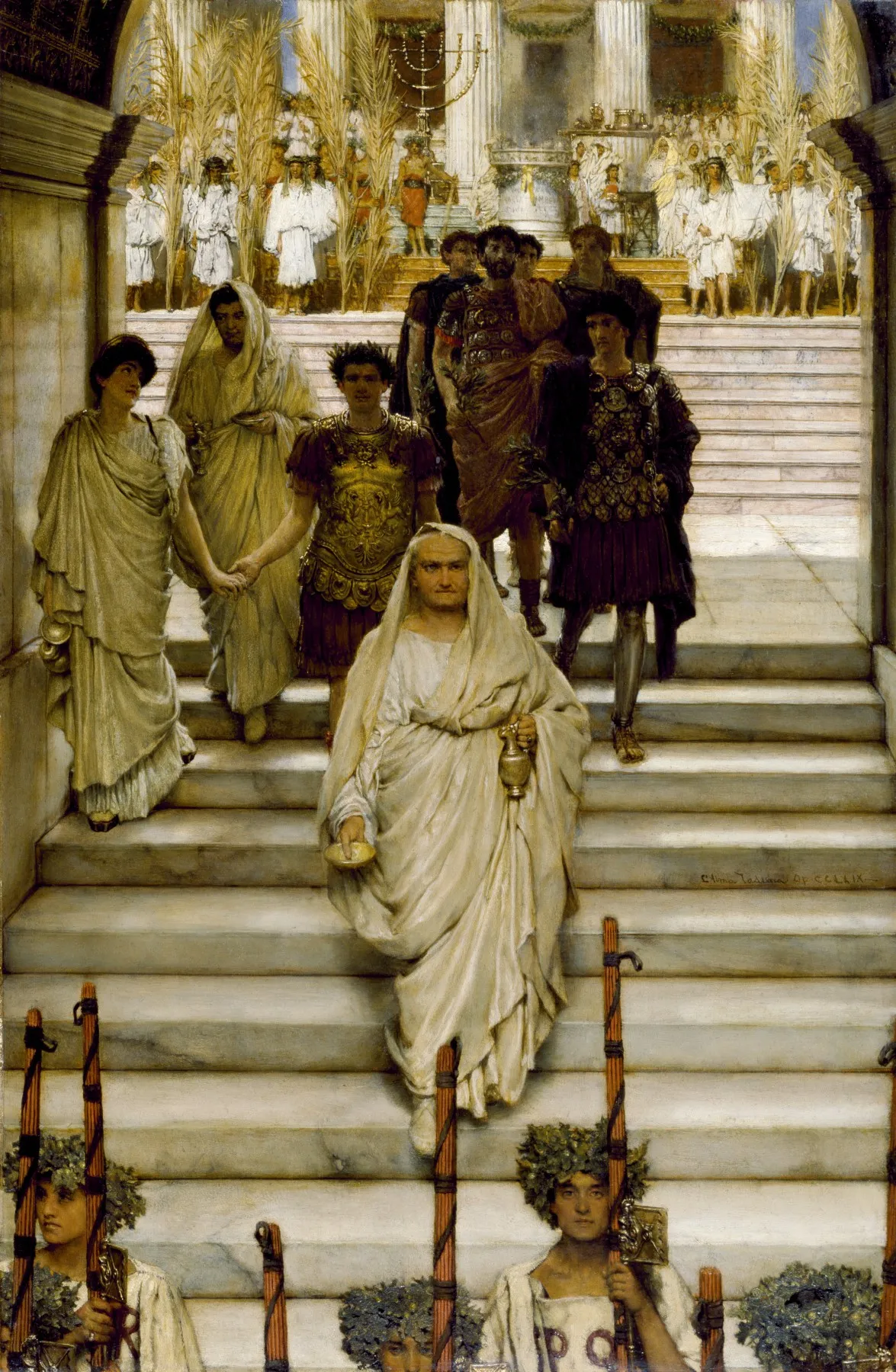
Seguì il padre in Giudea nel 66 d.C. e, quando Vespasiano fu proclamato imperatore nel 69, fu lui a portare a termine la guerra: assediò Gerusalemme per cinque mesi, la conquistò nell'agosto del 70 d.C. e distrusse il Tempio di Salomone: evento catastrofico per l'ebraismo mondiale che avrebbe cambiato il volto del giudaismo per sempre. Il suo trionfo a Roma fu magnifico. L'Arco di Tito, che ancora oggi si erge al Foro Romano, commemora quella vittoria.
He followed his father to Judea in 66 AD and, when Vespasian was proclaimed emperor in 69, it was he who completed the war: he besieged Jerusalem for five months, conquered it in August 70 AD and destroyed the Temple of Solomon, a catastrophic event for world Jewry that would change the face of Judaism forever. His triumph in Rome was magnificent. The Arch of Titus, which still stands at the Roman Forum, commemorates that victory.
Il suo breve regno, dal 79 all'81 d.C., fu segnato da calamità naturali di proporzioni bibliche. Il 24 agosto del 79 il Vesuvio eruttò, seppellendo Pompei, Ercolano e Stabia. L'anno successivo un grande incendio devastò Roma per tre giorni, seguito da un'epidemia di peste. Tito si mostrò all'altezza di ogni emergenza, distribuendo aiuti di tasca propria, coordinando i soccorsi con energia, vendendo oggetti del suo palazzo per finanziare la ricostruzione. Nell'80 inaugurò il Colosseo con cento giorni di giochi. Morì improvvisamente il 13 settembre dell'81, a soli 41 anni, della stessa febbre che aveva ucciso suo padre nella stessa villa. Molti sospettarono il fratello Domiziano.
His brief reign, from 79 to 81 AD, was marked by natural calamities of biblical proportions. On August 24, 79 Vesuvius erupted, burying Pompeii, Herculaneum and Stabiae. The following year a great fire devastated Rome for three days, followed by a plague epidemic. Titus proved equal to every emergency, distributing aid from his own pocket, coordinating relief efforts with energy, selling objects from his palace to finance reconstruction. In 80 he inaugurated the Colosseum with a hundred days of games. He died suddenly on September 13, 81, at only 41, from the same fever that had killed his father in the same villa. Many suspected his brother Domitian.
02Battaglie e Campagne MilitariBattles and Military Campaigns
- 66–70 d.C. Guerra giudaica e distruzione di Gerusalemme — Tito assunse il comando delle operazioni in Giudea quando il padre fu proclamato imperatore. Radunò quattro legioni (V Macedonica, X Fretensis, XII Fulminata, XV Apollinaris) e strinse Gerusalemme in un assedio serrato. La città cadde nell'agosto del 70 d.C. Il Tempio fu incendiato, probabilmente per caso, secondo Flavio Giuseppe, contro gli ordini di Tito stesso. Jewish War and destruction of Jerusalem — Titus assumed command of operations in Judea when his father was proclaimed emperor. He assembled four legions (V Macedonica, X Fretensis, XII Fulminata, XV Apollinaris) and tightened Jerusalem in a close siege. The city fell in August 70 AD. The Temple was burned, probably by accident, according to Josephus, against Titus's own orders.
- 70 d.C. Presa della fortezza di Masada — Dopo Gerusalemme, le operazioni proseguirono per ridurre gli ultimi focolai di resistenza. Masada, la fortezza degli zeloti sul Mar Morto, resistette fino al 73 d.C., quando l'assedio fu portato a termine dal governatore Flavio Silva, non da Tito, che era già rientrato a Roma. Siege of Masada — After Jerusalem, operations continued to reduce the last pockets of resistance. Masada, the Zealot fortress on the Dead Sea, held out until 73 AD, when the siege was completed by governor Flavius Silva, not Titus, who had already returned to Rome.
03Riforme e ProvvedimentiReforms and Measures
- 79 d.C. Soccorsi al Vesuvio — Alla notizia dell'eruzione, Tito inviò immediatamente due ex consoli in Campania con pieni poteri e fondi illimitati per organizzare i soccorsi e la ricostruzione. Si recò egli stesso due volte nella zona colpita. Le proprietà di chi era morto senza eredi furono usate per finanziare la ricostruzione dei sopravvissuti. Vesuvius relief — On hearing news of the eruption, Titus immediately sent two former consuls to Campania with full powers and unlimited funds to organize relief and reconstruction. He visited the stricken area himself twice. The properties of those who died without heirs were used to finance reconstruction for survivors.
- 79–81 d.C. Politica di clemenza — A differenza di quanto alcuni temevano, era stato prefetto del pretorio con poteri durissimi sotto il padre, Tito non perseguì mai nessun senatore per lesa maestà. Abolì i processi per maiestas e rifiutò di accettare eredità da persone con figli, rinunciando così a una consistente fonte di entrate. Policy of clemency — Unlike what some had feared (he had been praetorian prefect with harsh powers under his father) Titus never prosecuted any senator for treason. He abolished maiestas trials and refused to accept inheritances from people with children, thereby forgoing a substantial source of revenue.
04Opere e CostruzioniWorks and Constructions
- 80 d.C. Inaugurazione del Colosseo — Tito inaugurò l'Anfiteatro Flavio nell'80 d.C. con cento giorni consecutivi di giochi: combattimenti di gladiatori, cacce di animali esotici, simulazioni di battaglie navali nell'arena allagata. Furono uccisi cinquemila animali. L'inaugurazione fu uno degli eventi pubblici più grandiosi della storia romana. Inauguration of the Colosseum — Titus inaugurated the Flavian Amphitheatre in 80 AD with one hundred consecutive days of games: gladiatorial combat, hunts of exotic animals, simulated naval battles in a flooded arena. Five thousand animals were killed. The inauguration was one of the most grandiose public events in Roman history.
- 80 d.C. Terme di Tito — Costruì le prime terme imperiali di grandi dimensioni sul Colle Oppio, sopra parti della Domus Aurea. Furono inaugurate insieme al Colosseo nell'80 d.C. Il loro schema planimetrico influenzò tutte le grandi terme successive, dalle Terme di Traiano a quelle di Diocleziano. Baths of Titus — He built the first large-scale imperial baths on the Oppian Hill, above parts of the Domus Aurea. They were inaugurated together with the Colosseum in 80 AD. Their floor plan influenced all subsequent major baths, from the Baths of Trajan to those of Diocletian.
- 81 d.C. Arco di Tito — Costruito postumo da Domiziano al Foro Romano per commemorare la vittoria in Giudea. I suoi rilievi interni, il corteo trionfale con la Menorah del Tempio, sono tra i più importanti documenti figurativi dell'antichità e una delle fonti primarie per la ricostruzione del Tempio di Gerusalemme. Arch of Titus — Built posthumously by Domitian at the Roman Forum to commemorate the victory in Judea. Its interior reliefs, the triumphal procession with the Temple's Menorah, are among the most important figurative documents of antiquity and a primary source for the reconstruction of the Temple of Jerusalem.
05Le Tre CatastrofiThe Three Catastrophes
Il regno di Tito fu il più breve fra quelli dei grandi imperatori e il più denso di disastri. In ventisei mesi di principato si verificarono tre catastrofi che, sommate, sarebbero bastate a distruggere la reputazione di qualsiasi altro principe. Tito invece le attraversò aumentando la propria stima presso il popolo: era il pirotecnico opposto di Nerone, che dieci anni prima aveva incendiato Roma; era il volto compassionevole dell'autorità imperiale di fronte alla furia della natura.
Titus's reign was the briefest among those of the great emperors and the densest with disasters. In twenty-six months of principate three catastrophes occurred which, summed together, would have been enough to destroy the reputation of any other prince. Titus instead crossed them increasing his standing with the people: he was the pyrotechnic opposite of Nero, who ten years before had burned Rome; he was the compassionate face of imperial authority in the face of nature's fury.
Il Vesuvio (24 agosto 79 d.C.)
Vesuvius (24 August 79 AD)
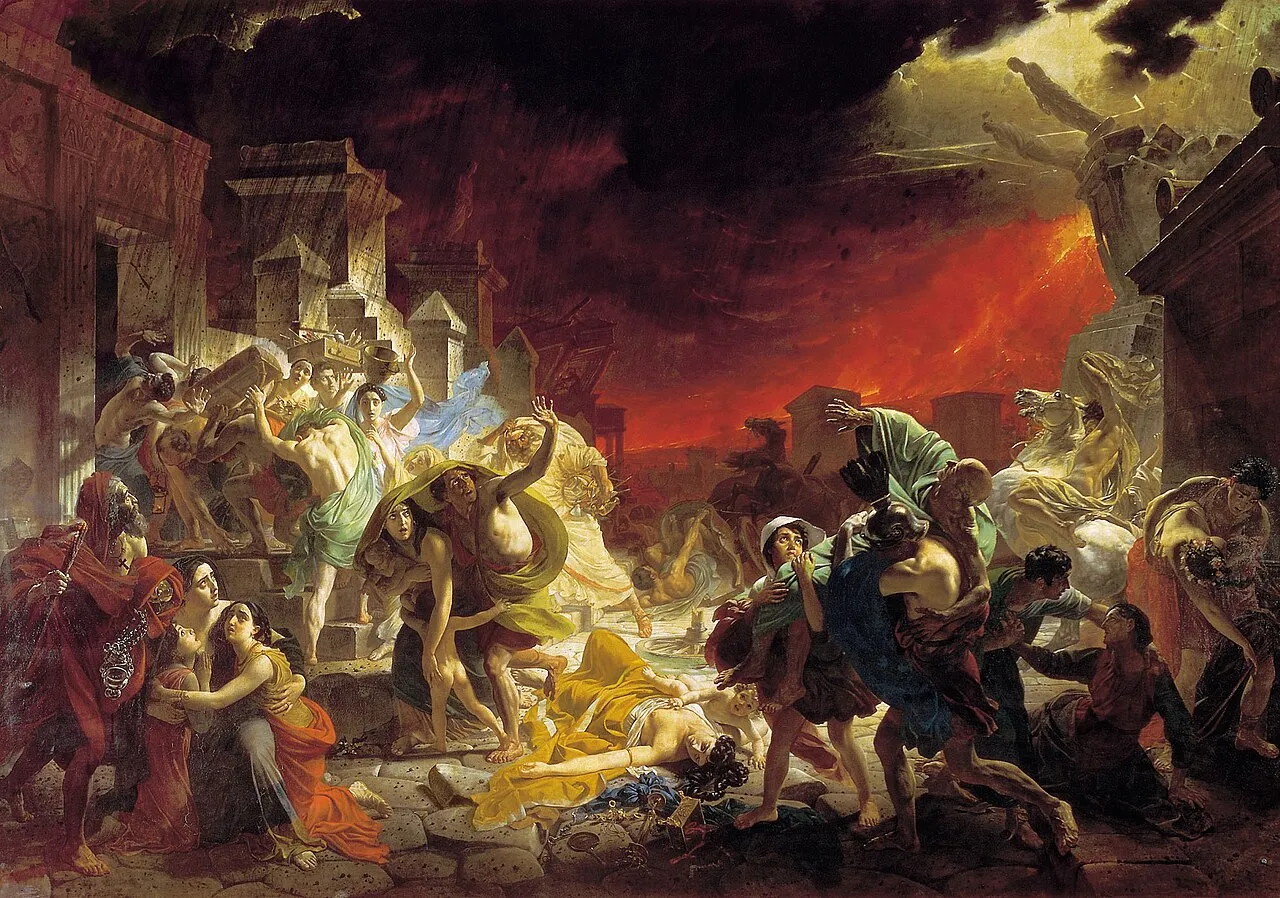
A poche settimane dall'ascesa al trono, Vespasiano era morto il 23 giugno, il Vesuvio eruttò con una violenza che la civiltà mediterranea non ricordava da secoli. La colonna di pomici e ceneri raggiunse trenta chilometri di altezza, riversò il suo carico su Pompei, Ercolano, Stabia, Oplonti. Ercolano fu sepolta da una colata piroclastica che la coprì per venti metri; Pompei fu soffocata sotto cinque metri di lapilli; migliaia di abitanti morirono nel sonno o per asfissia. Plinio il Vecchio, ammiraglio della flotta romana di Miseno e celebre naturalista, si avvicinò con le navi per soccorrere i fuggiaschi e morì sulla spiaggia di Stabia, probabilmente per attacco cardiaco aggravato dai gas vulcanici. Suo nipote Plinio il Giovane, sopravvissuto, anni dopo ne scrisse il resoconto in due lettere a Tacito: la prima descrizione scientifica di un'eruzione esplosiva nella storia.
Within weeks of his accession, Vespasian had died on 23 June, Vesuvius erupted with a violence the Mediterranean civilisation had not seen in centuries. The column of pumice and ash reached thirty kilometres in height and poured its load onto Pompeii, Herculaneum, Stabiae, Oplontis. Herculaneum was buried by a pyroclastic flow that covered it twenty metres deep; Pompeii suffocated under five metres of lapilli; thousands of inhabitants died in their sleep or by asphyxiation. Pliny the Elder, admiral of the Roman fleet at Misenum and famous naturalist, approached with the ships to rescue the fugitives and died on the beach of Stabiae, probably of a heart attack aggravated by volcanic gases. His nephew Pliny the Younger, who survived, years later wrote the account in two letters to Tacitus: the first scientific description of an explosive eruption in history.
Tito reagì con metodo paterno. Nominò due ex consoli con poteri straordinari, i curatores restituendae Campaniae, con fondi illimitati attinti dal fisco imperiale e dalle eredità dei morti senza discendenti. Si recò personalmente due volte nella zona, percorrendo le rovine fumanti. Donò il proprio patrimonio personale ai sopravvissuti. Le città distrutte non furono mai rifondate: erano un cimitero senza ritorno. Pompei sarebbe rimasta sepolta per diciassette secoli, riscoperta nel 1748 sotto i Borboni.
Titus reacted with paternal method. He appointed two former consuls with extraordinary powers, the curatores restituendae Campaniae, with unlimited funds drawn from the imperial fiscus and from the inheritances of those who had died without descendants. He visited the area himself twice, walking through the smoking ruins. He donated his personal patrimony to the survivors. The destroyed cities were never refounded: they were a cemetery without return. Pompeii would remain buried for seventeen centuries, rediscovered in 1748 under the Bourbons.
L'incendio di Roma (80 d.C.)
The fire of Rome (80 AD)
Mentre Tito era ancora in Campania, nell'estate dell'80 d.C. un gigantesco incendio divampò a Roma. Bruciò per tre giorni e tre notti, devastando il Campo Marzio e gran parte del centro storico. Andarono perduti il Pantheon di Agrippa (poi ricostruito da Adriano), i Saepta Iulia, il teatro di Pompeo, le Terme di Agrippa, l'Atheneum, le biblioteche di Augusto sul Palatino, il tempio di Iside e Serapide. Era il terzo grande incendio del secolo, dopo quello del 64 sotto Nerone e quello del 69 durante la guerra civile, e per dimensioni paragonabile a quello neroniano. Tito, tornato d'urgenza a Roma, ripeté lo schema campano: pieni poteri, fondi illimitati, ricostruzione metodica. Annunciò che «questa calamità ricadeva tutta sulla sua persona» e finanziò personalmente il restauro dei templi pubblici.
While Titus was still in Campania, in the summer of 80 AD a gigantic fire broke out in Rome. It burned for three days and three nights, devastating the Campus Martius and much of the historic centre. Lost were Agrippa's Pantheon (later rebuilt by Hadrian), the Saepta Julia, the theatre of Pompey, the Baths of Agrippa, the Athenaeum, Augustus's libraries on the Palatine, the temple of Isis and Serapis. It was the third great fire of the century, after that of 64 under Nero and that of 69 during the civil war, and comparable in size to the Neronian one. Titus, returning urgently to Rome, repeated the Campanian scheme: full powers, unlimited funds, methodical reconstruction. He announced that «this calamity fell entirely upon his own person» and personally financed the restoration of the public temples.
La peste (80 d.C.)
The plague (80 AD)
Subito dopo l'incendio, sull'aria ancora carica di fumo, si abbatté un'epidemia, con tutta probabilità una febbre tifoide o un'epidemia di vaiolo, di gravità tale che Cassio Dione la definisce «la peggiore mai vista a Roma». Le vittime furono diecimila al giorno per settimane. Tito vi rispose con tutti i mezzi di un'epoca priva di scienza medica moderna: organizzò la distribuzione di farmaci dalla farmacia imperiale, sacrificò personalmente agli dèi della medicina, mantenne aperti i bagni pubblici a spese pubbliche per favorire l'igiene, evacuò dalla città le popolazioni più vulnerabili verso le campagne. La sua presenza fisica nei quartieri colpiti, la sua disponibilità a ricevere ogni cittadino, la sua condotta paterna verso il popolo gli valsero un'affetto popolare che sarebbe rimasto leggendario.
Immediately after the fire, on air still heavy with smoke, an epidemic struck, in all likelihood a typhoid fever or a smallpox outbreak, of such gravity that Cassius Dio calls it "the worst ever seen in Rome". The victims were ten thousand a day for weeks. Titus responded with all the means of an age without modern medical science: he organised the distribution of drugs from the imperial pharmacy, sacrificed personally to the gods of medicine, kept the public baths open at public expense to promote hygiene, evacuated the most vulnerable populations from the city to the countryside. His physical presence in the stricken quarters, his readiness to receive every citizen, his paternal conduct toward the people earned him a popular affection that would remain legendary.
06Berenice, Aneddoti, la Morte MisteriosaBerenice, Anecdotes, the Mysterious Death
Berenice, l'amore impossibile
Berenice, the impossible love
Durante la guerra giudaica Tito si innamorò di Berenice di Cilicia, sorella di Erode Agrippa II e nipote di Erode il Grande. Era undici anni più anziana di lui, due volte vedova, una volta divorziata; chiacchiere antiche le attribuivano addirittura una relazione incestuosa col fratello. Ma era una donna di intelligenza eccezionale, raffinata, parlava greco, ebraico, aramaico e latino, aveva governato come regina di province ereditarie. Si era schierata coi Flavi durante la guerra civile del 69 d.C. e aveva prestato somme ingenti a Vespasiano. Tito la portò con sé a Roma nel 75 d.C. e la installò nel suo palazzo come consorte di fatto, sebbene il diritto romano non permettesse il matrimonio con una straniera regale.
During the Jewish war Titus fell in love with Berenice of Cilicia, sister of Herod Agrippa II and granddaughter of Herod the Great. She was eleven years older than him, twice widowed, once divorced; ancient gossip even attributed to her an incestuous relationship with her brother. But she was a woman of exceptional intelligence, refined, speaking Greek, Hebrew, Aramaic and Latin, who had governed as queen of hereditary provinces. She had sided with the Flavians during the 69 AD civil war and had lent large sums to Vespasian. Titus brought her with him to Rome in 75 AD and installed her in his palace as de facto consort, although Roman law did not allow marriage with a foreign royal.
La nobiltà senatoria era scandalizzata. Una straniera giudea, ricordo vivo della guerra appena vinta, regina come Cleopatra, undici anni più anziana del principe ereditario: ogni elemento era politicamente esplosivo. Il filosofo cinico Diogene fece pubblicamente un discorso contro di lei in pieno teatro; un altro, Eraclide, gli fece eco nel Foro. Tito li fece frustare in piazza, ma capì il messaggio. Quando salì al trono nel 79 d.C., congedò Berenice da Roma. Svetonio descrive la scena con due parole memorabili: «dimisit invitus invitam» — "la mandò via lui riluttante, lei riluttante". Berenice partì per l'Oriente; tentò di tornare a Roma più tardi, fu nuovamente respinta. Morì in un anno imprecisato. La storia ispirerà a Racine la tragedia Bérénice (1670), uno dei capolavori del teatro classico francese.
The senatorial nobility was scandalised. A foreign Jewess, living memory of the war just won, queen like Cleopatra, eleven years older than the heir: every element was politically explosive. The Cynic philosopher Diogenes publicly delivered a speech against her in the middle of the theatre; another, Heraclides, echoed him in the Forum. Titus had them flogged in public, but understood the message. When he ascended the throne in 79 AD, he dismissed Berenice from Rome. Suetonius describes the scene with two memorable words: «dimisit invitus invitam» — "he sent her away, he reluctant, she reluctant". Berenice left for the East; she tried to return to Rome later, was again rejected. She died in an unspecified year. The story would inspire Racine to the tragedy Bérénice (1670), one of the masterpieces of French classical theatre.
Aneddoti e generosità
Anecdotes and generosity
Le fonti antiche traboccano di aneddoti che dipingono Tito come un uomo dalle qualità rare nell'esercizio del potere assoluto. Aveva l'abitudine di non lasciare mai una richiesta senza risposta concreta: «nessuno deve uscire triste da un colloquio col principe», ripeteva. Quando due patrizi furono convinti di tradimento (un complotto reale, secondo le indagini imperiali) non li condannò: li invitò a cena, li mise a tavola accanto a sé, li portò con sé allo spettacolo a teatro durante il quale finse di mostrar loro la spada dei gladiatori in segno di leggera minaccia, e li congedò con un dono. Il giorno dopo i due si presentarono insieme al palazzo per giurargli fedeltà a vita. Non vi furono altri complotti.
The ancient sources overflow with anecdotes that paint Titus as a man of rare qualities in the exercise of absolute power. He had the habit of never leaving a request without concrete answer: «no one must leave a meeting with the prince saddened», he would repeat. When two patricians were proven guilty of treason (a real plot, according to imperial inquiries) he did not condemn them: he invited them to dinner, sat them at the table beside him, had them accompany him to the theatre where he pretended to show them the gladiators' sword as a light threat, and dismissed them with a gift. The next day the two presented themselves together at the palace to swear lifelong loyalty. There were no further plots.
Il famoso diem perdidi, "ho perso una giornata", pronunciato a cena quando si rese conto di non aver fatto del bene a nessuno in tutto il giorno, sintetizza la sua filosofia politica. Era un'idea quasi proto-cristiana di esercizio del potere: il sovrano è custode dei sudditi, e ogni giornata non spesa per loro è una giornata sprecata. La frase divenne così famosa nell'antichità che Marco Aurelio (un secolo dopo, nelle sue Meditazioni) la cita come motto da meditare ogni mattina al risveglio. È entrata nella lingua di tutti i tempi: ancora oggi diem perdidi è citazione viva nel latino moderno.
The famous diem perdidi, "I have lost a day", uttered at dinner when he realised he had done good to no one all day, summarises his political philosophy. It was an almost proto-Christian idea of the exercise of power: the sovereign is custodian of his subjects, and every day not spent for them is a day wasted. The phrase became so famous in antiquity that Marcus Aurelius (a century later, in his Meditations) cites it as a motto to meditate upon every morning on waking. It has entered the language of all times: still today diem perdidi is a living citation in modern Latin.
La morte e i sospetti su Domiziano
The death and suspicions about Domitian
Il 13 settembre dell'81 d.C., reduce dai giochi del Colosseo, Tito si ritirò nella villa paterna di Cutilia, in Sabina: la stessa in cui Vespasiano era morto due anni prima. Fu colto da una violenta febbre. Si dice che, già morente, abbia aperto una tenda del lettino, guardato il cielo e mormorato: «mi pento di una sola cosa». Quando i presenti gli chiesero di cosa, non rispose, e morì. Aveva quarantun anni. Lo storico Cassio Dione e altre fonti affermano che il "rimorso" fosse riferito all'amore con la cognata Domizia, moglie di Domiziano, o al non aver eliminato il fratello quando ne aveva avuto l'occasione. Ma sono speculazioni: il vero contenuto di quella frase sussurrata morì con lui.
On 13 September 81 AD, returning from the Colosseum games, Titus retired to his father's villa at Cutiliae, in Sabina: the same in which Vespasian had died two years before. He was struck by a violent fever. It is said that, already dying, he opened a curtain of the litter, looked at the sky and murmured: «I regret only one thing». When those present asked him what, he did not reply, and died. He was forty-one years old. The historian Cassius Dio and other sources claim that the "regret" referred to a love affair with his sister-in-law Domitia, Domitian's wife, or to not having eliminated his brother when he had the chance. But these are speculations: the true content of that whispered phrase died with him.
Su Domiziano i sospetti circolarono subito. Si raccontava che, durante l'agonia del fratello, avesse abbandonato Cutilia per precipitarsi a Roma a farsi acclamare imperatore dalle truppe pretoriane prima che la notizia della morte fosse ufficiale, un'azione politicamente disinvolta, moralmente scandalosa. Si vociferò anche che avesse accelerato la morte di Tito immergendolo in una cassa di neve durante la febbre, sotto pretesto terapeutico ma con esito mortale. Nessuna fonte antica conferma l'avvelenamento, ma il sospetto restò vivo per secoli. Domiziano deificò il fratello con tutti gli onori, ma rifiutò di completare i progetti monumentali da lui avviati con quella generosità che Tito aveva esibito.
About Domitian, suspicions circulated immediately. It was told that during his brother's agony he had abandoned Cutiliae to rush to Rome and have himself acclaimed emperor by the Praetorian troops before the news of the death was official: a politically casual, morally scandalous action. It was even rumoured that he had hastened Titus's death by immersing him in a box of snow during the fever, under therapeutic pretext but with fatal outcome. No ancient source confirms poisoning, but the suspicion remained alive for centuries. Domitian deified his brother with all honours, but refused to complete the monumental projects he had begun with the generosity Titus had displayed.
Il popolo pianse Tito come un padre. Svetonio scrive che alla notizia della sua morte tutti, anche chi non lo conosceva personalmente, indossarono il lutto come per un congiunto. Il Senato lo deificò all'unanimità: era il Divus Titus. Il fratello Domiziano gli fece costruire l'Arco di Tito al Foro Romano (quello con la Menorah scolpita all'interno, simbolo universale della distruzione del Tempio) e il tempio del Divus Vespasianus al Foro fu ridedicato anche a lui. La sua tomba esatta non è stata mai identificata con certezza. Ma il suo nome, nel calendario senatoriale, divenne sinonimo di "principe ideale": ogni successore avrebbe dovuto sperare di essere ricordato come un nuovo Tito.
The people mourned Titus as a father. Suetonius writes that at the news of his death everyone, even those who did not know him personally, put on mourning as for a relative. The Senate deified him unanimously: he was the Divus Titus. His brother Domitian had the Arch of Titus built for him in the Roman Forum (the one with the Menorah carved inside, universal symbol of the destruction of the Temple) and the temple of Divus Vespasianus in the Forum was rededicated to him too. His exact tomb has never been identified with certainty. But his name, in the senatorial calendar, became synonymous with "ideal prince": every successor would have to hope to be remembered as a new Titus.
07Eredità e Giudizio StoricoLegacy and Historical Judgement
Tito è uno dei rari imperatori romani di cui gli storici antichi, tradizionalmente severi, non riescono a trovare difetti significativi. Le fonti sono stranamente concordi nel dipingerlo come generoso, coraggioso, brillante, clemente con i nemici e prodigo verso i sudditi in difficoltà. Anche il comportamento verso Berenice (la principessa ebrea che amò e dovette allontanare da Roma per ragioni politiche, invitus invitam, "lui riluttante, lei riluttante") fu letto come prova di senso del dovere sopra il sentimento personale.
Titus is one of the rare Roman emperors of whom ancient historians, traditionally severe, cannot find significant faults. Sources are strangely unanimous in portraying him as generous, brave, brilliant, clement with enemies and generous toward subjects in difficulty. Even his behavior toward Berenice (the Jewish princess he loved and had to send away from Rome for political reasons, invitus invitam, "he reluctantly, she reluctantly") was read as evidence of duty above personal feeling.
La sua morte a 41 anni è uno dei grandi "e se" della storia imperiale. Regnò appena abbastanza a lungo da mostrare ciò che avrebbe potuto essere, e abbastanza poco da non lasciare spazio agli errori che il potere inevitabilmente porta. Il Colosseo, l'Arco di Tito e il ricordo della sua risposta al Vesuvio sono la sua triplice eredità: un monumento, un simbolo di vittoria e un esempio di governo compassionevole in tempi di crisi.
His death at 41 is one of the great "what ifs" of imperial history. He reigned just long enough to show what he could have been, and short enough not to leave room for the mistakes that power inevitably brings. The Colosseum, the Arch of Titus and the memory of his response to Vesuvius are his threefold legacy: a monument, a symbol of victory and an example of compassionate governance in times of crisis.