01Biografia e AscesaBiography and Rise
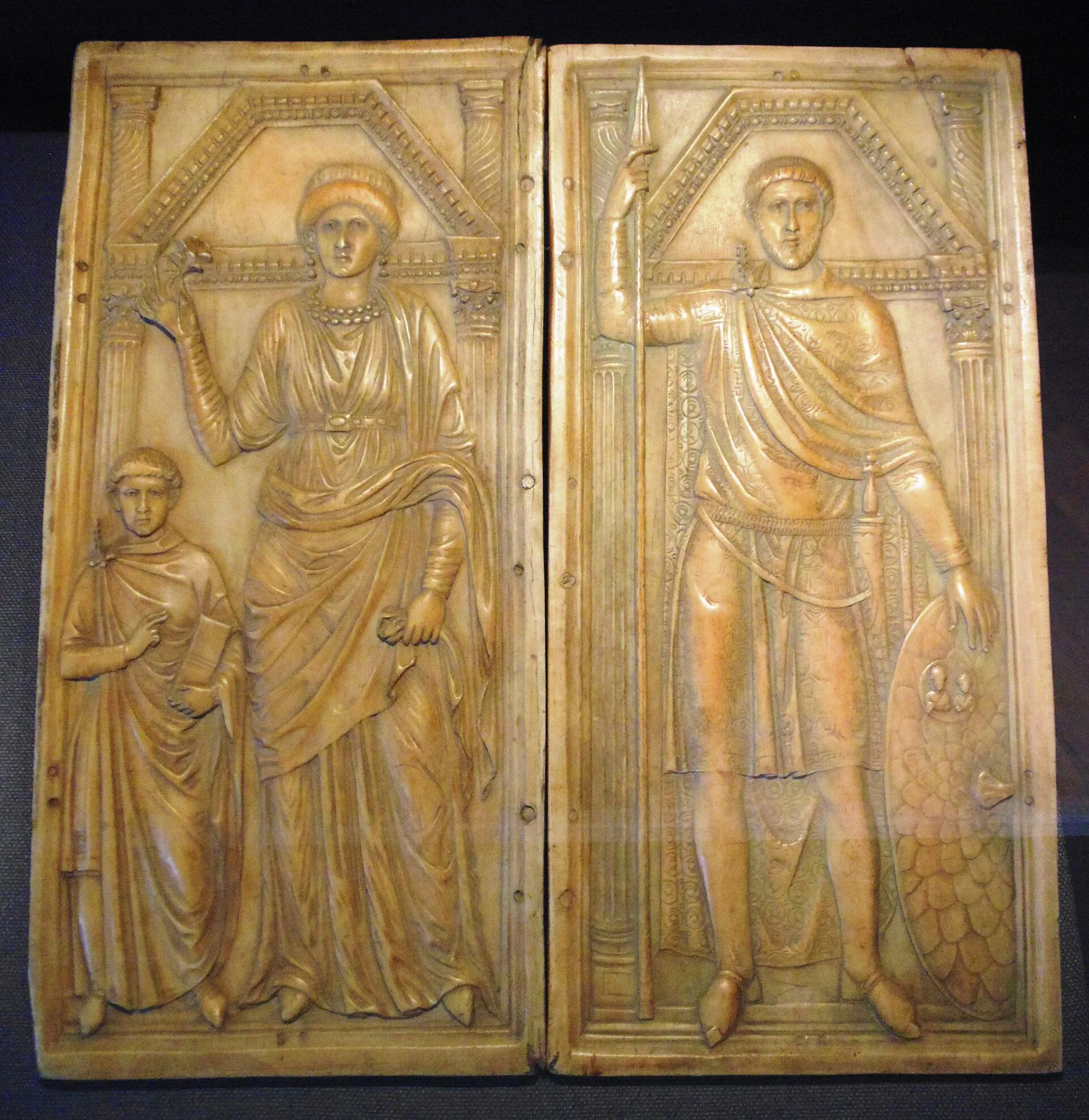
Flavio Stilicone nacque intorno al 359 d.C. da padre vandalo, un ufficiale di cavalleria al servizio di Roma, e da madre romana. Questa doppia origine era comune nell'esercito del Tardo Impero: le legioni erano ormai composte in larga parte da federati germanici, e i confini tra "romano" e "barbaro" si erano assottigliati fino quasi a scomparire. Stilicone crebbe come cittadino romano e soldato romano, parlava latino ed era cristiano. Non si sentiva un barbaro, e l'esercito romano non lo trattava come tale.
Flavius Stilicho was born around 359 AD to a Vandal father, a cavalry officer in Roman service, and a Roman mother. This dual origin was common in the Late Empire's army: the legions were now largely composed of Germanic federates, and the borders between "Roman" and "barbarian" had thinned almost to the point of disappearing. Stilicho grew up as a Roman citizen and Roman soldier, spoke Latin, and was a Christian. He did not think of himself as a barbarian, and the Roman army did not treat him as one.
Quasi tutto ciò che sappiamo di Stilicone ci giunge attraverso la voce di un solo uomo: Claudio Claudiano, l'ultimo grande poeta della Roma classica. Greco di Alessandria, Claudiano divenne il poeta di corte e il propagandista ufficiale del generale, e nei suoi panegirici in esametri (il De consulatu Stilichonis, le invettive contro i ministri d'Oriente) celebrò Stilicone come il salvatore semidivino dell'Impero, un nuovo Scipione, l'argine vivente contro il caos. È propaganda sublime, da maneggiare con cautela; ma è anche l'ultima fiammata della grande poesia latina, e ci restituisce l'immagine che Stilicone volle dare di sé: non un barbaro al servizio di Roma, ma Roma stessa fatta uomo e armata.
Almost everything we know of Stilicho reaches us through the voice of a single man: Claudian, the last great poet of classical Rome. A Greek from Alexandria, Claudian became the general's court poet and official propagandist, and in his panegyrics in hexameter (the De consulatu Stilichonis, the invectives against the ministers of the East) he celebrated Stilicho as the demigod saviour of the Empire, a new Scipio, the living bulwark against chaos. It is sublime propaganda, to be handled with care; but it is also the last blaze of great Latin poetry, and it gives back to us the image Stilicho wished to project: not a barbarian in Rome's service, but Rome herself made man and armed.
La sua carriera conobbe un'accelerazione decisiva grazie all'imperatore Teodosio I, che lo apprezzò come militare e uomo di fiducia. Nel 384 d.C. gli affidò un'importante missione diplomatica presso i Persiani. Al ritorno, Teodosio compì il gesto che avrebbe plasmato tutta la vita di Stilicone: gli diede in moglie Serena, sua nipote adottiva e figlia spirituale, una donna colta, forte di carattere e orgogliosa delle sue origini imperiali. Quel matrimonio trasformò Stilicone da brillante ufficiale a membro della famiglia imperiale.
His career received a decisive acceleration thanks to Emperor Theodosius I, who valued him as a soldier and trusted man. In 384 AD he entrusted him with an important diplomatic mission to the Persians. Upon his return, Theodosius made the gesture that would shape Stilicho's entire life: he gave him Serena, his adopted niece and spiritual daughter, as a wife, a cultured woman with strong character and pride in her imperial origins. That marriage transformed Stilicho from a brilliant officer to a member of the imperial family.
Quando Teodosio morì nel gennaio del 395 d.C., lasciò l'Impero diviso tra i due figli: Arcadio in Oriente (diciotto anni, debole e manovrabile) e Onorio in Occidente (appena dieci anni, ancora più debole). In punto di morte, Teodosio avrebbe affidato a Stilicone la tutela di entrambi. Stilicone interpretò questo mandato in modo espansivo, forse troppo, rivendicando l'autorità su tutto l'Impero. La corte orientale di Costantinopoli respinse questa pretesa. Per il resto della sua vita, Stilicone fu de facto reggente dell'Occidente, combattendo su due fronti: contro i barbari all'esterno e contro l'intrigante corte di Ravenna all'interno.
When Theodosius died in January 395 AD, he left the Empire divided between his two sons: Arcadius in the East (eighteen years old, weak and malleable) and Honorius in the West (barely ten, even weaker). On his deathbed, Theodosius reportedly entrusted both boys to Stilicho's guardianship. Stilicho interpreted this mandate expansively, perhaps too much, claiming authority over the entire Empire. The eastern court at Constantinople rejected this claim. For the rest of his life, Stilicho was de facto regent of the West, fighting on two fronts: against barbarians from without and against the scheming court of Ravenna from within.
02Le Campagne MilitariMilitary Campaigns
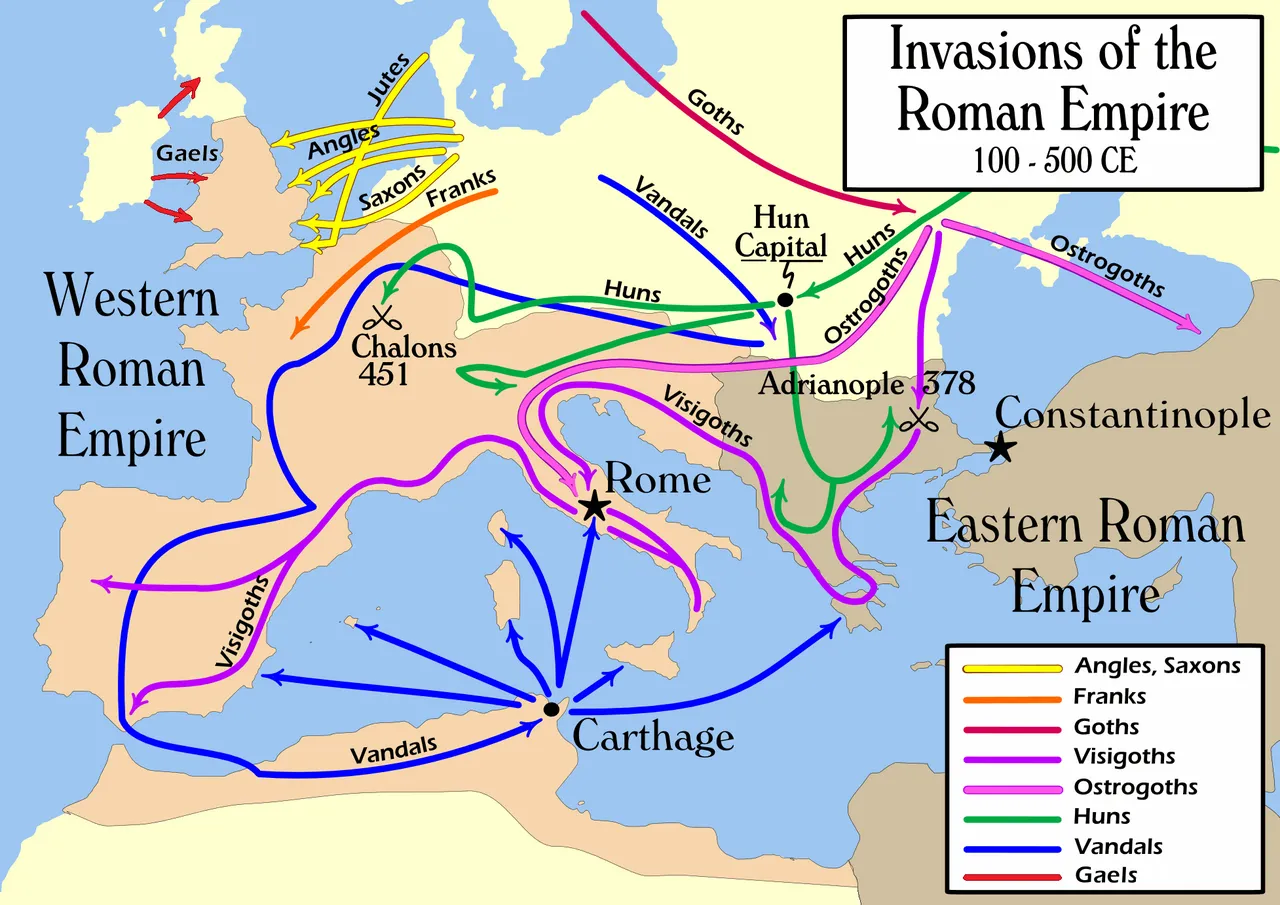
- 395–397 d.C. Prima campagna contro Alarico — Subito dopo la morte di Teodosio, Alarico, capo dei Visigoti foederati, guidò il suo popolo in una devastante scorreria attraverso la Grecia, saccheggiando città e campagne. Stilicone lo intercettò in Grecia con l'esercito occidentale, ma la corte orientale di Arcadio, sospettosa delle ambizioni di Stilicone sull'Oriente, gli ordinò di ritirare le sue truppe. Alarico rimase impunito e fu addirittura nominato governatore romano dell'Illirico. First campaign against Alaric — Immediately after Theodosius's death, Alaric, leader of the Visigothic federates, led his people in a devastating raid through Greece, pillaging cities and countryside. Stilicho intercepted him in Greece with the western army, but the eastern court of Arcadius, suspicious of Stilicho's ambitions over the East, ordered him to withdraw his troops. Alaric went unpunished and was even appointed Roman governor of Illyricum.
- 401–402 d.C. Invasione dell'Italia e Battaglia di Pollenzo — Alarico invase l'Italia settentrionale, mettendo a ferro e fuoco il Po e avanzando verso Mediolanum (Milano), dove risiedeva l'imperatore Onorio. Stilicone radunò truppe da tutta l'Europa (ritirando guarnigioni dal Reno e dal Danubio, con conseguenze disastrose per la difesa di quei confini) e affrontò Alarico a Pollenzo nel 402 d.C. La battaglia fu una vittoria tattica romana: l'accampamento visigoto fu preso d'assalto durante la domenica di Pasqua, la moglie di Alarico fu catturata. I Visigoti si ritirarono dall'Italia. Invasion of Italy and Battle of Pollentia — Alaric invaded northern Italy, ravaging the Po valley and advancing toward Mediolanum (Milan), where Emperor Honorius resided. Stilicho gathered troops from across Europe (withdrawing garrisons from the Rhine and Danube, with disastrous consequences for those border defenses) and faced Alaric at Pollentia in 402 AD. The battle was a Roman tactical victory: the Visigothic camp was stormed on Easter Sunday, Alaric's wife was captured. The Visigoths withdrew from Italy.
- 403 d.C. Battaglia di Verona — Alarico tentò una nuova invasione. Stilicone lo intercettò a Verona e lo sconfisse nuovamente, anche se non riuscì ad annientare completamente l'esercito visigoto. I Visigoti si ritirarono di nuovo, ma Alarico restava una minaccia incombente. Paradossalmente, Stilicone continuò a negoziare con lui, vedendo in Alarico un potenziale strumento per recuperare l'Illirico all'Occidente. Battle of Verona — Alaric attempted another invasion. Stilicho intercepted him at Verona and defeated him again, though he failed to completely annihilate the Visigothic army. The Visigoths retreated again, but Alaric remained a looming threat. Paradoxically, Stilicho continued to negotiate with him, seeing in Alaric a potential instrument for recovering Illyricum for the West.
- 405–406 d.C. Sconfitta di Radagaiso a Fiesole — Un'orda di circa 100.000–200.000 Goti pagani guidati da Radagaiso valicò il Danubio ghiacciato e piombò sull'Italia. Fu la più grande invasione mai subita dalla penisola. Stilicone, con un'armata mista di romani e federati, tra cui un contingente di Unni guidati da Uldin e di Goti guidati da Saro e Uldino, circondò l'esercito di Radagaiso sulle colline di Fiesole, nei pressi di Firenze, e lo distrusse. Radagaiso fu catturato e giustiziato il 23 agosto 406 d.C. Fu il più grande trionfo militare di Stilicone. Defeat of Radagaisus at Fiesole — A horde of some 100,000–200,000 pagan Goths led by Radagaisus crossed the frozen Danube and descended on Italy. It was the largest invasion the peninsula had ever suffered. Stilicho, with a mixed army of Romans and federates, including a contingent of Huns led by Uldin and Goths led by Sarus and Uldinus, surrounded Radagaisus's army on the hills of Fiesole, near Florence, and destroyed it. Radagaisus was captured and executed on August 23, 406 AD. It was Stilicho's greatest military triumph.
- 31 dic. 406 d.C. Il Reno gelato e la catastrofe del confine — Mentre Stilicone era impegnato in Italia contro Radagaiso, il Reno congelò. Vandali, Alani e Suebi lo attraversarono in massa il 31 dicembre 406 d.C.: uno degli eventi più catastrofici della storia romana. Le province di Gallia, Britannia e Spagna furono travolte. Era la conseguenza diretta di aver sguarnito il fronte renano per difendere l'Italia. The frozen Rhine and the border catastrophe — While Stilicho was occupied in Italy against Radagaisus, the Rhine froze. Vandals, Alans and Suebi crossed it en masse on December 31, 406 AD: one of the most catastrophic events in Roman history. The provinces of Gaul, Britain and Spain were overrun. This was the direct consequence of having stripped the Rhine frontier to defend Italy.
In queste campagne si nasconde la tragedia strategica di Stilicone. Per fermare Alarico in Italia dovette spogliare di truppe il Reno e il Danubio; e fu proprio mentre inseguiva la vittoria nella penisola che, nel dicembre del 406, il fiume gelato cedeva e Vandali, Alani e Svevi dilagavano in Gallia. Era un dilemma senza soluzione: ogni frontiera difesa ne lasciava un'altra scoperta, perché l'Impero non aveva più soldati a sufficienza per tutte. Stilicone vinse quasi ogni battaglia che combatté, ma combatteva contro la geografia e contro l'aritmetica, e quelle non si lasciano sconfiggere. Ogni suo trionfo comprava tempo al prezzo di una nuova falla.
In these campaigns lies Stilicho's strategic tragedy. To stop Alaric in Italy he had to strip the Rhine and Danube of troops; and it was precisely while he pursued victory in the peninsula that, in December 406, the frozen river gave way and Vandals, Alans and Suebi poured into Gaul. It was a dilemma without solution: every frontier defended left another exposed, for the Empire no longer had soldiers enough for all of them. Stilicho won almost every battle he fought, but he was fighting against geography and against arithmetic, and those cannot be defeated. Each of his triumphs bought time at the price of a new breach.
03La Congiura e la CadutaThe Conspiracy and the Fall
Nonostante le vittorie militari, la posizione di Stilicone a corte era sempre più fragile. I suoi nemici (in primo luogo il potente ciambellano Olimpio, che godeva della piena fiducia dell'imperatore Onorio) lo accusavano di connivenza con Alarico, di ambire alla porpora imperiale per suo figlio Eucherio, e persino di tradire Roma a favore dei barbari. La sua origine vandalica, mai dimenticata dai suoi avversari, diventò un'arma retorica devastante in un clima di crescente xenofobia militare.
Despite his military victories, Stilicho's position at court was increasingly fragile. His enemies (chief among them the powerful chamberlain Olympius, who enjoyed the full trust of Emperor Honorius) accused him of collusion with Alaric, of ambitions for the imperial purple for his son Eucherius, and even of betraying Rome in favor of the barbarians. His Vandal origin, never forgotten by his adversaries, became a devastating rhetorical weapon in a climate of growing military xenophobia.
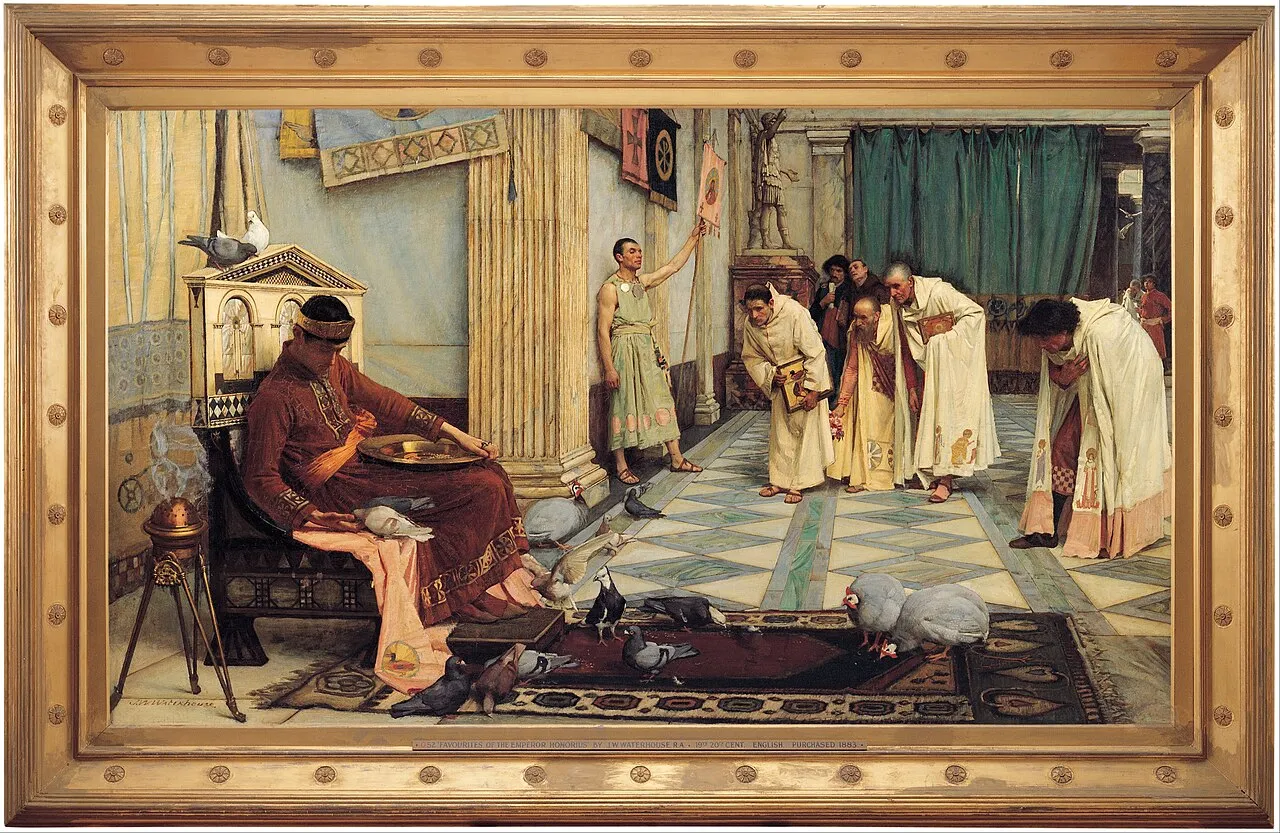
La crisi esplose nell'estate del 408 d.C. L'imperatore d'Oriente Arcadio era morto in maggio. Stilicone voleva partire per Costantinopoli per assicurarsi che il giovane nipote Teodosio II fosse guidato da consiglieri favorevoli all'Occidente. I suoi nemici presentarono questo piano come un tentativo di usurpazione. Olimpio organizzò una sedizione militare a Ticinum (Pavia): i soldati, aizzati dai suoi agenti, massacrarono i comandanti fedeli a Stilicone. Il generale si trovava a Bologna quando apprese dell'accaduto. Avrebbe potuto marciare su Ravenna e rovesciare Onorio. Non lo fece.
The crisis exploded in summer 408 AD. The eastern emperor Arcadius had died in May. Stilicho wanted to go to Constantinople to ensure that the young Theodosius II would be guided by advisors favorable to the West. His enemies presented this plan as an attempted usurpation. Olympius organized a military sedition at Ticinum (Pavia): soldiers, incited by his agents, massacred the commanders loyal to Stilicho. The general was in Bologna when he learned of what happened. He could have marched on Ravenna and overthrown Honorius. He did not.
Quella rinuncia è il cuore enigmatico della sua parabola. Stilicone disponeva ancora di reparti fedeli e dell'autorità di vent'anni di comando: marciare su Ravenna e deporre l'inetto Onorio sarebbe stato facile. Ma avrebbe significato scatenare l'ennesima guerra civile mentre i barbari premevano su ogni frontiera, e Stilicone, il figlio del vandalo, si rifiutò di versare sangue romano per salvare se stesso. Fu più romano dei romani che lo accusavano di tradimento. La stessa lealtà che lo aveva reso grande lo condannò: depose le armi e si affidò alla parola di un imperatore che non aspettava altro che la sua testa.
That renunciation is the enigmatic heart of his story. Stilicho still had loyal units and the authority of twenty years of command: to march on Ravenna and depose the inept Honorius would have been easy. But it would have meant unleashing yet another civil war while the barbarians pressed on every frontier, and Stilicho, the Vandal's son, refused to shed Roman blood to save himself. He was more Roman than the Romans who accused him of treason. The very loyalty that had made him great condemned him: he laid down his arms and trusted the word of an emperor who wanted nothing but his head.
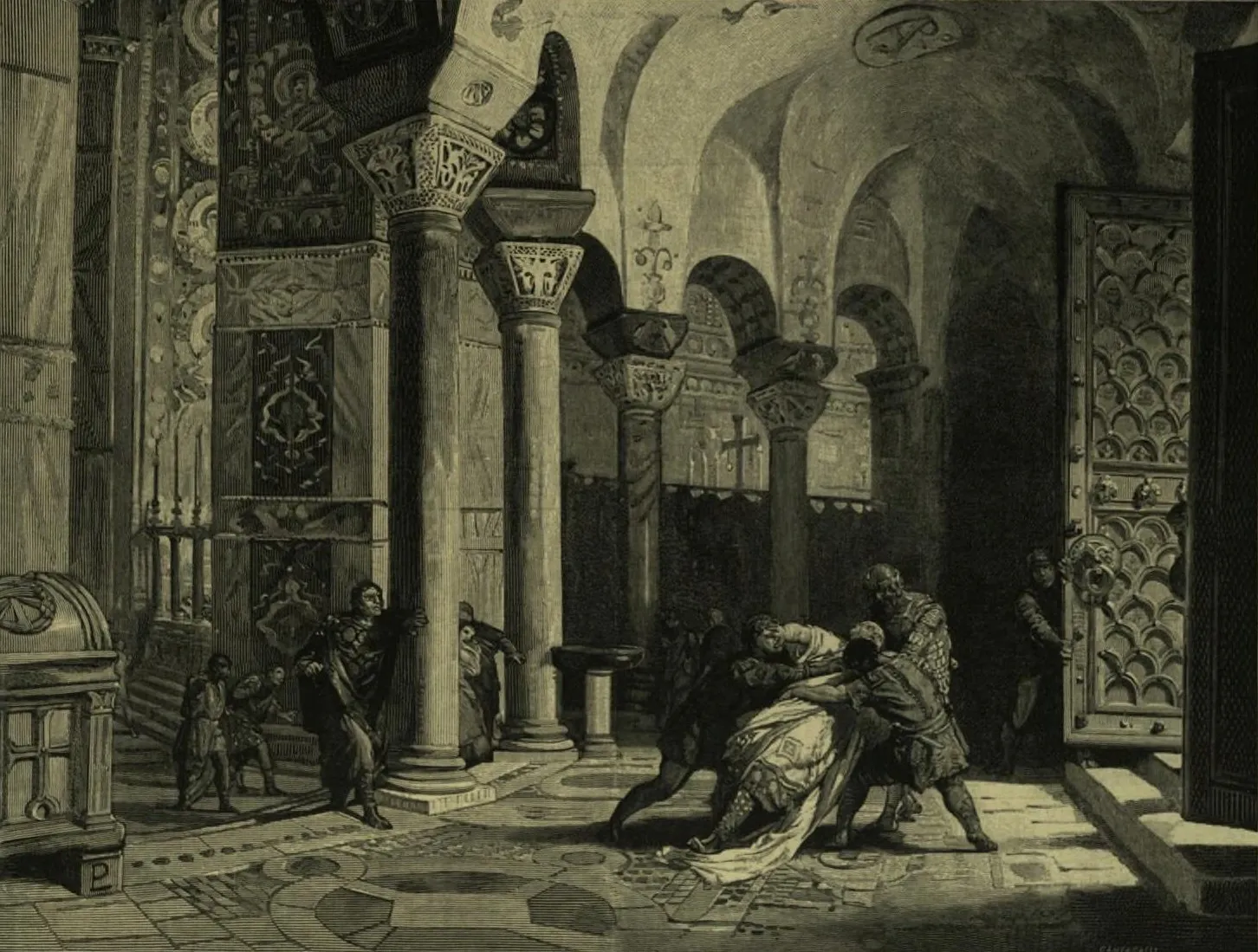
Stilicone si rifugiò in una chiesa di Ravenna, cercando asilo ecclesiastico. Il 22 agosto 408 d.C., i soldati inviati da Onorio lo circondarono. I vescovi che lo proteggevano ricevettero formale promessa che la vita di Stilicone sarebbe stata risparmiata: solo dopo quest'assicurazione, Stilicone uscì spontaneamente. Subito dopo, arrivò un secondo messaggero con la condanna a morte. Stilicone proibì ai suoi fedeli di resistere e si inginocchiò davanti al boia. Suo figlio Eucherio fu ucciso poco dopo. Sua moglie Serena, nipote di Teodosio, fu strangolata per ordine del Senato romano. La vendetta fu totale.
Stilicho took refuge in a church in Ravenna, seeking ecclesiastical asylum. On August 22, 408 AD, soldiers sent by Honorius surrounded him. The bishops protecting him received a formal promise that Stilicho's life would be spared: only after this assurance did Stilicho voluntarily emerge. Immediately afterward, a second messenger arrived with the death sentence. Stilicho forbade his faithful from resisting and knelt before the executioner. His son Eucherius was killed shortly after. His wife Serena, Theodosius's niece, was strangled on the order of the Roman Senate. The revenge was total.
04L'Eredità: Roma senza DifensoriThe Legacy: Rome without Defenders
La morte di Stilicone ebbe conseguenze immediate e catastrofiche. Migliaia di famiglie di soldati barbari al servizio di Roma, spaventate dai pogrom contro i "barbari" scatenati dalla fazione di Olimpio, disertarono in massa e raggiunsero Alarico, portando la sua forza a oltre 30.000 uomini. Alarico avanzò di nuovo sull'Italia. Senza Stilicone, nessun generale romano aveva né la competenza né l'autorità per fermarlo. Onorio si rifugiò nelle paludi di Ravenna, protette dalla laguna. Roma fu abbandonata a sé stessa.
Stilicho's death had immediate and catastrophic consequences. Thousands of families of barbarian soldiers in Roman service, frightened by the pogroms against "barbarians" unleashed by Olympius's faction, deserted en masse and joined Alaric, bringing his strength to over 30,000 men. Alaric advanced on Italy again. Without Stilicho, no Roman general had either the competence or the authority to stop him. Honorius took refuge in the marshes of Ravenna, protected by the lagoon. Rome was abandoned to itself.
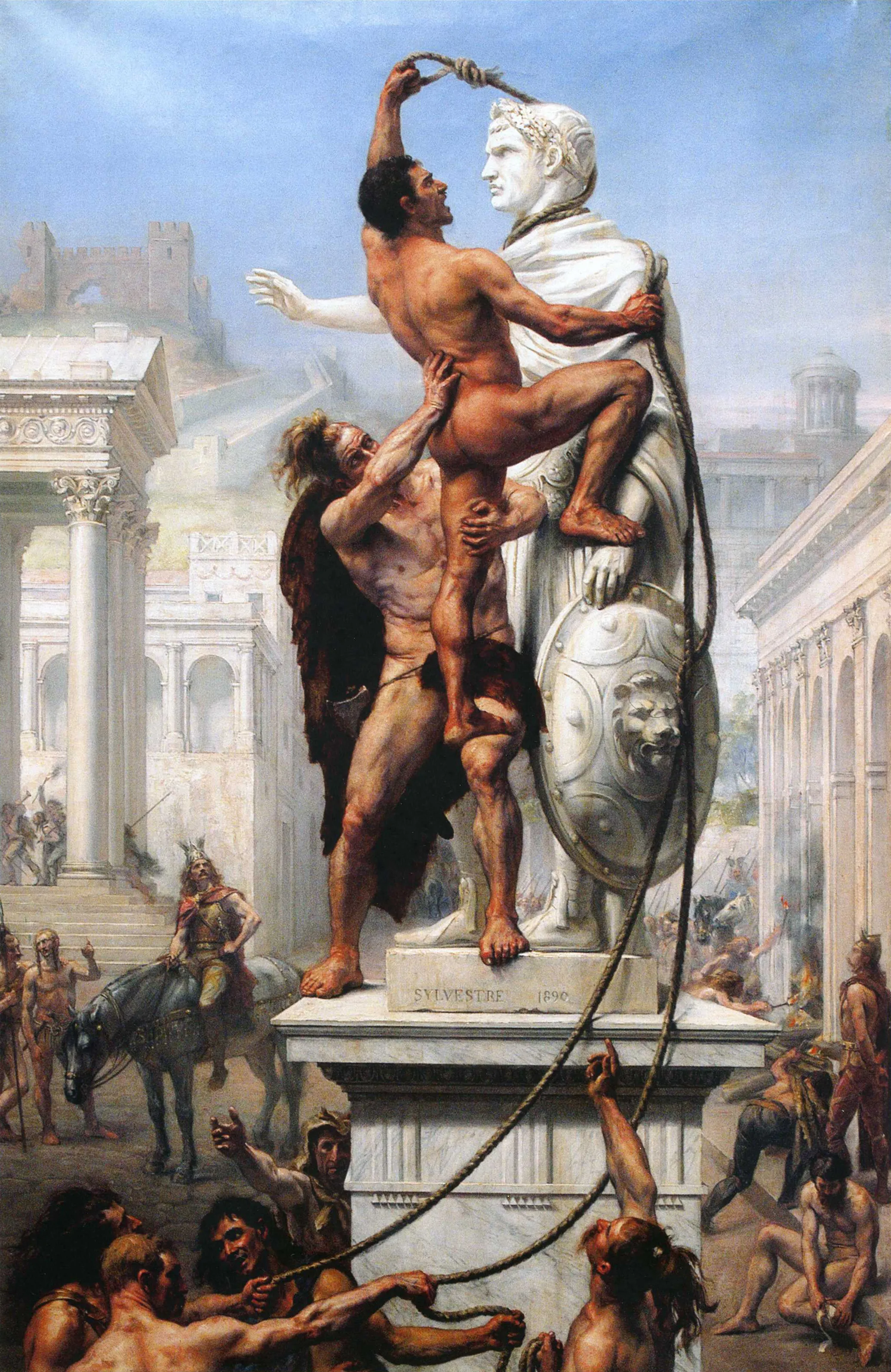
Il 24 agosto 410 d.C., per la prima volta in 800 anni, Roma fu saccheggiata da un esercito straniero. Alarico e i suoi Visigoti entrarono dalla Porta Salaria e passarono tre giorni a saccheggiare la città. Le chiese cristiane furono rispettate, Alarico era cristiano ariano, ma il resto della città fu messo a soqquadro. L'impatto psicologico fu devastante per tutto il mondo romano: sant'Agostino scrisse la sua monumentale opera La Città di Dio come risposta teologica allo shock del sacco. Girolamo, a Betlemme, scrisse: "Si è spenta la luce del mondo, e in questa catastrofe unica è stata troncata la testa dell'Impero romano."
On August 24, 410 AD, for the first time in 800 years, Rome was sacked by a foreign army. Alaric and his Visigoths entered through the Porta Salaria and spent three days pillaging the city. Christian churches were respected, Alaric was an Arian Christian, but the rest of the city was ransacked. The psychological impact was devastating throughout the Roman world: Saint Augustine wrote his monumental City of God as a theological response to the shock of the sack. Jerome, in Bethlehem, wrote: "The light of the world has been extinguished, and in this unique catastrophe the head of the Roman Empire has been cut off."
Il giudizio storico su Stilicone è cambiato profondamente nel corso dei secoli. I suoi contemporanei romani lo videro come un traditore. I posteri, da Gibbon in poi, lo riconobbero come il più capace dei generali tardoromani, un uomo che per tredici anni tenne insieme un Occidente sull'orlo del collasso con una combinazione di genio militare, diplomazia e personale dedizione. La sua tragedia fu doppia: fu tradito dall'Impero che aveva difeso, e il suo assassinio accelerò esattamente la catastrofe che aveva trascorso la vita intera a scongiurare.
Historical judgment on Stilicho has changed profoundly over the centuries. His Roman contemporaries saw him as a traitor. Posterity, from Gibbon onward, recognized him as the most capable of the late Roman generals, a man who for thirteen years held together a collapsing West through a combination of military genius, diplomacy and personal dedication. His tragedy was twofold: he was betrayed by the Empire he had defended, and his assassination accelerated exactly the catastrophe he had spent his entire life working to prevent.
Con Stilicone scomparve l'ultimo uomo capace di tenere insieme l'Occidente. I sessantasei anni che separano la sua morte dalla deposizione di Romolo Augustolo (476 d.C.) furono un lento franare: la Gallia, la Spagna e l'Africa perdute una dopo l'altra, gli eserciti ridotti a bande di federati, gli imperatori-fantoccio che si succedevano all'ombra di nuovi generali barbari (Ezio, Ricimero) nessuno dei quali ebbe mai più la statura e insieme la lealtà di Stilicone. Claudiano, il poeta che ne aveva cantato le vittorie, aveva detto il vero senza saperlo: finché Stilicone visse, Roma ebbe una spada e uno scudo. Quando quella spada fu spezzata per ordine dell'imperatore che proteggeva, nulla rimase più fra l'Urbe e la fine.
With Stilicho vanished the last man able to hold the West together. The sixty-six years that separate his death from the deposition of Romulus Augustulus (476 AD) were a slow collapse: Gaul, Spain and Africa lost one after another, the armies reduced to bands of federates, puppet-emperors succeeding one another in the shadow of new barbarian generals (Aetius, Ricimer) none of whom ever again had Stilicho's stature together with his loyalty. Claudian, the poet who had sung his victories, had spoken true without knowing it: while Stilicho lived, Rome had a sword and a shield. When that sword was broken by order of the emperor it protected, nothing remained between the City and the end.