01BiografiaBiography
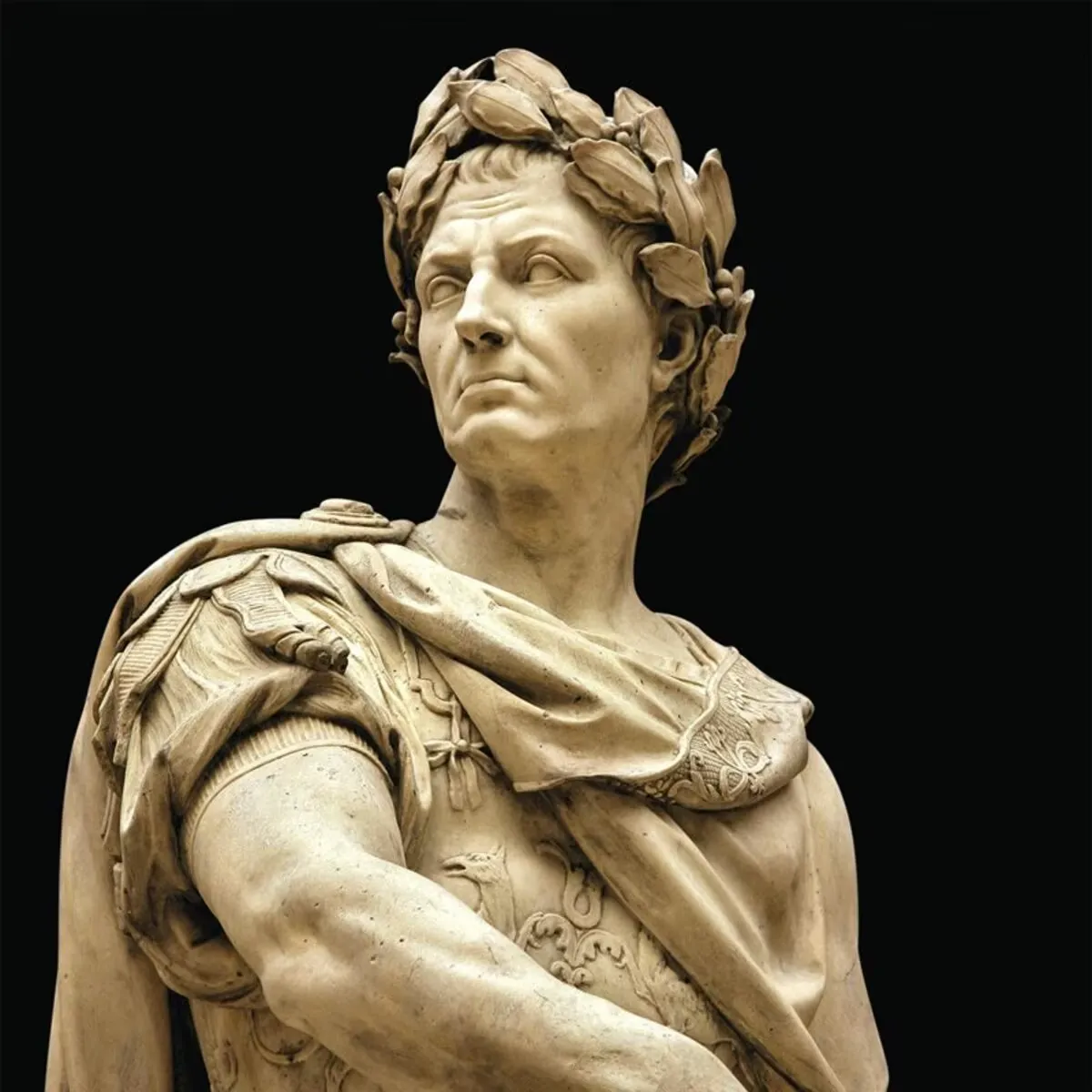
Gaio Giulio Cesare nacque il 13 luglio del 100 a.C. a Roma, nel cuore popolare e brulicante della Suburra, da una famiglia patrizia di antichissimo lignaggio ma di modesta fortuna. I Iulii Caesares facevano risalire il proprio sangue a Iulo, figlio di Enea, e per lui alla dea Venere in persona: una discendenza divina che nessun'altra casata di Roma poteva vantare. Eppure, nella realtà spietata della tarda Repubblica, quel lustro celeste non si traduceva in potere: da generazioni nessun Giulio aveva raggiunto le vette dello Stato. Fu da questa frattura, fra un nome che prometteva l'Olimpo e una posizione che lo negava, che nacque la smisurata ambizione di Cesare, l'urgenza di colmare a ogni costo l'abisso tra ciò che il suo sangue prometteva e ciò che il mondo gli concedeva.
Gaius Julius Caesar was born on 13 July 100 BC in Rome, in the teeming, plebeian heart of the Subura, into a patrician family of most ancient lineage but modest fortune. The Iulii Caesares traced their blood to Iulus, son of Aeneas, and through him to the goddess Venus herself: a divine descent no other house in Rome could boast. And yet, in the merciless reality of the late Republic, that celestial lustre did not translate into power: for generations no Julian had reached the heights of the State. It was from this fracture, between a name that promised Olympus and a station that denied it, that Caesar's boundless ambition was born, the urge to fill at any cost the abyss between what his blood promised and what the world granted him.
La sua adolescenza fu temprata nel fuoco della guerra civile fra Mario e Silla. Imparentato per parte di zia con il grande Mario, capo dei populares, il giovane Cesare divenne sospetto agli occhi di Silla non appena il dittatore ebbe vinto. Gli fu ingiunto di ripudiare la moglie Cornelia, figlia di Cinna, fiero avversario di Silla; Cesare, appena diciottenne, rifiutò, un atto di sfida che gli costò la confisca dei beni e la fuga, braccato di nascondiglio in nascondiglio finché amici di rango non ne ottennero il perdono. Si racconta che Silla, cedendo a malincuore, avvertisse: «in quel ragazzo dalla cintura molle si nascondono molti Marii». Lontano da Roma, Cesare servì nelle legioni d'Oriente, e all'assedio di Mitilene meritò la corona civica per aver salvato la vita a un commilitone. Alla morte di Silla, nel 78 a.C., rientrò nell'Urbe per intraprendere la via delle armi e della parola.
His adolescence was tempered in the fire of the civil war between Marius and Sulla. Related through his aunt to the great Marius, leader of the populares, young Caesar became suspect in Sulla's eyes the moment the dictator had won. He was ordered to repudiate his wife Cornelia, daughter of Cinna, Sulla's fierce opponent; Caesar, barely eighteen, refused, an act of defiance that cost him the confiscation of his property and flight, hunted from hiding place to hiding place until friends of rank obtained his pardon. It is said that Sulla, yielding reluctantly, warned: "in that loosely belted boy there hide many a Marius." Far from Rome, Caesar served in the legions of the East, and at the siege of Mytilene earned the civic crown for saving a comrade's life. On Sulla's death in 78 BC he returned to the City to take up the path of arms and of the word.
Tornato a Roma, Cesare scalò il cursus honorum con un'audacia che sfiorava la temerarietà. Da edile, nel 65 a.C., offrì al popolo giochi di una magnificenza mai vista (trecentoventi coppie di gladiatori dalle armi d'argento, cacce esotiche e banchetti pubblici) indebitandosi per somme astronomiche con Marco Licinio Crasso, l'uomo più ricco di Roma. Le folle lo adoravano; i creditori lo tenevano per la gola. Nel 63 a.C. giocò la mossa più spregiudicata della sua giovinezza: si candidò a Pontifex Maximus, la più alta carica religiosa dello Stato e dignità a vita, contro avversari ben più anziani e potenti. La mattina del voto, uscendo di casa, disse alla madre Aurelia che lo abbracciava in lacrime che sarebbe tornato Pontefice Massimo o non sarebbe tornato affatto. Vinse. A spese altrui aveva comprato il cuore del popolo e un seggio a vita nel cuore sacro di Roma.
Back in Rome, Caesar climbed the cursus honorum with an audacity bordering on recklessness. As aedile in 65 BC he gave the people games of unprecedented magnificence (three hundred and twenty pairs of gladiators in silver armour, exotic beast-hunts and public banquets) running up astronomical debts to Marcus Licinius Crassus, the richest man in Rome. The crowds adored him; his creditors held him by the throat. In 63 BC he played the most reckless card of his youth: he stood for Pontifex Maximus, the highest religious office of the State and a lifelong dignity, against rivals far older and more powerful. On the morning of the vote, leaving the house, he told his mother Aurelia, who embraced him in tears, that he would return as Pontifex Maximus or not return at all. He won. At others' expense he had bought the heart of the people and a seat for life at the sacred core of Rome.
Con un fiuto politico che non aveva eguali, nel 60 a.C. Cesare tessé l'alleanza segreta destinata a spezzare la Repubblica: il Primo Triumvirato, patto privato fra tre uomini che da soli non potevano nulla e insieme potevano tutto. Vi unì Pompeo, il più glorioso generale di Roma, frustrato da un Senato che gli negava le ricompense per i veterani; Crasso, l'uomo più ricco del mondo romano; e se stesso, che a quella triade portava l'astuzia, l'eloquenza e il favore crescente del popolo. Cementò il legame dando in sposa a Pompeo la propria amatissima figlia Giulia. Su quella base ottenne il consolato per il 59 a.C. e, soprattutto, il proconsolato delle Gallie per un quinquennio poi prolungato a un decennio: il comando militare che gli avrebbe consegnato l'esercito e la gloria necessari a giocare la partita finale.
With a political instinct without equal, in 60 BC Caesar wove the secret alliance destined to break the Republic: the First Triumvirate, a private pact among three men who alone could do nothing and together could do everything. He joined to it Pompey, Rome's most glorious general, frustrated by a Senate that denied him rewards for his veterans; Crassus, the richest man in the Roman world; and himself, who brought to that triad cunning, eloquence and the people's growing favour. He cemented the bond by giving Pompey in marriage his beloved daughter Julia. On that foundation he obtained the consulship for 59 BC and, above all, the proconsulship of the Gauls for a five-year term later extended to ten: the military command that would hand him the army and the glory needed to play the final game.
Un episodio della giovinezza illumina già tutto l'uomo. Nel 75 a.C., catturato dai pirati cilici mentre navigava verso Rodi, Cesare si sentì chiedere un riscatto di venti talenti; rispose, sdegnato, che ne valeva almeno cinquanta. Per le settimane di prigionia trattò i suoi rapitori come un re tratta la propria corte: declamava loro i versi che componeva, li rimproverava se non applaudivano, li chiamava barbari illetterati e prometteva loro, ridendo, che li avrebbe fatti crocifiggere tutti. Quelli ne ridevano, credendolo un giovane spaccone. Pagato il riscatto e tornato libero, Cesare armò in pochi giorni una flotta a Mileto, piombò sui pirati, li catturò e li crocifisse fino all'ultimo, concedendo loro, per un'ultima ombra di clemenza, di essere prima sgozzati. A venticinque anni aveva già rivelato la trama del suo carattere: orgoglio sconfinato, audacia glaciale, e quella facoltà rara di mutare una minaccia scherzosa in sentenza inappellabile.
An episode of his youth already illuminates the whole man. In 75 BC, captured by Cilician pirates as he sailed toward Rhodes, Caesar heard them demand a ransom of twenty talents; he replied, indignant, that he was worth at least fifty. Through the weeks of captivity he treated his captors as a king treats his court: he declaimed to them the verses he composed, rebuked them when they did not applaud, called them illiterate barbarians and promised them, laughing, that he would have them all crucified. They laughed, thinking him a young braggart. The ransom paid and his freedom regained, Caesar armed a fleet at Miletus within days, fell upon the pirates, captured them and crucified them to the last, granting them, as a final shadow of clemency, to have their throats cut first. At twenty-five he had already revealed the weave of his character: boundless pride, glacial daring, and that rare faculty of turning a jesting threat into an irrevocable sentence.
Uno degli episodi più rivelatori della sua psicologia risale al 69 a.C., quando Cesare, appena trentenne, prestava servizio come questore in Spagna Ulteriore. Visitando il tempio di Ercole a Gades (l'odierna Cadice), si trovò davanti a una statua di Alessandro Magno. Plutarco racconta che Cesare, contemplando l'immagine del macedone, scoppiò improvvisamente in pianto. Agli amici stupiti che gli chiedevano la ragione, rispose con parole rimaste celebri: alla sua età Alessandro aveva già conquistato il mondo conosciuto, mentre lui non aveva ancora compiuto nulla che meritasse di essere ricordato. Quella stessa notte, secondo la leggenda riportata da Svetonio, sognò di unirsi a sua madre, gli indovini interpretarono il sogno come presagio di un futuro dominio sulla Terra, madre di tutti gli uomini. Cesare chiese subito il congedo, tornò a Roma e da quel momento la sua ambizione cessò di essere una qualità privata: divenne il motore esplicito di tutta la sua azione politica. Il confronto con Alessandro sarebbe rimasto un'ossessione per tutta la vita.
One of the most revealing episodes of his psychology dates to 69 BC, when Caesar, barely thirty, was serving as quaestor in Hispania Ulterior. Visiting the temple of Hercules at Gades (modern Cadiz), he came face to face with a statue of Alexander the Great. Plutarch recounts that Caesar, contemplating the image of the Macedonian, suddenly burst into tears. To his astonished friends who asked the reason, he replied with words that have remained famous: at his age Alexander had already conquered the known world, while he himself had accomplished nothing yet worth remembering. That very night, according to the legend reported by Suetonius, he dreamed of having intercourse with his own mother: soothsayers interpreted the dream as an omen of future dominion over the Earth, mother of all men. Caesar at once requested his discharge, returned to Rome, and from that moment on his ambition ceased to be a private quality: it became the explicit engine of all his political action. The comparison with Alexander would remain a lifelong obsession.
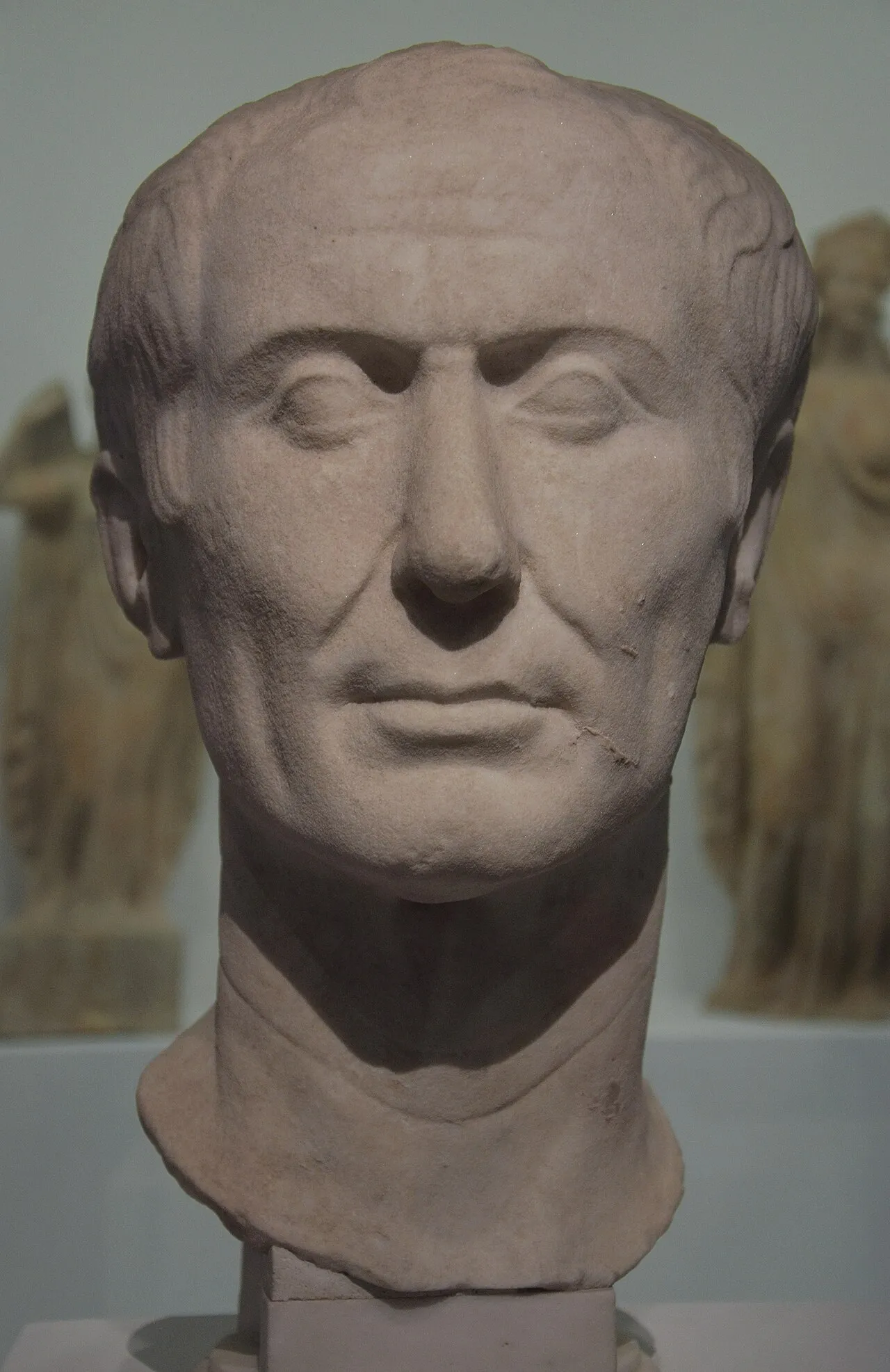
02Le Guerre GallicheThe Gallic Wars
- 58 a.C. Sconfitta degli Elvezi e di Ariovisto — Cesare interviene in Gallia col pretesto di proteggere le tribù alleate dagli Elvezi in migrazione e dai Germani di Ariovisto. Vince entrambe le battaglie in pochi mesi, stabilendo la sua presenza militare permanente nella regione. Defeat of the Helvetii and Ariovistus — Caesar intervenes in Gaul under the pretext of protecting allied tribes from the migrating Helvetii and the Germanic Ariovistus. He wins both battles in a few months, establishing his permanent military presence in the region.
- 57 a.C. Conquista dei Belgi — Cesare volge le armi contro le potenti tribù belgiche del nord. La sconfitta dei Nervi, tra le popolazioni più belligeranti della Gallia, è una delle battaglie più sanguinose delle campagne: Cesare dovrà intervenire personalmente a cavallo per rompere l'accerchiamento. Conquest of the Belgae — Caesar turns his forces against the powerful northern Belgian tribes. The defeat of the Nervii, among the most warlike peoples of Gaul, is one of the bloodiest battles of the campaigns: Caesar himself has to intervene on horseback to break the encirclement.
- 55–54 a.C. Spedizioni in Britannia — Cesare compie due incursioni oltre la Manica, la prima esplorazione romana delle isole britanniche. Pur senza stabilire una provincia duratura, ottiene ostaggi e tributi, e con il suo resoconto apre al mondo romano la conoscenza di queste terre misteriose. Expeditions into Britain — Caesar conducts two raids across the Channel, the first Roman exploration of the British Isles. Without establishing a lasting province, he obtains hostages and tribute, and through his account opens the Roman world's knowledge of these mysterious lands.
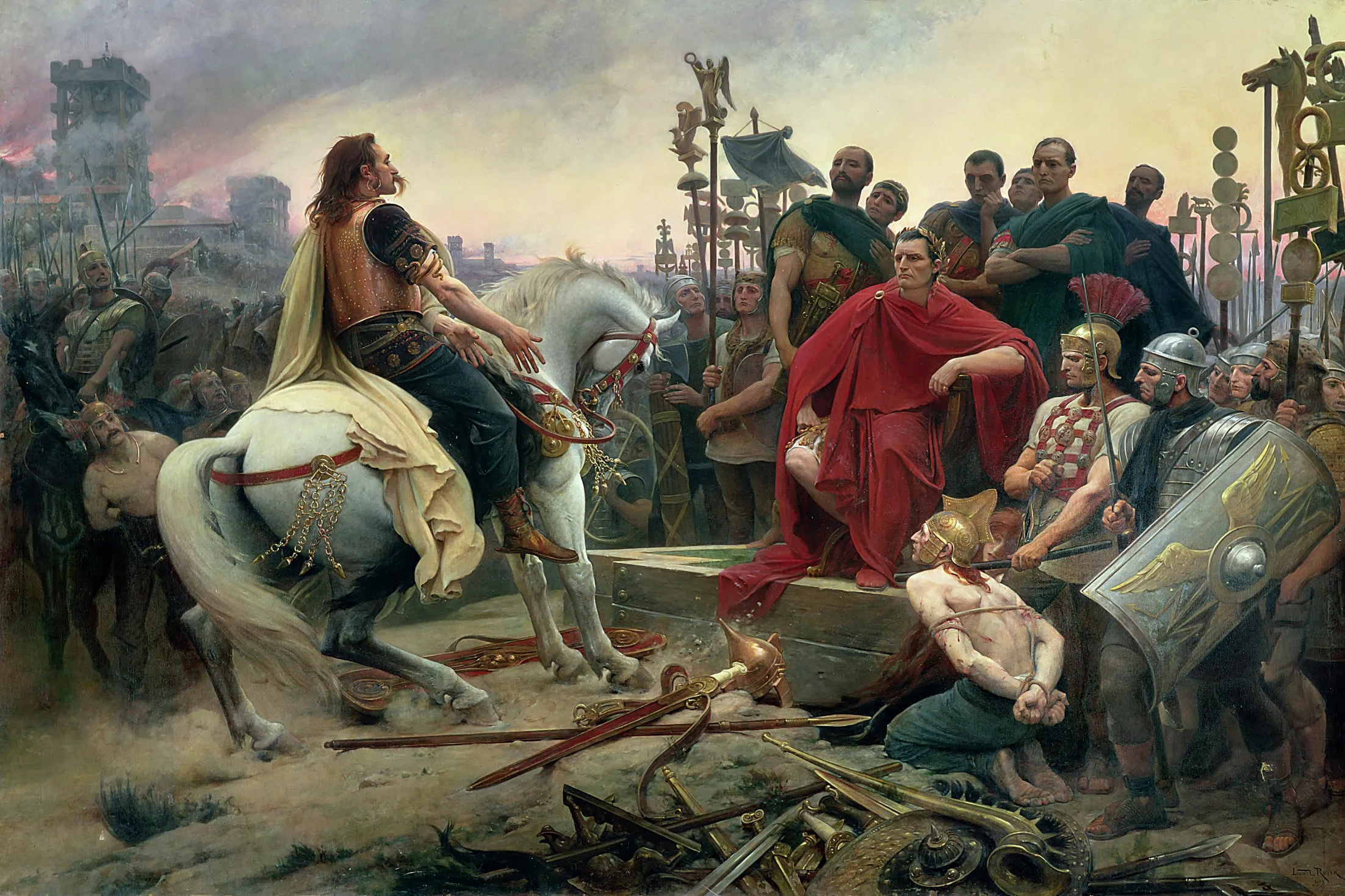
- 52 a.C. Grande Rivolta e Assedio di Alesia — La coalizione gallica guidata dal giovane capo arverno Vercingetorige scatena una rivolta generale. Cesare risponde con l'assedio di Alesia: costruisce un doppio anello di fortificazioni (circonvallazione e controvallazione) di 35 km per contenere i difensori e respingere l'esercito di soccorso. Vince entrambe le battaglie simultaneamente. Vercingetorige si arrende e sarà tenuto prigioniero per sei anni prima di essere strangolato durante il trionfo di Cesare a Roma. Great Revolt and Siege of Alesia — The Gallic coalition led by young Arvernian chieftain Vercingetorix unleashes a general revolt. Caesar responds with the siege of Alesia: he builds a double ring of fortifications (circumvallation and contravallation) stretching 35 km to contain the defenders and repel the relief army. He wins both battles simultaneously. Vercingetorix surrenders and would be kept prisoner for six years before being strangled during Caesar's triumph in Rome.
- 50 a.C. Fine delle campagne — Dopo otto anni e decine di battaglie, la Gallia è definitivamente pacificata. Cesare riporta nel suo De Bello Gallico di aver combattuto contro tre milioni di avversari, uccidendone un milione e riducendone in schiavitù altrettanti. Le cifre sono propagandistiche ma l'impatto demografico fu reale e devastante. End of the campaigns — After eight years and dozens of battles, Gaul is definitively pacified. Caesar reports in his De Bello Gallico having fought against three million opponents, killing one million and enslaving as many. The figures are propagandistic but the demographic impact was real and devastating.
Ad Alesia, nell'autunno del 52 a.C., si consumò insieme il capolavoro militare di Cesare e l'agonia della Gallia libera. Asserragliato Vercingetorige su un altopiano con ottantamila uomini, Cesare non si limitò ad assediarlo: lo imprigionò entro un anello di fortificazioni lungo quindici miglia (torri, fossati allagati, pali aguzzi e trappole che i legionari battezzarono «gigli» e «pungoli») e poi ne eresse un secondo, rivolto all'esterno, per reggere l'urto dell'esercito di soccorso. Quando i quasi duecentocinquantamila Galli della coalizione piombarono alle sue spalle, l'esercito romano si trovò stretto fra due mari di nemici, costretto a combattere nello stesso istante su due fronti opposti. Nel momento più disperato Cesare in persona, riconoscibile dal paludamentum scarlatto del comandante, guidò la riserva di cavalleria a sfondare il fianco gallico. Entro sera la più grande coalizione che la Gallia avesse mai schierato era distrutta. Il giorno dopo Vercingetorige uscì a cavallo dalle mura e depose le armi ai suoi piedi.
At Alesia, in the autumn of 52 BC, Caesar's military masterpiece and the death-agony of free Gaul were played out together. With Vercingetorix penned on a plateau with eighty thousand men, Caesar did not merely besiege him: he imprisoned him within a ring of fortifications fifteen miles long (towers, flooded ditches, sharpened stakes and traps the legionaries nicknamed "lilies" and "goads") and then raised a second ring, facing outward, to withstand the shock of the relief army. When nearly two hundred and fifty thousand Gauls of the coalition fell upon his rear, the Roman army found itself wedged between two seas of enemies, forced to fight in the same instant on two opposite fronts. At the most desperate moment Caesar himself, recognisable by the commander's scarlet paludamentum, led the cavalry reserve to break the Gallic flank. By evening the greatest coalition Gaul had ever fielded was destroyed. The next day Vercingetorix rode out from the walls and laid his arms at his feet.
Le campagne galliche non furono soltanto un'impresa militare ma una macchina di arricchimento personale e politico. Il bottino dell'oro celtico abbassò il prezzo dell'oro in Italia di un terzo. Migliaia di schiavi gallici inondarono i mercati. Cesare, partito povero, tornò il privato cittadino più ricco di Roma. Ma soprattutto, in quegli otto anni, aveva forgiato un esercito di legionari personalmente fedeli a lui, non al Senato, non alla Repubblica. Le legioni gridavano «Cesare!» quando entravano in battaglia. Questo legame personale, sancito da paga doppia, distribuzioni di terra promesse e onorificenze concrete, fu lo strumento che avrebbe permesso il salto successivo. Mentre Roma celebrava le sue vittorie, gli aristocratici conservatori, capeggiati da Catone il Giovane, si rendevano conto di aver creato un mostro che non avrebbero più potuto controllare.
The Gallic campaigns were not merely a military undertaking but a machine of personal and political enrichment. The plunder of Celtic gold lowered the price of gold in Italy by a third. Thousands of Gallic slaves flooded the markets. Caesar, who had started poor, returned the wealthiest private citizen in Rome. But above all, in those eight years, he had forged an army of legionaries personally loyal to him, not to the Senate, not to the Republic. The legions shouted "Caesar!" as they entered battle. This personal bond, sealed by double pay, promised land distributions, and tangible honors, was the instrument that would enable the next leap. While Rome celebrated his victories, the conservative aristocrats, led by Cato the Younger, were realizing they had created a monster they could no longer control.
03La Guerra CivileThe Civil War
Al termine delle campagne galliche, il Senato (controllato da una fazione conservatrice capeggiata da Pompeo, ora avversario di Cesare) gli impose di sciogliere le legioni e tornare a Roma come privato cittadino. Cesare sapeva che questo significava un processo certo per le sue azioni militari e la fine della carriera politica. Nella notte tra il 10 e l'11 gennaio del 49 a.C., al comando della XIII Legione, attraversò il Rubicone, il fiume che segnava il confine tra la Gallia Cisalpina e l'Italia propriamente detta, che nessun generale armato poteva attraversare per legge, pronunciando, secondo la tradizione, le parole: "Alea iacta est", il dado è tratto.
At the end of the Gallic campaigns, the Senate (controlled by a conservative faction led by Pompey, now Caesar's adversary) ordered him to disband his legions and return to Rome as a private citizen. Caesar knew this meant certain prosecution for his military actions and the end of his political career. In the night between January 10 and 11, 49 BC, commanding the XIII Legion, he crossed the Rubicon, the river marking the border between Cisalpine Gaul and Italy proper, which no armed general could legally cross, reportedly uttering the words: "Alea iacta est", the die is cast.
La frase «Alea iacta est» — pronunciata, secondo Asinio Pollione (testimone oculare dell'attraversamento, citato poi da Svetonio e Plutarco), in realtà in greco: «ἀνερρίφθω κύβος» (anerrhíphtho kýbos) è una citazione da una commedia perduta del poeta Menandro, autore amatissimo da Cesare. La traduzione corretta non è il passivo «il dado è tratto» ma l'imperativo perfetto: «si lasci che il dado sia gettato», cioè «sia lanciato il dado, accada quel che deve accadere». È una formula da giocatore d'azzardo che accetta consapevolmente il rischio, non la constatazione rassegnata di un destino già compiuto. Cesare disponeva di una sola legione, la XIII Gemina, circa 5.000 uomini, contro un Senato che poteva schierare contro di lui dieci legioni di Pompeo. Il Rubicone era un torrente di pochi metri di larghezza presso l'odierna Savignano sul Rubicone: per legge nessun proconsole poteva attraversarlo in armi, pena la dichiarazione di nemico pubblico (hostis publicus). Plutarco descrive l'esitazione di Cesare sulla riva, le ore passate a discutere con i luogotenenti, l'apparizione di una figura sovrumana che suonando una tromba avrebbe dato il segnale del passaggio. Quando finalmente attraversò, sapeva di avere giocato tutto su un'unica mano: vincere o morire. Quella frase è diventata, per ventuno secoli, il sinonimo universale di scelta irrevocabile, del punto oltre il quale non si può più tornare indietro.
The phrase "Alea iacta est", uttered, according to Asinius Pollio (an eyewitness of the crossing, later quoted by Suetonius and Plutarch), actually in Greek: "ἀνερρίφθω κύβος" (anerrhíphtho kýbos), is a quotation from a lost comedy by the poet Menander, an author Caesar deeply loved. The correct translation is not the passive "the die is cast" but the perfect imperative: "let the die be cast, " that is, "throw the die, come what may." It is a gambler's formula consciously embracing the risk, not the resigned acknowledgment of a destiny already fulfilled. Caesar had only a single legion at his disposal, the XIII Gemina, about 5,000 men, against a Senate that could field against him ten of Pompey's legions. The Rubicon was a stream just a few meters wide near modern Savignano sul Rubicone: by law no proconsul could cross it under arms, on pain of being declared a public enemy (hostis publicus). Plutarch describes Caesar's hesitation on the bank, the hours spent debating with his lieutenants, the appearance of a superhuman figure who, sounding a trumpet, gave the signal to cross. When he finally crossed, he knew he had staked everything on a single hand: victory or death. That phrase has become, for twenty-one centuries, the universal byword for an irrevocable choice, for the point past which one cannot turn back.
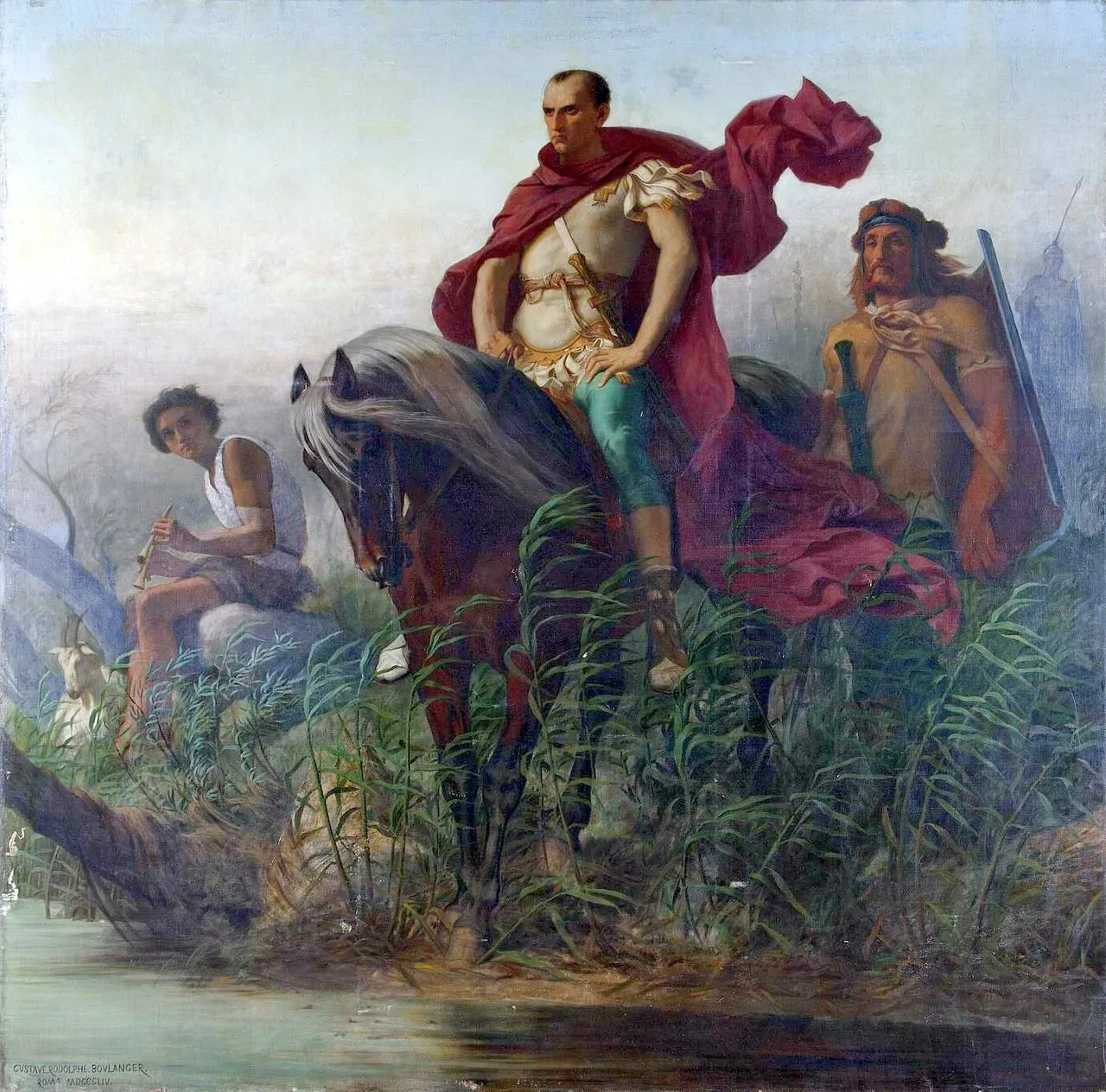
La guerra civile fu rapida e implacabile. Pompeo e la maggior parte del Senato fuggirono in Grecia. Cesare dominò l'Italia in settantadue giorni senza combattere una battaglia. Poi si mosse in Spagna contro i legati pompeiani, sconfiggendoli a Ilerda. Nella primavera del 48 a.C. attraversò l'Adriatico e inseguì Pompeo in Grecia. Dopo un primo insuccesso a Durazzo, Cesare ottenne la vittoria decisiva a Farsalo, in Tessaglia, dove le sue legioni veterane sbaragliarono un esercito più numeroso grazie a una geniale manovra delle coorti d'attacco. Pompeo fuggì in Egitto, dove fu assassinato per ordine del giovane faraone Tolomeo XIII.
The civil war was swift and relentless. Pompey and most of the Senate fled to Greece. Caesar dominated Italy in seventy-two days without fighting a battle. He then moved to Spain against the Pompeian legates, defeating them at Ilerda. In spring 48 BC he crossed the Adriatic and pursued Pompey to Greece. After an initial setback at Dyrrachium, Caesar achieved the decisive victory at Pharsalus, in Thessaly, where his veteran legions crushed a larger army through a brilliant maneuver of attack cohorts. Pompey fled to Egypt, where he was assassinated on the orders of the young Pharaoh Ptolemy XIII.
A Farsalo, nell'agosto del 48 a.C., Cesare era inferiore di numero quasi di due a uno. Pompeo contava di travolgergli l'ala destra con una massa di settemila cavalieri; Cesare lo aveva previsto. Nascose una quarta linea di coorti scelte dietro la propria cavalleria e impartì loro un ordine che faceva a pezzi ogni codice d'onore: non scagliare i pila come giavellotti, ma impugnarli come picche e puntarli al volto dei giovani aristocratici a cavallo: «miles, faciem feri», «soldato, colpisci la faccia». I cavalieri pompeiani, splendidi e vanitosi, ruppero le file pur di non sfregiarsi e travolsero le proprie stesse fanterie. In poche ore l'esercito della Repubblica si dissolse. Pompeo, che pochi anni prima aveva sfilato in tre trionfi sui tre continenti conosciuti, fuggì verso il mare e verso l'Egitto, dove lo attendeva il pugnale di un cortigiano.
At Pharsalus, in August 48 BC, Caesar was outnumbered almost two to one. Pompey meant to roll up his right wing with a mass of seven thousand horsemen; Caesar had foreseen it. He hid a fourth line of picked cohorts behind his own cavalry and gave them an order that tore through every code of honour: not to hurl their pila as javelins, but to wield them as pikes and aim them at the faces of the young aristocrats on horseback: “miles, faciem feri”, “soldier, strike the face”. The Pompeian horsemen, splendid and vain, broke ranks rather than scar themselves and trampled their own infantry. Within hours the army of the Republic dissolved. Pompey, who a few years earlier had paraded in three triumphs over the three known continents, fled toward the sea and toward Egypt, where a courtier's dagger awaited him.
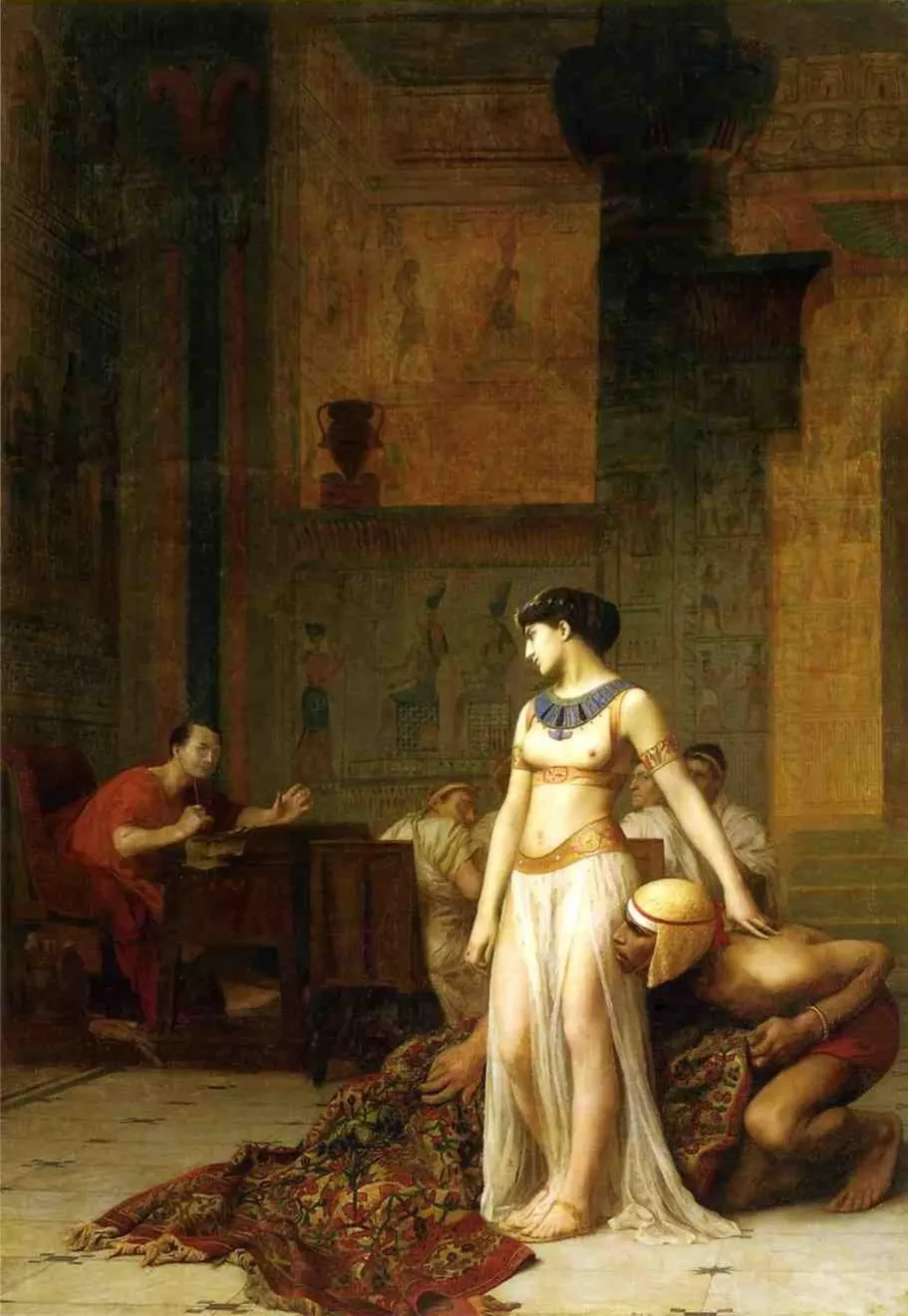
In Egitto Cesare incontrò Cleopatra VII, che si fece introdurre al suo cospetto avvolta in un tappeto. La loro unione politica e sentimentale produsse un figlio, Cesarione, e stabilizzò il trono egizio. Dopo la campagna in Ponto (dove sconfisse Farnace II in sole cinque ore di battaglia, ispirando il celebre "Veni, vidi, vici") Cesare tornò a Roma. Le ultime resistenze pompeiane in Africa e Spagna furono liquidate rispettivamente a Tapso (46 a.C.) e a Munda (45 a.C.). Cesare era padrone incontrastato del mondo romano.
In Egypt Caesar met Cleopatra VII, who had herself smuggled into his presence wrapped in a carpet. Their political and romantic union produced a son, Caesarion, and stabilized the Egyptian throne. After the campaign in Pontus (where he defeated Pharnaces II in just five hours of battle, inspiring the famous "Veni, vidi, vici") Caesar returned to Rome. The last Pompeian resistance in Africa and Spain was eliminated at Thapsus (46 BC) and Munda (45 BC) respectively. Caesar was the undisputed master of the Roman world.
04Il Dittatore e le RiformeThe Dictator and the Reforms
- 49–44 a.C. Dittatura progressiva — Cesare fu nominato dittatore più volte, prima per periodi limitati, poi nel 44 a.C. con il titolo di dictator perpetuo, dittatore a vita. Accumulò anche le cariche di console, tribuno della plebe, pontefice massimo e prefetto dei costumi. Questo accumulo senza precedenti di poteri nella stessa persona era incompatibile con la tradizione repubblicana. Progressive dictatorship — Caesar was appointed dictator multiple times, first for limited periods, then in 44 BC with the title of dictator perpetuo, dictator for life. He also accumulated the offices of consul, tribune of the plebs, pontifex maximus, and prefect of morals. This unprecedented accumulation of powers in one person was incompatible with republican tradition.
- 46 a.C. Riforma del Calendario — Cesare, con l'aiuto dell'astronomo alessandrino Sosigene, introdusse il Calendario Giuliano, basato sull'anno solare di 365,25 giorni. Sostituì il vecchio calendario romano lunare, ormai sfasato di settimane rispetto alle stagioni. Con piccole modifiche, questo calendario rimase in uso in tutta Europa fino al 1582, quando fu riformato da papa Gregorio XIII. Calendar Reform — Caesar, with the help of Alexandrian astronomer Sosigenes, introduced the Julian Calendar, based on the solar year of 365.25 days. It replaced the old lunar Roman calendar, which had drifted weeks out of alignment with the seasons. With minor modifications, this calendar remained in use throughout Europe until 1582, when it was reformed by Pope Gregory XIII.
- 46–44 a.C. Foro Iulio e opere pubbliche — Cesare avviò la costruzione del Foro di Cesare (Forum Iulium), il primo dei fori imperiali romani, dominato dal Tempio di Venere Genitrice, la dea dalla quale i Iulii affermavano di discendere. Promosse anche la ricostruzione di Cartagine e Corinto come colonie romane e avviò progetti grandiosi come il prosciugamento del Lago Fucino e il taglio dell'istmo di Corinto. Forum of Caesar and public works — Caesar initiated construction of the Forum of Caesar (Forum Iulium), the first of the Roman imperial fora, dominated by the Temple of Venus Genetrix, the goddess from whom the Iulii claimed descent. He also promoted the reconstruction of Carthage and Corinth as Roman colonies and launched grandiose projects such as draining Lake Fucino and cutting through the Isthmus of Corinth.
- 45–44 a.C. Riforme sociali e amministrative — Cesare ampliò il Senato da 600 a 900 membri, includendo provinciali e cavalieri. Riformò le distribuzioni di grano per ridurre il numero dei beneficiari da 320.000 a 150.000. Concesse la cittadinanza romana a medici e insegnanti stranieri. Tentò di limitare l'usura e riformò la legge sulle province per limitare il tempo in cui i governatori potevano arricchirsi a spese dei provinciali. Social and administrative reforms — Caesar expanded the Senate from 600 to 900 members, including provincials and equestrians. He reformed grain distributions to reduce beneficiaries from 320,000 to 150,000. He granted Roman citizenship to foreign doctors and teachers. He attempted to limit usury and reformed provincial law to limit the time governors could enrich themselves at the expense of provincials.
In meno di due anni Cesare riorganizzò lo Stato con la furia di chi sa di avere poco tempo. Non governava più come un magistrato della Repubblica, ma come un monarca ellenistico: sedeva su un seggio dorato, vestiva la porpora trionfale, vedeva il proprio volto inciso sulle monete mentre era ancora in vita: primo romano della storia a osare tanto. Progettava una colossale spedizione contro i Parti per vendicare Crasso, la deviazione del corso del Tevere, una biblioteca pubblica sul modello di Alessandria, la codificazione dell'intero diritto civile. Era riforma e provocazione a un tempo: ogni decreto che rendeva Roma più moderna la rendeva anche più simile a un regno. E «rex», a Roma, era la sola parola che dal 509 a.C. nessun uomo poteva pronunciare e sopravvivere.
In less than two years Caesar reorganised the State with the fury of a man who knows he has little time. He governed no longer as a magistrate of the Republic, but as a Hellenistic monarch: he sat on a gilded throne, wore the triumphal purple, saw his own face struck on the coinage while still alive, the first Roman in history to dare so much. He was planning a colossal expedition against the Parthians to avenge Crassus, the diversion of the Tiber's course, a public library on the Alexandrian model, the codification of the whole of civil law. It was reform and provocation at once: every decree that made Rome more modern made her also more like a kingdom. And “rex”, in Rome, was the one word that since 509 BC no man could utter and survive.
05Le Idi di MarzoThe Ides of March
Nella primavera del 44 a.C. circolavano voci insistenti che Cesare stesse per farsi proclamare re, il titolo che i Romani abborrivano dalla cacciata dei Tarquini nel 509 a.C. Il Senato aveva già votato per lui onori divini: una statua tra le divinità, il mese di Quintilis rinominato Iulius in suo onore, il diritto di portare sempre l'abito trionfale. Un gruppo di senatori, tra cui il suo amico Bruto e il cognato Cassio, organizzò la congiura che passò alla storia come la più famosa della civiltà occidentale.
In spring 44 BC, persistent rumors circulated that Caesar was about to have himself proclaimed king, the title Romans had abhorred since the expulsion of the Tarquins in 509 BC. The Senate had already voted him divine honors: a statue among the gods, the month of Quintilis renamed Iulius in his honor, the right to always wear triumphal dress. A group of senators, including his friend Brutus and brother-in-law Cassius, organized the conspiracy that passed into history as the most famous in Western civilization.
I segni di malaugurio si moltiplicarono nelle settimane precedenti. Un indovino etrusco di nome Spurinna aveva avvertito Cesare di guardarsi dalle Idi di Marzo. Quella stessa notte la moglie Calpurnia sognò il marito sanguinante tra le sue braccia e lo supplicò di non uscire di casa. Cesare esitò, ma Decimo Bruto, uno dei congiurati travestito da amico fidato, lo convinse a non offendere il Senato che lo attendeva. Lungo la strada un sacerdote gli porse un biglietto con i nomi dei cospiratori; Cesare lo arrotolò con gli altri documenti senza leggerlo. Incontrando Spurinna sui gradini della Curia, gli disse beffardo: «Le Idi di Marzo sono giunte». L'indovino, secondo Plutarco, rispose: «Sì, ma non sono ancora passate».
Omens multiplied in the preceding weeks. An Etruscan soothsayer named Spurinna had warned Caesar to beware the Ides of March. That very night his wife Calpurnia dreamed of her husband bleeding in her arms and begged him not to leave the house. Caesar hesitated, but Decimus Brutus, one of the conspirators disguised as a trusted friend, persuaded him not to insult the Senate that awaited him. On the way a priest handed him a note with the names of the conspirators; Caesar rolled it up with other documents without reading it. Meeting Spurinna on the steps of the Curia, he said mockingly: "The Ides of March have come." The soothsayer, according to Plutarch, replied: "Yes, but they have not yet passed."
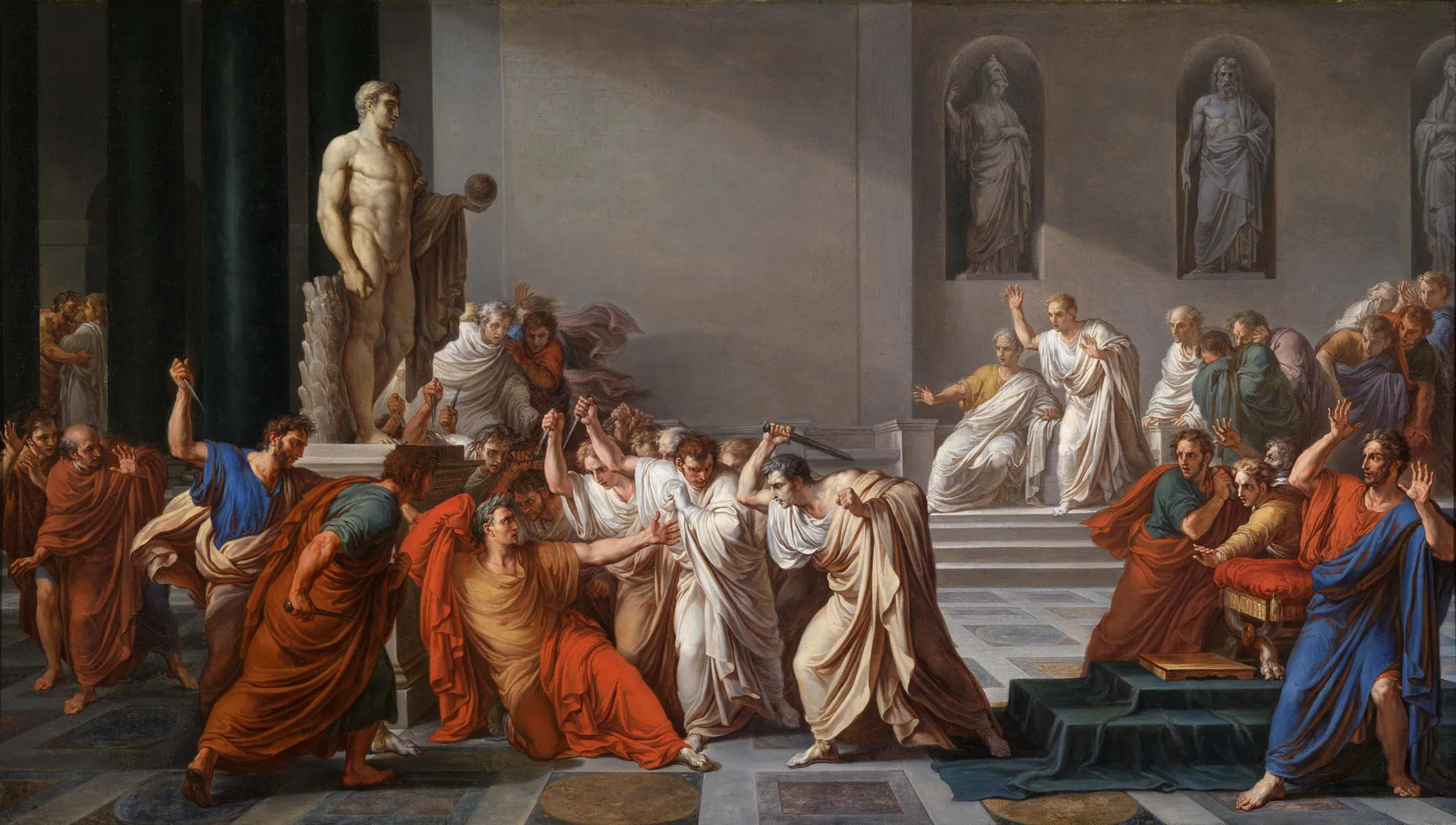
Il 15 marzo 44 a.C., le Idi di Marzo, Cesare si recò alla Curia di Pompeo per una seduta del Senato, ignorando i presagi e i consigli di non andare. Fu circondato da un gruppo di congiurati, tra ventitre e sessanta a seconda delle fonti, e colpito con ventitré pugnalate. Solo la seconda fu mortale. Quando vide Bruto tra gli assassini, disse, secondo Svetonio, in greco: "Kai su, teknon?" ("Anche tu, figlio?") Una scena che Shakespeare avrebbe reso immortale col latino "Et tu, Brute?". Cadde ai piedi della statua di Pompeo, suo antico genero e rivale, coprendosi il volto con la toga per non essere visto morire scomposto.
On March 15, 44 BC, the Ides of March, Caesar went to the Curia of Pompey for a Senate session, ignoring omens and advice not to attend. He was surrounded by a group of conspirators, between twenty-three and sixty depending on sources, and struck with twenty-three stab wounds. Only the second was fatal. When he saw Brutus among the assassins, he reportedly said, according to Suetonius, in Greek: "Kai su, teknon?" ("You too, son?") A scene Shakespeare would immortalize with the Latin "Et tu, Brute?". He fell at the foot of Pompey's statue, his former son-in-law and rival, covering his face with his toga so as not to be seen dying in disarray.
Le ultime parole di Cesare sono entrate per sempre nel patrimonio della civiltà occidentale, ma la loro forma esatta resta incerta e si presenta in tre versioni diverse. Svetonio, fonte principale, riferisce due tradizioni concorrenti: quella canonica secondo cui Cesare sarebbe morto in silenzio, emettendo solo un gemito al primo colpo; e quella, che lo storico stesso considera meno sicura ma che il tempo avrebbe consacrato, secondo cui avrebbe rivolto a Marco Bruto, in greco, le parole «Καὶ σύ, τέκνον; » (Kaì sý, téknon?): «Anche tu, figlio?». La tradizione latina medievale rese l'espressione come «Tu quoque, Brute, fili mi!» — «Anche tu, Bruto, figlio mio!» — formula che divenne proverbiale nelle scuole umanistiche europee. Infine Shakespeare, nel Julius Caesar (atto III, scena I, 1599), la fissò per sempre nella forma latina più breve e folgorante: «Et tu, Brute?, and then fall, Caesar!». Tre parole che da allora sono diventate sinonimo universale di tradimento dell'amico più caro.
Caesar's final words have entered Western civilization forever, but their exact form remains uncertain and survives in three different versions. Suetonius, the main source, reports two competing traditions: the canonical one in which Caesar died in silence, uttering only a groan at the first blow; and another, which the historian himself considers less certain but which time would consecrate, in which he addressed Marcus Brutus in Greek with the words "Καὶ σύ, τέκνον; " (Kaì sý, téknon?): "You too, son?" The medieval Latin tradition rendered the expression as "Tu quoque, Brute, fili mi!" ("You too, Brutus, my son!"): a formula that became proverbial in European humanist schools. Finally Shakespeare, in Julius Caesar (act III, scene I, 1599), fixed it forever in the shorter and more striking Latin form: "Et tu, Brute?, and then fall, Caesar!". Three words that have since become the universal byword for betrayal by the dearest of friends.
La scelta del termine greco téknon («figlio») non era casuale ed è la chiave della tragedia personale dell'episodio. Bruto era figlio di Servilia, sorellastra di Catone e amante storica di Cesare: la loro relazione era cominciata negli anni '60 a.C. ed era durata, con interruzioni, fino alla morte del dittatore. Voci insistenti circolavano già nell'antichità, riprese da Plutarco e da Appiano, secondo cui Cesare sarebbe stato il vero padre biologico di Bruto; cronologicamente è impossibile (Cesare aveva quindici anni alla nascita di Bruto), ma il sospetto bastò a rendere il giovane il favorito del dittatore. Cesare lo aveva risparmiato dopo Farsalo, dove Bruto aveva combattuto al fianco di Pompeo; lo aveva nominato governatore della Gallia Cisalpina; lo aveva designato pretore urbano per il 44 a.C. e console per il 41 a.C. Quel téknon non era dunque un grido di paternità biologica ma, più dolorosamente, il riconoscimento di un legame quasi filiale tradito. Plutarco aggiunge il dettaglio più agghiacciante: quando Cesare vide il pugnale di Bruto, smise di difendersi, si avvolse il capo nella toga e si lasciò colpire in silenzio. Dante, mille e trecento anni dopo, ricorderà quel tradimento collocando Bruto e Cassio nelle tre bocche di Lucifero, accanto a Giuda Iscariota: i tre traditori archetipici della storia umana.
The choice of the Greek word téknon ("son") was not casual and is the key to the personal tragedy of the episode. Brutus was the son of Servilia, half-sister of Cato and Caesar's historic lover: their relationship had begun in the 60s BC and lasted, with interruptions, until the dictator's death. Persistent rumors circulated already in antiquity, repeated by Plutarch and Appian, that Caesar was Brutus's true biological father; chronologically impossible (Caesar was fifteen at Brutus's birth), but the suspicion was enough to make the young man the dictator's favorite. Caesar had spared him after Pharsalus, where Brutus had fought alongside Pompey; had appointed him governor of Cisalpine Gaul; had designated him urban praetor for 44 BC and consul for 41 BC. That téknon was therefore not a cry of biological paternity but, more painfully, the recognition of an almost filial bond betrayed. Plutarch adds the most chilling detail: when Caesar saw Brutus's dagger, he stopped defending himself, wrapped his head in his toga, and let himself be struck in silence. Dante, thirteen hundred years later, would remember that betrayal by placing Brutus and Cassius in the three mouths of Lucifer, alongside Judas Iscariot: the three archetypal traitors of human history.
I congiurati avevano ucciso un uomo, ma non avevano alcun piano per il dopo. Si erano illusi che, caduto il tiranno, la Repubblica si sarebbe rigenerata da sé: fu un errore tragico. Marco Antonio, console e luogotenente di Cesare scampato alla strage, ne lesse pubblicamente il testamento, e fu la scintilla. Cesare lasciava i suoi splendidi giardini sul Tevere al popolo di Roma e trecento sesterzi a ogni cittadino: il morto si rivelava più generoso dei suoi «liberatori». Poi, davanti al corpo straziato esposto nel Foro, Antonio pronunciò l'orazione funebre più celebre dell'antichità. La folla impazzì di dolore e di rabbia: invece di portare il cadavere al rogo preparato, lo arse seduta stante nel Foro, alimentando le fiamme con i propri banchi, le vesti e i mobili delle botteghe, e poi corse con le torce alle case dei congiurati. Bruto e Cassio fuggirono dall'Italia. Il pugnale che doveva salvare la Repubblica l'aveva uccisa: la morte di Cesare aprì un'ultima, lunghissima stagione di guerre civili, conclusa a Filippi (42 a.C.) con la disfatta dei cesaricidi e ad Azio (31 a.C.) con il trionfo del suo erede, il giovane Ottaviano, il futuro Augusto, primo imperatore di Roma.
The conspirators had killed a man, but had no plan for what came after. They had deluded themselves that, the tyrant fallen, the Republic would regenerate by itself: it was a tragic error. Mark Antony, consul and Caesar's lieutenant who had escaped the slaughter, read out his will in public, and that was the spark. Caesar left his splendid gardens on the Tiber to the people of Rome and three hundred sesterces to every citizen: the dead man proved more generous than his “liberators”. Then, before the mangled body displayed in the Forum, Antony delivered the most famous funeral oration of antiquity. The crowd went mad with grief and rage: instead of carrying the corpse to the prepared pyre, they burned it on the spot in the Forum, feeding the flames with their own benches, their clothes and the furniture of the shops, and then ran with torches to the houses of the conspirators. Brutus and Cassius fled Italy. The dagger that was meant to save the Republic had killed it: Caesar's death opened one last, very long season of civil wars, ended at Philippi (42 BC) with the rout of the Caesar-slayers and at Actium (31 BC) with the triumph of his heir, the young Octavian, the future Augustus, Rome's first emperor.
06L'Uomo, lo Scrittore, il MitoThe Man, the Writer, the Myth
Cesare fu tra i pochi grandi della storia romana che furono insieme uomo d'azione e scrittore di prim'ordine. Cicerone, politicamente suo avversario, non poté trattenersi dall'ammirarne la prosa: i Commentarii de Bello Gallico, scritti durante le campagne galliche stesse e pubblicati anno per anno come bollettini ufficiali al Senato, erano per Cicerone «nudi, retti, eleganti, spogliati di ogni ornamento oratorio come di una veste». La terza persona impersonale che Cesare usa per parlare di sé («Caesar fecit, Cesare fece») è uno dei più sottili capolavori di propaganda della letteratura mondiale: dà al lettore l'illusione di leggere un resoconto obiettivo mentre in realtà sta seguendo la più consapevole costruzione autobiografica dell'antichità.
Caesar was among the few greats of Roman history who were both men of action and writers of the first order. Cicero, his political adversary, could not refrain from admiring his prose: the Commentarii de Bello Gallico, written during the Gallic campaigns themselves and published year by year as official bulletins to the Senate, were for Cicero "bare, upright, elegant, stripped of every oratorical ornament as of a garment." The impersonal third person Caesar uses to speak of himself ("Caesar fecit, Caesar did") is one of the subtlest masterpieces of propaganda in world literature: it gives the reader the illusion of reading an objective account while actually following the most self-conscious autobiographical construction of antiquity.
Oltre ai Commentarii, scrisse trattati di grammatica (De analogia), opere astronomiche, raccolte di motti spiritosi e un poemetto giovanile sulla via che porta in Spagna (Iter), tutti perduti. Le fonti antiche concordano nel descriverlo come l'oratore più potente di Roma dopo Cicerone, con una voce alta e penetrante e un'energia gestuale che ipnotizzava il pubblico. Soffriva di crisi epilettiche, il «morbo sacro» degli antichi, e probabilmente di emicranie violente; ne ebbe attacchi anche in battaglia, ma riusciva sempre a riprendere il comando. Era inoltre vanitoso: si tingeva la calvizie con foglie d'alloro, prediligeva la corona trionfale per nasconderla, e secondo Svetonio fra tutti gli onori che il Senato gli aveva votato accolse con maggior soddisfazione quello che gli permetteva di portare sempre l'alloro in pubblico.
Beyond the Commentarii, he wrote treatises on grammar (De analogia), astronomical works, collections of witty sayings, and a youthful poem on the road leading to Spain (Iter), all lost. Ancient sources agree in describing him as Rome's most powerful orator after Cicero, with a high penetrating voice and a gestural energy that hypnotized the crowd. He suffered epileptic seizures, the "sacred disease" of the ancients, and probably violent migraines; he had attacks even in battle, but always managed to retake command. He was also vain: he dyed his baldness with laurel leaves, preferred the triumphal crown to hide it, and according to Suetonius, among all the honors the Senate voted him, he accepted with the greatest satisfaction the one that allowed him to always wear laurel in public.
Ma il tratto che più lo distinse dai signori della guerra che lo avevano preceduto fu la clementia Caesaris. Dove Mario e Silla avevano riempito il Foro di teste mozzate e di liste di proscrizione, Cesare fece della clemenza un'arma politica deliberata: perdonò i pompeiani sconfitti, restituì cariche e patrimoni, riaccolse nel proprio cerchio uomini che gli avevano mosso guerra. Perdonò Bruto dopo Farsalo, perdonò Cassio, perdonò Cicerone. Era magnanimità sincera e calcolo freddissimo a un tempo: ogni nemico graziato diventava un debitore, e ogni perdono un atto di sovranità che solo un re può concedere. Quella stessa clemenza, però, gli fu fatale, i pugnali che lo uccisero alle Idi furono impugnati, in buona parte, da uomini che gli dovevano la vita.
But the trait that most set him apart from the warlords who had preceded him was the clementia Caesaris. Where Marius and Sulla had filled the Forum with severed heads and proscription lists, Caesar made clemency a deliberate political weapon: he pardoned the defeated Pompeians, restored offices and fortunes, welcomed back into his circle men who had made war on him. He pardoned Brutus after Pharsalus, pardoned Cassius, pardoned Cicero. It was sincere magnanimity and the coldest calculation at once: every spared enemy became a debtor, and every pardon an act of sovereignty that only a king can grant. Yet that same clemency proved fatal to him, the daggers that killed him on the Ides were wielded, in good part, by men who owed him their lives.
Pochi mesi dopo la sua morte, mentre Ottaviano celebrava i giochi funebri in suo onore, una cometa apparve in cielo per sette notti consecutive, l'evento è attestato da fonti cinesi e romane. Il popolo lo interpretò come l'anima di Cesare che saliva tra gli dèi. Il Senato decretò ufficialmente la sua divinizzazione: era il Divus Iulius, il divino Giulio. Da allora Ottaviano poté firmarsi «Divi filius», figlio del dio. La cometa, chiamata sidus Iulium, divenne il simbolo cosmico del nuovo regime imperiale e fu impressa su monete e statue per i decenni a venire.
A few months after his death, while Octavian celebrated funeral games in his honor, a comet appeared in the sky for seven consecutive nights: the event is attested in both Chinese and Roman sources. The people interpreted it as Caesar's soul ascending among the gods. The Senate officially decreed his deification: he was the Divus Iulius, the divine Julius. From then on Octavian could sign himself "Divi filius", son of the god. The comet, called sidus Iulium, became the cosmic symbol of the new imperial regime and was imprinted on coins and statues for decades to come.
L'eredità postuma di Cesare è probabilmente più vasta di quella di qualsiasi altro romano. Ogni imperatore che si succedette sul trono per i cinque secoli successivi portò il suo nome come titolo: Caesar. Da lì derivano "Kaiser" in tedesco, "Zar" in russo, "Qaysar" in arabo. Dante lo pone fra gli «spiriti magni» del Limbo, ma colloca Bruto e Cassio nell'ultimo cerchio dell'Inferno, dilaniati dalle bocche di Lucifero come traditori del «sommo imperatore». Shakespeare gli dedicò una tragedia (Julius Caesar, 1599) che è ancora oggi una delle sue opere più rappresentate. Napoleone si confrontò ossessivamente con lui: ne tenne sempre una copia dei Commentari con sé, perfino a Sant'Elena. Mussolini ne fece il simbolo della propria dittatura, copiandone tunica, posture e linguaggio. Il «cesarismo» (termine inventato nell'Ottocento) diventò la categoria politica con cui si descrivono ancora oggi i regimi personali che combinano consenso popolare e potere autoritario.
Caesar's posthumous legacy is probably vaster than that of any other Roman. Every emperor who succeeded to the throne for the following five centuries bore his name as a title: Caesar. From there derive "Kaiser" in German, "Tsar" in Russian, "Qaysar" in Arabic. Dante places him among the "magnanimous spirits" of Limbo, but places Brutus and Cassius in the lowest circle of Hell, torn apart by Lucifer's mouths as traitors to the "supreme emperor." Shakespeare dedicated to him a tragedy (Julius Caesar, 1599) that is still today among his most performed works. Napoleon confronted himself obsessively with him: he always kept a copy of the Commentaries with him, even at Saint Helena. Mussolini made him the symbol of his own dictatorship, copying his tunic, postures, and language. "Caesarism", a term coined in the 19th century, became the political category with which personal regimes combining popular consent and authoritarian power are still described today.
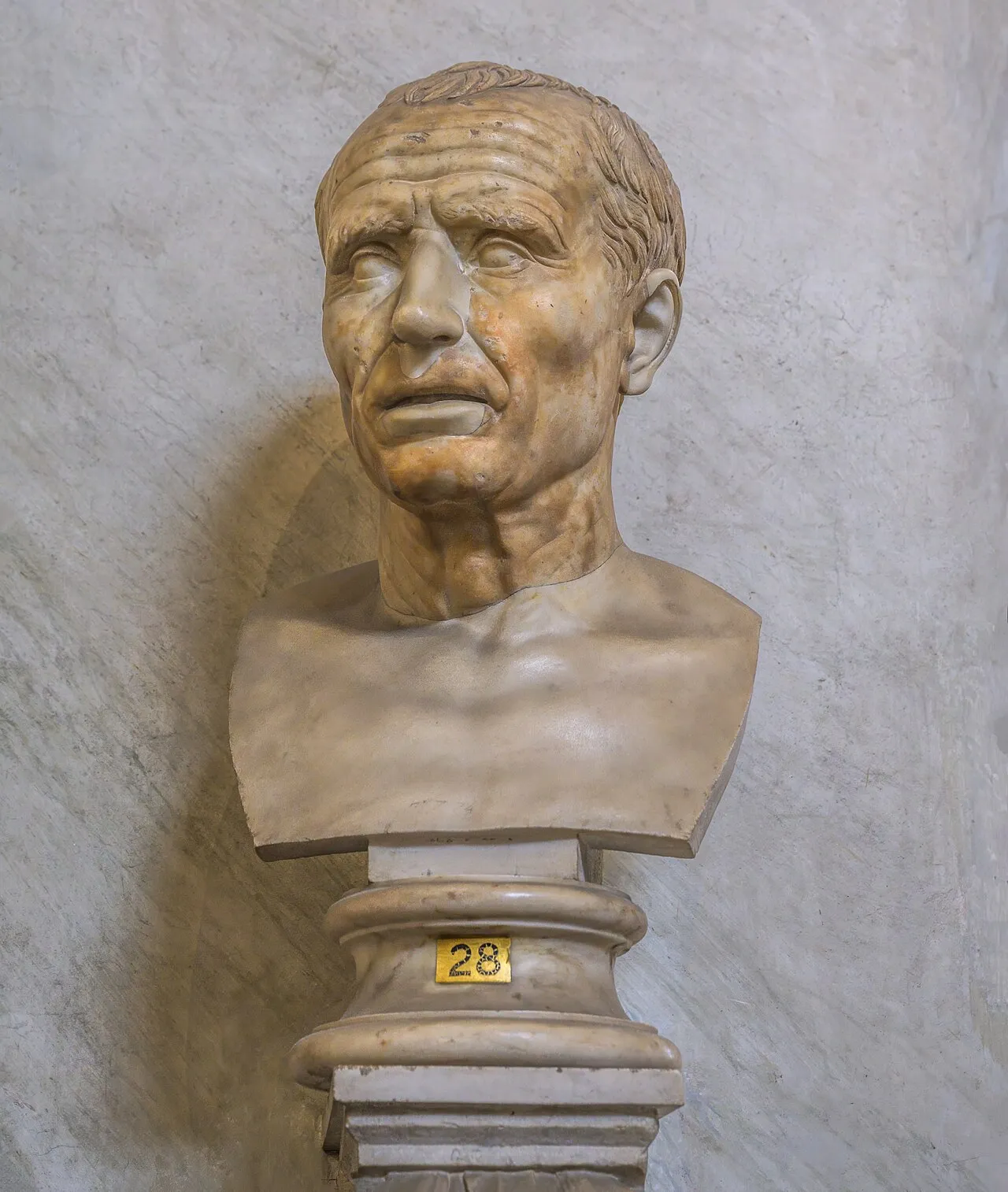
Come uomo, rimane un enigma: spietato in guerra ma prodigo di clemenza con i nemici sconfitti; tiranno per i congiurati ma riformatore illuminato per i più poveri; mortale che si presentava come discendente degli dèi e che divenne, per decreto del Senato romano, un dio dopo la morte. Forse il giudizio più giusto resta quello del suo contemporaneo Catullo, che in un epigramma fulminante non lo amava ma non poteva non riconoscergli la statura: «Nil nimium studeo, Caesar, tibi velle placere, / nec scire utrum sis albus an ater homo» — Non mi sforzo affatto, Cesare, di volerti piacere, né di sapere se sei un uomo bianco o nero. La Storia, due millenni dopo, ancora non lo sa.
As a man, he remains an enigma: ruthless in war yet generous with clemency toward defeated enemies; a tyrant to the conspirators but an enlightened reformer for the poorest; a mortal who presented himself as a descendant of the gods and who became, by decree of the Roman Senate, a god after death. Perhaps the truest judgment remains that of his contemporary Catullus, who in a withering epigram did not love him but could not deny his stature: "Nil nimium studeo, Caesar, tibi velle placere, / nec scire utrum sis albus an ater homo", I do not strive at all, Caesar, to want to please you, nor to know whether you are a white or a black man. History, two millennia later, still does not know.