01BiografiaBiography
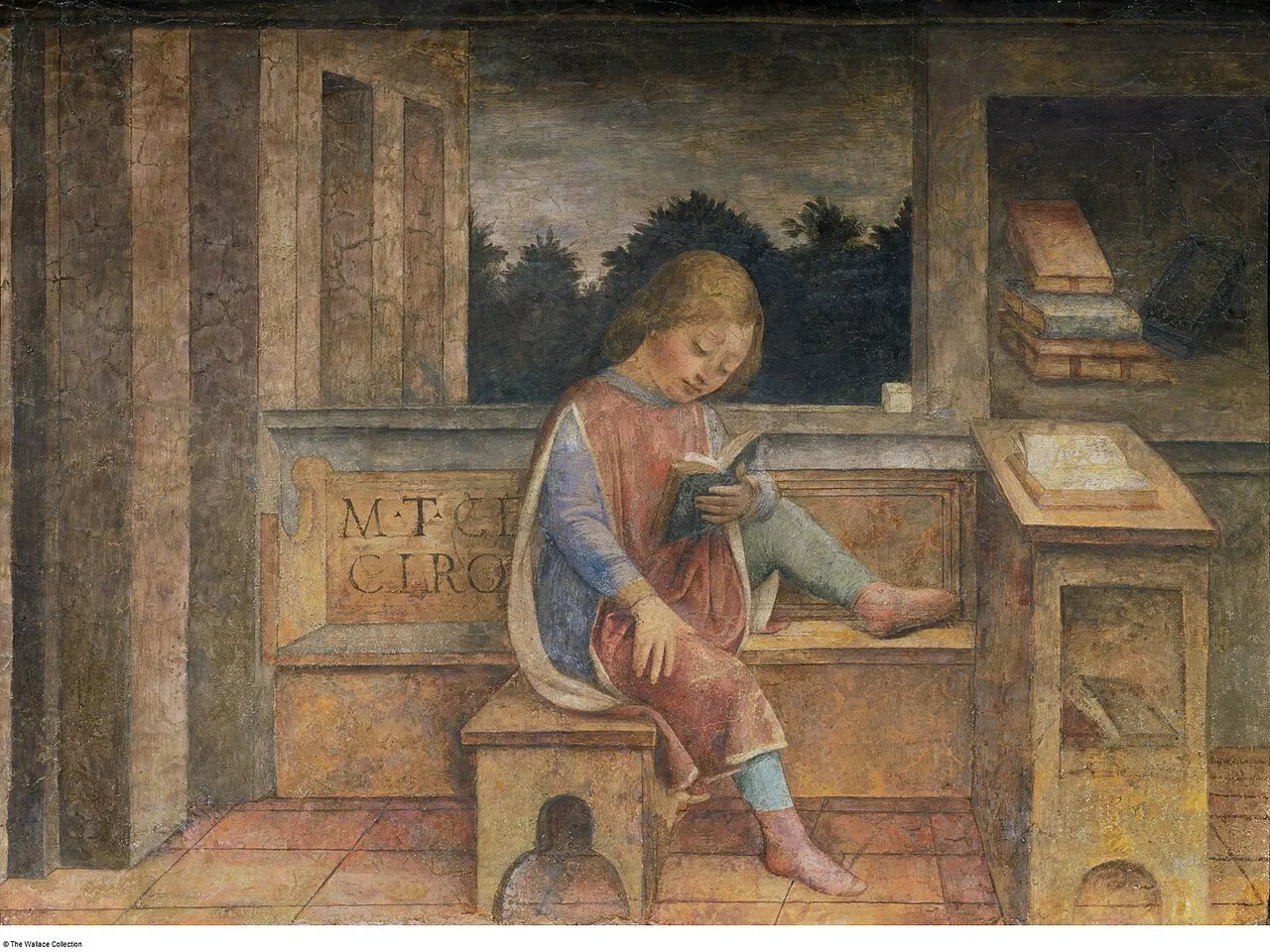
Marco Tullio Cicerone nacque il 3 gennaio del 106 a.C. ad Arpino, un'aspra cittadina dei monti del Lazio meridionale, da una famiglia dell'ordine equestre, agiata e stimata, ma priva di antenati consolari e dunque esclusa, per nascita, dal cuore del potere romano. Il cognome Cicero nasceva, dicevano, da un avo che portava sul naso una verruca a forma di cece (cicer); gli amici gli consigliarono di mutarlo in qualcosa di più nobile, ma il giovane Marco rispose che avrebbe reso quel nome più glorioso di quello degli Scauri e dei Catuli, e mantenne la promessa. Condotto fanciullo a Roma per ricevervi la più alta istruzione, divorò retorica, diritto e filosofia, poi perfezionò l'arte della parola in Grecia e in Asia, alla scuola dei maestri greci, temprando la voce e affinando quel pensiero stoico e accademico che sarebbe divenuto la trama della sua intera opera.
Marcus Tullius Cicero was born on 3 January 106 BC at Arpinum, a rugged little town in the mountains of southern Latium, into a family of the equestrian order, well-off and respected, but without consular ancestors and thus excluded, by birth, from the heart of Roman power. The cognomen Cicero arose, they said, from a forebear who bore on his nose a wart shaped like a chickpea (cicer); friends advised him to change it for something nobler, but young Marcus replied that he would make that name more glorious than those of the Scauri and the Catuli, and he kept the promise. Brought as a boy to Rome for the highest education, he devoured rhetoric, law and philosophy, then perfected the art of speech in Greece and Asia, at the school of the Greek masters, tempering his voice and refining that Stoic and Academic thought which would become the weave of his entire work.
La sua ascesa fu quella, rarissima, di un homo novus, un «uomo nuovo» senza maschere di antenati nell'atrio, che si fece largo nell'aristocrazia con la sola forza dell'ingegno. Nella Roma della tarda Repubblica l'eloquenza era la più temibile delle armi: chi sapeva dominare un'assemblea o un tribunale poteva piegare la volontà di migliaia. Cicerone la possedeva a un grado che non si vedeva da generazioni. La sua rivelazione giunse nell'80 a.C., a soli ventisei anni, con la difesa di Sesto Roscio di Ameria, un giovane accusato di parricidio in un processo che tutti sapevano orchestrato da Crisogono, potente liberto del dittatore Silla. Difendere l'imputato significava sfidare l'uomo più temuto di Roma: nessun avvocato osava. Cicerone osò, smontò l'accusa pezzo per pezzo e vinse. In una sola giornata il suo nome corse per ogni via dell'Urbe.
His rise was that, exceedingly rare, of a homo novus, a "new man" with no ancestral masks in his atrium, who forced his way into the aristocracy by the sheer power of his mind. In the Rome of the late Republic eloquence was the most fearsome of weapons: he who could master an assembly or a court could bend the will of thousands. Cicero possessed it to a degree unseen for generations. His revelation came in 80 BC, at just twenty-six, with the defence of Sextus Roscius of Ameria, a young man accused of parricide in a trial all knew to be staged by Chrysogonus, the powerful freedman of the dictator Sulla. To defend the accused meant to defy the most feared man in Rome: no advocate dared. Cicero dared, dismantled the charge piece by piece, and won. In a single day his name ran through every street of the City.
Da allora percorse il cursus honorum quasi senza incontrare ostacoli: questore in Sicilia nel 75 a.C., edile nel 69, pretore nel 66, ogni gradino conquistato all'età minima consentita dalla legge. Ma fu la Sicilia a offrirgli il processo che lo consacrò principe del foro. Quando i Siciliani, depredati e umiliati, gli affidarono l'accusa contro il loro governatore Verre, un predone che aveva spogliato l'isola di statue, opere d'arte e denaro: Cicerone raccolse le prove con tale metodo e le scagliò con tale forza che l'imputato, pur difeso dal più celebre avvocato di Roma, Ortensio, fuggì in esilio prima ancora della sentenza. Le Verrine, le orazioni composte per quel processo, restano un monumento di letteratura e un manuale d'accusa studiato ancora oggi nelle aule di tutto il mondo.
From then he ran the cursus honorum almost without obstacle: quaestor in Sicily in 75 BC, aedile in 69, praetor in 66, each step won at the youngest age the law allowed. But it was Sicily that offered him the trial that consecrated him prince of the forum. When the Sicilians, plundered and humiliated, entrusted to him the prosecution of their governor Verres, a brigand who had stripped the island of statues, artworks and money: Cicero gathered the evidence with such method and hurled it with such force that the accused, though defended by Rome's most celebrated advocate, Hortensius, fled into exile before the verdict. The Verrine orations, composed for that trial, remain a monument of literature and a manual of prosecution still studied today in courtrooms across the world.
02Il Console e la Congiura di CatilinaThe Consul and the Catilinarian Conspiracy
L'anno 63 a.C. lo vide salire al consolato, la vetta del cursus honorum e il coronamento del sogno di un uomo nuovo. Ma proprio in quell'anno la Repubblica sfiorò l'abisso. Lucio Sergio Catilina (patrizio rovinato, ambizioso e capace di ogni violenza) dopo aver perso per due volte le elezioni consolari, ordì una congiura per rovesciare lo Stato con il ferro e il fuoco: rivolta dei debitori e degli schiavi, incendi appiccati a Roma, massacro dei magistrati in una sola notte. Cicerone, avvertito da una rete di informatori, tra cui l'amante di un congiurato, seguì ogni passo del complotto nell'ombra, sventò l'attentato preparato contro la sua vita e, l'8 novembre, convocò d'urgenza il Senato nel Tempio di Giove Statore, cinto di guardie armate.
The year 63 BC saw him ascend to the consulship, the summit of the cursus honorum and the crowning of a new man's dream. But in that very year the Republic grazed the abyss. Lucius Sergius Catiline (a ruined patrician, ambitious and capable of any violence) after losing the consular elections twice, wove a conspiracy to overthrow the State by sword and fire: a revolt of debtors and slaves, fires set across Rome, the slaughter of the magistrates in a single night. Cicero, warned by a network of informants, among them the mistress of a conspirator, followed every step of the plot in the shadows, foiled the attempt prepared against his own life and, on 8 November, urgently convened the Senate in the Temple of Jupiter Stator, ringed with armed guards.
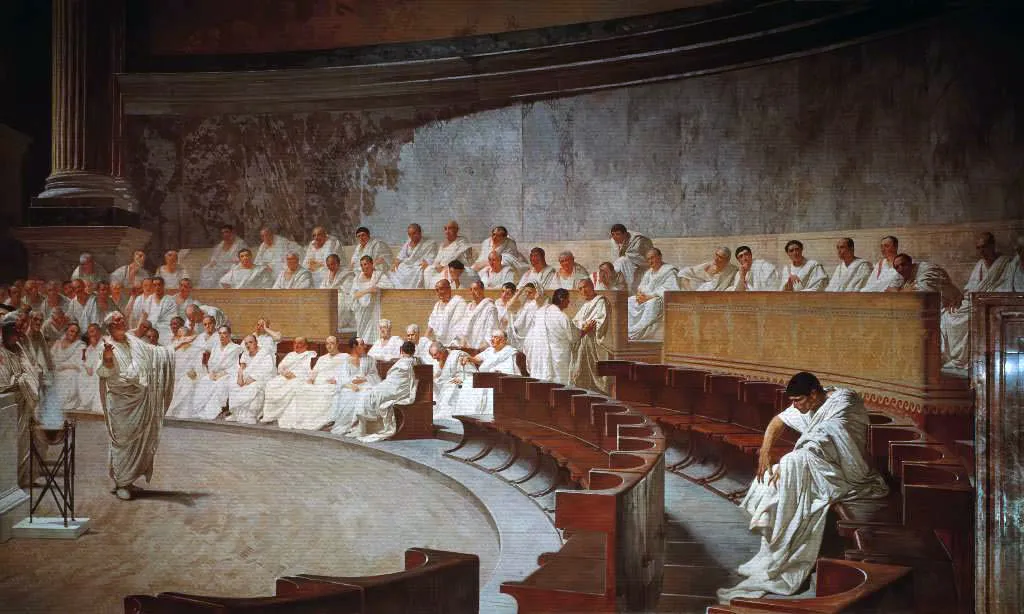
Con audacia, Catilina osò presentarsi in aula. Allora Cicerone si levò e gli rovesciò addosso la prima delle quattro Catilinarie, aprendo con le parole entrate per sempre nella memoria d'Occidente: «Quo usque tandem abutere, Catilina, patientia nostra?» — «Fino a quando, dunque, Catilina, abuserai della nostra pazienza?». Mentre la voce dell'oratore tuonava, i senatori seduti accanto al congiurato si alzarono in silenzio e gli lasciarono il vuoto intorno. Umiliato, smascherato, Catilina fuggì quella notte stessa a raggiungere l'esercito ribelle che lo attendeva in Etruria. Catturati i capi rimasti in città, Cicerone li sottopose al giudizio del Senato: e benché Cesare perorasse la clemenza, prevalse la linea durissima di Catone il Giovane. I congiurati furono strangolati senza processo nel carcere Tulliano. Cicerone uscì e annunciò al popolo con una sola parola: «Vixerunt» — «Hanno vissuto».
With audacity, Catiline dared to appear in the chamber. Then Cicero rose and poured upon him the first of the four Catilinarian orations, opening with words forever lodged in the memory of the West: "Quo usque tandem abutere, Catilina, patientia nostra?" ("How long, then, Catiline, will you abuse our patience?") As the orator's voice thundered, the senators seated beside the conspirator rose in silence and left a void around him. Humiliated, unmasked, Catiline fled that very night to join the rebel army awaiting him in Etruria. With the leaders left in the city seized, Cicero submitted them to the judgement of the Senate: and though Caesar pleaded for clemency, the iron line of Cato the Younger prevailed. The conspirators were strangled without trial in the Tullianum. Cicero came out and announced to the people with a single word: "Vixerunt" ("They have lived.")
Il Senato lo proclamò pater patriae, padre della patria: fu l'ora più alta e più luminosa della sua vita. Ma in quella gloria si annidava la rovina futura. L'aver giustiziato cittadini romani senza appello al popolo, per quanto colpevoli, era una ferita aperta nel diritto, e i suoi nemici non l'avrebbero dimenticata. Cinque anni più tardi il tribuno Publio Clodio, suo acerrimo avversario, fece approvare una legge che colpiva chi avesse messo a morte cittadini senza processo: era una freccia diretta al cuore di Cicerone. Costretto all'esilio nel 58 a.C., l'oratore lasciò Roma in lacrime, la casa sul Palatino rasa al suolo. Tornò un anno e mezzo dopo, richiamato dal favore di Pompeo e del Senato e accolto da folle esultanti lungo la via Appia, ma il suo tempo di protagonista era tramontato, e la Repubblica scivolava ormai verso i signori della guerra.
The Senate proclaimed him pater patriae, father of the fatherland: it was the highest and most luminous hour of his life. But within that glory nestled his future ruin. To have executed Roman citizens without appeal to the people, however guilty, was an open wound in the law, and his enemies would not forget it. Five years later the tribune Publius Clodius, his bitterest adversary, carried a law striking whoever had put citizens to death without trial: an arrow aimed straight at Cicero's heart. Forced into exile in 58 BC, the orator left Rome in tears, his house on the Palatine razed to the ground. He returned a year and a half later, recalled by the favour of Pompey and the Senate and welcomed by exultant crowds along the Appian Way, but his time as protagonist had set, and the Republic was already sliding toward the warlords.
03Le Opere: Oratore, Filosofo, EpistolografoThe Works: Orator, Philosopher, Letter-Writer
- 55 a.C. De Oratore — Il più ampio e maturo dei suoi trattati sull'arte della parola. In un dialogo immaginario ambientato tra i grandi oratori del passato, Cicerone delinea la figura del perfetto oratore: non un freddo tecnico del discorso, ma un uomo di cultura universale, che padroneggia la filosofia, il diritto, la storia e la conoscenza dell'animo umano. È la pietra angolare di tutta la retorica occidentale, il libro su cui per due millenni si è formata l'idea stessa di parola civile. De Oratore — The broadest and most mature of his treatises on the art of speech. In an imagined dialogue set among the great orators of the past, Cicero sketches the figure of the perfect orator: not a cold technician of discourse, but a man of universal culture, master of philosophy, law, history and the knowledge of the human soul. It is the cornerstone of all Western rhetoric, the book upon which, for two millennia, the very idea of civil speech was formed.
- 54–51 a.C. De Re Publica e De Legibus — Due grandi dialoghi sul governo ideale e sulle leggi che lo reggono. Nel De Re Publica Cicerone esalta la costituzione mista di Roma (equilibrio di monarchia, aristocrazia e democrazia) come la più giusta e duratura forma di Stato, e suggella l'opera con il celebre Somnium Scipionis, visione cosmica del premio eterno riservato a chi serve la patria. Del trattato si erano perse le tracce per secoli, finché nel 1820 il cardinale Angelo Mai ne ritrovò il testo raschiato sotto un commento di sant'Agostino, in un palinsesto della Biblioteca Vaticana: una resurrezione che parve un miracolo filologico. De Re Publica and De Legibus — Two great dialogues on the ideal government and the laws that uphold it. In the De Re Publica Cicero exalts Rome's mixed constitution (a balance of monarchy, aristocracy and democracy) as the justest and most enduring form of State, and seals the work with the famous Somnium Scipionis, a cosmic vision of the eternal reward reserved for those who serve their country. The treatise had been lost for centuries, until in 1820 Cardinal Angelo Mai found its text scraped away beneath a commentary of Saint Augustine, in a palimpsest of the Vatican Library: a resurrection that seemed a philological miracle.
- 45–44 a.C. Le opere filosofiche dell'ultimo periodo — Schiacciato dal dolore per la morte dell'adorata figlia Tullia (45 a.C.) ed escluso dalla vita pubblica sotto la dittatura di Cesare, Cicerone riversò la sua disperazione nella filosofia con una furia creatrice senza eguali: in pochi mesi compose le Tusculanae Disputationes, il De Finibus, il De Natura Deorum, il De Amicitia, il De Senectute. Con queste opere forgiò il lessico filosofico latino (coniando parole che usiamo ancora, come qualitas, humanitas, evidentia) e trasmise al mondo latino, e per esso all'Europa medievale e moderna, l'intero patrimonio del pensiero greco. The philosophical works of the final period — Crushed by grief at the death of his beloved daughter Tullia (45 BC) and shut out of public life under Caesar's dictatorship, Cicero poured his despair into philosophy with an unmatched creative fury: in a few months he composed the Tusculanae Disputationes, the De Finibus, the De Natura Deorum, the De Amicitia, the De Senectute. With these works he forged the Latin philosophical vocabulary (coining words we still use, such as qualitas, humanitas, evidentia) and transmitted to the Latin world, and through it to medieval and modern Europe, the entire heritage of Greek thought.
- 44 a.C. De Officiis — Scritto negli ultimi mesi di vita come una lettera-testamento al figlio Marco, è un trattato sui doveri morali dell'uomo e del cittadino, sul conflitto eterno tra l'utile e l'onesto. Forse nessun'altra opera di Cicerone ha avuto fortuna pari: ammirata da sant'Ambrogio, fu tra i primissimi libri usciti dai torchi di Gutenberg dopo la Bibbia (1465), e per secoli rimase il testo su cui l'Europa colta imparò il latino e la virtù insieme. De Officiis — Written in the last months of his life as a testament-letter to his son Marcus, it is a treatise on the moral duties of man and citizen, on the eternal conflict between the useful and the honourable. Perhaps no other work of Cicero enjoyed equal fortune: admired by Saint Ambrose, it was among the very first books to come off Gutenberg's presses after the Bible (1465), and for centuries remained the text on which cultivated Europe learned Latin and virtue together.
- 44–43 a.C. Le Filippiche — Dopo le Idi di Marzo e l'assassinio di Cesare, il vecchio Cicerone si gettò un'ultima volta nella mischia politica, ergendosi a estremo paladino della Repubblica morente contro Marco Antonio, che ne raccoglieva l'eredità e il potere. Pronunciò contro di lui quattordici orazioni infuocate, che battezzò Philippicae in omaggio a Demostene, che con la stessa fiamma aveva tuonato contro Filippo di Macedonia. Furono splendide, spietate e fatali: quando Antonio si riconciliò con Ottaviano e Lepido nel Secondo Triumvirato, pretese come prezzo del patto un solo nome in cima alle liste di morte: quello di Cicerone. The Philippics — After the Ides of March and the murder of Caesar, the aged Cicero threw himself one last time into the political fray, rising as the final champion of the dying Republic against Mark Antony, who was gathering up its inheritance and its power. He delivered against him fourteen blazing orations, which he named Philippicae in homage to Demosthenes, who with the same fire had thundered against Philip of Macedon. They were splendid, merciless and fatal: when Antony reconciled with Octavian and Lepidus in the Second Triumvirate, he demanded as the price of the pact a single name at the top of the death lists: that of Cicero.
04La Fine e l'EreditàThe End and the Legacy
Nell'autunno del 43 a.C. il Secondo Triumvirato (Marco Antonio, Ottaviano e Lepido) affisse le liste di proscrizione: migliaia di nomi di cittadini condannati a morte e alla confisca, sacrificati alla vendetta e all'avidità dei tre signori. In cima a quella lista, preteso da Marco Antonio che mai aveva perdonato le Filippiche, stava il nome di Cicerone. Si dice che Ottaviano, che all'oratore doveva il proprio primo sostegno politico, resistette due giorni prima di cederlo ai sicari. Cicerone tentò di imbarcarsi per la Grecia e raggiungere Bruto, ma il mare in tempesta e la stanchezza lo respinsero a riva. I cavalieri della morte lo raggiunsero il 7 dicembre del 43 a.C., presso la sua villa di Formia.
In the autumn of 43 BC the Second Triumvirate (Mark Antony, Octavian and Lepidus) posted the proscription lists: thousands of names of citizens condemned to death and confiscation, sacrificed to the vengeance and greed of the three lords. At the top of that list, demanded by Mark Antony, who had never forgiven the Philippics, stood the name of Cicero. It is said that Octavian, who owed the orator his first political support, resisted two days before yielding him to the assassins. Cicero tried to sail for Greece and reach Brutus, but the stormy sea and exhaustion drove him back to shore. The horsemen of death reached him on 7 December 43 BC, near his villa at Formia.
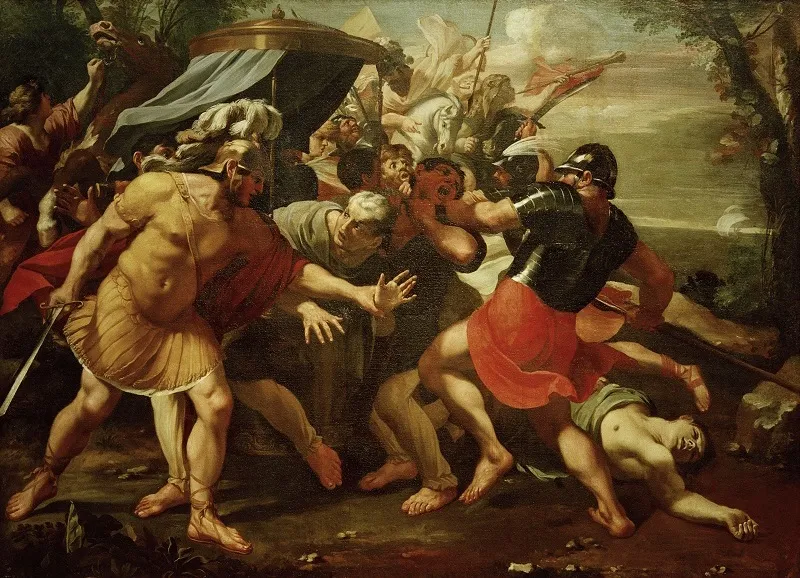
Plutarco ci ha tramandato la scena con solennità tragica. Avvistati i sicari, gli schiavi vollero portarlo in salvo a braccia, ma Cicerone (vecchio, sfinito, lordo di polvere) ordinò loro di deporre la lettiga. Scostò la tenda, sporse il capo e offrì la gola al pugnale, immobile, fissando i suoi carnefici. Il centurione Erennio lo decapitò. Per ordine di Antonio gli furono mozzate anche le mani: quelle che avevano vergato le Filippiche, e l'una e le altre furono inchiodate sui Rostra, la tribuna del Foro da cui per quarant'anni la sua voce aveva incantato Roma. Si racconta che Fulvia, moglie di Antonio, prese tra le mani quella testa e ne trafisse la lingua con gli spilloni d'oro dei suoi capelli: l'ultimo, osceno oltraggio dei tiranni alla libertà della parola.
Plutarch has handed down the scene with tragic solemnity. Sighting the assassins, his slaves wished to carry him to safety in their arms, but Cicero (old, spent, smeared with dust) ordered them to set the litter down. He drew back the curtain, leaned out his head and offered his throat to the blade, motionless, staring at his executioners. The centurion Herennius beheaded him. By Antony's order his hands too were severed, those that had written the Philippics, and head and hands alike were nailed upon the Rostra, the platform of the Forum from which for forty years his voice had enchanted Rome. It is told that Fulvia, Antony's wife, took that head in her hands and pierced its tongue with the golden pins of her hair: the last, obscene outrage of tyrants against the freedom of the word.
L'eredità di Cicerone è così vasta da sfuggire a ogni misura. Come oratore, fissò per sempre il modello della prosa latina (ampia, armoniosa, scandita da un ritmo musicale) che Quintiliano, sant'Agostino, gli umanisti e gli illuministi assunsero come canone assoluto: scrivere bene in latino significò, per due millenni, scrivere come Cicerone. Come filosofo, fu il grande ponte tra la sapienza greca e il mondo latino: senza la sua mediazione, gran parte dello stoicismo e dell'Accademia sarebbe svanita per l'Occidente. E come epistolografo, le oltre novecento lettere ad Attico, a Bruto, ai familiari, scritte senza pensiero di pubblicarle, ci restituiscono il ritratto più intimo e palpitante di un uomo dell'antichità, con le sue paure, le sue debolezze, le sue tenerezze.
Cicero's legacy is so vast it eludes all measure. As an orator, he fixed forever the model of Latin prose (ample, harmonious, scanned by a musical rhythm) which Quintilian, Saint Augustine, the humanists and the men of the Enlightenment took as their absolute canon: to write well in Latin meant, for two millennia, to write like Cicero. As a philosopher, he was the great bridge between Greek wisdom and the Latin world: without his mediation, much of Stoicism and of the Academy would have vanished for the West. And as a letter-writer, the more than nine hundred letters to Atticus, to Brutus, to his family, written with no thought of publishing them, give us back the most intimate and palpitating portrait of a man of antiquity, with his fears, his weaknesses, his tendernesses.
Fu proprio una di quelle lettere a riaccendere il mondo. Quando, nel 1345, Petrarca riscoprì nella Biblioteca Capitolare di Verona le epistole ad Attico, ne rimase sconvolto: dietro il marmo del filosofo trovò un uomo ansioso, vacillante, fin troppo umano, e quella scoperta accese una delle scintille del Rinascimento. San Girolamo aveva confessato, in sogno, di amare Cicerone più dei profeti; Carlo Magno teneva il De Officiis nel suo bagaglio di guerra; i Padri della Chiesa lo lessero come un pagano quasi cristiano. La sua lingua è ancora oggi il latino che si insegna nelle scuole del mondo. Antonio poté mozzargli la testa e le mani, ma non la voce: quella, inchiodata un giorno sui Rostra, parla ininterrottamente da duemila anni.
It was precisely one of those letters that rekindled the world. When, in 1345, Petrarch rediscovered in the Chapter Library of Verona the epistles to Atticus, he was shaken: behind the marble of the philosopher he found an anxious, faltering, all-too-human man, and that discovery lit one of the sparks of the Renaissance. Saint Jerome had confessed, in a dream, to loving Cicero more than the prophets; Charlemagne kept the De Officiis in his war baggage; the Fathers of the Church read him as a near-Christian pagan. His language is still today the Latin taught in the schools of the world. Antony could sever his head and his hands, but not his voice: that voice, nailed one day upon the Rostra, has been speaking without pause for two thousand years.