
01Il Fanciullo di MantovaThe Boy from Mantua
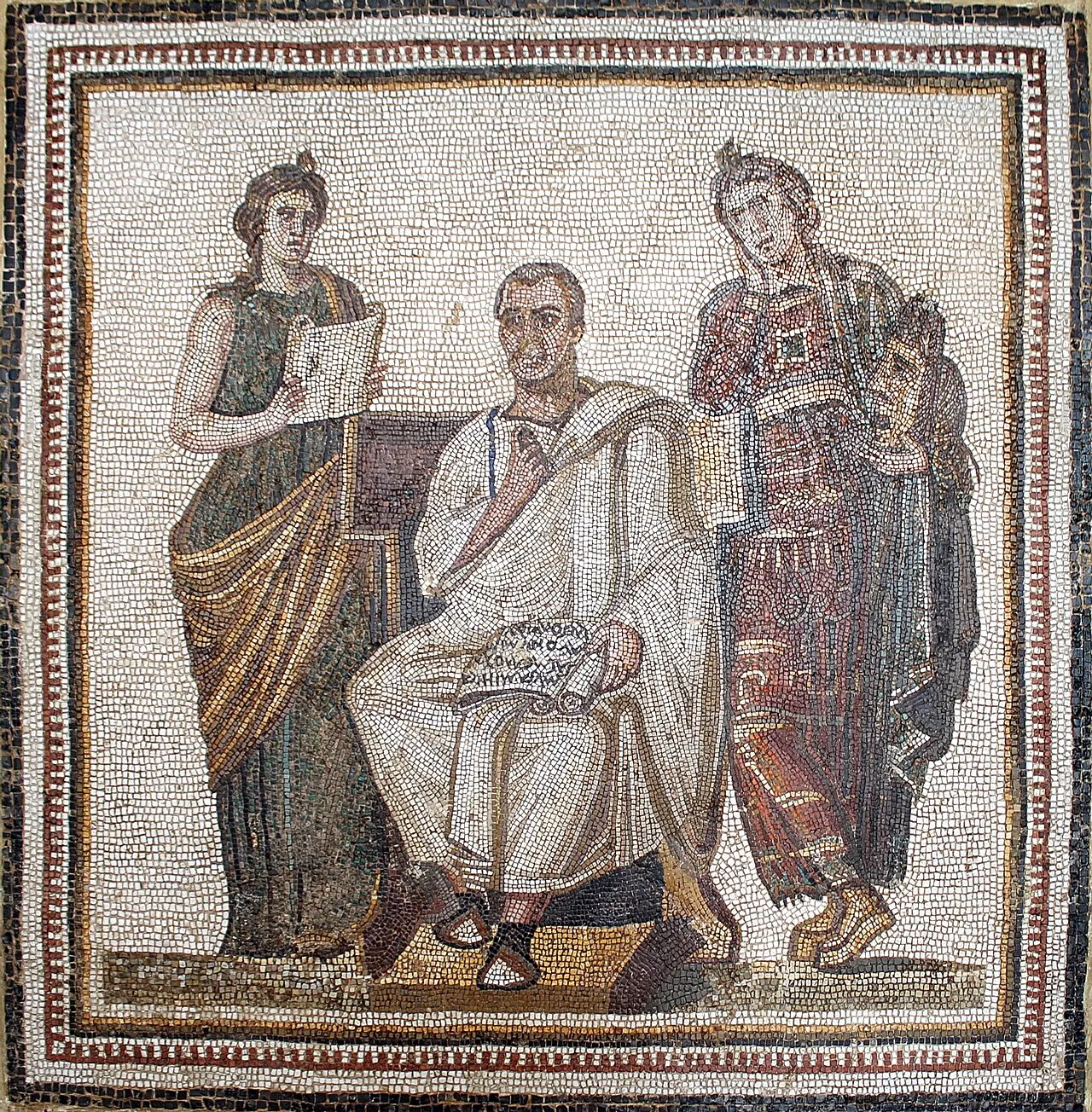
Publio Virgilio Marone nacque il 15 ottobre del 70 a.C. ad Andes, un villaggio nei pressi di Mantova in Gallia Cisalpina, una delle regioni più fertili d'Italia, dove piccoli proprietari terrieri coltivavano viti e pascoli tra le nebbie della pianura padana. Suo padre era un artigiano o un modesto proprietario che riuscì a dargli un'educazione di alto livello: Cremona, poi Milano, poi Napoli, dove Virgilio studiò filosofia epicurea nella scuola di Sirone. Fisicamente cagionevole, schivo per carattere, lontano dal temperamento del politico o del soldato, trovò a Napoli la pace intellettuale che avrebbe poi richiamato nelle sue opere: la città rimase il suo luogo del cuore per tutta la vita.
Publius Vergilius Maro was born on October 15, 70 BC at Andes, a village near Mantua in Cisalpine Gaul, one of Italy's most fertile regions, where small landowners cultivated vines and pastures amid the fogs of the Po Valley. His father was an artisan or modest landowner who managed to give him a high-level education: Cremona, then Milan, then Naples, where Virgil studied Epicurean philosophy at Siro's school. Physically delicate, retiring by character, far from the temperament of the politician or soldier, he found at Naples the intellectual peace he would later evoke in his works: the city remained his beloved home for his entire life.
Le fonti antiche, e soprattutto la Vita di Elio Donato, ci consegnano il ritratto di un uomo agli antipodi dei suoi eroi guerrieri. Alto, di carnagione scura, con l'aspetto rustico di un contadino padano, Virgilio era timido fino al pudore: a Napoli, dove visse a lungo, i cittadini lo chiamavano Parthenias, «il verginale», per la sua riservatezza e la sua morigeratezza. Parlava di rado in pubblico, fuggiva la folla, e quando per le strade veniva riconosciuto si rifugiava nella casa più vicina. Nella scuola del maestro Sirone aveva abbracciato l'epicureismo, e da quella filosofia trasse l'amore per la quiete, per l'amicizia e per il ritiro studioso, l'esatto contrario della vita pubblica che divorava i Romani del suo tempo. Tutta la sua opera nasce da questo temperamento contemplativo.
The ancient sources, and above all the Life by Aelius Donatus, hand down the portrait of a man at the opposite pole from his warrior heroes. Tall, dark-complexioned, with the rustic look of a Po-valley farmer, Virgil was shy to the point of modesty: at Naples, where he long lived, the citizens called him Parthenias, "the maidenly one", for his reserve and his temperance. He spoke seldom in public, fled crowds, and when recognised in the streets would take refuge in the nearest house. In the school of his master Siro he had embraced Epicureanism, and from that philosophy he drew his love of quiet, of friendship and of studious retreat, the exact opposite of the public life that devoured the Romans of his day. His entire work is born from this contemplative temperament.
Il trauma che segnò la sua giovinezza arrivò nel 41 a.C.: dopo la battaglia di Filippi, Ottaviano distribuì le terre della Gallia Cisalpina ai veterani delle sue legioni. Le proprietà di famiglia di Virgilio, nei pressi di Mantova e Cremona, rientravano nella zona delle confische. Secondo la tradizione il poeta rischiò la vita nel tentare di recuperarle. Da queste espropriazioni nacquero le Bucoliche, una raccolta in cui il dolore della perdita della terra si nasconde sotto la veste serena di un paesaggio arcadico immaginato. Fu il suo primo capolavoro, e bastò a portarlo all'attenzione di Mecenate.
The trauma that marked his youth came in 41 BC: after the Battle of Philippi, Octavian distributed Cisalpine Gaul's lands to the veterans of his legions. Virgil's family properties near Mantua and Cremona fell within the confiscation zone. According to tradition the poet risked his life attempting to recover them. From these expropriations were born the Eclogues, a collection in which the pain of losing the land hides beneath the serene guise of an imagined Arcadian landscape. It was his first masterpiece, and it was enough to bring him to the attention of Maecenas.
02Le Bucoliche e le GeorgicheThe Eclogues and Georgics
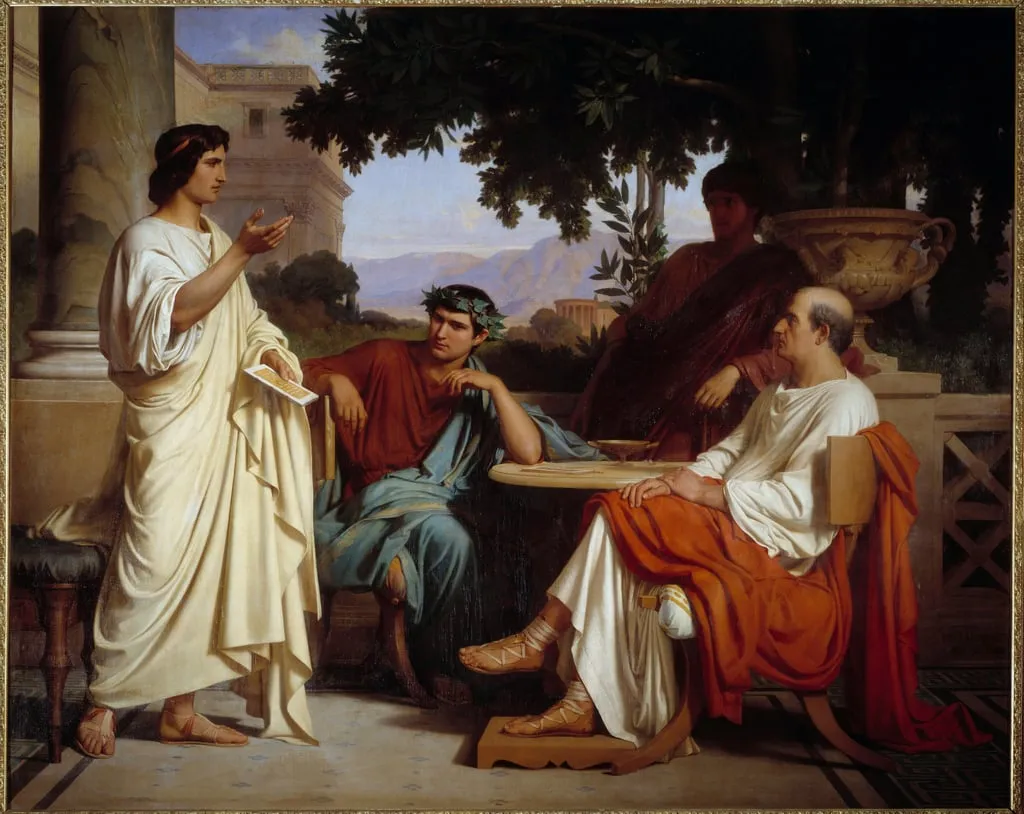
Le Bucoliche (42–38 a.C.) sono dieci composizioni pastorali ispirate al greco Teocrito: paesaggi di prati e greggi, pastori che cantano amori e rimpianti. Ma sotto la superficie arcadica scorre la storia contemporanea, le confische di terre, la guerra civile, l'attesa di un'era nuova. La Quarta Ecloga è tra le più discusse della letteratura latina: profetizza la nascita di un fanciullo che porterà un'età dell'oro sulla terra. I poeti cristiani medievali la lessero come una profezia di Cristo, trasformando Virgilio in una figura quasi profetica: il "poeta pagano cristiano ante litteram". Ancora oggi il significato preciso del fanciullo è dibattuto.
The Eclogues (42–38 BC) are ten pastoral compositions inspired by the Greek Theocritus: landscapes of meadows and flocks, shepherds singing of loves and regrets. But beneath the Arcadian surface runs contemporary history, land confiscations, civil war, the expectation of a new age. The Fourth Eclogue is among the most discussed poems in Latin literature: it prophesies the birth of a child who will bring a golden age to earth. Medieval Christian poets read it as a prophecy of Christ, transforming Virgil into an almost prophetic figure: the "pagan proto-Christian poet." The precise meaning of the child is still debated today.
nasce di nuovo il grande ordine dei secoli.
Già torna la Vergine, tornano i regni di Saturno,
già dal cielo scende una nuova stirpe." — Bucoliche, IV, 4–7
the great order of the ages is born anew.
Now the Virgin returns, the reign of Saturn returns,
now a new generation descends from heaven on high." — Eclogues, IV, 4–7
Le Georgiche (37–29 a.C.), dedicate a Mecenate, sono il poema dell'agricoltura: quattro libri su coltivazione dei campi, arboricoltura, allevamento del bestiame e apicoltura. In apparenza un manuale in versi, nella realtà, una meditazione profonda sul lavoro come fondamento della civiltà, sulla fatica come dignità, sulla natura come campo di tensione tra forze opposte. Il quarto libro si chiude con il mito di Aristeo e di Orfeo ed Euridice: uno dei grandi inserti mitologici della letteratura latina. Augusto, che stava cercando di riportare i romani alla terra dopo decenni di guerra civile, ne fece la propria bibbia agraria.
The Georgics (37–29 BC), dedicated to Maecenas, are the poem of agriculture: four books on field cultivation, arboriculture, livestock farming, and beekeeping. In appearance a manual in verse, in reality, a profound meditation on labor as the foundation of civilization, on toil as dignity, on nature as a field of tension between opposing forces. The fourth book closes with the myth of Aristaeus and of Orpheus and Eurydice, one of the great mythological inserts of Latin literature. Augustus, who was trying to bring Romans back to the land after decades of civil war, made it his own agrarian bible.
03L'Eneide: l'Epopea di RomaThe Aeneid: Rome's Epic
Nel 29 a.C., con le guerre civili finite e Augusto padrone incontrastato di Roma, Virgilio cominciò a lavorare alla sua opera più ambiziosa: un'epopea nazionale che facesse per Roma quello che Omero aveva fatto per la Grecia. L'Eneide racconta la fuga di Enea da Troia in fiamme, il lungo viaggio verso l'Italia, la guerra nel Lazio contro i popoli locali, e la fondazione di quella stirpe da cui sarebbe discesa Roma, e in particolare la gens Iulia, la famiglia di Giulio Cesare e quindi di Augusto. Il poema è costruito in due metà speculari: i primi sei libri riecheggiano l'Odissea (il viaggio), gli ultimi sei l'Iliade (la guerra). Non è un'imitazione: è una risposta consapevole e profonda alla tradizione greca.
In 29 BC, with the civil wars over and Augustus the undisputed master of Rome, Virgil began working on his most ambitious work: a national epic that would do for Rome what Homer had done for Greece. The Aeneid tells of Aeneas's flight from burning Troy, the long journey to Italy, the war in Latium against local peoples, and the founding of that lineage from which Rome would descend, and in particular the gens Iulia, the family of Julius Caesar and thus of Augustus. The poem is built in two specular halves: the first six books echo the Odyssey (the journey), the last six the Iliad (the war). It is not an imitation, it is a conscious and profound response to the Greek tradition.
Italiam fato profugus Laviniaque venit
litora — multum ille et terris iactatus et alto
vi superum, saevae memorem Iunonis ob iram." — Eneide, I, 1–4 — il primo verso della letteratura epica latina
exiled by fate, came to Italy and the Lavinian shores —
long was he tossed on land and sea by the power of the gods above,
because of the unforgetting wrath of savage Juno." — Aeneid, I, 1–4 — the opening verse of Latin epic literature
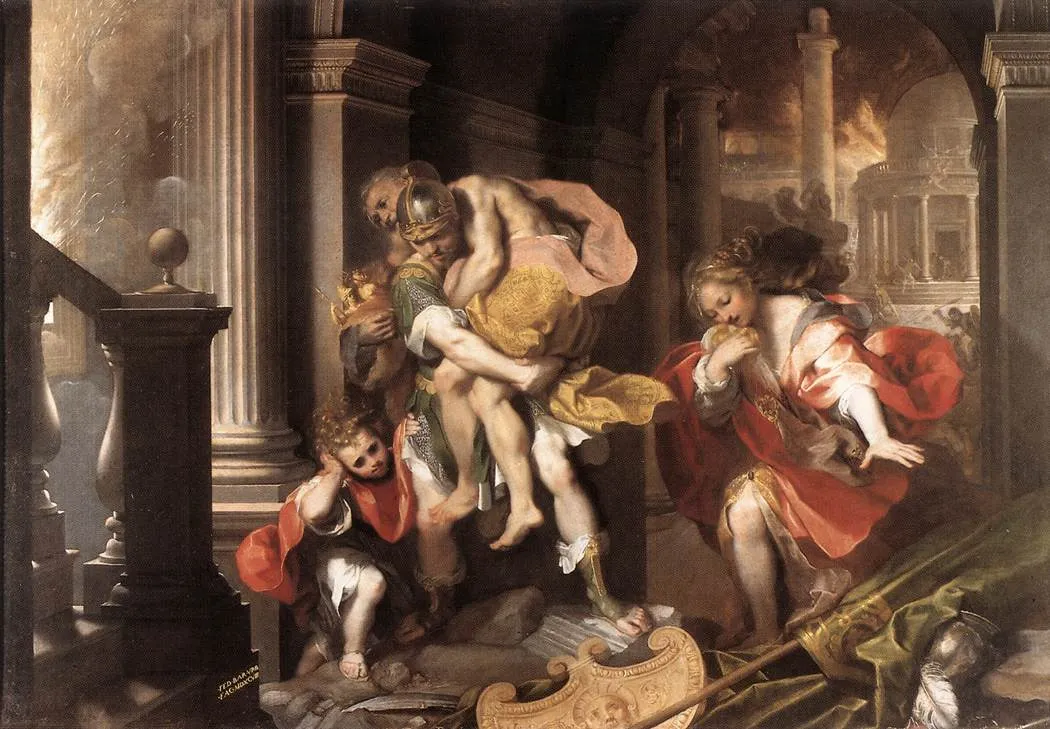
Ma è nel quarto libro che l'Eneide tocca la sua vetta tragica. Naufragato a Cartagine, Enea è accolto dalla regina Didone, che per lui arde di una passione fatale instillata da Venere. Per una stagione i due vivono come amanti, e l'eroe sembra dimenticare il proprio destino. Ma Giove invia Mercurio a richiamarlo: la sua vita non appartiene a sé, bensì alla stirpe che deve fondare. È il cuore morale del poema, il duello tra pietas e amor, tra il dovere e il cuore. Enea parte; Didone, abbandonata, sale sul rogo che ha fatto innalzare e si trafigge con la spada di lui, maledicendo i Troiani e invocando un vendicatore che sorga dalle sue ossa: la profezia di Annibale e delle guerre puniche. Nessuna donna della letteratura latina possiede una voce più potente della sua.
But it is in the fourth book that the Aeneid reaches its tragic summit. Shipwrecked at Carthage, Aeneas is received by Queen Dido, who burns for him with a fatal passion instilled by Venus. For a season the two live as lovers, and the hero seems to forget his own destiny. But Jupiter sends Mercury to recall him: his life belongs not to himself but to the lineage he must found. It is the moral heart of the poem, the duel between pietas and amor, between duty and the heart. Aeneas departs; Dido, abandoned, mounts the pyre she has had raised and runs herself through with his sword, cursing the Trojans and calling for an avenger to rise from her bones: the prophecy of Hannibal and the Punic Wars. No woman in Latin literature possesses a voice more powerful than hers.
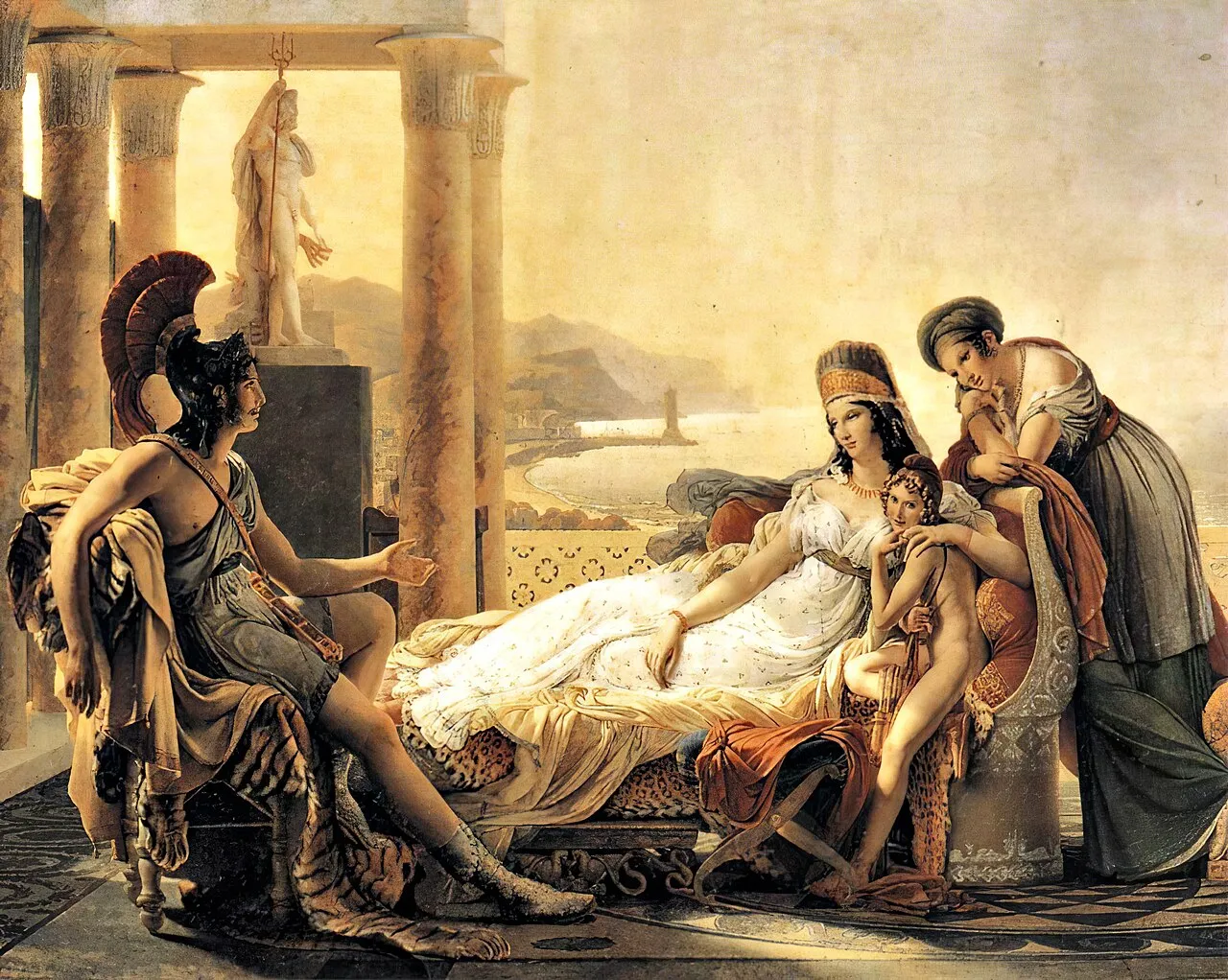
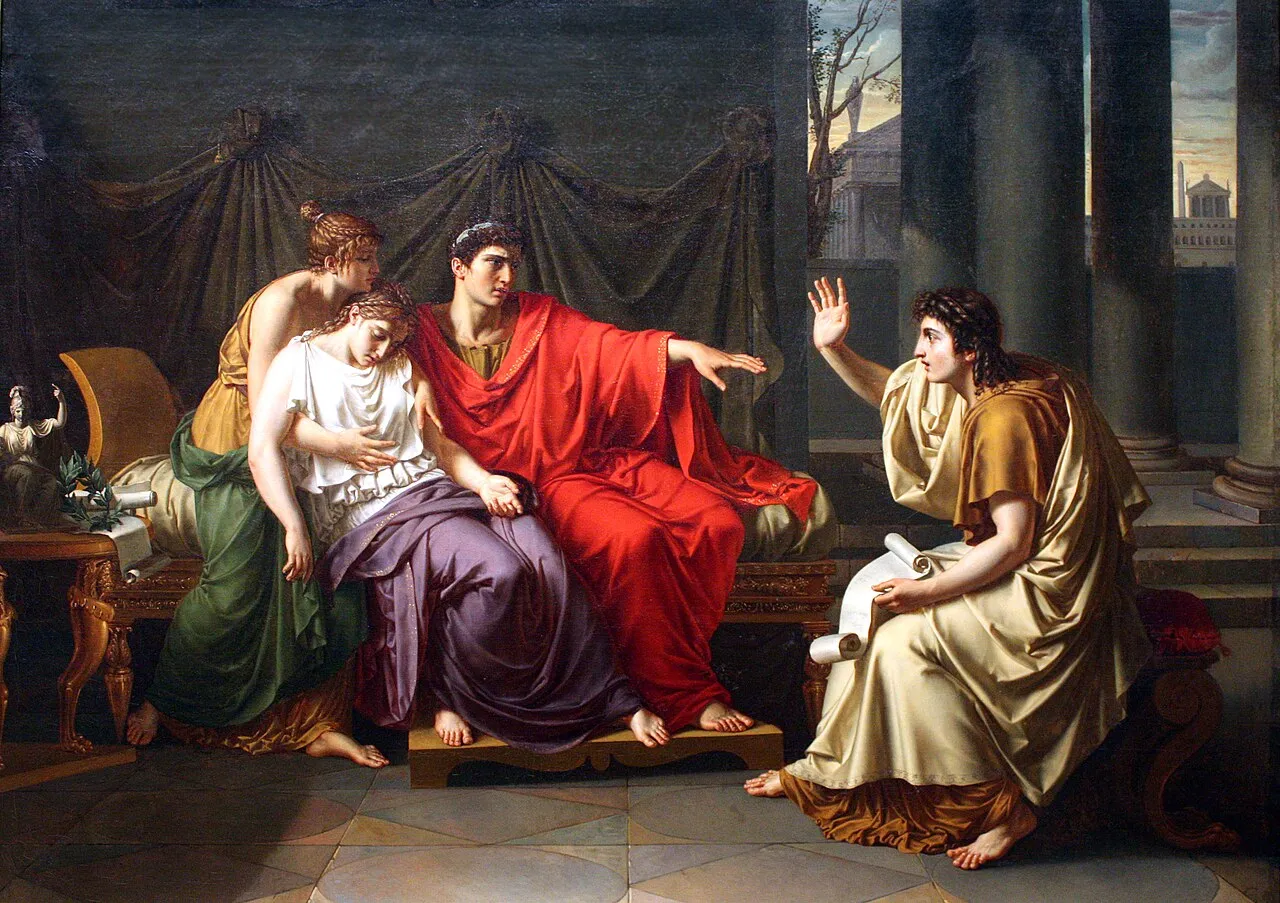
Il cuore poetico dell'Eneide è il sesto libro: la discesa di Enea agli Inferi, guidato dalla Sibilla Cumana, dove incontra l'anima del padre Anchise. Anchise mostra al figlio le anime dei futuri eroi romani che devono ancora nascere (Romolo, Camillo, i Decii, Scipione, fino a Cesare e Augusto) e pronuncia le parole che sintetizzano la missione di Roma:
The poetic heart of the Aeneid is Book Six: Aeneas's descent to the Underworld, guided by the Cumaean Sibyl, where he encounters the soul of his father Anchises. Anchises shows his son the souls of future Roman heroes yet to be born (Romulus, Camillus, the Decii, Scipio, down to Caesar and Augustus) and pronounces the words that summarize Rome's mission:
hae tibi erunt artes — pacique imponere morem,
parcere subiectis et debellare superbos." — Eneide, VI, 851–853 — "Tu, Romano, ricorda di governare i popoli con l'impero — queste saranno le tue arti — e di imporre le leggi della pace, di risparmiare i vinti e di abbattere i superbi."
hae tibi erunt artes — pacique imponere morem,
parcere subiectis et debellare superbos." — Aeneid, VI, 851–853 — "Roman, remember to rule the peoples with your power — these shall be your arts — to impose the customs of peace, to spare the conquered and to subdue the proud."
L'Eneide non si chiude però in gloria, ma su una nota cupa e ambigua che ha tormentato i lettori per duemila anni. Nell'ultimo libro Enea affronta in duello Turno, campione dei Latini, e lo atterra. Il nemico ferito implora pietà: proprio quella clemenza verso i vinti che Anchise aveva indicato come la più alta arte di Roma. Per un istante Enea esita. Poi scorge sulla spalla di Turno il balteo dell'amico Pallante, da lui ucciso, e l'ira lo travolge: affonda la spada nel petto del supplice. Il poema finisce di colpo, sul grido dell'anima di Turno che fugge sdegnata tra le ombre. Virgilio, il cantore della pietas, lascia il suo eroe macchiato di vendetta, come a dire che nessun impero, nemmeno quello di Roma, si fonda senza un prezzo di sangue.
Yet the Aeneid does not close in glory, but on a dark and ambiguous note that has tormented readers for two thousand years. In the final book Aeneas faces Turnus, champion of the Latins, in single combat and brings him down. The wounded enemy begs for mercy, the very clemency toward the conquered that Anchises had named Rome's highest art. For an instant Aeneas hesitates. Then he glimpses on Turnus's shoulder the baldric of his friend Pallas, slain by him, and fury overwhelms him: he buries his sword in the suppliant's breast. The poem ends abruptly, on the cry of Turnus's soul fleeing indignant among the shades. Virgil, the singer of pietas, leaves his hero stained with vengeance, as if to say that no empire, not even Rome's, is founded without a price paid in blood.
04La Morte e l'ImmortalitàDeath and Immortality
Nel 19 a.C. Virgilio partì per la Grecia con l'intenzione di visitare i luoghi dell'Eneide (Troia, il Peloponneso) e di trascorrere tre anni rifinendo il poema prima di pubblicarlo. Ad Atene incontrò Augusto, che lo convinse a tornare con lui. Si ammalò ad Atene, peggiorò sul viaggio, e morì a Brindisi il 21 settembre del 19 a.C., a cinquant'anni. Prima di partire per la Grecia aveva lasciato istruzioni scritte: se qualcosa gli fosse accaduto, il manoscritto dell'Eneide doveva essere bruciato. Era incompiuta: cinquantotto versi lasciati a metà, senza la revisione finale che avrebbe richiesto. Augusto ignorò le disposizioni del poeta e affidò il testo ai filologi Vario Rufo e Plotio Tucca, con l'ordine di pubblicarlo com'era, senza aggiungere nulla.
In 19 BC Virgil departed for Greece with the intention of visiting the places of the Aeneid (Troy, the Peloponnese) and spending three years refining the poem before publishing it. In Athens he met Augustus, who convinced him to return with him. He fell ill in Athens, worsened on the journey, and died at Brindisi on September 21, 19 BC, at fifty years old. Before leaving for Greece he had left written instructions: if anything happened to him, the manuscript of the Aeneid was to be burned. It was unfinished: fifty-eight verses left incomplete, without the final revision it would have required. Augustus ignored the poet's wishes and entrusted the text to the scholars Varius Rufus and Plotius Tucca, with orders to publish it as it was, adding nothing.
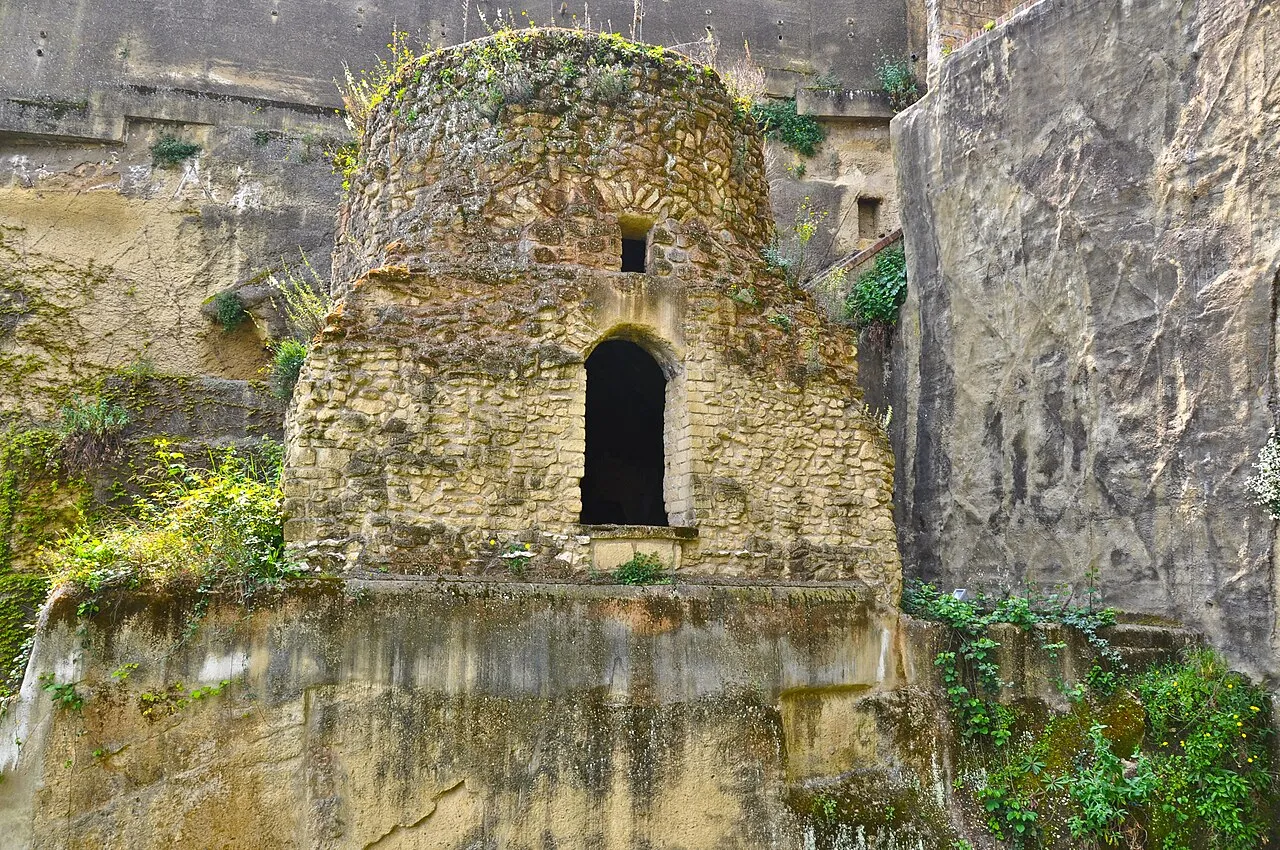
L'Eneide divenne quasi immediatamente la bibbia letteraria di Roma: studiata nelle scuole, citata nei discorsi, incisa sulle pareti. Nessuna opera latina fu mai più letta o copiata. Nel Medioevo la fama di Virgilio si trasformò: divenne un mago, un profeta, quasi un santo laico. La sua tomba a Napoli, oggi ancora visitabile alla Crypta Neapolitana, era venerata come un santuario. Dante Alighieri, nel 1300, scelse Virgilio come guida attraverso l'Inferno e il Purgatorio nella Divina Commedia, consacrandolo simbolo della ragione umana. Dal I secolo a.C. ad oggi, l'Eneide non ha mai smesso di essere letta.
The Aeneid became almost immediately Rome's literary bible: studied in schools, quoted in speeches, carved on walls. No Latin work was ever more read or copied. In the Middle Ages Virgil's fame transformed: he became a magician, a prophet, almost a secular saint. His tomb in Naples, still visitable today at the Crypta Neapolitana, was venerated as a shrine. Dante Alighieri, in 1300, chose Virgil as his guide through Hell and Purgatory in the Divine Comedy, consecrating him as the symbol of human reason. From the 1st century BC to today, the Aeneid has never stopped being read.
C'è un'ultima ironia in questa storia. Il poeta schivo che aveva chiesto di bruciare il proprio capolavoro divenne, per volontà di un imperatore, la voce stessa della civiltà che aveva cantato. I suoi versi venivano aperti a caso per leggervi il futuro, le sortes Vergilianae, e la sua ombra guidò la poesia europea per venti secoli: senza l'Eneide non esisterebbero né la Commedia di Dante né il Paradiso perduto di Milton. T. S. Eliot, nel 1944, poté definirlo con una sola formula: «il classico di tutta l'Europa». Mantova lo generò, Brindisi lo vide morire, ma è il mondo intero a custodirne, ancora oggi, la voce.
There is a final irony in this story. The shy poet who had asked that his masterpiece be burned became, by an emperor's will, the very voice of the civilisation he had sung. His verses were opened at random to read the future in them, the sortes Vergilianae, and his shadow guided European poetry for twenty centuries: without the Aeneid there would be neither Dante's Commedia nor Milton's Paradise Lost. T. S. Eliot, in 1944, could define him in a single phrase: “the classic of all Europe”. Mantua bore him, Brindisi saw him die, but it is the whole world that still guards his voice today.