01Le CauseThe Causes
Nel 58 a.C. Giulio Cesare, eletto console l'anno prima, era stato assegnato al governo della Gallia Cisalpina, della Narbonese e dell'Illirico per cinque anni rinnovabili. Era una concessione politica che gli serviva per coprire i debiti accumulati durante il consolato e per costruirsi un esercito personale. La situazione gallica gli offrì il pretesto perfetto: gli Elvezi minacciavano di emigrare in massa attraverso il territorio dei Romani; Cesare li respinse, e da lì in poi non si fermò più . In sei anni (58–53 a.C.) sottomise una dopo l'altra tutte le tribu galliche, dalla Loira al Reno, applicando una formula politica abile: alleanza con le aristocrazie collaborazioniste, sterminio o riduzione in schiavitù di chi resisteva.
In 58 BC Julius Caesar, elected consul the year before, had been assigned to govern Cisalpine Gaul, Narbonensis and Illyricum for a renewable five-year term. It was a political concession useful to cover the debts accumulated during his consulship and to build a personal army. The Gallic situation offered him the perfect pretext: the Helvetii threatened to migrate en masse through Roman territory; Caesar repelled them, and from then on never stopped. In six years (58–53 BC) he subdued one after another all the Gallic tribes, from the Loire to the Rhine, applying a clever political formula: alliance with collaborationist aristocracies, extermination or enslavement of those who resisted.
L'inverno del 53–52 a.C. portò un capovolgimento. La Gallia, divisa in oltre sessanta tribù e popoli, era stanca della pressione fiscale e degli abusi delle truppe romane stabilite negli accampamenti invernali. Quando arrivò la notizia della crisi politica a Roma (l'omicidio di Clodio, le tensioni fra Cesare e Pompeo, l'incertezza sul futuro del proconsole) le aristocrazie galliche videro un'occasione. Carnuti, Senoni, Bituriges, Edui, Arverni cominciarono a coordinarsi segretamente. Il segnale fu il massacro dei mercanti romani a Cenabum (Orléans) nel febbraio del 52 a.C. La rivolta divampò in poche settimane in tutta la Gallia centrale.
The winter of 53–52 BC brought a reversal. Gaul, divided among over sixty tribes and peoples, was exhausted by the fiscal pressure and abuses of Roman troops quartered in winter camps. When news arrived of the political crisis at Rome (Clodius's murder, the tensions between Caesar and Pompey, uncertainty over the proconsul's future) the Gallic aristocracies saw an opportunity. Carnutes, Senones, Bituriges, Aedui, Arverni began to coordinate secretly. The signal was the massacre of Roman merchants at Cenabum (Orléans) in February 52 BC. The revolt blazed across all central Gaul within a few weeks.
L'anima della rivolta era Vercingetorige, giovane principe degli Arverni, espulso dalla sua tribu dai filoromani e poi richiamato come capo della resistenza. Era un nobile di trent'anni, figlio del re Celtillo (giustiziato dagli Arverni stessi anni prima per troppa ambizione), formato alla guerra alla maniera celtica e alla diplomazia all'ellenistica. Riuscì a fare ciò che nessun altro era riuscito: unire le tribù galliche sotto un comando unico. La sua strategia era brillante: niente battaglie campali contro le legioni, terra bruciata per affamare i Romani, fortezze interne (oppida) come basi di rifornimento e di rifugio.
The soul of the revolt was Vercingetorix, young prince of the Arverni, expelled from his tribe by pro-Roman factions and then recalled as resistance leader. He was a thirty-year-old noble, son of King Celtillus (executed by the Arverni themselves years earlier for excessive ambition), trained in Celtic-style warfare and Hellenistic-style diplomacy. He achieved what no one else had: to unite the Gallic tribes under a single command. His strategy was brilliant: no pitched battles against the legions, scorched earth to starve the Romans, internal fortresses (oppida) as supply bases and refuges.
02Le Forze in CampoThe Forces
Cesare dispose ad Alesia di dieci-undici legioni: circa 50.000-60.000 legionari, più truppe ausiliarie galliche e germaniche fedeli (Edui filoromani, mercenari germani a cavallo) per un totale di circa 70.000-80.000 uomini. Erano veterani di sette anni di guerra: la VII, la VIII, la IX, la X, la XI, la XII, la XIII, la XIV, la XV legione, più due nuove. La cavalleria germanica, in particolare, fu decisiva nelle fasi finali. La logistica era straordinariamente curata: Cesare aveva costruito una rete di magazzini lungo la Saô ne e la Loira, e portava con sé ingegneri, fabbri, falegnami in numero industriale.
Caesar at Alesia disposed of ten to eleven legions: about 50,000-60,000 legionaries, plus Gallic and Germanic auxiliary troops loyal to him (pro-Roman Aedui, Germanic mounted mercenaries) for a total of about 70,000-80,000 men. They were veterans of seven years of war: legions VII, VIII, IX, X, XI, XII, XIII, XIV, XV, plus two new ones. The Germanic cavalry, in particular, was decisive in the final phases. The logistics were exceptionally organised: Caesar had built a network of warehouses along the Saône and Loire, and brought with him engineers, blacksmiths, carpenters in industrial numbers.
Vercingetorige chiuso in Alesia disponeva di circa 80.000 fanti e una cavalleria che riuscì a far uscire prima della chiusura dell'accerchiamento. L'esercito gallico era eterogeneo: Arverni veterani, Senoni, Carnuti, Bituriges, fanti delle tribù periferiche armati di spade lunghe (la spada celtica), scudi rettangolari, alcuni con cotta di maglia (invenzione celtica), molti senza armatura. La fanteria gallica era nota per la furia dell'assalto iniziale, ma incapace di sostenere combattimenti prolungati come quella romana. La cavalleria, invece, era ottima: gli aristocratici galli combattevano a cavallo da generazioni.
Vercingetorix trapped inside Alesia had about 80,000 infantry and a cavalry he managed to send out before the encirclement closed. The Gallic army was heterogeneous: veteran Arverni, Senones, Carnutes, Bituriges, infantry from peripheral tribes armed with long swords (the Celtic sword), rectangular shields, some with mail (a Celtic invention), many without armour. Gallic infantry was famous for the fury of the initial assault, but unable to sustain prolonged combat like the Roman. The cavalry, however, was excellent: Gallic aristocrats had fought mounted for generations.
Ma il vero numero spaventoso fu l'armata di soccorso raccolta dalla coalizione gallica. Cesare la stima in 250.000 fanti e 8.000 cavalieri, cifra probabilmente gonfiata, ma anche ridotta della metà significherebbe la più grande armata gallica mai messa insieme. Comandata da Commio, capo degli Atrebati, e dai cugini di Vercingetorige, fu raccolta da quarantatré tribù diverse. Quando arrivò sotto Alesia, fra il legionario romano accampato dietro le sue mura e l'attacco esterno c'erano quattro nemici per ogni soldato di Cesare.
But the truly terrifying number was the relief army raised by the Gallic coalition. Caesar estimates it at 250,000 infantry and 8,000 cavalry, a figure probably inflated, but even halved it would represent the greatest Gallic army ever assembled. Commanded by Commius, leader of the Atrebates, and Vercingetorix's cousins, it was raised from forty-three different tribes. When it arrived beneath Alesia, between the Roman legionary in his entrenchments and the external attack there were four enemies for every Caesar's soldier.
03L'Andamento dell'AssedioThe Course of the Siege
La rivolta era cominciata bene per Vercingetorige. A Gergovia (giugno 52 a.C.) aveva inflitto a Cesare la sua peggiore sconfitta di tutta la guerra gallica: 700 caduti romani, sei centurioni morti, una ritirata umiliante. Cesare capì che la strategia della terra bruciata era pericolosa: i suoi rifornimenti si stavano esaurendo. Decise allora di muovere verso nord per ricongiungersi con i suoi luogotenenti. Vercingetorige, ottimista dopo Gergovia, commise il suo unico errore tattico: cercò la battaglia campale presso il fiume Vingeanne. La sua cavalleria fu sbaragliata dai cavalieri germani al servizio di Cesare. In ritirata disordinata, Vercingetorige si rifugiò con 80.000 uomini nell'oppidum di Alesia, sul Mont Auxois.
The revolt had begun well for Vercingetorix. At Gergovia (June 52 BC) he had inflicted on Caesar his worst defeat of the entire Gallic war: 700 Roman dead, six centurions killed, a humiliating retreat. Caesar realised the scorched earth strategy was dangerous: his supplies were running low. He then decided to move north to rejoin his lieutenants. Vercingetorix, optimistic after Gergovia, made his one tactical mistake: he sought a pitched battle near the river Vingeanne. His cavalry was routed by Caesar's Germanic horsemen. In disordered retreat, Vercingetorix took refuge with 80,000 men in the oppidum of Alesia, on Mont Auxois.
Era una decisione che avrebbe deciso la guerra. Alesia era una fortezza fortissima, una collina dalla sommità piatta circondata su tre lati da fiumi e su tutti i lati da pendii ripidi, ma era anche una trappola. Cesare arrivò sotto le mura il 14 settembre 52 a.C. e capi immediatamente che assalirla frontalmente sarebbe stato suicida. Decise per l'assedio. Ma sapeva anche che le tribù galliche stavano raccogliendo un esercito di soccorso enorme. Doveva quindi resistere su due fronti contemporaneamente: dentro contro Vercingetorige, fuori contro l'esercito di soccorso in arrivo.
It was a decision that would decide the war. Alesia was a very strong fortress, a flat-topped hill surrounded on three sides by rivers and on all sides by steep slopes, but it was also a trap. Caesar arrived beneath the walls on 14 September 52 BC and immediately understood that frontal assault would be suicide. He chose siege. But he also knew that the Gallic tribes were gathering a vast relief army. So he had to hold out on two fronts simultaneously: inside against Vercingetorix, outside against the incoming relief army.
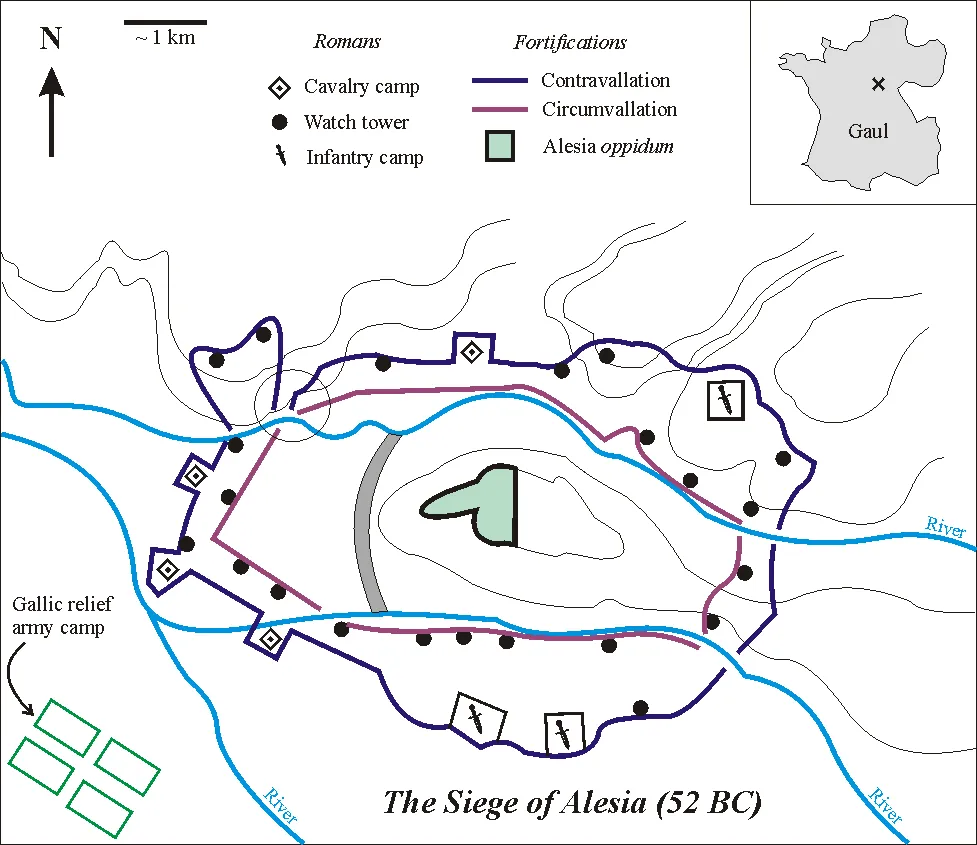
In trenta giorni, le legioni costruirono la più impressionante opera di ingegneria militare dell'antichità : una doppia cinta di fortificazioni concentriche. La circumvallatio interna, lunga 15 km, racchiudeva Alesia e impediva ogni fuga; la contravallatio esterna, lunga 21 km, formava un grande anello rivolto verso l'esterno per fronteggiare l'esercito di soccorso. Tra le due cinte si stendeva un campo trincerato dove i legionari accampati potevano spostarsi rapidamente da un fronte all'altro.
In thirty days, the legions built the most impressive engineering work of antiquity: a double ring of concentric fortifications. The inner circumvallatio, 15 km long, enclosed Alesia and prevented any escape; the outer contravallatio, 21 km long, formed a great ring facing outward to confront the relief army. Between the two walls stretched an entrenched camp where the legionaries could move quickly from one front to the other.
Vercingetorige capì il pericolo. Aveva mandato fuori la cavalleria proprio per chiamare i rinforzi, e aveva razionato severamente le scorte. Ma il tempo passava. A inizio ottobre, dopo trenta giorni di assedio, gli abitanti di Alesia stavano morendo di fame. Vercingetorige espulse dall'oppidum le donne, i bambini e i vecchi non combattenti, in un disperato tentativo di risparmiare cibo. Cesare rifiutò di lasciarli passare: bloccati fra le mura galliche e le linee romane, migliaia morirono di stenti nella terra di nessuno, sotto gli occhi di entrambi gli eserciti. È uno degli episodi più agghiaccianti della guerra antica.
Vercingetorix understood the danger. He had sent out the cavalry precisely to call for reinforcements, and had severely rationed supplies. But time was passing. By early October, after thirty days of siege, the inhabitants of Alesia were dying of hunger. Vercingetorix expelled from the oppidum the women, children, and elderly non-combatants, in a desperate attempt to save food. Caesar refused to let them through: trapped between the Gallic walls and the Roman lines, thousands died of starvation in no man's land, before the eyes of both armies. It is one of the most chilling episodes of ancient warfare.
Finalmente, alla fine di settembre o ai primi di ottobre, l'esercito di soccorso arrivò . Per quattro giorni Cesare combatté battaglie alternate sui due fronti: di giorno respingeva gli attacchi esterni dei rinforzi, di notte sventava le sortite di Vercingetorige dall'oppidum. La sua cavalleria germanica fu di nuovo decisiva: una carica improvvisa contro l'ala scoperta dei rinforzi galli ribaltò la situazione. Quando Cesare guidò personalmente il contrattacco finale, riconoscibile dal mantello rosso del proconsole, l'esercito di soccorso si sgretolò e fuggì in disordine verso la pianura. Da quel momento, Alesia era spacciata.
Finally, at the end of September or early October, the relief army arrived. For four days Caesar fought alternating battles on the two fronts: by day he repelled the external attacks of the reinforcements, by night he foiled Vercingetorix's sallies from the oppidum. His Germanic cavalry was again decisive: a sudden charge against the exposed wing of the Gallic reinforcements turned the tide. When Caesar personally led the final counter-attack, recognisable by the proconsul's red cloak, the relief army crumbled and fled in disorder towards the plain. From that moment, Alesia was doomed.
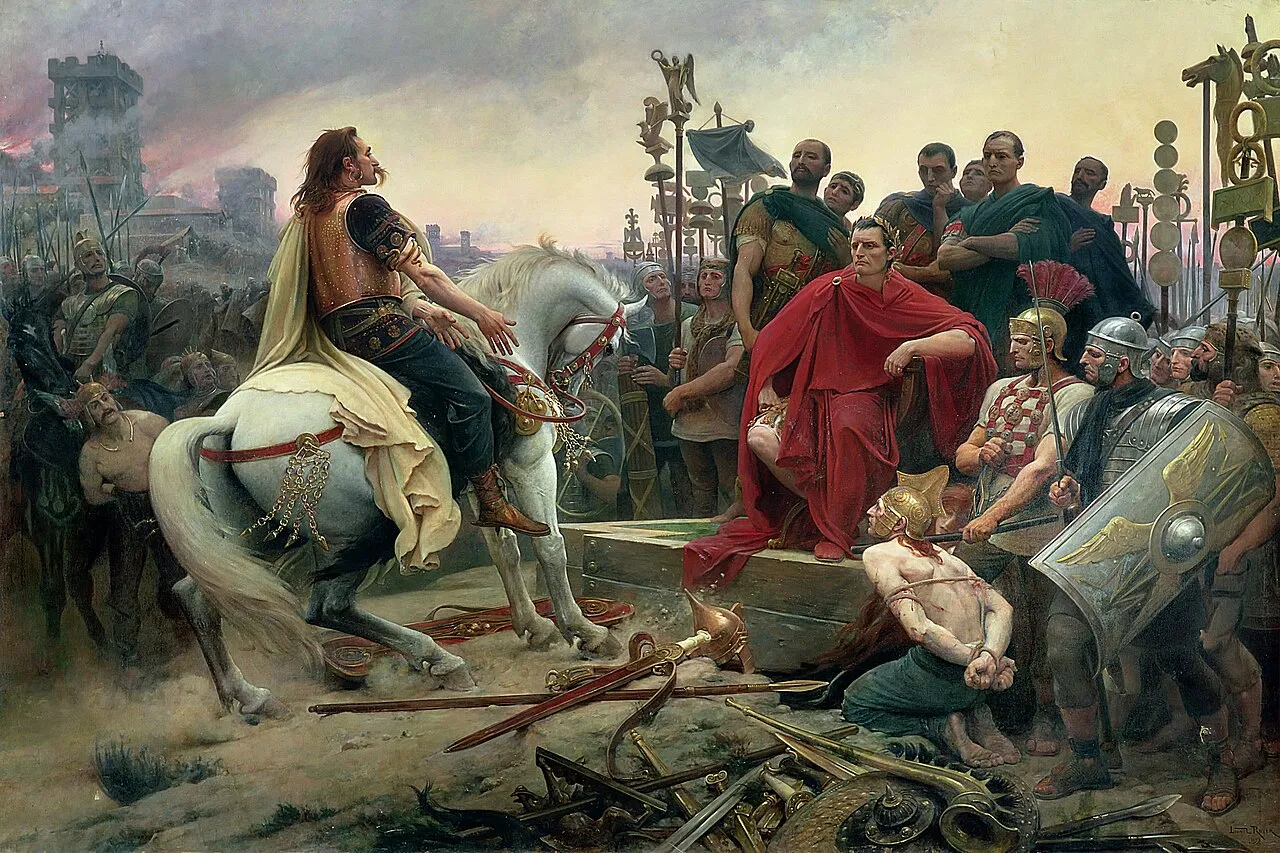
Il giorno dopo, Vercingetorige convocò il consiglio dei capi. La fame era ormai insostenibile. Decise di consegnarsi. Cavalcò fuori dalle mura nei suoi migliori paramenti, fece tre giri intorno al tribunale dove sedeva Cesare, gettò le sue armi ai piedi del proconsole e si sedette in silenzio. Cesare lo fece imprigionare. Avrebbe languito sei anni nei sotterranei del Tullianum a Roma, prima di essere strangolato durante il trionfo cesariano del 46 a.C. La Gallia era romana.
The next day, Vercingetorix convened the council of chiefs. Hunger was by now unbearable. He decided to surrender. He rode out of the walls in his finest regalia, made three circuits around the tribunal where Caesar sat, threw his arms at the proconsul's feet, and sat down in silence. Caesar had him imprisoned. He would languish six years in the dungeons of the Tullianum at Rome, before being strangled during Caesar's triumph in 46 BC. Gaul was Roman.
04Le TatticheThe Tactics
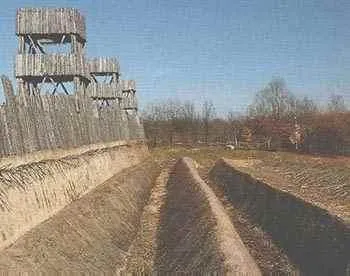
Le fortificazioni di Alesia furono un capolavoro di poliorcetica romana. Cesare le descrive lui stesso, con orgoglio quasi tecnico, nel De bello Gallico VII, 72–74. Ogni cinta consisteva in: una fossa profonda 5 metri, un terrapieno alto 3 metri, una palizzata di tronchi appuntiti alta 3,5 metri, e una serie di turres (torri di guardia) ogni 24 metri, da cui i legionari potevano scoccare frecce e proiettili da catapulta. Cinquanta chilometri di tutto questo, costruiti in trenta giorni da uomini che dovevano anche combattere ogni notte le sortite galliche.
The Alesia fortifications were a masterpiece of Roman poliorcetics. Caesar himself describes them, with almost technical pride, in De bello Gallico VII, 72–74. Each ring consisted of: a 5-metre-deep ditch, a 3-metre rampart, a 3.5-metre palisade of pointed logs, and a series of turres (watchtowers) every 24 metres, from which the legionaries could shoot arrows and catapult bolts. Fifty kilometres of all this, built in thirty days by men who also had to fight off Gallic sallies every night.
Davanti alla palizzata, Cesare fece costruire una serie di trappole in profondità : i cippi (rami appuntiti incastrati nel terreno), i lilia (fosse coniche di un metro di profondità con un tronco appuntito infisso al centro, disposte a quinconce per non lasciare passaggi sicuri), e gli stimuli (uncini di ferro nascosti nel terreno). Davanti alle trappole, due fossati larghi cinque metri ciascuno, uno dei quali riempito d'acqua deviata da un fiume vicino. Era un sistema senza precedenti, che avrebbe ispirato due millenni di fortificazione difensiva fino alle trincee della Prima Guerra Mondiale.
In front of the palisade, Caesar built a series of traps in depth: the cippi (sharpened branches set in the ground), the lilia (one-metre-deep conical pits with a sharpened log driven into the centre, set in a quincunx pattern to leave no safe passage), and the stimuli (iron hooks hidden in the ground). In front of the traps, two ditches each five metres wide, one of them filled with water diverted from a nearby river. It was a system without precedent, that would inspire two millennia of defensive fortification up to the trenches of the First World War.
Tatticamente, il problema centrale di Cesare era la simultaneità: come gestire due battaglie contemporaneamente con la stessa forza? La risposta fu una riserva mobile centrale. I legionari erano accampati fra le due cinte, dove potevano essere spostati rapidamente sul fronte minacciato. Ogni notte, Cesare e i suoi luogotenenti cavalcavano lungo il perimetro, controllando le posizioni, identificando i punti deboli, decidendo i rinforzi. La cavalleria germanica restava in riserva centrale e veniva impiegata come unità di shock al momento decisivo, come effettivamente accadde nella battaglia finale del quarto giorno.
Tactically, Caesar's central problem was simultaneity: how to manage two battles at the same time with the same force? The answer was a mobile central reserve. The legionaries were camped between the two rings, from where they could be quickly moved to the threatened front. Every night, Caesar and his lieutenants rode along the perimeter, checking positions, identifying weak points, deciding reinforcements. The Germanic cavalry remained in central reserve and was deployed as a shock unit at the decisive moment, as effectively happened in the final battle of the fourth day.
La strategia di Vercingetorige, dal canto suo, era anch'essa coerente. Aveva scelto Alesia come trappola per Cesare, contando sull'arrivo dell'esercito di soccorso prima che la fame piegasse i difensori. Era un calcolo militare ragionevole: l'esercito di soccorso si formava effettivamente, era enorme, e arrivò in tempo. Il fallimento non fu strategico ma tattico: i Galli, troppo numerosi per essere coordinati, attaccarono in ondate disorganizzate, senza mai concentrarsi in un punto unico per sfondare. La superiorità numerica si disperse in cento attacchi paralleli che Cesare poteva fronteggiare uno per uno.
Vercingetorix's strategy, for its part, was also coherent. He had chosen Alesia as a trap for Caesar, counting on the arrival of the relief army before hunger broke the defenders. It was a reasonable military calculation: the relief army did form, was enormous, and arrived in time. The failure was not strategic but tactical: the Gauls, too numerous to be coordinated, attacked in disorganised waves, never concentrating at a single point to break through. The numerical superiority was dispersed across a hundred parallel attacks that Caesar could face one by one.
« Erano cose che Cesare aveva ideato non solo per impedire l'uscita dal paese, ma anche per fronteggiare l'esercito che sarebbe arrivato di fuori; e in tal modo, restando l'opera fra di noi, ci protesse da entrambe le parti.» « These were things Caesar had devised not only to prevent escape from the country, but also to face the army that would arrive from outside; and so, with the work between us, it protected us on both sides.» — Cesare, De bello Gallico VII, 74
05Le ConseguenzeThe Consequences
Alesia chiuse di fatto la Guerra Gallica. Restavano sacche di resistenza che Cesare avrebbe domato nel corso del 51 a.C. (in particolare a Uxellodunum, dove fece tagliare le mani ai prigionieri come monito), ma la spina dorsale della rivolta era stata spezzata. La Gallia diventava romana per il millennio successivo. Cesare scelse una politica relativamente clemente: nessuna provincializzazione brutale come in Spagna o in Africa, ma una rete di alleanze con le aristocrazie collaborazioniste. Solo dopo la sua morte, sotto Augusto, la Gallia sarebbe stata formalmente organizzata in tre province (Lugdunense, Belgica, Aquitania) accanto alla Narbonese già esistente.
Alesia in effect closed the Gallic War. There remained pockets of resistance that Caesar would crush in 51 BC (notably at Uxellodunum, where he had the prisoners' hands cut off as a warning), but the backbone of the revolt had been broken. Gaul became Roman for the next millennium. Caesar chose a relatively lenient policy: no brutal provincialisation as in Spain or Africa, but a network of alliances with collaborationist aristocracies. Only after his death, under Augustus, would Gaul be formally organised into three provinces (Lugdunensis, Belgica, Aquitania) alongside the already existing Narbonensis.
Sul piano economico-militare, la guerra gallica produsse un milione di schiavi nei sette anni di campagne e quasi altrettanti morti. Cesare ne ricavò una ricchezza personale enorme, sufficiente a pagare i suoi debiti e a finanziare la guerra civile che sarebbe scoppiata di lì a tre anni. Il bottino di guerra cambiò per sempre il rapporto del proconsole con Roma: Cesare non era più un politico in difficoltà , era il più ricco e il più popolare comandante del mondo romano, alla testa di un esercito assolutamente fedele a lui personalmente. Pompeo si rese conto del pericolo, ma troppo tardi.
In economic-military terms, the Gallic war produced one million slaves in seven years of campaigns and almost as many dead. Caesar derived from it an enormous personal wealth, enough to pay off his debts and finance the civil war that would break out three years later. The war booty changed forever the proconsul's relationship with Rome: Caesar was no longer a struggling politician, he was the richest and most popular commander of the Roman world, at the head of an army absolutely loyal to him personally. Pompey realised the danger, but too late.
Sul piano culturale, le conseguenze furono ancora più profonde. La Gallia, in tre generazioni, si latinizzò : il latino soppiantò le lingue celtiche, le città gallo-romane (Lugdunum, Massilia, Burdigala, Lutetia) divennero centri di cultura latina, le ville rurali sostituirono i villaggi celti. Quando l'Impero si frantumò nel V secolo, la Gallia era ormai così profondamente romanizzata che il latino sopravvisse alla caduta politica e si trasformò lentamente in francese antico. La romanità dell'Occidente moderno nasce, in larga misura, da quei venti chilometri di trincee scavate sotto il Mont Auxois.
In cultural terms, the consequences were even more profound. Gaul, in three generations, became Latinised: Latin replaced Celtic languages, the Gallo-Roman cities (Lugdunum, Massilia, Burdigala, Lutetia) became centres of Latin culture, rural villas replaced Celtic villages. When the Empire shattered in the 5th century, Gaul was so deeply Romanised that Latin survived political collapse and slowly transformed into Old French. The Romanitas of the modern West is born, to a great extent, from those twenty kilometres of trenches dug beneath Mont Auxois.
Per Vercingetorige, la sconfitta divenne mito. Dimenticato per secoli, gli storici romani lo trattavano come uno dei tanti capi-tribu sconfitti, fu riscoperto nell'Ottocento dalla Francia di Napoleone III, che fece costruire sul Mont Auxois la grande statua di Vercingetorige di Aimé Millet (1865) e finanziò gli scavi archeologici che confermarono la realtà storica della battaglia. Per la Francia repubblicana, Vercingetorige diventò il "primo eroe nazionale", il martire della libertà gallica contro l'invasore: una costruzione ideologica utile, anche se piuttosto lontana dalla realtà politica della Gallia tribale del I secolo a.C. Ma così funziona la storia: i vinti diventano mito, i vincitori diventano civiltà .
For Vercingetorix, defeat became myth. Forgotten for centuries, Roman historians treated him as just another defeated tribal chief, he was rediscovered in the 19th century by Napoleon III's France, which built on Mont Auxois Aimé Millet's great statue of Vercingetorix (1865) and funded the archaeological excavations that confirmed the historical reality of the battle. For Republican France, Vercingetorix became the "first national hero", the martyr of Gallic liberty against the invader: a useful ideological construction, even if quite far from the political reality of tribal Gaul in the 1st century BC. But this is how history works: the defeated become myth, the victors become civilisation.