01Il Prefetto che Divenne ImperatoreThe Prefect Who Became Emperor
Origini incerte: Narbo o Illiria? (ca. 222–282 d.C.)
Uncertain origins: Narbo or Illyria? (c. 222–282 AD)
Marco Aurelio Caro nacque attorno al 222–224 d.C.. Le fonti antiche divergono: la Historia Augusta, notoriamente fantasiosa, lo dice nato a Narbo in Gallia Narbonensis (odierna Narbonne), da famiglia di origini illiriche emigrate a ovest; altre fonti, più affidabili, ne collocano la nascita in Illiria, nella stessa cerchia di provinciali militari che aveva prodotto Aureliano, Tacito e Probo. Quel che è certo è che apparteneva al ceppo dei nuovi notabili militari del III secolo: ricco, istruito (a Roma aveva insegnato retorica per un periodo, secondo alcune fonti), e con una solida carriera amministrativa che lo portò al senato, al governatorato di varie province e infine alla prefettura del pretorio sotto Probo, l'incarico militare più alto dopo l'imperatore. Aveva due figli adulti: il maggiore Carino (vizioso e violento) e il minore Numeriano (colto, di salute fragile).
Marcus Aurelius Carus was born around 222–224 AD. The ancient sources differ: the Historia Augusta, notoriously fanciful, places his birth at Narbo in Gallia Narbonensis (modern Narbonne), to a family of Illyrian origin migrated westward; other, more reliable sources locate his birth in Illyria, in the same circle of provincial soldier-rulers that had produced Aurelian, Tacitus and Probus. What is certain is that he belonged to the new military notables of the 3rd century: wealthy, educated (he had taught rhetoric in Rome for a time, according to some sources), with a solid administrative career that led him to the senate, the governorship of several provinces, and finally the praetorian prefecture under Probus, the highest military office after the emperor. He had two adult sons: the elder Carinus (vicious and violent) and the younger Numerianus (cultivated, frail in health).
L'acclamazione in Rezia (agosto/settembre 282 d.C.)
Acclamation in Raetia (August/September 282 AD)
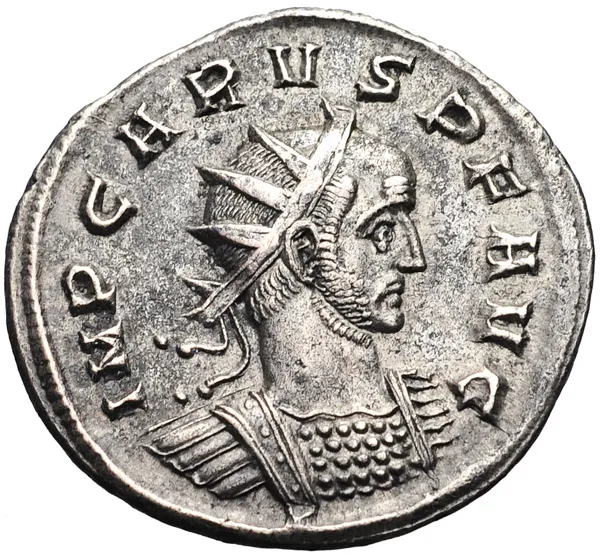
Nell'estate del 282, mentre Probo radunava un esercito a Sirmium per la campagna persiana, Caro si trovava al fronte settentrionale come comandante delle legioni di Rezia e Norico. Le sue truppe lo proclamarono Augustus contro Probo. Le fonti antiche ne fanno un colpo di Stato pianificato; gli storici moderni sospettano piuttosto che Caro (settantenne, ricco, già al vertice) non avesse mai aspirato al trono e fosse stato sollevato di forza dai propri soldati, poco entusiasti dei lavori di bonifica imposti loro da Probo. In ogni caso, quando le notizie raggiunsero Sirmium, le legioni di Probo lo uccisero piuttosto che combattere il rivale. Caro divenne imperatore senza una battaglia. Aveva circa sessant'anni: il più anziano nuovo imperatore dopo Tacito.
In the summer of 282, while Probus was assembling an army at Sirmium for the Persian campaign, Carus was on the northern front as commander of the legions of Raetia and Noricum. His troops proclaimed him Augustus against Probus. The ancient sources make this a planned coup; modern historians rather suspect that Carus (seventy, wealthy, already at the top) had never aspired to the throne and was raised by force by his own soldiers, unenthusiastic about the drainage work Probus had imposed on them. In any case, when the news reached Sirmium, Probus's legions killed him rather than fight the rival. Carus became emperor without a battle. He was about sixty years old: the oldest new emperor after Tacitus.
L'associazione dei figli al trono
Associating the sons to the throne
Caro non perse tempo. Pochi giorni dopo l'acclamazione, nominò entrambi i figli Cesari, il primo atto chiaramente dinastico dopo decenni di anarchia militare. Carino, il primogenito, ricevette il comando dell'Occidente (Italia, Gallia, Britannia, Hispania); Numeriano, il minore, accompagnò il padre in Oriente. Era un ritorno consapevole al modello di Vespasiano e dei Severi, prima che la "Crisi" frantumasse il principio ereditario. Notabilmente, Caro non chiese al Senato la ratifica del titolo: si limitò a notificargli l'acclamazione. La libertas senatoria riconquistata da Tacito appena sei anni prima era già definitivamente morta.
Carus wasted no time. A few days after his acclamation, he named both his sons Caesars, the first clearly dynastic act after decades of military anarchy. Carinus, the eldest, received the command of the West (Italy, Gaul, Britain, Hispania); Numerianus, the younger, accompanied his father east. It was a conscious return to the model of Vespasian and the Severans, before the "Crisis" shattered the hereditary principle. Notably, Carus did not ask the Senate to ratify the title: he merely notified it of the acclamation. The senatorial libertas recovered by Tacitus just six years earlier was already definitively dead.
« Ho prevenuto di poco il momento in cui l'Impero avrebbe avuto bisogno di sangue Cesare per sopravvivere » . « I have barely anticipated the moment when the Empire would have needed Caesarian blood to survive » . Caro al Senato, dopo l'associazione dei figli Carino e Numeriano (Historia Augusta, Car. 6.1)Carus to the Senate, after associating his sons Carinus and Numerianus (Historia Augusta, Car. 6.1)
02La Campagna PersianaThe Persian Campaign
- autunno 282 d.C.Vittoria danubiana contro Sarmati e Quadi — Prima di partire per l'Oriente, Caro dovette assicurare il limes settentrionale. Sconfisse rapidamente Sarmati e Quadi che si erano spinti in Pannonia, eliminando, secondo le fonti, ben sedicimila guerrieri e catturandone ventimila. Una vittoria fulminea che lo accreditò come comandante e gli assicurò la calma alle spalle.Danubian victory against Sarmatians and Quadi — Before leaving for the East, Carus had to secure the northern limes. He swiftly defeated the Sarmatians and Quadi who had penetrated into Pannonia, eliminating, according to the sources, some sixteen thousand warriors and capturing twenty thousand. A lightning victory that established him as a commander and secured his rear.
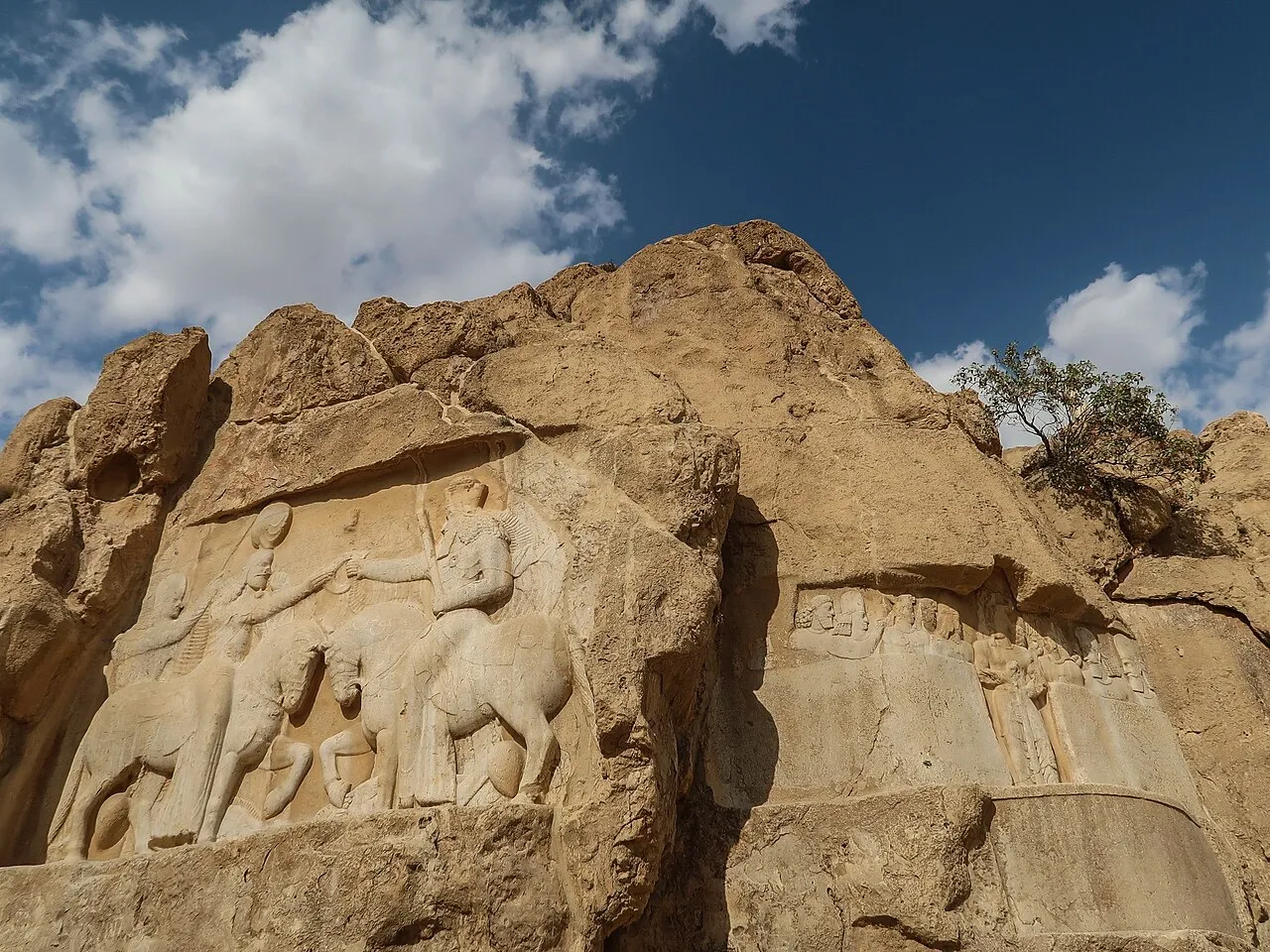
- inverno 282–283 d.C.Marcia attraverso l'Asia Minore — Con Numeriano al fianco e centomila uomini, Caro marciò da Sirmium fino in Mesopotamia attraversando i Balcani, la Tracia, il Bosforo, l'Anatolia. Il Sasanide Bahram II era impegnato in una guerra civile contro il fratello Ormuz nelle satrapie orientali: l'occasione era irripetibile. La marcia romana fu rapida e disciplinata; non ci fu nemmeno bisogno di battaglie minori.March across Asia Minor — With Numerianus at his side and a hundred thousand men, Carus marched from Sirmium to Mesopotamia across the Balkans, Thrace, the Bosphorus, Anatolia. The Sasanian king Bahram II was engaged in a civil war against his brother Ormizd in the eastern satrapies: the opportunity was unique. The Roman march was rapid and disciplined; no minor battles were even necessary.
- primavera 283 d.C.Attraversamento del Tigri e presa di Seleucia — Caro attraversò l'Eufrate presso Circesium, poi il Tigri, e dilagò in Mesopotamia centrale. Conquistò Seleucia sul Tigri, l'antica capitale ellenistica e centro economico dell'impero persiano. Le perdite romane furono trascurabili; le città mesopotamiche si arresero senza combattere.Crossing the Tigris and capture of Seleucia — Carus crossed the Euphrates near Circesium, then the Tigris, and poured into central Mesopotamia. He took Seleucia on the Tigris, the old Hellenistic capital and economic centre of the Persian empire. Roman losses were negligible; the Mesopotamian cities surrendered without fighting.
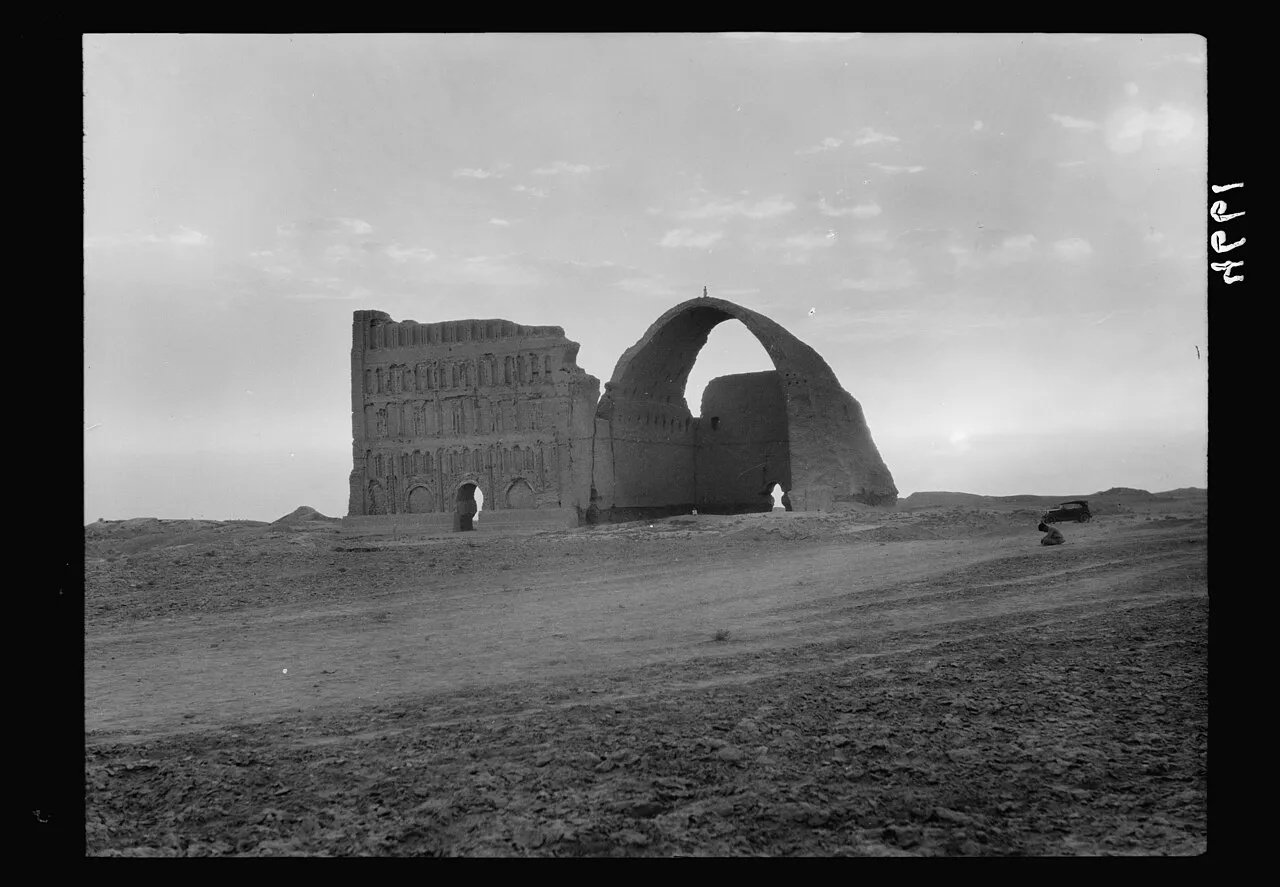
- estate 283 d.C.Conquista di Ctesifonte — Cuore del regno sasanide, residenza imperiale di Bahram II. Caro la prese senza combattere: la guarnigione fuggì all'avvicinarsi delle legioni. Per la prima volta dai tempi di Traiano (115 d.C., centosessantotto anni prima) un esercito romano occupava la capitale persiana. Il Senato gli votò il titolo trionfale di Persicus Maximus e Caro coniò una moneta celebrativa col rovescio VICTORIA PARTHICA. Sognava di proseguire fino al cuore della Persia, completando ciò che Traiano aveva interrotto.Conquest of Ctesiphon — Heart of the Sasanian realm, imperial residence of Bahram II. Carus took it without a battle: the garrison fled at the legions' approach. For the first time since Trajan's day (115 AD, one hundred sixty-eight years earlier) a Roman army occupied the Persian capital. The Senate voted him the triumphal title of Persicus Maximus and Carus minted a commemorative coin with the reverse VICTORIA PARTHICA. He dreamed of advancing into the heart of Persia, completing what Trajan had begun.
03La Morte Misteriosa e il Tramonto della CrisiThe Mysterious Death and the End of the Crisis
Il fulmine di Ctesifonte (luglio 283 d.C.)
The lightning of Ctesiphon (July 283 AD)
Nel pieno dell'estate del 283, mentre l'esercito si accampava a est di Ctesifonte preparando l'avanzata verso l'interno persiano, scoppiò un violento temporale. La Historia Augusta racconta che un fulmine colpì la tenda imperiale e uccise Caro all'istante. Gli storici antichi più sobri (Aurelio Vittore, Eutropio) registrano la versione ufficiale ma con uno scetticismo evidente. Gli storici moderni sono quasi unanimi: si trattò di un assassinio politico. Il movente principale: l'esercito, esausto, non voleva spingersi oltre nel cuore della Persia: ricordavano il destino di Crasso e di Giuliano, entrambi distrutti dalle steppe iraniche. Il presunto mandante: Lucio Flavio Apro, prefetto del pretorio e suocero di Numeriano, che aveva tutto da guadagnare a far succedere il proprio genero. La conquista persiana si arrestò di colpo. L'esercito si ritirò oltre il Tigri.
At the height of summer 283, while the army camped east of Ctesiphon preparing to advance into the Persian interior, a violent storm broke out. The Historia Augusta reports that a lightning bolt struck the imperial tent and killed Carus instantly. The more sober ancient historians (Aurelius Victor, Eutropius) record the official version but with evident scepticism. Modern historians are nearly unanimous: it was a political assassination. The chief motive: the army, exhausted, did not want to push further into the Persian heartland, they remembered the fate of Crassus and Julian, both destroyed by the Iranian steppes. The suspected instigator: Lucius Flavius Aper, praetorian prefect and Numerianus's father-in-law, who had everything to gain from his son-in-law succeeding. The Persian conquest stopped abruptly. The army retreated beyond the Tigris.
Numeriano, Carino e la fine della dinastia (283–285 d.C.)
Numerianus, Carinus and the end of the dynasty (283–285 AD)
Numeriano ereditò il comando d'Oriente e iniziò la lunga marcia di ritorno verso l'Europa. Lungo il viaggio si ammalò, ufficialmente di una grave infiammazione agli occhi; secondo le fonti più maliziose, fu avvelenato da Apro stesso. Per settimane il giovane imperatore viaggiò in lettiga chiusa, e Apro, che ne controllava gli accessi, emetteva editti a suo nome. Quando l'esercito giunse a Nicomedia in Bitinia, nel novembre 284, i soldati si accorsero del fetore: il corpo di Numeriano era in decomposizione da giorni. Convocata l'assemblea generale, un giovane comandante illirico di nome Diocle, futuro Diocleziano, accusò pubblicamente Apro e lo trafisse con la spada sul podio. Era il 20 novembre 284. Diocleziano fu acclamato Augusto.
Numerianus inherited the eastern command and began the long march back to Europe. On the journey he fell ill, officially with a severe eye inflammation; according to more malicious sources, he was poisoned by Aper himself. For weeks the young emperor travelled in a closed litter, and Aper, who controlled access to it, issued edicts in his name. When the army reached Nicomedia in Bithynia in November 284, the soldiers noticed the stench: Numerianus's body had been decomposing for days. With the general assembly summoned, a young Illyrian commander named Diocles, the future Diocletian, publicly accused Aper and ran him through with his sword on the platform. It was 20 November 284. Diocletian was acclaimed Augustus.
L'eredità: la fine della Crisi del III secolo
Legacy: the end of the Crisis of the 3rd Century
Carino, l'altro figlio, regnò sull'Occidente fino al 285. Marciò contro Diocleziano e lo sconfisse alla battaglia del Margus (od. Morava, Serbia) nell'estate del 285, ma fu assassinato dai suoi stessi ufficiali subito dopo la vittoria, probabilmente per la sua reputazione di crudeltà personale. Diocleziano divenne unico signore dell'Impero. Con lui finiva mezzo secolo di anarchia: la Tetrarchia, le riforme amministrative, monetarie, militari, religiose avrebbero ridisegnato Roma per i due secoli successivi. Caro fu l'ultimo imperatore della vecchia formula, comando personale, campagna lampo, morte oscura. La sua impresa persiana, troncata dal fulmine di Ctesifonte, sarebbe stata completata da Diocleziano e definitivamente sigillata da Galerio nel 298 con la pace di Nisibi. Ma il primo a calcare le strade di Ctesifonte fu lui, in una notte di luglio del 283.
Carinus, the other son, ruled the West until 285. He marched against Diocletian and defeated him at the battle of the Margus (modern Morava, Serbia) in the summer of 285, but he was murdered by his own officers immediately after the victory, probably for his reputation for personal cruelty. Diocletian became sole lord of the Empire. With him ended half a century of anarchy: the Tetrarchy, the administrative, monetary, military and religious reforms would reshape Rome for the next two centuries. Carus was the last emperor of the old formula: personal command, lightning campaign, obscure death. His Persian enterprise, cut short by the lightning at Ctesiphon, would be completed by Diocletian and definitively sealed by Galerius in 298 with the peace of Nisibis. But the first to walk the streets of Ctesiphon was he, on a July night in 283.