01Il Contesto — Una Repubblica in AgoniaContext — A Republic in Agony
Negli anni Sessanta del I secolo a.C. la Repubblica romana era, formalmente, ancora la stessa istituzione che aveva sconfitto Annibale e conquistato il Mediterraneo. Sotto la superficie però era un guscio in disgregazione. Le riforme di Mario (107 a.C.) avevano sostituito la milizia cittadina con un esercito di professionisti pagati e ricompensati dai loro generali; le guerre civili tra Mario e Silla, le proscrizioni sillane, la dittatura di Silla stesso (82–79 a.C.) avevano dimostrato che un comandante con legioni fedeli e ricchezze sufficienti poteva piegare il Senato. Il mos maiorum, l'insieme di convenzioni informali che regolava la vita politica romana, era ormai una facciata: contava chi controllava le armi, il grano e le clientele.
In the 60s BC the Roman Republic was formally still the same institution that had defeated Hannibal and conquered the Mediterranean. Beneath the surface, however, it was a disintegrating shell. The reforms of Marius (107 BC) had replaced the citizen militia with a professional army paid and rewarded by its generals; the civil wars between Marius and Sulla, Sulla's proscriptions and dictatorship (82–79 BC) had proven that a commander with loyal legions and sufficient wealth could bend the Senate. The mos maiorum, the informal conventions that governed Roman political life, was by then a façade: what mattered was who controlled the weapons, the grain and the clienteles.
Nel 62 a.C. Gneo Pompeo Magno rientrò trionfalmente in Italia da una serie di campagne fulminanti che avevano riorganizzato l'intero Oriente romano: aveva ripulito il Mediterraneo dai pirati cilici in tre mesi (67 a.C., lex Gabinia), annientato Mitridate VI del Ponto, annesso la Siria, regolato la Giudea ed elevato il gettito tributario di Roma di oltre il 50%. Era senza dubbio l'uomo più potente di Roma. Ma il Senato, dominato dalla fazione degli optimates e dal suo portavoce Catone Uticense, gli rifiutò ostinatamente due richieste minime: la ratifica delle sue disposizioni in Oriente e l'assegnazione di terre per i suoi veterani.
In 62 BC Gnaeus Pompeius Magnus returned triumphantly to Italy from a series of lightning campaigns that had reorganised the entire Roman East: he had cleared the Mediterranean of Cilician pirates in three months (67 BC, lex Gabinia), annihilated Mithridates VI of Pontus, annexed Syria, regulated Judaea and raised Rome's tribute income by over 50%. He was beyond question the most powerful man in Rome. Yet the Senate, dominated by the optimates faction and its spokesman Cato the Younger, stubbornly denied him two minimal requests: ratification of his eastern arrangements, and land allocations for his veterans.
Contemporaneamente Marco Licinio Crasso, l'uomo che aveva schiacciato la rivolta di Spartaco nel 71 a.C. e che era considerato il più ricco di Roma (Plutarco gli attribuisce un patrimonio di 7.100 talenti, circa 170 milioni di sesterzi) vedeva bloccata in Senato una proposta cruciale per i suoi affari: la rinegoziazione del contratto fiscale dei publicani che esigevano i tributi della provincia d'Asia, contratto chiuso troppo alto e ora rovinoso. Anche Crasso aveva un nemico mortale nella faccia rigida di Catone. Infine Gaio Giulio Cesare, di ritorno dalla Spagna Ulteriore nel 60 a.C., voleva al tempo stesso il trionfo militare e il consolato per l'anno seguente, la legge gli imponeva di scegliere, perché chiedere la candidatura significava entrare in città disarmato (e quindi rinunciare al trionfo). Il Senato rifiutò ogni eccezione.
At the same time Marcus Licinius Crassus, the man who had crushed Spartacus's revolt in 71 BC and was reckoned the richest man in Rome (Plutarch credits him with a fortune of 7,100 talents, around 170 million sesterces) saw a deal crucial to his interests blocked in the Senate: the renegotiation of the tax contract of the publicani who collected the tribute of the province of Asia, a contract closed too high and now ruinous. Crassus too had a mortal enemy in Cato's rigid face. Finally Gaius Julius Caesar, returning from Hispania Ulterior in 60 BC, wanted both a triumph and the consulship for the following year, the law forced him to choose, because requesting candidacy meant entering the city unarmed (and thereby renouncing the triumph). The Senate refused any exception.
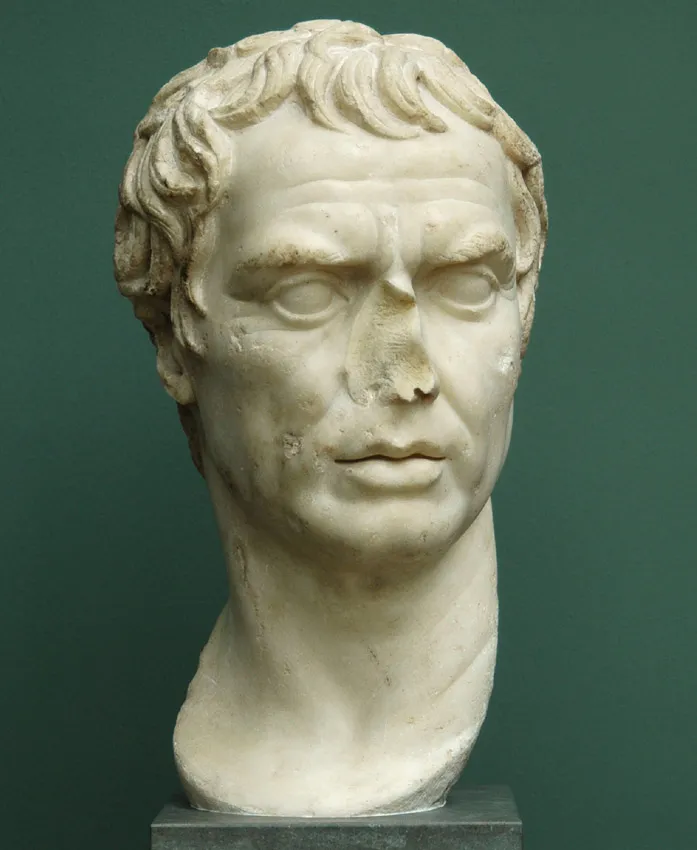
Plutarco osserva che il rigorismo di Catone, motivato dalla difesa intransigente della costituzione repubblicana, ebbe l'effetto opposto: respingendo tutti e tre (Pompeo, Crasso, Cesare) su questioni di per sé non rivoluzionarie, li spinse fra loro. La «virtù» catoniana fu, paradossalmente, una delle cause dirette del Triumvirato. Quando il Senato negò a Cesare la deroga per il trionfo, Cesare entrò in città rinunciando alla parata e si candidò: era ormai un uomo costretto a vincere.
Plutarch observes that Cato's rigorism, motivated by the intransigent defence of the Republican constitution, had the opposite effect: by rejecting all three (Pompey, Crassus, Caesar) on issues not in themselves revolutionary, he pushed them together. Cato's «virtue» was, paradoxically, one of the direct causes of the Triumvirate. When the Senate denied Caesar the dispensation for the triumph, Caesar entered the city forgoing the parade and stood for office: he was now a man condemned to win.
02I Tre ProtagonistiThe Three Protagonists
Il Triumvirato non fu un'alleanza tra eguali: fu la somma di tre capitali politici complementari, ciascuno indispensabile all'altro. Le biografie complete di Cesare e Pompeo sono trattate altrove sul sito: qui basti sintetizzare il ruolo specifico che ciascuno ricoprì all'interno del patto.
The Triumvirate was no alliance among equals: it was the sum of three complementary political capitals, each indispensable to the other. The complete biographies of Caesar and Pompey are treated elsewhere on the site: here we summarise only the specific role each played within the pact.
 Pompeo Magno
Il Generale · 106–48 a.C.
The General · 106–48 BC
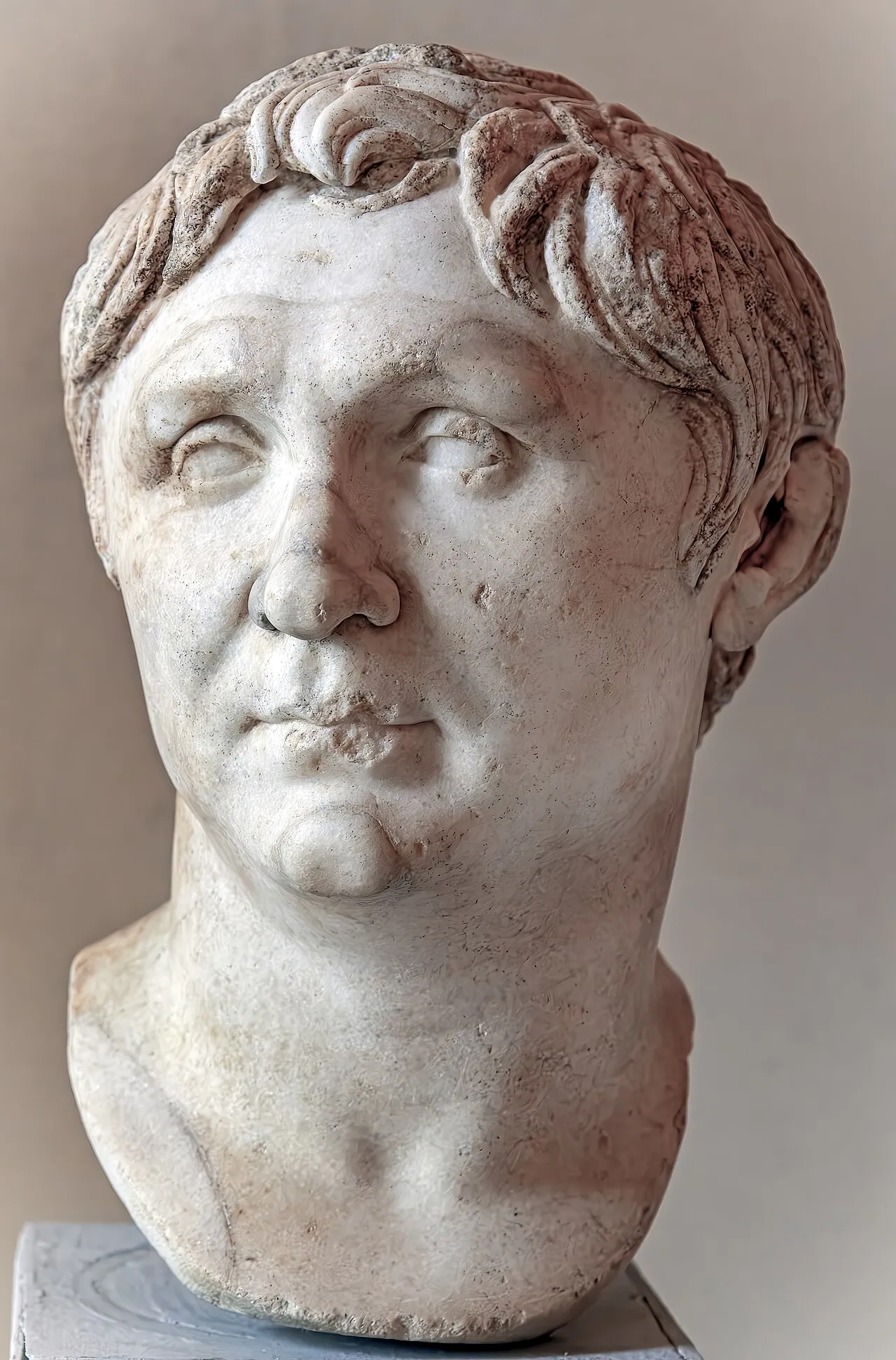
Pompeo Magno
Il Generale · 106–48 a.C.
The General · 106–48 BC
L'uomo dei tre trionfi (Africa, Spagna, Oriente) e di una rete clientelare estesa a mezzo Mediterraneo. Portava al patto il prestigio militare, i veterani che reclamavano terra, le città orientali che gli dovevano la loro carta costituzionale. Senza il suo nomen il triumvirato non avrebbe avuto autorità.
The man of three triumphs (Africa, Spain, the East) and a client network spanning half the Mediterranean. He brought military prestige, the veterans demanding land, the eastern cities owing him their constitutions. Without his nomen the triumvirate would have lacked authority.
 Marco Licinio Crasso
Il Ricco · ~115–53 a.C.
The Rich · ~115–53 BC
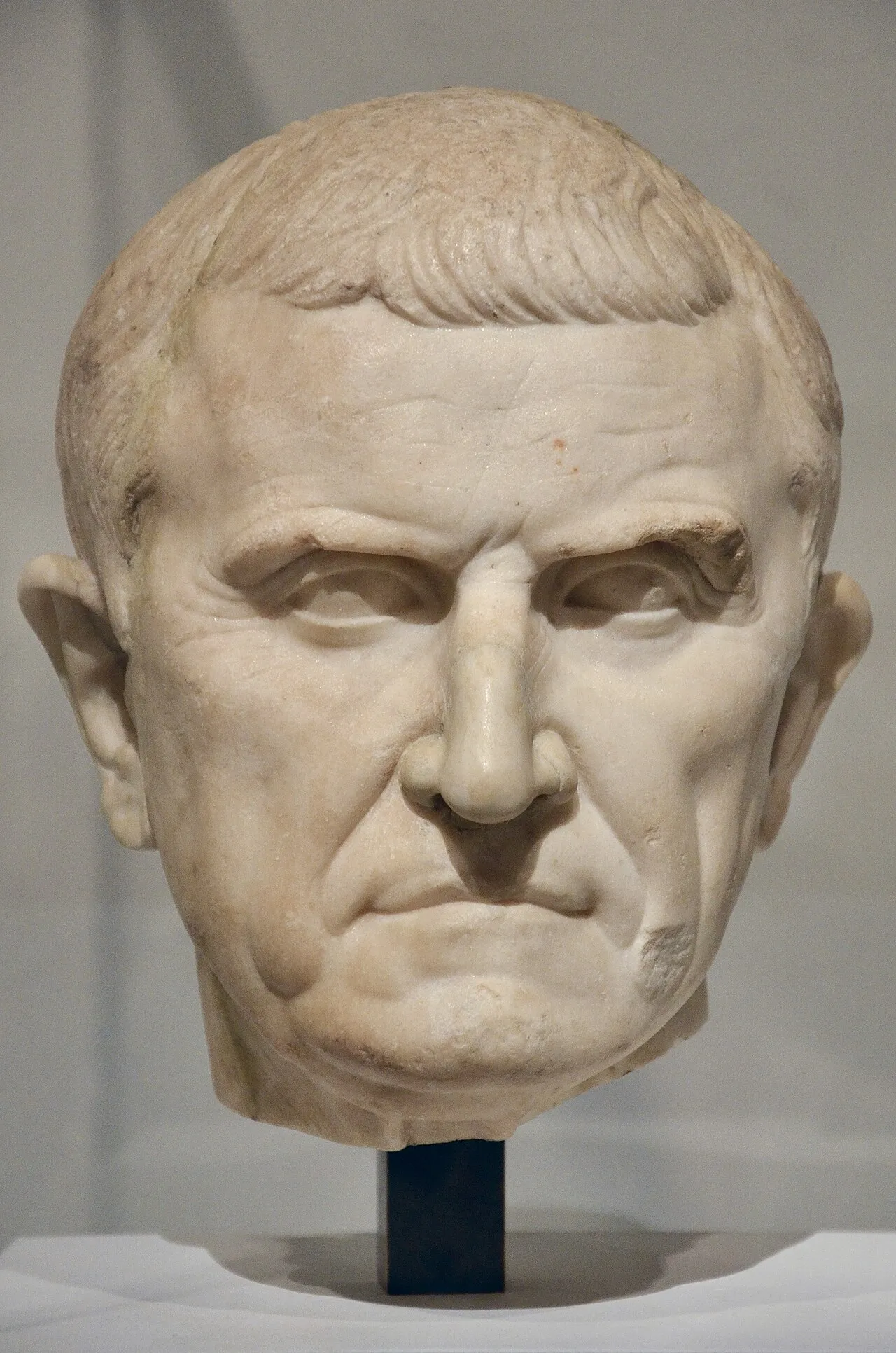
Marco Licinio Crasso
Il Ricco · ~115–53 a.C.
The Rich · ~115–53 BC
Sostenitore di Silla nella guerra civile, vincitore di Spartaco a Lucania (71 a.C.), Crasso aveva costruito la fortuna privata più grande di Roma comprando palazzi in fiamme tramite la sua celebre squadra di 500 schiavi pompieri e speculando sulle proscrizioni. Portò al patto la liquidità, gli appoggi nei publicani e nell'ordine equestre, e una rete di clientele finanziarie capaci di comprare interi comizi.
A Sullan supporter in the civil war, victor over Spartacus in Lucania (71 BC), Crassus had built Rome's greatest private fortune by buying burning houses through his celebrated team of 500 slave firemen, and by speculating on the proscriptions. He brought liquidity, support among the publicani and the equestrian order, and a web of financial clientelae able to buy entire popular assemblies.
 Giulio Cesare
L'Architetto · 100–44 a.C.
The Architect · 100–44 BC
Giulio Cesare
L'Architetto · 100–44 a.C.
The Architect · 100–44 BC
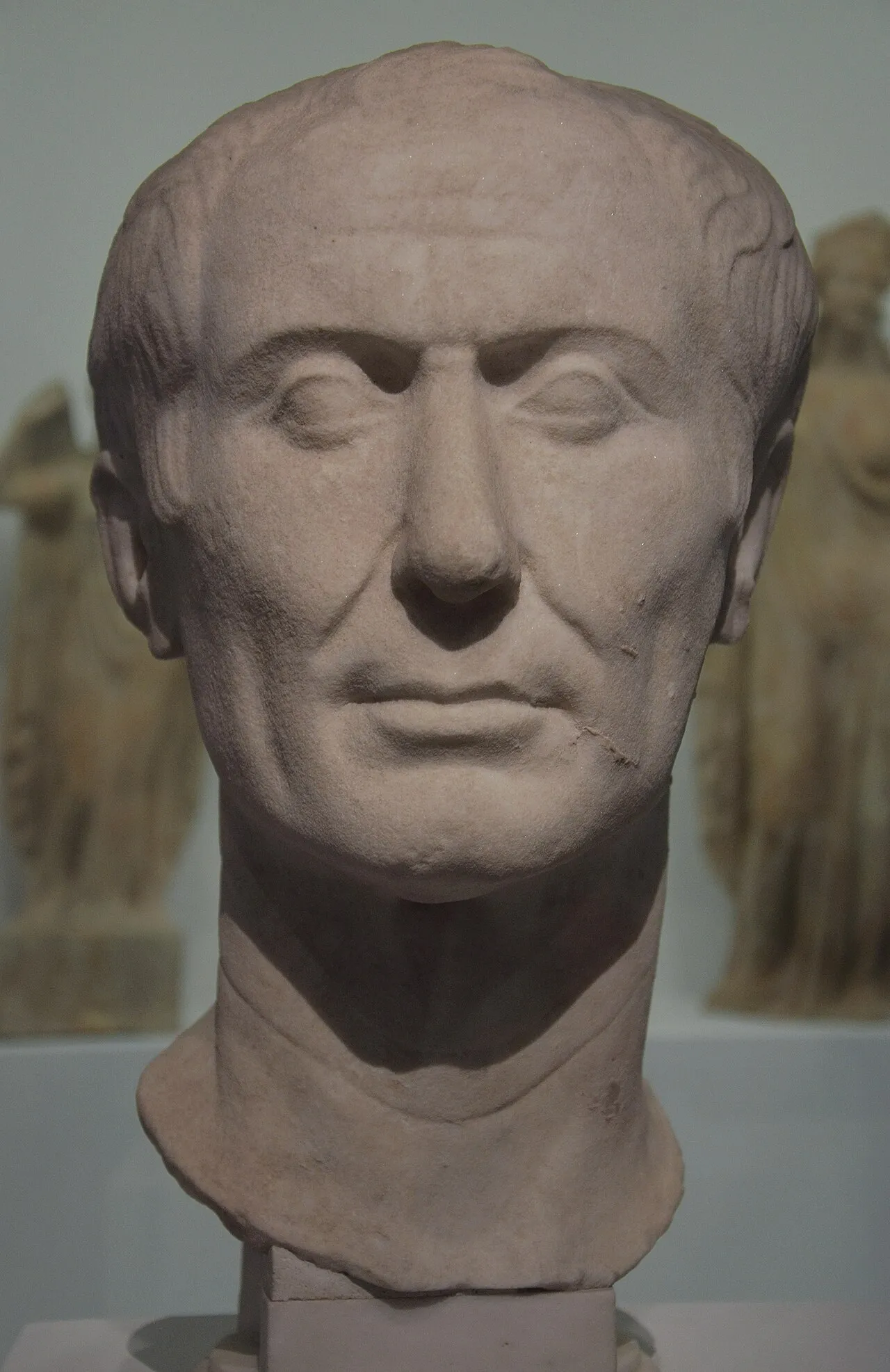
Più giovane (quarant'anni nel 60 a.C.), meno ricco, ancora senza grandi vittorie, Cesare era però l'unico che potesse parlare a entrambi i suoi futuri colleghi senza farsi rifiutare: Pompeo e Crasso si detestavano apertamente fin dal 70 a.C. Cesare fu il mediatore, il chef d'orchestre: progettò il patto, lo tenne in piedi, e ne fu il principale beneficiario nel lungo periodo.
Younger (forty in 60 BC), less wealthy, still without great victories, Caesar was nonetheless the only one able to speak to both his future colleagues without rebuff: Pompey and Crassus had openly detested each other since 70 BC. Caesar was the broker, the chef d'orchestre: he designed the pact, kept it alive, and in the long run was its principal beneficiary.
03Il Patto del 60 a.C. — Un Accordo PrivatoThe Pact of 60 BC — A Private Agreement
Il termine «triumvirato» — letteralmente «collegio di tre» — è in realtà un'etichetta posteriore. Nessuna legge votò mai questa magistratura, nessun atto pubblico la sancì. Tito Livio la definì conspiratio, una «congiura privata»; Asconio la chiamò societas, una società di tre uomini. Solo Augusto, costituendo il Secondo Triumvirato come magistratura legale nel 43 a.C. (lex Titia), avrebbe retroattivamente prestato il nome al primo. Quello che Cesare strinse nel tardo 60 a.C., al ritorno dalla Spagna, fu un patto fra privati siglato con stretta di mano e giuramenti, non con documenti.
The term «triumvirate» — literally «college of three» — is in fact a later label. No law ever voted this magistracy into being, no public act sanctioned it. Livy called it conspiratio, a «private conspiracy»; Asconius termed it societas, a partnership of three men. Only Augustus, by constituting the Second Triumvirate as a legal magistracy in 43 BC (lex Titia), would retroactively lend its name to the first. What Caesar sealed in late 60 BC, on his return from Spain, was a private compact ratified by handshake and oaths, not by documents.
Le clausole, ricostruite dalle fonti (Svetonio, Plutarco, Appiano, Cassio Dione), erano in sostanza tre, semplici e simmetriche:
The clauses, reconstructed from the sources (Suetonius, Plutarch, Appian, Cassius Dio), were essentially three, simple and symmetrical:
- Clausola 1Clause 1 Niente sarebbe stato fatto nello Stato che dispiacesse a uno dei tre.Nothing would be done in the State that displeased any of the three. Diritto di veto reciproco su qualunque legge, nomina o decisione del Senato. Era la formula di un governo di tre persone che paralizzava la sovranità del Senato e del popolo.A reciprocal veto on any law, appointment or Senate decision. It was the formula of a three-man government paralysing both Senate and popular sovereignty.
- Clausola 2Clause 2 Cesare avrebbe avuto il consolato per il 59 a.C.Caesar would obtain the consulship for 59 BC. Pompeo metteva i veterani (massa elettorale enorme nelle centuriae); Crasso pagava i corrotti. In cambio, Cesare avrebbe fatto approvare le leggi che servivano agli altri due.Pompey provided the veterans (a huge electoral mass in the centuriae); Crassus paid the bribed. In exchange, Caesar would push through the laws the other two needed.
- Clausola 3Clause 3 Una provincia proconsolare per Cesare al termine del consolato.A proconsular province for Caesar at the end of his consulship. Sarebbe stata la Gallia, il teatro che gli avrebbe regalato l'esercito personale, la fama militare e la ricchezza per farsi pari di Pompeo. È in questa clausola che si annida l'esito futuro: nel patto di Cesare-mediatore c'era già il germe di Cesare-dittatore.It would be Gaul, the theatre that would give him a personal army, military fame, and the wealth to match Pompey. This clause hid the future outcome: within Caesar-the-broker lay already the seed of Caesar-the-dictator.
Sigillare la parola: Pompeo, vedovo di Mucia, sposò pochi mesi dopo Giulia, l'unica figlia di Cesare, allora diciassettenne; Cesare a sua volta sposò Calpurnia, figlia di Lucio Calpurnio Pisone (consigliere finanziario gradito a Crasso). Una matrice familiare doppia teneva insieme l'alleanza. Cicerone, che osservava da lontano e con disprezzo, fu invitato a unirsi come quarto membro: rifiutò: scelta che pagherà con l'esilio nel 58 a.C.
To seal the word: Pompey, widower of Mucia, married shortly after Julia, Caesar's only daughter, then seventeen; Caesar in turn married Calpurnia, daughter of Lucius Calpurnius Piso (a financial advisor congenial to Crassus). A double family matrix held the alliance together. Cicero, observing from afar with contempt, was invited to join as a fourth member: he refused, a choice he would pay for with exile in 58 BC.
04Il Consolato di Cesare — 59 a.C.Caesar's Consulship — 59 BC
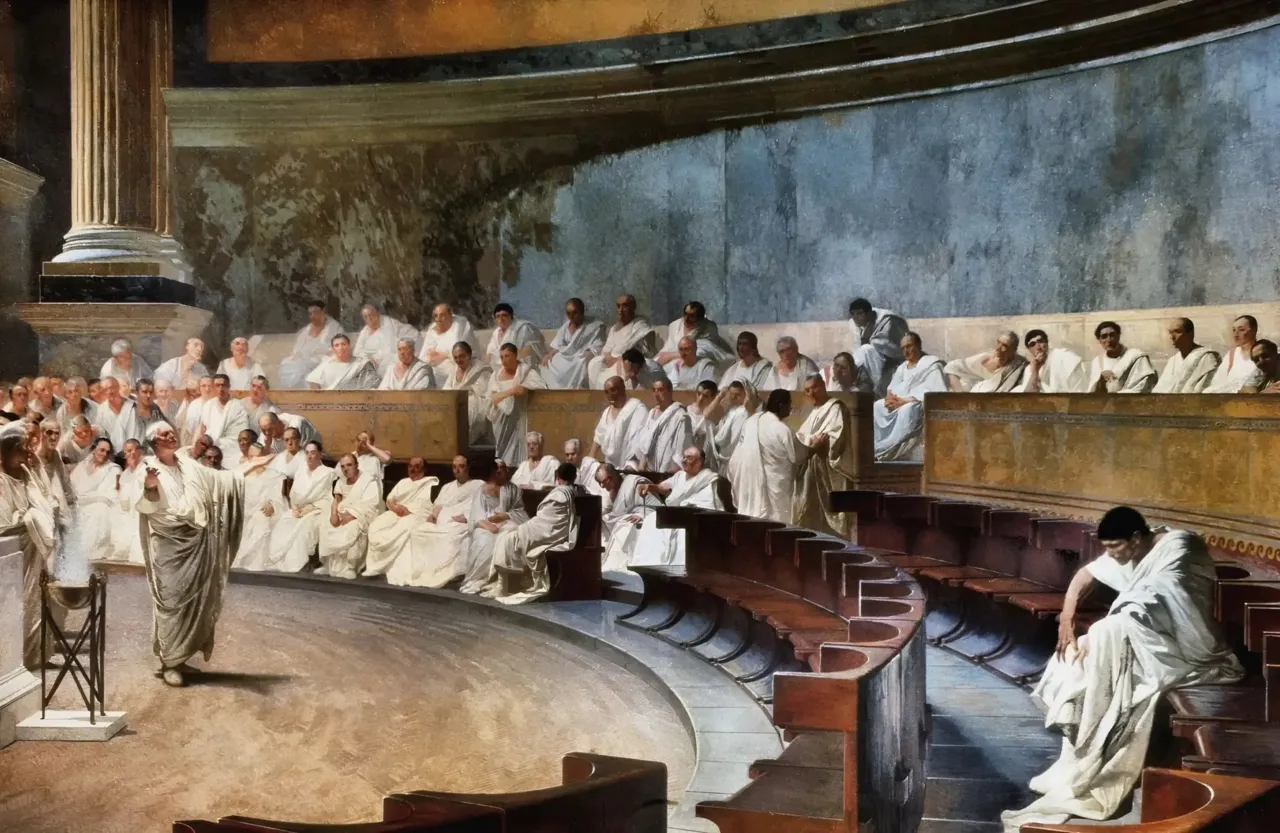
Eletto console nel luglio del 60 a.C., Cesare entrò in carica il 1° gennaio 59 a.C. Collega gli toccò Marco Calpurnio Bibulo, candidato degli optimates e marito di Porzia, figlia di Catone: il Senato aveva tentato di neutralizzare Cesare con un veto interno, finanziando largamente la campagna di Bibulo (Catone in persona giustificò la corruzione «per il bene della Repubblica»). Il calcolo fallì in modo spettacolare.
Elected consul in July 60 BC, Caesar took office on 1 January 59 BC. His colleague was Marcus Calpurnius Bibulus, the optimates' candidate and husband of Porcia, daughter of Cato: the Senate had tried to neutralise Caesar by an internal veto, lavishly funding Bibulus's campaign (Cato himself justified the bribery «for the good of the Republic»). The calculation failed spectacularly.
In pochi mesi Cesare fece approvare un programma legislativo di portata storica, sempre puntualmente bypassando il Senato e portando ogni proposta direttamente ai comizi:
Within a few months Caesar pushed through a legislative programme of historic scope, systematically bypassing the Senate and bringing every proposal directly to the assemblies:
- Gen. 59 a.C. Lex Iulia agrariaLex Iulia agraria — Distribuzione delle terre pubbliche della Campania ai veterani di Pompeo e a 20.000 famiglie indigenti con tre o più figli. Bibulo cercò di porre il veto: la folla lo cacciò con violenza dal Foro, gli rovesciarono un cesto di sterco sul capo e gli spezzarono i fasci. Da quel giorno Bibulo si chiuse in casa e non uscì più fino alla fine del mandato.Distribution of the public lands of Campania to Pompey's veterans and to 20,000 poor families with three or more children. Bibulus tried to veto: the crowd drove him violently from the Forum, dumped a basket of dung on his head and broke his lictors' fasces. From that day Bibulus shut himself indoors and did not emerge until the end of his term.
- Primav.Spring Ratifica degli acta orientali di PompeoRatification of Pompey's eastern acta — L'intera nuova carta dell'Oriente (regni clienti, città libere, frontiere) fu approvata in blocco, senza riapertura del dibattito. Pompeo aveva ottenuto in un'ora ciò che il Senato gli aveva negato per due anni.The entire new charter of the East (client kingdoms, free cities, frontiers) was approved in a single block, with no reopening of debate. Pompey had obtained in an hour what the Senate had denied him for two years.
- EstateSummer Sgravio del contratto fiscale d'AsiaAsia tax-farm rebate — Cesare ridusse di un terzo l'importo dovuto dai publicani per la riscossione dei tributi d'Asia, salvando Crasso e i suoi soci dal fallimento. In cambio l'ordine equestre, ricchissimo, divenne strumento elettorale stabile dei triumviri.Caesar cut by a third the sum due from the publicani for collecting Asia's tribute, saving Crassus and his partners from bankruptcy. In exchange the wealthy equestrian order became a stable electoral instrument of the triumvirs.
- MarzoMarch Lex Vatinia de provinciisLex Vatinia de provinciis — Il tribuno della plebe Publio Vatinio (uomo di Cesare) fece votare al popolo l'assegnazione a Cesare, per cinque anni, della Gallia Cisalpina e dell'Illirico con tre legioni. Il Senato, terrorizzato all'idea che gli toccasse aggiungere anche la Transalpina perché altrimenti Cesare l'avrebbe ottenuta lo stesso dai comizi, votò di sua iniziativa anche questa: quattro legioni, tre province, cinque anni. Era il quartier generale dal quale sarebbe partita la conquista delle Gallie.The tribune Publius Vatinius (Caesar's man) had the people vote, for five years, Caesar's command over Cisalpine Gaul and Illyricum with three legions. The Senate, terrified that it would have to add Transalpine Gaul too, since otherwise Caesar would obtain it from the assemblies anyway, voted it on its own initiative: four legions, three provinces, five years. It was the headquarters from which the conquest of the Gauls would set off.
L'opposizione di Bibulo, ridotto al silenzio fisico, prese forma nei suoi famosi editti: dichiarazioni quotidiane affisse in città in cui annunciava di stare «osservando i cieli» — atto religioso che secondo lo ius augurale sospendeva ogni votazione comiziale. Cesare ignorò gli auspici. Per dileggio i romani cominciarono a datare i documenti «sotto il consolato di Giulio e Cesare» anziché «di Bibulo e Cesare». Era una battuta, e una resa pubblica del Senato.
Bibulus's opposition, reduced to physical silence, took the form of his famous edicts: daily declarations posted around the city in which he announced he was «observing the heavens» — a religious act which, under ius augurale, suspended all voting in the assemblies. Caesar ignored the auspices. In mockery the Romans began dating documents «under the consulship of Julius and Caesar» instead of «of Bibulus and Caesar». It was a joke, and a public surrender by the Senate.
Il consolato di Cesare nel 59 a.C. è considerato dagli storici moderni, da Mommsen a Syme, il punto di non ritorno della Repubblica. Non perché violò leggi specifiche (i Gracchi avevano già aggirato il Senato attraverso i tribuni), ma perché stabilì che un'alleanza privata di tre uomini poteva sostituire il governo del Senato. Tutto ciò che seguirà (Rubicone, dittatura, principato) è applicazione conseguente di questo precedente.
Caesar's consulship in 59 BC is considered by modern historians, from Mommsen to Syme, the point of no return for the Republic. Not because it violated specific laws (the Gracchi had already bypassed the Senate through the tribunes), but because it established that a private alliance of three men could replace the government of the Senate. Everything that follows (Rubicon, dictatorship, principate) is the consistent application of this precedent.
05La Conferenza di Lucca — Aprile 56 a.C.The Conference of Luca — April 56 BC
Tra il 58 e il 57 a.C. il patto rischiò di sgretolarsi. Cesare era in Gallia, lontano da Roma. Pompeo, isolato e impopolare, si era piegato a chiedere il rientro di Cicerone dall'esilio per ricostruirsi una base. Crasso e Pompeo, di nuovo lasciati a fronteggiarsi, ripresero a litigare per il controllo dell'urbe: il loro acerrimo agente di strada era diventato il tribuno demagogo Publio Clodio Pulcro, manovrato da Crasso, che aveva esiliato Cicerone e ora tormentava lo stesso Pompeo con bande armate. Nel novembre del 57 a.C. il console eletto Lucio Domizio Enobarbo, cognato di Catone, minacciò apertamente di togliere a Cesare il comando in Gallia non appena fosse divenuto console nel 55 a.C.
Between 58 and 57 BC the pact came close to crumbling. Caesar was in Gaul, far from Rome. Pompey, isolated and unpopular, had stooped to recalling Cicero from exile to rebuild a base. Crassus and Pompey, left to face each other again, resumed quarrelling over control of the city: their bitterest street-agent was now the demagogue tribune Publius Clodius Pulcher, manipulated by Crassus, who had exiled Cicero and was now harassing Pompey himself with armed gangs. In November 57 BC the consul-designate Lucius Domitius Ahenobarbus, Cato's brother-in-law, openly threatened to strip Caesar of his Gallic command as soon as he became consul in 55 BC.
Cesare rispose con un colpo di teatro. Nell'aprile del 56 a.C. convocò Pompeo e Crasso a Luca (oggi Lucca), allora ultimo lembo della sua Gallia Cisalpina, città in cui poteva ricevere a casa propria senza varcare il pomerium e perdere così l'imperium. La fonte (Plutarco, Cesare 21) parla di un'affluenza enorme di senatori, magistrati e clienti: «più di duecento senatori si misero in cammino, e si videro presso la porta di Cesare centoventi fasces di proconsoli e pretori». Era una corte ambulante in viaggio per omaggiare il padrone effettivo dello Stato.
Caesar responded with a coup de théâtre. In April 56 BC he summoned Pompey and Crassus to Luca (modern Lucca), then the southernmost edge of his Cisalpine Gaul, a city in which he could receive them at his own residence without crossing the pomerium and so losing his imperium. The source (Plutarch, Caesar 21) reports an enormous turnout of senators, magistrates and clients: «more than two hundred senators set out, and at Caesar's door there were seen one hundred and twenty fasces of proconsuls and praetors». It was a travelling court journeying to pay homage to the effective master of the State.
Le decisioni di Lucca, pattuite in pochi giorni di colloqui privati:
The decisions of Luca, agreed in a few days of private talks:
- A Pompeo e Crasso consoli per il 55 a.C.Pompey and Crassus consuls for 55 BC. Sarebbe stato il loro secondo consolato congiunto (il primo fu nel 70 a.C.). Per imporre la candidatura nei comizi del 55 a.C., Cesare avrebbe inviato dalla Gallia il proprio luogotenente Publio Crasso (figlio del triumviro) con un drappello di soldati in licenza.It would be their second joint consulship (the first was in 70 BC). To force the candidacy through the assemblies of 55 BC, Caesar would send from Gaul his lieutenant Publius Crassus (the triumvir's son) with a detachment of soldiers on furlough.
- B Proroga del comando di Cesare in Gallia per altri 5 anniFive-year extension of Caesar's Gallic command (fino al 50 a.C.), formalmente votata l'anno dopo dalla lex Pompeia Licinia, le cui clausole erano già scritte qui.(until 50 BC), formally voted the following year by the lex Pompeia Licinia, whose clauses were already drafted here.
- C Proconsolati quinquennali per gli altri dueFive-year proconsulates for the other two Pompeo riceverà le due Spagne (governate in absentia, restando a Roma con un comando virtuale tramite legati: un'innovazione costituzionale gravissima). Crasso riceverà la Siria, perché finalmente voleva la sua gloria militare: progettava la conquista del regno parto. Pompey would receive the two Spains (governed in absentia, staying in Rome with a virtual command through legates: a grave constitutional innovation). Crassus would receive Syria, because at last he wanted his military glory: he was planning the conquest of the Parthian kingdom.
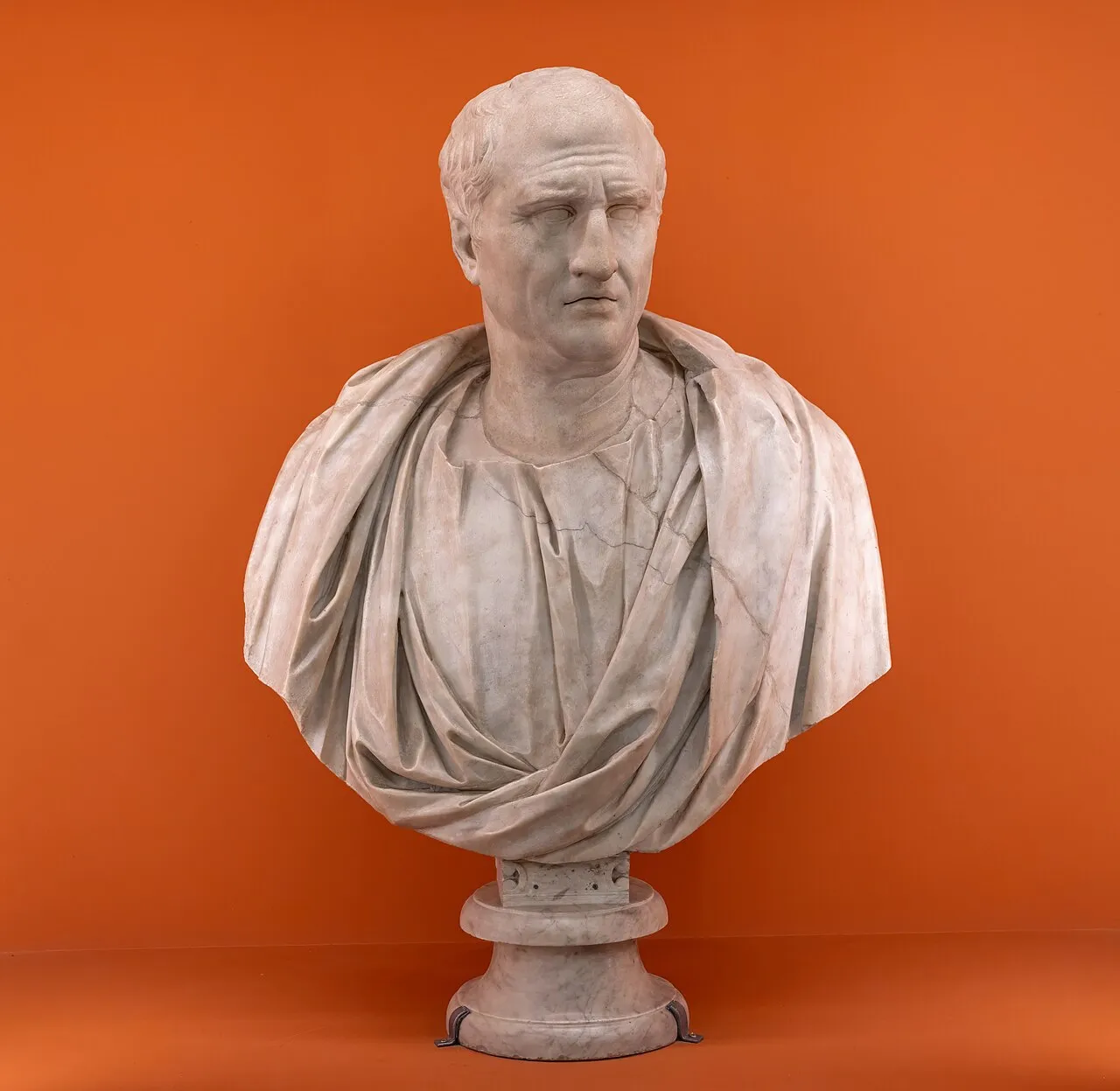
Lucca fu il momentum più alto del Triumvirato: Roma era stata, di fatto, spartita in tre imperia personali (la Gallia a Cesare, la Spagna a Pompeo, la Siria a Crasso) con l'Italia sotto controllo congiunto via clientele e veterani. Cicerone, costretto pochi mesi dopo a pronunciare in Senato un'orazione (De provinciis consularibus) a sostegno della proroga di Cesare, scrisse all'amico Attico parole amarissime: «palinodiam canere» — devo cantare la ritrattazione, devo rinnegare me stesso. Lo fece. Era il prezzo della sopravvivenza.
Luca was the Triumvirate's highest momentum: Rome had effectively been carved into three personal imperia (Gaul to Caesar, Spain to Pompey, Syria to Crassus) with Italy under joint control via clienteles and veterans. Cicero, forced months later to deliver in the Senate an oration (De provinciis consularibus) supporting the extension of Caesar's command, wrote to his friend Atticus in bitter words: «palinodiam canere» I must sing the recantation, I must disown myself. He did. It was the price of survival.
06La Crisi — Giulia, Carre, la FineThe Crisis — Julia, Carrhae, the End
Il Triumvirato fu disfatto in meno di due anni da due eventi non politici, entrambi mortali nel senso più letterale del termine.
The Triumvirate was undone in less than two years by two non-political events, both lethal in the most literal sense of the word.
Settembre 54 a.C. — La morte di Giulia. La figlia di Cesare e moglie di Pompeo morì di parto a Roma (il neonato la seguì dopo pochi giorni). Aveva ventidue anni. Le fonti antiche concordano nel sottolineare la sincerità dell'amore fra lei e il marito, di ventitré anni più anziano. Pompeo voleva seppellirla a Cuma, presso una sua villa; il popolo, in una scena tumultuosa, le strappò il corpo dal corteo e lo seppellì al Campo Marzio: un onore mai concesso a una donna prima. Cesare le dedicò nel 46 a.C. giochi gladiatorii senza precedenti. Ma la sua morte fece molto di più che riempire di dolore i due uomini: tagliò l'unico nodo personale che li teneva insieme. Cesare offrì in sposa a Pompeo la pronipote Ottavia (futura sorella di Augusto), e si propose lui stesso di sposare la figlia di Pompeo, Pompea. Pompeo rifiutò. Era il primo segnale.
September 54 BC — Julia's death. Caesar's daughter and Pompey's wife died in childbirth in Rome (the infant followed her within days). She was twenty-two. The ancient sources agree on the sincerity of the love between her and her husband, twenty-three years her senior. Pompey wished to bury her at Cumae, near one of his villas; the people, in a tumultuous scene, tore her body from the procession and buried her in the Campus Martius: an honour never previously granted to a woman. Caesar in 46 BC dedicated unprecedented gladiatorial games to her memory. But her death did far more than fill both men with grief: it severed the only personal knot that held them together. Caesar offered Pompey his great-niece Octavia (future sister of Augustus) in marriage, and proposed to marry Pompey's daughter Pompeia himself. Pompey refused. It was the first signal.
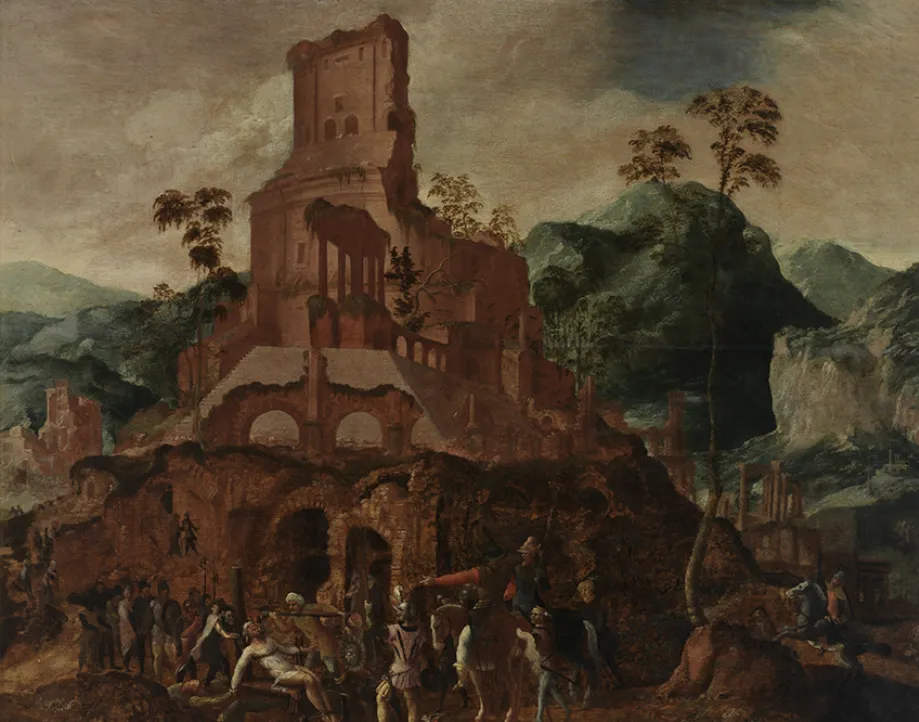
9 giugno 53 a.C. — La disfatta di Carre. Crasso, partito per la Siria nel 55 a.C. con sette legioni (circa 35.000 fanti, 4.000 cavalieri, 4.000 ausiliari), aveva invaso il regno dei Parti contro ogni consiglio prudente. A Carre (oggi Harran, Turchia sudorientale), in piena pianura mesopotamica, le legioni, addestrate al combattimento d'urto in formazione serrata, furono accerchiate dalla cavalleria leggera dei catafratti e dagli arcieri a cavallo del generale parto Surena, che disponeva di una colonna di cammelli dedicata al solo trasporto di frecce. Il testudo non bastò: i Parti tiravano per ore. Il figlio di Crasso, Publio, fu ucciso, la sua testa portata al padre infissa su una picca. Crasso stesso fu ucciso il giorno dopo durante un colloquio di tregua. Si dice che gli abbiano colato in gola oro fuso, per scherno della sua avidità. Sette aquile legionarie furono perse: uno dei più gravi disastri militari della storia romana.
9 June 53 BC — The catastrophe at Carrhae. Crassus, who had left for Syria in 55 BC with seven legions (about 35,000 infantry, 4,000 cavalry, 4,000 auxiliaries), had invaded the Parthian kingdom against all prudent advice. At Carrhae (modern Harran, south-east Turkey), in the open Mesopotamian plain, the legions, trained for shock combat in tight formation, were surrounded by the light cavalry of the cataphracts and the horse-archers of the Parthian general Surena, who deployed a column of camels devoted solely to transporting arrows. The testudo did not suffice: the Parthians shot for hours. Crassus's son Publius was killed, his head brought to his father on a pike. Crassus himself was killed the next day during a parley. He is said to have had molten gold poured down his throat, in mockery of his greed. Seven legionary eagles were lost: one of the gravest military disasters in Roman history.
Carre fece tre cose. Eliminò un terzo del triumvirato e con esso il cuscinetto finanziario e mediatore tra Cesare e Pompeo. Aprì una ferita strategica: Pompeo si ritrovò a Roma come unico militare disponibile in un'Italia sempre più scossa dalle violenze fra le bande di Clodio e Milone. Lasciò Cesare scoperto: ora ogni successo gallico lo rendeva un competitore più visibile e meno tollerabile.
Carrhae did three things. It eliminated a third of the triumvirate and with it the financial buffer and broker between Caesar and Pompey. It opened a strategic wound: Pompey found himself in Rome as the only available military man in an Italy increasingly shaken by the violence of Clodius's and Milo's gangs. It left Caesar exposed: now every Gallic success made him a more visible and less tolerable competitor.
Nel 52 a.C., dopo l'uccisione di Clodio per mano di Milone e l'incendio della curia, il Senato, su impulso di Catone, nominò Pompeo console unico (consul sine collega), una magistratura senza precedenti, di fatto una dittatura legale. Pompeo accettò. Sposò poco dopo Cornelia Metella, figlia di Quinto Metello Scipione, esponente della vecchia oligarchia senatoria: aveva scelto il campo. Il triumvirato, ridotto a un duumvirato, era già finito di fatto. Restava solo da scoprire quando si sarebbe trasformato in guerra. Il 10 gennaio del 49 a.C. Cesare oltrepassò un piccolo fiume al confine fra Gallia Cisalpina e Italia, l'alea iacta est.
In 52 BC, after Clodius's killing at Milo's hand and the burning of the Senate House, the Senate, at Cato's prompting, appointed Pompey sole consul (consul sine collega), an unprecedented magistracy, effectively a legal dictatorship. Pompey accepted. He shortly married Cornelia Metella, daughter of Quintus Metellus Scipio, a leading figure of the old senatorial oligarchy: he had chosen sides. The triumvirate, reduced to a duumvirate, was already in fact dead. All that remained was to discover when it would turn into war. On 10 January 49 BC Caesar crossed a small river on the border between Cisalpine Gaul and Italy, the alea iacta est.
07Eredità — Il Modello che Uccise la RepubblicaLegacy — The Model that Killed the Republic
Il Primo Triumvirato non fu, di per sé, un'istituzione: fu un metodo. Il metodo consisteva nel sostituire la deliberazione collettiva del Senato con un accordo privato fra i detentori effettivi del potere (militare, finanziario, politico) e poi nel servire il proprio programma attraverso i comizi popolari, manipolati con clientele, denaro e veterani. Fu il primo esperimento riuscito di governo informale sopra l'apparato repubblicano. Tutto quello che la Repubblica ha pagato negli anni successivi, la guerra civile cesariana, le Idi di Marzo, il Secondo Triumvirato (43 a.C., questa volta legalmente costituito dalla lex Titia), le proscrizioni di Antonio e Ottaviano, Filippi, Azio, il principato di Augusto, è la sequenza logica di quel primo precedente.
The First Triumvirate was not, in itself, an institution: it was a method. The method consisted in replacing the Senate's collective deliberation with a private agreement among the actual holders of power (military, financial, political) and then in serving its own programme through the popular assemblies, manipulated by clienteles, money and veterans. It was the first successful experiment of informal government superimposed on the republican apparatus. Everything the Republic paid for in the following years, the Caesarian civil war, the Ides of March, the Second Triumvirate (43 BC, this time legally constituted by the lex Titia), the proscriptions of Antony and Octavian, Philippi, Actium, Augustus's principate, is the logical sequence of that first precedent.
Tre lezioni rimasero acquisite per sempre:
Three lessons remained acquired forever:
- Lezione ILesson I Chi controlla legioni e denaro insieme controlla Roma.Whoever controls both legions and money controls Rome. Il Senato senza esercito e senza tesoro era, dal 59 a.C. in poi, una camera di registrazione.A Senate without an army and without a treasury was, from 59 BC onward, a rubber-stamp chamber.
- Lezione IILesson II Le magistrature ordinarie possono essere usate come strumenti di un comando privato.Ordinary magistracies can be used as instruments of private command. Cesare console fu il primo a far passare leggi per sé, anziché per la Repubblica. Il principato di Augusto non farà nulla di diverso, dandogli solo continuità.Caesar as consul was the first to enact laws for himself, not for the Republic. Augustus's principate would do nothing different, simply lending it continuity.
- Lezione IIILesson III Le alleanze personali sopravvivono solo finché vivono i legami personali.Personal alliances survive only as long as personal ties live. Morta Giulia, ucciso Crasso, il patto si è dissolto in due anni. Augusto trarrà da qui la lezione opposta: spersonalizzò il potere, lo legò all'ufficio (princeps, imperator, tribunicia potestas) e per primo riuscì a renderlo ereditario.With Julia dead and Crassus killed, the pact dissolved in two years. Augustus would draw the opposite lesson: he depersonalised power, tied it to office (princeps, imperator, tribunicia potestas) and was the first to succeed in making it hereditary.
Le fonti antiche per il Primo Triumvirato sono di seconda mano: Plutarco (II sec. d.C.), Svetonio (II sec.), Appiano (II sec.) e soprattutto Cassio Dione (III sec.). Più vicine ai fatti sono le lettere di Cicerone (ad Attico, ad Familiares): testimonianza diretta, però necessariamente parziale, di chi visse il patto da escluso. Lo stesso De Bello Gallico di Cesare evita scientificamente di parlare del triumvirato: il silenzio è di per sé una fonte. La ricostruzione moderna fonde questi materiali con dati epigrafici e numismatici per restituire la fisionomia di un'alleanza che, formalmente, non esistette mai.
The ancient sources for the First Triumvirate are second-hand: Plutarch (2nd c. AD), Suetonius (2nd c.), Appian (2nd c.) and above all Cassius Dio (3rd c.). Closer to events are Cicero's letters (ad Atticum, ad Familiares): direct testimony, though necessarily partial, of one who lived the pact as an outsider. Caesar's own De Bello Gallico scientifically avoids any mention of the triumvirate: the silence is itself a source. Modern reconstruction merges these materials with epigraphic and numismatic data to restore the physiognomy of an alliance that, formally, never existed.
08Cosa Successe Dopo — In BreveWhat Came After — In Brief
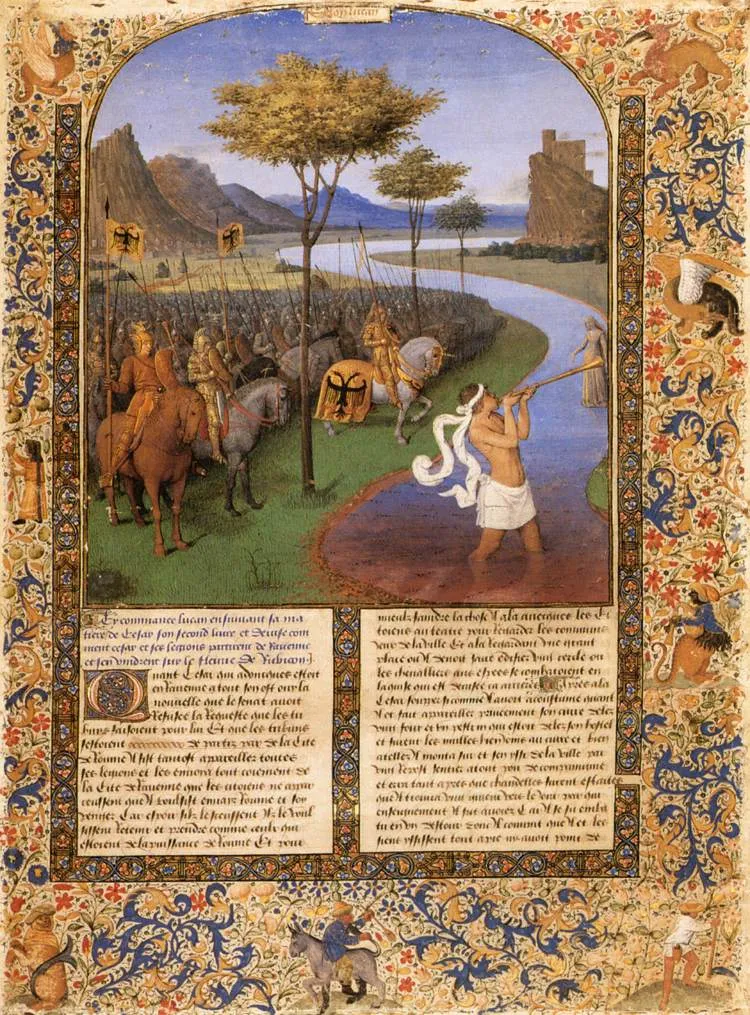
La rottura tra Cesare e Pompeo dopo la morte di Crasso non lasciò spazio a una soluzione politica. Nel 49 a.C., intimato dal Senato di deporre il comando e tornare a Roma come privato cittadino (dove un processo lo avrebbe sicuramente eliminato), Cesare oltrepassò il Rubicone con la XIII Legione: «alea iacta est». L'Italia cadde in poche settimane; Pompeo e gli ottimati fuggirono in Grecia.
The break between Caesar and Pompey after Crassus's death left no room for a political solution. In 49 BC, ordered by the Senate to lay down his command and return to Rome as a private citizen (where a trial would certainly have eliminated him), Caesar crossed the Rubicon with the Thirteenth Legion: «alea iacta est». Italy fell within weeks; Pompey and the optimates fled to Greece.
Nel 9 agosto 48 a.C. i due ex-suoceri si scontrarono a Farsalo, in Tessaglia. Cesare, in netta inferiorità numerica, distrusse l'esercito pompeiano in una sola giornata. Pompeo fuggì in Egitto sperando rifugio dal giovane re Tolomeo XIII; fu ucciso a tradimento sulla spiaggia il 28 settembre, la testa offerta a Cesare al suo sbarco. Cesare pianse, e fece giustiziare gli assassini.
On 9 August 48 BC the two former in-laws clashed at Pharsalus, in Thessaly. Caesar, heavily outnumbered, destroyed Pompey's army in a single day. Pompey fled to Egypt hoping for refuge from the young king Ptolemy XIII; he was treacherously murdered on the beach on 28 September, his head offered to Caesar on his landing. Caesar wept, and executed the assassins.
Seguirono quattro anni di guerre civili in Egitto (con Cleopatra), in Asia (Zela: «veni, vidi, vici»), in Africa (Tapso, 46 a.C.) e in Spagna (Munda, 45 a.C.). Tornato a Roma dittatore perpetuo, Cesare avviò riforme epocali (calendario giuliano, ridistribuzione delle terre, cittadinanza alle province) ma fu assassinato alle Idi di Marzo del 44 a.C. da una congiura di sessanta senatori guidata da Bruto e Cassio.
Four years of civil wars followed in Egypt (with Cleopatra), in Asia (Zela: «veni, vidi, vici»), in Africa (Thapsus, 46 BC) and in Spain (Munda, 45 BC). Returned to Rome as dictator for life, Caesar launched epochal reforms (Julian calendar, land redistribution, citizenship to the provinces) but was assassinated on the Ides of March 44 BC by a conspiracy of sixty senators led by Brutus and Cassius.
La sua eredità testamentaria andò al pronipote diciottenne Ottaviano, che con Marco Antonio e Lepido stipulò nel 43 a.C. il Secondo Triumvirato, questa volta legalizzato dalla Lex Titia. Le proscrizioni decimarono il Senato (Cicerone fra le prime vittime). A Filippi (42 a.C.) i cesaricidi furono annientati; ad Azio (31 a.C.) Ottaviano sconfisse Antonio e Cleopatra. Nel 27 a.C. il Senato gli conferì il titolo di Augustus: la Repubblica era morta, era nato l'Impero. Tutto era cominciato sessant'anni prima, nel tardo 60 a.C., con tre uomini che si erano stretti la mano lontano dal Senato.
His testamentary inheritance went to his nineteen-year-old great-nephew Octavian, who with Mark Antony and Lepidus sealed in 43 BC the Second Triumvirate, this time legalised by the Lex Titia. The proscriptions decimated the Senate (Cicero among the first victims). At Philippi (42 BC) the assassins were annihilated; at Actium (31 BC) Octavian defeated Antony and Cleopatra. In 27 BC the Senate granted him the title of Augustus: the Republic was dead, the Empire was born. It had all begun sixty years before, in late 60 BC, with three men shaking hands far from the Senate.