01L'Usurpatore di RomaThe Usurper of Rome
Il figlio escluso dalla Tetrarchia (ca. 283–306 d.C.)
The son excluded by the Tetrarchy (c. 283–306 AD)
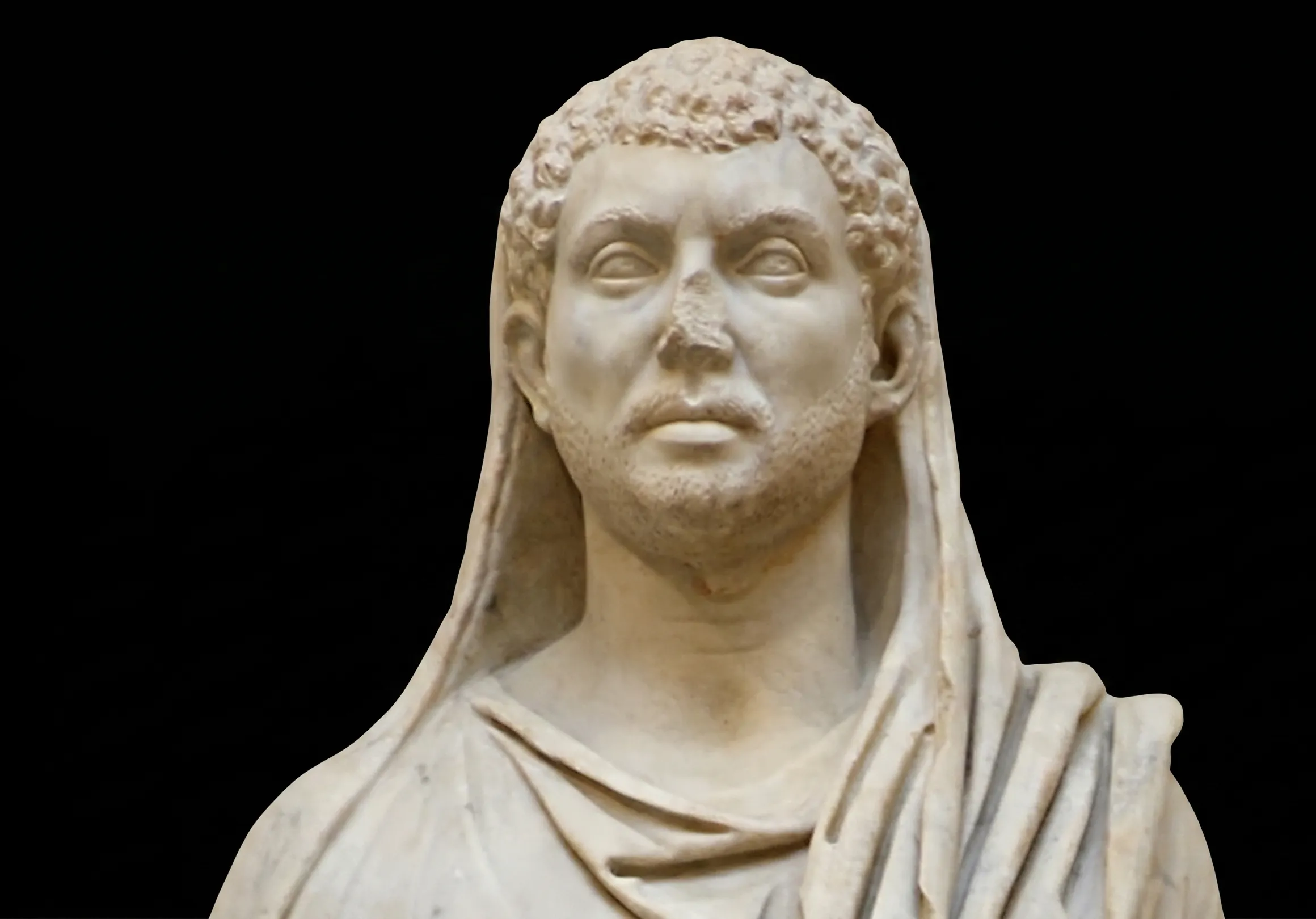
Marco Aurelio Valerio Massenzio nacque attorno al 283 d.C., figlio di Massimiano « Erculio» , l'Augusto d'Occidente, e di Eutropia. Sposò Valeria Massimilla, figlia di Galerio: era dunque figlio di un Augusto e genero di un altro. Per sangue, nessuno aveva titoli dinastici più forti dei suoi. Eppure, quando nel 305 Diocleziano e Massimiano abdicarono e fu istituita la « seconda Tetrarchia» , Massenzio fu clamorosamente escluso: i nuovi Cesari furono Severo e Massimino Daia, creature di Galerio. Il sistema dioclezianeo premiava il merito e non il sangue, ma per il figlio di un imperatore fu un'umiliazione intollerabile.
Marcus Aurelius Valerius Maxentius was born around 283 AD, son of Maximian "Herculius", the Augustus of the West, and of Eutropia. He married Valeria Maximilla, daughter of Galerius: he was thus the son of one Augustus and son-in-law of another. By blood, no one had stronger dynastic claims. Yet when in 305 Diocletian and Maximian abdicated and the "second Tetrarchy" was established, Maxentius was sensationally passed over: the new Caesars were Severus and Maximinus Daia, creatures of Galerius. The Diocletianic system rewarded merit, not blood, but for an emperor's son it was an intolerable humiliation.
Il colpo di Roma (28 ottobre 306)
The Roman coup (28 October 306)
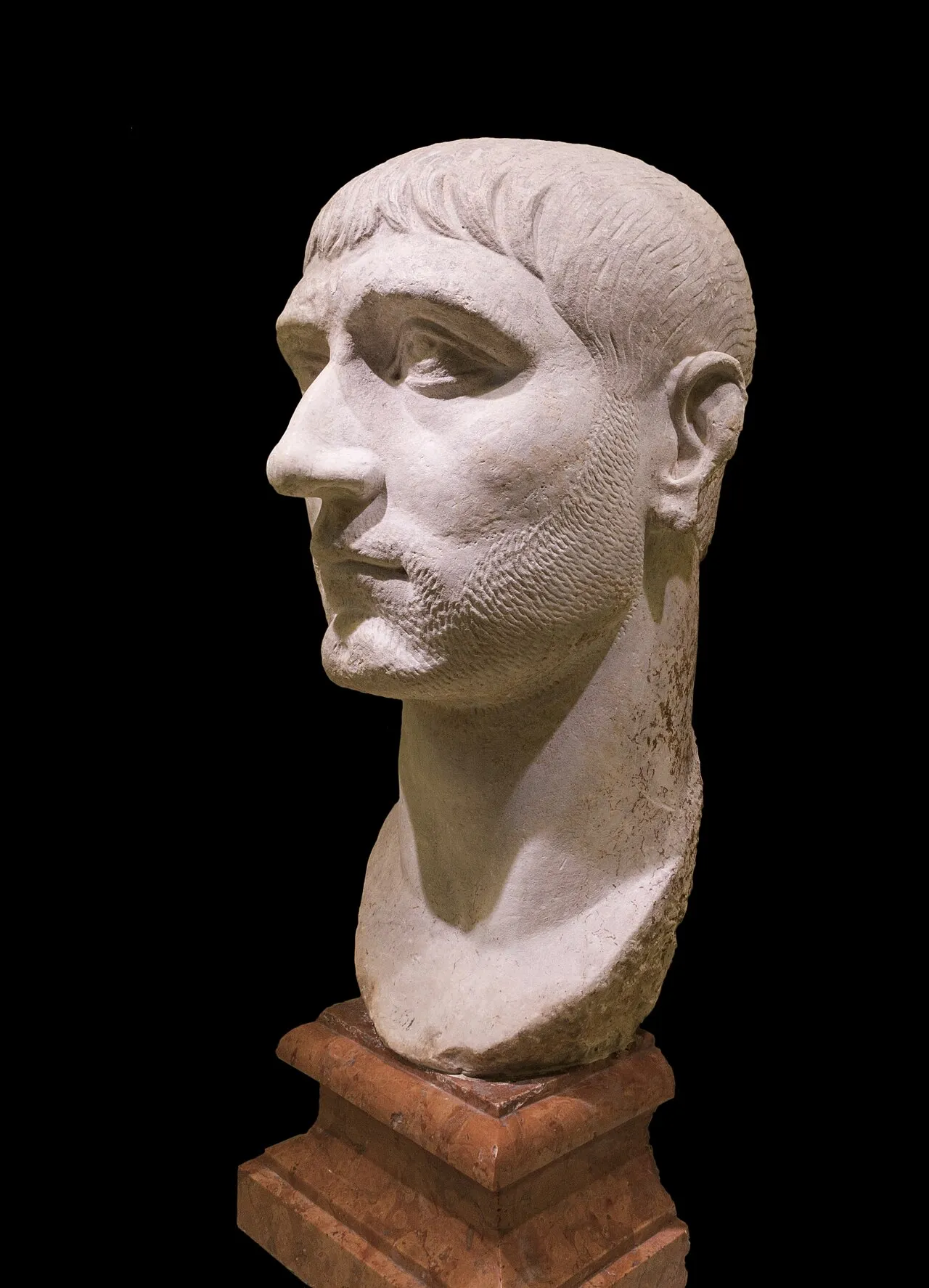
L'occasione venne da Roma stessa. Galerio aveva deciso di estendere la tassazione all'Italia e di sciogliere quanto restava della Guardia Pretoriana, privando l'Urbe degli ultimi privilegi che la distinguevano. Roma, già ridotta a capitale onoraria dalla Tetrarchia, nessun imperatore vi risiedeva da decenni, era furibonda. Il 28 ottobre 306 i pretoriani e il popolo acclamarono Massenzio, che si trovava in città: assunse dapprima il titolo prudente di princeps, poi quello pieno di Augustus. Per la prima volta da una generazione un imperatore tornava a risiedere a Roma e a farsene campione. Pochi mesi prima, a York, le legioni avevano acclamato Costantino: i due figli dei tetrarchi, esclusi dal sistema, lo facevano crollare nello stesso anno.
The opportunity came from Rome itself. Galerius had decided to extend taxation to Italy and to disband what remained of the Praetorian Guard, stripping the City of the last privileges that distinguished it. Rome, already reduced to a ceremonial capital by the Tetrarchy, no emperor had resided there for decades, was furious. On 28 October 306 the praetorians and the people acclaimed Maxentius, who was in the city: he first took the cautious title of princeps, then the full Augustus. For the first time in a generation an emperor again resided in Rome and made himself its champion. A few months earlier, at York, the legions had acclaimed Constantine: the two sons of the tetrarchs, excluded from the system, brought it down in the same year.
02Il Difensore d'ItaliaThe Defender of Italy
La Tetrarchia non poteva tollerare un usurpatore nel cuore dell'Impero. Reagì con due invasioni: entrambe fallite davanti alle Mura Aureliane, che Massenzio fece restaurare e potenziare.
The Tetrarchy could not tolerate a usurper at the heart of the Empire. It reacted with two invasions: both repelled before the Aurelian Walls, which Maxentius had restored and strengthened.
- 307 d.C.La sconfitta di Severo II — L'Augusto Severo marciò su Roma da Milano, ma il suo esercito, in gran parte veterani del vecchio Massimiano, lo abbandonò. Assediò invano la città, ripiegò su Ravenna, si arrese e fu costretto al suicidio. Massenzio aveva eliminato il primo Augusto.The defeat of Severus II — The Augustus Severus marched on Rome from Milan, but his army, largely old Maximian's veterans, deserted him. He besieged the city in vain, fell back on Ravenna, surrendered and was forced to suicide. Maxentius had eliminated the first Augustus.
- 307 d.C.La ritirata di Galerio — Il potente Augusto d'Oriente invase l'Italia in persona, ma anche il suo esercito si sfaldò tra le diserzioni davanti a Roma; dovette ritirarsi devastando la campagna. La città, cinta dalle Mura Aureliane, si era rivelata imprendibile per due Augusti in un anno.Galerius's retreat — The powerful Augustus of the East invaded Italy in person, but his army too crumbled amid desertions before Rome; he had to withdraw, ravaging the countryside. The city, ringed by the Aurelian Walls, had proved impregnable to two Augusti in a single year.
- 308–310 d.C.La rivolta d'Africa — Il vicario d'Africa Domizio Alessandro si proclamò imperatore e bloccò le navi del grano, affamando Roma. Massenzio inviò il prefetto Rufio Volusiano, che lo sconfisse e giustiziò: l'Africa e l'annona tornarono sotto controllo.The African revolt — The vicar of Africa Domitius Alexander proclaimed himself emperor and blocked the grain ships, starving Rome. Maxentius sent the prefect Rufius Volusianus, who defeated and executed him: Africa and the annona returned to control.
- 308 d.C.La rottura col padre — Massimiano, uscito dal ritiro, tentò di deporre il proprio figlio strappandogli la porpora davanti alle truppe a Roma: ma i soldati restarono fedeli a Massenzio. Il vecchio Augusto fuggì da Costantino, presso il quale, due anni dopo, sarebbe stato costretto al suicidio.The break with his father — Maximian, out of retirement, tried to depose his own son by tearing the purple from him before the troops in Rome: but the soldiers stayed loyal to Maxentius. The old Augustus fled to Constantine, at whose court, two years later, he would be forced to suicide.
03Il Grande Costruttore di RomaThe Great Builder of Rome
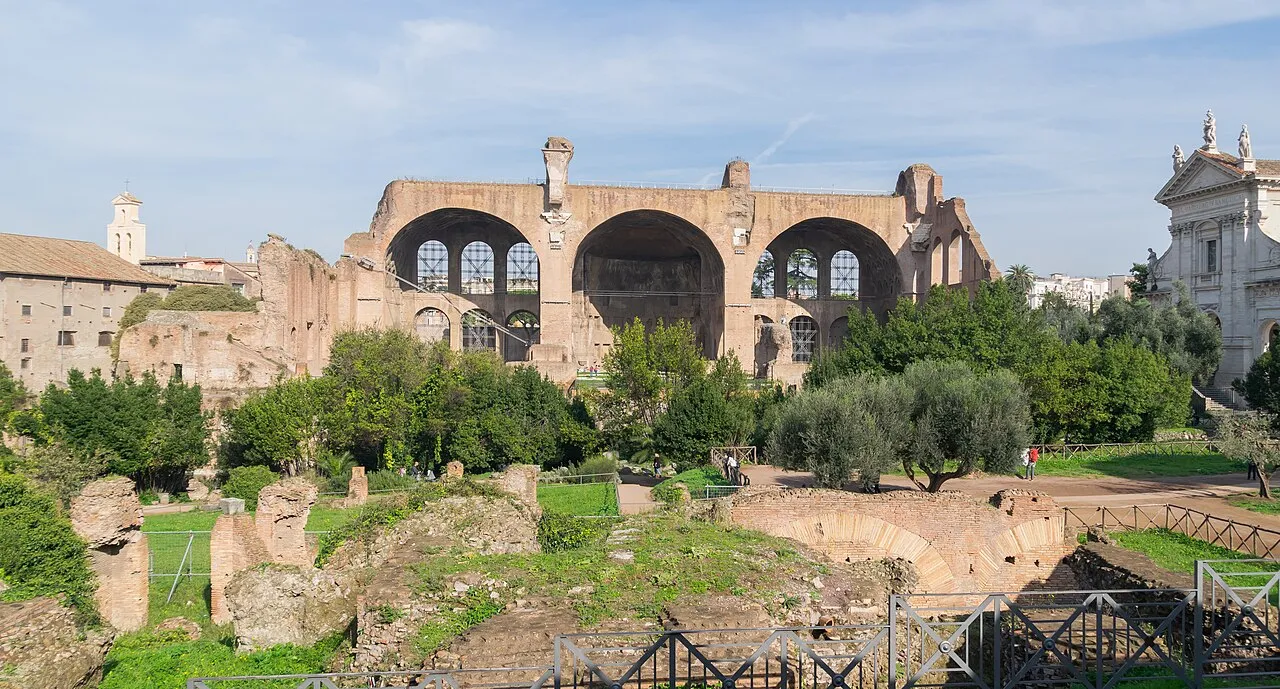
La Basilica Nova e il Foro
The Basilica Nova and the Forum
Massenzio lanciò il più ambizioso programma edilizio che Roma vedesse da oltre un secolo, deciso a riaffermare il primato architettonico dell'Urbe. Il capolavoro fu la Basilica di Massenzio (Basilica Nova) sulla Velia, accanto al Foro: un'aula immensa coperta da gigantesche volte di calcestruzzo, modello per architetti dal Rinascimento in poi (si dice ispirasse Bramante e Michelangelo per la nuova San Pietro). Restaurò inoltre il Tempio di Venere e Roma, il più grande della città, distrutto da un incendio.
Maxentius launched the most ambitious building programme Rome had seen in over a century, determined to reassert the City's architectural primacy. The masterpiece was the Basilica of Maxentius (Basilica Nova) on the Velia, beside the Forum: an immense hall roofed by gigantic concrete vaults, a model for architects from the Renaissance onward (said to have inspired Bramante and Michelangelo for the new St Peter's). He also restored the Temple of Venus and Roma, the largest in the city, destroyed by fire.
Il complesso della Via Appia
The Via Appia complex
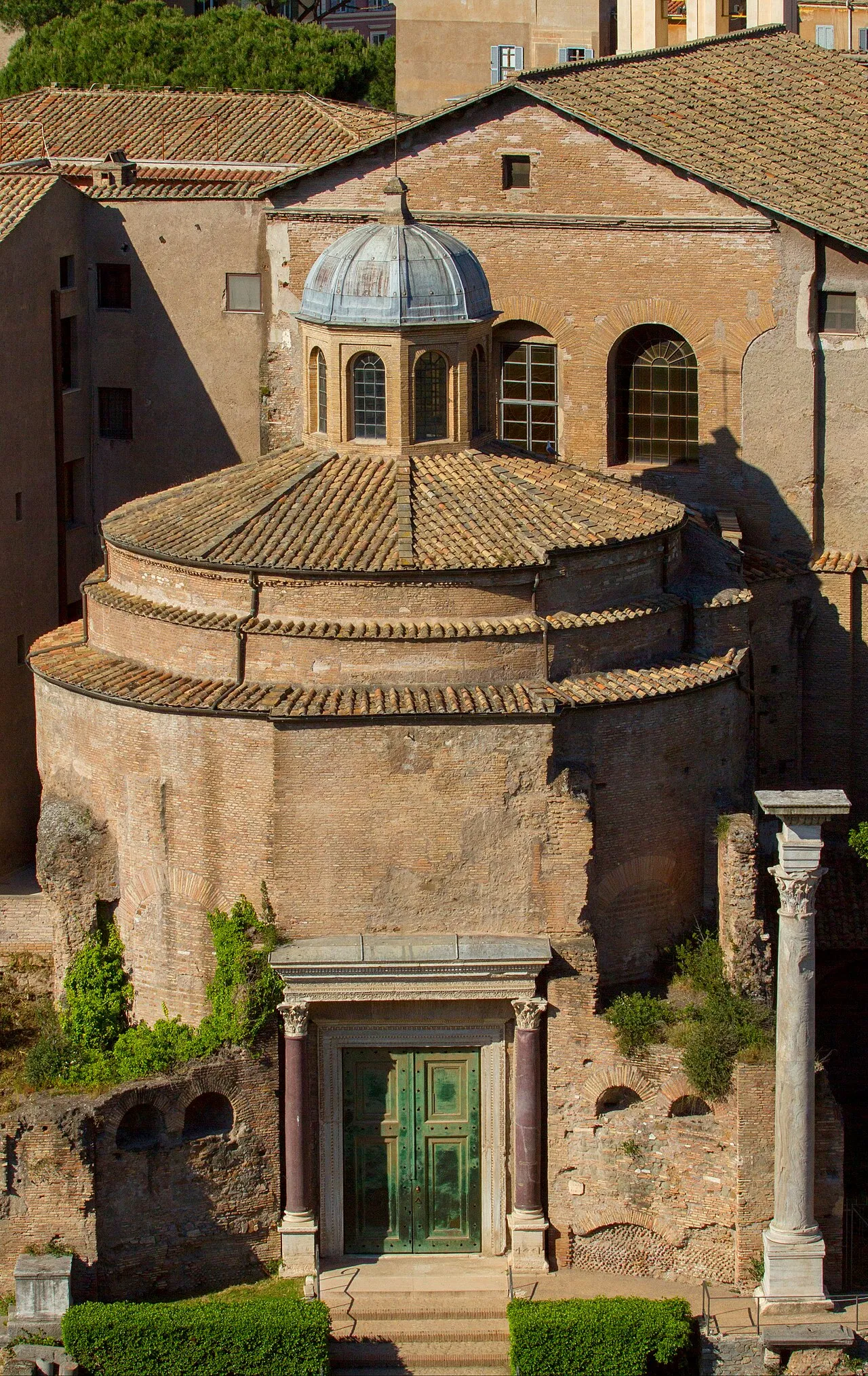
Quando il figlioletto Valerio Romolo morì nel 309, Massenzio lo divinizzò e gli dedicò il Tempio di Romolo sul Foro, oggi vestibolo della chiesa dei Santi Cosma e Damiano, con le porte bronzee originali ancora funzionanti dopo diciassette secoli. Sulla Via Appia eresse un grande complesso dinastico: un palazzo, il mausoleo di Romolo e un circo di diecimila posti, il Circo di Massenzio, il meglio conservato del mondo romano. Era la dichiarazione di una dinastia che intendeva radicarsi a Roma per sempre.
When his little son Valerius Romulus died in 309, Maxentius deified him and dedicated to him the Temple of Romulus on the Forum, today the vestibule of the church of Santi Cosma e Damiano, with its original bronze doors still working after seventeen centuries. On the Via Appia he raised a great dynastic complex: a palace, the mausoleum of Romulus and a circus for ten thousand spectators, the Circus of Maxentius, the best preserved in the Roman world. It was the declaration of a dynasty meaning to root itself in Rome forever.
04La Caduta al Ponte Milvio (312)The Fall at the Milvian Bridge (312)
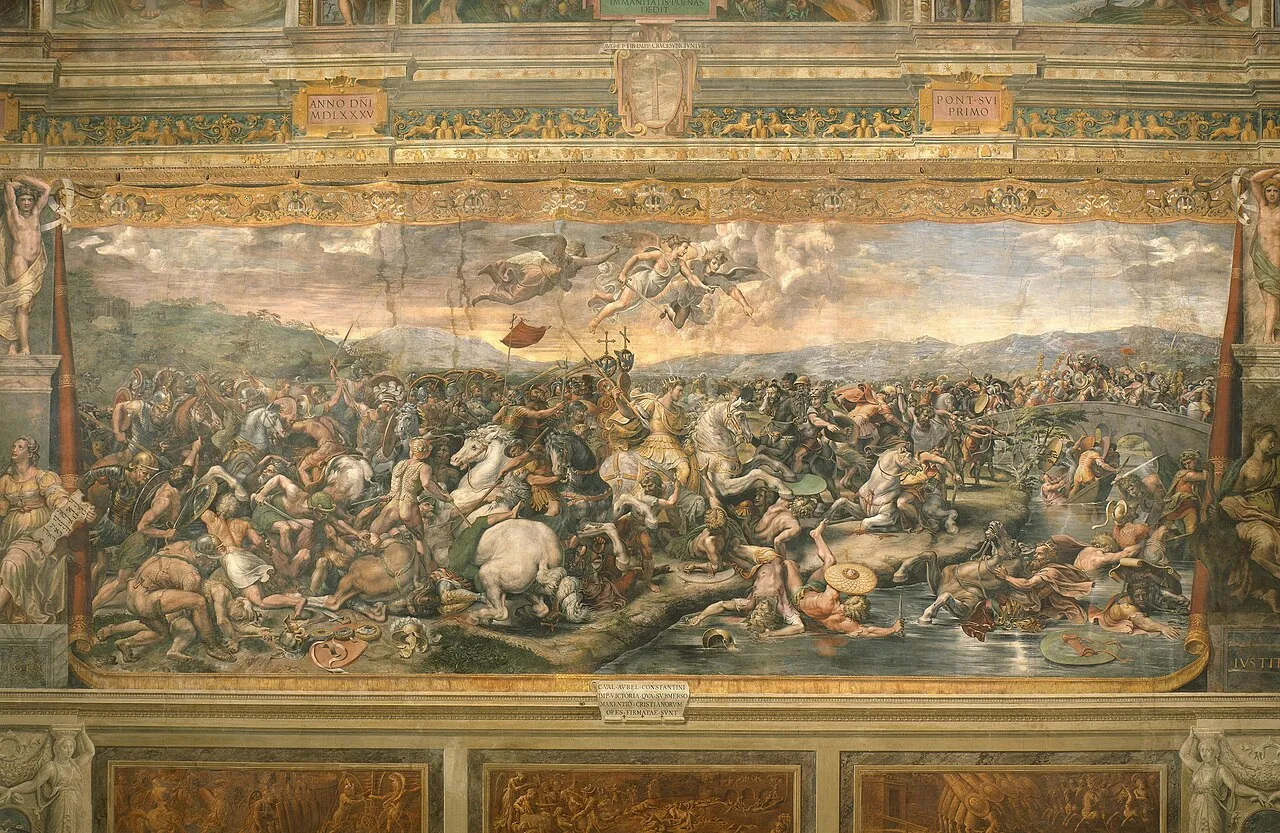
Nel 312 Costantino, signore di Gallia e Britannia, invase l'Italia con un esercito agguerrito, travolgendo le città del Nord. Massenzio aveva i numeri e le invincibili Mura Aureliane: gli sarebbe bastato resistere, come contro Severo e Galerio. Ma, forse fidando in un responso dei Libri Sibillini secondo cui « il nemico di Roma sarebbe perito» , e temendo l'umore mutevole del popolo, commise l'errore fatale di uscire in campo aperto.
In 312 Constantine, lord of Gaul and Britain, invaded Italy with a battle-hardened army, sweeping aside the northern cities. Maxentius had the numbers and the impregnable Aurelian Walls: he need only have held out, as against Severus and Galerius. But (perhaps trusting an oracle from the Sibylline Books that "the enemy of Rome would perish", and fearing the people's shifting mood) he made the fatal error of marching into the open field.
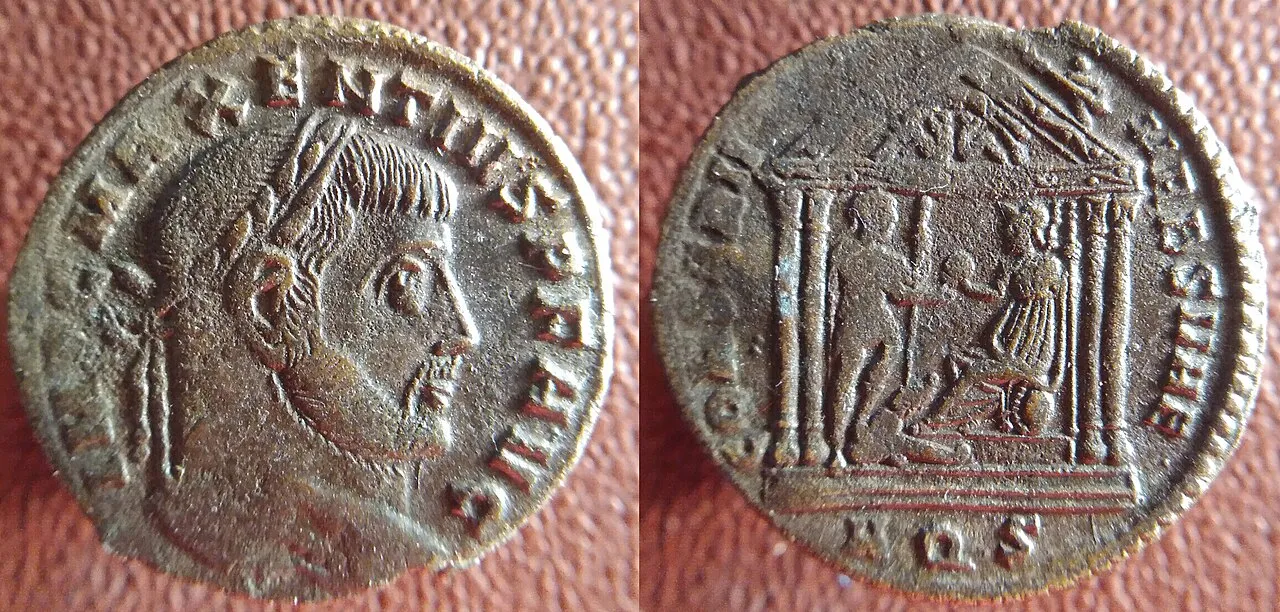
Il 28 ottobre 312 i due eserciti si scontrarono al Ponte Milvio, sul Tevere a nord di Roma. Massenzio aveva fatto tagliare il ponte di pietra e gettare un ponte di barche provvisorio per le manovre. Quando le sue linee cedettero sotto l'urto della cavalleria costantiniana e cominciò la ritirata, la calca dei fuggiaschi fece crollare il ponte di barche: Massenzio, in pesante armatura, precipitò nel Tevere e annegò. Il giorno dopo il suo corpo fu ripescato dal fiume, la testa mozzata e portata in trionfo per le strade di Roma, poi spedita in Africa a monito dei ribelli. Costantino entrò nell'Urbe accolto come liberatore.
On 28 October 312 the two armies clashed at the Milvian Bridge, on the Tiber north of Rome. Maxentius had cut the stone bridge and thrown across a temporary boat-bridge for manoeuvres. When his lines gave way under the charge of Constantine's cavalry and the retreat began, the press of fugitives made the boat-bridge collapse: Maxentius, in heavy armour, plunged into the Tiber and drowned. The next day his body was fished from the river, his head cut off and carried in triumph through the streets of Rome, then sent to Africa as a warning to the rebels. Constantine entered the City welcomed as a liberator.
05Eredità: il Tiranno e il CostruttoreLegacy: the Tyrant and the Builder
Costantino decretò la damnatio memoriae di Massenzio e ne riscrisse la figura come quella di un « tiranno» crudele, lussurioso e illegittimo, la versione tramandata da Eusebio e Lattanzio, autori cristiani al servizio del vincitore. Si appropriò inoltre delle sue opere: la Basilica Nova, il Tempio di Venere e Roma restaurato, l'intero programma monumentale del Foro divennero « costantiniani» .
Constantine decreed the damnatio memoriae of Maxentius and rewrote his figure as that of a cruel, lustful and illegitimate « tyrant» — the version handed down by Eusebius and Lactantius, Christian authors in the victor's service. He also appropriated his works: the Basilica Nova, the restored Temple of Venus and Roma, the whole monumental programme of the Forum became « Constantinian» .
La riabilitazione moderna
The modern rehabilitation
La storiografia moderna ha ribaltato il giudizio. Massenzio non fu un tiranno sanguinario ma un amministratore capace e, paradosso, relativamente tollerante coi cristiani: pose fine alla persecuzione a Roma, restituì i beni confiscati e permise di nuovo l'elezione dei vescovi di Roma (i papi Marcello, Eusebio e Milziade). Soprattutto fu l'ultimo imperatore a vivere e costruire a Roma, l'ultimo a credere che il cuore dell'Impero fosse ancora sul Tevere. Dopo di lui, e dopo la vittoria di Costantino, il baricentro si sposterà per sempre verso Costantinopoli. Le sue basiliche, il suo circo, i suoi templi restano: ironia suprema della storia, i monumenti del « tiranno» sono fra i più belli che la Roma antica ci abbia lasciato.
Modern historiography has reversed the verdict. Maxentius was no bloody tyrant but a capable administrator and, paradoxically, relatively tolerant toward Christians: he ended the persecution in Rome, restored confiscated property and again allowed the election of the bishops of Rome (popes Marcellus, Eusebius and Miltiades). Above all he was the last emperor to live and build in Rome, the last to believe the heart of the Empire was still on the Tiber. After him, and after Constantine's victory, the centre of gravity would shift forever toward Constantinople. His basilicas, his circus, his temples remain: history's supreme irony, the monuments of the "tyrant" are among the most beautiful that ancient Rome has left us.