01Il Cesare d'OrienteCaesar of the East
Origini illiriche: il pastore della Dacia (ca. 258 d.C.)
Illyrian origins: the Dacian herdsman (c. 258 AD)
Gaius Galerius Valerius Maximianus nacque verso il 258 d.C. nei pressi della Felix Romuliana (odierna Gamzigrad, Serbia orientale), nella regione della Mesia Superiore ai confini con la Dacia ripense. Le fonti (soprattutto il cristiano Lattanzio, suo nemico giurato) insistono sulle umili origini: la madre Romula sarebbe stata una contadina della Dacia transdanubiana, fuggita oltre il fiume durante le invasioni dei Carpi; il padre, un piccolo proprietario del Danubio. Da giovane, prima di entrare nell'esercito, avrebbe fatto il bubulcus, il bovaro, soprannome ironico che lo accompagnò per tutta la vita (Armentarius, «mandriano»). Apparteneva al ceppo illirico di soldati che dal regno di Aureliano in poi monopolizzò il trono: rude, devoto agli dèi tradizionali, formato dalla disciplina del limes danubiano, profondamente sospettoso della cultura urbana mediterranea.
Gaius Galerius Valerius Maximianus was born around 258 AD near Felix Romuliana (modern Gamzigrad, eastern Serbia), in the region of Moesia Superior on the border with Dacia Ripensis. The sources (above all the Christian Lactantius, his sworn enemy) insist on his humble origins: his mother Romula was a Dacian peasant from beyond the Danube, who had fled the river during the Carpic invasions; his father a small Danubian landowner. As a young man, before joining the army, he is said to have been a bubulcus, an ox-herd, an ironic nickname that stayed with him for life (Armentarius, "the herdsman"). He belonged to the Illyrian stock of soldiers who, from Aurelian's reign onward, monopolised the throne: rough, devoted to the traditional gods, shaped by the discipline of the Danubian limes, deeply suspicious of Mediterranean urban culture.
L'ascesa militare e la nomina a Cesare (1 marzo 293)
Military rise and appointment as Caesar (1 March 293)
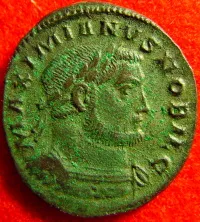
Entrò nell'esercito sotto Aureliano e Probo, distinguendosi nelle campagne danubiane contro Sarmati e Carpi. Quando DioclezianoDiocletian decise di completare la Tetrarchia il 1° marzo 293, lo scelse come proprio Cesare d'Oriente: un soldato senza ambizioni dinastiche autonome, illirico come lui, abituato a obbedire. Galerio fu costretto a ripudiare la prima moglie e a sposare Valeria, figlia di Diocleziano: operazione politica che lo legava al sangue dell'Augusto superiore. Insieme a Costanzo I Cloro, Cesare d'Occidente, ricevette il titolo di nobilissimus Caesar e una porzione del potere imperiale.
He entered the army under Aurelian and Probus, distinguishing himself in Danubian campaigns against Sarmatians and Carpi. When Diocletian decided to complete the Tetrarchy on 1 March 293, he chose Galerius as his Caesar of the East: a soldier without independent dynastic ambitions, an Illyrian like himself, accustomed to obey. Galerius was forced to repudiate his first wife and marry Valeria, Diocletian's daughter, a political operation binding him by blood to the senior Augustus. Together with Constantius I Chlorus, Caesar of the West, he received the title nobilissimus Caesar and a share of imperial power.
La capitale di Tessalonica e l'aspetto fisico
Capital at Thessalonica and physical appearance
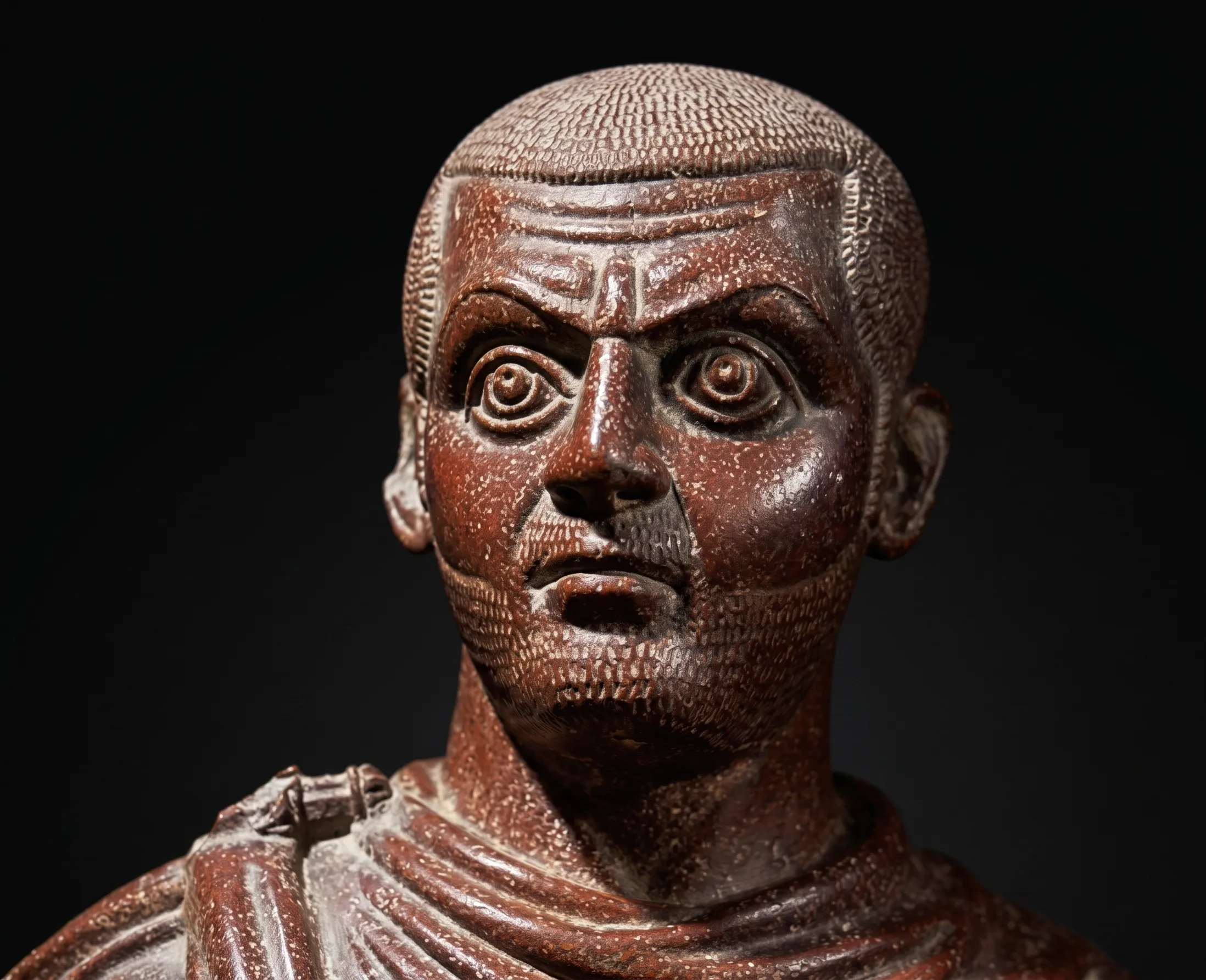
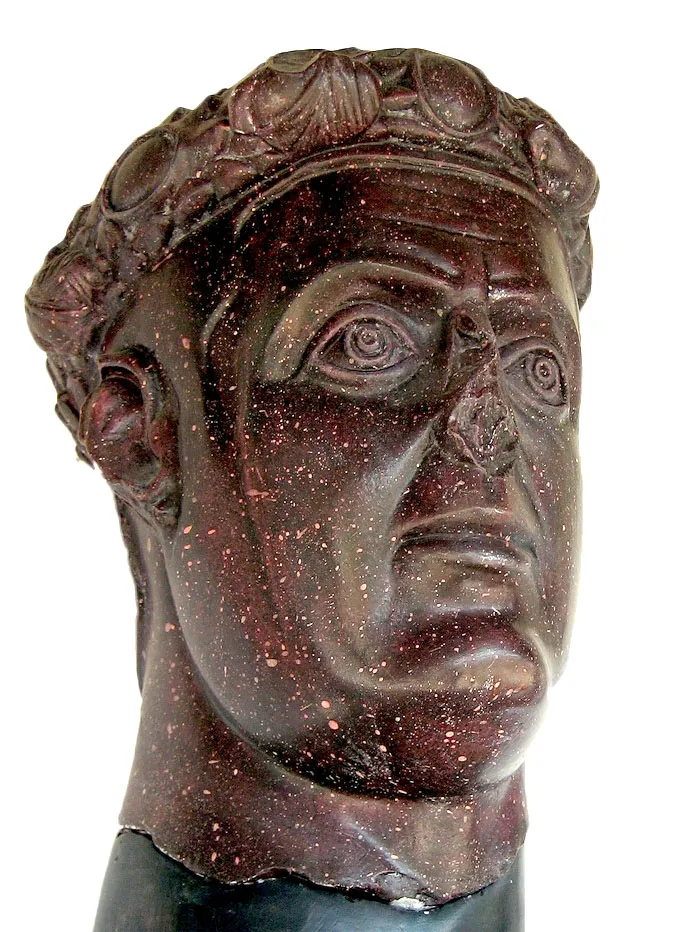
La sua capitale operativa divenne dapprima Sirmium (in Pannonia, oggi Sremska Mitrovica), poi Tessalonica (Salonicco), dove fece edificare un grandioso complesso palaziale con palazzo, ippodromo, mausoleo (l'attuale Rotonda) e l'Arco di Galerio, monumento celebrativo della vittoria persiana. Le fonti lo descrivono come un uomo di statura imponente, di corporatura massiccia, dal volto duro e rosso, dalla voce tonante; Lattanzio, ostile, lo paragona a una belva per le maniere brutali. Anche i nemici riconoscevano la sua personale coraggio in battaglia e la lealtà assoluta verso Diocleziano.
His operational capital became first Sirmium (in Pannonia, modern Sremska Mitrovica), then Thessalonica, where he built a grandiose palace complex with palace, hippodrome, mausoleum (today's Rotunda) and the Arch of Galerius, monument celebrating the Persian victory. The sources describe him as a man of imposing stature, massive build, with a hard reddish face and a thundering voice; the hostile Lactantius compares him to a wild beast for his brutal manners. Even his enemies recognised his personal courage in battle and his absolute loyalty to Diocletian.
02La Guerra Persiana: Sconfitta e RivincitaThe Persian War: Defeat and Revenge
L'attacco di Narsete e il disastro di Carre (296 d.C.)
Narses's attack and the disaster at Carrhae (296 AD)
Nel 296 il nuovo sovrano sasanide Narsete (Narseh) ruppe la pace stipulata da Caro: invase l'Armenia, espulse il re cliente filo-romano Tiridate III e penetrò in Mesopotamia. Diocleziano, impegnato con la rivolta egizia di Domiziano e Achilleo, affidò la reazione al suo Cesare. Galerio attaccò frettolosamente con forze insufficienti, appena due legioni distaccate dal Danubio, e fu travolto da Narsete fra Carre e Callinico, in pieno deserto siriano. Era la stessa terra dove Marco Licinio Crasso aveva perso la vita e le insegne nel 53 a.C.; il fantasma di quella catastrofe pesò sul morale romano.
In 296 the new Sasanian sovereign Narses (Narseh) broke the peace concluded by Carus: he invaded Armenia, expelled the pro-Roman client king Tiridates III, and pushed into Mesopotamia. Diocletian, busy with the Egyptian revolt of Domitianus and Achilleus, entrusted the response to his Caesar. Galerius attacked hastily with insufficient forces, barely two legions detached from the Danube, and was overwhelmed by Narses between Carrhae and Callinicum, in the Syrian desert. It was the same land where Marcus Licinius Crassus had lost his life and the standards in 53 BC; the ghost of that catastrophe weighed on Roman morale.
L'umiliazione di Antiochia
The humiliation at Antioch
Quando Galerio raggiunse Antiochia per rendere conto della disfatta, Diocleziano, secondo il racconto di Eutropio e Festo, lo fece camminare per più di un miglio in vesti imperiali porpora a fianco del carro dell'Augusto, davanti a tutto l'esercito riunito. Era una punizione cerimoniale studiata: pubblica, calcolata, ma non distruttiva. Diocleziano voleva ferirne l'orgoglio senza spezzarne la lealtà. Galerio incassò il colpo in silenzio e chiese una seconda possibilità con un esercito vero: venticinquemila uomini tratti dalle legioni illiriche, le sue truppe migliori.
When Galerius reached Antioch to account for the disaster, Diocletian, according to Eutropius and Festus, made him walk for more than a mile in imperial purple beside the chariot of the Augustus, in front of the assembled army. It was a calculated ceremonial punishment: public, deliberate, but not destructive. Diocletian sought to wound his pride without breaking his loyalty. Galerius absorbed the blow in silence and requested a second chance with a real army: twenty-five thousand men drawn from the Illyrian legions, his best troops.
La marcia armena e la battaglia di Satala (297–298 d.C.)
The Armenian march and the Battle of Satala (297–298 AD)
Nel 297 Galerio cambiò strategia. Anziché ripetere l'errore di avanzare nelle pianure aperte della Mesopotamia, dove la cavalleria sasanide era imbattibile, scelse la via dell'Armenia montuosa: terreno favorevole alla fanteria romana, popolazione locale fedele al re Tiridate. La marcia notturna attraverso le gole armene colse il campo persiano completamente di sorpresa. La battaglia di Satala (298) fu un trionfo totale: l'esercito di Narsete fu annientato, lo stesso re fuggì ferito, e Galerio catturò la famiglia reale persiana: moglie, sorelle, figli, harem, tesoro, archivio. Una preda senza precedenti dai tempi di Settimio Severo.
In 297 Galerius changed strategy. Rather than repeat the mistake of advancing on the open Mesopotamian plains, where Sasanian cavalry was unbeatable, he chose the route through mountainous Armenia: terrain favourable to Roman infantry, with local population loyal to King Tiridates. A night march through the Armenian gorges caught the Persian camp completely by surprise. The Battle of Satala (298) was a total triumph: Narses's army was annihilated, the king himself fled wounded, and Galerius captured the Persian royal family: wife, sisters, children, harem, treasury, archive. A prize without precedent since Septimius Severus.
La Pace di Nisibi (299): il trattato più favorevole in secoli
The Peace of Nisibis (299): the most favourable treaty in centuries
La Pace di Nisibi, negoziata personalmente da Galerio con l'ambasciatore persiano Aphpharban, fu il trattato più favorevole stipulato da Roma con la Persia da generazioni:
- TerritoriCinque satrapie transtigriane cedute a Roma: Intelene, Sophene, Arzanene, Carduene, Zabdicene: bacini montuosi del Tigri superiore, controllo sui passi tra Mesopotamia e Armenia.Five trans-Tigrine satrapies ceded to Rome: Intelene, Sophene, Arzanene, Carduene, Zabdicene: mountain basins of the upper Tigris, control over the passes between Mesopotamia and Armenia.
- ArmeniaTiridate III restaurato sul trono armeno come re cliente romano; l'Armenia, da quel momento, sarebbe stata stabilmente nell'orbita romana, e nel 301 si convertì ufficialmente al cristianesimo, prima nazione al mondo a farlo.Tiridates III restored on the Armenian throne as Roman client king; Armenia from that moment would remain stably in the Roman orbit, and in 301 officially converted to Christianity, the first nation in the world to do so.
- CommercioNisibis dichiarata unico mercato consentito per il commercio romano-persiano: tutto il traffico carovaniero tra i due imperi doveva transitarvi, sotto controllo doganale romano. Una vittoria commerciale equivalente alla vittoria territoriale.Nisibis declared the sole authorised market for Roman-Persian trade: all caravan traffic between the two empires had to pass through it under Roman customs control. A commercial victory equivalent to the territorial one.
- IberiaIl regno di Iberia caucasica (odierna Georgia) riconosciuto come zona di influenza romana, con investitura del re affidata all'imperatore di Roma.The kingdom of Caucasian Iberia (modern Georgia) recognised as a Roman sphere of influence, with the king's investiture entrusted to the emperor of Rome.
La pace di Nisibi tenne per sessantaquattro anni, fino al disastro di Giuliano nel 363. Per Galerio fu la rivincita totale: tornò in Oriente come triumphator persicus, fece coniare moneta con la legenda VICTORIA AETERNA AVG, e iniziò a comportarsi non più come un Cesare subordinato ma come futuro Augusto a pieno titolo.
The Peace of Nisibis held for sixty-four years, until Julian's disaster in 363. For Galerius it was total revenge: he returned to the East as triumphator persicus, had coins struck with the legend VICTORIA AETERNA AVG, and began to behave no longer as a subordinate Caesar but as a future Augustus in his own right.
03La Grande PersecuzioneThe Great Persecution
L'incidente del sacrificio (302 d.C.)
The sacrifice incident (302 AD)
Le fonti cristiane (Lattanzio in De mortibus persecutorum, Eusebio nella Storia ecclesiastica) concordano: il principale istigatore della Grande Persecuzione non fu Diocleziano ma Galerio. La madre Romula, sacerdotessa pagana fanatica, gli avrebbe trasmesso un odio viscerale per i cristiani. L'episodio scatenante avvenne ad Antiochia nel 302: durante un sacrificio pubblico, gli aruspici non riuscirono a leggere i presagi nelle viscere delle vittime. Accusarono i cristiani presenti tra il personale di corte di aver «contaminato» il rito facendosi il segno della croce. Galerio chiese a Diocleziano misure repressive; Diocleziano, prudente, esitò; ma il Cesare insistette per tutto l'inverno 302–303.
Christian sources (Lactantius in De mortibus persecutorum, Eusebius in the Ecclesiastical History) agree: the principal instigator of the Great Persecution was not Diocletian but Galerius. His mother Romula, a fanatical pagan priestess, had transmitted to him a visceral hatred of Christians. The triggering episode occurred at Antioch in 302: during a public sacrifice, the haruspices were unable to read the omens in the victims' entrails. They accused the Christians present among the court staff of having "contaminated" the rite by making the sign of the cross. Galerius pressed Diocletian for repressive measures; Diocletian, cautious, hesitated; but the Caesar insisted throughout the winter of 302–303.
I quattro editti del 303–304
The four edicts of 303–304
La consultazione dell'oracolo di Apollo a Didyma chiuse la questione: il dio rispose che «i giusti sulla terra» impedivano i suoi vaticini. Il 23 febbraio 303, festa dei Terminalia, la cattedrale di Nicomedia fu rasa al suolo davanti a Diocleziano e Galerio. Il giorno seguente fu promulgato il primo editto:
Consulting the oracle of Apollo at Didyma closed the matter: the god replied that "the just on earth" prevented his prophecies. On 23 February 303, feast of the Terminalia, the cathedral of Nicomedia was razed before Diocletian and Galerius. The following day the first edict was promulgated:
- I edittoFeb 303 — Demolizione di tutte le chiese, sequestro e rogo delle Scritture, perdita dei diritti civili per i cristiani, decadenza dalle cariche pubbliche. Esecuzione di chi rifiutasse il sacrificio alle insegne imperiali.Feb 303 — Demolition of all churches, seizure and burning of the Scriptures, loss of civil rights for Christians, removal from public office. Execution of those refusing to sacrifice to the imperial standards.
- II edittoEstate 303 — Arresto di tutto il clero (vescovi, presbiteri, diaconi, lettori) per costringerlo al sacrificio. Le prigioni dell'impero d'Oriente si riempirono al punto che dovettero essere svuotate per fare spazio ai criminali comuni.Summer 303 — Arrest of all clergy (bishops, presbyters, deacons, lectors) to compel them to sacrifice. The prisons of the eastern empire filled to such an extent that they had to be emptied to make room for common criminals.
- III edittoAutunno 303 — Amnistia parziale: chiunque sacrificasse veniva liberato. Diocleziano sperava di chiudere la questione con apostasie di massa.Autumn 303 — Partial amnesty: anyone who sacrificed was freed. Diocletian hoped to close the matter through mass apostasy.
- IV edittoPrimavera 304 — Sacrificio obbligatorio esteso a tutti i cittadini dell'impero, sotto pena di morte. È la fase più sanguinosa: martirio di Felice di Tibiuca, Eulalia di Mérida, Vincenzo di Saragozza, Agnese, Lucia di Siracusa, Giorgio di Lydda, e di centinaia di altri.Spring 304 — Compulsory sacrifice extended to all citizens of the empire, under penalty of death. This was the bloodiest phase: martyrdoms of Felix of Thibiuca, Eulalia of Mérida, Vincent of Saragossa, Agnes, Lucy of Syracuse, George of Lydda, and hundreds of others.
Geografia della persecuzione
Geography of the persecution
L'applicazione fu disomogenea. Nei territori di Costanzo I (Gallia e Britannia) si limitò alla distruzione di qualche edificio di culto: nessuna esecuzione. Nei domini di Massimiano (Italia, Africa) fu moderata. Ma in Oriente, Asia Minore, Siria, Egitto, dove regnava Galerio e dove i cristiani erano più numerosi, la persecuzione raggiunse un'intensità senza precedenti, proseguita anche dopo l'abdicazione di Diocleziano (305) dal nuovo Augusto Galerio e dal suo Cesare Massimino Daia, fino al 311. Le stime moderne contano tra 3.000 e 10.000 vittime accertate: cifra non enorme rispetto alle persecuzioni anti-eretiche dei secoli successivi, ma sufficiente a creare il martirologio fondante della Chiesa cristiana.
Enforcement was uneven. In the territories of Constantius I (Gaul and Britain) it was limited to destroying a few cult buildings: no executions. In Maximian's domains (Italy, Africa) it was moderate. But in the East, Asia Minor, Syria, Egypt, where Galerius reigned and where Christians were most numerous, the persecution reached an unprecedented intensity, continuing even after Diocletian's abdication (305) under the new Augustus Galerius and his Caesar Maximinus Daia, until 311. Modern estimates count between 3,000 and 10,000 confirmed victims, not enormous compared to the anti-heretical persecutions of later centuries, but enough to create the founding martyrology of the Christian Church.
04L'Augusto d'Oriente e il fallimento della successioneAugustus of the East and the failed succession
L'abdicazione di Diocleziano (1 maggio 305)
Diocletian's abdication (1 May 305)
Il 1° maggio 305, in una cerimonia parallela a Nicomedia (Diocleziano) e a Milano (Massimiano), i due Augusti abdicarono contemporaneamente: caso unico nella storia romana. Galerio e Costanzo I divennero automaticamente Augusti; bisognava nominare due nuovi Cesari. Tutti si aspettavano i figli adulti dei due tetrarchi anziani: Costantino (figlio di Costanzo I) e Massenzio (figlio di Massimiano). Galerio impose invece due suoi protetti: il nipote Massimino Daia e l'amico Severo II. Fu il primo passo verso il crollo del sistema tetrarchico: aver escluso i figli legittimi creò un risentimento esplosivo.
On 1 May 305, in parallel ceremonies at Nicomedia (Diocletian) and Milan (Maximian), the two Augusti abdicated simultaneously: a unique case in Roman history. Galerius and Constantius I became automatically Augusti; two new Caesars had to be appointed. Everyone expected the adult sons of the two senior tetrarchs: Constantine (son of Constantius I) and Maxentius (son of Maximian). Galerius instead imposed two of his protégés: his nephew Maximinus Daia and his friend Severus II. It was the first step toward the collapse of the tetrarchic system: having excluded the legitimate sons created an explosive resentment.
La fuga di Costantino e l'usurpazione di Massenzio (306)
Constantine's flight and Maxentius's usurpation (306)
Trattenuto a corte come «ospite onorato» (in realtà ostaggio), il giovane Costantino fuggì rocambolescamente nel 306, attraversando l'Europa a cavallo e azzoppando i cavalli di posta dietro di sé per evitare l'inseguimento. Raggiunse il padre Costanzo I in Britannia poco prima della sua morte a Eboracum (York), il 25 luglio 306, e fu acclamato Augusto dalle legioni britanniche. A Roma, pochi mesi dopo (28 ottobre 306), Massenzio approfittò del malcontento per la nuova tassazione galeriana (Galerio aveva esteso il census all'Italia, prima esente) e si proclamò princeps. Galerio inviò Severo II contro Massenzio: Severo fu tradito dai propri soldati e ucciso (307). La Tetrarchia era finita.
Held at court as an "honoured guest" (in reality hostage), young Constantine fled dramatically in 306, crossing Europe on horseback and laming the post horses behind him to prevent pursuit. He reached his father Constantius I in Britain shortly before his death at Eboracum (York) on 25 July 306, and was acclaimed Augustus by the British legions. At Rome, a few months later (28 October 306), Maxentius exploited the discontent over the new Galerian taxation (Galerius had extended the census to Italy, previously exempt) and proclaimed himself princeps. Galerius sent Severus II against Maxentius: Severus was betrayed by his own soldiers and killed (307). The Tetrarchy was over.
La Conferenza di Carnuntum (11 novembre 308)
The Conference of Carnuntum (11 November 308)
Disperato, Galerio convocò Diocleziano fuori dal ritiro di Spalato e organizzò un vertice imperiale a Carnuntum (sul Danubio, presso Vienna) l'11 novembre 308. Diocleziano rifiutò di tornare al trono, la celebre risposta: «Se vedessi i cavoli che coltivo nel mio orto a Salona, non mi chiederesti di lasciarli». Galerio fece nominare Augusto d'Occidente il vecchio amico Licinio, mentre Costantino fu retrocesso a Cesare (e Massenzio dichiarato fuorilegge). Era un compromesso fragile, che durò poco. Da quel momento ci furono sei imperatori contemporanei (Galerio, Licinio, Costantino, Massimino Daia, Massenzio, e formalmente Massimiano richiamato in servizio) e la guerra civile diventò inevitabile.
Desperate, Galerius summoned Diocletian out of his retirement at Split and organised an imperial summit at Carnuntum (on the Danube, near Vienna) on 11 November 308. Diocletian refused to return to the throne, the famous reply: "If you could see the cabbages I grow in my garden at Salona, you would not ask me to leave them". Galerius had his old friend Licinius appointed Augustus of the West, while Constantine was demoted to Caesar (and Maxentius declared an outlaw). It was a fragile compromise, short-lived. From that moment there were six contemporary emperors (Galerius, Licinius, Constantine, Maximinus Daia, Maxentius, and formally Maximian recalled to service) and civil war became inevitable.
05L'Editto di Tolleranza e la morteThe Edict of Toleration and death
La malattia (310–311 d.C.)
The illness (310–311 AD)
Nell'estate del 310 Galerio cominciò a soffrire di una malattia atroce ai genitali e all'addome. Lattanzio, in De mortibus persecutorum 33, ne fornisce una descrizione spaventosa, e palesemente compiaciuta, di putrefazione progressiva, vermi nelle ferite, fetore insopportabile. La diagnosi moderna oscilla tra cancro intestinale, gangrena gassosa, fistola anale infetta in stadio terminale. Per il narratore cristiano era la vendetta di Dio contro il persecutore; per la storiografia moderna è uno degli ultimi capitoli della vita di un soldato che aveva trascorso quasi quarant'anni in campagne militari.
In summer 310 Galerius began suffering from an atrocious illness of the genitals and abdomen. Lactantius, in De mortibus persecutorum 33, gives a horrifying, and openly gleeful, description of progressive putrefaction, worms in the wounds, unbearable stench. The modern diagnosis ranges between intestinal cancer, gas gangrene, infected anal fistula in terminal stage. For the Christian narrator it was God's vengeance against the persecutor; for modern historiography it is one of the final chapters in the life of a soldier who had spent nearly forty years on military campaigns.
L'Editto di Serdica (30 aprile 311)
The Edict of Serdica (30 April 311)
Pochi giorni prima di morire, lucido fino alla fine, Galerio emise da Serdica (odierna Sofia) l'Editto di Tolleranza, controfirmato anche dai colleghi Augusti Costantino e Licinio. Era il primo documento ufficiale romano che riconosceva la liceità del culto cristiano. Il testo, conservato da Lattanzio (cap. 34) e da Eusebio (HE 8.17), ha un tono insolito: Galerio ammette che la persecuzione ha fallito, che molti cristiani «né venerano gli dèi né il loro Dio» perché spaventati, e che dunque conviene tollerarli purché preghino il loro Dio per la salute degli imperatori e dello Stato. Non era ancora libertà religiosa piena, ma era la fine ufficiale della Grande Persecuzione e l'apertura giuridica della strada che, due anni dopo, Costantino e Licinio avrebbero percorso fino in fondo con l'Editto di Milano (313).
A few days before dying, lucid until the end, Galerius issued from Serdica (modern Sofia) the Edict of Toleration, also countersigned by his colleagues Augusti Constantine and Licinius. It was the first official Roman document recognising the legitimacy of Christian worship. The text, preserved by Lactantius (ch. 34) and Eusebius (HE 8.17), has an unusual tone: Galerius admits that the persecution has failed, that many Christians "neither venerate the gods nor their God" because terrified, and that it is therefore advisable to tolerate them provided they pray to their God for the safety of the emperors and the State. It was not yet full religious freedom, but it was the official end of the Great Persecution and the legal opening of the road that, two years later, Constantine and Licinius would travel to the end with the Edict of Milan (313).
« Sint denuo Christiani et conventicula sua componant, ita ut ne quid contra disciplinam agant » — «Siano dunque di nuovo cristiani e ricostituiscano le loro assemblee, purché non agiscano contro la disciplina pubblica». « Sint denuo Christiani et conventicula sua componant, ita ut ne quid contra disciplinam agant » — "Let them be Christians again and re-establish their assemblies, provided they do nothing against public discipline". Galerio, Editto di Serdica, aprile 311 (Lattanzio, De mortibus persecutorum 34)Galerius, Edict of Serdica, April 311 (Lactantius, De mortibus persecutorum 34)
Galerio morì a Serdica pochi giorni dopo, intorno al 5 maggio 311. Il corpo fu trasferito al mausoleo che si era fatto costruire a Felix Romuliana, il palazzo natale che voleva trasformare in propria città di morte, sul modello di Diocleziano a Spalato. Aveva regnato come Cesare per dodici anni e come Augusto per altri sei. La moglie Valeria e la suocera Prisca furono inseguite e uccise pochi anni dopo dal successore Massimino Daia.
Galerius died at Serdica a few days later, around 5 May 311. The body was transferred to the mausoleum he had built at Felix Romuliana, the birthplace palace he wanted to transform into his own city of death, on the model of Diocletian at Split. He had reigned as Caesar for twelve years and as Augustus for another six. His wife Valeria and mother-in-law Prisca were pursued and killed a few years later by his successor Maximinus Daia.
06Romuliana, monumenti, ereditàRomuliana, monuments, legacy
Felix Romuliana: il palazzo della madre
Felix Romuliana: the mother's palace
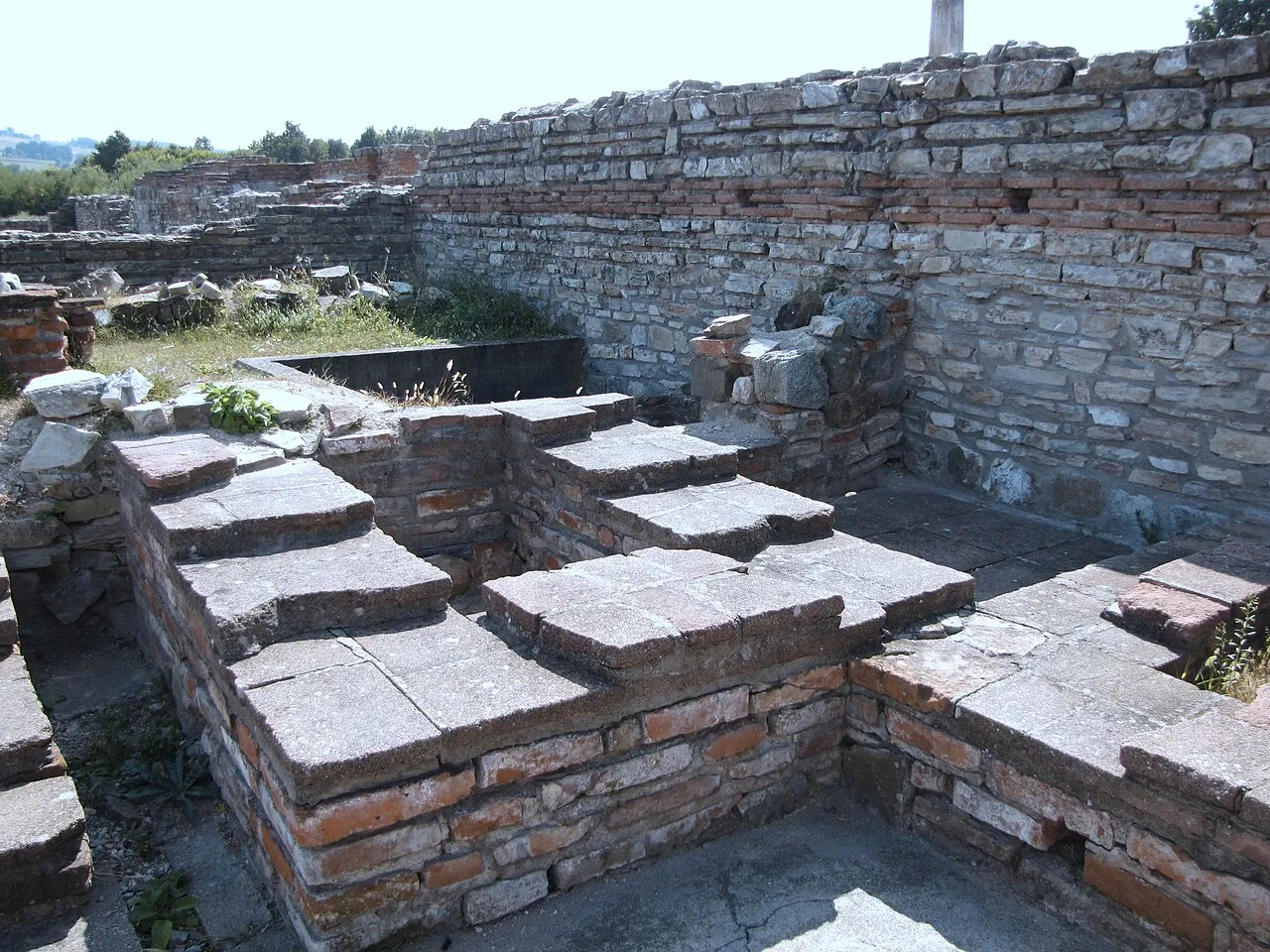
Il complesso di Gamzigrad, in Serbia orientale, fu eretto da Galerio nel suo luogo di nascita e dedicato alla madre Romula, da cui prese il nome. Era contemporaneamente palazzo, fortezza, tempio e mausoleo: cinta muraria di venti torri massicce, due tempi (uno per Giove, uno per la madre divinizzata), tetrapilon, terme, mosaici pavimentali tra i più belli del IV secolo (oggi al museo di Zaječar). Il rilievo del tholos mostra Galerio in apoteosi accanto a Romula divinizzata. Riscoperto nel 1953, dichiarato patrimonio UNESCO nel 2007, è oggi uno dei più importanti siti archeologici tardoantichi dei Balcani.
The complex of Gamzigrad, in eastern Serbia, was raised by Galerius at his birthplace and dedicated to his mother Romula, from whom it took its name. It was simultaneously palace, fortress, temple and mausoleum: a walled circuit of twenty massive towers, two temples (one for Jupiter, one for the deified mother), a tetrapylon, baths, and floor mosaics among the finest of the 4th century (today at the museum of Zaječar). The relief of the tholos shows Galerius in apotheosis beside the deified Romula. Rediscovered in 1953 and declared a UNESCO World Heritage site in 2007, it is today one of the most important late antique archaeological sites in the Balkans.
L'Arco e la Rotonda di Tessalonica
The Arch and Rotunda of Thessalonica
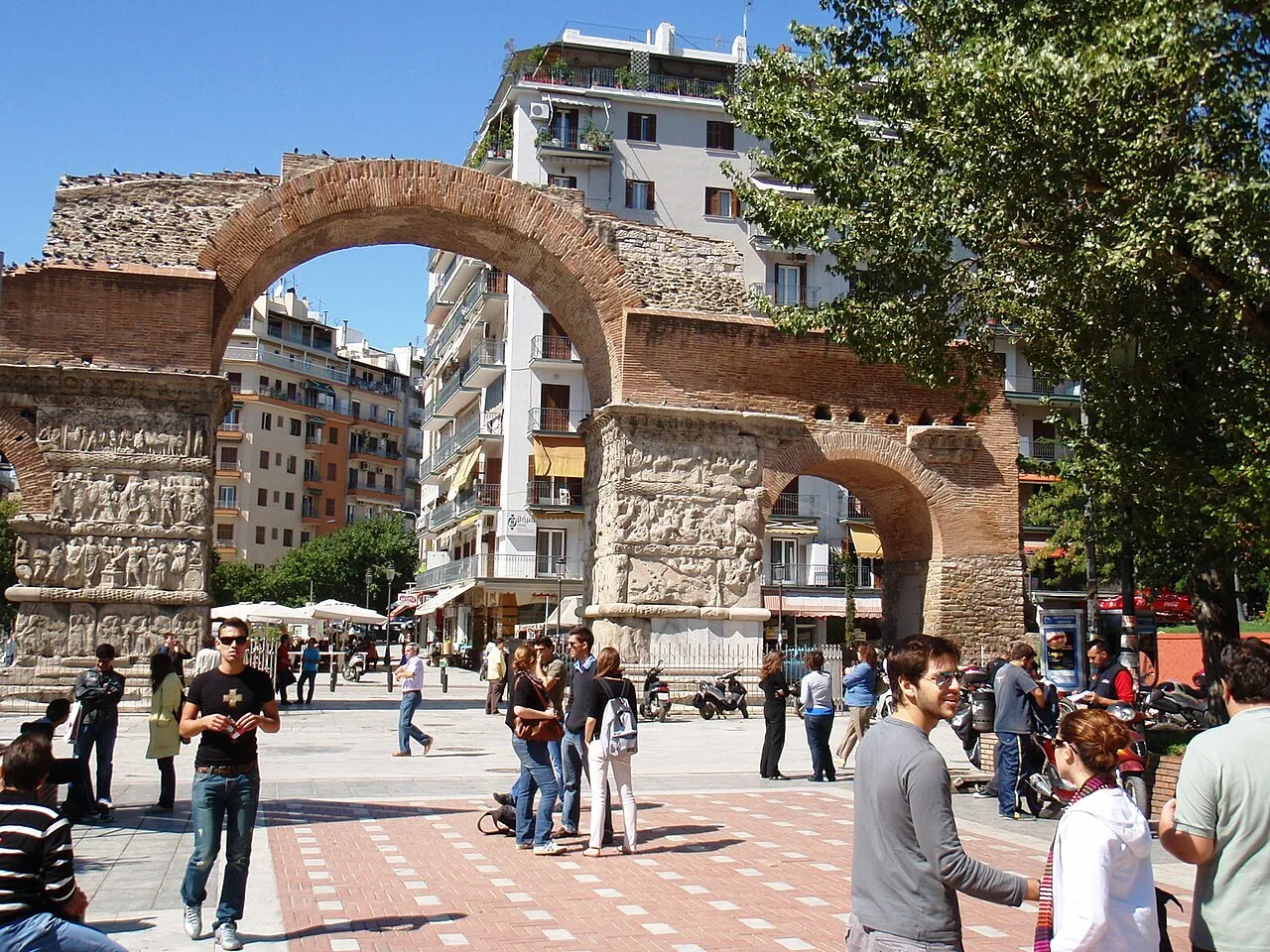
A Tessalonica, sua capitale d'Oriente, Galerio fece costruire il proprio complesso celebrativo: un grande palazzo imperiale (di cui restano fondazioni e mosaici), l'Arco di Galerio (Kamára, 298–303 d.C.) decorato con bassorilievi che narrano la campagna persiana in dettaglio analogo alla Colonna Traiana, e la Rotonda: un imponente edificio a cupola, originariamente concepito come suo mausoleo, convertito a chiesa cristiana di San Giorgio nel V secolo e oggi monumento UNESCO. I bassorilievi dell'arco mostrano Galerio a cavallo che riceve la sottomissione di Narsete, una delle ultime grandi opere narrative dell'arte imperiale romana.
At Thessalonica, his eastern capital, Galerius built his own celebratory complex: a great imperial palace (of which foundations and mosaics survive), the Arch of Galerius (Kamára, 298–303 AD) decorated with bas-reliefs narrating the Persian campaign in detail analogous to Trajan's Column, and the Rotunda: an imposing domed building, originally conceived as his mausoleum, converted into the Christian church of Saint George in the 5th century and today a UNESCO monument. The arch's reliefs show Galerius on horseback receiving the submission of Narses: one of the last great narrative works of Roman imperial art.
Il giudizio della storia
The verdict of history
La memoria di Galerio fu plasmata dai suoi nemici cristiani, Lattanzio e Eusebio, che lo dipinsero come un mostro di crudeltà e bestialità contadina, e dai panegiristi pagani che ne celebrarono il valore militare. Per duemila anni il primo ritratto prevalse: Galerio fu il «persecutore» per antonomasia, l'archetipo del nemico della fede. La storiografia moderna ha riequilibrato il giudizio: fu il vincitore di Satala, autore del più favorevole trattato romano-persiano del IV secolo; un amministratore efficace che estese il censimento a tutto l'Impero (anche all'Italia, fino ad allora privilegiata); il fondatore di Romuliana e dell'arco trionfale di Tessalonica; e, paradosso supremo, il primo imperatore romano a riconoscere giuridicamente il cristianesimo. Il persecutore, sul letto di morte, divenne, suo malgrado, il padre involontario della libertà religiosa romana. Pochi sovrani della tarda antichità racchiudono altrettante contraddizioni.
Galerius's memory was shaped by his Christian enemies, Lactantius and Eusebius, who depicted him as a monster of cruelty and peasant bestiality, and by the pagan panegyrists who celebrated his military valour. For two thousand years the first portrait prevailed: Galerius was the "persecutor" par excellence, the archetype of the enemy of the faith. Modern historiography has rebalanced the verdict: he was the victor of Satala, author of the most favourable Roman-Persian treaty of the 4th century; an effective administrator who extended the census to the whole Empire (including Italy, previously privileged); the founder of Romuliana and the triumphal arch of Thessalonica; and, supreme paradox, the first Roman emperor to legally recognise Christianity. The persecutor, on his deathbed, became, in spite of himself, the involuntary father of Roman religious freedom. Few late-antique sovereigns hold together so many contradictions.