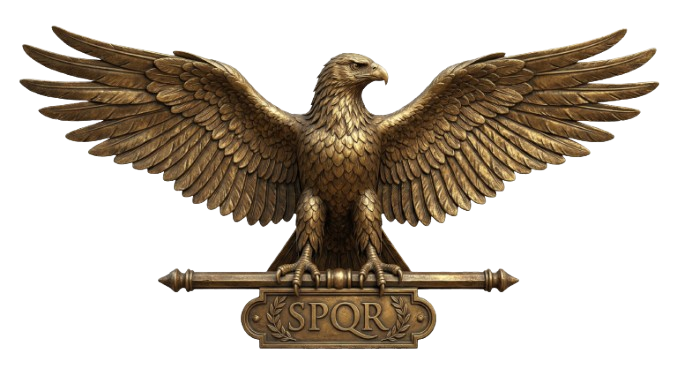
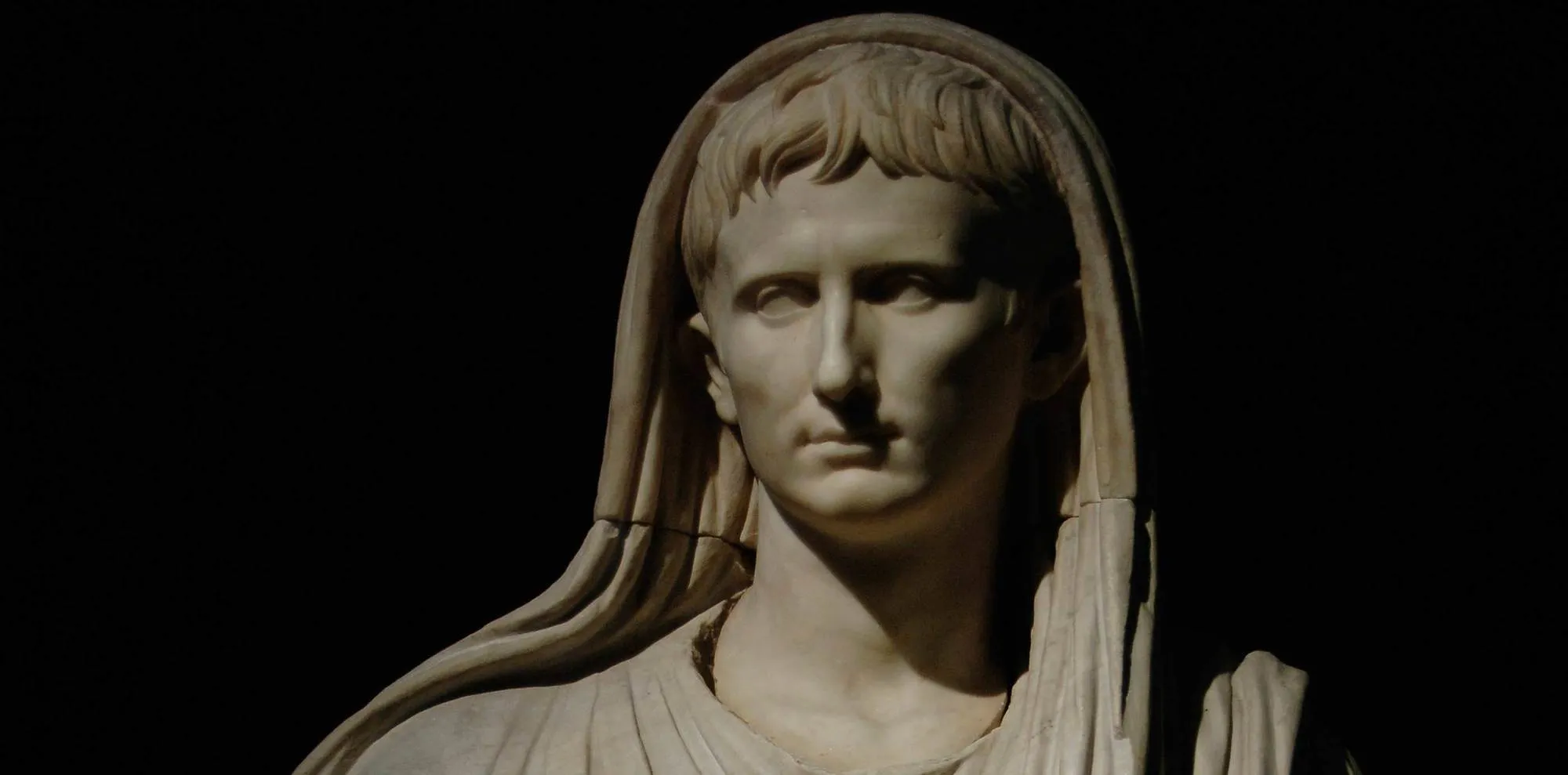
01BiografiaBiography
Le origini di un erede inatteso (63–44 a.C.)
Origins of an unlikely heir (63–44 BC)
Gaio Ottavio Turino nacque il 23 settembre del 63 a.C. a Roma, in una casa modesta sul Palatino. Il padre, Gaio Ottavio, era un cavaliere di Velletri, primo della famiglia ad arrivare al rango pretorio; morì quando il figlio aveva quattro anni. La madre Atia Balba Cesonia era nipote di Giulio Cesare per parte di madre: Giulia, sorella del dittatore. È questa sottile linea di sangue che avrebbe cambiato la storia del mondo: a Roma non si ereditava il potere per nascita, ma una connessione con Cesare, in un secolo dominato dalla sua figura, era una dote politica enorme.
Gaius Octavius Thurinus was born on 23 September 63 BC in Rome, in a modest house on the Palatine. His father, Gaius Octavius, was an equestrian from Velletri, the first of his family to reach praetorian rank; he died when his son was four. His mother Atia Balba Caesonia was the niece of Julius Caesar through her mother Julia, the dictator's sister. It is this slender line of blood that would change the history of the world: power was not inherited by birth in Rome, but in a century dominated by Caesar's figure, a connection with him was an enormous political dowry.
Il giovane Ottavio crebbe sotto l'occhio di Cesare. A dodici anni pronunciò l'elogio funebre della nonna Giulia. A sedici si riprese da una malattia che quasi lo uccise per cavalcare al fianco dello zio nelle campagne di Spagna; nel 46 a.C., a diciassette anni, sfilò nel trionfo africano di Cesare. Il dittatore lo prese in affetto particolare: lo nominò magister equitum designato e lo preparò alla guerra partica, mandandolo nell'inverno del 45–44 a.C. ad Apollonia in Illiria, sotto la disciplina di legioni veterane e di maestri di retorica greca. Lì lo raggiunse, alle Idi di marzo, una notizia destinata a fare di un adolescente lo sfidante del mondo: Cesare era stato ucciso a colpi di pugnale nella Curia di Pompeo.
The young Octavius grew up under Caesar's eye. At twelve he delivered the funeral oration for his grandmother Julia. At sixteen he recovered from an illness that nearly killed him to ride alongside his uncle in the Spanish campaigns; in 46 BC, at seventeen, he marched in Caesar's African triumph. The dictator developed a particular affection for him: he designated him magister equitum elect and prepared him for the Parthian war, sending him in the winter of 45–44 BC to Apollonia in Illyria, under the discipline of veteran legions and Greek masters of rhetoric. There, on the Ides of March, news reached him that would turn an adolescent into the world's challenger: Caesar had been stabbed to death in the Curia of Pompey.
L'erede di Cesare (44–43 a.C.)
Caesar's heir (44–43 BC)
Quando Ottaviano aprì il testamento di Cesare, scoprì di essere stato adottato come figlio. Il dittatore gli lasciava tre quarti del suo immenso patrimonio personale e il proprio nome. Da quel momento Gaio Ottavio divenne Gaio Giulio Cesare Ottaviano; con un colpo legale aveva acquistato la più potente eredità politica della storia romana. Aveva diciotto anni. Sbarcò a Brindisi e si diresse a Roma; lungo la strada, i veterani di Cesare cominciarono a unirsi a lui. La sua scelta era netta: vendicare il padre adottivo, prendersi il suo posto.
When Octavian opened Caesar's will, he discovered he had been adopted as his son. The dictator left him three-quarters of his immense personal estate and his own name. From that moment Gaius Octavius became Gaius Julius Caesar Octavianus; with a legal stroke he had acquired the most powerful political inheritance in Roman history. He was eighteen. He landed at Brundisium and marched on Rome; along the way, Caesar's veterans began to join him. His choice was clear: avenge his adoptive father, take his place.
A Roma trovò Marco Antonio, console e collega di Cesare, riluttante a consegnare il patrimonio del dittatore. Ottaviano vendette le proprie terre per pagare di tasca propria il legato che Cesare aveva lasciato a ciascun cittadino romano: trecento sesterzi, tre mesi di salario di un legionario. La folla impazzì per lui. Sull'altro fronte politico, Marco Tullio Cicerone, vecchio repubblicano sconfitto dalla guerra civile e ostile ad Antonio, vide nel ragazzo uno strumento contro il rivale: scrisse le quattordici Filippiche in cui demoliva Antonio e patrocinava Ottaviano in Senato. La frase rimasta è gelida: laudandum adulescentem, ornandum, tollendum, "il ragazzo va lodato, onorato, sollevato in alto" (e l'ultima parola, in latino, suggerisce anche "tolto di mezzo"). Ottaviano sentì il doppio senso e non lo dimenticò .
In Rome he found Mark Antony, consul and Caesar's colleague, reluctant to hand over the dictator's estate. Octavian sold his own lands to pay personally the bequest Caesar had left to each Roman citizen: three hundred sesterces, three months of a legionary's pay. The crowd went wild for him. On the other political front, Marcus Tullius Cicero, an old Republican beaten by the civil war and hostile to Antony, saw in the boy a weapon against his rival: he wrote the fourteen Philippics demolishing Antony and championing Octavian in the Senate. The line that remains is icy: laudandum adulescentem, ornandum, tollendum, "the young man must be praised, honoured, raised up" (and the last word, in Latin, suggests also "removed"). Octavian heard the double meaning and did not forget it.
Nell'aprile del 43 a.C. la guerra contro Antonio scoppiò a Modena. Ottaviano combatté a fianco dei due consoli, Irzio e Pansa, che caddero entrambi in battaglia. A diciannove anni il giovane si trovò padrone di un esercito consolare. Marchò su Roma, occupò il Foro con le legioni e si fece nominare console, contro tutte le leggi sull'età . Era il primo passo di un nuovo Cesare. Pochi mesi dopo, lungo le rive del fiume Reno presso Bologna, incontrò Marco Antonio e Marco Emilio Lepido: i tre formarono il Secondo Triumvirato, ufficialmente la tresviratus rei publicae constituendae, magistratura straordinaria che sospendeva la Repubblica per rifondarla.
In April 43 BC the war against Antony broke out at Mutina (Modena). Octavian fought beside the two consuls, Hirtius and Pansa, who both fell in battle. At nineteen the young man found himself master of a consular army. He marched on Rome, occupied the Forum with his legions and had himself appointed consul, against all laws on age. It was the first step of a new Caesar. A few months later, along the banks of the Reno near Bologna, he met Mark Antony and Marcus Aemilius Lepidus: the three formed the Second Triumvirate, officially the tresviratus rei publicae constituendae, an extraordinary magistracy suspending the Republic in order to refound it.
Le proscrizioni del novembre 43 a.C. furono il prezzo politico dell'accordo. Liste affisse nel Foro contenevano i nomi degli avversari da uccidere: oltre 2.000 cavalieri e 300 senatori furono assassinati, le loro proprietà confiscate per pagare le legioni. La vittima più celebre fu proprio Cicerone, esecrato da Antonio per le Filippiche; Ottaviano, dopo qualche resistenza, lasciò che il vecchio amico fosse sgozzato sulla via Appia. La testa e la mano destra dell'oratore furono inchiodate ai rostra del Foro: chi aveva tante volte parlato dal podio non avrebbe più parlato. Era la fine letterale e simbolica della Roma repubblicana.
The proscriptions of November 43 BC were the political price of the agreement. Lists posted in the Forum contained the names of opponents to be killed: over 2,000 equestrians and 300 senators were murdered, their properties seized to pay the legions. The most celebrated victim was Cicero himself, hated by Antony for the Philippics; Octavian, after some resistance, let his old ally have his throat cut on the Via Appia. The orator's head and right hand were nailed to the rostra of the Forum: he who had so often spoken from the platform would speak no more. It was the literal and symbolic end of Republican Rome.
Il triumviro contro Antonio (42–31 a.C.)
The triumvir against Antony (42–31 BC)
Restavano da regolare i conti con i cesaricidi. Bruto e Cassio avevano raccolto in Oriente un esercito immenso. A Filippi, in Macedonia, nell'ottobre del 42 a.C., due battaglie a distanza di poche settimane decisero la sorte: nella prima Antonio sconfisse Cassio (che si suicidò per errore credendo persa anche l'altra ala); nella seconda Bruto fu schiacciato e si tolse la vita anch'egli. La vendetta dei Cesariani era completa. Ottaviano, che era stato malato e poco brillante sul campo, lasciò che la gloria militare andasse ad Antonio, ma alla divisione del bottino imperiale prese saldamente l'Occidente, lasciando l'Oriente al rivale. Era la mossa di un calcolatore.
Accounts had still to be settled with Caesar's killers. Brutus and Cassius had raised an immense army in the East. At Philippi, in Macedonia, in October 42 BC, two battles within a few weeks of each other decided the issue: in the first Antony defeated Cassius (who killed himself by mistake, believing the other wing also lost); in the second Brutus was crushed and likewise took his own life. The Caesarian vendetta was complete. Octavian, ill and unimpressive on the field, let the military glory go to Antony, but in the imperial partition he firmly took the West, leaving the East to his rival. It was the move of a calculator.
Tornato in Italia, Ottaviano dovette gestire il malcontento dei veterani da insediare e una rivolta provocata dal fratello e dalla moglie di Antonio (Lucio Antonio e Fulvia) nella Guerra di Perugia. Vinse, ma il rischio di guerra con Antonio era reale. Lo evitò con un trattato firmato a Brindisi nel 40 a.C., suggellato dal matrimonio di Antonio con la propria sorella Ottavia. Pochi anni dopo, nel 38 a.C., sposò Livia Drusilla, già moglie di Tiberio Claudio Nerone e già madre del futuro imperatore Tiberio. Era incinta quando lasciò il marito per Ottaviano: i Romani fecero ironia sui figli che nascono in tre mesi. Livia sarebbe rimasta al fianco di Augusto per cinquantadue anni; sarebbe stata moglie, consigliera e architetta delle successioni dinastiche.
Back in Italy, Octavian had to manage discontent among veterans to be settled and a revolt led by Antony's brother and wife (Lucius Antonius and Fulvia) in the Perusine War. He won, but war with Antony was a real risk. He averted it with a treaty signed at Brundisium in 40 BC, sealed by Antony's marriage to his own sister Octavia. A few years later, in 38 BC, he married Livia Drusilla, already wife of Tiberius Claudius Nero and already mother of the future emperor Tiberius. She was pregnant when she left her husband for Octavian: Romans joked about sons born in three months. Livia would remain at Augustus's side for fifty-two years; she would be wife, counsellor and architect of dynastic successions.
Restava una minaccia: Sesto Pompeo, figlio di Pompeo Magno, comandava una flotta in Sicilia e affamava Roma con un blocco navale. Ottaviano, marinaio mediocre, affidò il problema all'amico d'infanzia Marco Vipsanio Agrippa: in due anni Agrippa costruì un nuovo bacino navale al Lago Lucrino, addestrò gli equipaggi e nel 36 a.C. distrusse la flotta pompeiana a Naulocho. Lepido, terzo triumviro, provò in quell'occasione un golpe e fu degradato a semplice pontifex maximus a vita. Ora restavano solo Antonio e Ottaviano: l'Oriente contro l'Occidente.
One threat remained: Sextus Pompey, son of Pompey the Great, commanded a fleet in Sicily and starved Rome with a naval blockade. Octavian, a mediocre seaman, entrusted the problem to his childhood friend Marcus Vipsanius Agrippa: in two years Agrippa built a new naval basin at Lake Lucrinus, trained the crews and in 36 BC destroyed the Pompeian fleet at Naulochus. Lepidus, the third triumvir, attempted a coup on that occasion and was demoted to mere lifelong pontifex maximus. Now only Antony and Octavian remained: East against West.
La rottura maturò lentamente. Antonio, ammaliato da Cleopatra VII, regina d'Egitto, viveva ad Alessandria, riconosceva i propri figli avuti dalla regina come eredi di territori romani (le Donazioni di Alessandria, 34 a.C.) e ripudiò Ottavia. Ottaviano scatenò una formidabile guerra propagandistica: pubblicò o forse fabbricò il testamento di Antonio, che chiedeva di essere sepolto ad Alessandria, e accusò il rivale di volere trasferire la capitale dell'Impero in Egitto. Nel 32 a.C. Roma dichiarò guerra non ad Antonio, sarebbe stata guerra civile, ma a Cleopatra. Era abile politica.
The break matured slowly. Antony, bewitched by Cleopatra VII, queen of Egypt, lived in Alexandria, recognised the children he had with her as heirs of Roman territories (the Donations of Alexandria, 34 BC) and repudiated Octavia. Octavian launched a formidable propaganda war: he published, or perhaps fabricated, Antony's will, which asked to be buried in Alexandria, and accused his rival of wanting to move the capital of the Empire to Egypt. In 32 BC Rome declared war not on Antony, that would have been civil war, but on Cleopatra. It was clever politics.
Lo scontro si risolse in un solo giorno. Il 2 settembre del 31 a.C., al largo dell'Epiro, ad Azio, le navi di Agrippa accerchiarono la flotta di Antonio. Cleopatra fuggì verso l'Egitto con sessanta navi; Antonio la seguì . Le legioni rimaste in terraferma, prive di comandante, si arresero senza combattere. L'anno dopo Alessandria cadde: Antonio si gettò sulla propria spada; Cleopatra, prigioniera, si fece mordere da un aspide. Cesarione, figlio di Cesare e Cleopatra, fu giustiziato per ordine di Ottaviano: due Cesari erano troppi. L'Egitto divenne provincia personale del vincitore. Ottaviano aveva trentadue anni e nessun rivale.
The clash was settled in a single day. On 2 September 31 BC, off Epirus, at Actium, Agrippa's ships encircled Antony's fleet. Cleopatra fled towards Egypt with sixty ships; Antony followed her. The legions left on land, without a commander, surrendered without fighting. The next year Alexandria fell: Antony threw himself on his sword; Cleopatra, captive, made an asp bite her. Caesarion, son of Caesar and Cleopatra, was executed on Octavian's orders: two Caesars were too many. Egypt became the personal province of the victor. Octavian was thirty-two and had no rival.
L'invenzione del Principato (27 a.C. – 14 d.C.)
The invention of the Principate (27 BC – 14 AD)
Il problema vero cominciava ora. La Repubblica era stata sventrata da un secolo di guerre civili; tutti i precedenti vincitori (Mario, Silla, Cesare) avevano ristabilito la legge marziale e poi erano stati assassinati o erano morti senza eredi. Ottaviano fece l'opposto: finse di restituire la Repubblica. Il 13 gennaio del 27 a.C. si presentò in Senato e dichiarò di rinunciare a tutti i poteri straordinari. Il Senato, ben istruito, lo supplicò di accettare almeno il governo delle province più pericolose. Quattro giorni dopo, il 16 gennaio, gli conferiva il titolo onorifico di Augustus, "il Venerabile", e l'imperium proconsulare maius sulle province con legioni. Era il colpo politico più abile della storia romana: assoluta concentrazione di potere militare avvolta in linguaggio repubblicano.
The real problem was beginning now. The Republic had been gutted by a century of civil wars; every previous victor (Marius, Sulla, Caesar) had imposed martial law and then been assassinated or died heirless. Octavian did the opposite: he pretended to give back the Republic. On 13 January 27 BC he appeared in the Senate and declared he was renouncing all extraordinary powers. The Senate, well rehearsed, begged him to accept at least the government of the most dangerous provinces. Four days later, on 16 January, it conferred on him the honorific title of Augustus, "the Venerable", and the imperium proconsulare maius over the provinces with legions. It was the cleverest political coup in Roman history: absolute concentration of military power wrapped in Republican language.
Il "ritocco" del 23 a.C. fu il secondo capolavoro: rinunciò al consolato annuale e si fece conferire a vita la tribunicia potestas e l'imperium proconsulare maius. Da allora in poi Augusto era inviolabile come un tribuno della plebe (la sua persona era sacrosancta), poteva proporre leggi, porre il veto, convocare il Senato e comandare gli eserciti senza tenere alcuna magistratura. Lo Stato era formalmente repubblicano; lui era oltre lo Stato. Si chiamò princeps, "il primo cittadino", un titolo che non esisteva nelle istituzioni e proprio per questo poteva contenere ogni cosa.
The "retouch" of 23 BC was the second masterpiece: he gave up the annual consulship and was granted lifelong tribunicia potestas and imperium proconsulare maius. From then on Augustus was inviolable as a tribune of the plebs (his person was sacrosancta), could propose laws, impose vetoes, convene the Senate and command armies without holding any magistracy. The State was formally Republican; he stood above it. He called himself princeps, "the first citizen", a title that did not exist in the institutions and for that very reason could contain anything.
« Trasferii lo Stato dal mio potere alla discrezione del Senato e del popolo romano» . « I transferred the state from my own power to the discretion of the Senate and the Roman people» . Augusto, Res Gestae 34
Il quarantennio del Principato fu un periodo di lavoro inesauribile. Augusto riformò ogni cosa: le province (divise tra senatorie e imperiali), l'esercito (professionale, di lunga ferma, con cassa pensionistica), il fisco (censimenti regolari), la classe senatoria (ridotta da 1.000 a 600 e ricostruita su criteri patrimoniali), la moneta (nuovo sistema d'oro e argento), persino il calendario (il mese di agosto prese il suo nome). Affiancò alla burocrazia tradizionale una nuova rete di liberti e cavalieri dipendenti da lui personalmente: era l'embrione dell'amministrazione imperiale.
The forty years of the Principate were a period of inexhaustible work. Augustus reformed everything: the provinces (split between senatorial and imperial), the army (professional, long-service, with a pension fund), the fiscal system (regular censuses), the senatorial class (cut from 1,000 to 600 and rebuilt on property qualifications), the coinage (a new gold-and-silver system), even the calendar (the month of August took his name). Alongside the traditional bureaucracy he placed a new network of freedmen and equestrians dependent on him personally: it was the embryo of the imperial administration.
Sul piano culturale, sostenuto dall'amico e ministro Mecenate, Augusto trasformò la letteratura latina nel suo apogeo. Virgilio compose l'Eneide, mito fondativo che legava la stirpe Giulia a Enea e a Venere. Tito Livio scrisse i centoquarantadue libri dell'Ab Urbe Condita, monumentale storia di Roma dalla fondazione. Orazio dedicò le Odi e il Carmen Saeculare al regime augusteo. Ovidio canta nelle Metamorfosi; sarà lui però l'unico letterato grande punito dal regime, esiliato a Tomi sul Mar Nero per ragioni mai del tutto chiarite.
On the cultural plane, supported by his friend and minister Maecenas, Augustus transformed Latin literature into its golden age. Virgil composed the Aeneid, the foundational myth that bound the Julian line to Aeneas and Venus. Livy wrote the one hundred and forty-two books of his Ab Urbe Condita, the monumental history of Rome from its founding. Horace dedicated his Odes and the Carmen Saeculare to the Augustan regime. Ovid sings in the Metamorphoses; yet he would be the only great writer punished by the regime, exiled to Tomis on the Black Sea for reasons never fully clarified.
L'urbanistica fu la sua firma. Le sue parole, marmoream se relinquere quam latericiam accepisset ("lasciare di marmo ciò che aveva ricevuto di mattoni"), descrivono un programma edilizio gigantesco: il Foro di Augusto con il Tempio di Marte Ultore, l'Ara Pacis Augustae, il colossale Mausoleo nel Campo Marzio, il restauro di ottantadue templi in un solo anno, la riorganizzazione del calendario civile e religioso. Roma diventò per la prima volta una capitale all'altezza di un Impero.
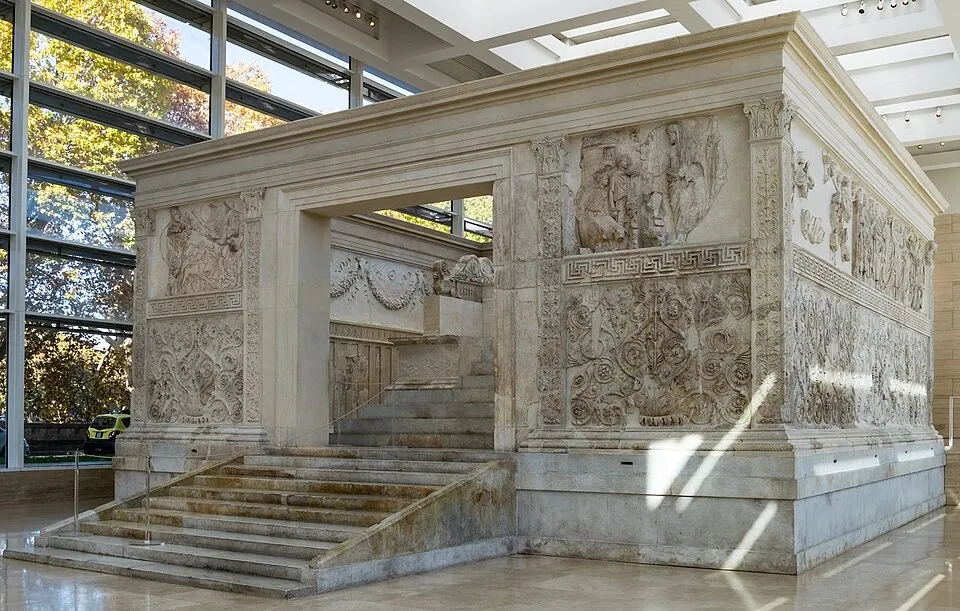
Town planning was his signature. His own phrase (marmoream se relinquere quam latericiam accepisset, "to leave in marble what he had received in brick") describes a vast building programme: the Forum of Augustus with the Temple of Mars Ultor, the Ara Pacis Augustae, the colossal Mausoleum on the Campus Martius, the restoration of eighty-two temples in a single year, the reorganisation of the civic and religious calendar. Rome for the first time became a capital worthy of an Empire.
Il dramma dinastico (12 a.C. – 14 d.C.)
The dynastic drama (12 BC – 14 AD)
Augusto progettò ogni cosa tranne, paradossalmente, la propria successione. Aveva un'unica figlia naturale, Giulia, avuta da Scribonia (la seconda moglie). La usò come pedina dinastica, costringendola a sposare in successione tre uomini diversi: il nipote Marcello (morto a diciannove anni nel 23 a.C.), l'amico Agrippa (morto nel 12 a.C.) e infine il figliastro Tiberio, che si rifiutò di amarla e si rifugiò a Rodi in volontario esilio per sette anni. Giulia stessa, abbandonata, condusse vita scandalosa nel cuore di Roma; nel 2 a.C. il padre, lo stesso che aveva varato leggi feroci contro l'adulterio, la fece arrestare, processare e relegare nell'isola di Pandataria. La rivide forse una sola volta, da lontano. Morì in esilio nel 14 d.C., poche settimane dopo Augusto.
Augustus planned everything except, paradoxically, his own succession. He had a single natural daughter, Julia, born of Scribonia (his second wife). He used her as a dynastic pawn, forcing her to marry three men in succession: his nephew Marcellus (dead at nineteen in 23 BC), his friend Agrippa (dead in 12 BC), and finally his stepson Tiberius, who refused to love her and retired to Rhodes in voluntary exile for seven years. Julia herself, abandoned, led a scandalous life in the heart of Rome; in 2 BC her father, the same who had passed ferocious laws against adultery, had her arrested, tried and exiled to the island of Pandataria. He saw her perhaps just once again, from afar. She died in exile in 14 AD, a few weeks after Augustus.
Avrebbe voluto come eredi i nipoti Gaio e Lucio, figli di Giulia e Agrippa, da lui adottati come figli. Li preparò al governo, li mandò in Oriente come comandanti. Lucio morì di malattia a Marsiglia nel 2 d.C., a diciannove anni; Gaio morì di ferite riportate in Armenia nel 4 d.C., a ventitré . Augusto, sessantasei anni, dovette ricominciare. Adottò allora il figliastro Tiberio, severo, abile generale, ma di temperamento opposto al suo: cupo, sospettoso, restio al ruolo. Era una scelta obbligata. La storia avrebbe rivelato che Tiberio era un comandante eccellente e un imperatore infelice.
He had wanted his grandsons Gaius and Lucius, sons of Julia and Agrippa, whom he had adopted as his own. He trained them for government, sent them East as commanders. Lucius died of illness at Marseille in 2 AD, aged nineteen; Gaius died of wounds suffered in Armenia in 4 AD, aged twenty-three. Augustus, sixty-six, had to start over. He then adopted his stepson Tiberius, stern, able general, but of a temperament opposite to his own: gloomy, suspicious, unwilling in the role. It was a forced choice. History would prove that Tiberius was an excellent commander and an unhappy emperor.
Nel settembre del 9 d.C. arrivò il colpo più duro del regno. Tre legioni romane (la XVII, la XVIII e la XIX) sotto il comando di Publio Quintilio Varo, furono attirate in trappola e annientate da una coalizione germanica capeggiata da Arminio nella Foresta di Teutoburgo. Ventimila legionari e altrettanti ausiliari morirono nei boschi. Le aquile delle legioni furono catturate. Alla notizia Augusto si percosse la testa contro le pareti del palazzo gridando, come riferisce Svetonio, « Quintili Vare, legiones redde!»: "Varo, ridammi le mie legioni!". Per mesi non si rasò la barba e i capelli. La conquista della Germania, sogno di una vita, era finita: il Reno sarebbe rimasto la frontiera dell'Impero per quattro secoli.
In September 9 AD came the heaviest blow of the reign. Three Roman legions (the XVII, XVIII and XIX) under the command of Publius Quinctilius Varus, were lured into a trap and annihilated by a Germanic coalition led by Arminius in the Teutoburg Forest. Twenty thousand legionaries and as many auxiliaries died in the woods. The legionary eagles were captured. At the news Augustus dashed his head against the palace walls, crying, as Suetonius reports, « Quintili Vare, legiones redde!»: "Varus, give me back my legions!". For months he did not cut his beard or hair. The conquest of Germany, dream of a lifetime, was over: the Rhine would remain the frontier of the Empire for four centuries.
L'ultimo atto (14 d.C.)
The last act (14 AD)
Negli ultimi anni Augusto ridusse i propri spostamenti, scrisse l'autobiografia ufficiale (le Res Gestae Divi Augusti, "le cose fatte dal divo Augusto") che fu poi incisa in latino e in greco sui templi di tutto l'Impero (ne sopravvive una copia integrale ad Ankara). Lavorò fino agli ultimi giorni alle nomine dei legati, alle revisioni dei conti dell'erario, alle disposizioni testamentarie. Nell'agosto del 14 d.C., a settantacinque anni, durante un viaggio in Campania per accompagnare Tiberio al porto di Brindisi, si ammalò . Si fermò nella villa di famiglia a Nola, la casa natale del padre.
In his last years Augustus reduced his travels, wrote his official autobiography (the Res Gestae Divi Augusti, "the things done by the divine Augustus") which was then carved in Latin and Greek on temples throughout the Empire (a complete copy survives at Ankara). He worked until his final days on the appointment of legates, the audit of treasury accounts, his testamentary dispositions. In August 14 AD, aged seventy-five, during a journey through Campania to accompany Tiberius to the port of Brundisium, he fell ill. He stopped at the family villa at Nola, his father's birthplace.
Morì il 19 agosto del 14 d.C., abbracciato a Livia. La leggenda riferisce le sue ultime parole, alla maniera del teatro greco: « Acta est fabula, plaudite!» — "La commedia è finita, applaudite!". Aveva regnato quarantun anni, undici mesi e ventisei giorni: il regno più lungo della storia romana. Il corpo fu portato a Roma a spalle dai senatori, le ceneri deposte nel Mausoleo che si era costruito in vita, sul Campo Marzio. Pochi giorni dopo, il Senato lo dichiarò Divus Augustus, dio. Era il primo, e la sua fortuna sarebbe stata seguita da un'intera serie di Cesari divinizzati per i quattro secoli successivi.
He died on 19 August 14 AD, embraced by Livia. Legend reports his last words, in the manner of Greek theatre: « Acta est fabula, plaudite!» — "The play is done, applaud!". He had reigned forty-one years, eleven months and twenty-six days: the longest reign in Roman history. His body was carried to Rome on the shoulders of senators, his ashes deposited in the Mausoleum he had built in life, on the Campus Martius. A few days later, the Senate declared him Divus Augustus, a god. He was the first, and his fortune would be followed by an entire series of deified Caesars for the next four centuries.
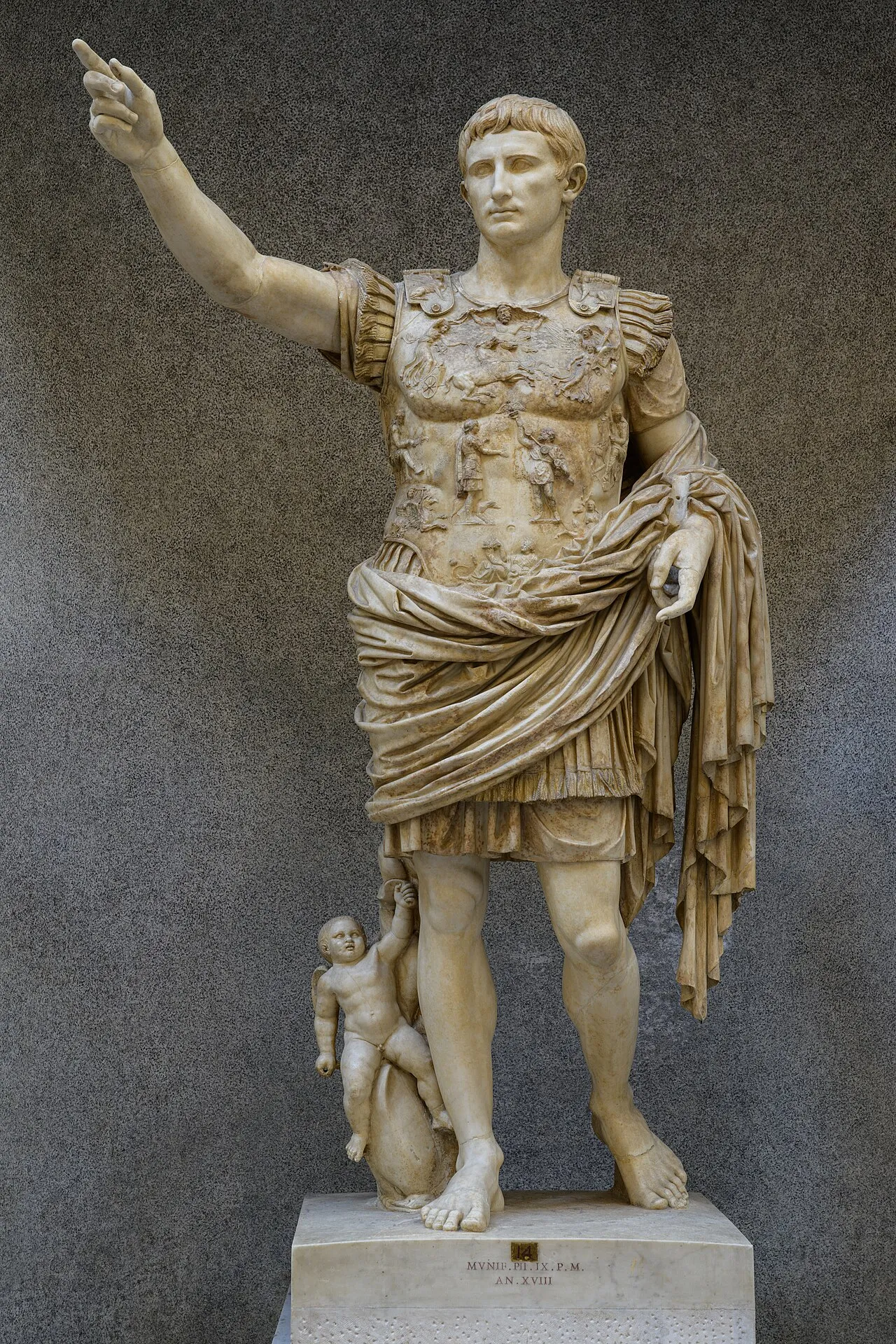
02Battaglie e Campagne MilitariBattles and Military Campaigns
L'attività militare di Augusto fu estesa ma quasi sempre delegata. La sua fortuna fu il binomio inseparabile con Marco Vipsanio Agrippa, l'amico d'infanzia che vinse per lui le grandi battaglie navali (Naulocho 36 a.C., Azio 31 a.C.), e con i figliastri Druso Maggiore e Tiberio, che pacificarono il Reno e il Danubio. Augusto stesso, dopo Filippi, evitò il fronte: era miope, di salute fragile, e lo sapeva. La sua arma era la strategia globale, non la tattica.
Augustus's military activity was vast but almost always delegated. His fortune was the inseparable bond with Marcus Vipsanius Agrippa, the childhood friend who won his great naval battles for him (Naulochus 36 BC, Actium 31 BC), and with his stepsons Drusus the Elder and Tiberius, who pacified the Rhine and the Danube. Augustus himself, after Philippi, avoided the front: he was short-sighted, frail, and he knew it. His weapon was global strategy, not tactics.
- 44 a.C. Presa di potere dopo Cesare — All'assassinio di Giulio Cesare, Ottaviano si affretta a Roma e mobilita i veterani cesariani contro Marco Antonio. Power seizure after Caesar — At Julius Caesar's assassination, Octavian rushed to Rome and mobilized Caesarian veterans against Mark Antony.
- 43 a.C. Secondo Triumvirato — Alleanza con Marco Antonio e Lepido. I tre si dividono il mondo romano e promulgano le proscrizioni, uccidendo tra gli altri Cicerone. Second Triumvirate — Alliance with Mark Antony and Lepidus. The three divide the Roman world and issue proscriptions, killing Cicero among others.
- 42 a.C. Battaglia di Filippi — Ottaviano e Marco Antonio sconfiggono i cesaricidi Bruto e Cassio in Macedonia. Fine della Repubblica nei fatti. Battle of Philippi — Octavian and Mark Antony defeat the liberators Brutus and Cassius in Macedonia. The Republic effectively ends.
- 36 a.C. Guerra contro Sesto Pompeo — Agrippa, il più grande ammiraglio di Ottaviano, sconfigge le forze di Sesto Pompeo nelle Battaglie di Milazzo e Nauloco, controllando il Mediterraneo. War against Sextus Pompey — Agrippa, Octavian's finest admiral, defeats Sextus Pompey at the Battles of Mylae and Naulochus, securing Mediterranean control.
- 31 a.C. Battaglia di Azio (2 settembre) — La flotta di Agrippa distrugge quella di Marco Antonio e Cleopatra. Marco Antonio e Cleopatra fuggono in Egitto e si suicidano. Ottaviano resta unico sovrano. Battle of Actium (September 2) — Agrippa's fleet destroys Mark Antony and Cleopatra's. They flee to Egypt and commit suicide. Octavian remains sole ruler.
- 30 a.C. Conquista dell'Egitto — L'Egitto di Cleopatra diventa provincia romana. I tesori dei Tolomei finanzieranno la trasformazione di Roma in marmo. Conquest of Egypt — Cleopatra's Egypt becomes a Roman province. The Ptolemaic treasures would finance Rome's transformation into marble.
- 27–19 a.C. Campagne in Spagna e nelle Alpi — Agrippa e il figliastro Tiberio pacificano le ultime tribù ispaniche (Cantabri e Asturi). Completamento del controllo alpino. Campaigns in Spain and the Alps — Agrippa and stepson Tiberius pacify the last Iberian tribes (Cantabri and Astures). Full Alpine control achieved.
- 9 d.C. Disfatta di Teutoburgo — Tre legioni romane (XVII, XVIII, XIX) sotto il comando di Publio Quintilio Varo vengono annientate da Arminio nella Foresta di Teutoburgo (Germania). Augusto avrebbe esclamato: "Varo, ridammi le mie legioni!" Il confine renano diventa definitivo. Teutoburg Forest Disaster — Three Roman legions (XVII, XVIII, XIX) under Publius Quinctilius Varus are annihilated by Arminius in the Teutoburg Forest (Germany). Augustus reportedly cried: "Varus, give me back my legions!" The Rhine boundary becomes permanent.
03Riforme e Leggi FondamentaliKey Reforms and Laws
- 27 a.C. Riforma provinciale — Divide le province in "senatorie" (pacificate, gestite dal Senato) e "imperiali" (con legioni, gestite da lui tramite legati). Concentra di fatto il potere militare. Provincial reform — Divides provinces into "senatorial" (pacified, Senate-run) and "imperial" (with legions, run through his legates). Effectively concentrates military power.
- 23 a.C. Tribunicia Potestas e Imperium Proconsulare — Ottiene a vita i poteri tribunizi (sacrosanctitas, veto sulle leggi) e l'imperium sulle province militari. È il fondamento legale del suo potere. Tribunicia Potestas and Imperium Proconsulare — Receives lifelong tribunician powers (sacrosanctitas, veto over laws) and imperium over military provinces. This is the legal foundation of his power.
- 18 a.C. Leges Iuliae sul matrimonio e l'adulterio — Riforma morale: incentiva i matrimoni e la natalità tra le classi alte. Punisce l'adulterio come crimine pubblico (non più solo privato). Esilia persino la figlia Giulia per immoralità. Leges Iuliae on marriage and adultery — Moral reform: incentivizes marriage and birth rates among the upper classes. Punishes adultery as a public crime. Even exiles his own daughter Julia for immorality.
- 17 a.C. Ludi Saeculares — Grande celebrazione religiosa che marca l'inizio di una nuova era di pace e prosperità. Orazio compone il Carmen Saeculare per l'occasione. Ludi Saeculares — Grand religious celebration marking the dawn of a new era of peace and prosperity. Horace composed the Carmen Saeculare for the occasion.
- 6 d.C. Aerarium Militare — Crea un fondo pensionistico per i veterani, finanziato da una nuova tassa sulle eredità (5%) e sulle vendite all'asta. Risolve il problema delle rivolte dei veterani. Aerarium Militare — Creates a pension fund for veterans, financed by a new tax on inheritances (5%) and auction sales. Solves the recurring problem of veteran uprisings.
- 2 a.C. Lex Fufia Caninia e Lex Aelia Sentia — Regolamentano le manomissioni degli schiavi: limitano il numero di schiavi liberati per testamento e introducono requisiti di età per i liberti. Lex Fufia Caninia and Lex Aelia Sentia — Regulate slave manumission: limit the number of slaves freed by will and introduce age requirements for freedmen.
04Opere e CostruzioniWorks and Constructions
- 27 a.C. Il Pantheon di Agrippa — L'originale Pantheon è fatto costruire dal genero Agrippa per volere di Augusto. La struttura attuale risale ad Adriano, ma l'iscrizione ricorda Agrippa. Original Pantheon — The original Pantheon is built by son-in-law Agrippa at Augustus's behest. The current structure dates to Hadrian, but the inscription still honors Agrippa.
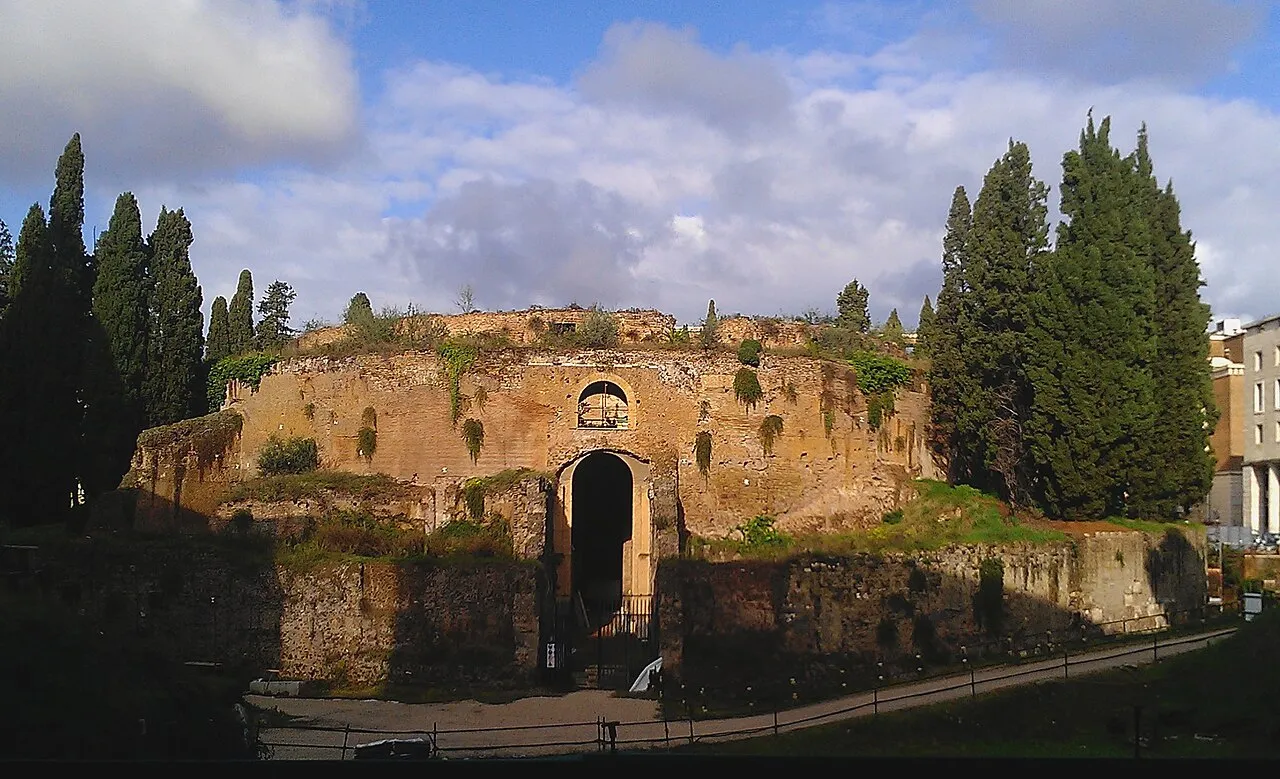
- 28 a.C. Mausoleo di Augusto — Colossale tomba circolare sul Campo Marzio, costruita in anticipo per sé e la famiglia. Diametro 87 metri, ricoperto di terra e piante. Mausoleum of Augustus — Colossal circular tomb on the Campus Martius, built in advance for himself and his family. 87 meters in diameter, covered with earth and plants.
- 13–9 a.C. Ara Pacis Augustae — Altare della Pace dedicato alla pace ritrovata in Occidente. Capolavoro della scultura augustea, decorato con rilievi che mostrano la famiglia imperiale in processione. Ara Pacis Augustae — Altar of Peace dedicated to the peace restored in the West. Masterpiece of Augustan sculpture, decorated with reliefs depicting the imperial family in procession.
- 2 a.C. Foro di Augusto e Tempio di Marte Ultore — Nuovo foro imperiale dedicato a Marte il Vendicatore, promesso da Ottaviano prima di Filippi. Centro della vita giuridica e militare di Roma. Forum of Augustus and Temple of Mars Ultor — New imperial forum dedicated to Mars the Avenger, vowed by Octavian before Philippi. Center of Rome's judicial and military life.
- vari anni 82 templi restaurati — Augusto ricostruì o restaurò 82 templi a Roma in un solo anno (28 a.C.), come dichiarato nella sua autobiografia Res Gestae Divi Augusti. 82 temples restored — Augustus rebuilt or restored 82 temples in Rome in a single year (28 BC), as stated in his autobiography Res Gestae Divi Augusti.
- vari anni Rete stradale e Vigiles — Riorganizza la rete stradale con miliari in oro (milliarium aureum). Crea i Vigiles, primo corpo di vigili del fuoco permanente di Roma. Road network and Vigiles — Reorganizes the road network with the golden milestone (milliarium aureum). Creates the Vigiles, Rome's first permanent fire brigade.
05L'Età Augustea e l'EreditàThe Augustan Age and Legacy
L'età aurea della letteratura latina
The golden age of Latin literature
Il regno di Augusto coincise con il periodo più fecondo della letteratura latina. Sotto il mecenatismo dell'amico Mecenate, il cui nome stesso sarebbe diventato sinonimo di patronage culturale, fiorirono tutti i grandi: Virgilio con l'Eneide, le Bucoliche e le Georgiche; Orazio con le Odi, le Satire e l'Arte Poetica; Ovidio con le Metamorfosi e i Fasti; Tito Livio con i centoquarantadue libri dell'Ab Urbe Condita. Properzio, Tibullo e Cornelio Gallo completavano il quadro elegiaco. In una sola generazione la lingua di Roma raggiunse forme che sarebbero rimaste insuperabili.
Augustus's reign coincided with the most fertile period of Latin literature. Under the patronage of his friend Maecenas, whose very name would become a synonym for cultural patronage, all the greats flourished: Virgil with the Aeneid, the Eclogues and the Georgics; Horace with the Odes, Satires and Ars Poetica; Ovid with the Metamorphoses and the Fasti; Livy with the one hundred and forty-two books of Ab Urbe Condita. Propertius, Tibullus and Cornelius Gallus completed the elegiac picture. In a single generation, the language of Rome reached forms that would remain unsurpassed.
Non era un caso: era un programma. Augusto sapeva che un regime nuovo aveva bisogno di un mito antico. L'Eneide di Virgilio sancisce la discendenza divina della stirpe Giulia da Enea e da Venere; le Odi di Orazio celebrano la pietas augustea; la storia di Tito Livio mostra che tutta Roma camminava verso il Principato fin dalla fondazione. Ovidio fu l'eccezione punita: forse per le Ars Amatoria, forse per qualche scandalo legato a Giulia Minore, fu esiliato a Tomi sul Mar Nero e morì senza più rivedere Roma. La sua storia ricorda quanto stretto fosse il margine fra mecenatismo e censura.
It was no accident: it was a programme. Augustus knew a new regime needed an ancient myth. Virgil's Aeneid sanctioned the divine descent of the Julian line from Aeneas and Venus; Horace's Odes celebrated Augustan pietas; Livy's history showed that all Rome had walked toward the Principate from its very foundation. Ovid was the exception punished: perhaps for the Ars Amatoria, perhaps for some scandal linked to Julia the Younger, he was exiled to Tomis on the Black Sea and died without ever seeing Rome again. His story recalls how narrow the margin was between patronage and censorship.
La Pax Romana: due secoli di pace
The Pax Romana: two centuries of peace
La Pax Romana, più di duecento anni di pace relativa all'interno dei confini dell'Impero, dal 27 a.C. fino almeno alla morte di Marco Aurelio nel 180 d.C., cominciò con Augusto. Permise uno sviluppo economico, culturale e infrastrutturale senza precedenti nel mondo antico. Le strade, le città , gli acquedotti, i teatri, i mercati che ancora oggi ammiriamo dalla Britannia alla Siria sono in larga parte figli di quella pace. La popolazione dell'Impero raggiunse forse i sessanta milioni; il Mediterraneo diventò per la prima e ultima volta nella storia un solo lago commerciale.
The Pax Romana, over two centuries of relative peace within the Empire's borders, from 27 BC until at least the death of Marcus Aurelius in 180 AD, began with Augustus. It permitted economic, cultural and infrastructural development unprecedented in the ancient world. The roads, cities, aqueducts, theatres and markets still admired today from Britain to Syria are largely children of that peace. The Empire's population may have reached sixty million; the Mediterranean became, for the first and last time in history, a single commercial lake.
Augusto creò le fondamenta amministrative su cui l'Impero resse per quattro secoli: province imperiali con legioni stanziali, esercito professionale con ventotto legioni e ferma di vent'anni, flotta permanente a Miseno e Ravenna, vigili per gli incendi e cohortes urbanae per la sicurezza, cursus publicus per le comunicazioni postali. Erano istituzioni nuove o radicalmente riformate; la maggior parte sarebbe sopravvissuta fino al V secolo, e qualcuna molto oltre.
Augustus created the administrative foundations on which the Empire stood for four centuries: imperial provinces with standing legions, a professional army of twenty-eight legions on twenty-year terms, a permanent fleet at Misenum and Ravenna, vigiles for fires and cohortes urbanae for security, cursus publicus for postal communications. They were new or radically reformed institutions; most would survive until the 5th century, and some much longer.
Il modello che generò quattro secoli di Cesari
The template that produced four centuries of Caesars
Augusto fu, e restò , il modello implicito di ogni imperatore romano successivo. Quando un nuovo principe saliva al trono, riceveva non un titolo solo ma un intero pacchetto di poteri sviluppato da Augusto: tribunicia potestas, imperium proconsulare maius, pontifex maximus, pater patriae, e dopo la morte la divinizzazione. Persino il nome, Augustus, diventò titolo. Tiberio, Caligola, Claudio, Nerone, e poi tutti, fino a Romolo Augustolo nel 476 d.C., furono ufficialmente Caesar Augustus. Il fondatore aveva inventato un linguaggio politico così potente da sopravvivere quasi cinque secoli.
Augustus was, and remained, the implicit model of every subsequent Roman emperor. When a new prince ascended the throne he received not a single title but an entire package of powers developed by Augustus: tribunicia potestas, imperium proconsulare maius, pontifex maximus, pater patriae, and after death divinisation. Even the name, Augustus, became a title. Tiberius, Caligula, Claudius, Nero, and then all the rest, down to Romulus Augustulus in 476 AD, were officially Caesar Augustus. The founder had invented a political language so powerful that it survived nearly five centuries.
Eppure proprio la sua dinastia mostrava il vizio del sistema. Augusto era un genio politico irripetibile; chi lo successe poteva essere meno capace e l'edificio cominciava a tremare. Tiberio regnò bene per dieci anni, poi si chiuse a Capri nella paranoia. Caligola, suo pronipote, si convinse di essere un dio e fu assassinato a ventotto anni. Claudio, balbuziente sottovalutato, restaurò l'amministrazione ma fu probabilmente avvelenato dalla moglie. Nerone, ultimo della dinastia, morì suicida nel 68 d.C. dopo l'incendio di Roma e la rivolta delle province. La Giulio-Claudia si estinse in cinquantaquattro anni. Augusto aveva costruito un sistema, non aveva risolto il problema dell'erede.
And yet his dynasty itself revealed the system's flaw. Augustus was an unrepeatable political genius; his successors could be less capable, and the building began to shake. Tiberius ruled well for a decade, then withdrew to Capri in paranoia. Caligula, his great-nephew, became convinced he was a god and was assassinated at twenty-eight. Claudius, an underestimated stutterer, restored the administration but was probably poisoned by his wife. Nero, the last of the dynasty, killed himself in 68 AD after the Great Fire of Rome and the revolt of the provinces. The Julio-Claudian line died in fifty-four years. Augustus had built a system; he had not solved the problem of the heir.
Le Res Gestae: il testamento politico
The Res Gestae: a political testament
Negli ultimi anni Augusto compose, di proprio pugno, il più straordinario documento autobiografico dell'antichità : le Res Gestae Divi Augusti. In trentacinque capitoli, scritti in prima persona ma in forma asciutta da bilancio, elencò ciò che aveva fatto: le guerre vinte, le province conquistate, le opere edificate, le somme spese di tasca propria per il popolo, gli onori ricevuti dal Senato. Volle che il testo fosse inciso in lettere di bronzo davanti al proprio Mausoleo, e in greco e latino sui templi del culto imperiale in tutto l'Impero. Una copia integrale ci è arrivata, scolpita nelle pareti di un tempio ad Ankara: il Monumentum Ancyranum.
In his last years Augustus wrote, in his own hand, the most extraordinary autobiographical document of antiquity: the Res Gestae Divi Augusti. In thirty-five chapters, written in the first person but in the dry form of a balance sheet, he listed what he had done: the wars won, provinces conquered, works built, sums spent from his own pocket for the people, honours received from the Senate. He had the text inscribed in bronze before his Mausoleum, and in Greek and Latin on temples of the imperial cult throughout the Empire. A complete copy has come down to us, carved on the walls of a temple at Ankara: the Monumentum Ancyranum.
Le Res Gestae non sono storia: sono propaganda perfetta. Augusto omette le proscrizioni, omette il sangue di Cicerone, omette l'esilio di Giulia, omette Teotoburgo. Eppure proprio quelle omissioni ne fanno il documento più rivelatore: ogni grande potere si racconta selezionando ricordi, e il Principe lo aveva capito. Ancora oggi gli storici lo studiano per quello che dice e per quello che tace.
The Res Gestae are not history: they are perfect propaganda. Augustus omits the proscriptions, omits the blood of Cicero, omits Julia's exile, omits Teutoburg. And yet those very omissions make it the most revealing document: every great power tells its own story by selecting memories, and the Princeps had understood this. Historians still study it for what it says and for what it leaves silent.
Duemila anni dopo
Two thousand years later
L'eredità di Augusto sopravvive nei luoghi più inattesi. Il mese di agosto porta il suo nome. La parola imperatore, e i derivati emperor, empereur, Kaiser, tsar (da Caesar), deriva da una sua pratica titolare. La forma costituzionale del principato, un governante che tiene poteri straordinari mantenendo formalmente le istituzioni repubblicane, sarebbe stata copiata da Napoleone, da Mussolini, da innumerevoli regimi successivi. La capitale di pietra che lui sognò è ancora visibile nei resti del suo Foro, dell'Ara Pacis, del Mausoleo recentemente restaurato.
Augustus's legacy survives in the most unexpected places. The month of August bears his name. The word emperor, and the cognates empereur, Kaiser, tsar (from Caesar), descends from one of his titular practices. The constitutional form of the principate, a ruler holding extraordinary powers while formally preserving Republican institutions, would be copied by Napoleon, by Mussolini, by countless later regimes. The stone capital he dreamed of is still visible in the remains of his Forum, the Ara Pacis, the recently restored Mausoleum.
Forse la sintesi più giusta è quella attribuita a lui stesso, sul letto di morte: aveva chiesto agli amici di applaudire, "perché la commedia è finita". Era un attore consapevole. Aveva inventato un personaggio (il Princeps, primo cittadino, modesto, paziente, pio) e lo aveva interpretato così bene per quarantun anni che il personaggio era diventato istituzione. Nessuno, neppure i suoi successori incapaci, avrebbero potuto distruggerlo del tutto. La fabula sarebbe continuata, attraverso Tiberio e Nerone e Traiano e Costantino, fino al 476 d.C. Augusto era morto da quattrocentosessantadue anni, ma la sua maschera continuava a recitare.
Perhaps the most just synthesis is the one attributed to him on his deathbed: he asked his friends to applaud, "for the play is done". He was a conscious actor. He had invented a character (the Princeps, first citizen, modest, patient, pious) and had played it so well for forty-one years that the character had become an institution. No one, not even his incapable successors, could ever entirely destroy it. The fabula would continue, through Tiberius and Nero and Trajan and Constantine, down to 476 AD. Augustus had been dead for four hundred and sixty-two years, but his mask was still acting.